|
Digest of new articles at openculture.com, your source for the best cultural and educational resources on the web ͏ ͏ ͏ ͏ ͏ ͏ ͏ ͏ ͏ ͏ ͏ ͏ ͏ ͏ ͏ ͏ ͏ ͏ ͏ ͏ ͏ ͏ ͏ ͏ ͏ ͏ ͏ ͏ ͏ ͏ ͏ ͏ ͏ ͏ ͏ ͏ ͏ ͏ ͏ ͏ ͏ ͏ ͏ ͏ ͏ ͏ ͏ ͏ ͏ ͏ ͏ ͏ ͏ ͏ ͏ ͏ ͏ ͏ ͏ ͏ ͏ ͏ ͏ ͏ ͏ ͏ ͏ ͏ ͏ ͏ ͏ ͏ ͏ ͏ ͏ ͏ ͏ ͏ ͏ ͏ ͏ ͏ ͏ ͏ ͏ ͏ ͏
|
|
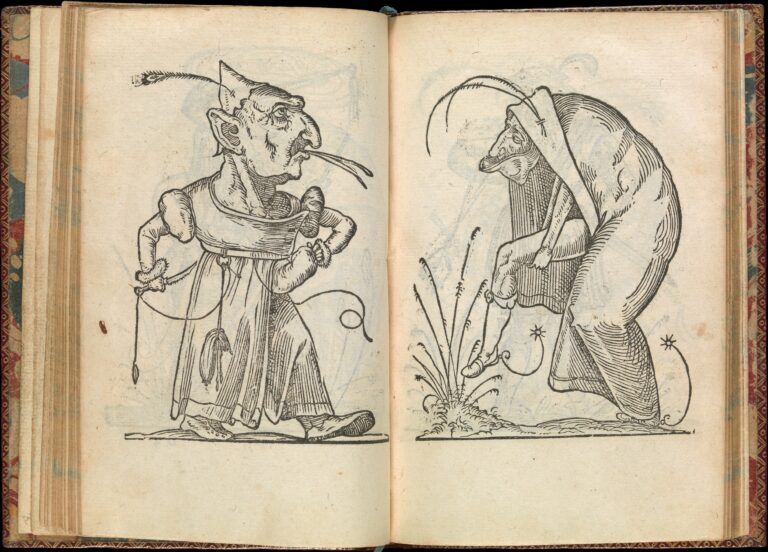
George Orwell lives on, to varying degrees of aptness, in the form of the word Orwellian. David Lynch has, within his lifetime, made necessary the term Lynchian. Though few of us will leave such adjectival legacies of our own, we should at least aspire to do so, and that task requires looking back to the original master: François Rabelais. Merriam-Webster defines Rabelaisian as “marked by gross robust humor, extravagance of caricature, or bold naturalism.” Rabelais expressed this sensibility at great length in La vie de Gargantua et de Pantagruel, a pentalogy of elaborate satirical novels published from the 1530s to the 1560s — and more recently endorsed by Harold Bloom, Joseph Brodsky, Henry Miller, and Marilyn Monroe.

Rabelais died in the 1550s, hence the still-unresolved questions about the authorship of the fifth and final Gargantua and Pantagruel book: was it completed from his notes? Was it, in fact, a fabrication by another writer?
Such was the public’s hunger for the Rabelaisian […]
|
|
|
|
|
A new explainer from Vox:
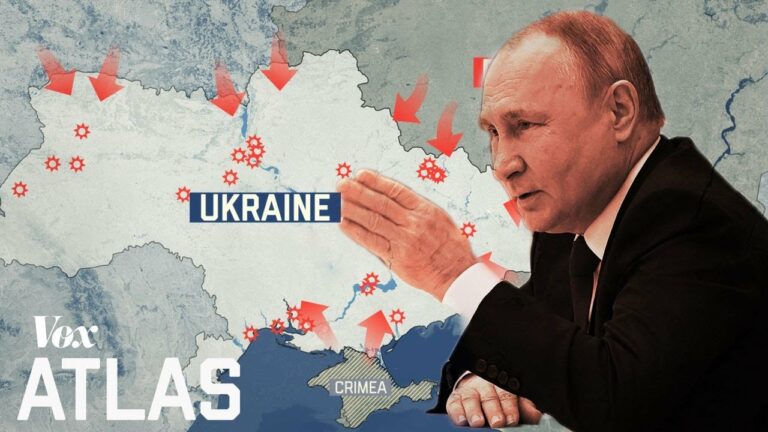
On February 24th, Russia launched a military invasion of Ukraine. Russian President Vladimir Putin called it a “special military operation,” but the scale of the attack shows this is a full-scale war that has already caused more than 100 casualties and forced more than half a million Ukrainians to flee their homes.
Ukraine and Russia’s conflict goes back to 2014, when Russia invaded and annexed Crimea and Russian-backed separatist forces took over parts of southeastern Ukraine’s Donbas region. But to understand the full context behind the invasion, it’s important to go even farther back, to the time when Europe’s current-day divisions began, and see how that shaped Europe’s power balance today.
To understand the current conflict’s history in less than 10 minutes, watch the video above.
|
|
|
|
|
Supergiant’s Hades is now the first video game ever to have won a Hugo award for sci-fi/fantasy fiction, and has set a new standard in the Roguelike genre, which features relatively short “runs” through a randomly-generated dungeon (or some equivalent) with perma-death, i.e. you die, you go back to the beginning. Generally, these games are very hard.
Your host Mark Linsenmayer is joined by three returning Pretty Much Pop guests: Psychologist of games Jamie Madigan, writer Al Baker, and musician Tyler Hislop. In addition to Hades, we talk about The Binding of Isaac, FTL, Slay the Spire, Dead Cells, Darkest Dungeon, Curse of the Dead Gods, Wayward, Risk of Rain, and more. What distinguishes a Roguelike from a Rogue-lite, and does it matter? How are they different than old-style arcade games? What makes Hades unique in the genre?
Read about Roguelikes on Wikipedia. See IGN’s list of best Roguelikes and […]
|
|
|
|
|
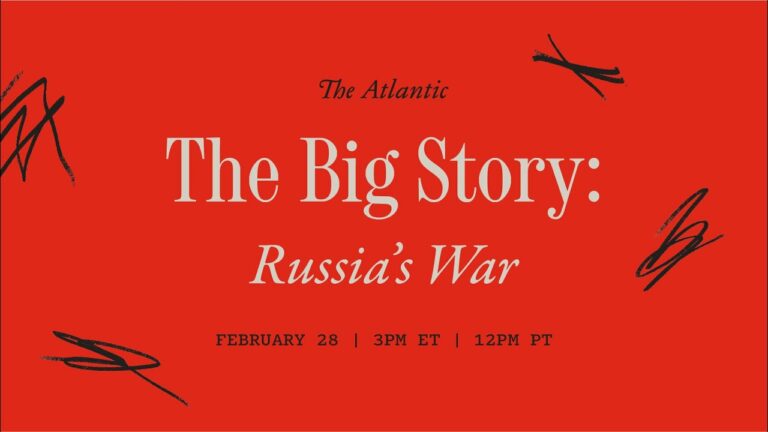
“After years of threats, Vladimir Putin’s Russian forces invaded Ukraine—culminating in the largest attack against one European state by another since the Second World War. What happens now?”
Above, you can watch a wide-ranging conversation hosted by The Atlantic, featuring Anne Applebaum (Pulitzer-prize winning historian), Tom Nichols (U.S. Naval War College professor), and Jeffrey Goldberg (editor-in-chief of The Atlantic) as they examine “the global reaction, the effectiveness of sanctions, and how to address the rise of authoritarianism and ongoing threats to democracy.” It’s also worth reading Applebaum’s latest piece, “The Impossible Suddenly Became Possible.”
|
|
|
|
|
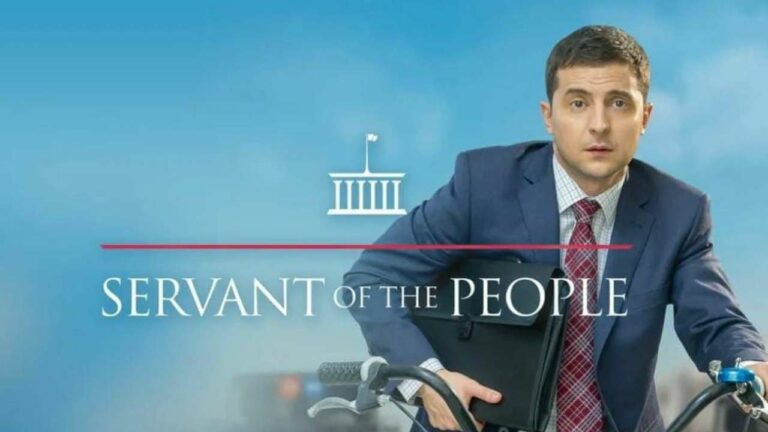
To the great dismay of West Wing fans, Josiah Bartlet never actually became President of the United States of America. At some point, one suspects they’d even have settled for Martin Sheen. Alas, playing the role of the president on television hasn’t yet become a qualifying experience for playing it in real life — or at least not in the U.S. But things work differently in Ukraine, which in 2019 elected to its presidency the star of Servant of the People (Слуга народу), a comedy series about a high-school teacher who becomes president on the back of an anti-establishment rant gone viral. His name, Volodymyr Zelenskyy, is one we’ve all become familiar with indeed since last week, when Russian president Vladimir Putin ordered an invasion of his country.
For as unlikely a head of state as Zelenskyy, a more formidable test could hardly be imagined. The seriousness of the conflict contrasts starkly with the tone of Servant of the People, in light of which Zelenskyy’s ascendance looks less like Martin Sheen becoming President than Veep‘s Julia Louis-Dreyfus becoming Vice President, or Yes […]
|
|
|
|