|
Digest of new articles at openculture.com, your source for the best cultural and educational resources on the web ͏ ͏ ͏ ͏ ͏ ͏ ͏ ͏ ͏ ͏ ͏ ͏ ͏ ͏ ͏ ͏ ͏ ͏ ͏ ͏ ͏ ͏ ͏ ͏ ͏ ͏ ͏ ͏ ͏ ͏ ͏ ͏ ͏ ͏ ͏ ͏ ͏ ͏ ͏ ͏ ͏ ͏ ͏ ͏ ͏ ͏ ͏ ͏ ͏ ͏ ͏ ͏ ͏ ͏ ͏ ͏ ͏ ͏ ͏ ͏ ͏ ͏ ͏ ͏ ͏ ͏ ͏ ͏ ͏ ͏ ͏ ͏ ͏ ͏ ͏ ͏ ͏ ͏ ͏ ͏ ͏ ͏ ͏ ͏ ͏ ͏ ͏
|
|
FYI, from now until Sunday, the art book publisher Taschen is running a summer sale, letting you enjoy up to 75% off of hundreds of display copies of fine arts books–some of which we’ve featured here before. Some titles include:
Enter the sale here. And keep in mind that some of the books sell out […]
|
|
|
|
|
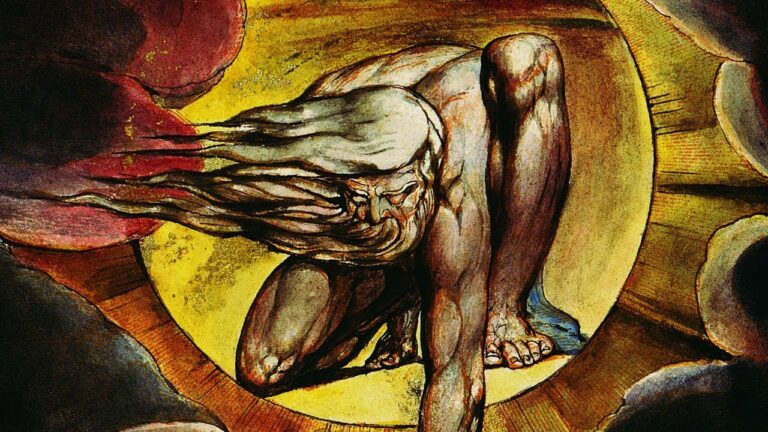
Given his achievements in the realms of both poetry and painting, to say nothing of his compulsions to religious and philosophical inquiry, it’s tempting to call William Blake a “Renaissance man.” But he lived in the England of the mid-eighteenth century to the near mid-nineteenth, making him a Romantic Age man — and in fact, according to the current historical view, one of that era’s defining figures. “Today he is recognized as the most spiritual of artists,” say the narrator of the video introduction above, “and an important poet in English literature.” And whether realized on canvas or in verse, his visions have retained their power over the centuries.
That power, however, went practically unacknowledged in Blake’s lifetime. Most who knew him regarded him as something between an eccentric and a madman, a perception his grandly mystical ideas and vigorous rejection of both institutions and conventions did little to dispel.
Blake didn’t believe that the world is as we see it. Rather, he sought to access much stranger underlying truths using his formidable imagination, exercised both in his art and […]
|
|
|
|
|
Everyone knows the song, a warning from a man or woman returning to the place that will destroy them. Yet they cannot turn back. The tragedy of “House of the Rising Sun” lies in its inevitability. “The narrator seems to have lost his free will,” writes Jim Beviglia, caught, perhaps, in the grip of an unbeatable addiction. As soon as we hear those first few notes, we know the story will end in ruin. But what kind of ruin takes place there? Is the House of the Rising Sun a brothel or a gambling den, or both? Was it a real place in New Orleans? Maybe a pub in England? Or a place in the anonymous songwriter’s imagination?
Eric Burdon and the Animals, who popularized the song worldwide when they recorded and released it in 1964, didn’t know. Even Alan Lomax couldn’t suss out the song’s origin, though he tried, and suspected it may have originated with an English farm worker named Harry Cox who sang a song called “She Was a Rum One” with a similar opening line.
Dave […]
|
|
|
|
|
Back in 2017, Coursera co-founder and former Stanford computer science professor Andrew Ng launched a five-part series of courses on “Deep Learning” on the edtech platform, a series meant to “help you master Deep Learning, apply it effectively, and build a career in AI.” These courses extended his initial Machine Learning course, which has attracted almost 5 million students since 2012, in an effort, he said, to build “a new AI-powered society.”
Ng’s goals are ambitious, to “teach millions of people to use these AI tools so they can go and invent the things that no large company, or company I could build, could do.” His new Machine Learning Specialization at Coursera takes him several steps further in that direction with an “updated version of [his] pioneering Machine Learning course,” notes Coursera’s description, providing “a broad introduction to modern machine learning.” The specialization‘s three courses include 1) Supervised Machine Learning: Regression and Classification, 2) Advanced Learning Algorithms, and 3) Unsupervised Learning, Recommenders, Reinforcement Learning. Collectively, the courses […]
|
|
|
|
|
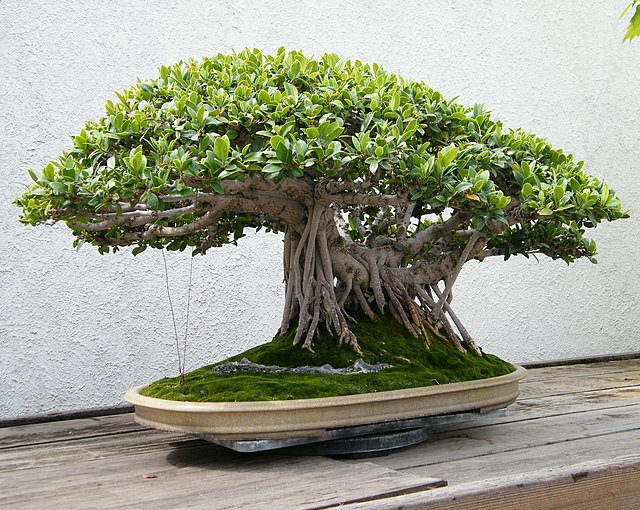
The art of bonsai originated in China. As subsequently refined in Japan, its techniques produce miniature trees that give aesthetic pleasure to people all around Asia and the wider world beyond. This appreciation is reflected in the couple-on-the-street interview footage incorporated into “The Biology Behind Bonsai Trees,” the video above from Youtuber Jonny Lim, better known as The Backpacking Biologist. Not only does Lim gather positive views on bonsai around Los Angeles, he also finds in that same city a bonsai nursery run by Bob Pressler, who has spent more than half a century mastering the art.
Even Pressler admits that he doesn’t fully understand the biology of bonsai. Lim’s search for scientific answers sends him to “something called the apical meristem.” That’s the part of the tree made of “stem cells found at the tips of the shoots and roots.” Stem cells, as you may remember from their long moment in the news a few years ago, have the potential to turn into any kind of cell.
The cells of bonsai are the same size as those of regular trees, […]
|
|
|
|