|
Digest of new articles at openculture.com, your source for the best cultural and educational resources on the web ͏ ͏ ͏ ͏ ͏ ͏ ͏ ͏ ͏ ͏ ͏ ͏ ͏ ͏ ͏ ͏ ͏ ͏ ͏ ͏ ͏ ͏ ͏ ͏ ͏ ͏ ͏ ͏ ͏ ͏ ͏ ͏ ͏ ͏ ͏ ͏ ͏ ͏ ͏ ͏ ͏ ͏ ͏ ͏ ͏ ͏ ͏ ͏ ͏ ͏ ͏ ͏ ͏ ͏ ͏ ͏ ͏ ͏ ͏ ͏ ͏ ͏ ͏ ͏ ͏ ͏ ͏ ͏ ͏ ͏ ͏ ͏ ͏ ͏ ͏ ͏ ͏ ͏ ͏ ͏ ͏ ͏ ͏ ͏ ͏ ͏ ͏
|
|
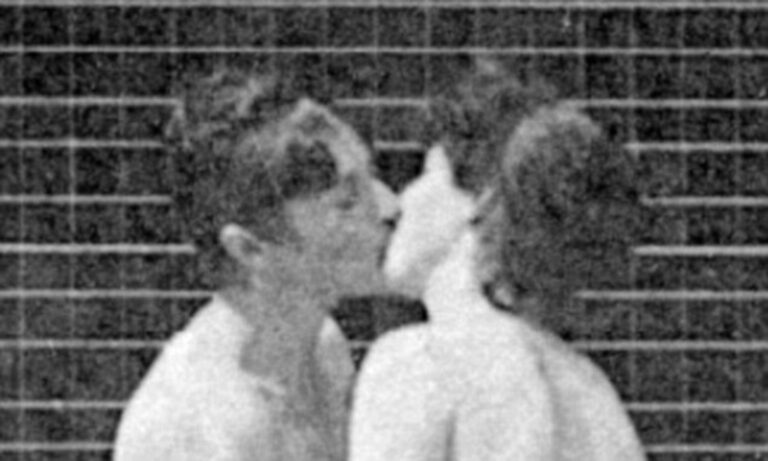
Every moving image we watch today descends, in a sense, from the work of Eadweard Muybridge. In the 1870s he devised a method of photographing the movements of animals, a study he expanded to humans in the 1880s. This constituted a leap toward the development of cinema, though you wouldn’t necessarily know it by looking at the best-known images he produced, such as the set of cards known as The Horse in Motion. You may get a more vivid sense of his photography’s import by seeing it in animated GIF form, as previously featured here on Open Culture, including the very first kiss on film.
Though he often worked with nude models, “Muybridge was not into smut and eroticism,” says Flashbak. “His rapid-fire sequential photographs of two naked women kissing served to aid his studies of human and animal movement. It was in the interests of art and science Muybridge secured the services of two women, invited them to undress and photographed them kissing.” This turns out to be […]
|
|
|
|
|
The nineteen-seventies had its own distinctive aesthetics, questionable though that period’s styles have often looked to subsequent generations. So, in stark, jagged, neon contrast, did the eighties. Those of us who came of age in the nineties have, in recent years, come to appreciate that look and feel of what then surrounded us, which seemed both bland and exaggerated at the time. But around the turn of the millennium, something fundamental seems to have changed. The brief “Y2K” era may now officially be retro, but how different was the style of the two-thousands from that of the subsequent decade, or indeed one after that — the one in which we find ourselves right now?
To put the question more bluntly, why don’t decades feel culturally distinct anymore? “The dimension of the future has disappeared,” British theorist Mark Fisher once said in a lecture. “We’re marooned, we’re trapped in the twentieth century, still.”
To be in the twenty-first century is nothing more than “to have twentieth-century culture on high-definition screens.” Though Fisher died five years ago, his observations have only become […]
|
|
|
|
|
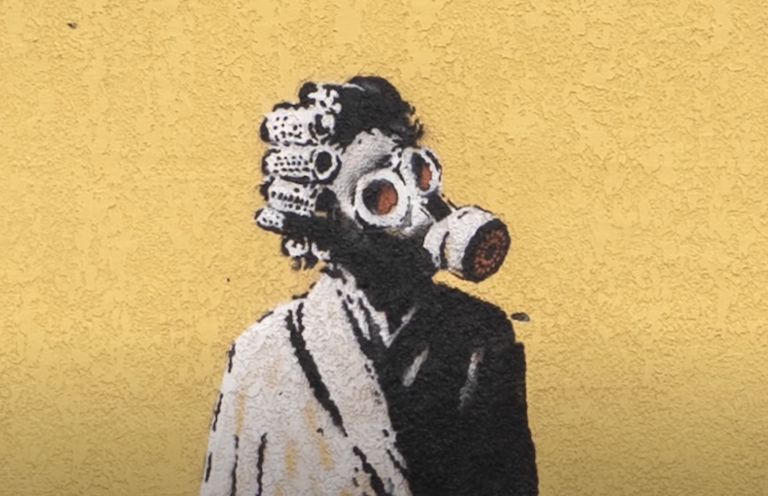
We may not know for sure the identity of Banksy, the English street artist famous for his social-commentary graffiti murals inspired and integrated with their surroundings. But given his apparent interests, we might have suspected him to turn up in Ukraine sooner or later. Recently posted by Banksy himself, the video above shows him at work in the region of Kyiv, the Ukrainian capital, each of which makes a visual comment on this year’s Russian invasion and the fortitude Ukraine’s people have shown against it. “As is typical of Banksy’s work,” writes The Art Newspaper‘s Torey Akers, “the artist’s edits combine a satirist’s edge for winking commentary with a sincere investment in political solidarity.”
Smithsonian.com’s Jacquelyne Germain describes a few of Banksy’s new works in Ukraine, beginning with two in the nearly abandoned town of Borodyanka. “Painted on the side of a crumbling building,” one piece “depicts a gymnast doing a handstand on a pile of rubble.”
In another, “a young boy flips an older man onto his back in […]
|
|
|
|
|
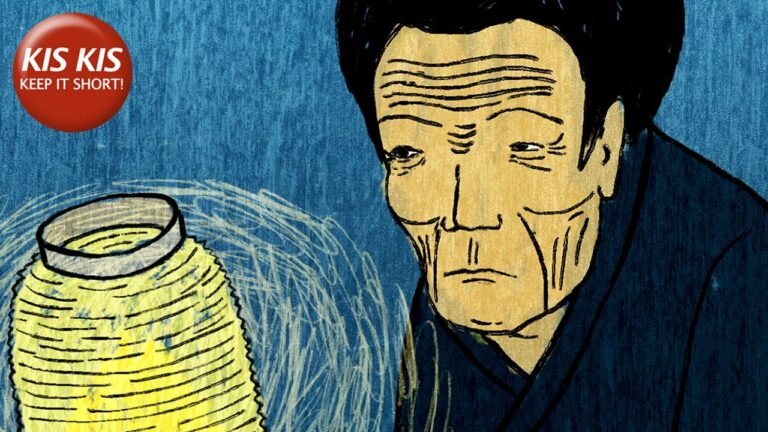
André Hörmann and Anna Samo’s short animation, Obon, opens on a serene scene – a quiet forest, anda red torii gate framing moonlight on the water.
But then we notice that the water is choked with bodies, victims of the bombing of Hiroshima.
Akiko Takakura, whose reminiscences inspired the film, arrived for work at the Hiroshima Bank just minutes before the Enola Gay dropped the atomic bomb “Little Boy” over the city, killing some 80,000 instantly.
Takakura-san, who had been cleaning desks and mooning over a cute co-worker with her fellow junior bank employee Satomi Usami when the bomb hit, was one of the 10 people within a radius of 500 meters from ground zero to have survived .
(Usami-san, who fought her way out of the wreckage with her friend’s assistance, later succumbed to her injuries.)
Animator Samo, whose style harkens to traditional woodcuts, based her depiction of the horrors confronting the two young women when they emerge from the bank on the drawings of survivors:
Without craft or artistry to hide behind, the […]
|
|
|
|