|
Digest of new articles at openculture.com, your source for the best cultural and educational resources on the web ͏ ͏ ͏ ͏ ͏ ͏ ͏ ͏ ͏ ͏ ͏ ͏ ͏ ͏ ͏ ͏ ͏ ͏ ͏ ͏ ͏ ͏ ͏ ͏ ͏ ͏ ͏ ͏ ͏ ͏ ͏ ͏ ͏ ͏ ͏ ͏ ͏ ͏ ͏ ͏ ͏ ͏ ͏ ͏ ͏ ͏ ͏ ͏ ͏ ͏ ͏ ͏ ͏ ͏ ͏ ͏ ͏ ͏ ͏ ͏ ͏ ͏ ͏ ͏ ͏ ͏ ͏ ͏ ͏ ͏ ͏ ͏ ͏ ͏ ͏ ͏ ͏ ͏ ͏ ͏ ͏ ͏ ͏ ͏ ͏ ͏ ͏
|
|
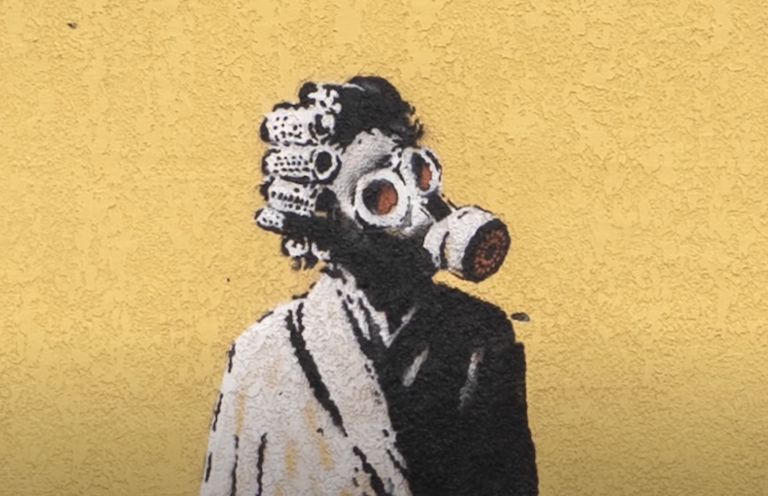
We may not know for sure the identity of Banksy, the English street artist famous for his social-commentary graffiti murals inspired and integrated with their surroundings. But given his apparent interests, we might have suspected him to turn up in Ukraine sooner or later. Recently posted by Banksy himself, the video above shows him at work in the region of Kyiv, the Ukrainian capital, each of which makes a visual comment on this year’s Russian invasion and the fortitude Ukraine’s people have shown against it. “As is typical of Banksy’s work,” writes The Art Newspaper‘s Torey Akers, “the artist’s edits combine a satirist’s edge for winking commentary with a sincere investment in political solidarity.”
Smithsonian.com’s Jacquelyne Germain describes a few of Banksy’s new works in Ukraine, beginning with two in the nearly abandoned town of Borodyanka. “Painted on the side of a crumbling building,” one piece “depicts a gymnast doing a handstand on a pile of rubble.”
In another, “a young boy flips an older man onto his back in […]
|
|
|
|
|
André Hörmann and Anna Samo’s short animation, Obon, opens on a serene scene – a quiet forest, anda red torii gate framing moonlight on the water.
But then we notice that the water is choked with bodies, victims of the bombing of Hiroshima.
Akiko Takakura, whose reminiscences inspired the film, arrived for work at the Hiroshima Bank just minutes before the Enola Gay dropped the atomic bomb “Little Boy” over the city, killing some 80,000 instantly.
Takakura-san, who had been cleaning desks and mooning over a cute co-worker with her fellow junior bank employee Satomi Usami when the bomb hit, was one of the 10 people within a radius of 500 meters from ground zero to have survived .
(Usami-san, who fought her way out of the wreckage with her friend’s assistance, later succumbed to her injuries.)
Animator Samo, whose style harkens to traditional woodcuts, based her depiction of the horrors confronting the two young women when they emerge from the bank on the drawings of survivors:
Without craft or artistry to hide behind, the […]
|
|
|
|
|
The B-52s‘ debut single “Rock Lobster” brought the party and a playful sense of the absurd
to New Wave.
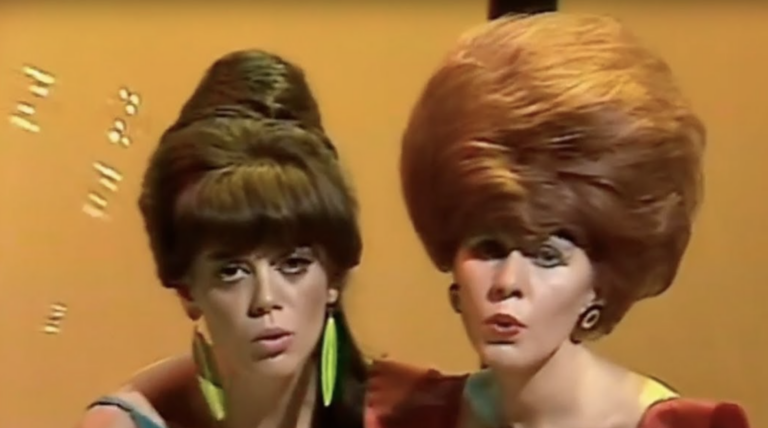
The New York Times nailed the band’s appeal as “70s punks molded not from the syringes and leather of New York City, but from the campy detritus you might have found in the thrift stores and garage sales of their home of Athens, Ga.: bright clothes, toy pianos, old issues of Vogue, tall wigs and discarded vinyl:”
They channeled spy soundtracks, exotica, surf music, long-abandoned dance crazes and garage rock …The B-52s were a sui generis clash of sounds that help bring punk to the suburban kids more likely to watch Saturday Night Live than visit CBGB: Fred Schneider’s sing-shout poetry, Cindy Wilson and Kate Pierson’s alien girl-group harmonies, Ricky Wilson’s tricky guitar riffs and Keith Strickland’s art-funky drums. Even demographically they were nothing like the new world of new wave being built by Talking Heads and Devo: 40 percent female, 60 percent Southern, 80 percent queer, 100 […]
|
|
|
|
|
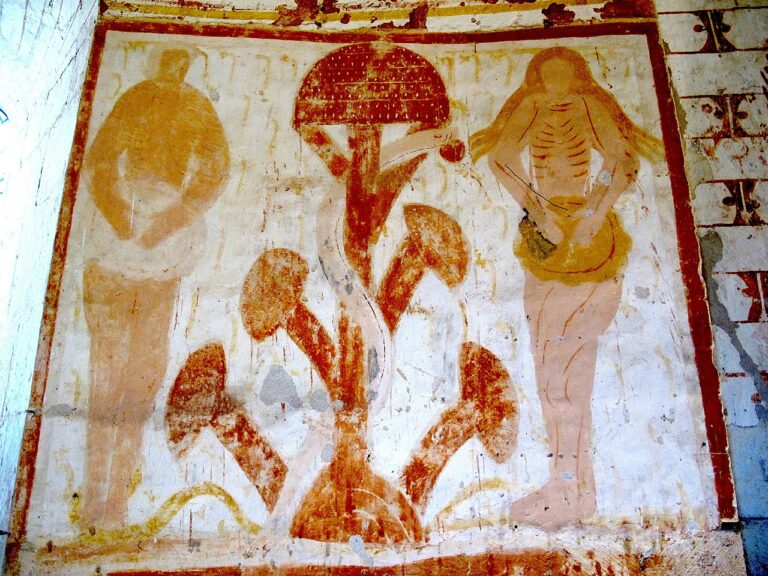
Historical research reveals psychoactive substances to have been in use longer than most of us would assume. But did Adam and Eve do mushrooms in the Garden of Eden? Unsurprisingly, that question is fraught on more than one level. But if you wish to believe that they did, spend some time with the thirteenth-century artwork above, known as the Plaincourault fresco. In it, writes Atlas Obscura’s Emma Betuel, “Adam and Eve stand in the Garden of Eden, both of them faceless.” Between them “stands a large red tree, crowned with a dotted, umbrella-like cap. The tree’s branches end in smaller caps, each with their own pattern of tiny white spots” — just like you’d see on certain species of fungus. “Tourists, scholars, and influencers come to see the tree that, according to some enthusiasts, depicts the hallucinogenic mushroom Amanita muscaria.”
This image, more than any other piece of evidence, supports the theory that “early Christians used hallucinogenic mushrooms.” Supports is probably the wrong word, though there have been true believers since at least […]
|
|
|
|