|
Digest of new articles at openculture.com, your source for the best cultural and educational resources on the web ͏ ͏ ͏ ͏ ͏ ͏ ͏ ͏ ͏ ͏ ͏ ͏ ͏ ͏ ͏ ͏ ͏ ͏ ͏ ͏ ͏ ͏ ͏ ͏ ͏ ͏ ͏ ͏ ͏ ͏ ͏ ͏ ͏ ͏ ͏ ͏ ͏ ͏ ͏ ͏ ͏ ͏ ͏ ͏ ͏ ͏ ͏ ͏ ͏ ͏ ͏ ͏ ͏ ͏ ͏ ͏ ͏ ͏ ͏ ͏ ͏ ͏ ͏ ͏ ͏ ͏ ͏ ͏ ͏ ͏ ͏ ͏ ͏ ͏ ͏ ͏ ͏ ͏ ͏ ͏ ͏ ͏ ͏ ͏ ͏ ͏ ͏
|
|
110 years after its first and last voyage, we remember the RMS Titanic and its touted “unsinkability” as one of the resounding ironies of maritime history. But 1912 also saw the launch of another newly built yet ill-fated ship whose name proved all too apt: Endurance, as it was rechristened by Sir Ernest Shackleton when he purchased it to use on his Imperial Trans-Antarctic Expedition of 1914. In January of the following year, Endurance got stuck in the ice of the Weddell Sea off Antarctica, and over the following ten months that ice slowly crushed and ultimately sank the ship. But her whole crew survived, thanks to Shackleton’s leading them more than 800 miles over the open ocean to safety.
Shackleton and his men have been celebrated for their endurance; as for Endurance herself, it has spent more than a century unseen at the bottom of the ocean — unseen, that is, until now. “A team of adventurers, marine archaeologists and technicians located the wreck at the bottom of the Weddell Sea, east of the Antarctic Peninsula, using undersea drones,” […]
|
|
|
|
|
Creative Commons image via Wikimedia Commons
Artist and music producer Brian Eno wrote one of my very favorite books: A Year with Swollen Appendices, which takes the form of his personal diary of the year 1995 with essayistic chapters (the “swollen appendices”) on topics like “edge culture,” generative music, new ways of , pretension, CD-ROMs (a relevant topic back then), and payment structures for recording artists (a relevant topic again today). It also includes a fair bit of Eno’s correspondence with Stewart Brand, once editor of the Whole Earth Catalog and now president of the Long Now Foundation, “a counterpoint to today’s accelerating culture” meant to “help make long-term thinking more common” and “creatively foster responsibility in the framework of the next 10,000 years.”
It so happens that Eno now sits on the Long Now Foundation’s board and has had a hand in some of its projects. Naturally, he contributed suggested reading material to the foundation’s Manual of Civilization, a collection of books humanity could use to rebuild civilization, should it need […]
|
|
|
|
|
Late in life, Kingsley Amis declared that he would henceforth read only novels opening with the sentence “A shot rang out.” On one level, this would have sounded bizarre coming from one of Britain’s most prominent men of letters. But on another it aligned with his long-demonstrated appreciation of genre fiction, including not just stories of crime but also of high technology and space exploration. His lifelong interest in the latter inspired the Christian Gauss Lectures he delivered at Princeton in 1958, published soon thereafter as New Maps of Hell: A Survey of Science Fiction, a book that sees him trace the history of the genre well back beyond his own boyhood — about eighteen centuries beyond it.
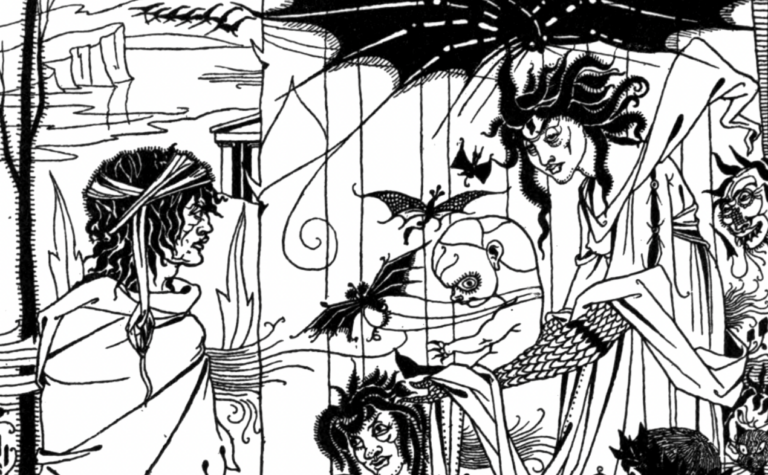
“Histories of science fiction, as opposed to ‘imaginative literature,’ usually begin, not with Plato or The Birds of Aristophanes or the Odyssey, but with a work of the late Greek prose romancer Lucian of Samosata,” Amis writes. He refers to what scholars now know as A True Story (Ἀληθῆ διηγήματα), a […]
|
|
|
|
|
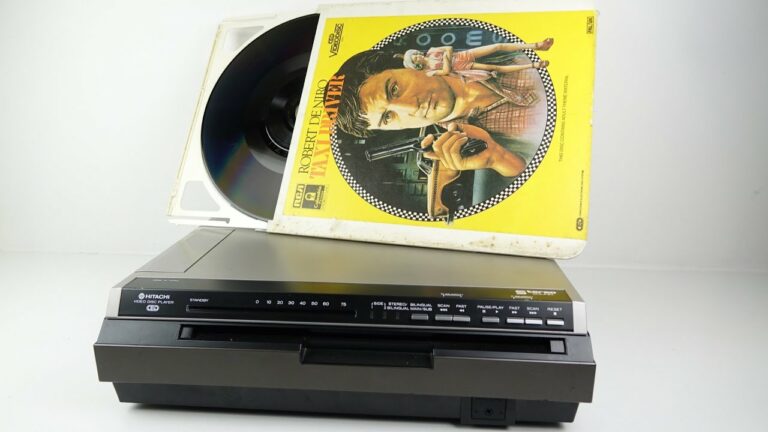
Anyone over 30 remembers a time when it was impossible to imagine home video without physical media. But anyone over 50 remembers a time when it was difficult to choose which kind of media to bet on. Just as the “computer zoo” of the early 1980s forced home-computing enthusiasts to choose between Apple, IBM, Commodore, Texas Instruments, and a host of other brands, each with its own technological specifications, the market for home-video hardware presented several different alternatives. You’ve heard of Sony’s Betamax, for example, which has been a punchline ever since it lost out to JVC’s VHS. But that was just the realm of video tape; have you ever watched a movie on a vinyl record?
Four decades ago, it was difficult for most consumers to imagine home video at all. “Get records that let you have John Travolta dancing on your floor, Gene Hackman driving though your living room, the Godfather staying at your house,” booms the narrator of the television commercial above.
How, you ask? By purchasing a SelectaVision player and compatible video […]
|
|
|
|