|
Digest of new articles at openculture.com, your source for the best cultural and educational resources on the web ͏ ͏ ͏ ͏ ͏ ͏ ͏ ͏ ͏ ͏ ͏ ͏ ͏ ͏ ͏ ͏ ͏ ͏ ͏ ͏ ͏ ͏ ͏ ͏ ͏ ͏ ͏ ͏ ͏ ͏ ͏ ͏ ͏ ͏ ͏ ͏ ͏ ͏ ͏ ͏ ͏ ͏ ͏ ͏ ͏ ͏ ͏ ͏ ͏ ͏ ͏ ͏ ͏ ͏ ͏ ͏ ͏ ͏ ͏ ͏ ͏ ͏ ͏ ͏ ͏ ͏ ͏ ͏ ͏ ͏ ͏ ͏ ͏ ͏ ͏ ͏ ͏ ͏ ͏ ͏ ͏ ͏ ͏ ͏ ͏ ͏ ͏
|
|
The name of Vincent Van Gogh is one of the very best known in the history of painting, and indeed the history of art. But that doesn’t mean the man himself enjoyed any success in his short lifetime. Though he was convinced that he was creating “the art of the future,” and seemingly right to believe it, the buyers of nineteenth-century European art didn’t see it quite that way. Consequently impoverished, Van Gogh had to resort to unconventional strategies to maintain his artistic productivity. Instead of professional models, for example, he hired peasants and people from the streets. And when he couldn’t paint them, he painted himself.
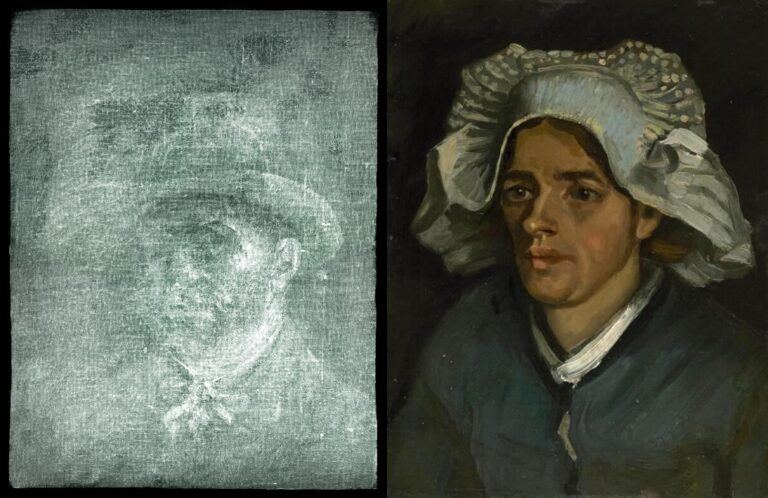
Van Gogh would also economize by re-using his canvases, a practice not unknown in his day. “However, instead of painting over earlier works,” writes Jordan Ogg at National Galleries Scotland, “he would turn the canvas around and work on the reverse.”
It seems he did this with the National Galleries Scotland’s own Head of a Peasant Woman, whose back side turns out […]
|
|
|
|
|
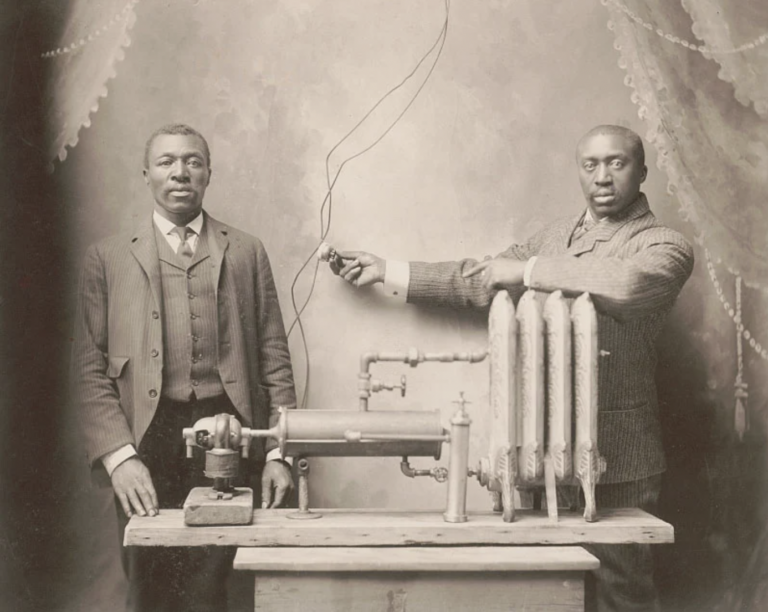
Image of Charles S.L. Baker with his Superheating Demonstration
Black History Month is February in the United States and Canada, and October in the United Kingdom and Europe. It may be July right now, but if you’re interested in a subject, there’s no reason not to get more deeply into it all year round. This is underscored by the opening, this month, of Getty Images’ Black History and Culture Collection. As Petapixel’s Matt Growcoot writes, it contains “30,000 rarely seen images of the Black diaspora in the United Kingdom and the United States that date back to the 19th century,” drawing from the domains of “politics, sport, music, culture, military, and celebrity.”
In the Black History and Culture Collection you’ll find pictures of cultural figures like Duke Ellington and Jay-Z, Jack Johnson, Venus and Serena Williams, Sojourner Truth, and Bernardine Evaristo. These names only hint at the range of the archive, which you can also browse by category […]
|
|
|
|
|
Image via Wikimedia Commons
In his 1935 essay, “The Work of Art in the Age of Mechanical Reproducibility,” influential German-Jewish critic Walter Benjamin introduced the term “aura” to describe an authentic experience of art. Aura relates to the physical proximity between objects and their viewers. Its loss, Benjamin argued, was a distinctly 20th-century phenomenon caused by mass media’s imposition of distance between object and viewer, though it appears to bring art closer through a simulation of intimacy.
The essay makes for potent reading today. Mass media — which for Benjamin meant radio, photography, and film — turns us all into potential actors, critics, experts, he wrote, and takes art out of the realm of the sacred and into the realm of the spectacle. Yet it retains the pretense of ritual. We make offerings to cults of personality, expanded in our time to include influencers and revered and reviled billionaires and political figures who joust in the headlines like professional wrestlers, led around by the chief of all heels. As Benjamin writes:
[…]
|
|
|
|
|
The idea that the human species can be neatly bracketed into racial groups based on superficial characteristics like skin, hair, and eye color only developed in the 18th century, and mainly took root as a pseudo-scientific justification for slavery and colonialism. Central to that idea was the Classical Ideal of Beauty, a standard supposedly set by Greek and Roman statuary from antiquity. As beliefs in regional supremacy in Western Europe transformed in the modern era into “White” supremacy, the stark whiteness of antique statuary became a specific point of pride. But ancient people did not think in terms of race, and ancient sculptors never intended their creations to stand around in public without color. “For the ancient Greeks and Romans,” Elaine Velie writes at Hyperallergic, “white marble was not considered the final product, but rather a blank canvas.”
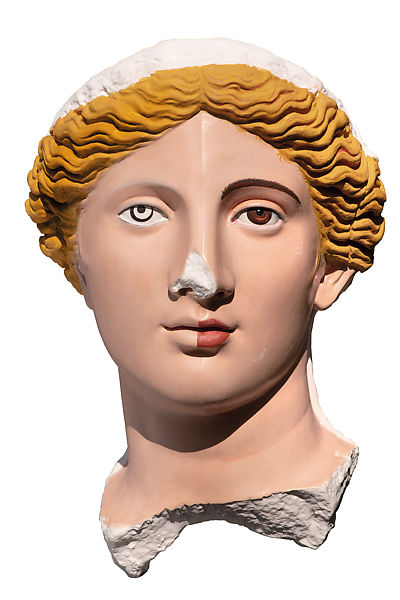
As Metropolitan Museum of Art curator Seán Hemingway says, “White supremacists have latched onto this idea of white sculpture — it’s not true but […]
|
|
|
|
|
Many trends in architecture and home design have come and gone over the past thirty years, and some have not spread as far as they might have. The green architectural movement in much of Asia, for example, in which skyscrapers practically drip with growing things, hasn’t caught on in congested cities in the West, and perhaps it never will. Granted, few urban areas have such concerns about air quality as cities in China where green buildings have taken hold recently — where 2/3rds of the population is slated to live in cities by 2050; and where a massive population boom in the last twenty years has required four to five million new buildings. But even if we don’t live in a burgeoning city with an urgent mandate to reduce carbon emissions for basic public health, it’s time for brand-new building standards everywhere.
The creators of the 1989 BBC episode of Tomorrow’s World had a sense of environmental urgency, though it wasn’t first on their list of home improvements for the buildings of 2020. After casually wondering whether the homes of […]
|
|
|
|