An Introduction to Postmodernist Thinkers & Themes: Watch Primers on Foucault, Nietzsche, Derrida, Deleuze & More

For decades we’ve been hearing about the problem of Postmodernism. I suppose I get, in a vague sort of way, what people mean by this: moral relativism, mistrust of objectivity and scientific, religious, and other authorities, “incredulity toward metanarratives,” as Jean-Francois Lyotard defined the term in The Postmodern Condition in 1979.

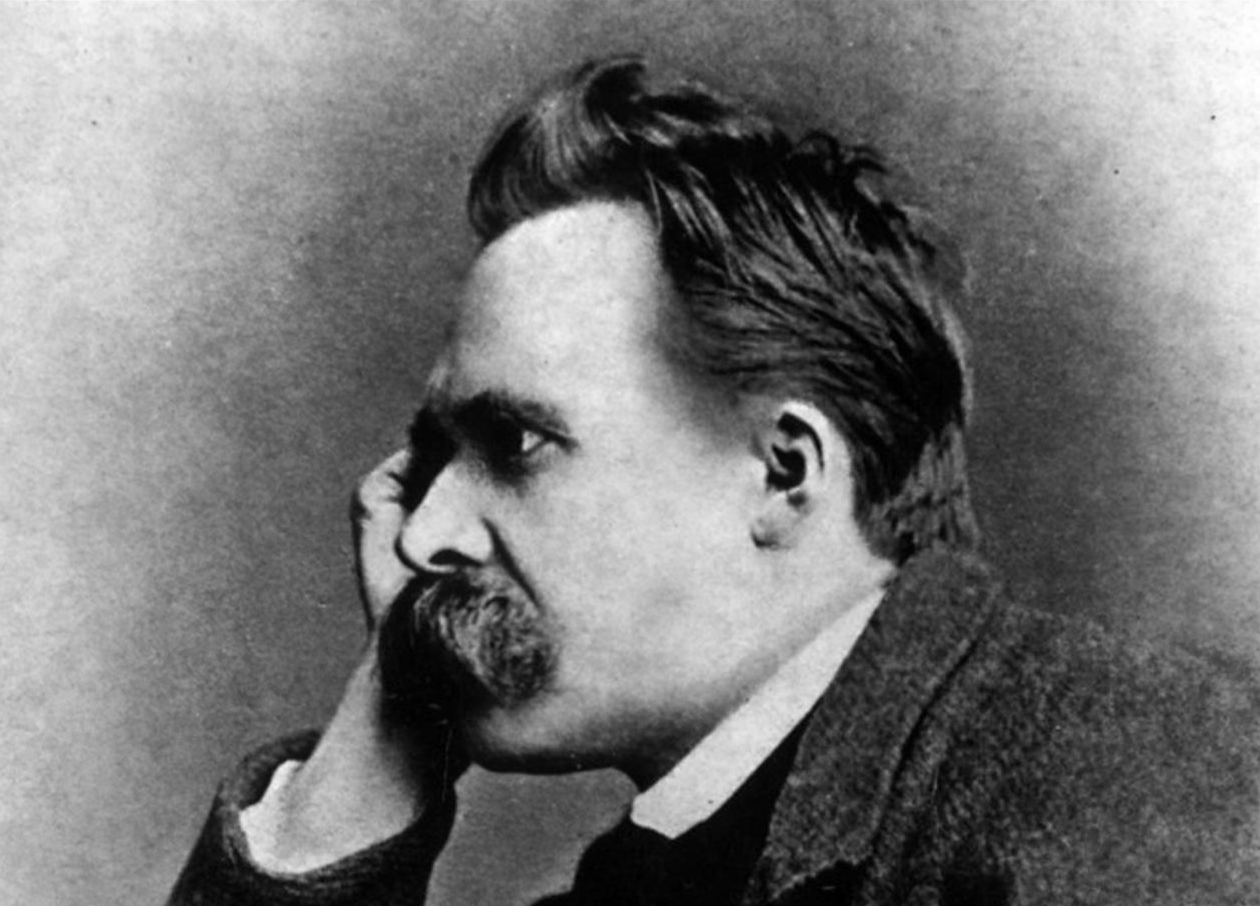
Don’t we find much of this radical skepticism in the work of David Hume? The Cynics? Or Nietzsche (a Postmodern ancestor, but also claimed by Pragmatist and Existentialist thinkers)? A problem with blanket critiques of Postmodernism is that the word has never represented a cohesive school of thought (nor, for that matter, has Existentialism).

The term derives from an architectural movement of the 1960s that is, itself, impossible to clearly define since it intentionally grafts together approaches and traditions in experiments that celebrate kitschy excesses of style and that defy narrative coherence. Postmodern architecture gave us modern malls and multiplexes, aiding and abetting late capitalist sprawl. (But this is another story….)


Lyotard certainly fit the stereotype of the Postmodernist philosopher, with his lifetime of socialist activism and theoretical hybrids of Marx and Freud. He gets little credit, though he put the term in circulation in philosophy. Instead, Michel Foucault is often cited as a significant influence, though he rejected the categorization and thought of himself as a modernist.

Many a survey of Postmodern thought, such as this YouTube video series by Then & Now, begins with Foucault. The series covers other thinkers we don't always see put in this box, like sociologist Pierre Bourdieu and 19th century Russian novelist Fyodor Dostoevsky. Nietzsche appears, of course, in two parts, as well as Eve Sedgwick, Jacques Derrida and Gilles Deleuze and Felix Guattari.

But in many ways, Foucault may be the best place to begin. As professor of philosophy Scott Moore writes:

If postmodernism is understood as a rejection of… an Enlightenment point of view... one that is characterized by a detached, autonomous, objective rationality… then Foucault is surely a postmodernist. Turning Bacon on his head, Foucault affirmed that it is not the case that knowledge is power, but power is knowledge. Meaning, those people who have power (social, political, etc.) always decide what will or will not be counted as "knowledge."

Unlike, however, many later cultural theorists who inherited the cumbersome label, Foucault looked not to the present or the future in his work, but to the past, re-interpreting primary sources from ancient Rome to the post-WWI global economic order, through several different disciplinary lenses.

Then & Now creator Lewis Waller takes a postmodern approach to this series himself. In the video “Detachment, Objectivity, Imagination: A Critique,” he makes a case that Romantic historians like Michelet, Thierry, and Carlyle had a “better understanding of the reality of the historian’s craft than the scientifically minded did.” It’s a contrarian argument that begins with Sir Walter Scott and that may unsettle your preconceptions of what the catch-all term Postmodernism might include.

See more videos from the series above and watch all of them on YouTube. You may or may not feel like you have a better sense of what Postmodernism means in general. If we take it as shorthand for the loss of unchallenged heteropatriarchal power, then it is, I suppose, a problem for many people. If we take it to mean a mode of thought that “problematizes” seemingly simple concepts we mistake for the very structure of reality, then it “is also an attitude," writes Moore, "and it has been most artfully practiced by Socrates, St. Augustine, Kierkegaard, Wittgenstein, and a host of others."

Maybe Postmodernism has appeared in every period of philosophical and literary history. Only it hasn’t always been so… well… so overwhelmingly French, which could have had more than a little to do with its negative reputation in Anglophone countries. Put your metanarratives aside and learn more here.

Related Content:

What the Theory?: Watch Short Introductions to Postmodernism, Semiotics, Phenomenology, Marxist Literary Criticism and More

David Foster Wallace on What’s Wrong with Postmodernism: A Video Essay

Hear Hours of Lectures by Michel Foucault: Recorded in English & French Between 1961 and 1983

Josh Jones is a writer and musician based in Durham, NC. Follow him at @jdmagness
Orson Welles Narrates Animations of Plato’s Cave and Kafka’s “Before the Law,” Two Parables of the Human Condition

You're held captive in an enclosed space, only able faintly to perceive the outside world. Or you're kept outside, unable to cross the threshold of a space you feel a desperate need to enter. If both of these scenarios sound like dreams, they must do so because they tap into the anxieties and suspicions in the depths of our shared subconscious. As such, they've also proven reliable material for storytellers since at least the fourth century B.C., when Plato came up with his allegory of the cave. You know that story nearly as surely as you know the ancient Greek philosopher's name: a group of human beings live, and have always lived, deep in a cave. Chained up to face a wall, they have only ever seen the images of shadow puppets thrown by firelight onto the wall before them.

To these isolated beings, "the truth would be literally nothing but the shadows of the images." So Orson Welles tells it in this 1973 short film by animator Dick Oden. In his timelessly resonant voice that complements the production's hauntingly retro aesthetic, Wells then speaks of what would happen if a cave-dweller were to be unshackled.


"He would be much too dazzled to see distinctly those things whose shadows he had seen before," but as he approaches reality, "he has a clearer vision." Still, "will he not be perplexed? Will he not think that the shadows which he formerly saw are truer than the objects which are now shown to him?" And if brought out of the cave to experience reality in full, would he not pity his old cavemates? "Would he not say, with Homer, better to be the poor servant of a poor master and to endure anything rather than think as they do and live after their manner?"

Plato's cave wasn't the first parable of the human condition Welles narrated. Just over a decade earlier, he engaged pinscreen animator Alexandre Alexeieff (he of Night on Bald Mountain and and "The Nose," previously featured here on Open Culture) to illustrate his reading of Franz Kafka's story "Before the Law." The law, in Kafka's telling, is a building, and before that building stands a guard. "A man comes from the country, begging admittance to the law," says Welles. "But the guard cannot admit him. May he hope to enter at a later time? That is possible, said the guard." Yet somehow that time never comes, and he spends the rest of his life awaiting admission to the law. "Nobody else but you could ever have obtained admittance," the guard admits to the man, not long before the man expires of old age. "This door was intended only for you! And now, I'm going to close it."

"Before the Law" describes a grimly absurd situation, as does Welles' The Trial, the film to which it serves as an introduction. Adapted from another work of Kafka's, specifically his best-known novel, it also concerns itself with the legal side of human affairs, at least on the surface. But when it becomes clear that the crime with which its bureaucrat protagonist Josef K. has been charged will never be specified, the story plunges into an altogether more troubling realm. We've all, at one time or another, felt to some degree like Joseph K., persecuted by an ultimately incomprehensible system, legal, social, or otherwise. And can we help but feel, especially in our highly mediated 21st century, like Plato's immobilized human, raised in darkness and made to build a worldview on illusions? As for how to escape the cave — or indeed to enter the law — it falls to each of us individually to figure out.

Related Content:

Hear John Malkovich Read Plato’s “Allegory of the Cave,” Set to Music Mixed by Ric Ocasek, Yoko Ono & Sean Lennon, OMD & More

Plato’s Cave Allegory Animated Monty Python-Style

Plato’s Cave Allegory Brought to Life with Claymation

The Philosophy of The Matrix: From Plato and Descartes, to Eastern Philosophy

Franz Kafka’s Existential Parable “Before the Law” Gets Brought to Life in a Striking, Modern Animation

Kafka’s Nightmare Tale, "A Country Doctor," Told in Award-Winning Japanese Animation

Based in Seoul, Colin Marshall writes and broadcasts on cities, language, and culture. His projects include the book The Stateless City: a Walk through 21st-Century Los Angeles and the video series The City in Cinema. Follow him on Twitter at @colinmarshall, on Facebook, or on Instagram.

An Introduction to Jean Baudrillard, Who Predicted the Simulation-Like Reality in Which We Live

Each and every morning, many of us wake up and immediately check on what's happening in the world. Sometimes these events stir emotions within us, and occasionally we act on those emotions, which raise in us a desire to affect the world ourselves. But does this entire ritual involve anything real? While performing it we don't experience the world, but only media; when we respond, we respond not with action in the world, but only with action in media. We have directly interacted, to put it bluntly, with nothing more than pixels on a screen. This condition has pitilessly intensified in our era of smartphones and social media, and though philosopher and sociologist Jean Baudrillard died three months before the introduction of the iPhone, nothing about it would surprise him.

Assembled in an ominous, vintage stock footage-heavy style reminiscent of Adam Curtis (he of The Century of the Self and HyperNormalisation), the half-hour Then & Now video essay above provides an introduction to Baudrillard's ideas, especially those that predicted the world in which we live today, a "hyperreal postmodern" one filled with signs referencing little that actually exists. "In the run-up to the 2008 crash," the narrator reminds us, "the real value of mortgages was hidden under layers of sign value, under deceitful insurance policies and financial ratings based on nothing." On the news, "it doesn't matter what's real. What matters is how it's said, who says it — the perspective, whether it will be provocative enough, whether it will entertain." We live, in sum, in a "postmodern carnival" where  "things like reality TV, Disneyland, and Facebook define our lives."


Baudrillard saw this happening nearly 40 years ago: "People no longer look at each other, but there are institutes for that," he writes in Simulacra and Simulation. "They no longer touch each other, but there is contactotherapy. They no longer walk, but they go jogging, etc. Everywhere one recycles lost faculties, or lost bodies, or lost sociality, or the lost taste for food." He credited Marshall McLuhan, fellow gnomic observer of late 20th-century society, with "one of the defining axioms of postmodern life." When McLuhan declared that "the medium is the message," says the narrator, he saw that "what mattered in this new world was not what was real and material, but what was represented as signs: in short, television, and now the computer screen, has come to dominate social life. Sign production has replaced material production as the organizing principle of political economy."

What would Baudrillard make of a production like HBO's Chernobyl, whose painstaking reconstruction of historical events we previously featured here on Open Culture? What made that show a spectacle, says the narrator, was that "the depiction was more real than the event itself: costumes, props, special effects, and the perfect angle, the Geiger counter mapped onto the score already overdetermined by signs." And so, "in twenty years' time we think of Chernobyl, will we think of the real event, or images conjured by TV studios?" But we need hardly look that far into the future. The very things our screens insist to us are happening in the world right now, far beyond the walls of the homes fewer and fewer of us leave these days — what do we truly know of their existence apart from this digital blizzard of signs? If Baudrillard were alive to hear our speculation about the possibility that we live in another being's simulation, he'd surely point out that we've already created the simulation ourselves.

Related Content:

French Philosopher Jean Baudrillard Reads His Poetry, Backed By All-Star Arts Band (1996)

Hear the Writing of French Theorists Jacques Derrida, Jean Baudrillard & Roland Barthes Sung by Poet Kenneth Goldsmith

The Simulation Theory Explained In Three Animated Videos

McLuhan Said “The Medium Is The Message”; Two Pieces Of Media Decode the Famous Phrase

An Animated Introduction to Roland Barthes’s Mythologies and How He Used Semiotics to Decode Popular Culture

Is Modern Society Stealing What Makes Us Human?: A Glimpse Into Nietzsche’s Thus Spoke Zarathustra by The Partially Examined Life

Based in Seoul, Colin Marshall writes and broadcasts on cities, language, and culture. His projects include the book The Stateless City: a Walk through 21st-Century Los Angeles and the video series The City in Cinema. Follow him on Twitter at @colinmarshall, on Facebook, or on Instagram.

John Trumbull’s Famous 1818 Painting Declaration of Independence Virtually Defaced to Show Which Founding Fathers Owned Slaves

Statues of slaveholders and their defenders are falling all over the U.S., and a lot of people are distraught. What’s next? Mount Rushmore? Well… maybe no one’s likely to blow it up, but some honesty about the “extremely racist” history of Mount Rushmore might make one think twice about using it as a limit case.

On the other hand, a sandblasting of the enormous Klan monument in Stone Mountain, Georgia—created earlier by Rushmore sculptor Gutzon Borglum—seems long overdue.

We are learning a lot about the history of these monuments and the people they represent, more than any of us Americans learned in our early education. But we still hear the usual defense that slaveholders were only men of their time—many were good, pious, and gentle and knew no better (or they agonized over the question but, you know, everyone was doing it….) People subjected to the violence and horror of slavery mostly tended to disagree.


Before the Haitian Revolution terrified the slaveholding South, many prominent slaveholders, Jefferson and Washington included, expressed intellectual and moral disgust with slavery. They could not consider abolition, however (though Washington freed his slaves in his will). There was too much profit in the enterprise. As Jefferson himself wrote, “It [would] never do to destroy the goose.”

What we see when we look at the Revolutionary period is the fatal irony of a republic based on ideals of liberty, founded mostly by men who kept millions of people enslaved. The point is made vividly above in a virtual defacement of Declaration of Independence, John Trumbull’s famous 1818 painting which hangs in the U.S. Capitol rotunda. All of the founders’ faces blotted out by red dots were slaveowners. Only the few in yellow in the corresponding image freed the the people they enslaved.

These images were not made in this current summer of national uprisings but in August of 2019, “a bloody month that saw 53 people die in mass shootings in the US,” notes Hyperallergic. Their creator, Arlen Parsa sought to make a different point about the Second Amendment, but wrote forcefully about the founders' enslaving of others. “There were no gentle slaveholders,” writes Parsa. “Countless children were born into slavery and died after a relatively short lifespan never knowing freedom for even a minute.” Many of those children were fathered by their owners.

Some founding fathers paid lip service to the idea of slavery as a blight because it was obvious that kidnapping and enslaving people contradicted democratic principles. Slavery happened to be the primary metaphor used by Enlightenment philosophers and their colonial readers to characterize the tyrannical monarchism they opposed. The philosopher John Locke wrote slavery into the constitution of the Carolina colony, and profited from it through owning stock in the Royal African Company. Yet by his later, hugely influential Two Treatises, he had come to see hereditary slavery as “so vile and miserable an estate of man… that ‘tis hardly to be conceived” that anyone could uphold it.

There were, of course, slaveholding founders who resisted such talk and felt no compunction about how they made their money. But lofty principles or no, the U.S. founders were often on the defensive against non-slaveholding colleagues, who scolded and attacked them, sometimes with frank references to the rapes of enslaved women and girls. These criticisms were so common that Thomas Paine could write the case for slavery had been “sufficiently disproved” when he published a 1775 tract denouncing it and calling for its immediate end:

The managers of [the slave trade] testify that many of these African nations inhabit fertile countries, are industrious farmers, enjoy plenty and lived quietly, averse to war, before the Europeans debauched them with liquors… By such wicked and inhuman ways, the English are said to enslave towards 100,000 yearly, of which 30,000 are supposed to die by barbarous treatment in the first year…

So monstrous is the making and keeping them slaves at all… and the many evils attending the practice, [such] as selling husbands away from wives, children from parents and from each other, in violation of sacred and natural ties; and opening the way for adulteries, incests and many shocking consequences, for all of which the guilty masters must answer to the final judge…

The chief design of this paper is not to disprove [slavery], which many have sufficiently done, but to entreat Americans to consider:

With that consistency… they complain so loudly of attempts to enslave them, while they hold so many hundred thousands in slavery and annually enslave many thousands more, without any pretence of authority or claim upon them.

Jefferson squared his theory of liberty with his practice of slavery by picking up the fad of scientific racism sweeping Europe at the time, in which philosophers who profited, or whose patrons and nations profited, from the slave trade began to coincidentally discover evidence that enslaving Africans was only natural. We should know by now what happens when racism guides science....

Maybe turning those who willfully perpetuated the country’s most intractable, damning crime against humanity into civic saints no longer serves the U.S., if it ever did. Maybe elevating the founders to the status of religious figures has produced a widespread historical ignorance and a very specific kind of nationalism that are no longer tenable. Younger and future generations will settle these questions their own way, as they sort through the mess their elders have left them. As Locke also argued, in a paraphrase from American History professor Holly Brewer, “people do not have to obey a government that no longer protects them, and the consent of an ancestor does not bind the descendants: each generation must consent for itself.”

via Hyperallergic

Related Content:

What the Textbooks Don’t Tell Us About The Atlantic Slave Trade: An Animated Video Fills In Historical Gaps

The Names of 1.8 Million Emancipated Slaves Are Now Searchable in the World’s Largest Genealogical Database, Helping African Americans Find Lost Ancestors

The Atlantic Slave Trade Visualized in Two Minutes: 10 Million Lives, 20,000 Voyages, Over 315 Years

The “Slave Bible” Removed Key Biblical Passages In Order to Legitimize Slavery & Discourage a Slave Rebellion (1807)

Josh Jones is a writer and musician based in Durham, NC. Follow him at @jdmagness

William Blake Illustrates Mary Wollstonecraft’s Work of Children’s Literature, Original Stories from Real Life (1791)

Most of us know Mary Wollstonecraft as the author of the 1792 pamphlet A Vindication of the Rights of Women, and as the mother of Frankenstein author Mary Shelley. Fewer of us may know that two years before she published her foundational feminist text, she wrote A Vindication of the Rights of Men, a pro-French Revolution, anti-monarchy argument that first made her famous as a writer and philosopher. Perhaps far fewer know that Wollstonecraft began her career as a published author in 1787 with Thoughts on the Education of Daughters (though she had yet to raise children herself), a conduct manual for proper behavior.

A hugely popular genre during the first Industrial Revolution, conduct manuals bore a miscellaneous character, inculcating a battery of middle-class rules, beliefs, and affectations through a mix of pedagogy, allegory, domestic advice, and devotional writing. Young women were instructed in the proper way to dress, eat, pray, laugh, love, etc., etc.


It may seem from our perspective that a radical firebrand like Wollstonecraft would shun this sort of thing, but her moralizing was typical of middle-class women of her time, even of pioneering writers who supported revolutions and women’s political and social equality.

Wollstonecraft’s assumptions about class and character come into relief when placed against the views of another famous contemporary, far more radical figure, William Blake, who was then a struggling, mostly obscure poet, printer, and illustrator in London. In 1791, he received a commission to illustrate a second edition of Wollstonecraft’s third book, a follow-up of sorts to her Thoughts on the Education of Daughters. The 1788 work—Original Stories from Real Life; with Conversations, Calculated to Regulate the Affections, and Form the Mind to Truth and Goodness—is a more focused book, using a series of vignettes woven into a frame story.

The two children in the narrative, 14-year-old Mary and 12-year-old Caroline, receive lessons from their relative Mrs. Mason, who instructs them on a different virtue and moral failing in each chapter by using stories and examples from nature. The two pupils “are motherless,” notes the British Library, “and lack the good habits they should have absorbed by example. Mrs. Mason intends to rectify this by being with them constantly and answering all their questions.” She is an all-knowing governess who explains the world away with a philosophy that might have sounded particularly harsh to Blake’s ears.

For example, in the chapter on physical pain, Mary is stung by several wasps. Afterward, her guardian begins to lecture her “with more than usual gravity.”

I am sorry to see a girl of your age weep on account of bodily pain; it is a proof of a weak mind—a proof that you cannot employ yourself about things of consequence. How often must I tell you that the Most High is educating us for eternity?... Children early feel bodily pain, to habituate them to bear the conflicts of the soul, when they become reasonable creatures. This is say, is the first trial, and I like to see that proper pride which strives to conceal its sufferings…. The Almighty, who never afflicts but to produce some good end, first sends diseases to children to teach them patience and fortitude; and when by degrees they have learned to bear them, they have acquired some virtue.

Blake likely found this line of reasoning off-putting, at the least. His own poems “were not children’s literature per se,” writes Stephanie Metz at the University of Tennessee’s Romantic Politics project, “yet their simplistic language and even some of their content responds to the characteristics of didactic fiction and children’s poetry.” Blake wrote expressly to protest the ideology found in conduct manuals like Wollstonecraft’s: “He calls attention to society’s abuse of children in a number of different ways, showing how society corrupts their inherent innocence and imagination while also failing to care for their physical and emotional needs.”

For Blake, children’s big emotions and active imaginations made them superior to adults. “Several of his poems,” Metz writes, “show the ways in which children’s innate nature has already been tainted by their parents and other societal forms of authority, such as the church.” Given his attitudes, we can see why “modern interpreters of the illustrations for Original Stories have detected a pictorial critique” in Blake’s rendering of Wollstonecraft’s text, as the William Blake Archive points out. Blake “appears to have found her morality too calculating, rationalistic, and rigid. He represents Wollstonecraft’s spokesperson, Mrs. Mason, as a domineering presence.”

Nonetheless, as always, Blake’s work is more than competent. The style for which we know him best emerges in some of the prints. We see it, for example, in the chiseled face, bulging eyes, and well-muscled arms of the standing figure above. For the most part, however, he keeps in check his exuberant desire to celebrate the human body. “Only a year earlier,” writes Brain Pickings, “Blake had finished printing and illuminating the first few copies of his now-legendary Songs of Innocence and Experience.” Two of the songs “were inspired by Wollstonecraft’s translation of C.G. Salzmann’s Elements of Morality, for which Blake had done several engravings.”

If he had misgivings about illustrating Wollstonecraft’s Original Stories, we must infer them from his illustrations. But placing Blake’s most famous book of poetry next to Wollstonecraft’s pious, didactic works of moral instruction produces some jarring contrasts, showing how two towering literary figures from the time (though not both at the time) conceived of childhood, social class, education, and morality in vastly different ways. Learn more about Blake's illustrations at Brain Pickings, read an edition of Wollstonecraft's Original Stories here, and see all of Blake's illustrations at the William Blake Archive.

via Brain Pickings

Related Content:

Enter an Archive of William Blake’s Fantastical “Illuminated Books”: The Images Are Sublime, and in High Resolution

William Blake’s Masterpiece Illustrations of the Book of Job (1793-1827)

William Blake’s Hallucinatory Illustrations of John Milton’s Paradise Lost

Josh Jones is a writer and musician based in Durham, NC. Follow him at @jdmagness

Take Hannah Arendt’s Final Exam for Her 1961 Course “On Revolution”

After her analysis of totalitarianism in Nazi Germany and Stalin’s Soviet Union, Hannah Arendt turned her scholarly attention to the subject of revolution—namely, to the French and American Revolutions. However, the first chapter of her 1963 book On Revolution opens with a paraphrase of Lenin about her own time: “Wars and revolutions… have thus far determined the physiognomy of the twentieth century.”

Arendt wrote the book on the threshold of many wars and revolutions yet to come, but she was not particularly sympathetic to the leftist turn of the 1960s. On Revolution favors the American Colonists over the French Sans Culottes and Jacobins. The book is in part an intellectual contribution to anti-Communism, one of many ideologies, Arendt writes, that “have lost contact with the major realities of our world”?


What are those realities? “War and revolution,” she argues, “have outlived all their ideological justifications… no cause is left but the most ancient of all, the one, in fact, that from the beginning of our history has determined the very existence of politics, the cause of freedom versus tyranny.” This sounds like pamphleteering, but Arendt did not use such abstractions lightly. As one of the foremost scholars of ancient Greek and modern European philosophy, she was eminently qualified to define her terms.

Her students, on the other hand, might have struggled with such weighty concepts as “revolution,” “rights, “freedom,” etc. which can so easily become meaningless slogans without substantive elaboration and "contact with reality." Arendt was a thorough teacher. Once her students left her class, they surely had a better grasp on the intellectual history of liberal democracy. Such understanding constituted Arendt’s life's work, and it was through teaching that she developed and refined the ideas that became On Revolution.

Arendt began research for the book at Princeton, where she was appointed the first woman to serve as a full professor in 1953. Throughout the 50s and early 60s, she taught at Berkeley, Columbia, Cornell, the University of Chicago, and Northwestern before joining the faculty of the New School. In 1961, she taught a Northwestern seminar called “On Revolution.” Just above, you can see the course’s final exam. (View it in a larger format here.) If you’re wondering why she gave the test in March, perhaps it’s because the following month, she boarded a plane to cover the Adolf Eichmann trial for The New Yorker.

What did Arendt want to make sure that her students understood before she left? See a transcription of the exam questions below. We see the two poles of her later argument coming into focus, the French and the American Revolutionary ideas. The latter example has been seen by many critical philosophers as hardly revolutionary at all, given that it was primarily waged in the interests of merchants and slave-owning plantation owners. It was, as one historian puts it, “a revolution in favor of government.”

This criticism is likely the basis of Arendt’s final question on the test. But in her erudite argument, the American Revolution is foundational to use of “revolution” as a political term of art. As Arendt writes in a late 60s lecture, re-discovered in 2017, “prior to the two great revolutions at the end of the 18th century and the specific sense it then acquired, the word ‘revolution’ was hardly prominent in the vocabulary of political thought or practice.” Rather, it mainly had astrological significance.

Arendt saw all subsequent world revolutions as partaking of the twinned logics of the 18th century. “Its political usage was metaphorical,” she says, “describing a movement back into some pre-established point, and hence a motion, a swinging back to a pre-ordained order.” Generally, that order has been pre-ordained by the revolutionaries themselves. See if your understanding of revolutionary history is up to Arendt’s pedagogical standards, below, and get a more comprehensive history of revolution from the readings on recent course syllabuses here, here, and here.


Answer at least five of the following questions:

  1. What is the origin of the word “revolution”?

How was the word originally used in political language?

  1. Identify the following dates:

The 14th of July

The 9th of Thermidore

The 18th of Brumaire

  1. Who wrote The Rights of Man?

Who wrote Reflections on the French Revolution?

What was the connection between the two books?

  1. Who was Crevecoeur? Give title of his book.
  2. Enumerate some authors and books that played a role in the revolutions?
  3. What is the difference between absolutism and a “limited monarchy”?
  4. Who is the author of The Spirit of the Laws?
  5. Which author had the greatest influence on the men of the French Revolution?
  6. What is meant by the phrase “state of nature”?
  7. The following words are of Greek origin; give their English equivalent: monarchy—oligarchy—aristocracy—democracy.

Write a short essay of no more than four pages on one of the following topics:

  1. It is a main thesis of R.R. Palmer’s The Age of the Democratic Revolution that “the American Revolution was an event within an Atlantic civilization as a whole.” Explain and discuss.

  2. Clinton Rossiter asserts that “America’s debt to the idea of social contract is so huge as to defy measurement.” Explain and discuss.

  3. Differences and similarities between the American and the French Revolution.

  4. Connect on possible meanings of the phrase: Pursuit of happiness.

  5. Describe Melville’s attitude to the French Revolution in Billy Budd.

  6. The American Revolution—was there any?

via Samantha Hill

Related Content: 

Hannah Arendt Explains How Propaganda Uses Lies to Erode All Truth & Morality: Insights from The Origins of Totalitarianism

Hannah Arendt Explains Why Democracies Need to Safeguard the Free Press & Truth … to Defend Themselves Against Dictators and Their Lies

Large Archive of Hannah Arendt’s Papers Digitized by the Library of Congress: Read Her Lectures, Drafts of Articles, Notes & Correspondence

Josh Jones is a writer and musician based in Durham, NC. Follow him at @jdmagness

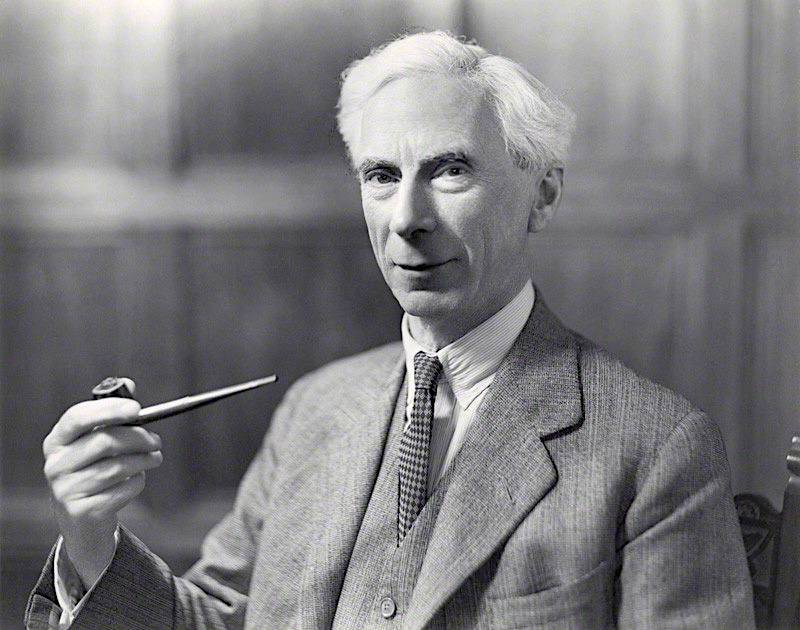
Bertrand Russell Remembers His Face-to-Face Encounter with Vladimir Ilyich Lenin

When the Bolsheviks seized control of Russia in the October Revolution of 1917, Bertrand Russell saw it as "one of the great heroic events of the world's history."

A renowned philosopher and mathematician, Russell was also a committed socialist. As he would write in his 1920 book The Practice and Theory of Bolshevism:

By far the most important aspect of the Russian Revolution is as an attempt to realize Communism. I believe that Communism is necessary to the world, and I believe that the heroism of Russia has fired men's hopes in a way which was essential to the realization of Communism in the future. Regarded as a splendid attempt, without which ultimate success would have been very improbable, Bolshevism deserves the gratitude and admiration of all the progressive part of mankind.

But despite his early admiration for the "splendid attempt," Russell found much in Soviet Russia to be concerned about. Specifically, he was appalled by the rigidly doctrinaire mindset of the Bolsheviks -- their zeal for quoting Marx like it was Holy gospel -- and the cruel tyranny they were willing to impose.


In May of 1920, a few months before finishing The Practice and Theory of Bolshevism, Russell visited Petrograd (Saint Petersburg) and Moscow with a British Labour delegation. As he says in the book:

I went to Russia a Communist; but contact with those who have no doubts has intensified a thousandfold my own doubts, not as to Communism in itself, but as to the wisdom of holding a creed so firmly that for its sake men are willing to inflict widespread misery.

As Russell would later write in the second volume of his autobiography, his time in Soviet Russia was one of "continually increasing nightmare:"

Cruelty, poverty, suspicion, persecution, formed the very air we breathed. Our conversations were continually spied upon. In the middle of the night one would hear shots, and know that idealists were being killed in prison. There was a hypocritical pretence of equality, and everybody was called 'tovarisch' [comrade], but it was amazing how differently this word could be pronounced according as the person who was addressed was Lenin or a lazy servant.

Soon after arriving in Moscow, Russell had a one-hour talk with Soviet leader Vladimir Ilyich Lenin at his spartan office in the Kremlin. "Lenin's room is very bare," writes Russell in The Practice and Theory of Bolshevism; "it contains a big desk, some maps on the walls, two book-cases, and one comfortable chair for visitors in addition to two or three hard chairs. It is obvious that he has no love of luxury or even comfort."

In the audio clip above, taken from a 1961 interview by John Chandos at Russell's home in north Wales, the old philosopher relates a pair of observations of what he saw as Lenin's two defining traits: his rigid orthodoxy, and what Russell would later call his "distinct vein of impish cruelty."

By the time of the interview, Russell's early ambivalence toward Soviet communism had hardened into antipathy. "Marx's doctrine was bad enough, but the developments which it underwent under Lenin and Stalin made it much worse," he writes in his 1956 essay "Why I am Not a Communist." "I am completely at a loss to understand how it came about that some people who are both humane and intelligent could find something to admire in the vast slave camp produced by Stalin."

Lenin died on January 21, 1924 -- less than four years after his meeting with Russell. A few days later, Russell published an essay, "Lenin: An Impression," in The New Leader. And although Russell once again mentions the man's narrow orthodoxy and ruthlessness, he paints a rather glowing picture of Lenin as a historical figure:

The death of Lenin makes the world poorer by the loss of one of the really great men produced by the war [World War I]. It seems probable that our age will go down to history as that of Lenin and Einstein -- the two men who have succeeded in a great work of synthesis in an analytic age, one in thought, the other in action. Lenin appeared to the outraged bourgeoisie of the world as a destroyer, but it was not the work of destruction that made him pre-eminent. Others could have destroyed, but I doubt whether any other living man could have built so well on the new foundations. His mind was orderly and creative: he was a philosophic system-maker in the sphere of practice.... Statesmen of his caliber do not appear in the world more than about once in a century, and few of us are likely to live to see his equal.

Related Content:

Bertrand Russell and F.C. Copleston Debate the Existence of God, 1948

Face to Face with Bertrand Russell: 'Love is Wise, Hatred is Foolish'

Russian History & Literature Come to Life in Wonderfully Colorized Portraits: See Photos of Tolstoy, Chekov, the Romanovs & More

More in this category... »
Quantcast