Rarely Seen, Very Early Godard Film Surfaces on YouTube

Jean-Luc Godard, that liv­ing embod­i­ment of the nou­velle vague who did so much to tear down and rebuild the rela­tion­ship between cin­e­ma and its view­ers, has kept push­ing the bound­aries of his art form well into his eight­ies. But even he had to start some­where, and up until very recent­ly indeed, Godard enthu­si­asts looked to his first film Opéra­tion béton, a short 1955 doc­u­men­tary on the con­struc­tion of a Swiss dam that we fea­tured a few years ago, as the start­ing point of his career as a film­mak­er. But most of them sure­ly had more inter­est in Un Femme coquette, Godard­’s sec­ond and no doubt more for­ma­tive first fic­tion film, a nine-minute adap­ta­tion of a Mau­pas­sant sto­ry hard­ly ever seen until just last week.

Une Femme coquette is the most elu­sive rar­i­ty of the French New Wave, and pos­si­bly the most dif­fi­cult-to-see film by a name film­mak­er that isn’t believed to be irre­triev­ably lost,” wrote A.V. Club crit­ic Ignatiy Vish­n­evet­sky in a 2014 piece on his search for it. And so, for decades, near­ly every­one who want­ed to see Un Femme coquette had to make do with mere descrip­tions. In his Godard biog­ra­phy Every­thing Is Cin­e­maNew York­er crit­ic Richard Brody high­lights not only how the film­mak­er, in adapt­ing this “tale about a woman who, see­ing a pros­ti­tute beck­on to pass­ing men, decides to try the ges­ture her­self [ … ] turns the neces­si­ty of film­ing cheap­ly and rapid­ly, with­out movie lights, into an aes­thet­ic virtue,” but also how this “film about watch­ing, about try­ing to live with what one has watched, and about the inher­ent dan­gers of doing so” evokes “the per­ilous path [Godard] was tak­ing as he sought to enter the cin­e­ma and antic­i­pates the moral dan­gers that await­ed him there.”

The sud­den appear­ance of Un Femme coquette on “the dig­i­tal back chan­nels fre­quent­ed by obscure movie enthu­si­asts,” as Vish­n­evet­sky puts it, and com­plete with Eng­lish sub­ti­tles at that, would thrill even a casu­al Godard fan. As for the Breath­lessAlphav­ille, and Week­end direc­tor’s die-hard exegetes, one can only imag­ine the feel­ings they, or at least the ones who’ve yet brought them­selves to cast eyes upon this sacred text, have expe­ri­enced while watch­ing it. No mat­ter our lev­el of famil­iar­i­ty with Godard and his work, we can all feel the charge cin­e­ma his­to­ry has giv­en his shoe­string-bud­get­ed and at times rough-look­ing black-and-white short. But who, watch­ing it at one of its sparse ear­ly screen­ings, could have imag­ined what an aes­thet­ic rev­o­lu­tion­ary its direc­tor, screen­writer, and one-man crew would short­ly become — who, that is, besides Jean-Luc Godard?

via AV Club

Relat­ed Con­tent:

An Intro­duc­tion to Jean-Luc Godard’s Inno­v­a­tive Film­mak­ing Through Five Video Essays

Jean-Luc Godard Takes Cannes’ Rejec­tion of Breath­less in Stride in 1960 Inter­view

The Entire­ty of Jean-Luc Godard’s Breath­less Art­ful­ly Com­pressed Into a 3 Minute Film

Jean-Luc Godard’s Debut, Opéra­tion béton (1955) — a Con­struc­tion Doc­u­men­tary

Based in Seoul, Col­in Mar­shall writes and broad­casts on cities and cul­ture. He’s at work on a book about Los Ange­les, A Los Ange­les Primer, the video series The City in Cin­e­ma, the crowd­fund­ed jour­nal­ism project Where Is the City of the Future?, and the Los Ange­les Review of Books’ Korea Blog. Fol­low him on Twit­ter at @colinmarshall or on Face­book.

Listen to Presidential, The Washington Post’s Podcast Exploring Each & Every U.S. President

A quick heads up on Pres­i­den­t’s Day: The Wash­ing­ton Post presents Pres­i­den­tial, a pod­cast that explores how “each Amer­i­can pres­i­dent reached office, made deci­sions, han­dled crises and rede­fined the role of com­man­der-in-chief.” Nat­u­ral­ly, it starts with George Wash­ing­ton. Hear that episode below.

Pres­i­den­tial is host­ed by Wash­Po edi­tor Lil­lian Cun­ning­ham and fea­tures Pulitzer Prize-win­ning his­to­ri­ans like David McCul­lough and jour­nal­ists like Bob Wood­ward. Right now you can get all 45 episodes (each about 30–50 min­utes long) on iTunes, Sound­cloud and Stitch­er.

If you would like to sign up for Open Culture’s free email newslet­ter, please find it here. It’s a great way to see our new posts, all bun­dled in one email, each day.

If you would like to sup­port the mis­sion of Open Cul­ture, con­sid­er mak­ing a dona­tion to our site. It’s hard to rely 100% on ads, and your con­tri­bu­tions will help us con­tin­ue pro­vid­ing the best free cul­tur­al and edu­ca­tion­al mate­ri­als to learn­ers every­where. You can con­tribute through Pay­Pal, Patre­on, and Ven­mo (@openculture). Thanks!

Relat­ed Con­tent:

Free Online His­to­ry Cours­es

Watch Online Every Pres­i­den­tial Debate Since 1960–and Revis­it America’s San­er Polit­i­cal Days

John Green’s Crash Course in U.S. His­to­ry: From Colo­nial­ism to Oba­ma in 47 Videos

The His­to­ry of the World in 46 Lec­tures From Colum­bia Uni­ver­si­ty

A Hypnotic Look at How Tennis Balls Are Made

Over the years, we’ve shown you var­i­ous house­hold objects being made–everything from crayons and ink, to vinyl records, old fash­ioned books and paper. Today, you can get a mes­mer­iz­ing glimpse into how ten­nis balls are made. Cre­at­ed by Bene­dict Red­grove for ESPN, the short film above shows “the man­u­fac­tur­ing process of [Wil­son] ten­nis balls for the US Open.” Com­bined, it takes 24 dif­fer­ent process­es to make the final ball. And it’s fun to watch.

If you would like to sign up for Open Culture’s free email newslet­ter, please find it here. It’s a great way to see our new posts, all bun­dled in one email, each day.

If you would like to sup­port the mis­sion of Open Cul­ture, con­sid­er mak­ing a dona­tion to our site. It’s hard to rely 100% on ads, and your con­tri­bu­tions will help us con­tin­ue pro­vid­ing the best free cul­tur­al and edu­ca­tion­al mate­ri­als to learn­ers every­where. You can con­tribute through Pay­Pal, Patre­on, and Ven­mo (@openculture). Thanks!

Relat­ed Con­tent:

How Japan­ese Things Are Made in 309 Videos: Bam­boo Tea Whisks, Hina Dolls, Steel Balls & More

How Ink is Made: A Volup­tuous Process Revealed in a Mouth-Water­ing Video

Learn How Crayons Are Made, Cour­tesy of 1980s Videos by Sesame Street and Mr. Rogers

20 Mes­mer­iz­ing Videos of Japan­ese Arti­sans Cre­at­ing Tra­di­tion­al Hand­i­crafts

The Art of Mak­ing Old-Fash­ioned, Hand-Print­ed Books

The Mak­ing of Japan­ese Hand­made Paper: A Short Film Doc­u­ments an 800-Year-Old Tra­di­tion

by | Permalink | Make a Comment ( 3 ) |

Japanese Priest Tries to Revive Buddhism by Bringing Techno Music into the Temple: Attend a Psychedelic 23-Minute Service

Many reli­gious lead­ers would like to liv­en up their ser­vices to attract a younger, hip­per flock, but few have the nec­es­sary back­ground to pull it off in a tru­ly impres­sive way. Not so for the Japan­ese Bud­dhist priest Gyōsen Asaku­ra, who answered the high­er call­ing after a career as a DJ but evi­dent­ly nev­er lost his feel for the unstop­pable pulse of elec­tron­ic music. Get­ting behind his decks and don­ning his head­phones once again, he has begun using sound, light, and the orig­i­nal splen­dor of Fukui City’s Shō-onji tem­ple to hold “tech­no memo­r­i­al ser­vices.” You can see and hear a bit of one such audio­vi­su­al spir­i­tu­al spec­ta­cle in the video just above, shot at a memo­r­i­al ser­vice last fall.

“Bud­dhism may be approach­ing some­thing of a cri­sis point in Japan,” reports Bud­dhist­door’s Craig Lewis, “with 27,000 of the country’s 77,000 Bud­dhist tem­ples fore­cast to close over the next 25 years, reflect­ing shrink­ing pop­u­la­tions in small rur­al com­mu­ni­ties and a loss of faith in orga­nized reli­gion among the country’s pop­u­la­tion as a whole.”

He also sites an Asahi Shim­bun sur­vey that found 434 tem­ples closed over the past decade and 12,065 Japan­ese Bud­dhist tem­ples cur­rent­ly with­out res­i­dent monks. Can this tem­ple in a small city, itself known for its phoenix-like rise from the ash­es of the Sec­ond World War, do its part to reverse the trend?

Gyōsen Asaku­ra frames his tech­no memo­r­i­al ser­vices, how­ev­er incon­gru­ous they might at first seem, as in keep­ing with the tra­di­tions of his branch of Pure Land Bud­dhism. “Orig­i­nal­ly, gold­en dec­o­ra­tions in the tem­ple are expres­sions of par­adise light,” he told THUMP. “How­ev­er, the light of a tra­di­tion­al tem­ple has not changed its form from 1000 years ago to use can­dle­light, even after elec­tric­i­ty was invent­ed. I felt doubt­ful about that, and then I thought about express­ing par­adise with the lat­est stage light­ing such as 3D map­ping.”

After all, as he said to Japankyo, “peo­ple used to use the most advanced tech­nolo­gies avail­able to them at the time in order to orna­ment tem­ples with gold leaf,” so why not har­ness today’s tech­nol­o­gy to evoke the Bud­dhist “world of light” as well? And in any case, ecsta­t­ic sen­so­ry expe­ri­ences are noth­ing new in the realm of faith, though ecsta­t­ic sen­so­ry expe­ri­ences of Gyōsen Asaku­ra’s kind do cost mon­ey to put togeth­er. And so he, in the way of most reli­gious projects the world over, has asked for dona­tions to fund them, using not a bowl but the crowd­fund­ing site Ready­for. Judg­ing by 383,000 yen (more than $3300 U.S. dol­lars) he’s already raised, quite a few tech­no-heads have seen the light.

via Elec­tron­ic Beats

Relat­ed Con­tent:

The “Amen Break”: The Most Famous 6‑Second Drum Loop & How It Spawned a Sam­pling Rev­o­lu­tion

Edward Snow­den & Jean-Michel Jarre Record a Tech­no Protest Song, “Exit”

Hear the Great­est Hits of Isao Tomi­ta (RIP), the Father of Japan­ese Elec­tron­ic Music

Based in Seoul, Col­in Mar­shall writes and broad­casts on cities and cul­ture. He’s at work on a book about Los Ange­les, A Los Ange­les Primer, the video series The City in Cin­e­ma, the crowd­fund­ed jour­nal­ism project Where Is the City of the Future?, and the Los Ange­les Review of Books’ Korea Blog. Fol­low him on Twit­ter at @colinmarshall or on Face­book.

If you would like to sign up for Open Culture’s free email newslet­ter, please find it here. It’s a great way to see our new posts, all bun­dled in one email, each day.

If you would like to sup­port the mis­sion of Open Cul­ture, con­sid­er mak­ing a dona­tion to our site. It’s hard to rely 100% on ads, and your con­tri­bu­tions will help us con­tin­ue pro­vid­ing the best free cul­tur­al and edu­ca­tion­al mate­ri­als to learn­ers every­where. You can con­tribute through Pay­Pal, Patre­on, and Ven­mo (@openculture). Thanks!

Rufus Harley, the First Jazz Musician to Make the Bagpipes His Main Instrument, Performs on I’ve Got a Secret (1966)

Musi­cian Rufus Harley did the peo­ple of Scot­land a great favor when he took up the bag­pipes. Like the Loch Ness Mon­ster and hag­gis, out­side its coun­try of ori­gin, the nation­al instru­ment has evolved into a hack­neyed punch­line.

What bet­ter, more unex­pect­ed ambas­sador for its expand­ed pos­si­bil­i­ties than a cer­ti­fied Amer­i­can jazz cat?

He cer­tain­ly stumped the all-white celebri­ty pan­el when he appeared on Steve Allen’s pop­u­lar TV game show, “I’ve Got a Secret” in 1966.

Politi­cian and for­mer Miss Amer­i­ca Bess Myer­son’s open­ing ques­tion feels a bit impolitic from a 50 year remove:

Is it how well you play it that’s unusu­al?

“Yes, def­i­nite­ly,” Harley agrees.

Hav­ing quick­ly sussed out that the instru­ment in ques­tion is a wood­wind, the pan­el cycles through a list of can­di­dates — flute?

Oboe?

Clar­inet?

No?

A…sweet pota­to?

Once they start bat­ting around sax­o­phones, Allen issues a brisk cor­rec­tive:

He wouldn’t be here tonight if he, you know, just played the sax­o­phone and that was his secret because that wouldn’t be too good a secret. 

Point tak­en.

Some­thing tells me a white guy in a suit and a tie would have elicit­ed less won­der from the pan­el upon the rev­e­la­tion that the instru­ment they failed to guess was the bag­pipes.

On the oth­er hand, here is a per­son of col­or com­mand­ing atten­tion and respect on nation­al tele­vi­sion in 1966, two days after the Black Pan­ther Par­ty was offi­cial­ly found­ed.

Harley had had pro­fes­sion­al train­ing in the sax­o­phone, oboe, trum­pet and flute, but as a bag­piper he was self-taught. As the com­ments on the video above demon­strate, his unortho­dox han­dling of the instru­ment con­tin­ues to con­found more tra­di­tion­al pipers. No mat­ter. The sounds he coaxed out of that thing are unlike any­thing you’re like­ly to hear on the bon­ny, bon­ny banks of Loch Lomond.

At the end of the seg­ment, Harley joined his back up musi­cians onstage for a live, Latin-inflect­ed cov­er of “Feel­ing Good.”

Spo­ti­fy lis­ten­ers can enjoy more of Harley’s dis­tinc­tive pip­ing here.

And just for fun, check out this list of bag­pipe terms.There’s more to this instru­ment than its asso­ci­a­tion with Groundskeep­er Willy might sug­gest.

Relat­ed Con­tent:

Hear What is Jazz?: Leonard Bernstein’s Intro­duc­tion to the Great Amer­i­can Art Form (1956)

A Young Frank Zap­pa Turns the Bicy­cle into a Musi­cal Instru­ment on The Steve Allen Show (1963)

John Cage Per­forms Water Walk on US Game Show I’ve Got a Secret (1960)

Ayun Hal­l­i­day is an author, illus­tra­tor, and the­ater mak­er whose lat­est play, Zam­boni Godot, is open­ing in New York City on March 2. Fol­low her @AyunHalliday.

Pasta for War: The Award-Winning Animation That Satirizes 1930s Propaganda Films & Features Marching Rigatoni

From art direc­tor Zach Schläp­pi comes Pas­ta for War, an ani­ma­tion that sat­i­rizes pro­pa­gan­da news­reels from the 1930s. The plot is sim­ple:

It begins with fresh pas­ta march­ing towards the podi­um. There, the Great Dic­ta­tor orates. A young recruit envi­sions for­ma­tions of dive bomb­ing bow-ties fly­ing above columns of ravi­o­li tanks, while he wades through mari­nara sauce to bat­tle against uten­sils at the bot­tom of the sink. The real­i­sa­tion that he may die ends his fan­ta­sy, but his com­rades march ever for­ward, to their impend­ing doom — a tow­er­ing pot of boil­ing water.

As Jon Hof­fer­man notes at Ani­ma­tion World Net­work, Schläp­pi does a pret­ty fine job of “re-cre­at­ing the look and feel of 1930s-era wartime film­mak­ing, using sepia tones, tri­umphal­ist cam­era angles and slight­ly stilt­ed edit­ing and nar­ra­tion to good advan­tage.” Cre­at­ed in 2000, Pas­ta for War was screened at var­i­ous ani­ma­tion film fes­ti­vals and took home a few awards. Hope you enjoy.

If you would like to sign up for Open Culture’s free email newslet­ter, please find it here. It’s a great way to see our new posts, all bun­dled in one email, each day.

If you would like to sup­port the mis­sion of Open Cul­ture, con­sid­er mak­ing a dona­tion to our site. It’s hard to rely 100% on ads, and your con­tri­bu­tions will help us con­tin­ue pro­vid­ing the best free cul­tur­al and edu­ca­tion­al mate­ri­als to learn­ers every­where. You can con­tribute through Pay­Pal, Patre­on, and Ven­mo (@openculture). Thanks!

Relat­ed Con­tent:

Edu­ca­tion for Death: The Mak­ing of Nazi–Walt Disney’s 1943 Pro­pa­gan­da Film Shows How Fas­cists Are Made

Dr. Seuss’ World War II Pro­pa­gan­da Films: Your Job in Ger­many (1945) and Our Job in Japan (1946)

Pri­vate Sna­fu: The World War II Pro­pa­gan­da Car­toons Cre­at­ed by Dr. Seuss, Frank Capra & Mel Blanc

by | Permalink | Make a Comment ( 1 ) |

The First Known Footage of Marcel Proust Discovered: Watch It Online

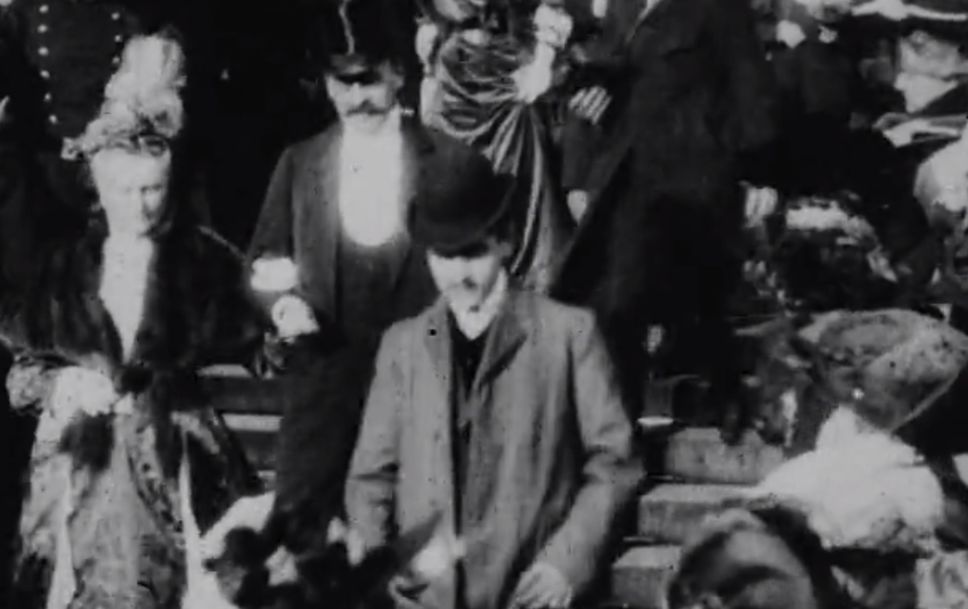
Ladies and gen­tle­men, we present the first known footage of the French author Mar­cel Proust.

Announced by Pro­fes­sor Jean-Pierre Sirois-Tra­han in the lat­est edi­tion of the French jour­nal, Revue d’é­tudes prousti­ennes, the footage was record­ed on Novem­ber 14, 1904 (nine years before Proust pub­lished the first vol­ume in his clas­sic work, À la recherche du temps perdu/Remem­brance of Things Past). And it shows Proust descend­ing a stair­way at the wed­ding of his close friend, Armand de Guiche. Look for him at the 37 sec­ond mark. He’s dressed less for­mal­ly (in grey, not black) than the aris­to­crats join­ing him at the cel­e­bra­tion. I’ve added a close up pic­ture below.

If you would like to sign up for Open Culture’s free email newslet­ter, please find it here. It’s a great way to see our new posts, all bun­dled in one email, each day.

If you would like to sup­port the mis­sion of Open Cul­ture, con­sid­er mak­ing a dona­tion to our site. It’s hard to rely 100% on ads, and your con­tri­bu­tions will help us con­tin­ue pro­vid­ing the best free cul­tur­al and edu­ca­tion­al mate­ri­als to learn­ers every­where. You can con­tribute through Pay­Pal, Patre­on, and Ven­mo (@openculture). Thanks!

via Le Jour­nal de Mon­tre­al

Relat­ed Con­tent:

An Intro­duc­tion to the Lit­er­ary Phi­los­o­phy of Mar­cel Proust, Pre­sent­ed in a Mon­ty Python-Style Ani­ma­tion

When James Joyce & Mar­cel Proust Met in 1922, and Total­ly Bored Each Oth­er

16-Year-Old Mar­cel Proust Tells His Grand­fa­ther About His Mis­guid­ed Adven­tures at the Local Broth­el

Mar­cel Proust Fills Out a Ques­tion­naire in 1890: The Man­u­script of the ‘Proust Ques­tion­naire’

by | Permalink | Make a Comment ( 6 ) |

Take a Break from Your Frantic Day & Let Alan Watts Introduce You to the Calming Ways of Zen

By the end of the 1960s, Alan Watts had become one of the gurus of the coun­ter­cul­ture. Though he was not real­ly a Zen Bud­dhist, he was many a person’s gate­way into the reli­gion due to The Way of Zen pub­lished in 1958. His was a philo­soph­i­cal and pop­ulist approach to East­ern reli­gion, an antecedent to the Eck­hart Tolles of our time.

This short film, Now and Zen, was direct­ed by Elda and Irv­ing Hart­ley, shot in the gar­dens at their res­i­dence, and fea­tures Watts encour­ag­ing the view­er to go beyond the mate­r­i­al world, espe­cial­ly as we under­stand it through lan­guage and our cul­tur­al view­point. Instead, he says, “This world is a mul­ti­di­men­sion­al net­work of all kinds of vibra­tions” which infants under­stand bet­ter than us adults. The film then tran­si­tions into a guid­ed sit­ting med­i­ta­tion of sorts, and ends with the sounds of nature. (Plus, there’s ducks.)

“Hence the impor­tance of med­i­ta­tion in zen,” he con­tin­ues, “which is, from time to time, to stop think­ing alto­geth­er, and sim­ply be aware of what is. This may be done very, very sim­ply. By becom­ing aware of the play of light and col­or upon your eyes. Don’t name any­thing you see. Just let the light and the shad­ow, the shape and the col­or, play with your eyes, and allow the sound to play with your ears.”

Elda Hart­ley, work­ing with her hus­band Irv­ing, used this film to launch the Hart­ley Film Foun­da­tion, its mis­sion to pro­duce doc­u­men­taries on world reli­gions and spir­i­tu­al­i­ty. (It still exists as a non-prof­it). Zen as a sub­ject came first, because Elda had been on a trip to Japan with Alan Watts, and when she pro­posed the film, he agreed to nar­rate. She would lat­er make films with Mar­garet Mead, Joseph Camp­bell, Ram Dass, Hus­ton Smith and oth­ers.

There are sev­er­al oth­er films on archive.org’s Hart­ley Pro­duc­tions page, and anoth­er Watts-nar­rat­ed one: The Flow of Zen. (Warn­ing: this is the oppo­site of med­i­ta­tive, and its harsh aton­al elec­tron­ic sounds very far removed from any medi­a­tion CD you might have kick­ing around.)

Bet­ter still: Open Cul­ture also has plen­ty of Alan Watts in the archive.

Final­ly, as some­one who spent many an under­grad night lis­ten­ing to his late-night lec­tures on KPFK and at the time not under­stand­ing a whit, it was edi­fy­ing to hear Watts say in the above film:

As you lis­ten to my voice, don’t try to make any sense of what I am say­ing. Just be aware of the tones and your brain will auto­mat­i­cal­ly take care of the sense.

I can vouch that he was right about that…eventually. But only after read­ing many, many books on Bud­dhism.

Now and Zen and The Flow of Zen will be added to our col­lec­tion, 4,000+ Free Movies Online: Great Clas­sics, Indies, Noir, West­erns, Doc­u­men­taries & More.

Relat­ed Con­tent:

Alan Watts Intro­duces Amer­i­ca to Med­i­ta­tion & East­ern Phi­los­o­phy: Watch the 1960 TV Show, East­ern Wis­dom and Mod­ern Life

The Wis­dom of Alan Watts in Four Thought-Pro­vok­ing Ani­ma­tions

What If Mon­ey Was No Object?: Thoughts on the Art of Liv­ing from East­ern Philoso­pher Alan Watts

Ted Mills is a free­lance writer on the arts who cur­rent­ly hosts the FunkZone Pod­cast. You can also fol­low him on Twit­ter at @tedmills, read his oth­er arts writ­ing at tedmills.com and/or watch his films here.

« Go BackMore in this category... »
Quantcast