Not a bad deal. Right now, Barnes and Noble is running a big sale on films in the Criterion Collection. They’re offering 50% off of hundreds of classic and contemporary films, including Fellini’s 8 1/2, John Ford’s Stagecoach, Howards End with Anthony Hopkins, Jim Jarmusch’s Mystery Train, Wim Wenders’ Wings of Desire, Steven Soderbergh’s Che and many more. Films are available in DVD and Blu-ray. Dig into the sale here.
The 1910 Tour de France Revisited
A hundred years ago, the organizers of the Tour de France took riders high into mountains for the very first time. And, from there, the mystique of the Tour de France grew and grew. To commemorate this occasion, a group of modern day riders retraced the same route through the Pyrenees, which includes some legendary climbs: the Col de Peyresourde, the Col d’Aspin, the Col du Tourmalet, the Col du Soulor, etc. The weather conditions are slightly tough for these riders, but their bikes are light and modern, and the gearing much more forgiving than what their forebears had. Meanwhile the film documenting their ride is a pleasure to watch. The runtime is about 15 minutes.
via @vimeo
Ingmar Bergman Visits The Dick Cavett Show, 1971
Running from 1968 to 1982, “The Dick Cavett Show” sometimes brought heady culture to the American airwaves. In this particular case, Cavett gave Americans a close up view of Ingmar Bergman, the influential Swedish director so admired by Woody Allen. (Allen once called Bergman “probably the greatest film artist, all things considered, since the invention of the motion picture camera.”) Cavett’s wide-ranging, 60 minute interview appears above. Thanks Roberta for the lead on this one.
If you would like to support the mission of Open Culture, consider making a donation to our site. It’s hard to rely 100% on ads, and your contributions will help us continue providing the best free cultural and educational materials to learners everywhere. You can contribute through PayPal, Patreon, and Venmo (@openculture). Thanks!
The Who by Tracks
Take The Who’s “Won’t Get Fooled Again” from 1971. Now break it down, separating out the tracks instrument by instrument, and you get some insight into how rock ‘n roll anthems come together. Above, we have Keith Moon’s driving drum track. Then Pete Townshend playing the power chords on guitar (plus some synthesizer); John Entwistle thumping out the bass; and Roger Daltrey on vocals. Put them back together and the whole becomes greater than the sum of the parts.
via metafilter
Oppenheimer: The Man Behind the Bomb
In July 1945, J. Robert Oppenheimer, a theoretical physicist from UC Berkeley, saw his work on the Manhattan Project culminate with the test of the first nuclear bomb. The genie was let out of the bottle, and, ever since then, world leaders have been trying to put the genie back in … with great difficulty. The new documentary Countdown to Zero, which premiered at Sundance earlier this year, traces the history of the atomic bomb and makes the case for worldwide nuclear disarmament – a timely issue given that the US Senate has been debating the New Strategic Arms Reduction Treaty (aka New START). The “featurette” above, excerpted from the film, gives you a quick and somewhat haunting introduction to Oppenheimer, the man behind the bomb.
If you would like to support the mission of Open Culture, consider making a donation to our site. It’s hard to rely 100% on ads, and your contributions will help us continue providing the best free cultural and educational materials to learners everywhere. You can contribute through PayPal, Patreon, and Venmo (@openculture). Thanks!
20 Great Authors (and Actors) Read Famous Literature Out Loud
Every now and then, we like to present vintage clips of great authors reading classic literary works – works they have often written themselves. These clips can be fairly revealing. Through them, you can recapture the voices of literary greats, most long since passed. And you can hear how they give character and expression to their own works … or those of others. In response to a reader’s request, we have pulled together some of the finest examples previously featured here. And, for good measure, we’ve added prime clips of famous celebrities giving literary readings too. Hope you enjoy (and share):
1) William Faulkner Reads from As I Lay Dying
2) James Joyce Reading Finnegans Wake
3) Vintage Radio: Aldous Huxley Narrates Brave New World
4) Dominic West (aka Jimmy McNulty) Reads Jane Austen
5) Truman Capote Reads from Breakfast at Tiffany’s
6) Joyce Carol Oates Reads Eudora Welty’s “Where Is the Voice Coming From?”
7) Orson Welles Reads Moby Dick
8) Johnny Depp Reads Letters from Hunter S. Thompson
9) Ernest Hemingway Reads “In Harry’s Bar in Venice”
10) T.S. Eliot Reading from The Wasteland
11) F. Scott Fitzgerald Reads Shakespeare Out Loud
12) Dennis Hopper Reads Rudyard Kipling on Johnny Cash Show
13) Kurt Vonnegut Reads from Slaughterhouse-Five
14) Tom Waits Reads Charles Bukowski
15) William Carlos Williams Reads His Poetry (1954)
16) Orhan Pamuk Reads Vladimir Nabokov
17) Charles Bukowski “Bluebird”
18) Wallace Stevens Reads His Own Poetry
19) Tobias Wolff Reads From His New Short Story Collection
20) Listening to Famous Poets Reading Their Own Work
Your Brain on Caffeine
Just what happens to your brain when that daily cup of joe kicks in? Lifehacker has pulled together a nice little primer based on research appearing in Stephen R. Braun’s book, Buzz: The Science and Lore of Alcohol and Caffeine. The post also references a short video – “A Brain On Caffeine” – from CurrentTV. It’s re-presented above.
Eudora Welty on “A Worn Path”
First published in The Atlantic Monthly in February 1940, “A Worn Path” is perhaps Eudora Welty’s most prized piece of short fiction. In this video, Welty talks with dramatist Beth Henley about the writing of the famous short story. The two women, it’s worth noting, share a good deal in common. Both are Pulitzer Prize winners who have their common roots in Jackson, Mississippi. Thanks to Mike S. for sending our way…
William Faulkner Audio Archive Goes Online
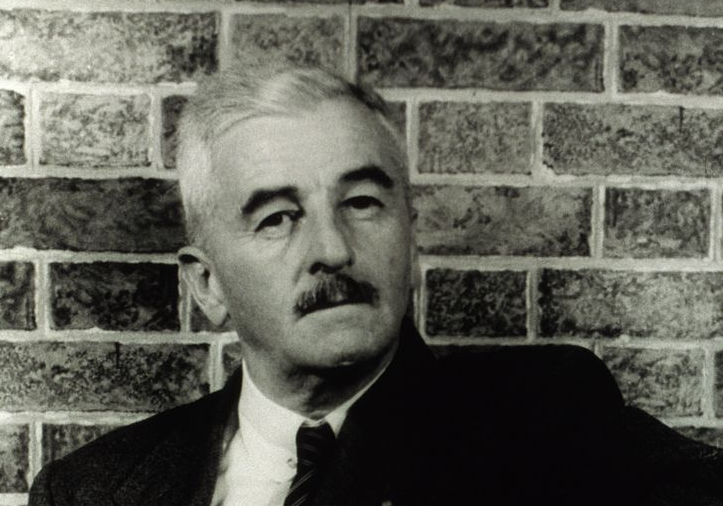
Image by Carl Van Vechten, via Wikimedia Commons
In 1957 and 1958, the great American writer William Faulkner spent two years as Writer-in-Residence at the University of Virginia. During this stint, he presented several public speeches, gave many readings from his literary works, spoke at countless public events, and answered questions from hundreds of students. The talks were originally recorded on reel-to-reel tapes, and now UVA has digitized the audio collection and made it available through a new web site: Faulkner at Virginia: An Audio Archive. In total, the archive presents 1690 minutes (over 28 hours) of Faulkner recordings. It also includes an archive of photos and newspaper items, as well as an audio recording of a press conference the English department gave when Faulkner died on July 6, 1962. A real treasure. You can dive into the audio trove right here.
Note: To access the audio, you will need a QuickTime player. If your browser doesn’t already support QuickTime, you can download a free QuickTime plug-in here.
Jimi Hendrix Plays “Sgt. Pepper’s Lonely Hearts Club Band” Days After the Song Was Released (1967)
When playing a concert in San Francisco in July 2010, Paul McCartney recalled for his audience how the Beatles released Sgt. Pepper’s Lonely Hearts Club Band in June, 1967. The album came out on a Friday, and by Sunday night, Jimi Hendrix learned the songs and opened his own show with a cover of the title track. It would have looked something like this. Watch above. And watch out for your ears!
Related Content:
Deconstructing The Master Track of The Beatles’ “Sgt. Pepper’s Lonely Hearts Club Band”
The Beatles: Unplugged Collects Acoustic Demos of White Album Songs (1968)
In 1969 Telegram, Jimi Hendrix Invites Paul McCartney to Join a Super Group with Miles Davis
Jimi Hendrix’s Final Interview on September 11, 1970: Listen to the Complete Audio
Support Us
We're hoping to rely on loyal readers, rather than erratic ads. Please click the Donate button and support Open Culture. You can use Paypal, Venmo, Patreon, even Crypto! We thank you!

Great Lectures
About Us

Open Culture scours the web for the best educational media. We find the free courses and audio books you need, the language lessons & educational videos you want, and plenty of enlightenment in between.
Advertise With Us
Archives
- August 2026
- July 2026
- June 2026
- May 2026
- April 2026
- March 2026
- February 2026
- January 2026
- December 2025
- November 2025
- October 2025
- September 2025
- August 2025
- July 2025
- June 2025
- May 2025
- April 2025
- March 2025
- February 2025
- January 2025
- December 2024
- November 2024
- October 2024
- September 2024
- August 2024
- July 2024
- June 2024
- May 2024
- April 2024
- March 2024
- February 2024
- January 2024
- December 2023
- November 2023
- October 2023
- September 2023
- August 2023
- July 2023
- June 2023
- May 2023
- April 2023
- March 2023
- February 2023
- January 2023
- December 2022
- November 2022
- October 2022
- September 2022
- August 2022
- July 2022
- June 2022
- May 2022
- April 2022
- March 2022
- February 2022
- January 2022
- December 2021
- November 2021
- October 2021
- September 2021
- August 2021
- July 2021
- June 2021
- May 2021
- April 2021
- March 2021
- February 2021
- January 2021
- December 2020
- November 2020
- October 2020
- September 2020
- August 2020
- July 2020
- June 2020
- May 2020
- April 2020
- March 2020
- February 2020
- January 2020
- December 2019
- November 2019
- October 2019
- September 2019
- August 2019
- July 2019
- June 2019
- May 2019
- April 2019
- March 2019
- February 2019
- January 2019
- December 2018
- November 2018
- October 2018
- September 2018
- August 2018
- July 2018
- June 2018
- May 2018
- April 2018
- March 2018
- February 2018
- January 2018
- December 2017
- November 2017
- October 2017
- September 2017
- August 2017
- July 2017
- June 2017
- May 2017
- April 2017
- March 2017
- February 2017
- January 2017
- December 2016
- November 2016
- October 2016
- September 2016
- August 2016
- July 2016
- June 2016
- May 2016
- April 2016
- March 2016
- February 2016
- January 2016
- December 2015
- November 2015
- October 2015
- September 2015
- August 2015
- July 2015
- June 2015
- May 2015
- April 2015
- March 2015
- February 2015
- January 2015
- December 2014
- November 2014
- October 2014
- September 2014
- August 2014
- July 2014
- June 2014
- May 2014
- April 2014
- March 2014
- February 2014
- January 2014
- December 2013
- November 2013
- October 2013
- September 2013
- August 2013
- July 2013
- June 2013
- May 2013
- April 2013
- March 2013
- February 2013
- January 2013
- December 2012
- November 2012
- October 2012
- September 2012
- August 2012
- July 2012
- June 2012
- May 2012
- April 2012
- March 2012
- February 2012
- January 2012
- December 2011
- November 2011
- October 2011
- September 2011
- August 2011
- July 2011
- June 2011
- May 2011
- April 2011
- March 2011
- February 2011
- January 2011
- December 2010
- November 2010
- October 2010
- September 2010
- August 2010
- July 2010
- June 2010
- May 2010
- April 2010
- March 2010
- February 2010
- January 2010
- December 2009
- November 2009
- October 2009
- September 2009
- August 2009
- July 2009
- June 2009
- May 2009
- April 2009
- March 2009
- February 2009
- January 2009
- December 2008
- November 2008
- October 2008
- September 2008
- August 2008
- July 2008
- June 2008
- May 2008
- April 2008
- March 2008
- February 2008
- January 2008
- December 2007
- November 2007
- October 2007
- September 2007
- August 2007
- July 2007
- June 2007
- May 2007
- April 2007
- March 2007
- February 2007
- January 2007
- December 2006
- November 2006
- October 2006
- September 2006


