Quentin Tarantino has always had a way of getting on the wrong side of various groups. Most recently he angered the guitar-heads of the world when, to their shock and dismay, it came out that, under the auteur’s watch on the set of his latest picture, the post-Civil War intensified Western The Hateful Eight, a priceless 145-year-old six-string met its brutal end. “In the scene in question,” writes Vanity Fair’s Rachel Handler, Kurt Russell, “as bounty hunter John ‘The Hangman’ Ruth, snatches the guitar from the hands of Jennifer Jason Leigh’s Daisy Domergue and hurls it against the wall, as one does.” That guitar — “an invaluable historical artifact,” Handler explains — came on loan from Pennsylvania’s Martin Guitar Museum (and its likely irked director Dick Boak).
Even if you don’t play the guitar yourself, you’ve probably heard of the Martin brand name. Established in 1833 in New York as the cabinet-making C.F. Martin & Company, they went on to introduce some of the innovations that have come to define the acoustic guitar as we know it today, from X‑bracing in the 1850s to metal strings, replacing traditional catgut, in the early 1900s. The ill-fated specimen lost to the hands of Kurt Russell — who, according to the production’s official story, never got the memo about cutting and swapping out a replica before the smash — which the Martin Guitar Museum originally acquired (and insured) for about $40,000, came out of the Martin workshop in the 1870s.
Naturally, the farther back you go in guitar-making history, the fewer guitars made at the time still exist. You can still go out and buy a serviceable guitar from the end of the 19th century without completely wiping out your savings, but you’d be hard pressed to find a Martin made a few decades earlier — such as the one smashed in The Hateful Eight — at any price at all; less than ten may exist anywhere. But Martin’s solid standard of craftsmanship ensured that their instrument would hold up over the 140 or so years until a filmmaker wanted to use it as a prop in his period piece, where it still, aesthetically as well as sonically, fit right in. Still, no guitar could hold up against the viciousness of a character like The Hangman as envisioned by Tarantino — nor against the dedication of a director like Tarantino who, always in search of a perfectly visceral moment, simply can’t bear to cut.
Well, at least he wasn’t using the last playable Stradivarius guitar in the world. The Martin Museum retained the presence of mind to ask for their guitar’s pieces back, and though they couldn’t put the historical instrument back together again, maybe they’ll find a place to display the fragments themselves. That way, both guitar-heads and cinephiles could pay their respects.
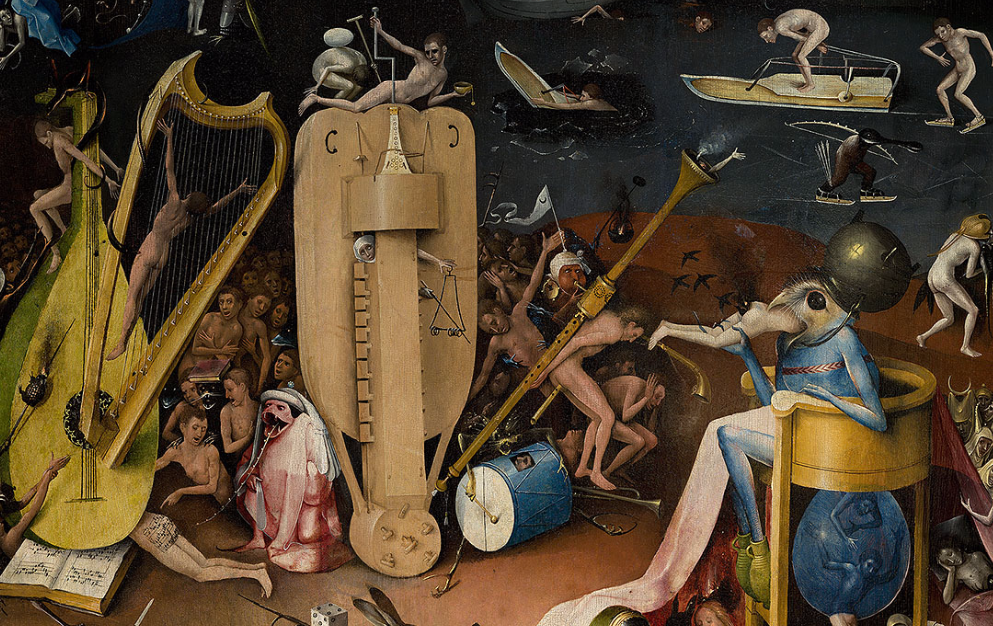
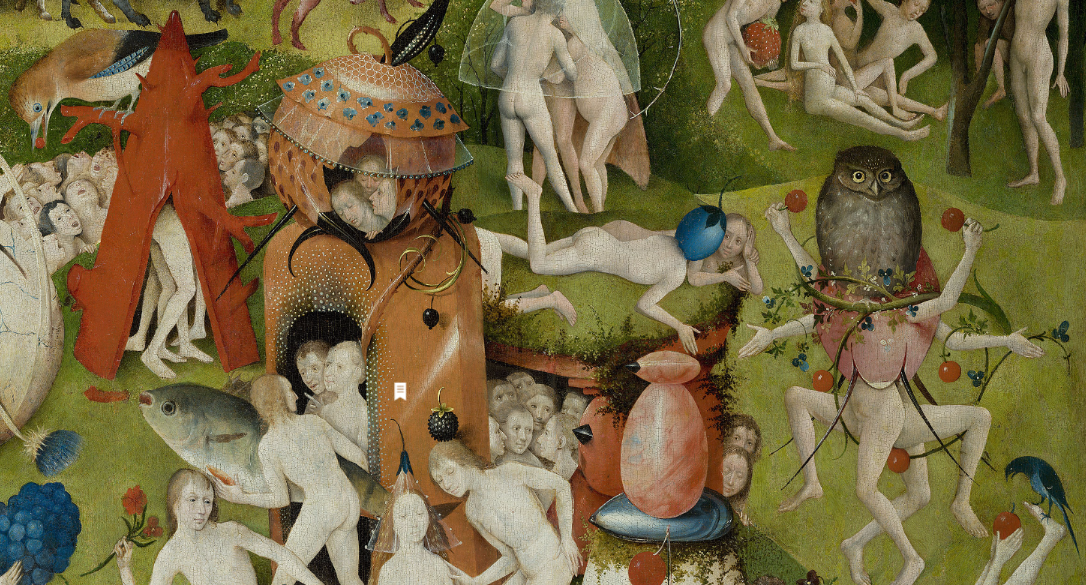
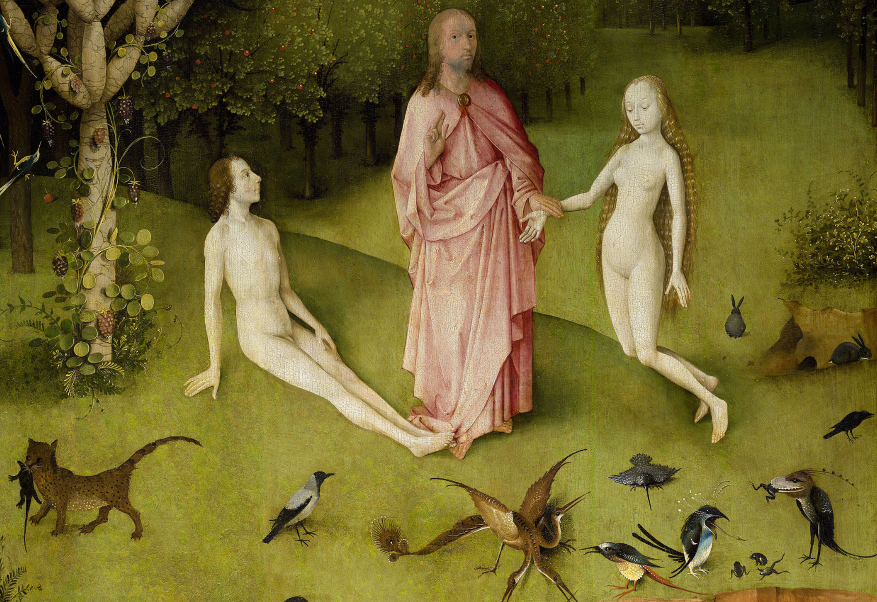
Art historians have argued about the meaning of The Garden of Earthly Delights—Hieronymus Bosch’s enormously sized, lavishly detailed, and compellingly grotesque late 14th- or early 15th-century triptych—more or less since the painter’s death. What does it really say about the appearance and fall of man on Earth that it seems to depict? How seriously or ironically does it say it? Does it offer us a warning against temptation, or a celebration of temptation? Does it take a religious or anti-religious stance? And what’s with all those creepy animals and bizarre pseudo-sex acts? “In spite of all the ingenious, erudite and in part extremely useful research devoted to the task,” said scholar Erwin Panofsky, “I cannot help feeling that the real secret of his magnificent nightmares and daydreams has still to be disclosed.”
Panofsky said that in the 1950s, by which era he summed up the accumulated efforts to decode Bosch as having “bored a few holes through the door of the locked room; but somehow we do not seem to have discovered the key.” Now you can at least try your own hand at knocking on the door with this “interactive documentary” of The Garden of Early Delights, which allows you to explore the painting in depth, reading and hearing what stories we know of the many images nightmarishly and often hilariously presented within, while you zoom far closer than you could while even standing before the real thing at the Prado.
(Assuming you could successfully elbow your way past all the tour groups.) “The visitor of the interactive documentary will get a better understanding of what it was like to live in the Late Middle Ages,” says the official description, which also assures us we can “come back after a visit and pick up the book again from the shelf to further explore.”
The project comes as part of a larger “transmedia tryptich,” which also consists of the traditional documentary film Hieronymus Bosch, Touched by the Devil (whose trailer you can see below) and a “virtual reality documentary” called Hieronymus Bosch, the Eyes of the Owl. I find that last title especially appropriate, since I’ve long enjoyed Bosch’s recurring owls and appreciate the ability this highly zoomable Garden of Earthly Delights offers me to count them one by one. Spend some time roaming Bosch’s vision’s paradise, bacchanal, and damnation and, whether you take the guided tour through them or not, you’ll find much to stare at in sheer fascination — and, as often as not, disbelief.
Despite its legacy and influence, the original Star Trek ran three seasons (or 79 episodes in total) before NBC canceled the show in June, 1969. Only in syndication did Star Trek achieve cult status, and did its growing number of fans start to wonder: What if Star Trek had continued? How would the story have played out? Enter Star Trek Continues, a critically-acclaimed, fan-produced webseries created by director and actor Vic Mignogna.
If you ask the son of Gene Roddenberry, the creator of the original TV series, Star Trek Continues has managed to create a bona fide sequel. “I do have to say … I’m pretty damn sure my dad would consider this canon. The fact that you do stories that mean something, that have depth, that make us all think a little bit… I really think he would applaud you guys.”
[Star Trek Continues] comes frighteningly close to replicating the original series, in the sets, make-up and hairstyles, costumes and music… The art direction precisely captures the Day-Glo visuals of early color TV. Most remarkable is Mr. Mignogna; no actor playing, for instance, James Bond has imitated Sean Connery outright, but Mr. Mignogna comes so scarily close to the dynamic, staccato energy of William Shatner that we keep forgetting we’re looking at another actor.
Thanks to funding raised by two Kickstarter campaigns, you can now watch 5 episodes. Click play and watch the episodes on a Youtube playlist above, from start to finish. Or watch them on the official Star Trek Continues website, where, among other things, you can take a 360 virtual tour of the set. You can also make a donation, which will help support the 6th episode due out in May, and another 7 episodes beyond that.
If you would like to support the mission of Open Culture, consider making a donation to our site. It’s hard to rely 100% on ads, and your contributions will help us continue providing the best free cultural and educational materials to learners everywhere. You can contribute through PayPal, Patreon, and Venmo (@openculture). Thanks!
It came together quickly. Bischoff arranged the album’s five tracks and spent three and a half hours recording the strings (Serena McKinney and Alyssa Park on violin, Ben Ullery on viola, and Jacob Braun on cello).
Meanwhile new mother Palmer lined up three days worth of babysitting in order to dive back into the studio. She also tapped some famous friends, who contributed in smaller ways.
Gaiman questioned Palmer’s choice to lead with the title track of Bowie’s final album, but as she told New Musical Express, a lot of freshly minted millennial Bowie fans among her Patreon supporters listed “Blackstar” as a favorite. Singer Anna Calvi duets and plays guitar on this stripped down version:
Each tune is matched to a Bowie-centric image by a visual artist. On Palmer’s Patreon blog,“Blackstar” artist, elementary school teacher, and cancer survivor Cassandra Long writes about discussing Bowie’s death with a roomful of kindergarteners. Palmer plans to provide a similar platform to the other participating artists in the days to come.
The finished product is both professional and a labor of love.
Music is the binding agent of our mundane lives. It cements the moments in which we wash the dishes, type the resumes, go to the funerals, have the babies. The stronger the agent, the tougher the memory, and Bowie was NASA-grade epoxy to a sprawling span of freaked-out kids over three generations. He bonded us to our weird selves…Bowie worked on music up to the end to give us a parting gift. So this is how we, as musicians, mourn: keeping Bowie constantly in our ears and brains.
— Amanda Palmer
The complete tracklist is below. You can listen for free, but an ante-up will help Palmer cover 9¢ in licensing fees every time one of the songs is streamed. Any leftover proceeds from sales through March 5th will be donated to Tufts Medical Center’s cancer research wing in memory of David Bowie.
Click on the arrows to get the full 360 degree experience.
I felt as impressed as everyone else did when I saw my first 360-degree video, the technology that allows viewers to “look” in any direction they wish. But most of the 360-degree videos that became popular early simply demonstrated the concept, and as much astonishment as the experience of the concept alone can generate, even more excitement came from thinking about the technology’s potential. It hasn’t taken long for 360-degree videos to look beyond virtual reality — indeed, to look all the way to virtual surreality, as envisioned by perhaps the best-known surrealist of them all, Salvador Dalí.
“Dreams of Dalí,” the 36o-degree video above, drops you into the world of Dalí’s 1935 canvas Archaeological Reminiscence of Millet’s ‘Angelus,’ an homage to an earlier work (Jean-François Millet’s painting, “The Angelus”) which enjoyed enormous popularity during Dalí’s youth. This earlier work, notes the Dalí’ Museum, was “reproduced on everything from prints and postcards to everyday objects like teacups and inkwells. The late 19th century painting depicts a peasant couple standing in a field with their heads bowed in prayer. For many it was a sentimental work, but for Dalí’ it was troubling, with layers of hidden meaning, which he explored through daydreams and fantasies.”
As the artist himself put it, “I surrendered myself to a brief fantasy during which I imagined sculptures of the two figures in Millet’s ‘Angelus’ carved out of the highest rocks.” His formidable imagination converted that mid-19th-century image of rural hardship and piety into the moonlit desert landscape through which “Dreams of Dalí” flies you. Created for “Disney and Dalí: Architects of the Imagination,” an exhibit at St. Petersburg, Florida’s Dalí Museum on the friendship and collaboration between those two visionary 20th-century world-creators (see Destino, the short film Dalí and Disney collaborated on), the video not only gives the painting a third spatial dimension, but a detailed sonic one featuring the godlike voice of Dalí himself.
If you make use of the arrows that appear in the video’s upper-left corner or click and drag (or, on smartphones, press and drag with your finger) within the frame, you can turn the “camera” in any direction. Pay close enough attention, and you’ll spot more than a few touches not included in the original painting that will nonetheless delight fans of the Dalí sensibility, not all of which you can catch on your first flight through. But as much as the experience may feel like a dream — and it counts as one of the few works to really merit the term “dreamlike” — it won’t vanish as soon as you emerge from it; you can have at it again and again, seeing something new and surprising each time.
A quick note: This week, the BBC posted the second of Stephen Hawking’s Reith Lectures focusing on Black Holes. And, once again, they’ve animated the presentation with some fun chalkboard illustrations. You can watch Part 1, “Do Black Holes Have No Hair?” here. And now Part 2, “Black Holes Ain’t as Black as They Are Painted,” above. Hawking is getting a little playful with his grammar, isn’t he? Enjoy.
If you would like to support the mission of Open Culture, consider making a donation to our site. It’s hard to rely 100% on ads, and your contributions will help us continue providing the best free cultural and educational materials to learners everywhere. You can contribute through PayPal, Patreon, and Venmo (@openculture). Thanks!
Every generation, it seems, has its preferred bestselling genre fiction. We’ve had fantasy and, at least in very recent history, vampire romance keeping us reading. The fifties and sixties had their westerns and sci-fi. And in the forties, it won’t surprise you to hear, detective fiction was all the rage. So much so that—like many an irritable contrarian critic today—esteemed literary tastemaker Edmund Wilson penned a cranky New Yorker piece in 1944 declaiming its popularity, writing “at the age of twelve… I was outgrowing that form of literature”; the form, that is, perfected by Edgar Allan Poe, Arthur Conan Doyle, and Wilkie Collins, and imitated by a host of pulp writers in Wilson’s day. Detective stories, in fact, were in vogue for the first few decades of the 20th century—since the appearance of Sherlock Holmes and a derivative 1907 character called “the Thinking Machine,” responsible, it seems, for Wilson’s loss of interest.
Thus, when Wilson learned that “of all people,”Paul Grimstad writes, T.S. Eliot “was a devoted fan of the genre,” he must have been particularly dismayed, as he considered Eliot “an unimpeachable authority in matters of literary judgment.” Eliot’s tastes were much more ecumenical than most critics supposed, his “attitude toward popular art forms… more capacious and ambivalent than he’s often given credit for.” The rhythms of ragtime pervade his early poetry, and “in his later years he wanted nothing more than to have a hit on Broadway.” (He succeeded, sixteen years after his death.) Eliot peppered his conversation and poetry with quotations from Arthur Conan Doyle and wrote several glowing reviews of detective novels by writers like Dorothy Sayers and Agatha Christie during the genre’s “Golden Age,” publishing them anonymously in his literary journal The Criterion in 1927.
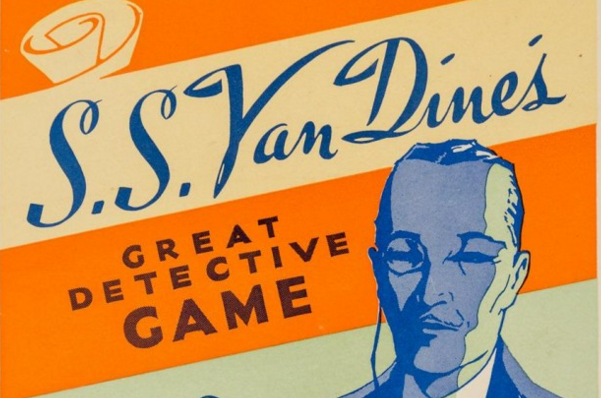
One novel that impressed him above all others is titled The Benson Murder Case by an American writer named S.S. Van Dine, pen name of an art critic and editor named Willard Huntington Wright. Referring to an eminent art historian—whose tastes guided those of the wealthy industrial class—Eliot wrote that Van Dine used “methods similar to those which Bernard Berenson applies to paintings.” He had good reason to ascribe to Van Dine a curatorial sensibility. After a nervous breakdown, the writer “spent two years in bed reading more than two thousand detective stories, during with time he methodically distilled the genre’s formulas and began writing novels.” The year after Eliot’s appreciative review, Van Dine published his own set of criteria for detective fiction in a 1928 issue of The American Magazine. You can read his “Twenty Rules for Writing Detective Stories” below. They include such proscriptions as “There must be no love interest” and “The detective himself, or one of the official investigators, should never turn out to be the culprit.”
Rules, of course, are made to be broken (just ask G.K. Chesterton), provided one is clever and experienced enough to circumvent or disregard them. But the novice detective or mystery writer could certainly do worse than take the advice below from one of T.S. Eliot’s favorite detective writers. We’d also urge you to see Raymond Chandler’s 10 Commandments for Writing Detective Fiction.
THE DETECTIVE story is a kind of intellectual game. It is more — it is a sporting event. And for the writing of detective stories there are very definite laws — unwritten, perhaps, but none the less binding; and every respectable and self-respecting concocter of literary mysteries lives up to them. Herewith, then, is a sort Credo, based partly on the practice of all the great writers of detective stories, and partly on the promptings of the honest author’s inner conscience. To wit:
1. The reader must have equal opportunity with the detective for solving the mystery. All clues must be plainly stated and described.
2. No willful tricks or deceptions may be placed on the reader other than those played legitimately by the criminal on the detective himself.
3. There must be no love interest. The business in hand is to bring a criminal to the bar of justice, not to bring a lovelorn couple to the hymeneal altar.
4. The detective himself, or one of the official investigators, should never turn out to be the culprit. This is bald trickery, on a par with offering some one a bright penny for a five-dollar gold piece. It’s false pretenses.
5. The culprit must be determined by logical deductions — not by accident or coincidence or unmotivated confession. To solve a criminal problem in this latter fashion is like sending the reader on a deliberate wild-goose chase, and then telling him, after he has failed, that you had the object of his search up your sleeve all the time. Such an author is no better than a practical joker.
6. The detective novel must have a detective in it; and a detective is not a detective unless he detects. His function is to gather clues that will eventually lead to the person who did the dirty work in the first chapter; and if the detective does not reach his conclusions through an analysis of those clues, he has no more solved his problem than the schoolboy who gets his answer out of the back of the arithmetic.
7. There simply must be a corpse in a detective novel, and the deader the corpse the better. No lesser crime than murder will suffice. Three hundred pages is far too much pother for a crime other than murder. After all, the reader’s trouble and expenditure of energy must be rewarded.
8. The problem of the crime must he solved by strictly naturalistic means. Such methods for learning the truth as slate-writing, ouija-boards, mind-reading, spiritualistic se’ances, crystal-gazing, and the like, are taboo. A reader has a chance when matching his wits with a rationalistic detective, but if he must compete with the world of spirits and go chasing about the fourth dimension of metaphysics, he is defeated ab initio.
9. There must be but one detective — that is, but one protagonist of deduction — one deus ex machina. To bring the minds of three or four, or sometimes a gang of detectives to bear on a problem, is not only to disperse the interest and break the direct thread of logic, but to take an unfair advantage of the reader. If there is more than one detective the reader doesn’t know who his codeductor is. It’s like making the reader run a race with a relay team.
10. The culprit must turn out to be a person who has played a more or less prominent part in the story — that is, a person with whom the reader is familiar and in whom he takes an interest.
11. A servant must not be chosen by the author as the culprit. This is begging a noble question. It is a too easy solution. The culprit must be a decidedly worth-while person — one that wouldn’t ordinarily come under suspicion.
12. There must be but one culprit, no matter how many murders are committed. The culprit may, of course, have a minor helper or co-plotter; but the entire onus must rest on one pair of shoulders: the entire indignation of the reader must be permitted to concentrate on a single black nature.
13. Secret societies, camorras, mafias, et al., have no place in a detective story. A fascinating and truly beautiful murder is irremediably spoiled by any such wholesale culpability. To be sure, the murderer in a detective novel should be given a sporting chance; but it is going too far to grant him a secret society to fall back on. No high-class, self-respecting murderer would want such odds.
14. The method of murder, and the means of detecting it, must be be rational and scientific. That is to say, pseudo-science and purely imaginative and speculative devices are not to be tolerated in the roman policier. Once an author soars into the realm of fantasy, in the Jules Verne manner, he is outside the bounds of detective fiction, cavorting in the uncharted reaches of adventure.
15. The truth of the problem must at all times be apparent — provided the reader is shrewd enough to see it. By this I mean that if the reader, after learning the explanation for the crime, should reread the book, he would see that the solution had, in a sense, been staring him in the face-that all the clues really pointed to the culprit — and that, if he had been as clever as the detective, he could have solved the mystery himself without going on to the final chapter. That the clever reader does often thus solve the problem goes without saying.
16. A detective novel should contain no long descriptive passages, no literary dallying with side-issues, no subtly worked-out character analyses, no “atmospheric” preoccupations. such matters have no vital place in a record of crime and deduction. They hold up the action and introduce issues irrelevant to the main purpose, which is to state a problem, analyze it, and bring it to a successful conclusion. To be sure, there must be a sufficient descriptiveness and character delineation to give the novel verisimilitude.
17. A professional criminal must never be shouldered with the guilt of a crime in a detective story. Crimes by housebreakers and bandits are the province of the police departments — not of authors and brilliant amateur detectives. A really fascinating crime is one committed by a pillar of a church, or a spinster noted for her charities.
18. A crime in a detective story must never turn out to be an accident or a suicide. To end an odyssey of sleuthing with such an anti-climax is to hoodwink the trusting and kind-hearted reader.
19. The motives for all crimes in detective stories should be personal. International plottings and war politics belong in a different category of fiction — in secret-service tales, for instance. But a murder story must be kept gemütlich, so to speak. It must reflect the reader’s everyday experiences, and give him a certain outlet for his own repressed desires and emotions.
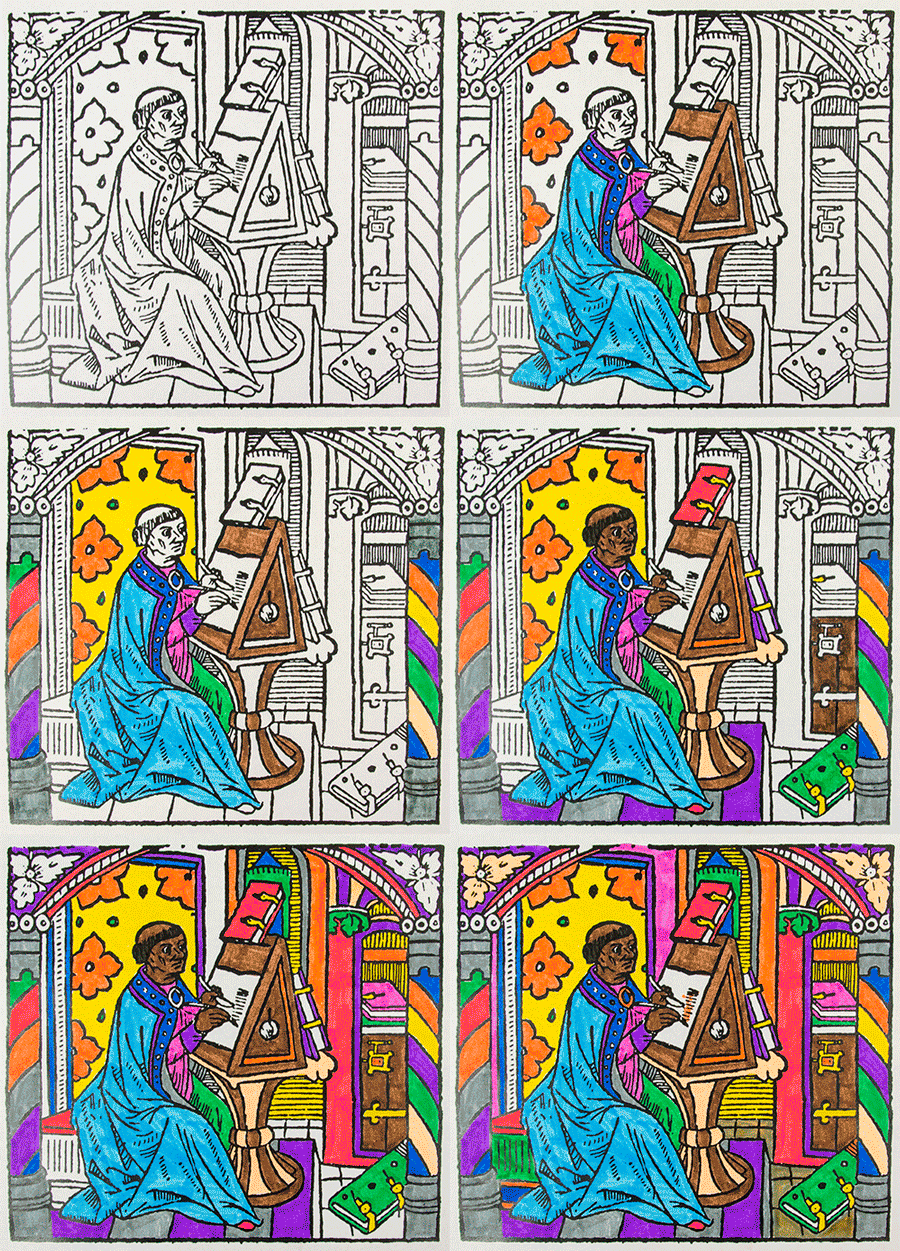
In early February 2016, museums and libraries worldwide took part in #ColorOurCollections–a campaign where they made available free coloring books, letting you color artwork from their collections and then share it on Twitter and other social media platforms, using the hashtag #ColorOurCollections. Below you can find a collection of free coloring books, which you can download and continue to enjoy. If you see any that we’re missing, please let us know in the comments, and we’ll do our best to update the page.
I don’t know about you, but when I’ve thought of chess grandmasters, I’ve often thought of Russians, northern Europeans, the occasional American, the guy on the Chessmaster box — purely by stereotype, in other words. I’ve never thought of anyone from, say, Jamaica, the country of birth of Maurice Ashley, not just a chess grandmaster but a chess commentator, writer, app and puzzle designer, speaker and Fellow at the Media Lab at MIT. Since we’ve only just entered February, known in the United States as Black History Month, why not highlight the Brooklyn-raised (and Brooklyn-park trained) Ashley’s status as, in the words of his official web site, “the first African-American International Grandmaster in the annals of the game”?
Given the impressiveness of his achievements, we might also ask what we can learn from him, whether or not we play chess ourselves. You can learn a bit more about Ashley, the work he does, and the work his students have gone on to do, in The World Is a Chess Board, the five-minute Mashable documentary at the top of the post. Even in that short runtime, he has much to say about how the game (which, he clarifies, “we consider an art form”) not only reflects life, and reflects the personalities of its players, but teaches those players — especially the young ones who may come from less-than-ideal beginnings — all about focus, determination, choice, and consequence. Perhaps the most important lesson? “You’ve got to be ready to lose.”
Ashley expounds upon the value of chess as a tool to hone the mind in “Working Backward to Solve Problems,” a clip from his TED Ed lesson just above. He begins by waving off the misperception, common among non-chess-players, that grandmasters “see ahead” ten, twenty, or thirty moves into the game, then goes on to explain that the sharpest players do it not by looking forward, but by looking backward. He provides a few examples of how using this sort of “retrograde analysis,” combined with pattern recognition, applies to problems in a range of situations from proofreading to biology to law enforcement to card tricks. If you ever have a chance to enter into a bet with this man, don’t.
That’s my advice, anyway. As far as Ashley’s advice goes, if we endorse any particular takeaway from what he says here, we endorse the first step of his chess-learning strategy for absolute beginners, which works equally well as the first step of a learning strategy for absolute beginners in anything: “The best advice I could give a young person today is, go online and watch some videos.” Stick with us, and we’ll keep you in all the videos you need.
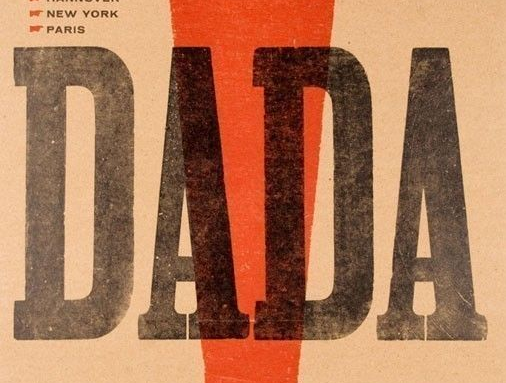
When we think of Dada, we think of an art movement—or anti-art movement—that embraced chance operations, futurism, and experimentation and rejected all of the previous doctrines of the formal art world as moribund and fraudulent. As Dada artist and theorist Tristan Tzara wrote in his 1918 manifesto, the aims of the establishment art world had been “to make money and cajole the nice nice bourgeois.” This new breed would have none of it. In their attack on bourgeois artistic and political values, artists like Tzara, Marcel Duchamp, Man Ray, Hans Richter, Kurt Schwitters and others willfully trespassed formal boundaries, using any means or medium they happened to find of interest in the moment. We have Dada painting, sculpture, typography, and film; Dada poetry, theater, dance, and even Dadaist politics, so well represented by Tzara’s manifesto.
One medium we don’t often associate with Dada, however, is music. And yet, those same artists who waged war on the establishment with readymade urinals and rambling manifestos also did so with musical compositions that were as influential as the painting, film, and poetry.
Dada, and its immediate successor, surrealism, “exerted a pervasive influence on 20th-century music,” writes Matthew Greenbaum at New Music Box, but “the presence of Dada and surrealism is generally unrecognized or forgotten” in discussions of “mid-century avant-garde composers” in New York, like Stefan Wolpe, Morton Feldman, and John Cage. And yet, the repetitive, machine-like qualities we associate with mid-century minimalism come more or less directly from the Dadaists, as does the high concept experimentation.
Dada artists, adds Greenbaum, “paid close attention to advanced and developing technology, and the repetitive beauty of machines was a ubiquitous image.” Works like Marcel Duchamp’s conceptual musical “assemblages cunningly obscure the boundaries of text, music, representation, and notation a half-century before John Cage’s experiments in indeterminacy.” Greenbaum’s essay makes a strong case for this lineage, but the most direct way to trace the steps from Duchamp, et al., to Cage is to listen to the Dada artists’ experiments with music firsthand, and you can hear a selection of them here, excerpted from the 1985 compilation Dada For Now and brought to us courtesy of Ubuweb, who host the full album. Many of these compositions are experiments with language, theatrical performance, and text (the album is shelved in the “Spoken Word” category), though none of the composers would have drawn any lines between word and music.
At the top of the post, hear Antonio Russolo’s 1921 composition “Corale and Serenata,” which sounds like a rather traditional march, but for the ominous roaring that shadows the orchestration and occasionally breaks in to disrupt it entirely, sounding like the rush of tires on a highway or workings of a huge, industrial machine. Next is Hugo Ball’s 1916 composition “Karawane,” in which a trio of vocalists—Trio Exvoco—grows louder and more guttural as they chant in unison, their only accompaniment what sounds like a trolley bell. Further down, in Tristan Tzara and others’ “L’amiral cherche une maison a louer,” also from 1916, that same trio performs some sort of exuberant comedy, with accompanying whiz-bang sound effects that one would hear in radio plays of the succeeding decades. And just above, in Kurt Schwitters’ 1919 “Simultangedicht kaa gee dee,” Trio Exvoco begins a chant that soon devolves into staccato vocalizations and gibberish.
A few of these pieces, like the Russolo at the top, are original recordings. The rest are reconstructions. All of them are strange, as is to be expected, but it’s impossible to hear just how strange—and how tasteless and absurd, perhaps—they would have sounded to audiences one hundred years ago. As Greenbaum argues, what was once revolutionary in Dada became normative as it was integrated into the American art establishment in the later 20th century. But to hear it with fresh ears is to recapture how Dadaist art sounded as radical as it looked.
Blank on Blank returned this week with the latest episode in “The Experimenters,” a miniseries highlighting the icons of STEM. This new animation brings to life a 1983 interview featuring one trailblazer, Gloria Steinem, talking with another, Sally Ride, a physicist who became the first American woman in space, and endured a lot of gender stereotyping along the way. Other episodes in “The Experimenters” series have focused on Buckminster Fuller, Richard Feynman, and Jane Goodall.
Note: Gloria Steinem recently published a new memoir called My Life on the Road. You can download it as a free audiobook if you head over to Audible.com and register for a 30-day free trial. The trial lets you download two audiobooks for free. Then, when the trial is over, you can continue your subscription, or cancel it, and still keep the audio books. The choice is yours. Get more info here.
If you would like to support the mission of Open Culture, consider making a donation to our site. It’s hard to rely 100% on ads, and your contributions will help us continue providing the best free cultural and educational materials to learners everywhere. You can contribute through PayPal, Patreon, and Venmo (@openculture). Thanks!
We're hoping to rely on loyal readers, rather than erratic ads. Please click the Donate button and support Open Culture. You can use Paypal, Venmo, Patreon, even Crypto! We thank you!
Open Culture scours the web for the best educational media. We find the free courses and audio books you need, the language lessons & educational videos you want, and plenty of enlightenment in between.