The Partially Examined Life: A Philosophy Podcast

A year-and-a-half ago, an old friend found me on Face­book and offered me a writ­ing job and par­tic­i­pa­tion in a pod­cast. I took him up on both.

Mark Lin­sen­may­er and I had been grad­u­ate stu­dents in phi­los­o­phy at the Uni­ver­si­ty of Texas in Austin, but we both left before get­ting the PhD to try our hands at some­thing more prac­ti­cal. Mark sug­gest­ed we make that expe­ri­ence the theme of an ongo­ing philo­soph­i­cal dis­cus­sion: we loved phi­los­o­phy but pre­ferred it as an avo­ca­tion. There was some­thing about the pro­fes­sion­al­iza­tion of phi­los­o­phy that seemed to go against the spir­it of it. We pre­ferred the “par­tial­ly exam­ined life” to the exam­ined life.

And so we decid­ed to cre­ate a phi­los­o­phy pod­cast with dis­cus­sions that were informed but not over­ly aca­d­e­m­ic, less like a class­room lec­ture and more like a con­ver­sa­tion over drinks after class, and uni­fied by the ques­tion of what makes phi­los­o­phy worth­while. We found anoth­er like­mind­ed for­mer col­league from the Uni­ver­si­ty of Texas, Seth Paskin, and began record­ing and pub­lish­ing our dis­cus­sions as The Par­tial­ly Exam­ined Life. (Find the pod­cast on iTunes here.)

May 12 was the one year anniver­sary of our first episode. Dur­ing that time we’ve cov­ered top­ics rang­ing from Plato’s con­cep­tion of the exam­ined life to Nietzsche’s immoral­ism, God and faith, to the phi­los­o­phy of mind. Frankly I’m always amazed that there are peo­ple who want to lis­ten to three guys talk about these things, but we seem to have a chem­istry that works. One review—for bet­ter or for worse—pegs Mark as “the Jack Black-like musi­cian,” Seth as the “sad one with calm voice who usu­al­ly guides the rud­der of the con­ver­sa­tion back into the top­ic,” and me as “avun­cu­lar and wry.” We’ve also received a lot of great reviews on iTunes, and a thrilling com­pli­ment from philoso­pher Arthur C. Dan­to, who was gra­cious enough to lis­ten to our dis­cus­sion of two of his essays in The Philo­soph­i­cal Dis­en­fran­chise­ment of Art. We’ve been grat­i­fied to see our lis­ten­er­ship rise, but most impor­tant­ly we’re hap­py that the pod­cast has kept us con­nect­ed to phi­los­o­phy and allowed us to pur­sue it—partially—in a way that seems more com­pat­i­ble with the spir­it of the dis­ci­pline.

This post comes to us via Wes Alwan, an occa­sion­al con­trib­u­tor to Open Cul­ture.

A Day on Earth (as Seen From Space)

Dur­ing his time on the Inter­na­tion­al Space Sta­tion, astro­naut Don Pet­tit trained his cam­era on plan­et Earth, and had it take a pho­to once every 15 sec­onds. The time lapse video above shows you Earth from day to night, com­plete with a sun­set, a moon­rise and the north­ern lights. Over­all, Pet­tit took 85 time-lapsed videos of Earth, and at least eight of them appear on this YouTube playlist.

via Wired

by | Permalink | Make a Comment ( 4 ) |

Bombing Warsaw … With Poems

Nazi Ger­many invad­ed Poland in 1939 and began a ter­ror bomb­ing cam­paign of War­saw, the nation’s capi­tol. In total, the Nazis dropped some 500 tons of high explo­sive bombs and 72 tons of incen­di­ary bombs on War­saw, begin­ning the planned destruc­tion of the city.

Now fast for­ward to 2009, and we wit­ness (above) War­saw under lit­er­ary assault. Last August, 100,000 poems writ­ten by Pol­ish and Chilean poets rained down on the city. The lit­er­ary strike came at the hands of Casagrande, a Chilean art col­lec­tive that has staged poet­ry bomb­ings of oth­er for­mer­ly bombed out cities. Dubrovnik, Guer­ni­ca, Berlin, etc. Need­less to say, the project marks a protest against war, a call for peace, and a cel­e­bra­tion of poet­ry. The Guardian has more on last mon­th’s poet­ry bomb­ing of Berlin here. H/T to MS…

Take it Easy: Sand Animation Splendor

It took Cesar DĂ­az MelĂ©n­dez three months, using only a cam­era, light table and sand, to pro­duce this sand ani­mat­ed film that serves as a video for the song, “No cor­ras tan­to,” which loose­ly trans­lates to “Take it Easy.” And, rather strik­ing­ly, Cesar made the film using no added effects or post pro­duc­tion. The Mak­ing of No cor­ras tan­to gives you a good look inside the pro­duc­tion process. Oth­er videos by the Madrid-based artist can be viewed here.

A quick PS: The song accom­pa­ny­ing the video was writ­ten by Cesar’s band, El Com­bolin­ga. Vis­it the band’s MySpace page.

by | Permalink | Make a Comment ( 2 ) |

The Lunch Date

In 1989, Adam David­son, while still a stu­dent at Colum­bia Uni­ver­si­ty, direct­ed a short film called The Lunch Date. Although the film has a vin­tage look to it, the com­men­tary is entire­ly con­tem­po­rary – a prod­uct of 1980s debates on race in Amer­i­ca. The Lunch Date picked up the Short Film Palme d’Or at the 1990 Cannes Film Fes­ti­val and then an Acad­e­my Award for the best Live Action Short Film in 1991. Not too shab­by for a stu­dent film that hap­pens to run a quick 9:10.

The Lunch Date now appears in our col­lec­tion of Free Movies Online along with many oth­er award win­ning movies. Many thanks to Patrick for send­ing this short our way.

by | Permalink | Make a Comment ( 7 ) |

Hitchcock on the Art of Suspense

In 1939, Alfred Hitch­cock gave a lec­ture at Radio City Music Hall orga­nized by The Muse­um of Mod­ern Art and Colum­bia Uni­ver­si­ty. The talk (read the full tran­script here) takes you inside the cre­ative evo­lu­tion of Hitchcock’s film­mak­ing. First comes the bare bones plot, then a fuller treat­ment, com­plete with the dia­logue and a sus­pense­ful sto­ry that dri­ves the movie along for two hours. Hitch­cock was the mas­ter of cre­at­ing sus­pense – of giv­ing the audi­ence the “dope,” as he oth­er­wise calls it – that strings view­ers along. And, just what was in that “dope”? He describes it below:

That is the one thing that dis­turbs me a lit­tle. You see mod­ern nov­els, psy­cho­log­i­cal nov­els, with frank char­ac­ter­i­za­tions and very good psy­chol­o­gy, but there has been a ten­den­cy, with the nov­el and with a lot of stage plays, to aban­don sto­ry. They don’t tell enough sto­ry or plot. For a motion pic­ture, we do need quite an amount of sto­ry.

Now the rea­son we need a lot of sto­ry is this: a film takes an hour and twen­ty min­utes to play, and an audi­ence can stand about an hour. After an hour, it starts to get tired, so it needs the injec­tion of some dope. One might also say there should be a slo­gan, “Keep them awake at the movies!”

That dope, as one might call it, is action, move­ment, and excite­ment; but more than that, keep­ing the audi­ence occu­pied men­tal­ly. Peo­ple think, for exam­ple, that pace is fast action, quick cut­ting, peo­ple run­ning around, or what­ev­er you will, and it is not real­ly that at all. I think that pace in a film is made entire­ly by keep­ing the mind of the spec­ta­tor occu­pied. You don’t need to have quick cut­ting, you don’t need to have quick play­ing, but you do need a very full sto­ry and the chang­ing of one sit­u­a­tion to anoth­er. You need the chang­ing of one inci­dent to anoth­er, so that all the time the audience’s mind is occu­pied.

Now so long as you can sus­tain that and not let up, then you have pace. That is why sus­pense is such a valu­able thing, because it keeps the mind of the audi­ence going. Lat­er on I will tell you how I think the audi­ence should par­tic­i­pate in those things.

The rest of the lec­ture con­tin­ues here. And be sure to find many Hitch­cock films in our col­lec­tion of Free Movies Online.

Sundown in Southwestern France

Two weeks in South­west­ern France. All footage was shot by Jon Bryant sim­ply using a Canon 7D. You can also watch the video direct­ly on Vimeo here.

Via @brainpicker.

NASA Lauches Photo Archive on Flickr

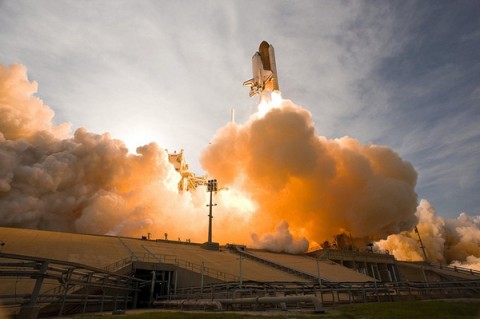
This week, NASA rolled a big archive of his­tor­i­cal images into Flickr Com­mons, giv­ing users access to more than a half cen­tu­ry of NASA’s pho­to­graph­ic his­to­ry. The images are divid­ed into three neat sets – “Launch and Take­off,” “Build­ing NASA” and “Cen­ter Name­sakes” – and they’re all copy­right-free, mean­ing that you can share and use these images how­ev­er you like. You can jump into the archive here and watch it grow over time. Thanks for the heads up @eugenephoto! They’re always appre­ci­at­ed…

« Go BackMore in this category... »
Quantcast