The First Pizza Ordered by Computer, 1974

By the late 1960s, tech­nol­o­gists were already invent­ing the future we now inhab­it. Arthur C. Clarke peered into the future and saw a wired world where infor­ma­tion and com­mu­ni­ca­tion would be imme­di­ate and bor­der­less. Mar­shall McLuhan fore­saw the rough out­lines of what we now call “social media.” And oth­ers pre­dict­ed that email and ecom­merce were on the not-so-dis­tant hori­zon. It should per­haps then come as no sur­prise that, just a few years lat­er, The Arti­fi­cial Lan­guage Lab­o­ra­to­ry at Michi­gan State devel­oped a way for the com­put­er to start doing some every­day com­merce — like order­ing piz­za.

In 1974 Don­ald Sher­man, whose speech was lim­it­ed by a neu­ro­log­i­cal dis­or­der called Moe­bius Syn­drome, used a new-fan­gled device designed by John Eulen­berg to dial up a pizze­ria. The first call went to Domi­nos, which hung up. They were appar­ent­ly too busy becom­ing a behe­moth. Mer­ci­ful­ly, a humane pizze­ria — Mr. Mike’s — took the call, and his­to­ry was made. It all plays out above, and we hope that Mr. Mike’s is still thriv­ing all these years lat­er.…

via Coudal

by | Permalink | Make a Comment ( 7 ) |

Nichelle Nichols Explains How Martin Luther King Convinced Her to Stay on Star Trek

nichelle-nichols-king

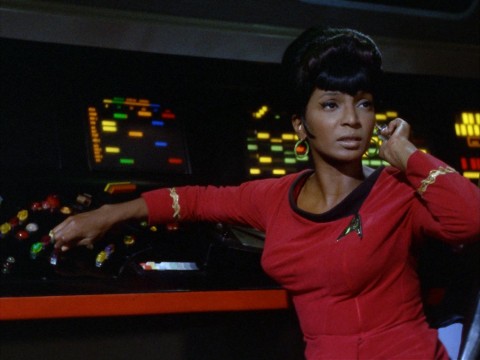
Nichelle Nichols played Lt. Uhu­ra on the orig­i­nal Star Trek series (1966–1969). Dur­ing the days when African-Amer­i­cans were still fight­ing for legal equal­i­ty in Amer­i­ca, her role took on spe­cial impor­tance. Her inclu­sion on the Enter­prise point­ed to a future when Amer­i­cans could live and work togeth­er, putting race aside. And Nichols made his­to­ry when Lt. Uhu­ra and Cap­tain Kirk embraced in the first inter-racial kiss on Amer­i­can tele­vi­sion.

We can part­ly thank Mar­tin Luther King, Jr. for all of this. As Nichols explains below, she gave con­sid­ered leav­ing Star Trek at the end of Sea­son 1, hop­ing to pur­sue a broad­way career. But MLK asked her to recon­sid­er. A big fan of the show, Dr. King under­scored the impor­tance of her char­ac­ter, of what it meant to future African-Amer­i­cans, of how her char­ac­ter, through the pow­er of TV, was open­ing a door that could nev­er be closed. Need­less to say, he per­suad­ed her to stay on the show, and the rest is glo­ri­ous his­to­ry.

If you would like to sign up for Open Culture’s free email newslet­ter, please find it here. It’s a great way to see our new posts, all bun­dled in one email, each day.

If you would like to sup­port the mis­sion of Open Cul­ture, con­sid­er mak­ing a dona­tion to our site. It’s hard to rely 100% on ads, and your con­tri­bu­tions will help us con­tin­ue pro­vid­ing the best free cul­tur­al and edu­ca­tion­al mate­ri­als to learn­ers every­where. You can con­tribute through Pay­Pal, Patre­on, and Ven­mo (@openculture). Thanks!

Relat­ed Con­tent:

Neil deGrasse Tyson Lists 8 (Free) Books Every Intel­li­gent Per­son Should Read

Stephen Col­bert Talks Sci­ence with Astro­physi­cist Neil deGrasse Tyson

Neil deGrasse Tyson Deliv­ers the Great­est Sci­ence Ser­mon Ever

by | Permalink | Make a Comment ( 6 ) |

Listen to Robert Frost Read ‘The Gift Outright,’ the Poem He Recited from Memory at JFK’s Inauguration

The read­ing from Cuban-Amer­i­can poet Richard Blan­co at Pres­i­dent Barack Oba­ma’s sec­ond inau­gu­ra­tion cer­e­mo­ny today fol­lows a tra­di­tion that began 52 years ago, when John F. Kennedy invit­ed his fel­low New Eng­lan­der Robert Frost to read at his inau­gur­al.

Frost was an ear­ly sup­port­er of Kennedy. On his 85th birth­day (March 26, 1959) he was asked by a reporter about the decline of New Eng­land’s cul­tur­al influ­ence in Amer­i­ca. “The next Pres­i­dent of the Unit­ed States will be from Boston,” replied Frost, accord­ing to Poets.org. “Does that sound as if New Eng­land is decay­ing?” At that time Kennedy had yet to for­mal­ly announce his can­di­da­cy, so Frost was asked to explain who he was talk­ing about. “He’s a Puri­tan named Kennedy. The only Puri­tans left these days are the Roman Catholics. There. I guess I wear my pol­i­tics on my sleeve.” When Pres­i­dent-elect Kennedy invit­ed the 86-year-old poet to read a poem at his inau­gu­ra­tion, if it was not too ardu­ous, Frost cabled his response:

IF YOU CAN BEAR AT YOUR AGE THE HONOR OF BEING MADE PRESIDENT OF THE UNITED STATES, I OUGHT TO BE ABLE AT MY AGE TO BEAR THE HONOR OF TAKING SOME PART IN YOUR INAUGURATION. I MAY NOT BE EQUAL TO IT BUT I CAN ACCEPT IT FOR MY CAUSE–THE ARTS, POETRY, NOW FOR THE FIRST TIME TAKEN INTO THE AFFAIRS OF STATESMEN.

Frost wrote a new poem, “Ded­i­ca­tion,” espe­cial­ly for the occa­sion. But con­di­tions on inau­gu­ra­tion day con­spired against the old poet. A heavy blan­ket of snow fell on Wash­ing­ton the night before, and the sun­light that day was intense. In the harsh glare from the sun and snow, Frost found that he could­n’t read the type­script of his new poem. Kennedy had ear­li­er asked Frost, if he was­n’t going to write a new poem, to con­sid­er read­ing his poem on Amer­i­can his­to­ry, “A Gift Out­right.” So when Frost found that he could­n’t read the new poem, he recit­ed “A Gift Out­right” from mem­o­ry.

In the video above, we hear Frost read­ing the poem, which was writ­ten in the late 1930s and first pub­lished in 1942. Although some have said the audio is from the Kennedy inau­gu­ra­tion, it appar­ent­ly is not, because Frost reads the orig­i­nal text. For the inau­gu­ra­tion, the poet report­ed­ly agreed to Kennedy’s request to make a change in the final line. The phrase “Such as she would become” was changed to a more opti­mistic “Such as she will become.” (You can read the full text of the poem in a new win­dow.) Some­time after the event, Kennedy put Frost’s inau­gur­al appear­ance in per­spec­tive:

I asked Robert Frost to come and speak at the inau­gu­ra­tion because I felt he had some­thing impor­tant to say to those of us who are occu­pied with the busi­ness of gov­ern­ment, that he would remind us that we were deal­ing with life, of hopes and fears of mil­lions of peo­ple. He has said it well in a poem called “Choose Some­thing Like a Star,” in which he speaks of the fairest star in sight and says, “It asks lit­tle of us here./It asks of us a cer­tain height./So when at times the mob is swayed/to car­ry praise or blame too far,/we may choose some­thing like a star/ to stay our mind on and be stayed.”

Relat­ed con­tent:

Robert Frost Recites ‘Stop­ping by Woods on a Snowy Evening’

An Animated Interpretation of Billy Collins’ Poem, “Forgetfulness”

Some twen­ty-five years ago, my act­ing class spent an entire semes­ter on the plays of Anton Chekhov. At the time, it felt very vital, but like so much else I stud­ied in col­lege, what I wound up retain­ing is sad­ly piece­meal. One thing I do remem­ber is the youngest of the Three Sis­ters break­down upon real­iz­ing that they’ll nev­er make it to Moscow. At the heart of this freak-out is her despair that she, and every­one who mat­ters to her, is aging, a con­di­tion she defines as dimin­ish­ment. It seemed a bit over-the-top to me at the time. For god’s sake, she’s only 24. So what if she can’t remem­ber a few words of school­girl Ital­ian? Two and a half decades out, I was mis­re­mem­ber­ing her name as Anya, a momen­tary con­fu­sion eas­i­ly right­ed on my third Google search.

(IRINA. (Sob­bing.) Where? Where has it all gone? Where is it? Oh my God, my God! I have for­got­ten every­thing, for­got­ten every­thing… Every­thing is con­fused in my head… I can’t remem­ber what is the word for win­dow in Ital­ian, or for ceil­ing… I am for­get­ting every­thing, I for­get more every day, and life flies past and nev­er returns, nev­er, and we will nev­er go to Moscow… I see now that we will nev­er go…)

I flashed on this long ago melt­down while watch­ing “For­get­ful­ness,” the love­ly ani­ma­tion of the Bil­ly Collins poem, above. As Collins lists the seem­ing­ly incon­se­quen­tial things lost, it occurred to me that the cen­tral “you” could stand for any­body: you, me, an elder­ly rel­a­tive, Chekhov’s Iri­na. (Not Anya. If we’re to make it to Moscow, we bet­ter get crack­ing.)

We’re lucky to have artists like Chekhov, Collins, and by exten­sion, ani­ma­tor Julian Grey, all pos­sessed of the abil­i­ty to imbue one of mankind’s most depress­ing and time­ly real­i­ties with ten­der­ness and lyri­cism. Per­haps you’ll remem­ber some­one with whom to share “For­get­ful­ness”.

Relat­ed Con­tent:

Bil­ly Collins Poet­ry to Ani­mat­ed Life

The Ani­ma­tion of Bil­ly Collins’ Poet­ry

Ayun Hal­l­i­day describes some of the places she has been (not Moscow) in No Touch Mon­key! And Oth­er Trav­el Lessons Learned Too Late.

Watch Häxan, the Classic Cinematic Study of Witchcraft Narrated by William S. Burroughs (1922)

Some pic­tures from the silent era, like F.W. Mur­nau’s Nos­fer­atu, could­n’t look more clear­ly like ances­tors of the mod­ern hor­ror film. Trac­ing the dis­tant ori­gins of oth­er forms — of doc­u­men­tary, say — proves a trick­i­er task. Hence the val­ue of a movie like Ben­jamin Chris­tensen’s Häx­an, also known as Witch­craft Through the Ages, which not only mounts a non­fic­tion­al inves­ti­ga­tion into human­i­ty’s per­cep­tion of “witch­es” through­out the ages, but does so with the aid of dra­mat­ic sequences as eerie as any of Count Orlok run­ning amok. Giv­en that Chris­tensen’s metic­u­lous­ly researched his­tor­i­cal cre­ation demand­ed a larg­er bud­get than any oth­er Scan­di­na­vian film to that point, you could also view it as an antecedent of today’s visu­al­ly elab­o­rate, spec­ta­cle-inten­sive block­busters. Like many well-known silent films, Häx­an has under­gone mul­ti­ple releas­es, each run­ning dif­fer­ent lengths, with dif­fer­ent scores. You see above the 1968 ver­sion, which reduces Chris­tensen’s orig­i­nal 104-minute cut to a brisk 77 min­utes and accom­pa­nies it with a jaun­ty, rich­ly incon­gru­ous five-piece jazz score by Daniel Humair.

Atop the music we hear the his­to­ry of the per­se­cu­tion of  “witch­es,” from the prim­i­tive era to medieval times to then-mod­ern times, when the idea of the “hys­ter­i­cal woman” gained pur­chase in the zeit­geist. Nar­rat­ing this sto­ry in the 1968 ver­sion is none oth­er than writer and Beat icon William S. Bur­roughs, who, despite his flam­boy­ant­ly artis­tic per­son­al­i­ty, deliv­ers an ulti­mate­ly sober analy­sis. The film takes the posi­tion that witch­craft, far from a real­i­ty in and of itself, aris­es and re-aris­es as an inven­tion of the super­sti­tious, the irra­tional, and those dis­in­clined to under­stand the nature of men­tal ill­ness. If that sub­ject sounds more suit­able for an aca­d­e­m­ic paper, remem­ber that this research comes deliv­ered by the bold visu­al strokes of pro­to-hor­ror silent film, close read­ing of the fif­teenth-cen­tu­ry inquisi­tor’s trea­tise Malleus Malefi­carum, and the man who wrote Naked Lunch.

via Bib­liok­lept

Relat­ed Con­tent:

Watch the Quin­tes­sen­tial Vam­pire Film Nos­fer­atu Free Online as Hal­loween Approach­es

The Pix­ies’ Black Fran­cis Cre­ates Sound­track for Famous Ger­man Expres­sion­ist Film, The Golem

Col­in Mar­shall hosts and pro­duces Note­book on Cities and Cul­ture and writes essays on lit­er­a­ture, film, cities, Asia, and aes­thet­ics. He’s at work on a book about Los Ange­les, A Los Ange­les Primer. Fol­low him on Twit­ter at @colinmarshall.

Day of Light: A Crowdsourced Film by Multimedia Genius Brian Eno

Over the past sev­er­al years, we’ve seen exper­i­men­tal artists adapt grace­ful­ly (or cash in, if you’re cyn­i­cal) to the user-gen­er­at­ed world we live in now. While the pre­dictably unpre­dictable Flam­ing Lips have been at the inter­ac­tive media game for a while in their own weird way, we’ve also seen Bjork branch out into mul­ti­me­dia with the Bio­phil­ia iPhone/iPad app to accom­pa­ny the album of the same name, and last week we cov­ered Philip Glass’s for­ay into the app mar­ket with his Glass Machine remix­ing app.

Not ever to be out­done, producer/composer/multimedia genius Bri­an Eno released his own app last year, Scape, which allows users to gen­er­ate their own ambi­ent com­po­si­tions on their i‑devices. Scape’s release came just before that of Eno’s lat­est ambi­ent album, Lux, a col­lec­tion of sound­scapes that were ini­tial­ly installed in art gal­leries and air­port ter­mi­nals. On the album’s release date this past Novem­ber, Eno had more in store for fans. He streamed the entire album online at four dif­fer­ent times dur­ing the same day: sun­rise, day­light, sun­set, and night.

Lis­ten­ers were invit­ed to upload pho­tos of each time of day, under the gen­er­al theme of “play of light” (a title Eno con­sid­ered for the album). Eno and his team then curat­ed their favorite images, from all over the globe, and edit­ed them togeth­er into the short film above, enti­tled “Day of Light.” The idea, he says, was to “make a col­lab­o­ra­tive, gen­er­a­tive work… to see what hap­pened if you just made a space for it to hap­pen in.” Judge the results for your­self. Does this prod­uct from the minds and eyes of the Eno col­lec­tive add up to more than the sum of its parts?

Relat­ed Con­tent

Bri­an Eno on Cre­at­ing Music and Art As Imag­i­nary Land­scapes (1989)

Bri­an Eno Once Com­posed Music for Win­dows 95; Now He Lets You Cre­ate Music with an iPad App

Josh Jones is a writer and musi­cian based in Wash­ing­ton, DC. Fol­low him @jdmagness

R.E.M.‘s “Losing My Religion” Reworked from Minor to Major Scale

Take R.E.M.‘s 1991 bal­lad “Los­ing My Reli­gion” and rework it from minor to major scale, and here’s what you get — some­thing that’s, as one Vimeo com­menter called it, “rec­og­niz­able enough to be nostalgic…unique enough to be shared!” Oth­er songs dig­i­tal­ly reworked by MajorScaled TV include “Rid­ers on the Storm” by The Doors, Metal­li­ca’s “Noth­ing Else Mat­ters,” and Djan­go Rein­hardt’s “Minor Swing.” Fol­low MajorScaled TV on Face­book for even­tu­al addi­tions to the col­lec­tion.

If you would like to sign up for Open Culture’s free email newslet­ter, please find it here. It’s a great way to see our new posts, all bun­dled in one email, each day.

If you would like to sup­port the mis­sion of Open Cul­ture, con­sid­er mak­ing a dona­tion to our site. It’s hard to rely 100% on ads, and your con­tri­bu­tions will help us con­tin­ue pro­vid­ing the best free cul­tur­al and edu­ca­tion­al mate­ri­als to learn­ers every­where. You can con­tribute through Pay­Pal, Patre­on, and Ven­mo (@openculture). Thanks!

Relat­ed Con­tent:

Nirvana’s “Smells Like Teen Spir­it,” Reworked in Major Key, Becomes a Cheer­ful Pop Song

R.E.M. Reveals the Secrets Behind Their Emo­tion­al­ly-Charged Songs: “Los­ing My Reli­gion” and “Try Not to Breathe”

R.E.M Plays “Radio Free Europe” on Their Nation­al Tele­vi­sion Debut on The David Let­ter­man Show (1983)

by | Permalink | Make a Comment ( 29 ) |

Harder Than It Looks: How to Make a Great Stop Motion Animation

Ever find your­self watch­ing a great lit­tle stop motion ani­ma­tion and think­ing, “Hey, I could do that?”  What’s that? You made one with some friends in mid­dle school? Great! Maybe you should bang one out tomor­row morn­ing, slap it up on YouTube, and brace your­self for the onslaught of pub­lic ado­ra­tion that’s so damnably dif­fi­cult to avoid when one’s cre­ation becomes a viral sen­sa­tion overnight.

Hold your hors­es, Gum­by. Film­mak­ing has grown increas­ing­ly demo­c­ra­t­ic in the dig­i­tal age, but a real­ly elab­o­rate stop motion ani­ma­tion is still a ton of work. Care to con­sid­er all that goes into one?

Try 382 Mole­sk­ine note­books; days of painstak­ing, no doubt bor­ing, labor; a cam­era dol­ly, a green screen, and a live, albeit less-than-pro­fes­sion­al, cat and mouse team. These are the pri­ma­ry ele­ments of Dutch “graph­ic motion design­er” Rogi­er Wieland’s “A Year in Full Colour,” a cun­ning salute to old-school dai­ly plan­ners. Unsur­pris­ing­ly, this flight of fan­cy was com­mis­sioned by Mole­sk­ine, a brand whose inroads into the iPad cov­er mar­ket would like­ly not be enough to keep things in the black should jot­ting things on paper go the way of the dodo.  Per­haps instead of mak­ing a stop motion of your own, you could pour your cre­ative efforts into record­ing your upcom­ing appoint­ments in a Mole­sk­ine clas­sic.

As to which you should view first—the fin­ished prod­uct (above) or the equal­ly brief, but high­ly illu­mi­nat­ing Mak­ing Of  (below)–we leave that in your capa­ble hands.

Relat­ed Con­tent

Spike Jonze Presents a Stop Motion Film for Book Lovers

Going West: A Stop Motion Nov­el

Ayun Hal­l­i­day’s plan­ner of choice is the Sling­shot Orga­niz­er  Fol­low her @AyunHalliday

« Go BackMore in this category... »
Quantcast