Watch Jimi Hendrix: Hear My Train A Comin’, the New PBS Documentary (Free for a Limited Time)

Def­i­nite­ly worth a quick men­tion. For a lim­it­ed time, PBS is mak­ing avail­able its lat­est film from its great Amer­i­can Mas­ters doc­u­men­tary series. My Train A Comin’ traces Jimi Hen­drix’s “remark­able jour­ney from his hard­scrab­ble begin­nings in Seat­tle, through his stint as a US Army para­troop­er and as an unknown side­man, to R&B stars until his dis­cov­ery and ulti­mate inter­na­tion­al star­dom.” It fea­tures “pre­vi­ous­ly unseen footage of the 1968 Mia­mi Pop Fes­ti­val, home movies, and inter­views with those clos­est to Jimi Hen­drix.” From what we can tell, PBS will keep this film online for only a mat­ter of days. So watch it while you can.

Relat­ed Con­tent:

In 1969 Telegram, Jimi Hen­drix Invites Paul McCart­ney to Join a Super Group with Miles Davis

Jimi Hen­drix Wreaks Hav­oc on the Lulu Show, Gets Banned From BBC

‘Elec­tric Church’: The Jimi Hen­drix Expe­ri­ence Live in Stock­holm, 1969

See Jimi Hendrix’s First TV Appear­ance, and His Last as a Back­ing Musi­cian (1965)

575 Free Movies Online: Great Clas­sics, Indies, Noir, Doc­u­men­taries & West­erns, etc.

by | Permalink | Make a Comment ( 8 ) |

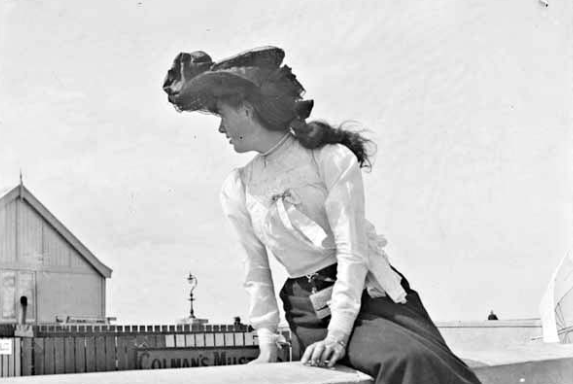
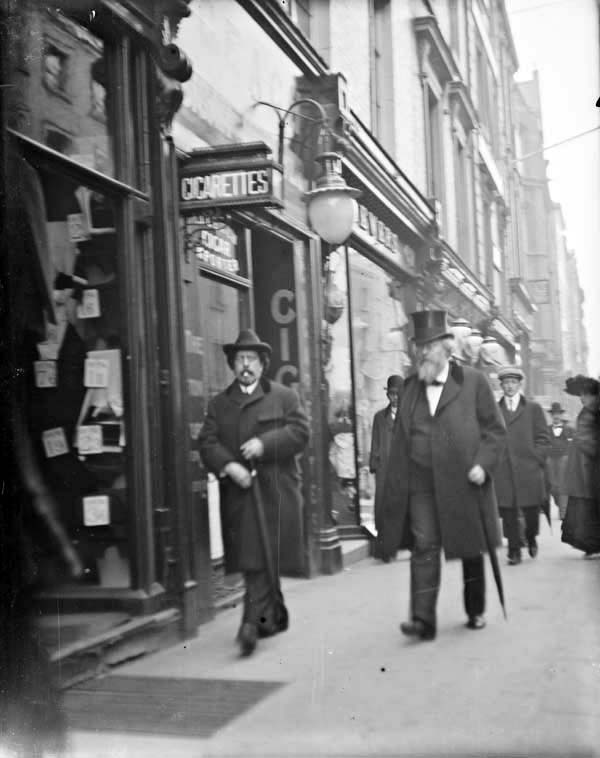
James Joyce’s Dublin Captured in Vintage Photos from 1897 to 1904

dublin 1902

The Google Cul­tur­al Insti­tute has drawn our atten­tion before, with its vir­tu­al exhi­bi­tions on the rise of the Eif­fel Tow­er, the fall of the Iron Cur­tain, and many oth­er notable chap­ters of human his­to­ry. Today, take a look at a Google Cul­tur­al Insti­tute gallery that has a foot in lit­er­a­ture as well as in his­to­ry, Dublin­ers: the Pho­tographs of J.J. Clarke from the Nation­al Library of Ire­land. Sub­ti­tled “a glimpse of James Joyce’s Dublin,” the online show presents pic­tures tak­en by this fel­low Clarke at the turn of the 20th cen­tu­ry, when he came to the Irish cap­i­tal to study med­i­cine. His “pho­to­jour­nal­is­tic approach to his sub­jects allowed him to cap­ture vivid scenes from the dai­ly lives of Dublin’s men, women and chil­dren.”

CLAR_071

This made Clarke a con­tem­po­rary of Joyce, and so his “images also show us how the city looked” to the writer “whose best known works — the short sto­ry col­lec­tion Dublin­ers, and the nov­els A Por­trait of the Artist as a Young Man and Ulysses — are all set around that time, when Joyce too was a young stu­dent fas­ci­nat­ed by the world around him.”

Both the pho­tog­ra­ph­er and the nov­el­ist, in their sep­a­rate forms, set about cap­tur­ing the city, the era, and the cul­ture around them, and the pic­tures of Clarke’s fea­tured at the Google Cul­tur­al Insti­tute could eas­i­ly illus­trate any of Joyce’s books.

CLAR_008

I’ve long enjoyed repeat­ing the obser­va­tion that, had the real Dublin crum­bled, we could rebuild it from the details giv­en in Ulysses — or at least we could rebuild the Dublin of 1904. But I now accept that hav­ing on hand Clarke’s pho­tographs, about which you can learn much more at the Nation­al Library of Ire­land’s site, they would great­ly speed the recon­struc­tion process as well. All of the Joycean texts men­tioned above can be found in our col­lec­tion of Free Audio Books and Free eBooks.

Relat­ed Con­tent:

Vladimir Nabokov Cre­ates a Hand-Drawn Map of James Joyce’s Ulysses

James Joyce, With His Eye­sight Fail­ing, Draws a Sketch of Leopold Bloom (1926)

James Joyce Reads ‘Anna Livia Plura­belle’ from Finnegans Wake

Col­in Mar­shall hosts and pro­duces Note­book on Cities and Cul­ture and writes essays on lit­er­a­ture, film, cities, Asia, and aes­thet­ics. He’s at work on a book about Los Ange­lesA Los Ange­les Primer. Fol­low him on Twit­ter at @colinmarshall.

Jerry Garcia Talks About the Birth of the Grateful Dead & Playing Kesey’s Acid Tests in New Animated Video

Before the Grate­ful Dead record­ed their clas­sic epony­mous coun­try psych album, before they were the Grate­ful Dead, they were the War­locks, “play­ing the divorcees bars up and down the penin­su­la,” Jer­ry Gar­cia tells us above. Their book­ing agent “used to book strip­pers and dog acts and magi­cians and every­body else.” Their first few gigs “sound­ed like hell,” says Gar­cia, “very awful.” In this Blank-on-Blank-ani­mat­ed 1988 inter­view with for­mer Cap­i­tal-EMI record exec­u­tive Joe Smith, Gar­cia gets into the ori­gin of their name (a sto­ry involv­ing the East Coast War­locks, who might have sued. What he doesn’t men­tion is that the Vel­vet Underground—inventors of East Coast psych—also played at that time as the War­locks.)

Smith was with Warn­er Bros. when the Dead were signed in 1967. His rela­tion­ship with the band then was frus­trat­ed, and he went so far as to call the record­ing of their sec­ond album “the most unrea­son­able project with which we have ever involved our­selves.” But this con­ver­sa­tion is a fun­ny, cor­dial exchange between two very affa­ble peo­ple with sur­pris­ing­ly good mem­o­ries of the time (Smith also once said the Dead “could have put me in the hos­pi­tal for the rest of my life”). Jer­ry tells the sto­ry of their invi­ta­tion to Mer­ry Prankster and psy­che­del­ic genius Ken Kesey’s acid test par­ties in La Hon­da, Cal­i­for­nia. It’s more or less the his­to­ry of the West Coast acid rock scene and its apoth­e­o­sis at Haight-Ash­bury, so kind of essen­tial watch­ing, I’d say, but at less than six min­utes, you can afford to be the judge.

Relat­ed Con­tent:

Ken Kesey Talks About the Mean­ing of the Acid Tests in a Clas­sic Inter­view

UC San­ta Cruz Opens a Deadhead’s Delight: The Grate­ful Dead Archive is Now Online

The Grate­ful Dead Rock the Nation­al Anthem at Can­dle­stick Park: Open­ing Day, 1993

Library of Con­gress Releas­es Audio Archive of Inter­views with Rock ‘n’ Roll Icons

Josh Jones is a writer and musi­cian based in Durham, NC. Fol­low him at @jdmagness

T.S. Eliot’s “The Love Song of J. Alfred Prufrock” Gets Adapted As a Comic Book

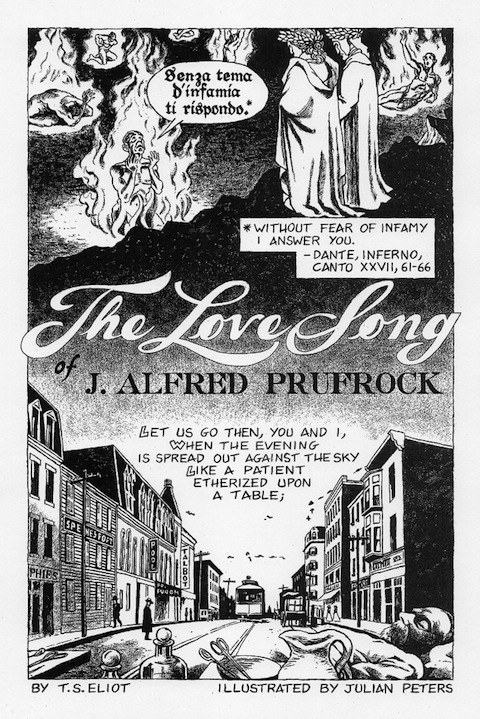
prufrockPeters1

Poet­ry is as close as writ­ten lan­guage comes to the visu­al arts but, aside from nar­ra­tive poems, it is not a medi­um eas­i­ly adapt­ed to visu­al forms. Per­haps some of the least adapt­able, I would think, are the high mod­ernists, whose obses­sive focus on tech­nique ren­ders much of their work opaque to all but the most care­ful read­ers. The major poems of T.S. Eliot per­haps best rep­re­sent this ten­den­cy. And yet com­ic artist Julian Peters is up to the chal­lenge. Peters, who has pre­vi­ous­ly adapt­ed Poe, Keats, and Rim­baud, now takes on Eliot’s “The Love Song of J. Alfred Prufrock,” and you can see the first nine pages at his site.

Writ­ten in 1910 and pub­lished five years lat­er, “Prufrock” has become a stan­dard ref­er­ence for Eliot’s doc­trine of the “objec­tive cor­rel­a­tive,” a con­cept he defines in his crit­i­cal essay, “Ham­let and His Prob­lems,” as “a set of objects, a sit­u­a­tion, a chain of events which shall be the for­mu­la of that par­tic­u­lar emo­tion.” It’s a the­o­ry he elab­o­rates in “Tra­di­tion and the Indi­vid­ual Tal­ent” in his dis­cus­sion of Dante. And Dante is where “Prufrock” begins, with an epi­graph from the Infer­no. Peters’ first page illus­trates the ago­nized speak­er of Dante’s lines, Gui­do da Mon­te­fel­tro, a soul con­fined to the eighth cir­cle, whom you can see at the top of the title page shown above. Peters’ visu­al choic­es place us firm­ly in the hell­ish emo­tion­al realm of “Prufrock,” a seem­ing cat­a­logue of the mun­dane that har­bors a dark­er import. Peters gives us no hint of when we might expect new pages, but I for one am eager to see more.

via The Rum­pus

Relat­ed Con­tent:

T.S. Eliot’s Rad­i­cal Poem “The Love Song of J. Alfred Prufrock,” Read by Antho­ny Hop­kins and Eliot Him­self

T.S. Eliot Reads His Mod­ernist Mas­ter­pieces “The Waste Land” and “The Love Song of J. Alfred Prufrock”

Hear Gertrude Stein Read Works Inspired by Matisse, Picas­so, and T.S. Eliot (1934)

Josh Jones is a writer and musi­cian based in Durham, NC. Fol­low him at @jdmagness

Gay Talese Outlines His Famous 1966 Profile “Frank Sinatra Has a Cold” on a Shirt Board

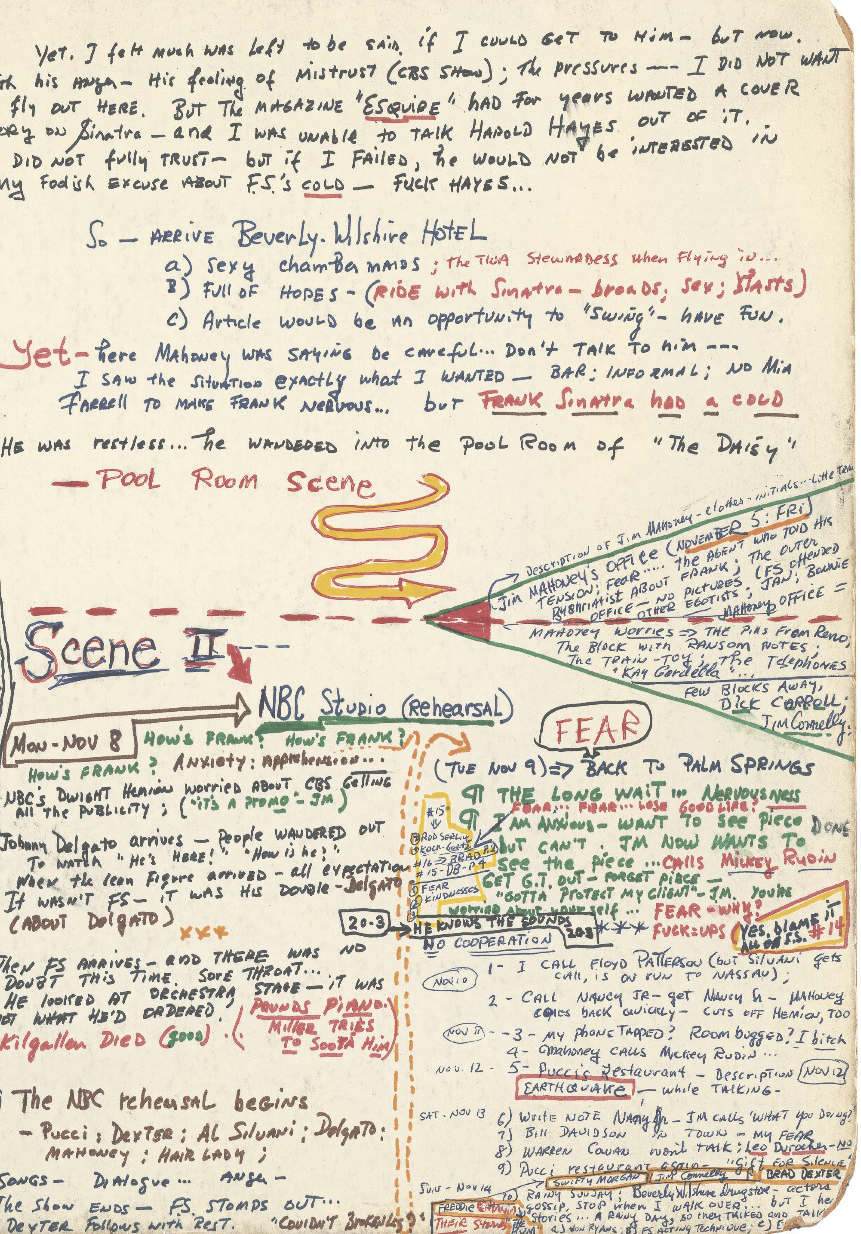
shirt board 3

Click image once to enlarge, and yet again to enlarge fur­ther.

The assign­ment was impos­si­ble: a sub­ject that refused to be inter­viewed, research that took over three months, and expens­es that reached near­ly $5,000 (in mid 1960s mon­ey). The result: one of the great­est celebri­ty pro­files ever writ­ten.

Recent­ly hired by Esquire after spend­ing the first ten years of his career at The New York Times, Gay Talese’s first assign­ment from edi­tor Harold Hayes was to write a pro­file of the already icon­ic Frank Sina­tra.

Accord­ing to Esquire:

The leg­endary singer was approach­ing fifty, under the weath­er, out of sorts, and unwill­ing to be inter­viewed. So Talese remained in L.A., hop­ing Sina­tra might recov­er and recon­sid­er, and he began talk­ing to many of the peo­ple around Sina­tra — his friends, his asso­ciates, his fam­i­ly, his count­less hang­ers-on — and observ­ing the man him­self wher­ev­er he could.

In an inter­view last month with Nie­man Sto­ry­board, Talese explained that he didn’t want to write the sto­ry in the first place. “Life mag­a­zine just did a piece on Sina­tra,” he recalls. “What can you say about Sina­tra that hasn’t already been said?” How­ev­er, for a writer who has writ­ten many bril­liant pieces, the result­ing pro­file, “Frank Sina­tra Has a Cold,” is his most indeli­ble.

Above is Talese’s out­line for the pro­file. Instead of note­books, Talese used shirt boards to write down his obser­va­tions. As he told The Paris Review in 2009, “I cut the shirt board into four parts and I cut the cor­ners into round edges, so that they [could] fit in my pock­et. I also use full shirt boards when I’m writ­ing my out­lines.”

What is also vital to Talese’s process is his per­son­al obser­va­tion. If you read Talese’s out­line (click on the image above to enlarge), you will uncov­er more of what Talese thought and felt dur­ing that day than facts about Sina­tra. “What I’m doing as a research­ing writer is always mixed up with what I’m feel­ing while doing it,” Talese notes, “and I keep a record of this. I’m always part of the assign­ment.”

This style goes to the heart of what became known as New Jour­nal­ism, which, among oth­er things, estab­lished the right for a writer to use his or her imag­i­na­tion to make a scene come alive. While the style was adopt­ed by Talese, along with Tom Wolfe, Joan Did­ion, and oth­ers, it was first born out of neces­si­ty to com­plete the Sina­tra pro­file. “The cre­ativ­i­ty in jour­nal­ism is in what you do with what you have,” Talese says.

Relat­ed Con­tent:

Gay Talese: Drink­ing at New York Times Put Mad Men to Shame

The Ten Best Amer­i­can Essays Since 1950, Accord­ing to Robert Atwan

Watch Frank Sina­tra Play “Snarling Mad Dog Killer” in 1954 Noir Sud­den­ly

Patti Smith Plays Songs by The Ramones, Rolling Stones, Lou Reed & More on CBGB’s Closing Night (2006)

Club own­er Hil­lel Kristal’s leg­endary CBGB died a slow death. A long, drawn-out affair that, when it came on Octo­ber 15, 2006, seemed inevitable. The old venue’s state then was per­fect­ly described by Ben Sis­ario in the New York Times as “the famous­ly crum­bling rock club that has been in con­tin­u­ous, loud oper­a­tion since Decem­ber 1973, serv­ing as the casu­al head­quar­ters and dank incu­ba­tor for some of New York’s most revered groups.”

But CBGB’s still had some life in it, as did all of the old New York haunts that fold­ed under Giu­liani and Bloomberg. CBGB out­last­ed so much of old New York that it seemed inde­struc­tible, and thus slight­ly annoy­ing until it was gone. Yet it need­ed to be seen into the next world in real style, and so it was, all thanks to Pat­ti Smith.

On the club’s clos­ing night, Smith and band con­vened to pay trib­ute to that “dank incu­ba­tor” by play­ing not only the bands it birthed but those who came before. At the top, see their live take on the Stones’ “Gimme Shel­ter.” It lacks the strange del­i­ca­cy of the orig­i­nal, but once Smith takes off her glass­es and Flea, who sat in for a few tunes, cuts loose, it’s a seri­ous rock­er. Smith’s ad-lib at the end is as cap­ti­vat­ing as her announcement—“Rolling Stones!”—is unnec­es­sary.

Smith’s band also played a Ramones med­ley (above) more than wor­thy of the for­mi­da­ble Queens four­some. Sure, any­one could play these songs—that was the point. But not many could so well cap­ture the Ramones’ tune­ful enthu­si­asm in the New York band’s ances­tral home.

Last­ly we bring you Smith and band’s “Pale Blue Eyes.” Although this footage pre­dates Reed’s pass­ing by sev­en years, it’s still a poignant trib­ute to the man who per­haps more than any oth­er musi­cian and writer inspired the ethos of the old CBGB. With­out Lou Reed, we would have no… bet­ter not to fin­ish that sen­tence. Enjoy the CBGB trib­ute above and see more of the final night’s cel­e­bra­tion here.

Relat­ed Con­tent:

CBGB’s: The Roots of Punk Lets You Watch Vin­tage Footage from the Hey­day of NYC’s Great Music Scene

The Ramones in Their Hey­day, Filmed “Live at CBGB,” 1977

The Talk­ing Heads Play CBGB, the New York Club that Shaped Their Sound (1975)

Pat­ti Smith Sings “You Light Up My Life” with Com­pos­er Joe Brooks on 1979 Show Kids Are Peo­ple Too

Josh Jones is a writer and musi­cian based in Durham, NC. Fol­low him at @jdmagness

Hear Albert Camus Deliver His Nobel Prize Acceptance Speech (1957)

Albert Camus—polit­i­cal dis­si­dent, jour­nal­ist, nov­el­ist, play­wright, and philosopher—was born 100 years ago today in French Alge­ria. Camus’ mod­est child­hood cir­cum­stances, marked by the death of his father in WWI when Camus was an infant, and his devo­tion to his deaf, illit­er­ate moth­er, seem to have instilled in him a mod­esty that shrank from his unavoid­able lit­er­ary fame. In his 1957 Nobel accep­tance speech (above, in French with Eng­lish sub­ti­tles), Camus opens with an expres­sion of mod­esty. After thank­ing the dig­ni­taries present, he says:

I have not been able to learn of your deci­sion with­out com­par­ing its reper­cus­sions to what I real­ly am. A man almost young, rich only in his doubts and with his work still in progress, accus­tomed to liv­ing in the soli­tude of work or in the retreats of friend­ship: how would he not feel a kind of pan­ic at hear­ing the decree that trans­ports him all of a sud­den, alone and reduced to him­self, to the cen­tre of a glar­ing light? And with what feel­ings could he accept this hon­our at a time when oth­er writ­ers in Europe, among them the very great­est, are con­demned to silence, and even at a time when the coun­try of his birth is going through unend­ing mis­ery?

Camus’ con­cerns dis­play anoth­er defin­ing char­ac­ter­is­tic: his sense of writ­ing as a polit­i­cal act, which he honed as a jour­nal­ist for left­ist and anti-colo­nial news­pa­pers, most notably France’s resis­tance paper Com­bat, edit­ed by Camus from 1943 to 1947. It was dur­ing these war years that Camus pro­duced some of his most well-known work, includ­ing his essay The Myth of Sisy­phus and nov­el The Stranger, and struck up a friend­ship with Jean-Paul Sartre, who also wrote for Com­bat. The friend­ship even­tu­al­ly went sour, in part due to Camus’ unwill­ing­ness to accept the per­se­cu­tions and abus­es of state pow­er man­i­fest­ed by Com­mu­nist regimes (Camus had been kicked out of the Com­mu­nist par­ty years before, in 1937, for refus­ing its dog­mas).

Just as Camus could not place par­ty over peo­ple, he would not ele­vate art to a spe­cial sta­tus above the polit­i­cal. Says Camus in his Nobel speech above: “I can­not live with­out my art. But I have nev­er placed it above every­thing. If, on the oth­er hand, I need it, it is because it can­not be sep­a­rat­ed from my fel­low men… it oblig­es the artist not to keep him­self apart; it sub­jects him to the most hum­ble and the most uni­ver­sal truth.” Believ­ing strong­ly in the social duty of the artist, Camus describes his writ­ing as a “com­mit­ment” to bear wit­ness to “an insane his­to­ry.” After out­lin­ing the spe­cial mis­sion of writ­ing, the “nobil­i­ty of the writer’s craft,” Camus returns near the end of his speech to mod­esty and puts the writer “in his prop­er place” among “his com­rades in arms.” For a writer who iden­ti­fied him­self sole­ly with his “lim­its and debts,” Camus left a sin­gu­lar­ly rich body of work that stands out­side of par­ty pol­i­tics while active­ly engag­ing with the polit­i­cal in its most rad­i­cal form—the duties of peo­ple to each oth­er in spite of, or because of, the absur­di­ty of human exis­tence.

Read the full tran­script of the trans­lat­ed Nobel Prize Speech here, or below:

In receiv­ing the dis­tinc­tion with which your free Acad­e­my has so gen­er­ous­ly hon­oured me, my grat­i­tude has been pro­found, par­tic­u­lar­ly when I con­sid­er the extent to which this rec­om­pense has sur­passed my per­son­al mer­its. Every man, and for stronger rea­sons, every artist, wants to be rec­og­nized. So do I. But I have not been able to learn of your deci­sion with­out com­par­ing its reper­cus­sions to what I real­ly am. A man almost young, rich only in his doubts and with his work still in progress, accus­tomed to liv­ing in the soli­tude of work or in the retreats of friend­ship: how would he not feel a kind of pan­ic at hear­ing the decree that trans­ports him all of a sud­den, alone and reduced to him­self, to the cen­tre of a glar­ing light? And with what feel­ings could he accept this hon­our at a time when oth­er writ­ers in Europe, among them the very great­est, are con­demned to silence, and even at a time when the coun­try of his birth is going through unend­ing mis­ery?

I felt that shock and inner tur­moil. In order to regain peace I have had, in short, to come to terms with a too gen­er­ous for­tune. And since I can­not live up to it by mere­ly rest­ing on my achieve­ment, I have found noth­ing to sup­port me but what has sup­port­ed me through all my life, even in the most con­trary cir­cum­stances: the idea that I have of my art and of the role of the writer. Let me only tell you, in a spir­it of grat­i­tude and friend­ship, as sim­ply as I can, what this idea is.

For myself, I can­not live with­out my art. But I have nev­er placed it above every­thing. If, on the oth­er hand, I need it, it is because it can­not be sep­a­rat­ed from my fel­low men, and it allows me to live, such as I am, on one lev­el with them. It is a means of stir­ring the great­est num­ber of peo­ple by offer­ing them a priv­i­leged pic­ture of com­mon joys and suf­fer­ings. It oblig­es the artist not to keep him­self apart; it sub­jects him to the most hum­ble and the most uni­ver­sal truth. And often he who has cho­sen the fate of the artist because he felt him­self to be dif­fer­ent soon real­izes that he can main­tain nei­ther his art nor his dif­fer­ence unless he admits that he is like the oth­ers. The artist forges him­self to the oth­ers, mid­way between the beau­ty he can­not do with­out and the com­mu­ni­ty he can­not tear him­self away from. That is why true artists scorn noth­ing: they are oblig­ed to under­stand rather than to judge. And if they have to take sides in this world, they can per­haps side only with that soci­ety in which, accord­ing to Nietzsche’s great words, not the judge but the cre­ator will rule, whether he be a work­er or an intel­lec­tu­al.

By the same token, the writer’s role is not free from dif­fi­cult duties. By def­i­n­i­tion he can­not put him­self today in the ser­vice of those who make his­to­ry; he is at the ser­vice of those who suf­fer it. Oth­er­wise, he will be alone and deprived of his art. Not all the armies of tyran­ny with their mil­lions of men will free him from his iso­la­tion, even and par­tic­u­lar­ly if he falls into step with them. But the silence of an unknown pris­on­er, aban­doned to humil­i­a­tions at the oth­er end of the world, is enough to draw the writer out of his exile, at least when­ev­er, in the midst of the priv­i­leges of free­dom, he man­ages not to for­get that silence, and to trans­mit it in order to make it resound by means of his art.

None of us is great enough for such a task. But in all cir­cum­stances of life, in obscu­ri­ty or tem­po­rary fame, cast in the irons of tyran­ny or for a time free to express him­self, the writer can win the heart of a liv­ing com­mu­ni­ty that will jus­ti­fy him, on the one con­di­tion that he will accept to the lim­it of his abil­i­ties the two tasks that con­sti­tute the great­ness of his craft: the ser­vice of truth and the ser­vice of lib­er­ty. Because his task is to unite the great­est pos­si­ble num­ber of peo­ple, his art must not com­pro­mise with lies and servi­tude which, wher­ev­er they rule, breed soli­tude. What­ev­er our per­son­al weak­ness­es may be, the nobil­i­ty of our craft will always be root­ed in two com­mit­ments, dif­fi­cult to main­tain: the refusal to lie about what one knows and the resis­tance to oppres­sion.

For more than twen­ty years of an insane his­to­ry, hope­less­ly lost like all the men of my gen­er­a­tion in the con­vul­sions of time, I have been sup­port­ed by one thing: by the hid­den feel­ing that to write today was an hon­our because this activ­i­ty was a com­mit­ment – and a com­mit­ment not only to write. Specif­i­cal­ly, in view of my pow­ers and my state of being, it was a com­mit­ment to bear, togeth­er with all those who were liv­ing through the same his­to­ry, the mis­ery and the hope we shared. These men, who were born at the begin­ning of the First World War, who were twen­ty when Hitler came to pow­er and the first rev­o­lu­tion­ary tri­als were begin­ning, who were then con­front­ed as a com­ple­tion of their edu­ca­tion with the Span­ish Civ­il War, the Sec­ond World War, the world of con­cen­tra­tion camps, a Europe of tor­ture and pris­ons – these men must today rear their sons and cre­ate their works in a world threat­ened by nuclear destruc­tion. Nobody, I think, can ask them to be opti­mists. And I even think that we should under­stand – with­out ceas­ing to fight it – the error of those who in an excess of despair have assert­ed their right to dis­hon­our and have rushed into the nihilism of the era. But the fact remains that most of us, in my coun­try and in Europe, have refused this nihilism and have engaged upon a quest for legit­i­ma­cy. They have had to forge for them­selves an art of liv­ing in times of cat­a­stro­phe in order to be born a sec­ond time and to fight open­ly against the instinct of death at work in our his­to­ry.

Each gen­er­a­tion doubt­less feels called upon to reform the world. Mine knows that it will not reform it, but its task is per­haps even greater. It con­sists in pre­vent­ing the world from destroy­ing itself. Heir to a cor­rupt his­to­ry, in which are min­gled fall­en rev­o­lu­tions, tech­nol­o­gy gone mad, dead gods, and worn-out ide­olo­gies, where mediocre pow­ers can destroy all yet no longer know how to con­vince, where intel­li­gence has debased itself to become the ser­vant of hatred and oppres­sion, this gen­er­a­tion start­ing from its own nega­tions has had to re-estab­lish, both with­in and with­out, a lit­tle of that which con­sti­tutes the dig­ni­ty of life and death. In a world threat­ened by dis­in­te­gra­tion, in which our grand inquisi­tors run the risk of estab­lish­ing for­ev­er the king­dom of death, it knows that it should, in an insane race against the clock, restore among the nations a peace that is not servi­tude, rec­on­cile anew labour and cul­ture, and remake with all men the Ark of the Covenant. It is not cer­tain that this gen­er­a­tion will ever be able to accom­plish this immense task, but already it is ris­ing every­where in the world to the dou­ble chal­lenge of truth and lib­er­ty and, if nec­es­sary, knows how to die for it with­out hate. Wher­ev­er it is found, it deserves to be salut­ed and encour­aged, par­tic­u­lar­ly where it is sac­ri­fic­ing itself. In any event, cer­tain of your com­plete approval, it is to this gen­er­a­tion that I should like to pass on the hon­our that you have just giv­en me.

At the same time, after hav­ing out­lined the nobil­i­ty of the writer’s craft, I should have put him in his prop­er place. He has no oth­er claims but those which he shares with his com­rades in arms: vul­ner­a­ble but obsti­nate, unjust but impas­sioned for jus­tice, doing his work with­out shame or pride in view of every­body, not ceas­ing to be divid­ed between sor­row and beau­ty, and devot­ed final­ly to draw­ing from his dou­ble exis­tence the cre­ations that he obsti­nate­ly tries to erect in the destruc­tive move­ment of his­to­ry. Who after all this can expect from him com­plete solu­tions and high morals? Truth is mys­te­ri­ous, elu­sive, always to be con­quered. Lib­er­ty is dan­ger­ous, as hard to live with as it is elat­ing. We must march toward these two goals, painful­ly but res­olute­ly, cer­tain in advance of our fail­ings on so long a road. What writer would from now on in good con­science dare set him­self up as a preach­er of virtue? For myself, I must state once more that I am not of this kind. I have nev­er been able to renounce the light, the plea­sure of being, and the free­dom in which I grew up. But although this nos­tal­gia explains many of my errors and my faults, it has doubt­less helped me toward a bet­ter under­stand­ing of my craft. It is help­ing me still to sup­port unques­tion­ing­ly all those silent men who sus­tain the life made for them in the world only through mem­o­ry of the return of brief and free hap­pi­ness.

Thus reduced to what I real­ly am, to my lim­its and debts as well as to my dif­fi­cult creed, I feel freer, in con­clud­ing, to com­ment upon the extent and the gen­eros­i­ty of the hon­our you have just bestowed upon me, freer also to tell you that I would receive it as an homage ren­dered to all those who, shar­ing in the same fight, have not received any priv­i­lege, but have on the con­trary known mis­ery and per­se­cu­tion. It remains for me to thank you from the bot­tom of my heart and to make before you pub­licly, as a per­son­al sign of my grat­i­tude, the same and ancient promise of faith­ful­ness which every true artist repeats to him­self in silence every day.

Pri­or to the speech, B. Karl­gren, Mem­ber of the Roy­al Acad­e­my of Sci­ences, addressed the French writer: «Mr. Camus – As a stu­dent of his­to­ry and lit­er­a­ture, I address you first. I do not have the ambi­tion and the bold­ness to pro­nounce judg­ment on the char­ac­ter or impor­tance of your work – crit­ics more com­pe­tent than I have already thrown suf­fi­cient light on it. But let me assure you that we take pro­found sat­is­fac­tion in the fact that we are wit­ness­ing the ninth award­ing of a Nobel Prize in Lit­er­a­ture to a French­man. Par­tic­u­lar­ly in our time, with its ten­den­cy to direct intel­lec­tu­al atten­tion, admi­ra­tion, and imi­ta­tion toward those nations who have – by virtue of their enor­mous mate­r­i­al resources – become pro­tag­o­nists, there remains, nev­er­the­less, in Swe­den and else­where, a suf­fi­cient­ly large elite that does not for­get, but is always con­scious of the fact that in West­ern cul­ture the French spir­it has for cen­turies played a pre­pon­der­ant and lead­ing role and con­tin­ues to do so. In your writ­ings we find man­i­fest­ed to a high degree the clar­i­ty and the lucid­i­ty, the pen­e­tra­tion and the sub­tle­ty, the inim­itable art inher­ent in your lit­er­ary lan­guage, all of which we admire and warm­ly love. We salute you as a true rep­re­sen­ta­tive of that won­der­ful French spir­it.

Relat­ed Con­tent:

Albert Camus Writes a Friend­ly Let­ter to Jean-Paul Sartre Before Their Per­son­al and Philo­soph­i­cal Rift

Albert Camus Talks About Adapt­ing Dos­toyevsky for the The­atre, 1959

The Fall by Albert Camus Ani­mat­ed

Josh Jones is a writer and musi­cian based in Durham, NC. Fol­low him at @jdmagness

Watch Joni Mitchell’s Classic Performances of “Both Sides Now” & “The Circle Game” (1968)

Joni Mitchell turns 70 today. A child of rur­al west­ern Cana­da, Mitchell endured a series of ear­ly hard­ships that might have crushed a more timid soul — polio, teen preg­nan­cy, an unhap­py mar­riage — but she always man­aged to fol­low her muse.

Mitchell made a life­long habit of guard­ing her artis­tic free­dom and turn­ing adver­si­ty into advan­tage. When a child­hood piano teacher slapped her on the wrist with a ruler for the offense of play­ing by ear, Mitchell decid­ed she did­n’t want any more for­mal music edu­ca­tion. When she found it dif­fi­cult to form gui­tar chords with her polio-weak­ened left hand, she learned to explore alter­na­tive, open-chord tun­ings that have giv­en her music an extra dimen­sion of rich­ness and vari­a­tion.

As a folk singer in the 1960s, Mitchell man­aged to ful­fill both sides of the Bob Dylan/Joan Baez dichoto­my: In one per­son she was both the song­writer of genius and the woman with the gold­en voice. And like Dylan, Mitchell did­n’t remain a folk singer for long. “I looked like a folk singer,” she once said, “even though the moment I began to write, my music was not folk music. It was some­thing else that had ele­ments of roman­tic clas­si­cism to it.” She went on to explore jazz, col­lab­o­rat­ing with Charles Min­gus, Jaco Pas­to­rius, Wayne Short­er, Her­bie Han­cock and oth­ers. “Impos­si­ble to clas­si­fy,” says her biog­ra­phy at the Rock and Roll Hall of Fame, “Mitchell has dogged­ly pur­sued avenues of self-expres­sion, heed­less of com­mer­cial out­comes.”

As a musi­cian, Mitchell is most­ly retired now. She con­tin­ues to paint and write poet­ry. To cel­e­brate today’s mile­stone we bring you a pair of great per­for­mances from her younger years. In the clip above, from the Jan­u­ary 21, 1968 episode of the CBC’s The Way it Is, a 25-year-old Mitchell plays her clas­sic ear­ly songs “Both Sides Now” and “The Cir­cle Game.” Even after 45 years, the songs can send a shiv­er down your spine. And below, from the 1970 Isle of Wight Fes­ti­val, Mitchel­l’s evo­lu­tion as a writer and per­former are evi­dent in the lilt­ing, melod­i­cal­ly inven­tive “Big Yel­low Taxi.” In a pre­vi­ous post, we have also high­light­ed Mitchell play­ing a 30-minute set on British TV in 1970.

Relat­ed Con­tent:

The Music, Art, and Life of Joni Mitchell Pre­sent­ed in a Superb 2003 Doc­u­men­tary

Joni Mitchell: Singer, Song­writer, Artist, Smok­ing Grand­ma

James Tay­lor Per­forms Live in 1970, Thanks to a Lit­tle Help from His Friends, The Bea­t­les

Dick Cavett’s Epic Wood­stock Fes­ti­val Show (August, 1969)

« Go BackMore in this category... »
Quantcast