Read Two Poems David Foster Wallace Wrote During His Elementary School Days

WallacePoems

Some read­ers dis­cov­er David Fos­ter Wal­lace through his fic­tion, and oth­ers dis­cov­er him through his essays. (Find 30 Free Sto­ries & Essays by DFW here.) Now that the pub­lish­ing indus­try has spent more than five years putting out every­thing of the late writer’s left­over mate­r­i­al they can rea­son­ably turn into books, new DFW fans may arrive through more forms still: his inter­views, Keny­on com­mence­ment speech, phi­los­o­phy the­sis, etc.. And though he pro­duced too few of them to appear col­lect­ed between cov­ers, Wal­lace once wrote poems as well, though judg­ing by the hand­writ­ing of the two shown here, he seems to have both start­ed down and aban­doned that par­tic­u­lar lit­er­ary avenue in child­hood. Still, that very qual­i­ty — and the oppor­tu­ni­ty it holds out to see the lin­guis­tic for­ma­tion of a man lat­er regard­ed as a prose genius — makes them all the more intrigu­ing. First, we have the unti­tled poem above, a sym­pa­thet­ic paean to the labors of moth­er­hood:

My moth­er works so hard
And for bread she needs some lard.
She bakes the bread. And makes the bed.
And when she’s threw
She feels she’s dayd.

dfwviking

Sec­ond, we have ”Viking Song”, which he prob­a­bly wrote lat­er. (The Har­ry Ran­som Cen­ter at UT-Austin, where the text resides, believes he was 6 or 7 when he wrote the poem.)

Vikings oh! They were so strong
Though there war­riors won’t live so long.
For a long time they rode the stormy seas.
Whether there was a great big storm or a lit­tle breeze.
There ships were made of real strong wood
As every good ship real­ly should.
If you were to see a Viking today
It’s best you go some oth­er way.
Because they’d kill you very well
And all your gold they’ll cer­tain­ly sell
For all these rea­sons stay away
From a Viking every day.

Though not what we would call mature works, these two poems still offer much of inter­est to the ded­i­cat­ed DFW exegete. “Note Wallace’s uncom­mon phras­ing in ‘so hard and for bread,’ ” writes Jus­tine Tal Gold­berg of the first. “I can’t think of a sin­gle child who would opt for this phras­ing over, say, a more sim­ple ‘so hard to make bread,’ ” a choice that demon­strates he “was already exhibit­ing the mas­ter­ful grasp of lan­guage for which he would lat­er become famous.” Alex Balk at The Awl calls “Viking Poem” “ ‘charm­ing and trag­ic,” adding that “the obvi­ous enthu­si­asm with which he wrote it makes me reflect on the joys of child­hood that we tend to for­get.” Wal­lace’s biog­ra­ph­er D.T. Max goes into more depth at the New York­er, iden­ti­fy­ing “moments in these poems that her­ald (or just acci­den­tal­ly fore­shad­ow?) the mature David’s Amer­i­can plain­song voice.” I’ve heard it assert­ed that every child has a nat­ur­al capac­i­ty for poet­ry, but the young Wal­lace, preter­nat­u­ral­ly per­cep­tive even then, must have soon real­ized that his tex­tu­al strengths resided else­where.

Relat­ed Con­tent:

David Fos­ter Wallace’s Love of Lan­guage Revealed by the Books in His Per­son­al Library

30 Free Essays & Sto­ries by David Fos­ter Wal­lace on the Web

David Fos­ter Wal­lace: The Big, Uncut Inter­view (2003)

David Fos­ter Wallace’s 1994 Syl­labus

Col­in Mar­shall hosts and pro­duces Note­book on Cities and Cul­ture and writes essays on cities, Asia, film, lit­er­a­ture, and aes­thet­ics. He’s at work on a book about Los Ange­les, A Los Ange­les Primer. Fol­low him on Twit­ter at @colinmarshall or on his brand new Face­book page.

A Quick Animation of Frida Kahlo’s Famous Self Portrait

In 1940, Fri­da Kahlo paint­ed a self por­trait for her lover, the pho­tog­ra­ph­er Nick­o­las Muray. Accord­ing to the Fri­da Kahlo fan site, the paint­ing enti­tled “Autor­re­tra­to con col­lar de espinas” (or Self Por­trait with Neck­lace of Thorns) fea­tures Kahlo wear­ing Christ’s crown of thorns

as a neck­lace, pre­sent­ing her­self as a Chris­t­ian mar­tyr. The thorns dig­ging into her neck are sym­bol­ic of the pain she still feels over her divorce from Diego [Rivera]. Hang­ing from the thorny neck­lace is a dead hum­ming­bird whose out­stretched wings echo Frida’s joined eye­brows. In Mex­i­can folk tra­di­tion, dead hum­ming­birds were used as charms to bring luck in love. Over her left shoul­der the black cat, a sym­bol of bad luck and death, waits to pounce on the hum­ming­bird. Over her right shoul­der the sym­bol of the dev­il, her pet monkey…a gift from Diego. Around her hair, but­ter­flies rep­re­sent the Res­ur­rec­tion. Once again, Fri­da uses a wall of large trop­i­cal plant leaves as the back­ground.

In late 2013, Flo­rent Por­ta dropped the paint­ing into Pho­to­shop and brought every­thing in the back­ground to life. If this short clip intrigues, you should­n’t miss the recent viral video called “Beau­ty,” which ani­mates paint­ings by Car­avag­gio, Ver­meer, & oth­er great mas­ters.

via Coudal

Relat­ed Con­tent:

Fri­da Kahlo Writes a Per­son­al Let­ter to Geor­gia O’Keeffe After O’Keeffe’s Ner­vous Break­down (1933)

Watch Mov­ing Short Films of Fri­da Kahlo and Diego Rivera at the “Blue House”

Fri­da Kahlo and Diego Rivera Vis­it Leon Trot­sky in Mex­i­co, 1938

Ridley Scott on the Making of Apple’s Iconic “1984” Commercial, Aired on Super Bowl Sunday in 1984

“I like to claim that I bought the sec­ond Mac­in­tosh com­put­er ever sold in Europe,” writes actor, come­di­an, writer, wit, and die-hard Apple enthu­si­ast Stephen Fry in Tele­graph essay mark­ing the Mac­in­tosh com­put­er’s 30th anniver­sary. “My friend and hero Dou­glas Adams was in the queue ahead of me. For all I know some­one some­where had bought one ten min­utes ear­li­er, but these were the first two that the only shop sell­ing them in Lon­don had in stock on the 24th Jan­u­ary 1984, so I’m stick­ing to my sto­ry.”

Fry had found the only com­put­er that made him want to write; “I couldn’t wait to get to it every morn­ing,” he remem­bers. He did­n’t even need con­vinc­ing from “1984,” Rid­ley Scot­t’s “leg­endary com­mer­cial” above, which he did­n’t see “until it crept onto Eng­lish tele­vi­sion screens way past its dra­mat­ic Super Bowl debut.”

Now that we’ve come upon the 30th anniver­sary of that dra­mat­ic Super Bowl debut, why not get a lit­tle insight from the man who direct­ed it? In the clip just above, Scott, who by that time already had the rich and trou­bling futur­is­tic visions Alien and Blade Run­ner under his belt, talks about his expe­ri­ence bring­ing the sto­ry­boards — auda­cious by the tele­vi­sion com­mer­cial stan­dard of the era, let alone for per­son­al com­put­ers — onto the screen. He dis­cuss­es look­ing to the past for his “slight­ly deca­dent-look­ing” future, hang­ing jet engines on the set as an act of “good dra­mat­ic bull­shit,” putting out a “fright­en­ing” cast­ing call for a back­ground full of skin­heads, get­ting the total­i­tar­i­an text for Big Broth­er to intone, and find­ing a young lady who could swing a ham­mer. And what would he have done with an even big­ger bud­get? “Not very much. I think we nailed it.” As, Fry and his fel­low user-enthu­si­asts agree, did Apple.

Relat­ed Con­tent:

Every Apple Ad Ever Aired on TV

Mar­tin Scors­ese Appears in New Apple Ad with Siri, Plays on His Chill­ing Cameo in Taxi Dri­ver

Steve Jobs Nar­rates the First “Think Dif­fer­ent” Ad (Nev­er Aired)

Rid­ley Scott Demys­ti­fies the Art of Sto­ry­board­ing (and How to Jump­start Your Cre­ative Project)

Col­in Mar­shall hosts and pro­duces Note­book on Cities and Cul­ture and writes essays on cities, Asia, film, lit­er­a­ture, and aes­thet­ics. He’s at work on a book about Los Ange­les, A Los Ange­les Primer. Fol­low him on Twit­ter at @colinmarshall or on his brand new Face­book page.

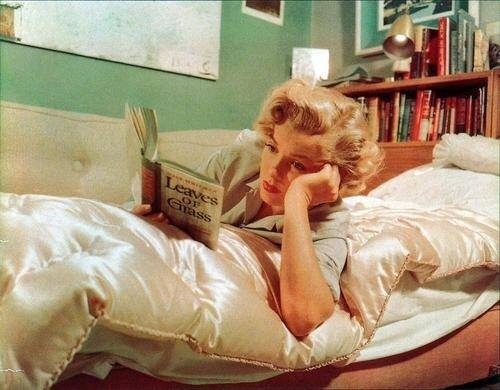
Marilyn Monroe Reads Walt Whitman’s Leaves of Grass (1952)

marilyn reads walt

We’ve tak­en you inside Mar­i­lyn Mon­roe’s per­son­al library, which includ­ed “no short­age of great lit­er­ary works – every­thing from Invis­i­ble Man by Ralph Elli­son, to Ulysses by James Joyce, to Crime And Pun­ish­ment by Fyo­dor Dos­to­evsky and The Plays Of Anton Chekhov.” And speak­ing of Ulysses, we’ve also revis­it­ed a 1955 pho­to­shoot where the pio­neer­ing pho­to­jour­nal­ist Eve Arnold cap­tured Mon­roe read­ing a worn copy of James Joyce’s mod­ernist clas­sic in a play­ground. By the looks of things, Mon­roe was mak­ing her way through the final chap­ter, some­times known as “Mol­ly Bloom’s Solil­o­quy.”

Today, we have Mon­roe read­ing Leaves of Grass by Walt Whit­man. In his biog­ra­phy The Return of Mar­i­lyn Mon­roe, Sam Stag­gs notes that “Walt Whit­man was [Mon­roe’s] favorite poet, even more than Carl Sand­burg. She loved him from the moment a New York friend gave her [Leaves of Grass] years ear­li­er.” Stag­gs con­tin­ues, “She often read Whit­man for relax­ation. The rhythm of his long free lines of verse lulled and stim­u­lat­ed her at the same time.” The pho­to above was seem­ing­ly tak­en by John Flo­rea at the Bev­er­ly Carl­ton Hotel cir­ca 1952. You can find a whole Pin­ter­est board ded­i­cat­ed to Mar­i­lyn Mon­roe read­ing here.

Feel free to down­load free copies of Leaves of Grass and Ulysses from our Free eBooks and Free Audio Books col­lec­tions.

If you would like to sign up for Open Culture’s free email newslet­ter, please find it here. It’s a great way to see our new posts, all bun­dled in one email, each day.

If you would like to sup­port the mis­sion of Open Cul­ture, con­sid­er mak­ing a dona­tion to our site. It’s hard to rely 100% on ads, and your con­tri­bu­tions will help us con­tin­ue pro­vid­ing the best free cul­tur­al and edu­ca­tion­al mate­ri­als to learn­ers every­where. You can con­tribute through Pay­Pal, Patre­on, and Ven­mo (@openculture). Thanks!

Relat­ed Con­tent:

Mar­i­lyn Mon­roe Reads Joyce’s Ulysses at the Play­ground (1955)

A Look Inside Mar­i­lyn Monroe’s Per­son­al Library

FBI’s “Vault” Web Site Reveals Declas­si­fied Files on Hem­ing­way, Ein­stein, Mar­i­lyn & Oth­er Icons

by | Permalink | Make a Comment ( 1 ) |

« Go Back
Quantcast