Watch the Trippy Screen Projections Used by Pink Floyd During their Dark Side of the Moon Tours

Even in the ear­ly years of Pink Floyd’s career, the band was exper­i­ment­ing with the pos­si­bil­i­ties of the live expe­ri­ence. Already daz­zling audi­ences with boom­ing sound, col­or­ful light shows, and bub­bling translu­cent oil pro­jec­tions, the group called in Abbey Road engi­neers to design a quadro­phon­ic sound sys­tem in 1967 to send Rick Wright’s key­boards around the con­cert hall, along with nature sounds, foot­steps, or mani­a­cal laugh­ter.

By the time of Dark Side of the Moon, the band had even more of a bud­get, and began to screen short films, some ani­mat­ed, dur­ing their world tour con­certs. Not real­ly pro­mo­tion­al videos, these films haven’t been seen out­side their live con­text since. But the Inter­net has a way of find­ing these things.

Ear­li­er this month, sev­er­al YouTube users uploaded the film reels used on Pink Floyd’s 1974 North Amer­i­can Tour, with music from Dark Side of the Moon added back in to give an indi­ca­tion of how it was used in the show. (The mix­es are also quite dif­fer­ent from the album–maybe a fan can tell us from where these come?)

We get some very Kubrick-like trav­el­ing shots down both an emp­ty hos­pi­tal cor­ri­dor and of Heathrow’s arrival lounge, and lat­er a fist punch­ing a bowl of eggs, Zabriskie Point-like explod­ing tele­vi­sions, shots of Nixon and Idi Amin, and final­ly back to open­ing shots of the moon for the finale.

But there’s also moments of ani­ma­tion cre­at­ed then-unknown film­mak­er Ian Emes.

The up-and-com­ing and self-taught artist had already made an ani­ma­tion “French Win­dows” set to the Floyd song “One of these Days,” filled with trip­py land­scapes and roto­scoped dancers. It won awards at ani­ma­tion fes­ti­vals and was shown on British TV. Accord­ing to Emes:

“Hav­ing seen my film French Win­dows on BBC’s The Old Grey Whis­tle Test, the band com­mis­sioned me to make their first-ever ani­mat­ed film, which they sub­se­quent­ly toured the world with. The Time sequence is used to this day. It was a breath­tak­ing expe­ri­ence to see my film pro­ject­ed live at Wem­b­ley Are­na before a huge crowd of tripped out fans.”

The con­cert films dif­fered from coun­try to coun­try, shar­ing 75 per­cent of their footage, which means if you are a true fan, you’ll have to watch the British Tour ver­sion and the French Tour to know what you’re miss­ing. The British ver­sion fea­tures more infor­ma­tion, but it’s not clear if it’s also by Emes.

After Dark Side of the Moon, Pink Floyd con­tin­ued to bring visu­als into their live shows, most notably anoth­er ani­ma­tion for “Wel­come to the Machine,” seen below. This time they used anoth­er up-and-com­ing illus­tra­tor and ani­ma­tor called Ger­ald Scarfe to cre­ate the har­row­ing graph­ics. Scarfe, of course, would lat­er cre­ate many more works for Pink Floy­d’s The Wall, and those ani­ma­tions would be used in con­cert and lat­er in the Alan Park­er film, The Wall.

via Boing Boing

Relat­ed Con­tent:

Pink Floyd Per­forms on US Tele­vi­sion for the First Time: Amer­i­can Band­stand, 1967

Pink Floyd’s “Echoes” Pro­vides a Sound­track for the Final Scene of Kubrick’s 2001: A Space Odyssey

Hear Lost Record­ing of Pink Floyd Play­ing with Jazz Vio­lin­ist Stéphane Grap­pel­li on “Wish You Were Here”

Ted Mills is a free­lance writer on the arts who cur­rent­ly hosts the artist inter­view-based FunkZone Pod­cast and is the pro­duc­er of KCR­W’s Curi­ous Coast. You can also fol­low him on Twit­ter at @tedmills, read his oth­er arts writ­ing at tedmills.com and/or watch his films here.
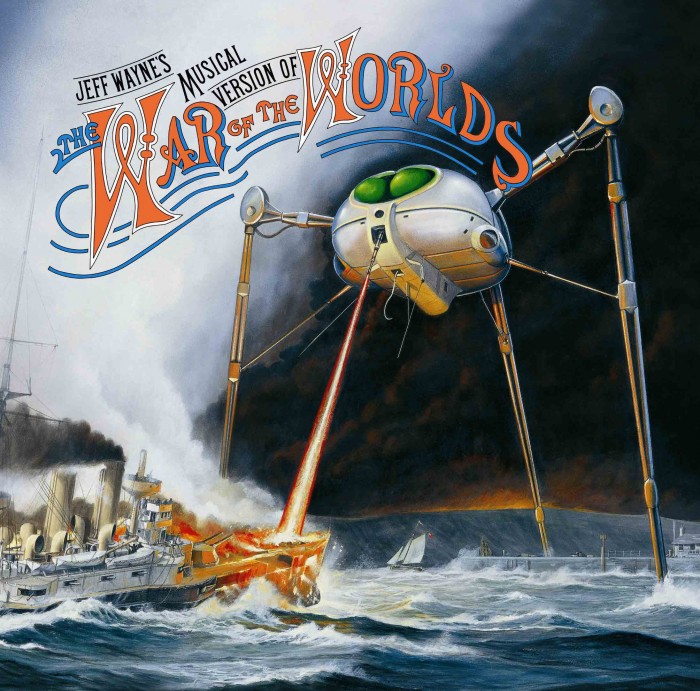
Hear the Prog-Rock Adaptation of H.G. Wells’ War of the Worlds: The 1978 Rock Opera That Sold 15 Million Copies Worldwide

Since the 1950s at least, Amer­i­cans have embraced sci­ence fic­tion of all kinds—from the high con­cepts of 2001 to the high kitsch of Bar­barel­la—even if some­times only among devot­ed cult fans. The Queen-scored Flash Gor­don, for exam­ple, did not do well in U.S. the­aters on its release in 1980, though it was a hit in the UK. But not long after, its icon­ic, puls­ing theme song, with its oper­at­ic blasts, became an unmis­tak­able call­back to the final days of 70s rock opera’s glo­ri­ous excess­es.

And yet some­how, anoth­er equal­ly bom­bas­tic sci-fi rock opera pro­duced in 1978, Jeff Wayne’s musi­cal adap­ta­tion of H.G. Wells’ War of the Worlds, has been denied prop­er cult sta­tus in the States. At the time of its release, U.S. audi­ences, primed by the pre­vi­ous year’s colos­sal hit, Star Wars, per­haps sought more swash­buck­ling fare, not prog-rock dou­ble con­cept albums based on clas­sic nov­els. Amer­i­can indif­fer­ence, how­ev­er, in no way hin­dered the album’s pop­u­lar­i­ty abroad.

Accord­ing to its clunky web­site, Wayne’s adap­ta­tion, “is one of the best known and best-sell­ing musi­cal works of all time.” This is no emp­ty boast; it had “sold approx­i­mate­ly 15 mil­lion records around the world” by 2013 and in 2009 was named the 40th best-sell­ing album ever. And for good rea­son! While you may nev­er have heard of Wayne—he wrote music for TV com­mer­cials for much of his career, and once struck it big by pro­duc­ing David Essex’s 1973 hit “Rock On”—you know the “cast” of his War of the Worlds.

Richard Bur­ton nar­rates, lend­ing the pro­ceed­ings the grav­i­tas Orson Welles gave The Alan Par­sons Project’s adap­ta­tion of Edgar Allan Poe (and, many years ear­li­er, brought to his own infa­mous War of the Worlds adap­ta­tion). The songs promi­nent­ly fea­ture Thin Lizzy’s Phil Lynott and The Moody Blues’ Justin Hay­ward, both huge stars at the time, as well as David Essex, “musi­cal the­ater vet Julie Cov­ing­ton,” writes Dan­ger­ous Minds’ Ron Kretsch, and “gui­tar ace and Sex Pis­tols demo pro­duc­er Chris Sped­ding.”

Sup­ple­ment­ing the album’s musi­cal charms, and they are many, the orig­i­nal LP also came “pack­aged in a gate­fold with a book con­tain­ing the com­plete script and some awe­some paint­ings, most­ly by not­ed Lord of the Rings cov­er artist Geoff Tay­lor.” For many of us, Jeff Wayne’s War of the Worlds will seem like a lost mas­ter­piece, a bril­liant­ly kitschy sci-fi, prog-dis­co clas­sic that nev­er got its due. For fans, how­ev­er, in “no less than 22 coun­tries,” as the album’s site pro­claims, where it chart­ed, reach­ing num­ber one in half of them, the strange­ly inspired rock opera may well be very famil­iar.

You can hear the com­plete dou­ble LP at the playlist above (or click here), along with two more “sides” of alter­nates, out­takes, and demos. (If you need Spo­ti­fy, down­load it here.) One of the songs, Hayward’s “For­ev­er Autumn,” above, was orig­i­nal­ly writ­ten for a “late-‘60s LEGO com­mer­cial,” but war­rant­ed inclu­sion because “Wayne sim­ply want­ed a bal­lad to be includ­ed.” The move is typ­i­cal of his more is more pro­duc­tion approach to War of the Worlds, and yet, some­how, it all comes togeth­er into an engross­ing expe­ri­ence. For some rea­son, in 2012, Wayne decid­ed to remake the album, with Liam Nee­son tak­ing on the nar­ra­tion duties. Judg­ing by its Ama­zon reviews, the new ver­sion is just as beloved by many fans as the old.

via Dan­ger­ous Minds

Relat­ed Con­tent:

Hear Orson Welles’ Icon­ic War of the Worlds Broad­cast (1938)

The Very First Illus­tra­tions of H.G. Wells’ The War of the Worlds (1897)

The Great Leonard Nimoy Reads H.G. Wells’ Sem­i­nal Sci-Fi Nov­el The War of the Worlds

Josh Jones is a writer and musi­cian based in Durham, NC. Fol­low him at @jdmagness

The Origins of Anime: Watch Free Online 64 Animations That Launched the Japanese Anime Tradition

Japan­ese ani­ma­tion has a way of seem­ing per­pet­u­al­ly new and dar­ing, but it now goes back at least a cen­tu­ry. Hav­ing carved out its own aes­thet­ic and intel­lec­tu­al space in world cul­ture, ani­me (even for­eign­ers who’ve nev­er watched so much as a minute of it know the Japan­ese term) con­tin­ues to gen­er­ate a dis­tinc­tive kind of excite­ment in its view­ers. That goes for rel­a­tive­ly recent fea­tures that have already attained clas­sic sta­tus, like the lush, simul­ta­ne­ous­ly real­is­tic and fan­tas­ti­cal works of Hayao Miyaza­ki, the dark­er, deep­er visions like Mamoru Oshi­i’s Ghost in the Shell, and the diver­si­ty of works in between. But how did those qual­i­ties man­i­fest in the very ear­li­est ani­me? We can now eas­i­ly see for our­selves, thanks to the selec­tion of 64 Japan­ese ani­mat­ed film clas­sics made freely avail­able online, as a cel­e­bra­tion of the cen­te­nary of the form, by Japan’s Nation­al Film Archive.

“The most excit­ing of these are the two ear­li­est extant ani­me The Dull Sword (Namaku­ra Gatana, 1917) and Urashima Tarō (1918),” writes Nishika­ta Film Review’s Cathy Munroe Hotes, “films which were con­sid­ered lost until copies were mirac­u­lous­ly dis­cov­ered in an antique shop in Osa­ka in 2008.  As the vast major­i­ty of pre-war films have been lost due to nat­ur­al dis­as­ter, war, and gen­er­al neglect, each of these 64 films is an impor­tant glimpse into ear­ly ani­me his­to­ry and ear­ly 20th cen­tu­ry Japan­ese cul­ture.”

You can also browse the Nation­al Film Archive’s online col­lec­tion of ear­ly ani­ma­tion by direc­tor. Watch­ing the works of cer­tain espe­cial­ly pro­lif­ic ones like Noburō Ōfu­ji and Yasu­ji Mura­ta (whose 1929 The Old Man’s Lump Removed, not avail­able in the col­lec­tion, appears above), you might come away con­vinced that, even in its first decades, Japan­ese ani­ma­tion had devel­oped its auteur cul­ture.

The move­ment (which some­times bare­ly qual­i­fies as such) and sound (if any) in some of these shorts could hard­ly impress today, at least on a tech­ni­cal lev­el. Nev­er­the­less, those of us who’ve felt the excite­ment of the best of ani­me will rec­og­nize in the pre­sen­ta­tion of the images them­selves — in its dynamism, its humor, its cre­ativ­i­ty — the spe­cial ani­mat­ing spir­it, as it were, that first sparked our inter­est. Whether the some­times slap­dash likes of Speed Rac­erRobot­ech, or Kim­ba the White Lion, which intro­duced gen­er­a­tions of West­ern­ers to ani­me in the 1960s, 70s, and 80s, real­ly marked that much of an improve­ment on crude pro­duc­tion of, say, Murata’s My Ski Trip from 1930 remains open to debate, but through them all we can trace the devel­op­ment of the style and sen­si­bil­i­ty that, to this day, no ani­ma­tion but the Japan­ese vari­ety has tru­ly mas­tered.

Enter the Nation­al Film Archive ani­me col­lec­tion here.

(NOTE: the Nation­al Film Archive assures us that the Eng­lish ver­sion of the site “will be avail­able in a month or two,” but you can find Eng­lish-sub­ti­tled films there even now.)

via coudal.com

Relat­ed Con­tent:

Ear­ly Japan­ese Ani­ma­tions: The Ori­gins of Ani­me (1917–1931)

How the Films of Hayao Miyaza­ki Work Their Ani­mat­ed Mag­ic, Explained in 4 Video Essays

The Phi­los­o­phy, Sto­ry­telling & Visu­al Cre­ativ­i­ty of Ghost in the Shell, the Acclaimed Ani­me Film, Explained in Video Essays

Based in Seoul, Col­in Mar­shall writes and broad­casts on cities and cul­ture. He’s at work on a book about Los Ange­les, A Los Ange­les Primer, the video series The City in Cin­e­ma, the crowd­fund­ed jour­nal­ism project Where Is the City of the Future?, and the Los Ange­les Review of Books’ Korea Blog. Fol­low him on Twit­ter at @colinmarshall or on Face­book.

The Philosophy, Storytelling & Visual Creativity of Ghost in the Shell, the Acclaimed Anime Film, Explained in Video Essays

Ghost in the Shell is not in any sense an ani­mat­ed film for chil­dren,” wrote Roger Ebert twen­ty years ago. “Filled with sex, vio­lence and nudi­ty (although all rather styl­ized), it’s anoth­er exam­ple of ani­me, ani­ma­tion from Japan aimed at adults.” Now, when no crit­ic any longer needs to explain the term ani­me to West­ern read­ers, we look back on Ghost in the Shell (1995) as one of the true mas­ter­pieces among Japan­ese ani­mat­ed fea­ture films, mature not just in its con­tent but in its form. Evan Puschak, bet­ter known as the Nerd­writer, takes a look at how it express­es its philo­soph­i­cal themes through its still-strik­ing cyber­punk set­ting in his video essay “Iden­ti­ty in Space.”

Puschak first high­lights the pres­ence (in the mid­dle of this “sci-fi action thriller” about the hunt for a want­ed hack­er turned self-aware arti­fi­cial intel­li­gence) of an action-free inter­lude: a “three minute and twen­ty-ish sec­ond-long scene” con­sist­ing of noth­ing but “34 gor­geous, exquis­ite­ly detailed atmos­pher­ic shots of a future city in Japan that’s mod­eled after Hong Kong.”

Its plot-sus­pend­ing visu­al explo­ration of the film’s Blade Run­ner-esque urban space of “a chaot­ic mul­ti­cul­tur­al future city dom­i­nat­ed by the inter­sec­tions of old and new struc­tures, con­nect­ed by roads, canals, and tech­nol­o­gy,” empha­sizes that “spaces, like iden­ti­ties, are con­struct­ed. Though space often feels neu­tral or giv­en, like we could move any­where with­in it, our move­ments, our activ­i­ties, our life, is always lim­it­ed by the way space is pro­duced.”

Just as all of Ghost in the Shell’s char­ac­ters exist in space, the main ones also exist in cyber­net­ic bod­ies, regard­ing their iden­ti­ties as stored in their effec­tive­ly trans­plantable brains all con­nect­ed over a vast infor­ma­tion net­work. The half-hour-long analy­sis from Ani­meEv­ery­day just above gets into the philo­soph­i­cal dilem­ma this presents to the film’s pro­tag­o­nist, the cyborg police offi­cer Motoko Kusana­gi, exam­in­ing in depth sev­er­al of the scenes that — through dia­logue, imagery, sym­bol­ism, or sub­tle com­bi­na­tions of the three that view­ers might not catch the first time around — illu­mi­nate the sto­ry’s cen­tral ques­tions about the nature of man, the nature of machine, and the nature of what emerges when the two inter­sect.

Film Her­ald’s briefer expla­na­tion of Ghost in the Shell (which con­tains poten­tial­ly NSFW images) points to three main themes: iden­ti­ty, Carte­sian dual­ism, and evo­lu­tion, all con­cepts that come into ques­tion — or at least demand a thor­ough revi­sion — when the bound­ary between the nat­ur­al and the syn­thet­ic blurs to the film’s imag­ined extent. “My intu­ition told me that this sto­ry about a futur­is­tic world car­ried an imme­di­ate mes­sage for our present world,” said direc­tor Mamoru Oshii, and now, more than two decades lat­er, Hol­ly­wood has even got around to remak­ing it in a live-action ver­sion star­ring Scar­lett Johans­son in the Kusana­gi role. That does pro­vides a chance to update some of the now-dat­ed-look­ing tech­nol­o­gy seen in the ani­mat­ed orig­i­nal, but there’s no improv­ing on its artistry.

Relat­ed Con­tent:

Blade Run­ner Spoofed in Three Japan­ese Com­mer­cials (and Gen­er­al­ly Loved in Japan)

Ear­ly Japan­ese Ani­ma­tions: The Ori­gins of Ani­me (1917–1931)

How the Films of Hayao Miyaza­ki Work Their Ani­mat­ed Mag­ic, Explained in 4 Video Essays

The Matrix: What Went Into The Mix

Based in Seoul, Col­in Mar­shall writes and broad­casts on cities and cul­ture. He’s at work on a book about Los Ange­les, A Los Ange­les Primer, the video series The City in Cin­e­ma, the crowd­fund­ed jour­nal­ism project Where Is the City of the Future?, and the Los Ange­les Review of Books’ Korea Blog. Fol­low him on Twit­ter at @colinmarshall or on Face­book.

Discover Ray Bradbury & Kurt Vonnegut’s 1990s TV Shows: The Ray Bradbury Theater and Welcome to the Monkey House

There has always been good tele­vi­sion. Even Kurt Von­negut, wit­ti­est of cur­mud­geons, had to agree in 1991 when he was inter­viewed in The Cable Guide for his own con­tri­bu­tion to the medi­um, an adap­ta­tion of his book of sto­ries, Wel­come to the Mon­key House on Show­time. Von­negut did not like tele­vi­sion, and com­pared it to thalido­mide. “We don’t know what the side effects are until it’s too late.” He could only go up from there, and did, prais­ing, Cheers, M*A*S*H, and Hill Street Blues, and then say­ing, “I’d rather have writ­ten Cheers than any­thing I’ve writ­ten.”

I nev­er know exact­ly when to take Von­negut seri­ous­ly. He also calls TV everybody’s “rot­ten teacher” and says “I’m sor­ry tele­vi­sion exists,” but he had long been a TV writer in its “so-called gold­en days,” as John Goudas put it in a Los Ange­les Times inter­view with Von­negut in 1993, when his sev­en-episode run of Kurt Vonnegut’s Mon­key House, host­ed by him­self, would soon come to a close. Von­negut found him­self very pleased by the results, remark­ing of his sto­ries that “TV can do them very well,” and espe­cial­ly prais­ing “More State­ly Man­sions,” above, star­ring an irre­press­ible Made­line Kahn, whom he called “a superb actress.”

Anoth­er very direct, wit­ty spec­u­la­tive writer in the same year’s issue of The Cable Guide, Ray Brad­bury, appeared with Von­negut as part of two “duel­ing, short fea­tures,” notes Nick Greene at Men­tal Floss,
“under the aus­pices of pro­mot­ing the authors’ upcom­ing cable spe­cials,” Mon­key House and The Ray Brad­bury The­ater. Brad­bury was also an old media hand, hav­ing writ­ten for radio in the 50s, and see­ing adap­ta­tions of his sto­ries made since that decade, includ­ing one on Alfred Hitchcock’s Alfred Hitch­cock Presents. Like Hitch­cock, when it came time for his own show, The Ray Brad­bury The­ater in 1985, Brad­bury intro­duced the episodes and became a pub­lic face for thou­sands of view­ers.

He also wrote each episode, all 65 of them, from 1985–86 on HBO and 1988–92 on USA. In his Cable Guide inter­view, Brad­bury calls tele­vi­sion, “most­ly trash,” then adds, “I’m full of trash… I’ve watched thou­sands of hours of TV. I’ve seen every movie ever made… everything’s the same.” What did he like to watch? Nova, unsur­pris­ing­ly, and CNN, which he called “the most rev­o­lu­tion­ary thing in years.” In his inter­view (which you can read in a high res­o­lu­tion scan at Men­tal Floss), Brad­bury cred­its tele­vi­sion for “a lot of what hap­pened in Europe”—referring to the fall of Com­mu­nism, as well as Tianan­men Square, and the Gulf War. “Final­ly, the mes­sage got through,” he says, “and peo­ple revolt­ed… CNN,” he con­clud­ed, “is very pow­er­ful tele­vi­sion.” If he could see us now. See Bradbury’s very first episode of The Ray Brad­bury The­ater, “Mar­i­onettes” from 1985, just above. And pur­chase the com­plete TV series online.

Relat­ed Con­tent:

Hear Kurt Von­negut Read Slaugh­ter­house-Five, Cat’s Cra­dle & Oth­er Nov­els

Hear Kurt Von­negut Vis­it the After­life & Inter­view Dead His­tor­i­cal Fig­ures: Isaac New­ton, Adolf Hitler, Eugene Debs & More (Audio, 1998)

Ray Brad­bury Gives 12 Pieces of Writ­ing Advice to Young Authors (2001)

How Ray Brad­bury Wrote the Script for John Huston’s Moby Dick (1956)

Josh Jones is a writer and musi­cian based in Durham, NC. Fol­low him at @jdmagness

School of Visual Arts Presents 99 Hours of Free Photography Lectures

FYI: Last week, pho­tog­ra­ph­er Dan Cul­ber­son flagged on Red­dit a trove of free pho­tog­ra­phy lec­tures avail­able on School of Visu­al Arts’ rich YouTube chan­nel. Elab­o­rat­ing, the pho­tog­ra­phy blog Petapix­el writes:

Tons of hour-long lec­tures can be found on the channel’s Images, Ideas, Inspi­ra­tion playlist, most of them pho­tog­ra­phy relat­ed and all of them fas­ci­nat­ing.

You’ll find some­thing for every­one on this channel—from a lec­ture by gallery rep Mar­git Erb talk­ing about her close per­son­al and pro­fes­sion­al rela­tion­ship with the great Saul Leit­er, to a talk by Dancers Among Us pho­tog­ra­ph­er Jor­dan Mat­ter, to Jack Hollingsworth’s fas­ci­nat­ing talk titled “Small Cam­era Big Results.”

There are a total of 99 videos in that playlist alone—approximately 99 hours of edu­ca­tion, inspi­ra­tion, and ideas.

Above you can watch Jack Hollingsworth’s lec­ture, “Small Cam­era Big Results.” He has “trav­eled to over 20 coun­tries and shot over 400,000 images with his iPhone,” and here he dis­cuss­es his iPhone pho­tog­ra­phy tech­nique, and all the apps he uses.

Find more lec­tures on this Images, Ideas, Inspi­ra­tion playlist. Also find cours­es on dig­i­tal pho­tog­ra­phy in our col­lec­tion, 1,700 Free Online Cours­es from Top Uni­ver­si­ties.

If you would like to sign up for Open Culture’s free email newslet­ter, please find it here. It’s a great way to see our new posts, all bun­dled in one email, each day.

If you would like to sup­port the mis­sion of Open Cul­ture, con­sid­er mak­ing a dona­tion to our site. It’s hard to rely 100% on ads, and your con­tri­bu­tions will help us con­tin­ue pro­vid­ing the best free cul­tur­al and edu­ca­tion­al mate­ri­als to learn­ers every­where. You can con­tribute through Pay­Pal, Patre­on, and Ven­mo (@openculture). Thanks!

via Petapix­el

Relat­ed Con­tent:

Google Makes Its $149 Pho­to Edit­ing Soft­ware Now Com­plete­ly Free to Down­load

An Intro­duc­tion to Dig­i­tal Pho­tog­ra­phy: Take a Free Course from Stan­ford Prof/Google Researcher Marc Lev­oy

Learn Dig­i­tal Pho­tog­ra­phy with Har­vard University’s Free Online Course

The His­to­ry of Pho­tog­ra­phy in Five Ani­mat­ed Min­utes: From Cam­era Obscu­ra to Cam­era Phone

How to Take Pho­tographs Like Ansel Adams: The Mas­ter Explains The Art of “Visu­al­iza­tion”

1,700 Free Online Cours­es from Top Uni­ver­si­ties

by | Permalink | Make a Comment ( 6 ) |

Stephen Hawking Auditions Celebrities to Provide His New Voice: Lin-Manuel Miranda, Liam Neeson, Anna Kendrick & Michael Caine

Stephen Hawk­ing’s com­put­er-syn­the­sized voice is dis­tinc­tive. You know it when you hear it. But, after so many years, it’s time for a change. That’s the premise of this short com­ic bit, cre­at­ed for Com­ic Relief’s Red Nose Day. Above, watch A‑list celebrities–everyone from Lin-Manuel Miran­da and Liam Nee­son, to Anna Kendrick and Bill Gates–audition to become the new voice of Prof. Hawk­ing. You can see how it plays out.

Red Nose Day (just held on March 24th this year) is a fundrais­er to help strug­gling peo­ple in coun­tries around the world. You can donate to the cause here.

If you would like to sign up for Open Culture’s free email newslet­ter, please find it here. It’s a great way to see our new posts, all bun­dled in one email, each day.

If you would like to sup­port the mis­sion of Open Cul­ture, con­sid­er mak­ing a dona­tion to our site. It’s hard to rely 100% on ads, and your con­tri­bu­tions will help us con­tin­ue pro­vid­ing the best free cul­tur­al and edu­ca­tion­al mate­ri­als to learn­ers every­where. You can con­tribute through Pay­Pal, Patre­on, and Ven­mo (@openculture). Thanks!

Relat­ed Con­tent:

Down­load the Soft­ware That Pro­vides Stephen Hawking’s Voice

Before Siri & Alexa: Hear the First Attempt to Use a Syn­the­siz­er to Recre­ate the Human Voice (1939)

Mon­ty Python’s “Argu­ment Clin­ic” Sketch Reen­act­ed by Two Vin­tage Voice Syn­the­siz­ers (One Is Stephen Hawking’s Voice)

Stephen Hawking’s Lec­tures on Black Holes Now Ful­ly Ani­mat­ed with Chalk­board Illus­tra­tions

Free Online Physics Cours­es

Great Filmmakers Offer Advice to Young Directors: Tarantino, Herzog, Coppola, Scorsese, Anderson, Fellini & More

One-to-one rela­tion­ships do not exist between the medieval Euro­pean Guild sys­tem and con­tem­po­rary labor unions or pro­tec­tion­ist rack­ets…. Nev­er­the­less, guilds were very much like both those things in some ways. They were also voca­tion­al schools, where young aspir­ing arti­sans could, with the right skills and con­nec­tions, appren­tice them­selves to mas­ter crafts­men, hope to receive decent train­ing, and look for­ward to becom­ing guild mas­ters them­selves should they per­sist.

Few orga­ni­za­tions like that exist today. But there is per­haps one indus­try in which—with the right con­nec­tions, skill, and persistence—a lucky and tal­ent­ed few rise through the ranks to mas­tery: the film indus­try, where a video store clerk, Quentin Taran­ti­no, can achieve last­ing fame and for­tune, as can for­mer part-time pro­jec­tion­ist, Wes Ander­son. Many direc­tors who came of age in the six­ties and sev­en­ties went the tra­di­tion­al route of film school, but one, Wern­er Her­zog, took a bandit’s way into the craft, steal­ing a cam­era from the Munich Film School, feel­ing that he “had some sort of nat­ur­al right for a cam­era, a tool to work with.”

Her­zog has cre­at­ed his own guild sys­tem, of a sort, with the Rogue Film School, a rough, infor­mal course, among oth­er things, in “guer­ril­la film­mak­ing.” Steal­ing cam­eras is not ruled out. But you’ll have to learn the tech­ni­cal stuff on your own. What mat­ters, most, Her­zog says, is that film­mak­ers “read, read, read, read, read.” These are direc­tors who have bor­rowed from oth­er direc­tors and films, and also from books, music, paint­ing, etc., dri­ven by an obses­sive and per­sis­tent desire to learn. And you’ll find them all in the super­cut above, in which Taran­ti­no, Ander­son, Her­zog, and oth­er “mas­ter film­mak­ers” like Scors­ese, Cop­po­la, Felli­ni, Welles, and more offer short, yet pro­found pieces of advice to aspi­rants.

We begin with Taran­ti­no, who argues that pas­sion is all you need to make a great film. “You don’t need to go to school” or know any of the tech­ni­cal stuff, but you do need to appren­tice your­self, with pure devo­tion and tenac­i­ty, to cin­e­ma. You won’t hear this from many of the oth­ers, but Ter­ry Gilliam also rec­om­mends a sec­ondary trade, maybe as a plumber, anoth­er pro­fes­sion that involves appren­tices and jour­ney­men work­ing their way up. It’s cer­tain­ly a trade that involves great skill, but to hear these direc­to­r­i­al guild mas­ters tell it, no oth­er pro­fes­sion asks for as much dri­ve and pas­sion as the movies, and appar­ent­ly you don’t even need to know what you’re doing at first. See the com­plete list of inter­vie­wees below.

QUENTIN TARANTINO: 00:00
JERRY LEWIS: 00:40
TERRY GILLIAM: 01:15
JOHN CARPENTER: 01:40
PAUL THOMAS ANDERSON: 02:30
FRANCIS FORD COPPOLA: 03:54
FEDERICO FELLINI: 04:52
WERNER HERZOG: 05:56
WES ANDERSON: 07:22
SIDNEY LUMET: 07:50
JOHN LANDIS: 08:58
MARTIN SCORSESE: 10:15
GUILLERMO DEL TORO 11:38
ORSON WELLES 14:55

Relat­ed Con­tent:

Wern­er Herzog’s Rogue Film School: Apply & Learn the Art of Gueril­la Film­mak­ing & Lock-Pick­ing

Wern­er Her­zog Offers 24 Pieces of Film­mak­ing & Life Advice

Andrei Tarkovsky’s Advice to Young Film­mak­ers: Sac­ri­fice Your­self for Cin­e­ma

Aki­ra Kurosawa’s Advice to Aspir­ing Film­mak­ers: Write, Write, Write and Read

Josh Jones is a writer and musi­cian based in Durham, NC. Fol­low him at @jdmagness

« Go BackMore in this category... »
Quantcast

