Ridley Scott Walks You Through His Favorite Scene from Blade Runner


The open­ing Voight-Kampff test that turns explo­sive, the flight over the high-rise rooftops and past the tow­er-side video geisha of 2019 Los Ange­les, Roy Bat­ty’s dying mono­logue on the rainy rooftop, Deckard pick­ing up Gaff’s origa­mi uni­corn: like any oth­er movie mer­it­ing clas­sic sta­tus, Blade Run­ner less pos­sess­es mem­o­rable scenes than com­pris­es noth­ing but mem­o­rable scenes. Fans have, of course, argued for their favorites, and if you have one your­self you can now com­pare your judg­ment against that of the film’s direc­tor Rid­ley Scott, who talks about which Blade Run­ner scene he holds in high­est esteem in the new video from Wired above.

Scott picks the scene when Deckard, Har­ri­son Ford’s hunter of the arti­fi­cial human beings known as repli­cants, vis­its the offices of the colos­sal Tyrell Cor­po­ra­tion that invent­ed them and inter­views an immac­u­late­ly put-togeth­er young lady, almost a vision out of film noir, named Rachael.

But that’s no lady — that’s a repli­cant, at least accord­ing to the Voight-Kampff gear he breaks out and sets up for the pro­ce­dure. “To Rick Deckard, it’s just a job,” says Scott. “He appears to be obliv­i­ous to the beau­ty and is unim­pressed by what he sees. At the end of it, he says, ‘How can it now know what it is?’ He calls her ‘it.’ So obvi­ous­ly she’s a race apart.”

But how to sig­nal that to the audi­ence, show­ing with­out telling? Scott speaks of mod­el­ing Rachael after Hedy Lamarr, the Aus­tri­an-born star from the gold­en age of Hol­ly­wood “who had a sever­i­ty which was spec­tac­u­lar.” Still work­ing at a time in cin­e­ma when “dig­i­tal does­n’t have a word,” he want­ed a way to dif­fer­en­ti­ate repli­cants from humans by putting an unusu­al “light in their eyes” (he ref­er­ences the leop­ard in the begin­ning of Stan­ley Kubrick­’s 2001: A Space Odyssey). Spe­cial effects super­vi­sor Dou­glas Trum­bull (who’d also worked on 2011) came up with a cam­era-mount­ed half-mir­ror that would, just often enough, tilt to make a “gold­en light” reflect off the reti­nas of Rachael and the oth­er repli­cants. Scot­t’s ver­dict: “Genius.”

Many of us would say the same about most oth­er aspects of Blade Run­ner as well. But as with any artis­ti­cal­ly rich film, nobody, not even the direc­tor, has the final say about it. Scott may have an unam­bigu­ous atti­tude about the best part of Blade Run­ner, but then, he also has an unam­bigu­ous answer to the sto­ry’s cen­tral ques­tion of whether not just Rachael but Deckard him­self is a repli­cant. Will Denis Vil­leneu­ve’s soon upcom­ing sequel Blade Run­ner 2049 hon­or, ignore, or work around that answer? More to the point, will it, in the full­ness of time, con­tribute as much to our col­lec­tive mem­o­ry as did the orig­i­nal? Only one test, of the kind that hap­pens in the movie the­ater, will reveal that to us.

Relat­ed Con­tent:

The Art of Mak­ing Blade Run­ner: See the Orig­i­nal Sketch­book, Sto­ry­boards, On-Set Polaroids & More

How Rid­ley Scott’s Blade Run­ner Illu­mi­nates the Cen­tral Prob­lem of Moder­ni­ty

Blade Run­ner 2049’s New Mak­ing-Of Fea­turette Gives You a Sneak Peek Inside the Long-Await­ed Sequel

Based in Seoul, Col­in Mar­shall writes and broad­casts on cities and cul­ture. He’s at work on the book The State­less City: a Walk through 21st-Cen­tu­ry Los Ange­les, the video series The City in Cin­e­ma, the crowd­fund­ed jour­nal­ism project Where Is the City of the Future?, and the Los Ange­les Review of Books’ Korea Blog. Fol­low him on Twit­ter at @colinmarshall or on Face­book.

AC/DC’s “Back in Black” Played on the Gayageum, a Korean Instrument Dating Back to the 6th Century

Every now and again, we check in on what’s hap­pen­ing in the musi­cal world of Luna Lee–a musi­cian who per­forms West­ern music on the Gayageum, a tra­di­tion­al Kore­an stringed instru­ment that dates back to the 6th cen­tu­ry. Over the years, we’ve shown you her adap­ta­tions of Jimi Hendrix’s ‘Voodoo Chile;’ David Bowie’s “The Man Who Sold The World;” Leonard Cohen’s “Hal­lelu­jah;” blues clas­sics by John Lee Hook­er, B.B. King & Mud­dy Waters; and Pink Floy­d’s “Com­fort­ably Numb,” “Anoth­er Brick in the Wall” & “Great Gig in the Sky.” To keep the tra­di­tion going, we bring you today Luna’s take on AC/DC’s 1980 clas­sic, “Back in Black.” Enjoy these four min­utes of met­al­ized Gayageum.

If you would like to sign up for Open Culture’s free email newslet­ter, please find it here. It’s a great way to see our new posts, all bun­dled in one email, each day.

If you would like to sup­port the mis­sion of Open Cul­ture, con­sid­er mak­ing a dona­tion to our site. It’s hard to rely 100% on ads, and your con­tri­bu­tions will help us con­tin­ue pro­vid­ing the best free cul­tur­al and edu­ca­tion­al mate­ri­als to learn­ers every­where. You can con­tribute through Pay­Pal, Patre­on, and Ven­mo (@openculture). Thanks!

Relat­ed Con­tent:

Pak­istani Musi­cians Play an Enchant­i­ng Ver­sion of Dave Brubeck’s Jazz Clas­sic, “Take Five”

Talk­ing Heads’ “This Must Be the Place (Naive Melody)” Per­formed on Tra­di­tion­al Chi­nese Instru­ments

Ultra Ortho­dox Rab­bis Sing Pink Floyd’s “Wish You Were Here” on the Streets of Jerusalem

by | Permalink | Make a Comment ( 1 ) |

How a Recording Studio Mishap Created the Famous Drum Sound That Defined 80s Music & Beyond

It’s not a sub­tle effect, by any means, which is pre­cise­ly what makes it so effec­tive. Gat­ed reverb, the sound of an airbag deploy­ing or weath­er bal­loon sud­den­ly blow­ing out, an airy thud that per­vades eight­ies pop, and the work of every musi­cian there­after who has ref­er­enced eight­ies pop, includ­ing CHVRCHES, Tegan and Sara, M83, Bey­on­cé, and Lorde, to name but a very few.

Before them came the pum­mel­ing gat­ed drums of Kate Bush, Bruce Spring­steen, Prince, Depeche Mode, New Order, Cocteau Twins, David Bowie, and Grace Jones, who turned Roxy Music’s “Love is the Drug” into a strict machine with the gat­ed reverb of her 1980 cov­er.

Roxy Music caught up quick­ly with songs like the love­ly “More Than This” on 1982’s Aval­on, but Jones was an ear­ly adopter of the effect, which—like many a leg­endary piece of stu­dio wizardry—came about entire­ly by acci­dent, dur­ing a 1979 record­ing ses­sion for Peter Gabriel’s eerie solo track “Intrud­er.”

On the drums—Vox’s Estelle Caswell tells us in the explain­er video at the top—was Gabriel’s for­mer Gen­e­sis band­mate Phil Collins, and in the con­trol room, record­ing engi­neer Hugh Padgham, who had inad­ver­tent­ly left a talk­back mic on in the stu­dio.

The mic hap­pened to be run­ning through a heavy com­pres­sor, which squashed the sound, and a noise gate that clamped down on the rever­ber­at­ing drums, cut­ting off the nat­ur­al decay and cre­at­ing a short, sharp echo that cut right through any mix. After hear­ing the sound, Gabriel arranged “Intrud­er” around it, and the fol­low­ing year, Collins and Padgham cre­at­ed the most icon­ic use of gat­ed reverb in pop music his­to­ry on “In the Air Tonight.” “Thanks to a hap­py acci­dent,” says Caswell, “the sound of the 80s was born.” Also the sound of the oughties and beyond, as you’ll hear in the 38-s0ng playlist above, fea­tur­ing many of the pio­neers of gat­ed reverb and the many earnest revival­ists who made it hip, and ubiq­ui­tous, again.

Relat­ed Con­tent:

All Hail the Beat: How the 1980 Roland TR-808 Drum Machine Changed Pop Music

The “Amen Break”: The Most Famous 6‑Second Drum Loop & How It Spawned a Sam­pling Rev­o­lu­tion

Two Gui­tar Effects That Rev­o­lu­tion­ized Rock: The Inven­tion of the Wah-Wah & Fuzz Ped­als

Josh Jones is a writer and musi­cian based in Durham, NC. Fol­low him at @jdmagness

Laurie Anderson Introduces Her Virtual Reality Installation That Lets You Fly Magically Through Stories

While the sci-fi dreams of vir­tu­al and “aug­ment­ed” real­i­ty are now with­in the grasp of artists and game design­ers, the tech­nol­o­gy of the adult human brain remains root­ed in the stone age—we still need a good sto­ry to accom­pa­ny the flick­er­ing shad­ows on the cave wall. An artist as wise as Lau­rie Ander­son under­stands this, but—given that it’s Lau­rie Anderson—she isn’t going to retread famil­iar nar­ra­tive paths, espe­cial­ly when work­ing in the vehi­cle of VR, as she has in her new piece Chalk­room, cre­at­ed in a col­lab­o­ra­tion with Tai­wanese artist Hsin-Chien Huang.

The piece allows view­ers the oppor­tu­ni­ty to trav­el not only into the space of imag­i­na­tion a sto­ry cre­ates, but into the very archi­tec­ture of sto­ry itself—to walk, or rather float, through its pas­sage­ways as words and let­ters drift by like tufts of dan­de­lion, stars, or, as Ander­son puts it, like snow. “They’re there to define the space and to show you a lit­tle bit about what it is,” says the artist in the inter­view above, “But they’re actu­al­ly frac­tured lan­guages, so it’s kind of explod­ed things.” She explains the “chalk­room” con­cept as resist­ing the “per­fect, slick and shiny” aes­thet­ic that char­ac­ter­izes most com­put­er-gen­er­at­ed images. “It has a cer­tain tac­til­i­ty and made-by-hand kind of thing… this is grit­ty and drip­py and filled with dust and dirt.”

Chalk­room, she says, “is a library of sto­ries, and no one will ever find them all.” It sounds to me, at least, more intrigu­ing than the premise of most video games, but the audi­ence for this piece will be lim­it­ed, not only to those will­ing to give it a chance, but to those who can expe­ri­ence the piece first­hand, as it were, by vis­it­ing the phys­i­cal space of one of Anderson’s exhi­bi­tions and strap­ping on the VR gog­gles. Once they do, she says, they will be able to fly, a dis­ori­ent­ing expe­ri­ence that sends some peo­ple falling out of their chair. Last spring, Chalk­room became part of an ongo­ing exhib­it at the Mass­a­chu­setts Muse­um of Con­tem­po­rary Art, a “Lau­rie Ander­son pil­grim­age,” as Mass MoCA direc­tor Joseph C. Thomp­son describes it, that also fea­tures a VR expe­ri­ence called Aloft.

In August, Chalk­room appeared at the Louisiana Muse­um of Mod­ern Art in Den­mark, where the inter­view above took place. Watch­ing it, you’ll see why the piece has gen­er­at­ed so much buzz, win­ning “Best VR Expe­ri­ence” at the Venice Film Fes­ti­val and vis­it­ing major muse­ums around Europe and the U.S. “Most­ly VR is kind of task-ori­ent­ed,” she says, “you get that, you do that, you shoot that.” Chalk­room feels more like nav­i­gat­ing cat­a­combs, tra­vers­ing dark labyrinths punc­tu­at­ed by bril­liant con­stel­la­tions of light made out of words, as Anderson’s voice pro­vides enig­mat­ic nar­ra­tion against a back­drop of three-dimen­sion­al sound design. It’s an immer­sive jour­ney that seems, as promised, like the one we take as read­ers, pur­su­ing elu­sive mean­ings that can seem tan­ta­liz­ing­ly just out of reach.

via @WFMU

Relat­ed Con­tent:

Lau­rie Anderson’s Top 10 Books to Take to a Desert Island

21 Artists Give “Advice to the Young:” Vital Lessons from Lau­rie Ander­son, David Byrne, Umber­to Eco, Pat­ti Smith & More

Go Inside the First 30 Min­utes of Kubrick’s The Shin­ing with This 360º Vir­tu­al Real­i­ty Video

Josh Jones is a writer and musi­cian based in Durham, NC. Fol­low him at @jdmagness

Watch Björk’s Hypnotic Music Video for Her New Song, “The Gate”

FYI. Björk has just released a new track, “The Gate,” from her forth­com­ing album. And, with it, comes a hyp­not­ic new video, the prod­uct of a col­lab­o­ra­tion between Björk, artist Andrew Thomas Huang, and Gucci’s Alessan­dro Michele.

About the video, Andrew Thomas Huang has this to say:

The Gate picks up where 2015’s Vul­ni­cu­ra left off. It is the first glimpse into Björk’s utopia. The door­way lies with­in the wound from Vul­ni­cu­ra, which now appears trans­formed into a pris­mat­ic por­tal chan­neled between the chests of two lovers. Not lovers in the quo­tid­i­an roman­tic sense, but in a broad­er cos­mo­log­i­cal way. As a through­way into Bjork’s new album, The Gate is a dec­la­ra­tion of hope sung by a woman refract­ed and re-formed into a lumi­nous whole.

Björk’s new album, Utopia, is due out in Novem­ber. The new video is made avail­able by Now­ness.

If you would like to sign up for Open Culture’s free email newslet­ter, please find it here. It’s a great way to see our new posts, all bun­dled in one email, each day.

If you would like to sup­port the mis­sion of Open Cul­ture, con­sid­er mak­ing a dona­tion to our site. It’s hard to rely 100% on ads, and your con­tri­bu­tions will help us con­tin­ue pro­vid­ing the best free cul­tur­al and edu­ca­tion­al mate­ri­als to learn­ers every­where. You can con­tribute through Pay­Pal, Patre­on, and Ven­mo (@openculture). Thanks!

Relat­ed Con­tent:

Björk Takes Us Inside Her Cre­ative Process and Explains How She Writes a Song

Hear the Album Björk Record­ed as an 11-Year-Old: Fea­tures Cov­er Art Pro­vid­ed By Her Mom (1977)

A Young Björk Decon­structs (Phys­i­cal­ly & The­o­ret­i­cal­ly) a Tele­vi­sion in a Delight­ful Retro Video

Watch Björk’s 6 Favorite TED Talks, From the Mush­room Death Suit to the Vir­tu­al Choir

How a Simple Email Survey Pulled Scripts Out of Hollywood Purgatory & Turned Them Into Award-Winning Films

How did the Black List get start­ed? Not the Hol­ly­wood black­list that ruined the careers of count­less direc­tors, actors and actress­es dur­ing the 1940s and 1950s. No, we mean the Black List, cre­at­ed by Franklin Leonard in 2005, which has allowed more than 300 scripts, once stuck in Hol­ly­wood pur­ga­to­ry, to get turned into fea­ture films–films like Slum­dog Mil­lion­aire, The King’s Speech, Argo and Spot­light.  This all start­ed when Leonard cre­at­ed a sim­ple sur­vey, ask­ing near­ly 100 movies exec­u­tives to name their favorite scripts that had not yet been made as fea­ture films. The new Vox video above tells the rest of the sto­ry.

If you would like to sign up for Open Culture’s free email newslet­ter, please find it here. It’s a great way to see our new posts, all bun­dled in one email, each day.

If you would like to sup­port the mis­sion of Open Cul­ture, con­sid­er mak­ing a dona­tion to our site. It’s hard to rely 100% on ads, and your con­tri­bu­tions will help us con­tin­ue pro­vid­ing the best free cul­tur­al and edu­ca­tion­al mate­ri­als to learn­ers every­where. You can con­tribute through Pay­Pal, Patre­on, and Ven­mo (@openculture). Thanks!

Relat­ed Con­tent:

Jean-Paul Sartre Writes a Script for John Huston’s Film on Freud (1958)

When Aldous Hux­ley Wrote a Script for Disney’s Alice in Won­der­land

How Movie Stu­dios Reject­ed Scripts Dur­ing the Silent-Film Era: A Cold, 17-Point Check­list Cir­ca 1915

New Study Reveals How the Neanderthals Made Super Glue 200,000 Years Ago: The World’s Oldest Synthetic Material

It’s become increas­ing­ly clear how much we’ve under­es­ti­mat­ed the Nean­derthals, the archa­ic humans who evolved in Europe and went extinct about 40,000 years ago. Though we’ve long used them as a byword for a lum­ber­ing, beast-like lack of devel­op­ment and intel­li­gence — com­pared, of course, to we glo­ri­ous exam­ples of Homo sapi­ens — evi­dence has come to reveal a greater sim­i­lar­i­ty between us and Homo nean­derthalen­sis than we’d imag­ined. Not only did they devel­op stone tools, they even invent­ed a kind of “super glue,” one that, as you can see in the NOVA seg­ment above, we have dif­fi­cul­ty repli­cat­ing even today.

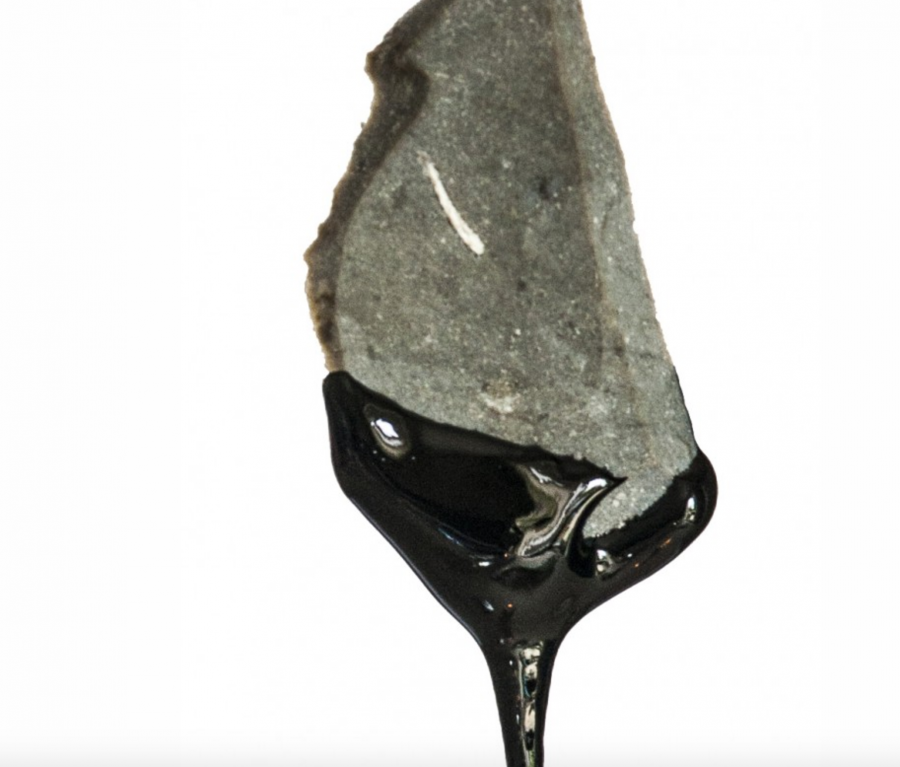
“Archae­ol­o­gists first found tar-cov­ered stones and black lumps at Nean­derthal sites across Europe about two decades ago,” writes the New York Times’ Nicholas St. Fleur. “The tar was dis­tilled from the bark of birch trees some 200,000 years ago, and seemed to have been used for haft­ing, or attach­ing han­dles to stone tools and weapons. But sci­en­tists did not know how Nean­derthals pro­duced the dark, sticky sub­stance, more than 100,000 years before Homo sapi­ens in Africa used tree resin and ocher adhe­sives.” But in a new study in Sci­en­tif­ic Reports, “a team of archae­ol­o­gists has used mate­ri­als avail­able dur­ing pre­his­toric times to demon­strate three pos­si­ble ways Nean­derthals could have delib­er­ate­ly made tar.”

The process might have looked some­thing like that in the video above, an attempt by archae­ol­o­gists Wil Roe­broeks and Friedrich Palmer to make this of old­est known syn­thet­ic mate­r­i­al just as the Nean­derthals might have exe­cut­ed it. Their only mate­ri­als: “an upturned ani­mal skull to catch the pitch; a small stone on which the pitch would con­dense; some rolls of birch bark, the source of the pitch; and a lay­er of ash, to exclude oxy­gen and pre­vent the bark from burn­ing.”

Image by Paul Kozowyk

They tech­ni­cal­ly get it to work, man­ag­ing to heat the bark to just the right tem­per­a­ture, but the exper­i­ment does­n’t pro­duce very much of this ancient super glue — cer­tain­ly not as much as Nean­derthals would have used to make spears, which might turn out to have been the very first indus­tri­al process in his­to­ry. Inno­va­tion, in the 21st cen­tu­ry as well as 250,000 years ago, does tend to come from unex­pect­ed places.

You can read more about arche­ol­o­gists lat­est the­o­ries on the mak­ing of Nean­derthal super glue over at Sci­en­tif­ic Reports.

via Giz­mo­do

Relat­ed Con­tent:

What Did the Voice of Nean­derthals, Our Dis­tant Cousins, Sound Like?: Sci­en­tists Demon­strate Their “High Pitch” The­o­ry

Hear the World’s Old­est Instru­ment, the “Nean­derthal Flute,” Dat­ing Back Over 43,000 Years

Richard Dawkins Explains Why There Was Nev­er a First Human Being

Based in Seoul, Col­in Mar­shall writes and broad­casts on cities and cul­ture. He’s at work on the book The State­less City: a Walk through 21st-Cen­tu­ry Los Ange­les, the video series The City in Cin­e­ma, the crowd­fund­ed jour­nal­ism project Where Is the City of the Future?, and the Los Ange­les Review of Books’ Korea Blog. Fol­low him on Twit­ter at @colinmarshall or on Face­book.

The Sex Pistols Make a Scandalous Appearance on the Bill Grundy Show & Introduce Punk Rock to the Startled Masses (1976)

The brain­less­ness and hypocrisy of tele­vi­sion has long been a source of fun and social com­men­tary in punk rock—from Black Flag’s “TV Par­ty” (“I don’t even both­er to use my brain any­more”) to the Dead Kennedys’ “M.T.V. –Get Off the Air” (“… feed­ing you end­less dos­es / of sug­ar-coat­ed mind­less garbage”). It’s fit­ting then that one of the sem­i­nal moments in punk his­to­ry hap­pened on tele­vi­sion, orches­trat­ed by Sex Pis­tols man­ag­er and arch provo­ca­teur Mal­colm McLaren, who knew as well as any­one how to manip­u­late the media. The noto­ri­ous Bill Grundy inter­view, which you can watch—likely not for the first or even sec­ond time—above, rock­et­ed the Sex Pis­tols to nation­al infamy overnight, sim­ply because of a few swear words and some slight­ly rude behav­ior.

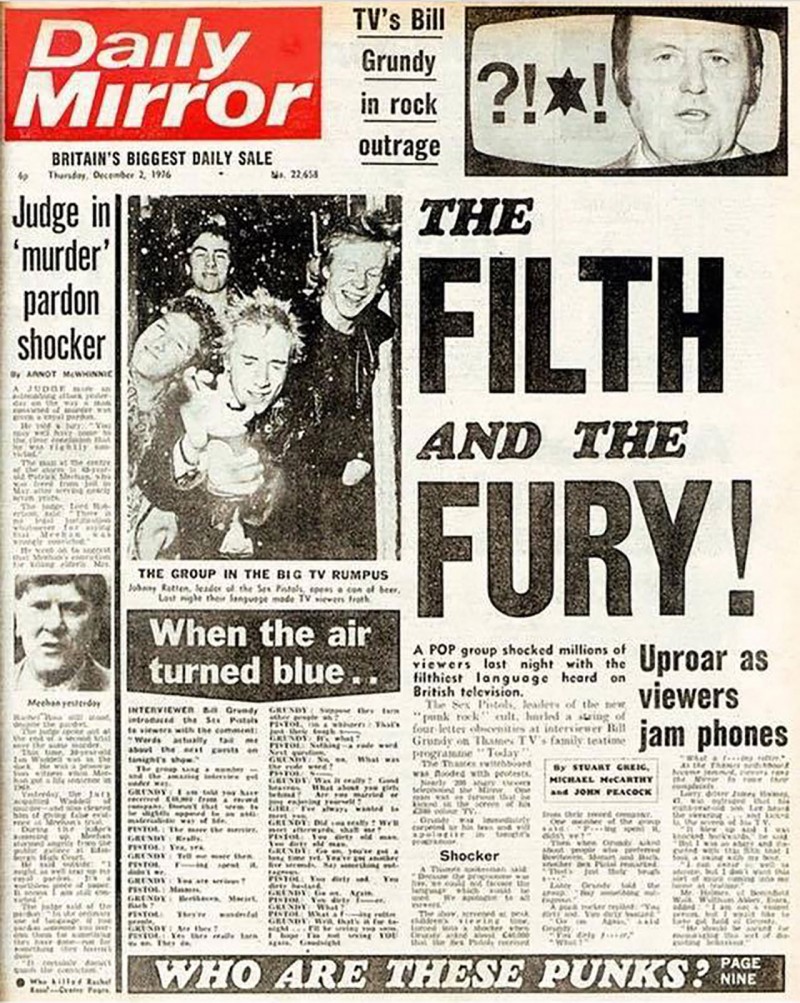
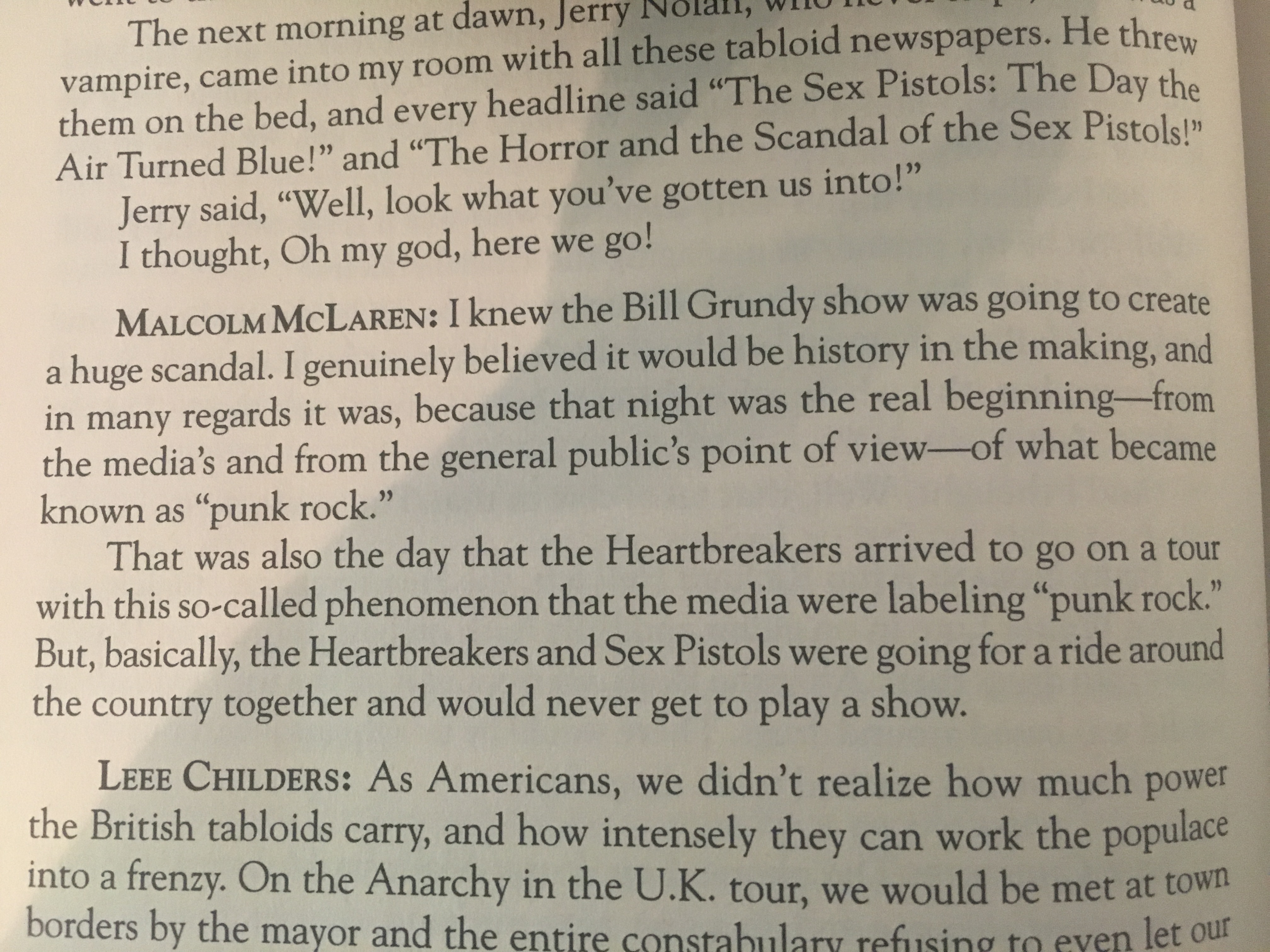
Though the U.S. does its damn­d­est to keep up these days, no one in 1976 could match the out­rage machin­ery of the UK press. As rock pho­tog­ra­ph­er and man­ag­er Leee Black Childers put it in the oral his­to­ry of punk, Please Kill Me, the tabloids “can work the pop­u­lace into a fren­zy.” McLaren goes on record to say, “I knew the Bill Grundy show was going to cre­ate a huge scan­dal. I gen­uine­ly believed it would be his­to­ry in the mak­ing.” We might expect him to take cred­it after the fact, but in any case, it worked: the day after the band’s appear­ance on the Grundy-host­ed Today show on Thames Tele­vi­sion, every tabloid paper fea­tured them on the front page. The Dai­ly Mir­ror pro­vid­ed the title of Julien Temple’s 2000 doc­u­men­tary with their clever head­line, “The Filth and the Fury.”

Even in 2008, a sur­vey showed the Grundy inter­view as the most request­ed clip in UK tele­vi­sion his­to­ry. With all this hype, you might be dis­ap­point­ed if you’re one of the few who hasn’t seen it. Though f‑bombs on TV can still cause a minor stir, a few mum­bled curse words will hard­ly gar­ner the kind of pub­lic­i­ty they did forty years ago. McLaren claims punk rock began that day on the Today show, and that’s true, at least, for the view­ing pub­lic who would have been treat­ed to an appear­ance from Queen if Fred­die Mer­cury hadn’t devel­oped a crip­pling toothache. Instead, they were intro­duced to Paul Cook in a Vivi­enne West­wood naked breasts t‑shirt, and Glen Mat­lock, Steve Jones, and John­ny Rot­ten toss­ing insults at Grundy, who egged them on, hit on the teenage Siouxsie Sioux, part of the band’s entourage, and may have been drunk, though he denied it.

It may be one of the least wit­ty exchanges in tele­vi­sion his­to­ry, and that’s say­ing a lot. But for all the pearl-clutch­ing over the band’s cru­di­ty, it’s maybe Grundy who comes off look­ing the worse. More inter­est­ing than the inter­view itself is the hyper­bol­ic fall­out, as well as what hap­pened imme­di­ate­ly after­ward. The sta­tion was flood­ed with com­plaints, and for some rea­son, its tele­phone sys­tem rerout­ed unan­swered calls to the green room, where the band and their fol­low­ers had decamped. “A pro­duc­er on the pro­gramme ignored instruc­tions to remain in the room,” notes Jon Ben­nett at Team Rock. “The result? The group start­ed answer­ing the phones and dish­ing out even more abuse. How this evad­ed the press at the time remains a mys­tery.” Indeed. It’s doubt­ful McLaren could have planned it, but the image evokes the sneer of every punk who has ever spit on the pious insis­tence that TV spoon­feed its view­ers mid­dle-class deco­rum with their adver­tis­ing, sports, wish-ful­fill­ing fan­tasies, and info­tain­ment.

Relat­ed Con­tent:

Watch the Sex Pis­tols’ Very Last Con­cert (San Fran­cis­co, 1978)

The Sex Pis­tols’ 1976 Man­ches­ter “Gig That Changed the World,” and the Day the Punk Era Began

The Sex Pis­tols Play in Dal­las’ Long­horn Ball­room; Next Show Is Mer­le Hag­gard (1978)

Josh Jones is a writer and musi­cian based in Durham, NC. Fol­low him at @jdmagness

« Go BackMore in this category... »
Quantcast