English animator Steve Cutts has a knack for satirizing the excesses of modern society. Just watch his 2012 short animation “Man,” and you’ll see what I mean. In three short minutes, Cutts covers a lot of ground, documenting the rise of human civilization and its ever-escalating assault on nature and our natural resources. It’s funny. It’s biting. And it may give you pause as we gear up for Christmas, the apotheosis of American materialism.
If you would like to sign up for Open Culture’s free email newsletter, please find it here. It’s a great way to see our new posts, all bundled in one email, each day.
If you would like to support the mission of Open Culture, consider making a donation to our site. It’s hard to rely 100% on ads, and your contributions will help us continue providing the best free cultural and educational materials to learners everywhere. You can contribute through PayPal, Patreon, and Venmo (@openculture). Thanks!
There’s a maxim that says, “It’s not the guitar, it’s the player.” And the video above bears it out.
In this clip, musician Clay Shelburn and his pal Zac Stokes visit a Walmart at 3 a.m. and pick up a Disney Cars 2 toy guitar. Next, they proceed to play Stevie Ray Vaughan’s “Pride and Joy” and unleash the full potential of that $25 guitar. The Barbies all go crazy.
When it comes to the blues, any old guitar will do. That we know. But if you care to watch Shelburn play the same song on a guitar that runs north of $1,000, check out the video below.
If you would like to sign up for Open Culture’s free email newsletter, please find it here. It’s a great way to see our new posts, all bundled in one email, each day.
If you would like to support the mission of Open Culture, consider making a donation to our site. It’s hard to rely 100% on ads, and your contributions will help us continue providing the best free cultural and educational materials to learners everywhere. You can contribute through PayPal, Patreon, and Venmo (@openculture). Thanks!
If you hear someone complaining about the scarcity of good Christmas music, you know they’re doing something wrong. As we pointed out a couple years back, you can keep a Christmas party going for hours upon hours with holiday classics and funky originals from James Brown, Johnny Cash, The Jackson 5, Dinah Washington, Willie Nelson, Ella Fitzgerald, The Beach Boys, Bob Dylan, Low, Bad Religion, Christopher Lee, The Ventures, and so much more besides.
And then there’s the Beatles, whom we wouldn’t ever think of as an acquired taste, but whose Christmas records may only appeal to a special kind of fan, one who appreciates, and perhaps remembers, the band’s aggressively cheerful spirit of marketing. Throughout the 60s, they made short, whimsical Christmas “flexi discs” for fan club members. These are amusing, but hardly essential, though I’d recommend putting 1967’s “Christmas Time (Is Here Again)” on any playlist, holiday or otherwise.
While the band made their light and breezy 1965 Christmas record, Paul McCartney undertook a decidedly different holiday solo side project—recording experimental tape loops at home, including, writes author Richie Unterberger, “singing, acting, and sketches.” Only “three copies were pressed, one each for John, George, and Ringo.” As McCartney himself described the recording, “I put together something crazy, something left field, just for the other Beatles, a fun thing which they could play late in the evening.”
You can hear what survives of the recording above. McCartney calls it “Unforgettable” and begins the disc in an American announcer’s voice, “a fast-talking New York DJ,” Rolling Stone writes, followed by Nat King Cole, then “an inventive selection of songs by the Rolling Stones, the Beach Boys, and Martha and the Vandellas.” McCartney described the project as “a magazine program: full of weird interviews, experimental music, tape loops” and “some tracks I knew the others hadn’t heard.”
Unfortunately, much of the experimentation has not survived, or made it to a digital format. Nonetheless, the tape “might be the earliest evidence of the Beatles using home recording equipment for specifically experimental/avant-garde purposes,” Unterberger notes, “something that John and Paul did in the last half of the 1960s, though John’s ventures in this field are more widely known than Paul’s.” It isn’t Christmas music, exactly, but when you put it on, you’ll know it began its life as a special mixtape McCartney made just for his bandmates, not the fans. We might think of it as the holiday album he really wanted to make.
García Márquez began to hate such elevated praise. It raised expectations he felt he couldn’t fulfill after the enormous success of that incredibly brilliant, seemingly sui generis second novel. Everyone in South America read the book. To avoid the crowds, the author moved to Spain (where Mario Vargas Llosa wrote a doctoral dissertation on him). He needn’t have worried.
Everything he wrote afterward met with near-universal acclaim—bringing earlier work like No One Writes to the Colonel, Leaf Storm, short story collections like A Very Old Man with Enormous Wings, and decades of journalism and non-fiction writing—to a much wider readership than he’d ever had before.
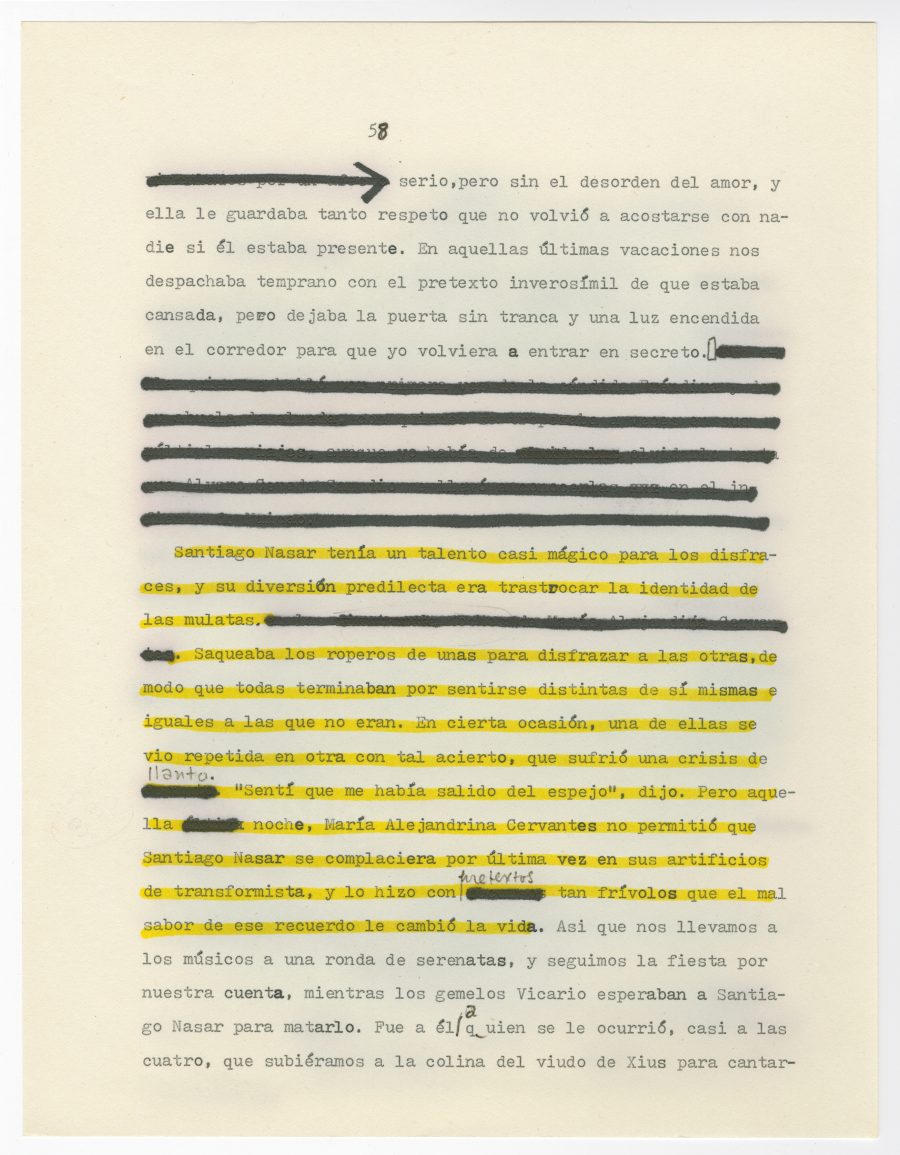
Gabriel García Márquez’s revised typescript of Chronicle of a Death Foretold, 1980.
Courtesy Harry Ransom Center.
After Gregory Rabassa’s 1970 translation of One Hundred Years of Solitude, waves of “magical realist” and Latin American literature from the 50s and 60s swept through the English-speaking world, much of it in translation for the first time. García Márquez declared the English version of his novel better than the original, and affectionately called Rabassa, “the best Latin American writer in the English language.” Upwards of 50 million people worldwide now know the story of the Buendía family. “Published in 44 languages,” The Atlantic notes, “it remains the most translated literary work in Spanish after Don Quixote, and a survey among international writers ranks it as the novel that has most shaped world literature over the past three decades.”
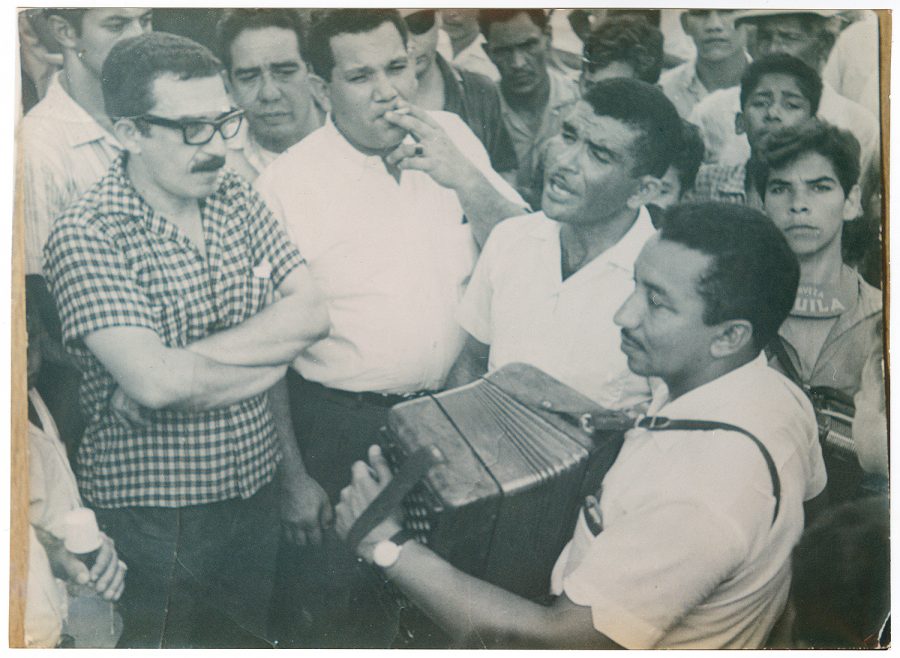
The story of the book’s composition is even more fascinating. In the Democracy Now tribute video below, you can hear García Márquez himself tell it. And at the University of Texas at Austin’s Harry Ransom Center, we can see artifacts like the photograph of the author at the top, in his hometown of Aracataca, Colombia in March of 1966, during the composition of One Hundred Years of Solitude. We can see scanned images of typescript like the page above from Chronicle of a Death Foretold.
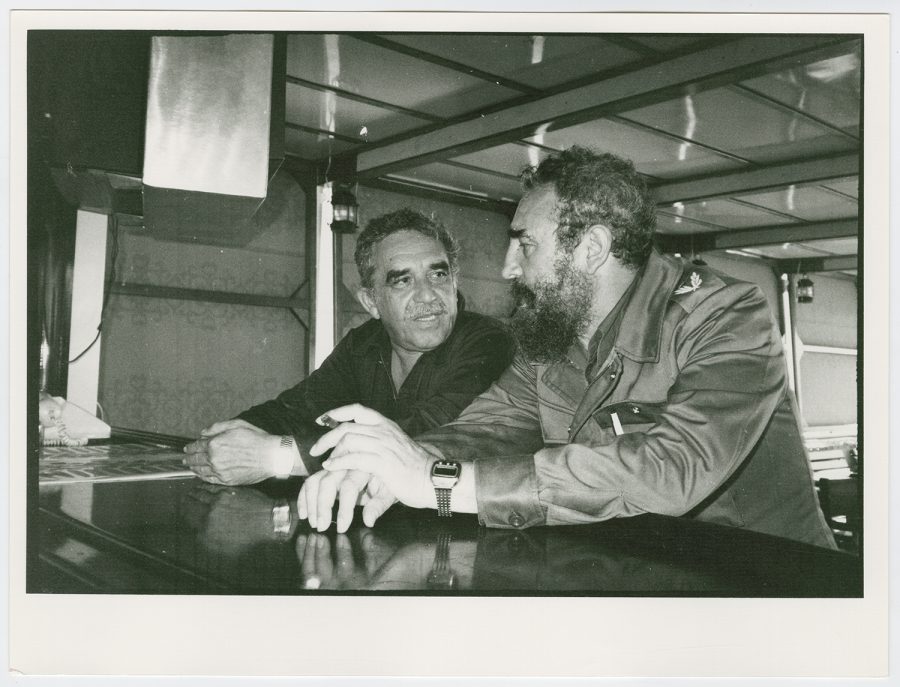
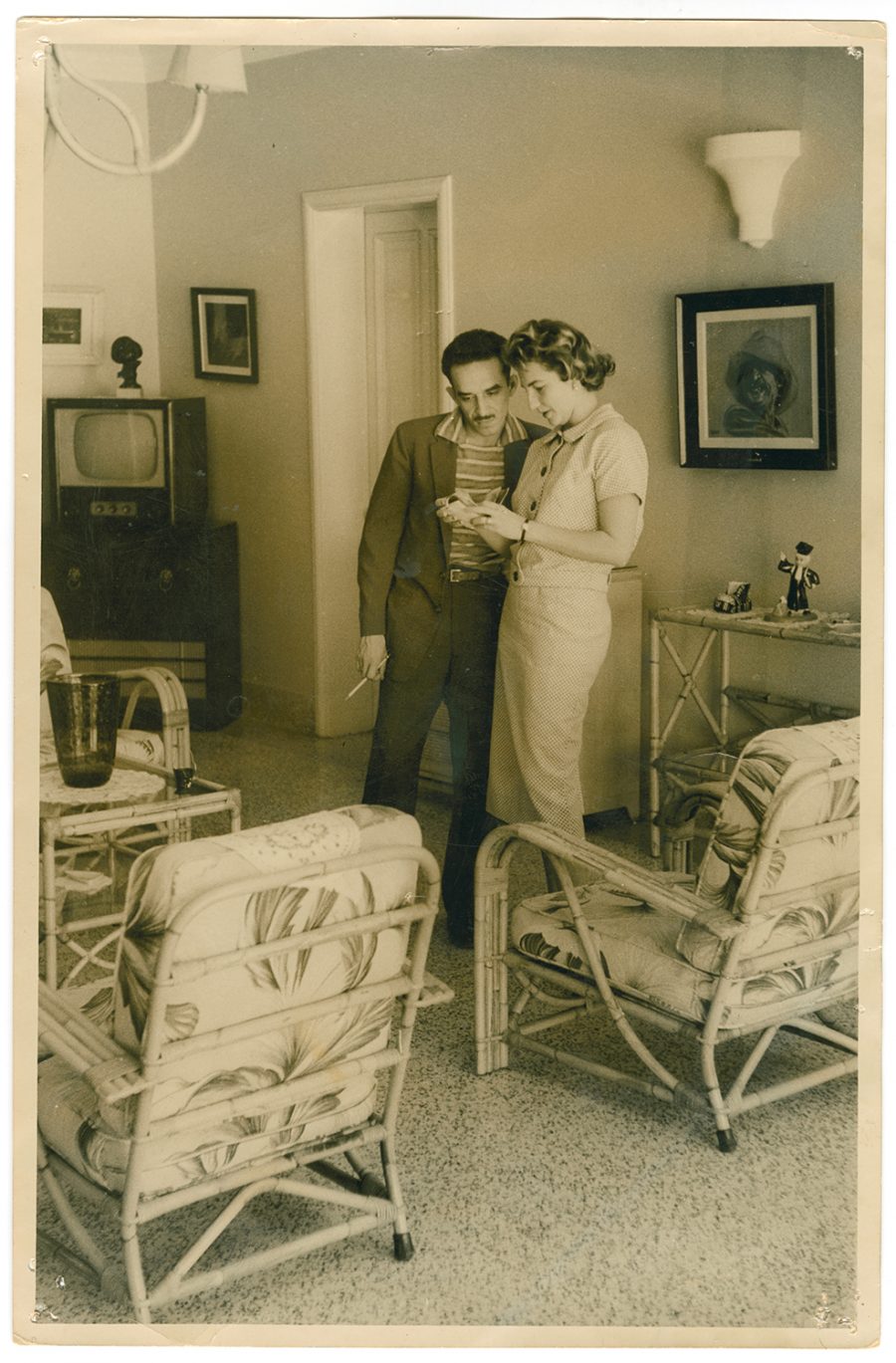
In all, the archive “includes manuscript drafts of published and unpublished works, research material, photographs, scrapbooks, correspondence, clippings, notebooks, screenplays, printed material, ephemera, and an audio recording of García Márquez’s acceptance speech for the Nobel Prize in Literature in 1982… approximately 27,500 items from García Márquez’s papers.” These documents and photos, like that further down of young journalist García Márquez with Emma Castro and, just below, of the seasoned famous novelist, with her brother, tell the story of a writer who lived his life steeped in the politics and history of Latin America, and who translated those stories faithfully for the rest of the world.
Unidentified photographer. Gabriel García Márquez with Fidel Castro, undated.
Courtesy Harry Ransom Center.
Enter, search, and explore the archive here. This amazing resource opens up to the general public a wealth of material previously only available to scholars and librarians. The project features “text-searchable English- and Spanish-language materials, took 18 months and involved the efforts of librarians, archivists, students, technology staff members and conservators.” Perhaps only coincidentally, 18 months is the time it took García Márquez to write One Hundred Years of Solitude, barricaded in his office while he ran out of money, pulled forward by some irresistible force. “I did not stop writing for a single day for 18 straight months, until I finished the book,” he tells us. As always, we believe him.
Unidentified photographer. Gabriel García Márquez with Emma Castro, 1957.
Courtesy Harry Ransom Center.
The intersection of mathematics and art holds out great potential for not just endless discoveries but deeply memorable creations. The 20th-century visionary M.C. Escher understood that, but so did the Islamic artists of centuries before that inspired him. They’ve also inspired the Iranian game developer Mahdi Bahrami, whose newest effort Engare stands at the cross of mathematics, art, and technology, a puzzle video game that challenges its players to complete the kind of brilliantly colorful, mathematically rigorous, and at once both strikingly simple and strikingly complex patterns seen in traditional Islamic art and design.
“The leap from the bare bones prototype to it becoming a game about creating art was a small one, given that Islamic art is steeped in mathematical knowledge,” writes Kill Screen’s Chris Priestman.
“The visual flair of Islamic art also helps to further ensure that Engare doesn’t ever feel ‘dry.’ Yes, it’s a game about math, but there are no dull equations to solve. Yet, the same ideas that those equations belong to are approached in Engare, just from a different angle and one that Bahrami reckons can also evoke emotions. You can see this in mesmerizing action in the gameplay trailer just above.
“There are geometrical shapes that make us feel happy, patterns that make someone nervous/hypnotized, the tiling of a ceiling can make someone feel lonely,” Priestman quotes Bahrami as writing. He’s done this sort of emotional thinking about visual mathematics before: his previous game Farsh “had you rolling out Persian carpets in such a way as to create paths across the levels,” and his next one Tandis is “inspired by Celtic shapes, and is a wild and unpredictable experiment in topographical transformation.” If you’d like to give Engare a try, you can get it from its website or on Steam. When the 21st century’s M.C. Escher discovers Islamic art, will he do it through the medium of video games?
Based in Seoul, Colin Marshall writes and broadcasts on cities and culture. His projects include the book The Stateless City: a Walk through 21st-Century Los Angeles and the video series The City in Cinema. Follow him on Twitter at @colinmarshall or on Facebook.
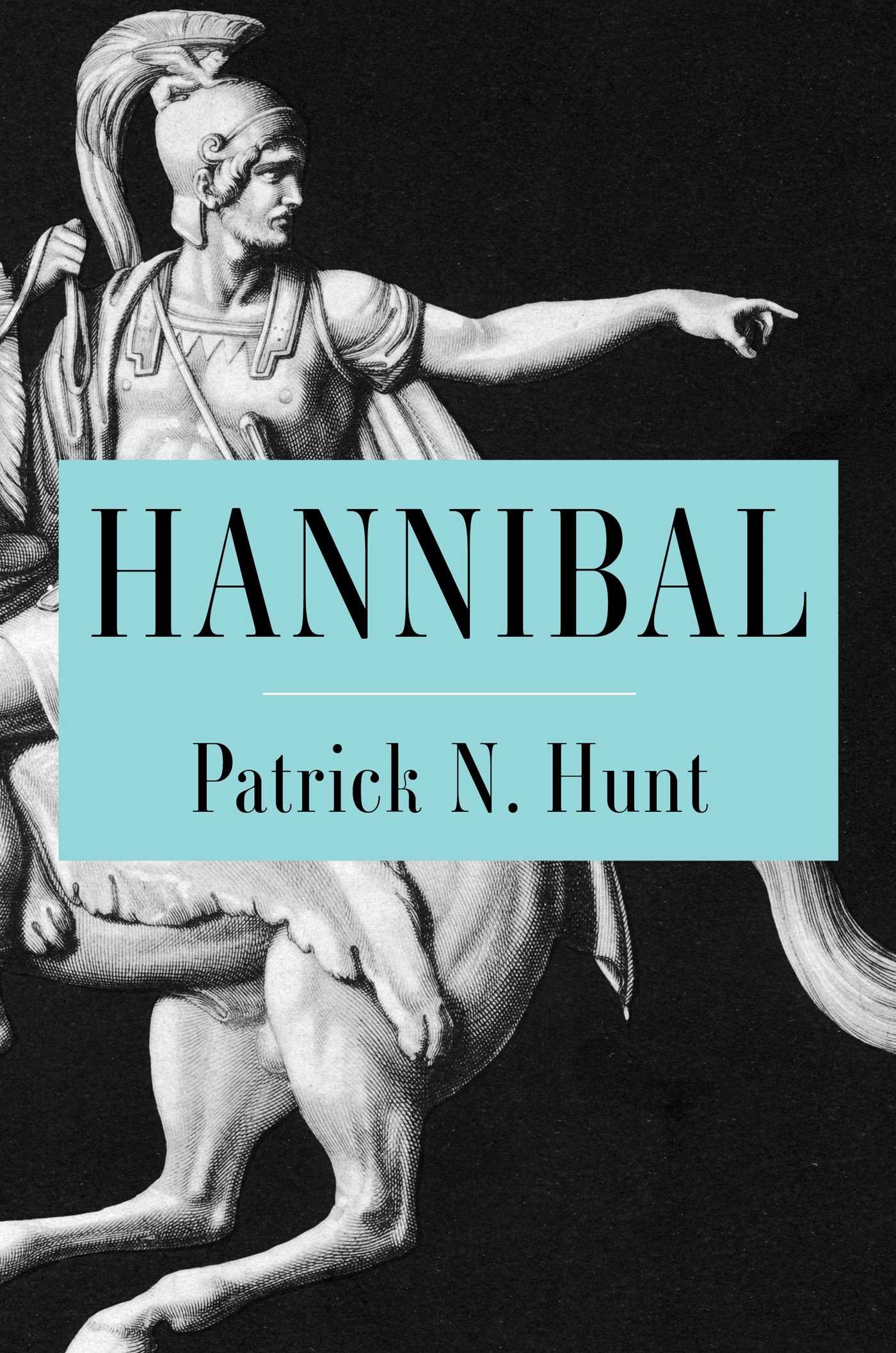
Note: This is a guest post from Patrick Hunt, author of the new book, Hannibal.
Hannibal Barca, otherwise simply known as Hannibal, lived and waged war over two thousand years ago – but is he still relevant in a world where the Romans are long gone? His famous crossing of the Alps in winter with an intrepid army and elephants is unforgettable, but are his brilliant maneuvers and intelligence gathering still worth examining? Despite the enigma of this great Carthaginian general being unable to preserve Carthage after him, Hannibal’s tactics and methods offer great lessons not only for military history but also for civilization at large. History reveals the Romans had a destiny of world conquest, but what is less well known is how much Hannibal changed the ways in which the Romans conducted the wars that eventually brought them Pax Romana, a peace often forged out of violence after a brutal expansion that killed and enslaved millions, including Carthage a century after Hannibal.
Before Hannibal, Rome was hemmed in by seas on almost all sides and could hardly expand except northward into Etruscan and Celtic territory; acquiring Sicily was Rome’s first step outside its mainland. But Hannibal forced Rome to fight a very different kind of war; his victories taught them how exploitable their military organization was, and he pressured Rome to change for survival. More relevant, while Hannibal didn’t invent spycraft, he seemingly used it more effectively than any other ancient general by his careful contingency planning. Hannibal set precedents for spy agencies and intelligence gathering and how to stage battles in any kind of terrain and weather–templates that current nations still study and follow. Every military academy today offers detailed classes and seminars on Hannibal’s tactics. I am frequently invited to lecture on Hannibal’s intelligence gathering in venues like the U.S. Naval War College, where classes are filled with Navy, Army, Marines, and Air Force officers along with representatives of the intelligence agencies. That is also why the National Geographic Society sponsored my Hannibal field research – sending me to every Hannibal battle site and to Carthage in Tunisia, along with Spain, France, Italy and even Turkey where Hannibal concluded his dramatic life — and also why Simon and Schuster published my biography Hannibal this summer. Here are some nuggets from 20 years of Hannibal fieldwork found in this new book.
Hannibal studied his opponents very carefully, employing every means of gathering intelligence in enemy camps, including spies from allied populations who provisioned the Romans.
When necessary, Hannibal paid for credible intelligence with silver supplied from mines in Carthaginian Spain; as long as that silver lasted to pay for good intel, he was unbeatable. Once Rome conquered Spain’s silver mines, Hannibal’s ability to gather and exploit such military intelligence was cut off. There is a direct correlation to Hannibal’s access to silver for intel or mercenary use and his brilliant victories.
Hannibal usually went for the unpredictable surprise maneuver that had never been seen before, including crossing the Alps in winter and forcing the Romans to fight in the dead of winter and at night.
Hannibal got into the minds of his enemies with psy-ops, exposing their weaknesses, triggering their anger and vanity, and making them fall into his traps; undermining the confidence of the Roman foot soldiers in big battles and paralyzing them with fear. Romans taught their children to fear Hannibal as the bogeyman – always warning in crises for centuries that “Hannibal is at the Gates”.
Hannibal proved it’s not the size of your army but how well prepared it is. He epitomizes the old adage, “Better 10 men wisely led than 100 with a fool at the head.” Even if austere, Hannibal’s leadership was legendarily charismatic – he even slept with his men on the ground wrapped in a blanket. He taught his men the brutality of war with likely less PTSD than his enemies because he always prepared them with ideas like “fight or die.” Much later, Machiavelli even alluded to Hannibal in The Prince with the concept that it’s “better to be feared than loved.”
Hannibal effectively used the most mobile units possible with his Numidian cavalry, often outflanking the Roman infantry on multiple campaigns, especially in his famous “double envelopment” or where he finished battles with ambushes from the rear where there was no escape.
Because his armies were almost always smaller – especially after his difficult Alps crossing when he lost many soldiers – Hannibal augmented his arsenal with weapons of nature: forcing the Romans to cross the frozen Trebbia River, hiding his armies in the fog above Lake Trasimene, driving captured cattle with torches tied to their horns to fool the Romans into thinking he was on the move at night at Volturnus, making the Romans face the blinding dust and sand blowing from Africa at Cannae. He even confused the Romans at Cannae with some of his troops outfitted with captured Roman gear.
Similarly, after studying terrain and topography, Hannibal always chose his battle sites when possible for the best possible advantage, especially constricting the larger Roman armies where they would be unable to outflank him and instead they would be hemmed in by rivers or hills, etc., also choosing terrain where he could hide ambushes in nearby forests.
Hannibal sagely exploited the 2‑consul Roman alternating command rotated one day between an experienced military veteran and the next day with a political appointee populist leading. On at least three occasions, Hannibal annihilated the Romans on the days when fools were the supposed commanders. The following Roman generations learned the hard lesson from this and the Senate created a professional army commanded by veteran leadership. Eventually Rome also amped up its cavalry and became less dependent on infantry thanks to Hannibal.
Hannibal taught his one formidable Roman opponent Scipio how to implement brilliant tactics, how to mine data from military intelligence and how to benefit from Spain’s mercenary silver to bribe the Numidians to abandon Carthage. Scipio – the only one to beat Hannibal — respected Hannibal more than any other Roman because he learned so much from him. It’s one of the great ironies in history that Hannibal is apparently more famous than Scipio, and it’s not only because of crossing the Alps with elephants: ultimately the Romans didn’t appreciate a victorious Scipio any more than the Carthaginians appreciated a victorious Hannibal. Hannibal will remain a profound enigma in that he could not ultimately win the war with Rome, yet he could win so many brilliant battles with incredibly memorable tactics still taught today.
The Roman book Stratagemata by Frontinus — a compilation of military stratagems — has more clever ruses of Hannibal than any other commander up to that time. Historic great commanders or officers who studied or emulated Hannibal include but are not limited to Julius Caesar, Belisarius, Charlemagne, Napoleon, Suvorov, Kutuzov, von Clausewitz, Montgomery, Liddell Hart, Rommel, Patton and Schwarzkopf, among many others. Even the term blitzkrieg alluded to Hannibal’s clan (Barca = “lightning”) and his rapid advance in his invasion of Italy.” So, of course, Hannibal is at least as relevant as any other memorable person in history, especially in a time of world chaos and rethinking strategic allegiances.
Postscript: Hannibal (Simon and Schuster 2017) has been acclaimed in reviews from The New York Times, Christian Science Monitor, Philadelphia Inquirer, Ancient History Encyclopedia, a starred Kirkus Review and many others, and also nominated in the Kirkus List of Best Nonfiction Books of 2017.
For decades now, academics have made popular culture a worthy area of study, from hip hop, comic books, and Hollywood film and television to video games and internet culture. And for just as long, there have been those who sneered at the disciplines emerging around pop culture studies. But really, what are we to do with someone like Prince, someone so clearly, profoundly, a musical genius, with such an outsized impact on popular culture, that he cannot help being a major historical figure just a year and a half after his death?
Devote an entire journal issue to him, of course, as the Journal of African American Studies did this past September. This is not, by far, Prince’s first appearance in a scholarly publication. And a slew of academic conferences devoted to the artist this past year has raised him to the academic status achieved by other megastars like Bruce Springsteen and Pink Floyd. This special journal issue, however, may be one of the most comprehensive collections of Prince scholarship you’re likely to find online. And unlike the majority of academic articles, these are all free. Just click the “Download PDF” link under each title found on this page.
The issue was published to coincide with the 40th anniversary of Prince’s signing with Warner Brothers in 1977, the day he “turned pro.” The following year, he released the debut album For You, to modest critical success. While it didn’t make him a star overnight, For You announced him as a virtuoso, “as Prince played every instrument and sang all the vocals, something unheard of, then and now.” Prince’s musical skill could be taken for granted. It is easy to do with an artist who reconfigured culture in so many ways that had nothing to do with playing guitar or piano.
Prince’s radical, if very complicated, redefinition of gender and cultural expression provides an example, writes Deirdre T. Guion Peoples, of “Optimal Distinctiveness,” in the way he “negotiated his social identity.” He lived an ardent, consistently utopian vision in his music and also in his life; and his “singular vision of utopia cast women as essential to its creation,” notes H. Zahra Caldwell. And Prince’s “creative practices,” James Gordon Williams argues, “were linked to his covert, but avid, support of social justice initiatives that support black humanity.”
These ten articles elaborate things we thought we knew about Prince, but maybe didn’t, and introduce us to aspects of his life and work we’ve never considered. They are joined by seven essays and personal reflections and two book reviews. Read online or download the special Prince issue here.
The rapid development of studio technology in the 1960s could seem like something of an avalanche, started, say, by Phil Spector, expanded by Brian Wilson, who spurred the Beatles and George Martin, who inspired dozens of artists to experiment in the studio, including Jimi Hendrix. By the time we get to the 70s it begins to seem like one man drives forward the progress of studio as instrument, Brian Eno—from his work with Robert Fripp, to the refinement of almost fully synthetic ambient music, to his groundbreaking work on David Bowie’s “Berlin Trilogy” and Talking Heads’ Remain in Light in 1980.
Eno called himself a “non-musician” who valued theory over practice. But we know this to be untrue. He’s a profoundly hypnotic, engaging composer, player, and even singer, as well as a virtuoso practitioner of the studio recording arts, which, by 1979, he had honed sufficiently to expound on in a lecture titled “The Recording Studio as a Compositional Tool.” By ’79, when Eno delivered the talk captured above at the Inaugural New Music American Festival in New York, he had already done so three times. In 1983, Down Beat magazine published the influential lecture (read it here).
Eno displays the critical acumen of Walter Benjamin in discussing the history and cultural significance of his art form, with philosophically punchy lines like his take on jazz: “the interesting thing about improvisations is that they become more interesting as you listen to them more times. What seemed like an almost arbitrary collision of events comes to seem very meaningful on relistening.” A very Eno-like observation, underlining his central thesis, which he delivers in a measured series of clauses to construct a sentence as long as some of his compositions, but one, nonetheless, with perfect clarity:
In this lecture, I want to indicate that recorded music, in certain of its aspects, is an entirely different art form from traditional music, and that the contemporary composer, people like me, those who work directly in relation to studios and multi-tracking and in relation to recording tape, are, in fact, engaged in a different, a radically different, business, from traditional composers.
How does Eno make his case? Recorded music substitutes the “space dimension” for the “time dimension,” and thus has a “detachable aspect,” it’s portable—and never more so than now. Eno seems to anticipate the current technological moment in 1979 when he says, “not only is the whole history of our music with us now, in some sense, on record, but the whole global musical culture is also available.” This results in a break with the European classical tradition as composers acquire “a culture unbounded, both temporally and geographically.”
Before the development of recording technology in the late 19th century, limitations of time and space ensured that every musical performance was a one of a kind event, over forever when it ended. In the 20th century, not only could recording engineers reproduce a performance infinitely, but with the medium of tape, they could cut, splice, rearrange, manipulate, and otherwise edit it together. With multi-tracking, they could create a unified whole from several disparate recordings, often from different times and places. And, as the audience for recorded music was a mass consumer market, popular musical tastes, to some extent, began to shift the kind of music that got made. (Eno has since expressed highly negative criticism of contemporary music that relies too heavily on studio technology.)
Eno begins rather drily, but once he gets going, the lecture becomes totally engrossing. He covers the mixing of Sly and the Family Stone’s Fresh, discusses Sly Dunbar and Lee “Scratch” Perry’s studio inventions, and those of his own Another Green World and Music for Airports. He offers a crash course on basic studio technology, and describes owning a recording of a recorded telephone message from Germany that sought apprehension of the Baader Meinhoff gang by playing a recording of one of their voices. He may be one of the most coolly dispassionate artists in modern popular music, but Brian Eno is never boring. Read a transcript of the lecture here.
We're hoping to rely on loyal readers, rather than erratic ads. Please click the Donate button and support Open Culture. You can use Paypal, Venmo, Patreon, even Crypto! We thank you!
Open Culture scours the web for the best educational media. We find the free courses and audio books you need, the language lessons & educational videos you want, and plenty of enlightenment in between.