How to Get Over the Anxiety of Public Speaking?: Watch the Stanford Video, “Think Fast, Talk Smart,” Viewed Already 15 Million Times

How many of us fear pub­lic speak­ing more than death: four out of five, nine out of ten, 99 out of 100? We’ve all heard a vari­ety of sta­tis­tics, all of them sug­gest­ing the for­mi­da­bil­i­ty — per­ceived or real — of the task of get­ting up and talk­ing in front of oth­er peo­ple. But per­haps you’ll get an even clear­er sense of that from the num­ber 15,021,560: the total view count, as of this writ­ing, racked up by “Think Fast, Talk Smart,” an hour-long talk on pub­lic speak­ing tech­niques by com­mu­ni­ca­tion coach and Stan­ford Grad­u­ate School of Busi­ness lec­tur­er Matt Abra­hams.

The pedants among us, myself includ­ed, will have already tak­en note of that lin­guis­tic infe­lic­i­ty in the very title of the talk, but Abra­hams him­self wastes lit­tle time point­ing it out him­self. He also points out its val­ue: you’ve got to catch the atten­tion of your audi­ence, and a delib­er­ate­ly made mis­take (or even a non-delib­er­ate­ly made one) catch­es it as well as any­thing.

He goes on to elab­o­rate on var­i­ous oth­er tech­niques we can use not just to get oth­er peo­ple lis­ten­ing well, but to get our­selves talk­ing well, the first pri­or­i­ty being to get our­selves to stop trip­ping over our innate desire to talk per­fect­ly.

Abra­hams leads his audi­ence through sev­er­al short “games,” instruct­ing them to do things like explain­ing their week­ends to one anoth­er by spelling out loud and sell­ing one anoth­er Slinkys, with the under­ly­ing goal of break­ing the habits that have so often imped­ed our abil­i­ty to sim­ply get up and speak. He also pro­vides phys­i­cal tech­niques, like doing push-ups or tak­ing a walk around the block before giv­ing a talk in order to get your mind more “present,” and intel­lec­tu­al ones, like always adher­ing to a struc­ture, no mat­ter how sim­ple and no mat­ter how ordi­nary the sit­u­a­tion. (“I prac­tice these struc­tures on my kids,” he notes.)

Tak­ing the wider view, we should­n’t look at speak­ing as a chal­lenge, accord­ing to Abra­hams, but as a chance to explain and influ­ence. “A Q&A ses­sion is an oppor­tu­ni­ty for you,” he says, and prac­tic­ing what he preach­es, he opens one up at the end of the talk, under­scor­ing that we can improve our pub­lic speak­ing skills by doing as he says, but even more so by doing as he does. Some of those more than eleven mil­lion views sure­ly come from peo­ple who have watched more than once, study­ing Abra­hams’ own use of lan­guage, both ver­bal and body. He also demon­strates a good deal of humor, though brevi­ty, as Shake­speare wrote, being the soul of wit, you might con­sid­er chas­ing his talk with the four-minute Big Think video on the same sub­ject just above.

Abra­hams reg­u­lar­ly teach­es cours­es on Pub­lic Speak­ing at Stan­ford Con­tin­u­ing Stud­ies. If you live in the San Fran­cis­co Bay Area, give his class­es a look. Also see his books, Speak­ing Up with­out Freak­ing Out: 50 Tech­niques for Con­fi­dent and Com­pelling Pre­sent­ing.

Relat­ed Con­tent:

Teacher Helps His Stu­dent Over­come Stut­ter­ing and Read Poet­ry, Using the Sound of Music

NPR Launch­es Data­base of Best Com­mence­ment Speech­es Ever

How to Sound Smart in a TED Talk: A Fun­ny Primer by Sat­ur­day Night Live‘s Will Stephen

Based in Seoul, Col­in Mar­shall writes and broad­casts on cities and cul­ture. His projects include the book The State­less City: a Walk through 21st-Cen­tu­ry Los Ange­les and the video series The City in Cin­e­ma. Fol­low him on Twit­ter at @colinmarshall or on Face­book.

How Do Computers Work?: New Video Series Explains the Inner Workings of the Device You Use Every Day

How do com­put­ers work? Yes, that appli­ance you use every day? To help answer the ques­tion, Code.org (a non-prof­it ded­i­cat­ed to expand­ing access to com­put­er sci­ence) has put togeth­er a col­lec­tion of primers that explain some of the oft-dis­cussed com­po­nents of computers–circuits, mem­o­ry, CPU, etc. And how they all fit togeth­er.

The first video starts off with an intro­duc­tion by Bill Gates. Watch the remain­ing five videos (each about five min­utes long) just by let­ting the playlist run above. Or see this video col­lec­tion on YouTube.

h/t Paul

If you would like to sign up for Open Culture’s free email newslet­ter, please find it here. It’s a great way to see our new posts, all bun­dled in one email, each day.

If you would like to sup­port the mis­sion of Open Cul­ture, con­sid­er mak­ing a dona­tion to our site. It’s hard to rely 100% on ads, and your con­tri­bu­tions will help us con­tin­ue pro­vid­ing the best free cul­tur­al and edu­ca­tion­al mate­ri­als to learn­ers every­where. You can con­tribute through Pay­Pal, Patre­on, and Ven­mo (@openculture). Thanks!

Relat­ed Con­tent:

Free Online Com­put­er Sci­ence Cours­es

Learn to Code with Harvard’s Pop­u­lar Intro to Com­put­er Sci­ence Course: The 2016 Edi­tion

Free Text­books: Com­put­er Sci­ence

Learn Python: A Free Online Course from Google

Learn Python: A Free Online Course from Google

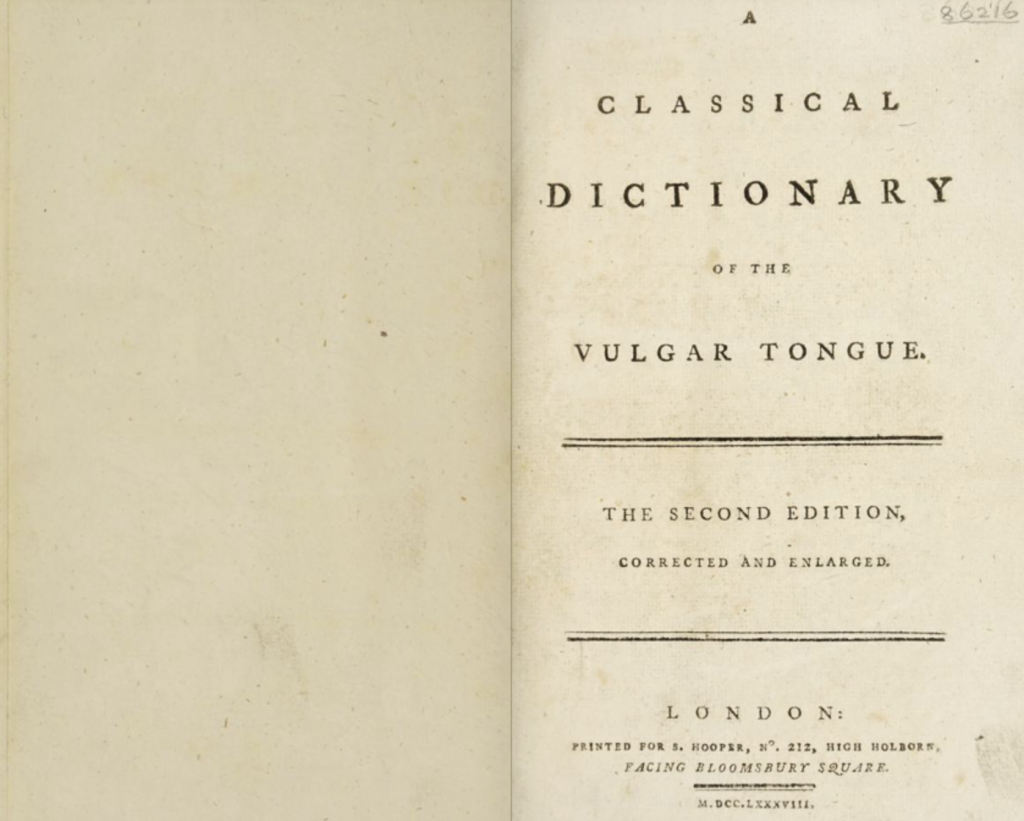
Read A Classical Dictionary of the Vulgar Tongue, a Hilarious & Informative Collection of Early Modern English Slang (1785)

A deep appre­ci­a­tion for pro­fan­i­ty may rate high as a mark of a sophis­ti­ca­tion and authen­tic­i­ty. Cog­ni­tive psy­chol­o­gist Steven Pinker has made the neu­ro­science of swear­ing an object of study; leg­endary com­ic actor, writer, and “lan­guage enthu­si­ast” Stephen Fry declares the prac­tice a fine art; stud­ies show that those who swear may be more hon­est than those who don’t; and if you have any doubt about how much swear­ing con­tributes to the lit­er­ary his­to­ry of the Eng­lish lan­guage, just do a search on Shakespeare’s many pro­fane insults, so rich and var­ied as to con­sti­tute a genre all their own.

Not all vul­gar speech is con­sid­ered “swear words,” ref­er­enc­ing sex acts and bod­i­ly func­tions, but many a crit­ic and lex­i­cog­ra­ph­er has nonethe­less decid­ed that slang, obscene or oth­er­wise, doesn’t belong in polite com­pa­ny with for­mal dic­tion. Samuel John­son, the esteemed 18th-cen­tu­ry essay­ist, poet, and com­pil­er of the 1755 Dic­tio­nary of the Eng­lish Lan­guage deemed slang “unfit for his learned tome,” writes The Pub­lic Domain Review. So, enter Fran­cis Grose to cor­rect the error thir­ty years lat­er with his Clas­si­cal Dic­tio­nary of the Vul­gar Tongue, a “com­pendi­um of slang” chock full of hilar­i­ous idioms of every kind.

There is the bawdy (“Sug­ar stick—the vir­ile mem­ber”), the scat­o­log­i­cal (“Cack­ling farts—eggs”), the odd­ly obscure (“Kit­tle pitchering—to dis­rupt the flow of a ‘trou­ble­some teller of long sto­ries’ by con­stant­ly ques­tion­ing and con­tra­dict­ing unim­por­tant details, espe­cial­ly at the start”). Puns make their inevitable way in (“Just-ass—a pun­ning name for jus­tice [judge]”), as of course do com­ic images for body parts (“Tallywags/Whirligigs—testicles”). Much of this Ear­ly Mod­ern Eng­lish slang sounds to Amer­i­can ears just as col­or­ful­ly askew as con­tem­po­rary Eng­lish slang does (“Dog booby—an awk­ward lout”; “Cap­tain queernabs—a shab­by ill-dressed fel­low”).

Grose, com­pil­er of the dic­tio­nary, “was not one for library work” and pre­ferred to col­lect his spec­i­mens in the field where slang lives and breathes—the streets, pubs, and hous­es of ill-repute. “Sup­port­ed by his trusty assist Tom Cock­ing [your joke here],” Grose “cruised the water­ing holes of Covent Gar­den and the East End, eat­ing, booz­ing, and lis­ten­ing. He took plea­sure in hear­ing his name pun­ning­ly con­nect­ed to his rotund frame. And he pro­duced a book brim­ming with Fal­staffi­an life.” Very much a Shake­speare­an bon vivant, Grose appears as some­thing of a rib­ald dop­pel­ganger of the rotund, yet moral­is­tic and often scowl­ing Dr. John­son. (See his por­trait here.)

The so-called “long 18th-Century”—a peri­od last­ing from the restora­tion of the Monar­chy after the Eng­lish Civ­il War to around the French Revolution—presents a tra­di­tion of lewd wit­ti­cism, from the poet­ry of John Wilmot, Earl of Rochester, to Jonathan Swift’s “The Lady’s Dress­ing Room,” to the sor­did fan­tasies of the Mar­quis de Sade. Such porno­graph­ic humor and rude earth­i­ness offered a coun­ter­weight to heady Enlight­en­ment phi­los­o­phy, just as Shakespeare’s insults pro­vide need­ed com­ic relief for his bloody tragedies. Grose’s dic­tio­nary can be seen as adding need­ed com­ic local col­or to the many seri­ous dic­tio­nar­ies and stud­ies of lan­guage that emerged in the 1700s.

But A Clas­si­cal Dic­tio­nary of the Vul­gar Tongue is also an impor­tant aca­d­e­m­ic resource all its own, and “would strong­ly influ­ence lat­er dic­tio­nar­ies of this kind,” notes the British Library—those like J. Red­ding Ware’s 1909 Pass­ing Eng­lish of the Vic­to­ri­an Era: A Dic­tio­nary of Het­ero­dox Eng­lish, Slang, and Phrase. We can see in Grose’s work how many slang words and phras­es still in com­mon use today—like “baker’s dozen,” “gift of the gab,” “birds of a feath­er,” “birth­day suit,” and “kick the bucket”—were just as cur­rent well over 200 years ago. And we get a very vivid sense of the world in which Grose moved in the many metaphors employed, most involv­ing food and drink. (A “butcher’s dog,” for exam­ple, refers to some­one who “lies by the beef with­out touch­ing it; a sim­i­le often applic­a­ble to mar­ried men.”)

But we needn’t wor­ry too much about schol­ar­ly uses for Grose’s work. Instead, we might find our­selves moti­vat­ed to do as he did, hit the streets and the bars, and maybe bring back into cir­cu­la­tion such locu­tions as “Bet­wat­tled” (sur­prised, con­found­ed, out of one’s sens­es), “Chimp­ing mer­ry” (exhil­a­rat­ed with liquor), or, per­haps my favorite so far, “Dicked in the nob” (sil­ly, crazed).

Page through Grose’s dic­tio­nary above or read it in a larg­er for­mat (and/or down­load as a PDF or ePub) at the Inter­net Archive.

via Pub­lic Domain Review

Relat­ed Con­tent:

The Largest His­tor­i­cal Dic­tio­nary of Eng­lish Slang Now Free Online: Cov­ers 500 Years of the “Vul­gar Tongue”

The Very First Writ­ten Use of the F Word in Eng­lish (1528)

Peo­ple Who Swear Are More Hon­est Than Those Who Don’t, Finds a New Uni­ver­si­ty Study

Stephen Fry, Lan­guage Enthu­si­ast, Defends The “Unnec­es­sary” Art Of Swear­ing

Josh Jones is a writer and musi­cian based in Durham, NC. Fol­low him at @jdmagness

When the Sex Pistols Played at the Chelmsford Top Security Prison: Hear Vintage Tracks from the 1976 Gig

Seri­ous fans of live record­ings well know that such pro­duc­tions are usu­al­ly doc­tored before they reach the mass­es, with effects added to sweet­en the mix, record­ing errors cor­rect­ed, instru­ments and crowd noise over­dubbed, tracks rearranged, and per­for­mances from dif­fer­ent nights com­bined. It’s a com­mon prac­tice and shouldn’t alarm any­one expect­ing absolute doc­u­men­tary fideli­ty. If you couldn’t make the show to expe­ri­ence the band first­hand, they’d at least like you to hear them at their best. (Who could resist the oppor­tu­ni­ty to revise, say, a pub­lic speak­ing gig after the fact?)

When record com­pa­nies are involved, every effort can go into mak­ing a saleable prod­uct, but heavy edit­ing usu­al­ly doesn’t hap­pen to taped bootlegs. One notable excep­tion hap­pens to come from an excep­tion­al gig, when the Sex Pis­tols fol­lowed John­ny Cash’s exam­ple and played the Chelms­ford Top Secu­ri­ty Prison dur­ing their first major tour of Eng­land in 1976 for an audi­ence of 500 pris­on­ers. Part­ly due to a seri­ous record­ing issue—the near total fail­ure to cap­ture orig­i­nal bassist Glen Matlock—and part­ly to a “con­fused idea of what would make for a wor­thy release,” writes Ned Raggett at All­mu­sic, the band’s sound­man Dave Good­man decid­ed to make sev­er­al alter­ations to the record­ing.

These changes, in turn, gave rise to a mythol­o­gy sur­round­ing the show, rais­ing its rep­u­ta­tion to the lev­els of chaos for which the Pis­tols are renowned. That rep­u­ta­tion itself large­ly revolves around Sid Vicious’ lat­er onstage antics, and is at times inflat­ed. The Pis­tols could be a great live band—Steve Jones, Paul Cook, and Mat­lock were all more than capa­ble musi­cians, and John­ny Rot­ten was a per­fect punk spec­ta­cle all his own. But the ele­ments didn’t always come togeth­er amidst the band’s unre­hearsed dis­or­der.

The audi­ence at Chelms­ford were, please excuse the pun, a cap­tive one, and there­fore, unable to dis­play the same unbri­dled enthu­si­asm as the band’s usu­al crowds of rub­ber­neck­ers and scen­esters. To play up the gig, then, Good­man dubbed in the sounds of “ran­dom crowd and vio­lence noise” and sirens. He didn’t only see fit to over­dub Matlock’s miss­ing bass, but also added in “an incred­i­bly poor Rot­ten imi­ta­tor goad­ing the ‘pris­on­ers’ on between songs,” Ragett notes, “as well as often singing on top of the real Rot­ten him­self!” That first 1990 release of Live at Chelms­ford does not so much gild the band’s musi­cal strengths as it “plays on the revolutionary/anarchy side of the punk image to no avail.”

Luck­i­ly, the orig­i­nal record­ings remained, and were released lat­er on the Sex Pis­tols Alive com­pi­la­tion, in their orig­i­nal order, and, rearranged, on a sec­ond Live at Chelms­ford Prison CD. It is the orig­i­nals, with min­i­mal treat­ment, that you can hear here. At the top is “Anar­chy in the UK,” below it “Sub­mis­sion,” and a sneer­ing cov­er of The Who’s “Sub­sti­tute” fur­ther down.  The giant hole in the mid­dle of the mix where Matlock’s bass should be is hard to ignore, but over­all, these are some occa­sion­al­ly great per­for­mances, par­tic­u­lar­ly from Cook and Jones, whose pound­ing drums and blis­ter­ing gui­tar come through loud and clear, often bury­ing Rotten’s voice, which is mud­died through­out.

But a good record­ing of half the band hard­ly sells the leg­end of the Sex Pis­tols, espe­cial­ly the Sex Pis­tols in prison. “By all accounts,” writes Raggett, “it was a bit of a har­row­ing expe­ri­ence.” But you’d have to have been there to know it, and you prob­a­bly wouldn’t want to be. So it’s no won­der Good­man saw the need to spruce things up with what Discogs’ notes describe as “a canned audio track of a riot (com­plete with shout­ing, scuf­fles, break­ing glass, etc.)” A lot of peo­ple hat­ed it, but if you’re real­ly curi­ous, you can grab a copy of the over­dubbed ver­sion and hear for your­self. Or lis­ten to the full, undoc­tored, record­ing on YouTube.

Relat­ed Con­tent:

The Sex Pis­tols Make a Scan­dalous Appear­ance on the Bill Grundy Show & Intro­duce Punk Rock to the Star­tled Mass­es (1976)

Watch the Sex Pis­tols’ Christ­mas Par­ty for Children–Which Hap­pened to Be Their Final Gig in the UK (1977)

Watch the Sex Pis­tols’ Very Last Con­cert (San Fran­cis­co, 1978)

Josh Jones is a writer and musi­cian based in Durham, NC. Fol­low him at @jdmagness

Noam Chomsky Explains What’s Wrong with Postmodern Philosophy & French Intellectuals, and How They End Up Supporting Oppressive Power Structures

Noam Chom­sky has always had iras­ci­ble tendencies—when he doesn’t like some­thing, he lets us know it, with­out ever rais­ing his voice and usu­al­ly with plen­ty of foot­notes. It’s a qual­i­ty that has made the emer­i­tus MIT pro­fes­sor and famed lin­guist such a potent crit­ic of U.S. empire for half a cen­tu­ry, vig­or­ous­ly denounc­ing the Viet­nam War, the Iraq War(s), and the pos­si­bil­i­ty of a cat­a­stroph­ic war with North Korea. Chom­sky isn’t a pro­fes­sion­al his­to­ri­an or polit­i­cal philoso­pher; these are avo­ca­tions he has tak­en on to bol­ster his argu­ments. But those argu­ments are strength­ened by his will­ing­ness to engage with pri­ma­ry sources and take them seri­ous­ly.

When it comes, how­ev­er, to his much-pub­li­cized feud with “Post­mod­ernism,” a term he uses lib­er­al­ly at times to describe almost all post-war French intel­lec­tu­al cul­ture, Chom­sky rarely con­fronts his oppo­nents in their own terms. That’s large­ly because, as he’s said on many occa­sions, he can’t make any sense of them. It’s not exact­ly an orig­i­nal cri­tique. Man­darins of French thought like Jean-Fran­cois Lyotard, Jacques Lacan, and Jean Bau­drillard have been accused for decades, and not with­out mer­it, of know­ing­ly ped­dling bull­shit to a French read­er­ship that expects, as Michel Fou­cault once admit­ted, a manda­to­ry “ten per­cent incom­pre­hen­si­ble.” (Soci­ol­o­gist Pierre Bour­dieu asserts that the num­ber is much high­er.)

But Chomsky’s cri­tique goes fur­ther, in a direc­tion that doesn’t get near­ly as much press as his charges of obscu­ran­tism and overuse of insu­lar jar­gon. Chom­sky claims that far from offer­ing rad­i­cal new ways of con­ceiv­ing the world, Post­mod­ern thought serves as an instru­ment of oppres­sive pow­er struc­tures. It’s an inter­est­ing asser­tion giv­en some recent argu­ments that “post-truth” post­mod­ernism is respon­si­ble for the rise of the self-described “alt-right” and the rapid spread of fake infor­ma­tion as a tool for the cur­rent U.S. rul­ing par­ty seiz­ing pow­er.

Not only is there “a lot of mate­r­i­al reward,” Chom­sky says, that comes from the aca­d­e­m­ic super­star­dom many high-pro­file French philoso­phers achieved, but their position—or lack of a clear position—“allows peo­ple to take a very rad­i­cal stance… but to be com­plete­ly dis­so­ci­at­ed from every­thing that’s hap­pen­ing.” Chom­sky gives an exam­ple above of an anony­mous post­mod­ernist crit­ic brand­ing a talk he gave as “naïve” for its dis­cus­sion of such out­mod­ed “Enlight­en­ment stuff” as mak­ing moral deci­sions and refer­ring to such a thing as “truth.” In his brief dis­cus­sion of “the strange bub­ble of French intel­lec­tu­als” at the top of the post, Chom­sky gets more spe­cif­ic.

Most post-war French philoso­phers, he alleges, have been Stal­in­ists or Maoists (he uses the exam­ple of Julia Kris­te­va), and have uncrit­i­cal­ly embraced author­i­tar­i­an state com­mu­nism despite its doc­u­ment­ed crimes and abus­es, while reject­ing oth­er modes of philo­soph­i­cal thought like log­i­cal pos­i­tivism that accept the valid­i­ty of the sci­en­tif­ic method. This may or may not be a fair cri­tique: polit­i­cal ori­en­ta­tions shift and change (and at times we accept a thinker’s work while ful­ly reject­ing their per­son­al pol­i­tics). And the post­mod­ern cri­tique of sci­en­tif­ic dis­course as form of oppres­sive pow­er is a seri­ous one that need­n’t entail a whole­sale rejec­tion of sci­ence.

Are there any post-struc­tural­ist thinkers Chom­sky admires? Though he takes a lit­tle dig at Michel Fou­cault in the clip above, he and the French the­o­rist have had some fruit­ful debates, “on real issues,” Chom­sky says, “and using lan­guage that was per­fect­ly comprehensible—he speak­ing French, me Eng­lish.” That’s not a sur­prise. The two thinkers, despite the immense dif­fer­ence in their styles and frames of ref­er­ence, both engage heav­i­ly with pri­ma­ry his­tor­i­cal sources and both con­sis­tent­ly write his­to­ries of ide­ol­o­gy.

It is part­ly through the inter­play between Fou­cault and Chomsky’s ideas that we might find a syn­the­sis of French Marx­ist post-struc­tural­ist thought and Amer­i­can anar­chist polit­i­cal phi­los­o­phy. Rather than see­ing them as pro­fes­sion­al wrestlers in the ring, with the post­mod­ernist as the heel and head­lines like “Chom­sky DESTROYS Post­mod­ernism,” we could look for com­ple­men­tar­i­ty and points of agree­ment, and gen­uine­ly read, as dif­fi­cult as that can be, as many of the argu­ments of post­mod­ern French philoso­phers as we can (and per­haps this defense of obscu­ran­tism) before decid­ing with a sweep­ing ges­ture that none of them make any sense.

Relat­ed Con­tent:

Free Online Phi­los­o­phy Cours­es

Noam Chom­sky Calls Post­mod­ern Cri­tiques of Sci­ence Over-Inflat­ed “Poly­syl­lab­ic Tru­isms”

Noam Chom­sky Slams Žižek and Lacan: Emp­ty ‘Pos­tur­ing’

Clash of the Titans: Noam Chom­sky & Michel Fou­cault Debate Human Nature & Pow­er on Dutch TV, 1971

MIT Is Dig­i­tiz­ing a Huge Archive of Noam Chomsky’s Lec­tures, Papers and Oth­er Doc­u­ments & Will Put Them Online

Josh Jones is a writer and musi­cian based in Durham, NC. Fol­low him at @jdmagness

Criterion Collection Films 50% Off for a Limited Time: Get Great Films at Half Price

FYI. Until noon east­ern time tomor­row (2/14), the Cri­te­ri­on Col­lec­tion is run­ning a flash sale (click here), giv­ing you a chance to pur­chase “all in-stock Blu-rays & DVDs at 50% off.” Just use the pro­mo code GOLD and get clas­sic films by Hitch­cock, Lynch, Welles, Kubrick, the Coen Broth­ers, and many oth­ers.

If you would like to sign up for Open Culture’s free email newslet­ter, please find it here. It’s a great way to see our new posts, all bun­dled in one email, each day.

If you would like to sup­port the mis­sion of Open Cul­ture, con­sid­er mak­ing a dona­tion to our site. It’s hard to rely 100% on ads, and your con­tri­bu­tions will help us con­tin­ue pro­vid­ing the best free cul­tur­al and edu­ca­tion­al mate­ri­als to learn­ers every­where. You can con­tribute through Pay­Pal, Patre­on, and Ven­mo (@openculture). Thanks!

Designer Creates Origami Cardboard Tents to Shelter the Homeless from the Winter Cold

Dur­ing the day, Xavier Van der Stap­pen runs an elec­tric car com­pa­ny. At night, the Bel­gian entrepreneur/designer helps spear­head the ORIG-AMI project, which cre­ates origa­mi-style card­board tents designed to shield Brus­sels’ home­less from the bit­ter cold of win­ter. Card­board is light and portable. It holds heat fair­ly well. And the card­board tents (as opposed to oth­er struc­tures) are legal on Brus­sels’ streets. The cost for each life-sav­ing struc­ture? Only $36.

If you would like to sign up for Open Culture’s free email newslet­ter, please find it here. It’s a great way to see our new posts, all bun­dled in one email, each day.

If you would like to sup­port the mis­sion of Open Cul­ture, con­sid­er mak­ing a dona­tion to our site. It’s hard to rely 100% on ads, and your con­tri­bu­tions will help us con­tin­ue pro­vid­ing the best free cul­tur­al and edu­ca­tion­al mate­ri­als to learn­ers every­where. You can con­tribute through Pay­Pal, Patre­on, and Ven­mo (@openculture). Thanks!

Relat­ed Con­tent:

How to “Hijack” Ama­zon Prime for Good: Short Video Shows How Prime & Oth­er Instant Deliv­ery Ser­vices Can Eas­i­ly Help the Home­less

MIT Cre­ates Amaz­ing Self-Fold­ing Origa­mi Robots & Leap­ing Chee­tah Robots

How Josephine Bak­er Went From Home­less Street Per­former to Inter­na­tion­al Super­star, French Resis­tance Fight­er & Civ­il Rights Hero

Reading Mary Shelley’s Frankenstein on Its 200th Anniversary: An Animated Primer to the Great Monster Story & Technology Cautionary Tale

200 years ago, 18-year-old Mary Shel­ley did an extra­or­di­nary thing. After a drea­ry win­ter evening spent indoors telling ghost sto­ries dur­ing the sto­ried “year with­out a sum­mer,” she took her idea and turned it into a nov­el. In Jan­u­ary of 1818, Franken­stein; or, The Mod­ern Prometheus appeared, first pub­lished anony­mous­ly in an edi­tion of 500 copies, with a pref­ace by her hus­band, poet Per­cy Bysshe Shel­ley. Grant­ed, Mary Shel­ley wasn’t an ordi­nary 18-year-old. In addi­tion to her romance with Shel­ley and friend­ship with Lord Byron, she was also the daugh­ter of philoso­phers William God­win and Mary Woll­stonecraft. Which is to say that she was steeped in Roman­tic poet­ry and Vic­to­ri­an thought from a very ear­ly age, and con­ver­sant with the intel­lec­tu­al con­tro­ver­sies of the day.

Nonethe­less, the young novelist’s achievement—her syn­the­sis of so many 19th-cen­tu­ry anx­i­eties into a mon­ster sto­ry rivaled only, per­haps, by Bram Stoker’s Drac­u­la—remains as impres­sive now as it was then. Shel­ley tells the leg­endary tale of the novel’s com­po­si­tion her­self in an intro­duc­tion to the heav­i­ly revised 1831 edi­tion. In the ani­mat­ed video above, schol­ar Iseult Gille­spie sketch­es out the book’s basics (as we know, Franken­stein is the name of the monster’s cre­ator; the mon­ster him­self remains name­less), then briefly explains some of its “mul­ti­ple mean­ings.”

We may be con­di­tioned by the genius of James Whale and Mel Brooks to think of the novel’s cen­ter as the doctor’s elec­tri­fied lab­o­ra­to­ry, but “the plot turns on a chill­ing chase” between mon­ster and doc­tor, and what a chase it is. The book’s grip­ping action scenes get bad­ly under­sold in con­cep­tions of Franken­stein (or the mon­ster, rather) as a sad, stu­pid, lum­ber­ing beast. In fact, Franken­stein, says Gille­spie, “is one of the first cau­tion­ary tales about arti­fi­cial intel­li­gence.” The novel’s Roman­tic inter­est in mythol­o­gy (spelled out more direct­ly by Per­cy two years lat­er in his Prometheus Unbound) and its use of Goth­ic devices to evoke dread mark it as a com­pli­cat­ed work, and its crea­ture as a very com­pli­cat­ed monster—a per­pet­u­al­ly rel­e­vant sym­bol of the hor­rors unchecked sci­en­tif­ic exper­i­men­ta­tion might unleash.

Shel­ley also inscribed her per­son­al trau­ma in the text; though well-known as the daugh­ter of the famed Wollstonecraft—author of the “key fem­i­nist text” A Vin­di­ca­tion of the Rights of WomenShel­ley nev­er actu­al­ly got to know her moth­er. Woll­stonecraft died of com­pli­ca­tions in child­birth, and Shel­ley, haunt­ed by guilt, and her grief over sev­er­al mis­car­riages she suf­fered, the first at age 16, uses what seems like a sto­ry sole­ly about male cre­ative agency to intro­duce themes of child­birth “as both cre­ative and destruc­tive.”

But most­ly Franken­stein comes to us as a nov­el about the “pow­er of rad­i­cal ideas to expose dark­er areas of life.” Though it may do the nov­el a crit­i­cal injus­tice to call it the Black Mir­ror (or Prometheus) of its time, the anx­ious con­tem­po­rary anthol­o­gy show is insep­a­ra­ble from a lin­eage of cre­ative texts in hor­ror and sci­ence fic­tion that owe a tremen­dous debt to the bril­liance of the young Mary Shel­ley. For more info on the ori­gins of this famous book, read Jill Lep­ore’s 200th-anniver­sary essay at The New York­er, and see all of the known man­u­scripts dig­i­tized at the Shel­ley-God­win archive.

Relat­ed Con­tent:

Mary Shelley’s Hand­writ­ten Man­u­scripts of Franken­stein Now Online for the First Time

The Very First Film Adap­ta­tion of Mary Shelley’s Franken­stein, a Thomas Edi­son Pro­duc­tion (1910)

Franken­wee­nie: Tim Bur­ton Turns Franken­stein Tale into Dis­ney Kids Film (1984)

Josh Jones is a writer and musi­cian based in Durham, NC. Fol­low him at @jdmagness

« Go BackMore in this category... »
Quantcast