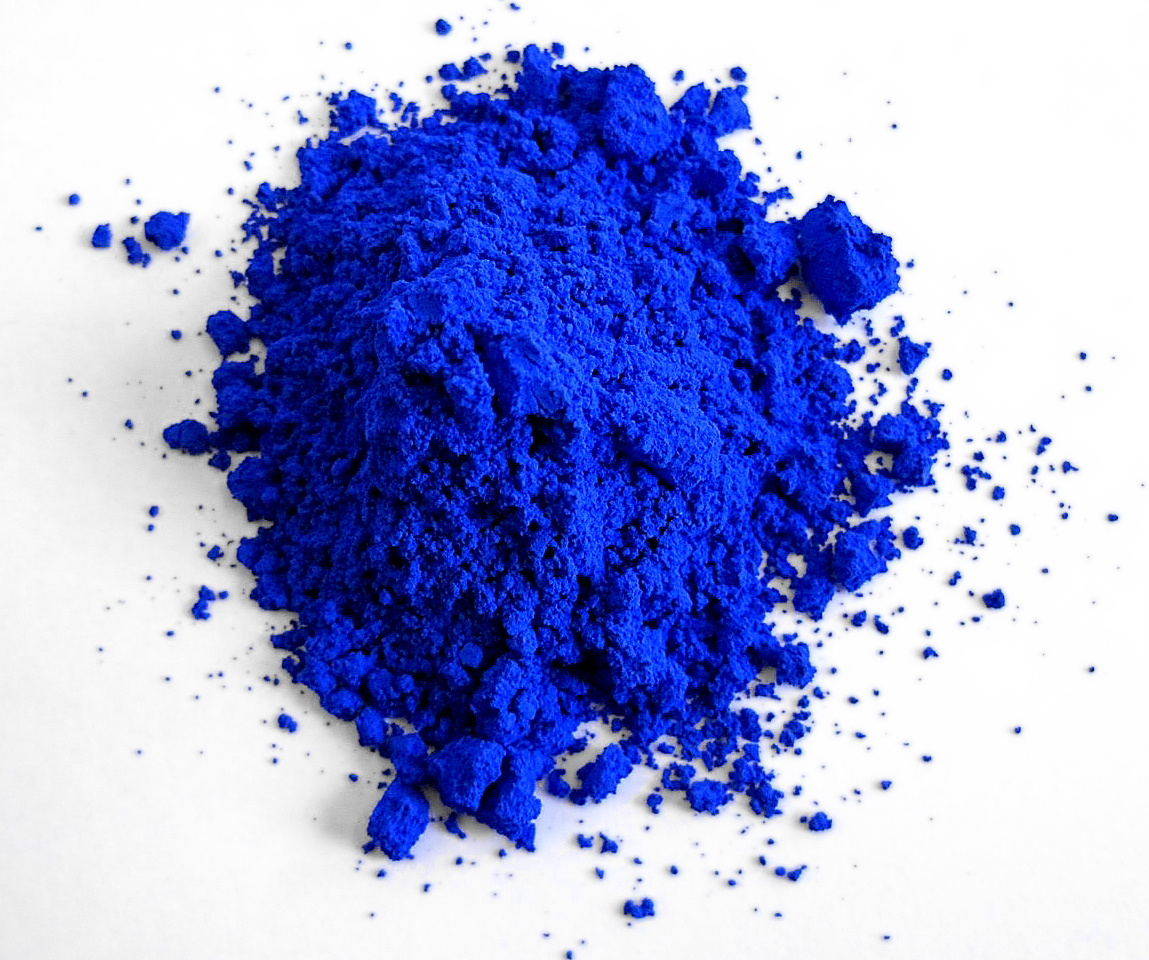
YInMn Blue, the First Shade of Blue Discovered in 200 Years, Is Now Available for Artists

Pho­to via Ore­gon State Uni­ver­si­ty

“Col­or is part of a spec­trum, so you can’t dis­cov­er a col­or,” says Pro­fes­sor Mas Sub­ra­man­ian, a sol­id-state chemist at Ore­gon State Uni­ver­si­ty. “You can only dis­cov­er a mate­r­i­al that is a par­tic­u­lar color”—or, more pre­cise­ly, a mate­r­i­al that reflects light in such a way that we per­ceive it as a col­or. Sci­en­tif­ic mod­esty aside, Sub­ra­man­ian actu­al­ly has been cred­it­ed with dis­cov­er­ing a color—the first inor­gan­ic shade of blue in 200 years.

Named “YIn­Mn blue” —and affec­tion­ate­ly called “Mas­Blue” at Ore­gon State—the pig­men­t’s unwieldy name derives from its chem­i­cal make­up of yttri­um, indi­um, and man­ganese oxides, which togeth­er “absorbed red and green wave­lengths and reflect­ed blue wave­lengths in such a way that it came off look­ing a very bright blue,” Gabriel Rosen­berg notes at NPR. It is a blue, in fact, nev­er before seen, since it is not a nat­u­ral­ly occur­ring pig­ment, but one lit­er­al­ly cooked in a lab­o­ra­to­ry, and by acci­dent at that.

The dis­cov­ery, if we can use the word, should just­ly be cred­it­ed to Subramanian’s grad stu­dent Andrew E. Smith who, dur­ing a 2009 attempt to “man­u­fac­ture new mate­ri­als that could be used in elec­tron­ics,” heat­ed the par­tic­u­lar mix of chem­i­cals to over 2000 degrees Fahren­heit. Smith noticed “it had turned a sur­pris­ing, bright blue col­or [and] Sub­ra­man­ian knew imme­di­ate­ly it was a big deal.” Why? Because the col­or blue is a big deal.

In an impor­tant sense, col­or is some­thing humans dis­cov­ered over long peri­ods of time in which we learned to see the world in shades and hues our ances­tors could not per­ceive. “Some sci­en­tists believe that the ear­li­est humans were actu­al­ly col­or­blind,” Emma Tag­gart writes at My Mod­ern Met, “and could only rec­og­nize black, white, red, and only lat­er yel­low and green.” Blue, that is to say, didn’t exist for ear­ly humans. “With no con­cept of the col­or blue,” Tag­gart writes, “they sim­ply had no words to describe it. This is even reflect­ed in ancient lit­er­a­ture, such as Homer’s Odyssey,” with its “wine-dark sea.”

Pho­to via Ore­gon State Uni­ver­si­ty

Sea and sky only begin to assume their cur­rent col­ors some 6,000 years ago when ancient Egyp­tians began to pro­duce blue pig­ment. The first known col­or to be syn­thet­i­cal­ly pro­duced is thus called Egypt­ian blue, cre­at­ed using “ground lime­stone mixed with sand and a cop­per-con­tain­ing min­er­al, such as azu­rite or mala­chite.” Blue holds a spe­cial place in our col­or lex­i­cog­ra­phy. It is the last col­or word that devel­ops across cul­tures and one of the most dif­fi­cult col­ors to man­u­fac­ture. “Peo­ple have been look­ing for a good, durable blue col­or for a cou­ple of cen­turies,” Sub­ra­man­ian told NPR.

And so, YIn­Mn blue has become a sen­sa­tion among indus­tri­al man­u­fac­tur­ers and artists. Patent­ed in 2012 by OSU, it received approval for indus­tri­al use in 2017. That same year, Aus­tralian paint sup­pli­er Derivan released it as an acrylic paint called “Ore­gon Blue.” It has tak­en a few more years for the U.S. Envi­ron­men­tal Pro­tec­tion Agency to come around, but they’ve final­ly approved Yln­Mn blue for com­mer­cial use, “mak­ing it avail­able to all,” Isis Davis-Marks writes at Smith­son­ian. “Now the authen­ti­cat­ed pig­ment is avail­able for sale in paint retail­ers like Gold­en in the US.”

Pho­to via Ore­gon State Uni­ver­si­ty

The new blue solves a num­ber of prob­lems with oth­er blue pig­ments. It is non­tox­ic and not prone to fad­ing, since it “reflects heat and absorbs UV radi­a­tion.” YIn­Mn blue is “extreme­ly sta­ble, a prop­er­ty long sought in a blue pig­ment,” says Sub­ra­man­ian. It also fills “a gap in the range of col­ors,” says art sup­ply man­u­fac­tur­er Georg Kre­mer, adding, “The pure­ness of YIn­Blue is real­ly per­fect.”

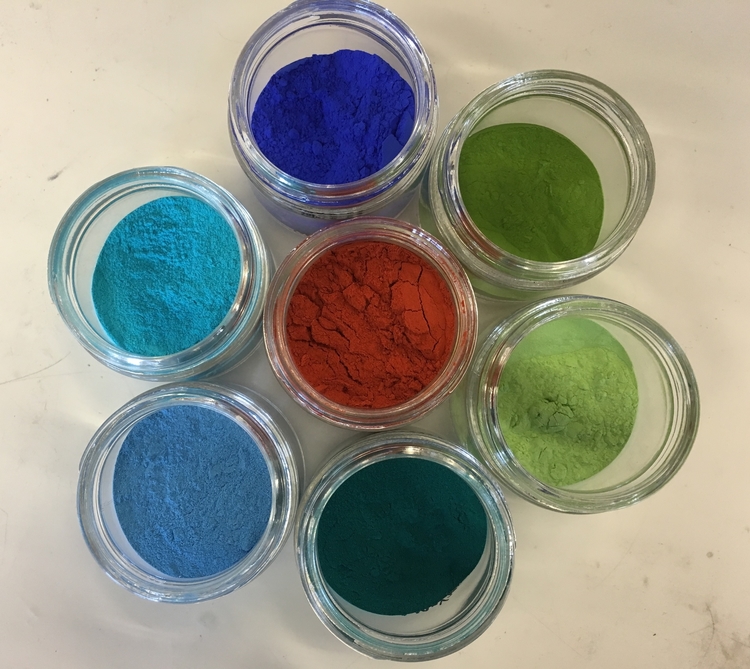
Since their first, acci­den­tal col­or dis­cov­ery, “Sub­ra­man­ian and his team have expand­ed their research and have made a range of new pig­ments to include almost every col­or, from bright oranges to shades of pur­ple, turquoise and green,” notes the Ore­gon State Uni­ver­si­ty Depart­ment of Chem­istry. None have yet had the impact of the new blue. Learn much more about the unique chem­i­cal prop­er­ties of YIn­Mn blue here and see Pro­fes­sor Sub­ra­man­ian dis­cuss its dis­cov­ery in his TED talk fur­ther up.

via Hyper­al­ler­gic

Relat­ed Con­tent: 

Behold One of the Ear­li­est Known Col­or Charts: The Table of Phys­i­o­log­i­cal Col­ors (1686)

A 900-Page Pre-Pan­tone Guide to Col­or from 1692: A Com­plete Dig­i­tal Scan

Werner’s Nomen­cla­ture of Colour, the 19th-Cen­tu­ry “Col­or Dic­tio­nary” Used by Charles Dar­win (1814)

Josh Jones is a writer and musi­cian based in Durham, NC. Fol­low him at @jdmagness

The Great Gatsby Is Now in the Public Domain and There’s a New Graphic Novel

If you’ve ever dreamed about mount­ing that “Great Gats­by” musi­cal, or writ­ing that sci-fi adap­ta­tion based on Gats­by but they’re all androids, there’s some good news: as of Jan­u­ary 1, 2021, F. Scott Fitzgerald’s clas­sic nov­el final­ly entered the pub­lic domain. (Read a pub­lic domain copy here.) Cre­atives can now do what they want with the work: reprint or adapt it any way they like, with­out hav­ing to nego­ti­ate the rights.

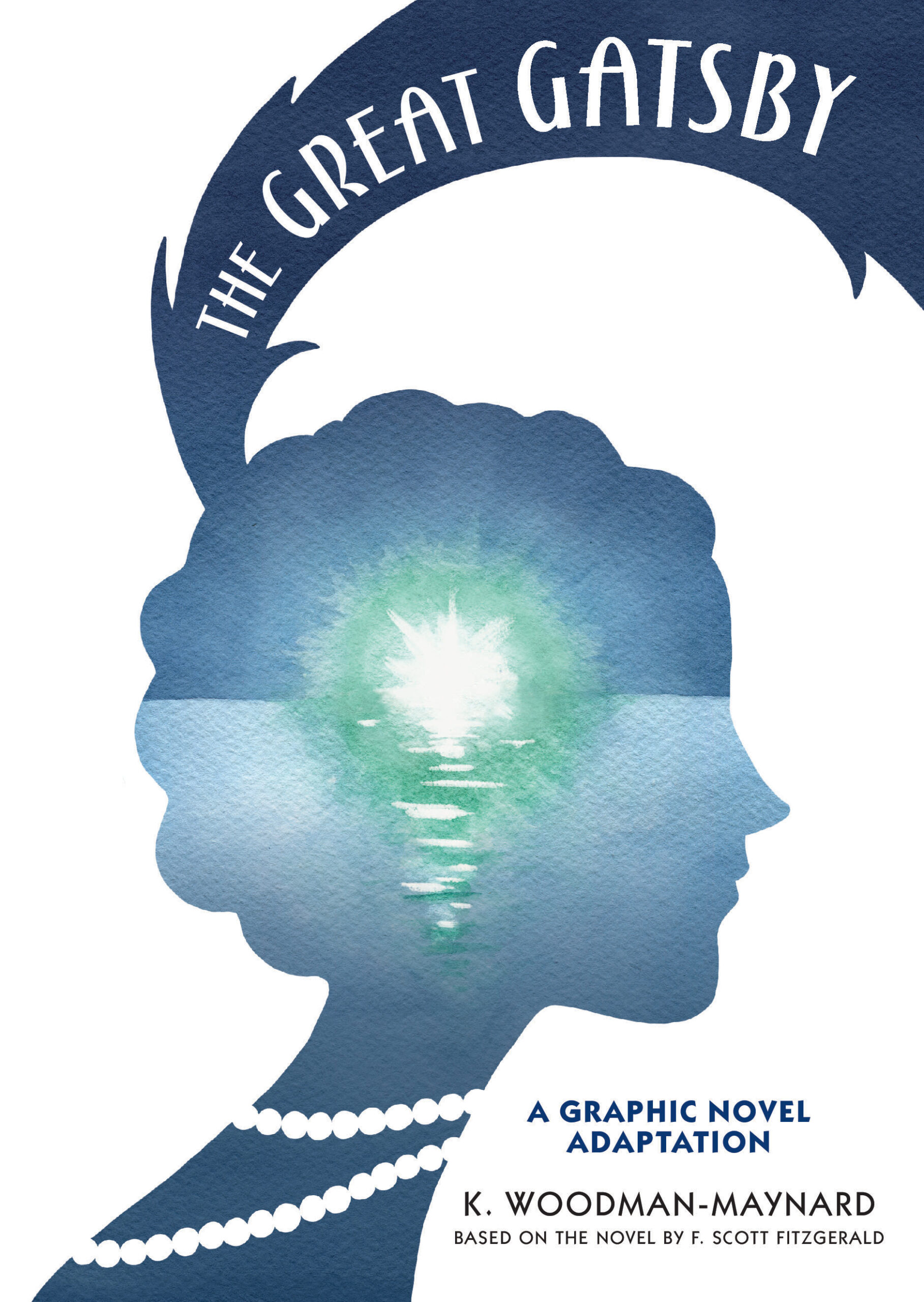
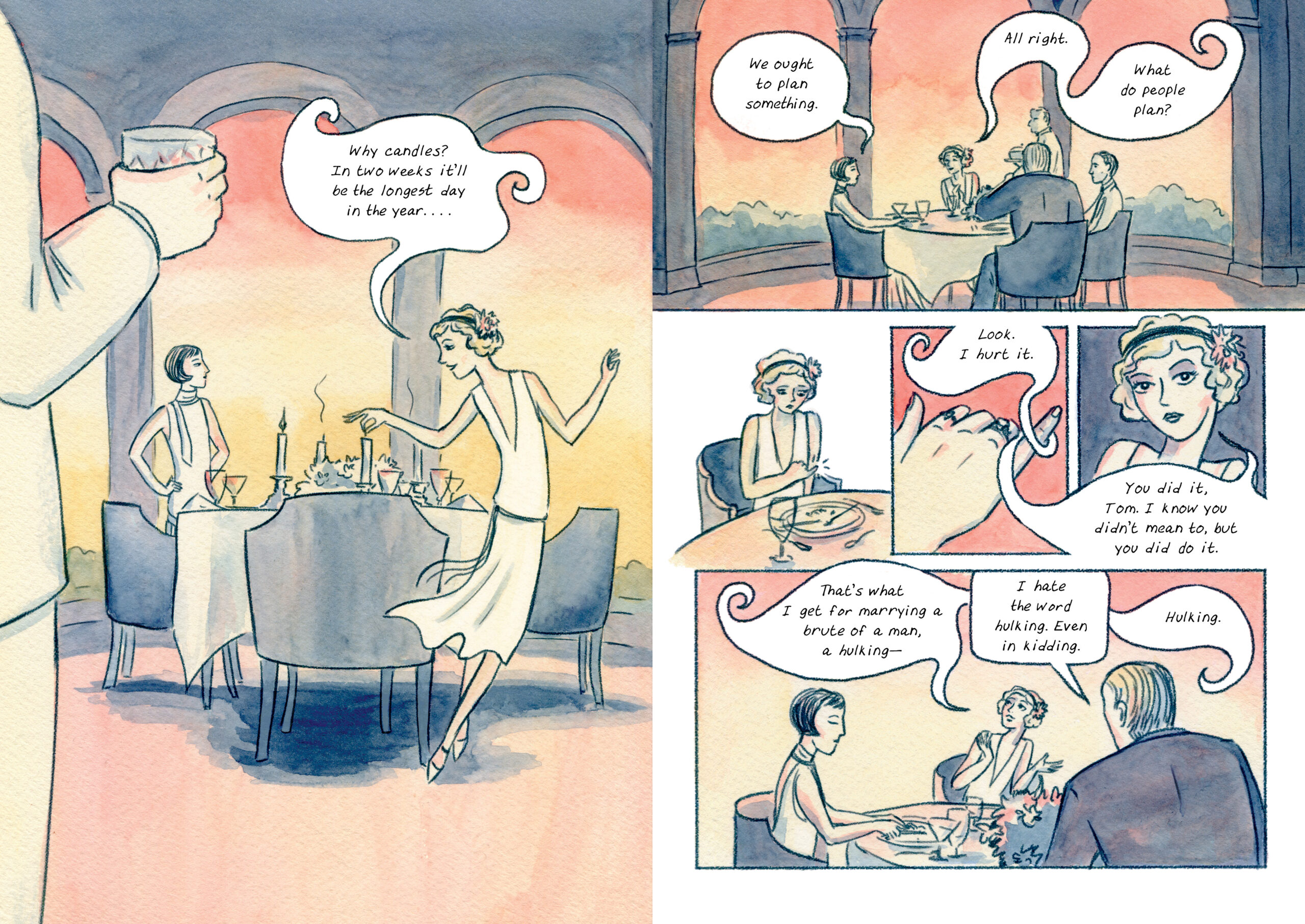
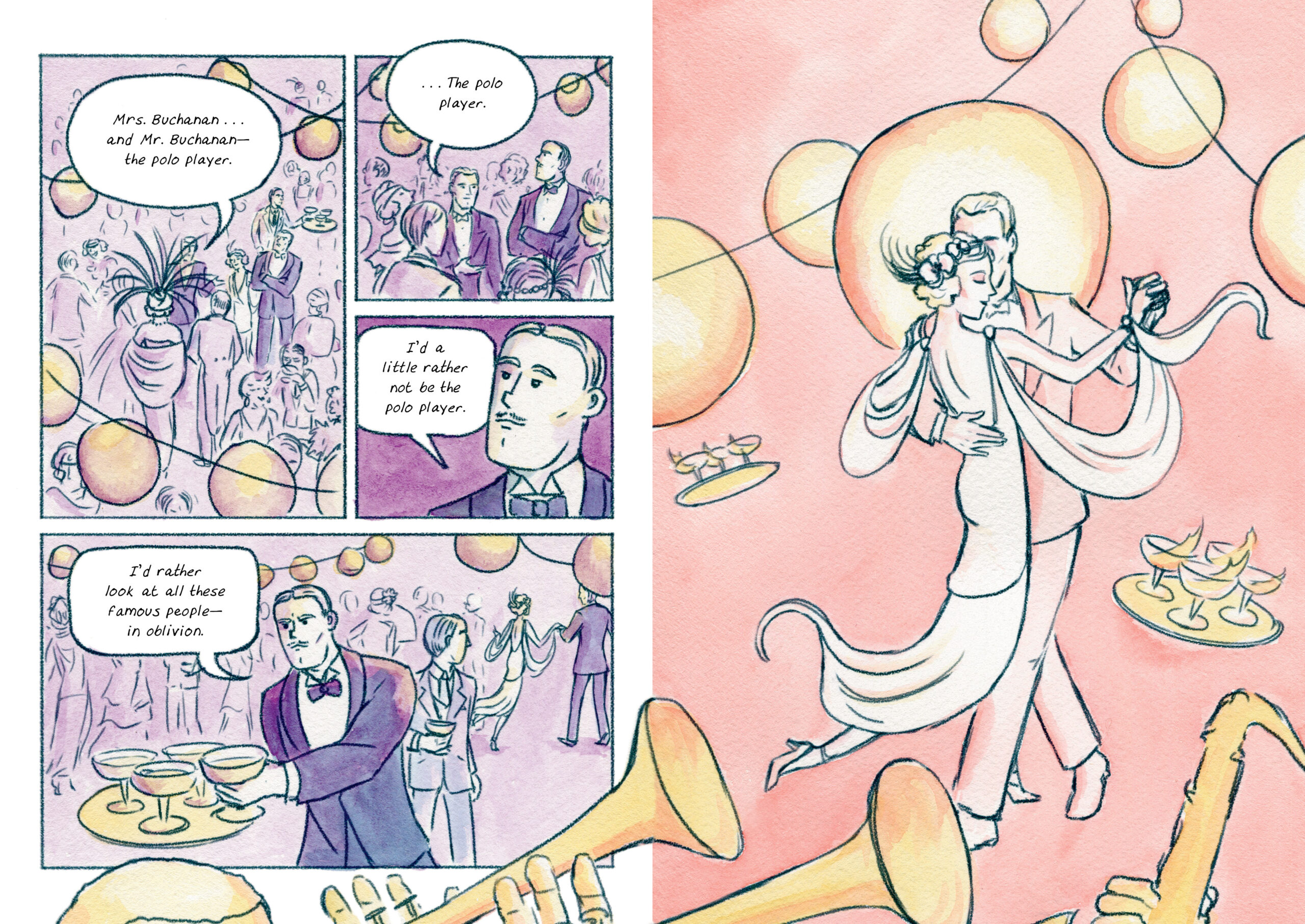
Or you could, just like Min­neapo­lis-based artist K. Wood­man-May­nard adapt the work into a beau­ti­ful graph­ic nov­el, pages of which you can glimpse here. Her ver­sion is all light and pas­tel water­col­ors, with a lib­er­al use of the orig­i­nal text along­side more fan­tas­tic sur­re­al imagery, mak­ing visu­al some of Fitzgerald’s word play. At 240 pages, there’s a lot of work here and, as if it needs repeat­ing, no graph­ic nov­el is a sub­sti­tute for the orig­i­nal, just…a jazz riff, if you were.

But Wood­man-May­nard was one of many wait­ing for Gats­by to enter the pub­lic domain, which apart from Dis­ney prop­er­ty, will hap­pen to most record­ed and writ­ten works over time. Many authors have been wait­ing for the chance to riff on the nov­el and its char­ac­ters with­out wor­ry­ing about a cease and desist let­ter. Already you can find The Gay Gats­by, B.A. Baker’s slash fic­tion rein­ter­pre­ta­tion of all the sup­pressed long­ing in the orig­i­nal nov­el; The Great Gats­by Undead, a zom­bie ver­sion; and Michael Far­ris Smith’s Nick, a pre­quel that fol­lows Nick Car­raway through World War I and out the oth­er side. And there are plen­ty more to come.

Copy­right law stip­u­lates that any work after 95 years will enter the pub­lic domain. (Up until 1998, this used to be 75 years, but some lawyers talked to some con­gress­crit­ters).

As of 2021, along with The Great Gats­by, the pub­lic domain gained:

Mrs. Dal­loway — Vir­ginia Woolf

In Our Time — Ernest Hem­ing­way

The New Negro — Alain Locke (the first major com­pendi­um of Harlem Renais­sance writ­ers)

An Amer­i­can Tragedy — Theodore Dreis­er (adapt­ed into the 1951 film A Place in the Sun)

The Secret of Chim­neys — Agatha Christie

Arrow­smith — Sin­clair Lewis

Those Bar­ren Leaves — Aldous Hux­ley

The Paint­ed Veil — W. Som­er­set Maugh­am

Now, the thing about The Great Gats­by is that it is both loved by read­ers and hard to adapt into oth­er medi­ums by its fans. It has been adapt­ed five times for the screen (the Baz Luhrmann-Leonar­do DiCaprio ver­sion is the most recent from 2013) and they have all dealt with the cen­tral para­dox: Fitzger­ald gives us so lit­tle about Gats­by. The author is inten­tion­al­ly hop­ing the read­er to cre­ate this “great man” in our heads, and there he must stay. The nov­el is very much about the “idea” of a man, much like the idea of the “Amer­i­can Dream.” But film must cast some­body and Hol­ly­wood absolute­ly has to cast a star like Leonar­do DiCaprio or Robert Red­ford. A graph­ic nov­el, how­ev­er, does not have those con­ces­sions to the mar­ket. Woodman-Maynard’s ver­sion is not even the first graph­ic nov­el based on Fitzgerald’s book—-Scribner pub­lished a ver­sion adapt­ed by Fred Ford­ham and illus­trat­ed by Aya Mor­ton last year—-and it cer­tain­ly will not be the last. Get ready for a bumper decade celebrating/critiquing the Roar­ing ‘20s, while we still fig­ure out what to call our own era.

Relat­ed Con­tent:

What’s Enter­ing the Pub­lic Domain in 2021: The Great Gats­by & Mrs. Dal­loway, Music by Irv­ing Berlin & Duke Elling­ton, Come­dies by Buster Keaton, and More

The Great Gats­by and Wait­ing for Godot: The Video Game Edi­tions

The Wire Breaks Down The Great Gats­by, F. Scott Fitzgerald’s Clas­sic Crit­i­cism of Amer­i­ca (NSFW)

The Only Known Footage of the 1926 Film Adap­ta­tion of The Great Gats­by (Which F. Scott Fitzger­ald Hat­ed)

Ted Mills is a free­lance writer on the arts who cur­rent­ly hosts the Notes from the Shed pod­cast and is the pro­duc­er of KCR­W’s Curi­ous Coast. You can also fol­low him on Twit­ter at @tedmills, and/or watch his films here.

Quantcast