Leon Levinstein: Photography Reveals How Little We See

In the 1960s, while now-icon­ic pho­tog­ra­phers like Robert Frank and Diane Arbus were busy becom­ing icon­ic — apply­ing for grants, enter­ing award shows, hus­tling for high-pro­file mag­a­zine assign­ments — Leon Levin­stein was blend­ing into crowds, unno­ticed, doc­u­ment­ing street life and the era’s hip­sters: beach bums, down­town der­ri­eres, street hus­tlers. An unsung pho­tog­ra­phy hero of the 20th cen­tu­ry, Levin­stein craft­ed and inhab­it­ed a lone­ly, her­mit-like world behind his lens, yet man­aged to cap­ture the rich­ness of the world in front of it with remark­able ele­gance and vig­or.

In fan­tas­tic 1988 inter­view recent­ly fea­tured on NPR, the lone pho­tog­ra­ph­er shares his cre­ative ethos and his ulti­mate approach to his art: “You got­ta be alone and work alone. It’s a lone­ly occu­pa­tion, if you wan­na call it that.”

Image © Howard Green­berg Gallery

Image © Howard Green­berg Gallery

What makes Levin­stein a par­tic­u­lar­ly unlike­ly mas­ter of street pho­tog­ra­phy — or, per­haps, pre­cise­ly what makes him a mas­ter — is that he nev­er received any for­mal train­ing in pho­tog­ra­phy. Instead, he exit­ed the army, bought him­self a used cam­era, and qui­et­ly set to shoot­ing.

“A good pho­to­graph will prove to the view­er how lit­tle our eyes per­mit us to see. Most peo­ple only see what they have always seen and what they expect to see. Where a pho­tog­ra­ph­er, if he’s good, will see every­thing.”

Image © Howard Green­berg Gallery

Image © Howard Green­berg Gallery

This month, a new exhi­bi­tion at New York’s Met­ro­pol­i­tan Muse­um of Art pays homage to the obscure pho­tog­ra­ph­er. Hip­sters, Hus­tlers, and Hand­ball Play­ers: Leon Levin­stein’s New York Pho­tographs, 1950–1980 is as much a ret­ro­spec­tive of Levin­stein’s work as it is a unique time cap­sule of the era’s every­day cul­ture-mak­ers. You can view the col­lec­tion of pho­tographs on the muse­um’s web­site and catch the exhi­bi­tion at the Met until Octo­ber 17.

Maria Popo­va is the founder and edi­tor in chief of Brain Pick­ings, a curat­ed inven­to­ry of eclec­tic inter­est­ing­ness and indis­crim­i­nate curios­i­ty. She writes for Wired UK, GOOD Mag­a­zine, Big­Think and Huff­in­g­ton Post, and spends a dis­turb­ing amount of time on Twit­ter.

Johnny Cash Remembered with 1,000+ Drawings

Give cred­it to The John­ny Cash Project. They took took hun­dreds of draw­ings, each done by a dif­fer­ent per­son, then stitched them togeth­er to pro­duce a video (above) that accom­pa­nies the title track of John­ny Cash’s last album, Ain’t No Grave. H/T to men­talfloss

by | Permalink | Make a Comment ( 1 ) |

Andrei Tarkovsky: Two Free Films & Some Polaroids Too

A quick fyi: Film Annex is now mak­ing avail­able two films by the great Sovi­et film­mak­er Andrei Tarkovsky: Stalk­er and Andrei Rublev (Part 1 and Part 2). You can also find them list­ed in our col­lec­tion of Free Movies Online. When not mak­ing movies, Tarkovsky snapped some polaroids too…

The Walker Library of Human Imagination


The tech/internet bil­lion­aires of the 1990s were nev­er known for their largesse. They built their mas­sive yachts. They bought their sports teams. They did­n’t give much back to the pub­lic domain, as the Rock­e­fellers, Mel­lons and the Get­tys once did (despite their many oth­er flaws).

There are some  excep­tions, of course. Bill Gates final­ly found reli­gion and got involved in phil­an­thropy in a big way. Then, on a less­er scale, there’s Jay Walk­er, the founder of Price­line and Walk­er Dig­i­tal. He plowed many of his mil­lions into cre­at­ing The Walk­er Library of Human Imag­i­na­tion. As Wired mag­a­zine has put it, the library is a kind of intel­lec­tu­al Dis­ney­land, a 3600 square foot room that dis­plays great works of human imag­i­na­tion in an imag­i­na­tive set­ting. Arti­facts on dis­play include: a com­plete Bible hand­writ­ten on sheep­skin from 1240 AD, the first illus­trat­ed med­ical book from 1499, a 1699 atlas con­tain­ing the first maps that put the sun at the cen­ter of the uni­verse, the nap­kin on which FDR sketched his plan to win WWII, and an orig­i­nal 1957 Russ­ian Sput­nik satel­lite. You can get a full list of cul­tur­al curiosi­ties here, watch the recent­ly pro­duced video tour of the library above, and spend a few min­utes watch­ing Walk­er talk about his library at TED.

Thanks Colleen for flag­ging the new video.

by | Permalink | Make a Comment ( 2 ) |

Vermeer with a BiC

Take  Johannes Ver­meer’s, The Girl with a Pearl Ear­ring, and then try to repro­duce it with a sim­ple BiC pen. That’s what artist James Mylne does here. In 90 sec­onds, we see what took him 90 hours to pull off. Here it goes.

by | Permalink | Make a Comment ( 2 ) |

Oscar Wilde in His Own Words

Click the image two times to take a clos­er look!

It’s a cre­ative take on Oscar Wilde. And Eri­ka Iris Sim­mons does­n’t stop there. You can find more of her cre­ative “paper­work” cre­ations on her web site. Beethoven, Hitch­cock, Ein­stein – they’re all here… (For more of her work, also see Sim­mons’ Flickrstream.)

via Metafil­ter

by | Permalink | Make a Comment ( 1 ) |

Artists Under the Influence

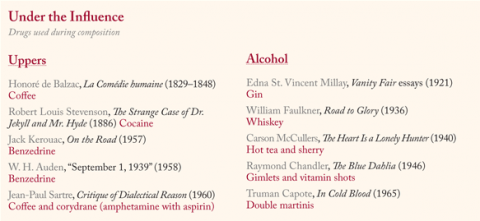
artists under the influenceIt’s no secret. Many writ­ers have writ­ten their mas­ter­pieces under the influ­ence of var­i­ous liq­uids and chem­i­cals, rang­ing from fair­ly innocu­ous to not. This month, Lapham’s Quar­ter­ly has pulled togeth­er a list that cor­re­lates great works with con­tribut­ing sub­stances. Here’s a quick sam­ple:

  • Hon­orĂ© de Balzac, La comĂ©die humaine, Cof­fee
  • W.H. Auden, Sep­tem­ber 1, 1939, Ben­zedrine
  • Tru­man Capote, In Cold Blood, Dou­ble Mar­ti­nis
  • Ken Kesey, One Who Flew Over the Cuck­oo’s Nest, Pey­ote & LSD

via @kirstinbutler

by | Permalink | Make a Comment ( 3 ) |

What Leonardo da Vinci Really Looked Like

Leonar­do da Vin­ci (1452 – 1519) paint­ed arguably the world’s most famous por­trait – the Mona Lisa. But rather iron­i­cal­ly, we have nev­er seen a por­trait of the artist him­self. Per­haps until now… Speak­ing at TED, Siegfried Wold­hek shows what he believes is the true face of da Vin­ci. It’s all pret­ty spec­u­la­tive, but it may be right.

via @brainpicker

by | Permalink | Make a Comment ( 7 ) |

« Go BackMore in this category... »
Quantcast