Watch Bill Murray Perform a Satirical Anti-Technology Rant (1982)

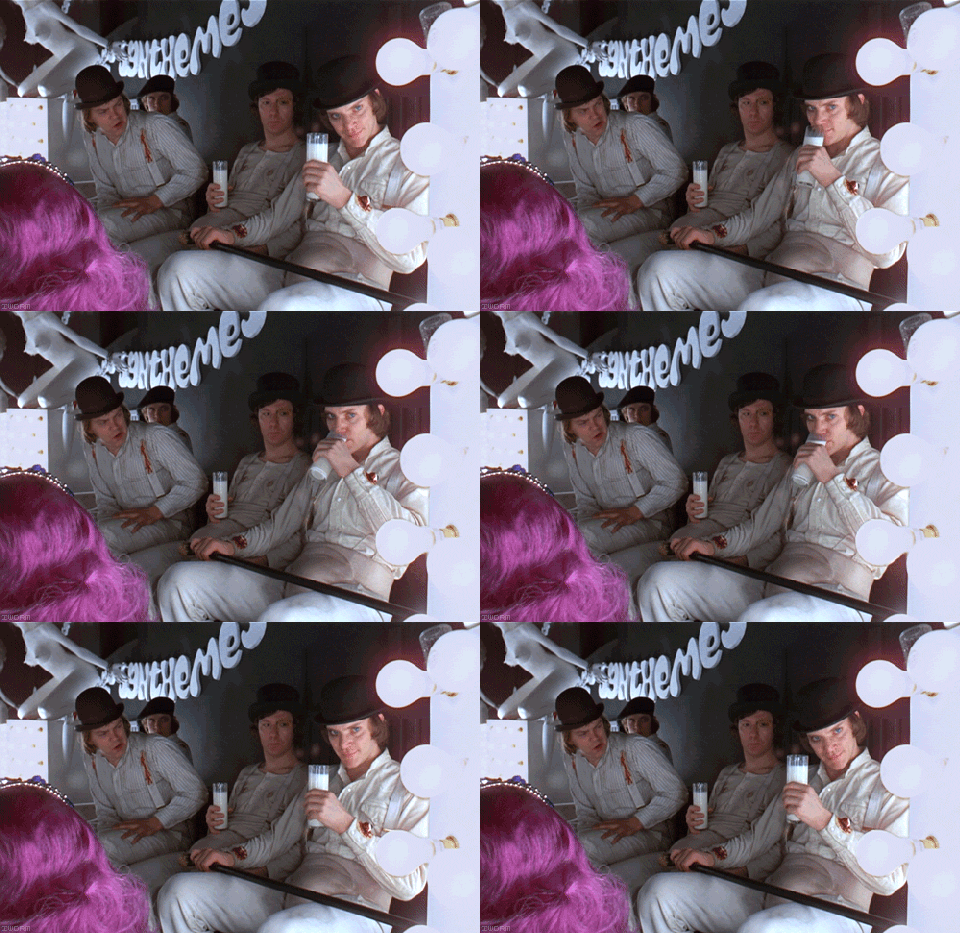
Above you’ll find find a clip from Wired In, a tele­vi­sion show pro­duced in the ear­ly eight­ies meant to ori­ent view­ers in the midst of that heady era of tech­no­log­i­cal inno­va­tion. Alas, the pro­gram nev­er aired; only a demo reel and some raw footage sur­vive. But those remains fea­ture no less a comedic lumi­nary than Bill Mur­ray, who even 32 years ago must have been quite a catch for a pilot like this. Though not known for his tech savvy, he has built a rep­u­ta­tion for mak­ing any­thing sound hilar­i­ous by virtue of his per­sona alone. This skill he applies to a par­o­dy of the every­man’s anti-tech­nol­o­gy dia­tribe, as com­mon­ly heard then as it is today — or as it no doubt was 32 years before the shoot, or will be 32 years from now. “Who thinks up all this high-tech stuff any­way?” Mur­ray demands. “They start with the dig­i­tal watch­es. Tells you the time in num­bers, the exact time to the sec­ond. 3:12 and 42 sec­onds. Who needs to know that stuff? I don’t!”

Keep watch­ing, and that Wired In clip heads to Las Vegas to demon­strate for us the won­der of sol­id-state car­tridge soft­ware for the Texas Instru­ments Home Com­put­er. But if you’d rather mar­vel at more of Mur­ray’s par­tic­u­lar kind of craft, watch the full sev­en min­utes of rant takes above. His riffs, seem­ing­ly script­ed as well as impro­vised, of vary­ing moods and pitched at vary­ing ener­gy lev­els, take him from those dig­i­tal watch­es to auto­mat­ed car fac­to­ries to R2-D2 to talk­ing dash­boards to the one idea he does like, robots that ride along­side you in your car’s pas­sen­ger’s seat. “You know what?” he con­cludes, “They’ll nev­er do it — because it makes too much sense.” The mak­ers of Wired In clear­ly had a pre­scient­ly sar­don­ic atti­tude about the com­ing waves of tech-relat­ed anx­i­ety; the pilot also includes a jab at the notion of video game addic­tion from “Pac-Man freak” Lily Tom­lin.

Relat­ed Con­tent:

Bill Mur­ray Reads Wal­lace Stevens Poems — “The Plan­et on The Table” and “A Rab­bit as King of the Ghosts”

Fact Check­ing Bill Mur­ray: A Short, Com­ic Film from Sun­dance 2008

Bill Mur­ray Reads Poet­ry at a Con­struc­tion Site

Col­in Mar­shall hosts and pro­duces Note­book on Cities and Cul­ture and writes essays on lit­er­a­ture, film, cities, Asia, and aes­thet­ics. He’s at work on a book about Los Ange­les, A Los Ange­les Primer. Fol­low him on Twit­ter at @colinmarshall.

The First Pizza Ordered by Computer, 1974

By the late 1960s, tech­nol­o­gists were already invent­ing the future we now inhab­it. Arthur C. Clarke peered into the future and saw a wired world where infor­ma­tion and com­mu­ni­ca­tion would be imme­di­ate and bor­der­less. Mar­shall McLuhan fore­saw the rough out­lines of what we now call “social media.” And oth­ers pre­dict­ed that email and ecom­merce were on the not-so-dis­tant hori­zon. It should per­haps then come as no sur­prise that, just a few years lat­er, The Arti­fi­cial Lan­guage Lab­o­ra­to­ry at Michi­gan State devel­oped a way for the com­put­er to start doing some every­day com­merce — like order­ing piz­za.

In 1974 Don­ald Sher­man, whose speech was lim­it­ed by a neu­ro­log­i­cal dis­or­der called Moe­bius Syn­drome, used a new-fan­gled device designed by John Eulen­berg to dial up a pizze­ria. The first call went to Domi­nos, which hung up. They were appar­ent­ly too busy becom­ing a behe­moth. Mer­ci­ful­ly, a humane pizze­ria — Mr. Mike’s — took the call, and his­to­ry was made. It all plays out above, and we hope that Mr. Mike’s is still thriv­ing all these years lat­er.…

via Coudal

by | Permalink | Make a Comment ( 7 ) |

Stanford Makes Open Source Platform, Class2Go, Available to All; Launches MOOC on Platform Today

Are you on the hunt for a free, open source plat­form that will let you deliv­er free online cours­es? We’ve already told you about one option: Google Course Builder. Now here’s anoth­er: Stan­ford’s Class2Go. The plat­form is open, mean­ing that you can grab the code base for free and run it on your very own serv­er. Class2Go is also portable, giv­ing schools the abil­i­ty to move doc­u­ments and media to oth­er plat­forms if they so choose. The Stan­ford plat­form is inter­op­er­a­ble in the sense that it builds on exist­ing soft­ware (MySQL, Github, Piaz­za, MySQL, Python Djan­go, etc.). And, unlike some oth­er plat­forms, Class2Go gives edu­ca­tors imme­di­ate access to valu­able data, allow­ing them to make refine­ments to the edu­ca­tion­al expe­ri­ence.

Although still under devel­op­ment, Class2Go is ready for action. In the fall, Stan­ford offered two MOOCs through Class2Go (Com­put­er Net­work­ing and Solar Cells, Fuel Cells, & Bat­ter­ies). And it has a new MOOC get­ting start­ed today: Intro­duc­tion to Data­bas­es taught by Jen­nifer Widom, the Chair of Stan­ford’s famed Com­put­er Sci­ence depart­ment. (Watch her intro above.) You can take the course for free and learn all about data­base devel­op­ment. Or you can use it as an oppor­tu­ni­ty to see Class2Go up close.

In the com­ing months, Class2Go will be deployed at the Uni­ver­si­ty of West­ern Aus­tralia. If you’re tempt­ed to do the same at your own uni­ver­si­ty, you can get the Class2Go code here.

Relat­ed Con­tent:

A Com­plete list of MOOCs and Cer­tifi­cate Cours­es from Lead­ing Uni­ver­si­ties

650 Free Online Cours­es from Top Uni­ver­si­ties (a huge trove of video/audio lec­tures)

by | Permalink | Make a Comment ( 2 ) |

Introducing KA Lite: An Offline Version of the Khan Academy That Runs on Almost Anything

Salman Khan’s mod­el for free online edu­ca­tion hinges on the micro lecture—brief tuto­ri­als on near­ly every sub­ject under the sun—delivered through YouTube. Launched in 2006, the Khan Acad­e­my now has a library of 3000 videos. That’s not bad, espe­cial­ly for a site with the ele­vat­ed goal of pro­vid­ing a “free world-class edu­ca­tion for any­one any­where.” With the help of hun­dreds of vol­un­teers, the site’s con­tent is acces­si­ble in 18 lan­guages. But even with all of that effort, Khan does­n’t achieve the glob­al reach that it promis­es. The fact is that only 35 per­cent of the world’s pop­u­la­tion has access to the inter­net, which puts the idea of online learn­ing behind a vir­tu­al fire­wall for many peo­ple.

Enter Khan Acad­e­my Lite, oth­er­wise called KA Lite. This new ser­vice tries to work around that fire­wall. Soft­ware devel­op­er Jamie Alexan­dre and a team from UCSD devel­oped an offline ver­sion of Khan’s learn­ing mod­el that can run on just about any­thing. Once you down­load the KA Lite soft­ware and install it on a Lin­ux or Win­dows serv­er, stu­dents can start watch­ing Khan videos and exer­cis­es on computers/devices as tiny and cheap as the $35 Rasp­ber­ry Pi. Actu­al­ly, the whole serv­er can be run on the Rasp­ber­ry Pi!

You can down­load the soft­ware here and find instal­la­tion instruc­tions here. Jamie Alexan­dre offers his own intro­duc­tion to KA Lite here.

Khan Acad­e­my Lite sits nice­ly along­side the free apps released for the iPhone, iPad, and iPod Touch ear­li­er this year. Be sure to check them out.

Find more K‑12 Resources in our col­lec­tion of 200 Free Kids Edu­ca­tion­al Resources: Video Lessons, Apps, Books, Web­sites & More

Kate Rix writes about dig­i­tal media and edu­ca­tion. Read more of her work at and thenifty.blogspot.com.

Watch a Cool and Creepy Visualization of U.S. Births & Deaths in Real-Time

As one Metafil­ter com­menter put it, this visu­al­iza­tion is cool and creepy at once. Assem­bled by Brad Fly­on, the visu­al­iza­tion gives you a feel for the qual­i­ta­tive rhythm of births and deaths in the U.S.. (For­tu­nate­ly the births exceed deaths by a sig­nif­i­cant mar­gin.) When you enter the visu­al­iza­tion, you’ll want to give things a few moments to get going. And you can mouse over parts of the map to get more data.

The visu­al­iza­tion itself was cre­at­ed with the fol­low­ing (and I’m quot­ing Fly­on ver­ba­tim here):

by | Permalink | Make a Comment ( 3 ) |

Self-Taught African Teenager Wows M.I.T. (and Other Innovators Changing Africa’s Fate)

The news the world receives from the con­ti­nent of Africa is almost uni­form­ly bad, and this is cer­tain­ly an unjust sit­u­a­tion. A recent par­o­dy ad cam­paign by Nor­we­gian Erik Schrein­er Evans attempts to say as much; Evans’ Africa for Nor­way spoof intends to send the mes­sage to “stop treat­ing Africans like pas­sive recip­i­ents of aid, and rec­og­nize that the con­ti­nent is more than the sum of its prob­lems.” This mes­sage may have some effect on the ten­den­cy of major news and aid orga­ni­za­tions to cap­i­tal­ize on the suf­fer­ing of African peo­ple, but recent sto­ries high­light­ing the inge­nu­ity and self-suf­fi­cien­cy of African teenagers may do more to change per­cep­tions. First, there is the sto­ry of four Niger­ian teenagers who debuted their “urine-pow­ered gen­er­a­tor” at the 2012 “Mak­er Faire Africa” in Lagos, a sto­ry that made head­lines in inter­na­tion­al news. Anoth­er prodi­gy, from Sier­ra Leone, has made a splash with his abil­i­ty to turn garbage into use­able tech­nol­o­gy. Fif­teen-year-old Kelvin Doe—a.k.a. D.J. Focus—has wowed engi­neers by build­ing his own bat­ter­ies, gen­er­a­tors, and trans­mit­ters with scrounged-up spare parts and youth­ful resource­ful­ness.

The above THINKR video pro­files Kelvin, with inter­views from engi­neers like MIT doc­tor­al stu­dent David Sen­geh, also from Sier­ra Leone, who has used his con­nec­tions to help young peo­ple like Kelvin devel­op their tal­ents for the ben­e­fit of their war-torn and impov­er­ished coun­try. Kelvin’s a pret­ty amaz­ing young guy. He explains his alter-ego “D.J. Focus” as part of his per­son­al ethos: “I believe if you focus, you can do an inven­tion per­fect­ly.” Kelvin hosts his own radio show, which pro­vid­ed the impe­tus for his tech inno­va­tions. Kelv­in’s sto­ry struck a chord: the short video gar­nered over three-mil­lion views in just ten days.

A more recent episode of THINKR’s “Prodi­gies” series pro­files Kelvin’s men­tor, David Sen­gah, whose research focus­es on design­ing com­fort­able pros­thet­ic limbs, an inter­est he devel­oped through his own expe­ri­ence of the ten-year Sier­ra Leone Civ­il War, dur­ing which rebel forces ampu­tat­ed limbs to intim­i­date their oppo­si­tion.

Kelvin Doe and David Sen­gah are extra­or­di­nary inven­tors, but they are only two exam­ples of a steady stream of African tech inno­va­tors, artists, writ­ers, and entre­pre­neurs ded­i­cat­ed to chang­ing their coun­tries’ fates and there­by chang­ing the offi­cial nar­ra­tive of Africans as help­less vic­tims.

Josh Jones is a doc­tor­al can­di­date in Eng­lish at Ford­ham Uni­ver­si­ty and a co-founder and for­mer man­ag­ing edi­tor of Guer­ni­ca / A Mag­a­zine of Arts and Pol­i­tics.

The Coen Brothers Make a TV Commercial — Ridiculing “Clean Coal”

When famous movie direc­tors shoot tele­vi­sion spots, they usu­al­ly focus on the mer­its of a par­tic­u­lar prod­uct: Wim Wen­ders and Stel­la Artois, Wes Ander­son and the Hyundai Azera, Jean-Luc Godard and Schick after­shave. Above, you’ll see one by Joel and Ethan Coen meant not to endorse but to oppose. Premised on the notion that the name “clean coal” masks a not-espe­cial­ly-clean tech­nol­o­gy, “Clean Coal Clean” dish­es it out against the coal indus­try — “the most trust­ed name in coal” — with a satir­i­cal pas­tiche of house­hold clean­ing spray com­mer­cials. I’ll say this: if any pair of film­mak­ers can get me to watch a video about the pol­i­tics of coal, the guys behind Rais­ing Ari­zona, Bar­ton Fink, and A Seri­ous Man can. The clip just below offers a look into the pro­duc­tion of anoth­er “Clean Coal Clean” par­o­dy com­mer­cial, and a rare chance to see the Coen broth­ers at work.

Mar­la Dick­er­son in the Los Ange­les Times pro­vides back­ground on this “lat­est sal­vo in the media bat­tle between the coal indus­try and envi­ron­men­tal­ists over the role that car­bon fuels should play in the Unit­ed States’ ener­gy future.” Dick­er­son quotes a coal spokesman on how the “the indus­try spent more than $50 bil­lion since the 1970s installing pol­lu­tion-con­trol equip­ment and design­ing plants that are more effi­cient.” She also lays out the envi­ron­men­tal­ists’ argu­ment: “the coal indus­try’s mar­ket­ing cam­paign has left Amer­i­cans with the impres­sion that such ‘clean coal” tech­nol­o­gy already exists. Such a break­through has yet to be devel­oped,” she quotes the Sier­ra Cub’s coal cam­paign direc­tor as say­ing, “and may nev­er be at a cost that makes eco­nom­ic sense.” Of course, not even a genius auteur — not even two of them — can make up your mind on this issue. But with these spots, the Coen broth­ers and the Alliance for Cli­mate Pro­tec­tion reit­er­ate an invalu­able point: whether about house­hold clean­ers or ener­gy sources, nev­er believe the hype.

Relat­ed con­tent:

Wim Wen­ders Cre­ates Ads to Sell Beer (Stel­la Artois), Pas­ta (Bar­il­la), and More Beer (Car­ling)

Wes Anderson’s New Com­mer­cials Sell the Hyundai Azera

Fellini’s Fan­tas­tic TV Com­mer­cials

David Lynch’s Sur­re­al Com­mer­cials

Jean-Luc Godard’s After-Shave Com­mer­cial for Schick

Col­in Mar­shall hosts and pro­duces Note­book on Cities and Cul­ture. Fol­low him on Twit­ter at @colinmarshall.

Watch the World’s Oldest Working Digital Computer — the 1951 Harwell Dekatron — Get Fired Up Again

The next time you feel frus­trat­ed with your aging per­son­al com­put­er, just watch the video above. In these fifty sec­onds, the Nation­al Muse­um of Com­put­ing fires up the Har­well Deka­tron, also known as the Wolver­hamp­ton Instru­ment for Teach­ing Com­pu­ta­tion — or, nat­u­ral­ly, the WITCH. Hold­er of the title of the world’s old­est work­ing orig­i­nal dig­i­tal com­put­er, the WITCH, first built in 1951, went into retire­ment from Wolver­hamp­ton’s Stafford­shire Tech­ni­cal Col­lege in 1973. A three-year restora­tion of the com­put­er — all two-and-a-half tons, 828 flash­ing Deka­tron valves, and 480 relays of it — began in 2008. Now, hav­ing just fin­ished return­ing the machine to tip-top shape, they’ve actu­al­ly boot­ed it up, as you can see. “In 1951 the Har­well Deka­tron was one of per­haps a dozen com­put­ers in the world,” The Nation­al Muse­um of Com­put­ing’s press release quotes its trustee Kevin Mur­rell as say­ing, “and since then it has led a charmed life sur­viv­ing intact while its con­tem­po­raries were recy­cled or destroyed.”

The Har­well Atom­ic Ener­gy Research Estab­lish­ment pro­vid­ed the Deka­tron its first tasks, crank­ing out cal­cu­la­tions for­mer­ly done by hand. When it passed into obso­les­cence there in 1957, Stafford­shire Tech­ni­cal Col­lege took the mas­sive com­put­er off Har­well’s hands, and there it became the WITCH, used for teach­ing pur­pos­es over the next six­teen years. When it out­lived even its edu­ca­tion­al use, the WITCH went on dis­play at the Birm­ing­ham Muse­um of Sci­ence and Indus­try, and final­ly to dis­man­tle­ment and stor­age. Now it offers a whirring, clat­ter­ing, flash­ing, retro-tech­no­log­i­cal spec­ta­cle to new gen­er­a­tions of com­put­er enthu­si­asts. Some of them may be shocked to learn that, by virtue of sheer age, it does­n’t adhere to some of the very qual­i­ties of dig­i­tal com­put­ing they take for grant­ed: it does­n’t cal­cu­late in bina­ry code, but dec­i­mal code, hence the name “Deka­tron.” Though its prac­ti­cal appli­ca­tions would seem lim­it­ed in the mod­ern world, rest assured that some young hob­by­ist is even now pon­der­ing how to get the thing onto the web.

h/t: Boing­Bo­ing

Relat­ed con­tent:

A Short His­to­ry of Roman­ian Com­put­ing: From 1961 to 1989

Col­in Mar­shall hosts and pro­duces Note­book on Cities and Cul­ture. Fol­low him on Twit­ter at @colinmarshall.

« Go BackMore in this category... »
Quantcast