Let me set the scene: Not long after the attack on Pearl Harbor, Japan invaded Burma, a “backwater of the British Empire,” hoping to put the Chinese and British at a strategic disadvantage. (Get more details here.) Initially the Japanese campaign met with success, and, in early 1942, the British and local allies beat a retreat, trying to escape over the border to India. But when they reached the border, they found rivers, flooded by monsoons, blocking their way. That’s when a British tea planter named Gyles Mackrell stepped in and moved 200 refugees across the border using the only means available to them — elephants. This amazing story is now being told for the first time, thanks to the Centre of South Asian Studies at the University of Cambridge and its short film (13 minutes) shown above. You can read more about the great elephant escape here.
What A Glorious Space To Dwell
I can’t vouch for the claims being made in this “fun facts” song. (Nor do I know what’s up with the Jesus imagery.) But the video has some entertainment value, if not some good trivia. So enjoy…
In Praise of Copying: Get Your Free Copy
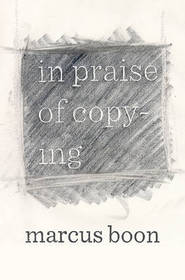 Just a quick fyi: If you head over to the Harvard University Press web site, you can grab a free copy of Marcus Boon’s new book, In Praise of Copying, which makes the case that “copying is an essential part of being human, that the ability to copy is worthy of celebration, and that, without recognizing how integral copying is to being human, we cannot understand ourselves or the world we live in.” Boon is a writer, journalist and Associate Professor in the English Literature department at York University, Toronto. You can download a free copy of his book in PDF format straight from this link. (Note that the text is formally released under a Creative Commons license.) Or you can always purchase a printed copy online.
P.S. The University of Chicago Press is offering up a free e‑book of its own: The Bourgeois Virtues (632 pages) by Deirdre N. McCloskey. Head here to get a copy.
Down to the Bone
Every November 2nd, Mexicans celebrate the Day of the Dead. Closely associated with other Catholic holidays (All Saints’ Day and All Souls’ Day), the Day of the Dead gives participants a chance to pray for and remember dearly departed family members and friends. And it’s often carried out in a festive spirit, not one marked by melancholy. As Carlos Fuentes, one of Mexico’s most celebrated writers, once said about death: “We Mexicans don’t advance towards death, we return to it, because death is not the end but the beginning, the start of everything: we descend from death.”
Today, on the Day of the Dead, we give you a claymation film that captures the mood of the holiday — Hasta los huesos or Down to the Bone. René Castillo, a self-taught animator from Guadalajara, wrote and directed the film back in 2001. And it went on to win many international awards for excellence in film. Down to the Bone runs nine minutes, and it’s a wild ride throughout. H/T M.S.
iTunes U Introduces Free eBooks: Download Shakespeare’s Complete Works
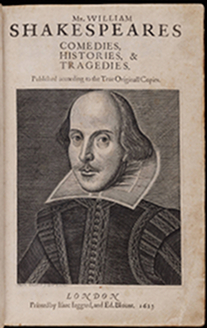 Perhaps you’re accustomed to downloading free lectures and courses on iTunes U. Now, you have a new option. Last week, Apple began introducing free eBooks to its media collection. And, to kick things off, they’re giving users access to 18 free textbooks sponsored by Connexions (a Rice University project); a series of 100 ebooks produced by the Open University, and then, courtesy of Oxford University, the complete collection of Shakespeare’s plays from the First Folio of 1623. You can download all of these texts in the open ePub format. And if you have an iPad (or an iPhone with a copy of iBooks), they easily sync to the device, and make for a great reading experience. But you’re not necessarily limited to using the iPad. I was able to read the texts in ebook readers created by Stanza and Barnes & Noble (the maker of the new color Nook). And, using this free online service and then following these general directions, I easily converted the ePub files to Amazon’s .mobi format and uploaded them to my Kindle. The bottom line? You can expect iTunes U to become a handy resource for free ebooks as the service matures – one best suited to the iPad, but certainly not limited to it. And, speaking of the iPad, you should give this story a read. “IPad Opens World to a Disabled Boy.” It’s a great way to start the week…
Note: If you want a simple html version of Shakespeare’s collected works, don’t miss MIT’s invaluable web site.
FYI. You can find more free eBooks in our ever-growing collection, 600 Free eBooks for iPad, Kindle & Other Devices.
“A Haunted House” by Virginia Woolf
Published first in 1921, then again in 1944, Virginia Woolf’s short story, “A Haunted House,” runs a mere 692 words – which makes it a Halloween treat that is short and sweet. We give you an appropriately somber reading of Woolf’s story above, with the accompanying text here. Or you can find an mp3 version in our collection of Free Audio Books. H/T to Mike, and enjoy the day.
The Milky Way over Texas
This 45 second timelapse video of the “Galactic Center of the Milky Way” rising over Texas Star Party (2009) just gets more spectacular as it rolls along. William Castleman created this sequence using a Canon EOS-5D, with exposures at 20 and 40 second intervals. This complements nicely Stéphane Guisard’s panoramic view of the Milky Way taken from the Atacama desert in Chile. See the The Milky Way in 360 Degrees here.
Find us on Facebook and Twitter!
Introduction to Computer Science & Programming: Free Courses
Nowadays, any well-rounded student must learn to master reading, writing and math. And then add something new to the mix: learning to code. If you didn’t learn to program software in school, not to worry. Free materials abound on the web, and we have made them easy to find. Above, you can start watching the first lecture of an MIT course (Introduction to Computer Science and Programming) that assumes no special knowledge of programming, and it sets out to teach you to think like a computer scientist. (Find the full set of lectures on YouTube, iTunes and MIT’s website.) Or alternatively, you can spend time with another course – Intensive Introduction to Computer Science Using C, PHP, and JavaScript – taught by David Malan at Harvard Extension. (Get it in multiple formats here.) And then don’t forget that Stanford University offers several introductory courses, all found under the Stanford Engineering Everywhere umbrella.
Once you have a good foundation in place, you can move in a variety of directions. Within our collection of Free Online Courses, we have listed 27 computer science courses where you can learn all about operating systems, computer graphics, artificial intelligence, building web sites, designing iPhone apps and beyond. The courses are all free. They’re available 24/7 on the web. You can get going any time…
Related Content:
Take Stanford Computer Science Courses This Fall: Free Worldwide
So You Want to Get a PhD in the Humanities?
So if you want the full case against getting a PhD in the humanities, here you go. Every argument the disillusioned academic can possibly make now packed into one semi-comic video. If you’re in the humanities, the litany of complaints, whether fair or not, will hardly be unfamiliar to you.
Now on a more serious note … Towards the end, the video references SUNY Albany’s recent decision to shutter its French, Italian, classics, Russian and theater programs. That event that triggered a much-discussed series of articles by Stanley Fish in The New York Times. If you’re looking for something that operates on a slightly higher intellectual plane, you might want to spend some time with “The Crisis of the Humanities Officially Arrives: Part 1 and Part 2.” Also don’t miss some of the reader comments. They bring a lot to the discussion. Thanks Jason for sending our way…
Related Content:
The Illustrated Guide to the PhD
Open Culture Goes Mobile: Your Feedback Requested
A quick note for our readers: This week, we soft launched a new mobile web site for Open Culture – one designed to give our readers the ability to access Open Culture content with far greater ease on their smartphones. If you have an iPhone, iPod Touch, Android phone (or any phone with an advanced web browser), you should be able to read our posts, watch videos, and listen to audio much more cleanly, no matter where you are. Simply pick up your phone, visit any page on openculture.com, and you will see what I mean.
This mobile site is still in “beta.” So if you experience any problems, or have any feedback, please send it our way. We want your input. And, if you don’t prefer the mobile site, you can always turn it off. Just scroll to the bottom of the mobile page and click “Switch to Standard View.”
Finally, as you can imagine, this project required some time and expense. If you can comfortably afford it, please consider making a donation via PayPal to support this initiative and others like it. And if you can’t swing it, that’s a‑okay. Maybe just tell a friend about the site (or about our Free iPhone app) and otherwise enjoy the ride.
Thanks for any feedback you might have, and hope you enjoy the mobile version of Open Culture.
Stephen Fry Gets Animated about Language
For a brief time in 2008, Stephen Fry, the popular British author, writer and comedian, produced a series of podcasts – called “Podgrams” – that drew on his writings, speeches and collective thoughts. (Find them on RSS and iTunes here). During one particular episode, Fry meditated on language (the English language & his own language) and a little on Barthes, Chomsky, Pinker and even Eddie Izzard. Then Matthew Rogers took that meditation and ran with it, producing a “kinetic typography animation” that artfully illustrates a six minute segment of the longer talk. Watch it above, and if you’re captivated by what Fry has to say, don’t miss his popular video, What I Wish I Had Known When I Was 18.
Support Us
We're hoping to rely on loyal readers, rather than erratic ads. Please click the Donate button and support Open Culture. You can use Paypal, Venmo, Patreon, even Crypto! We thank you!

Great Lectures
About Us

Open Culture scours the web for the best educational media. We find the free courses and audio books you need, the language lessons & educational videos you want, and plenty of enlightenment in between.
Advertise With Us
Archives
- October 2026
- September 2026
- August 2026
- July 2026
- June 2026
- May 2026
- April 2026
- March 2026
- February 2026
- January 2026
- December 2025
- November 2025
- October 2025
- September 2025
- August 2025
- July 2025
- June 2025
- May 2025
- April 2025
- March 2025
- February 2025
- January 2025
- December 2024
- November 2024
- October 2024
- September 2024
- August 2024
- July 2024
- June 2024
- May 2024
- April 2024
- March 2024
- February 2024
- January 2024
- December 2023
- November 2023
- October 2023
- September 2023
- August 2023
- July 2023
- June 2023
- May 2023
- April 2023
- March 2023
- February 2023
- January 2023
- December 2022
- November 2022
- October 2022
- September 2022
- August 2022
- July 2022
- June 2022
- May 2022
- April 2022
- March 2022
- February 2022
- January 2022
- December 2021
- November 2021
- October 2021
- September 2021
- August 2021
- July 2021
- June 2021
- May 2021
- April 2021
- March 2021
- February 2021
- January 2021
- December 2020
- November 2020
- October 2020
- September 2020
- August 2020
- July 2020
- June 2020
- May 2020
- April 2020
- March 2020
- February 2020
- January 2020
- December 2019
- November 2019
- October 2019
- September 2019
- August 2019
- July 2019
- June 2019
- May 2019
- April 2019
- March 2019
- February 2019
- January 2019
- December 2018
- November 2018
- October 2018
- September 2018
- August 2018
- July 2018
- June 2018
- May 2018
- April 2018
- March 2018
- February 2018
- January 2018
- December 2017
- November 2017
- October 2017
- September 2017
- August 2017
- July 2017
- June 2017
- May 2017
- April 2017
- March 2017
- February 2017
- January 2017
- December 2016
- November 2016
- October 2016
- September 2016
- August 2016
- July 2016
- June 2016
- May 2016
- April 2016
- March 2016
- February 2016
- January 2016
- December 2015
- November 2015
- October 2015
- September 2015
- August 2015
- July 2015
- June 2015
- May 2015
- April 2015
- March 2015
- February 2015
- January 2015
- December 2014
- November 2014
- October 2014
- September 2014
- August 2014
- July 2014
- June 2014
- May 2014
- April 2014
- March 2014
- February 2014
- January 2014
- December 2013
- November 2013
- October 2013
- September 2013
- August 2013
- July 2013
- June 2013
- May 2013
- April 2013
- March 2013
- February 2013
- January 2013
- December 2012
- November 2012
- October 2012
- September 2012
- August 2012
- July 2012
- June 2012
- May 2012
- April 2012
- March 2012
- February 2012
- January 2012
- December 2011
- November 2011
- October 2011
- September 2011
- August 2011
- July 2011
- June 2011
- May 2011
- April 2011
- March 2011
- February 2011
- January 2011
- December 2010
- November 2010
- October 2010
- September 2010
- August 2010
- July 2010
- June 2010
- May 2010
- April 2010
- March 2010
- February 2010
- January 2010
- December 2009
- November 2009
- October 2009
- September 2009
- August 2009
- July 2009
- June 2009
- May 2009
- April 2009
- March 2009
- February 2009
- January 2009
- December 2008
- November 2008
- October 2008
- September 2008
- August 2008
- July 2008
- June 2008
- May 2008
- April 2008
- March 2008
- February 2008
- January 2008
- December 2007
- November 2007
- October 2007
- September 2007
- August 2007
- July 2007
- June 2007
- May 2007
- April 2007
- March 2007
- February 2007
- January 2007
- December 2006
- November 2006
- October 2006
- September 2006

