Courtesy of The New York Times.
Know of any podcasts or videos that we should feature on Open Culture? Email us your tips.
Courtesy of The New York Times.
Know of any podcasts or videos that we should feature on Open Culture? Email us your tips.
Mitt Romney, a Mormon, looked yesterday to set aside lingering concerns about his religion in a highly publicized speech. Immediately, the speech revived memories of John F. Kennedy’s attempt, during the 1960 campaign, to ease concerns about his Catholicism. We’ve posted both speeches below. The similarities are there. But the differences are more profound. I’ll resist the temptation to point them out. You can watch the clips and draw your own conclusions.
John F. Kennedy — 1960
Mitt Romney — 2007
Podcasting is a new form of media distribution that’s done a good job of reviving old forms of media, particularly old radio shows. In the past, we’ve pointed you to several old radio broadcasts, including Orson Welles’ famous 1938 radio drama that led many Americans to hunker down in basements, desperately hoping to avoid an unfolding martian invasion. Today, we’re highlighting a vintage radio collection (iTunes — Feed — Web Site) that features dramatizations of mysteries written by Agatha Christie, the ‘Queen of Crime.’ Here, at your leisure, you can listen to the adventures of Hercule Poirot, the fictional Belgian detective who appeared throughout much of her writing. To be precise, he figured into 33 of her novels, and 54 of her short stories. Right now, you can access 27 individual recordings of Christie’s work, and there’s seemingly more to come.
In the meantime, if you’re looking for more old time media, I’d encourage you to visit this producer’s larger collection of podcasts on iTunes. Among other things, you’ll find revived productions of Abbott & Costello, Jack Benny, Flash Gordon and more.
The routine is always the same here in the Bay Area. Wake up, get in the car, listen to Forum on KQED. Today, the host Michael Krasny invited listeners to call in and pick the best books of the year, or those they plan to give as gifts this holiday season. To get some good reading/gift tips, you can listen here (iTunes — Feed — MP3) or simply read the printed list here. (Forum can be found in our collection of Ideas & Culture Podcasts.)
Also, in case you missed them, you may want to review these recent selections by The New York Times: 100 Notable Books of 2007 and The 10 Best Books of 2007.
What’s an easy way to learn a new language at no cost, whenever and wherever you want? One is to take advantage of our extensive collection of Free Foreign Language Lessons. Another is to check out Mango Languages, a web site that offers free online language courses that will teach you the basics in French, German, English, Italian, Spanish, Mandarin Chinese, Japanese and more.
We’d usually outline the pros and cons of learning languages the Mango Way. But there’s no reason to reinvent the wheel. So we’re directing your attention to Jon Gordon, the host of Future Tense, whose recent broadcast took a short look at Mango’s offering. You can listen to it here (MP3 — RealAudio — Feed) and read some more here. You can also access Future Tense on iTunes.
NOTE: To get started with Mango Languages, you will need to register with the website.
For the first night of Hanukkah, we bring you a classic bit from Saturday Night Live (1989) starring Jon Lovitz called “Hanukkah Harry Saves Christmas.” You can watch the video directly on NBC’s site along with other vintage SNL videos. (Sorry, I couldn’t find an embed for this one.)
 Lifehacker has assembled a great list that will help you maximize the use of your iPod. Here, they point you to free software that will let you 1) rip a DVD to your iPod, 2) copy music and videos to and from your iPod, and also from and to any computer, 3) load videos (and particularly YouTube videos) to you iPod, 4) put Wikipedia on your iPod, 5) free yourself from using iTunes, 6) backup your iPod, etc.
Check out the full list here and learn to make your iPod a better learning/entertainment tool.
PS: A very similar list of iPod tips was published a few days ago over at Pachecus.com, and they were kind of enough to include a link to one of our old features. Have a look here too.
The Western Tradition is a free series of videos that traces the arc of western civilization. Starting in Ancient Egypt, Greece and Rome, the survey proceeds to cover the Byzantine Empire and Medieval Europe, then the Renaissance, Enlightenment, and Industrial Revolution, and finally ends up in 20th century Europe and America. Presented by UCLA professor Eugen Weber, an impressive European historian, the video series includes over 2,700 images from the Metropolitan Museum of Art that illustrate some of the West’s great cultural achievements. Each of the 52 videos runs about 30 minutes. So you’re getting an amazing 26 hours of content for free.
You can stream all of the videos from this page.
You can find The Western Tradition listed in our collection, 1,700 Free Online Courses from Top Universities.
If you would like to support the mission of Open Culture, consider making a donation to our site. It’s hard to rely 100% on ads, and your contributions will help us continue providing the best free cultural and educational materials to learners everywhere. You can contribute through PayPal, Patreon, and Venmo (@openculture). Thanks!
Empire Online has published its list of the 50 best indie films. Skewed towards action/crime films, the list won’t appeal to all. But there are some indisputably amazing movies of the list. We’ve posted the top 10 below. But somehow I think the better ones are actually lower down on the list — for example, #17, City of God, the Brazilian film that mixes Tarantino aesthetics & violence with meaningful social commentary. See trailer below.
The top 10 movies in descending order are: Mean Streets, Sideways, The Usual Suspects, Sex, Lies and Videotape, The Night of the Living Dead, Monty Python’s Life of Brian, Clerks, The Terminator, Donnie Darko, and Reservoir Dogs.
Looking for free movies? Dive into our collection here.
Quick fyi: Starting today, you can sign up for online writing courses from Stanford. Offered by Stanford Continuing Studies and the Stanford Creative Writing Program (which is one of the most distinguished writing programs in the country), these online courses give beginning and advanced writers, no matter where they live, the chance to refine their craft with gifted writing instructors and smart peers. Just to be clear, the courses are not free.
Registration starts today, and the courses (see the list below) will go from January 14 — March 23. For more information, click here, or separately check out the FAQ.
(Full disclosure: I helped set up these courses and think they’re a great educational opportunity. But nonetheless take my opinion with a grain of salt.)
Winter Courses:
By the way, if you live in the San Francisco Bay Area and want to keep the mind engaged, give some thought to Stanford Continuing Studies. Our full winter catalogue is here.
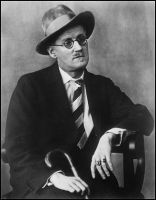 Back in June, we highlighted the release of James Joyce’s Ulysses in free audiobook format. Ulysses stands as Joyce’s most important work, and for some, it’s most the important work published in the English language during the entire 20th century. Despite Ulysses’ enormous stature, many readers still turn to Dubliners, a collection of 15 short stories that Joyce published in 1914, partly because it’s considered his most accessible writing. Over at Librivox, you can find several key stories from this collection — namely, The Sisters (mp3), Araby (mp3), Eveline (mp3), and The Dead (mp3 in zip file). The Dead is the longest and last story in the collection, and it’s a Christmas story, some say the “greatest of all Christmas stories,” which makes it particularly timely to mention here.
It’s worth noting that you can download the complete etext of Dubliners at Project Gutenberg or on Google Book Search. (The latter version is cleaner.) And, if you can suffer through it, Gutenberg also offers a free audio version of Joyce’s text, which is read by a computer, not a real person.
Lastly, be sure to spend some time perusing Librivox’s entire collection of free audiobooks. It’s the best on the web.


Open Culture scours the web for the best educational media. We find the free courses and audio books you need, the language lessons & educational videos you want, and plenty of enlightenment in between.

©2006-2026 Open Culture, LLC.
All rights reserved.


