Animated and directed by Jeff Chiba Stearns. The short film is the winner of the Prix du Public at Clermont-Ferrand.
Animated and directed by Jeff Chiba Stearns. The short film is the winner of the Prix du Public at Clermont-Ferrand.
A little public service announcement… Dan Buettner, a writer for National Geographic, has studied the world’s longest-lived peoples. Most of his findings are summed up in his book, The Blue Zones: Lessons for Living Longer From the People Who’ve Lived the Longest. And here, in this Ted Talk, he boils things down even further, giving you 9 common diet and lifestyle habits found among the world’s oldest populations. They’ve been usefully summarized by PresentationZen as follows:
Move Naturally
(1) You don’t need a formal, rigorous exercise plan. We’re talking here a change in lifestyle that is fundamentally active. We’re designed to move. We’ve not meant to drive 100 meters in a car to pick up chips at the local store. Walk, do yard work, whatever. Do exercises/activities that you enjoy.Have Right Outlook
(2) Slow down. When you’re constantly in a hurry and stressed out, this has a negative impact on your health. Limiting negative stress is one of the healthiest things you can do for yourself.
(3) Have a clear purpose. The Japanese call it “ikigai” 生き甲斐 (lit: life + value, be worth while). You must have a passion, a calling, a purpose. There’s got to be a reason to get out of bed every day.Eat Wisely
(4) Drink a little (wine) everyday.
(5) Eat mainly plant-based foods. Small amounts of meat and fish are OK.
(6) Hara Hachi Bu: Eat until 80% full. Do not eat eat until you’re stuffed. (I’ve talked about this many time before in the context of presentation.)Be Connected with others
(7) Put family, loved ones first.
(8) Belong to a community. Many in his study belonged to faith-based communities.
(9) Belong to the right tribe. That is, hang out with people with healthy habits, physical and emotional ones.
Takes these tips to heart, and please share them with friends…
If you would like to sign up for Open Culture’s free email newsletter, please find it here. It’s a great way to see our new posts, all bundled in one email, each day.
If you would like to support the mission of Open Culture, consider making a donation to our site. It’s hard to rely 100% on ads, and your contributions will help us continue providing the best free cultural and educational materials to learners everywhere. You can contribute through PayPal, Patreon, and Venmo (@openculture). Thanks!
After he left office in 2007, Tony Blair went across the pond and spent time teaching at Yale. Exit Prime Minister Blair. Enter Professor Blair. During the 2008-09 academic year, Blair and Miroslav Volf co-taught “Faith and Globalization,” a course designed to help students understand the two intertwined forces shaping our world. In some ways, religion is the real focus here, and it is Blair’s argument (above, for example) that “If you cannot understand the world of faith, whether you are in business, or in public affairs, or in politics, then you actually cannot understand the world.” The full course can be accessed on iTunes, and we have also added it to our large collection of free courses from top universities. For more information on this course, please visit Yale’s Faith and Globalization website and also be sure to access Yale’s Open Course initiative.
If you would like to sign up for Open Culture’s free email newsletter, please find it here. It’s a great way to see our new posts, all bundled in one email, each day.
If you would like to support the mission of Open Culture, consider making a donation to our site. It’s hard to rely 100% on ads, and your contributions will help us continue providing the best free cultural and educational materials to learners everywhere. You can contribute through PayPal, Patreon, and Venmo (@openculture). Thanks!
Two days ago, NASA’s Solar and Helioscopic Observatory (SOHO) captured a comet doing its best Icarus imitation. You can see the comet’s misstep at the end of the clip above. You can also find still shots over at the Daily Mail.
If you’re completely new to the concept of “open” courses, then this primer is worth a good look. The new edition of the AARP Bulletin (which targets millions of Americans over the age of 50) tells you where to find open courses, what software you might need, how to store files, etc. We get a little mention here, and if you’re visiting from AARP, I would encourage you to delve into our large collection of free courses from top universities. (It currently features over 250 courses.) Our collections of free audio books, free language lessons, free e‑books, free online movies, educational video sites, and smart YouTube channels will also be of interest. Some of these collections also appear on our free iPhone app.
For more Open Culture, become a fan on Facebook and follow us on Twitter.
 Last year, Michael Sandel made a splash when he put online his popular Harvard philosophy course, Justice: What’s the Right Thing to Do? Over the past 30 years, more than 14,000 Harvard students have taken his course. And now you can access the course online at no cost. (Details here.) In recent days, Sandel has surfaced one again, this time on Philosophy Bites (iTunes — Feed — Web Site), a British podcast that features top philosophers being interviewed on bite-sized topics. In this conversation (listen here or below), Sandel and Nigel Warburton tackle some big questions: What are the limits of free market thinking, especially when it comes to what we can do with our bodies in the marketplace? Can we sell blood consensually? Perhaps. But what about selling our kidneys on the open market? Or “renting wombs”? (There are whole villages in India where women act as “paid surrogates” for Western couples.) Or what about consensual prostitution? Or engaging, however willingly, in degrading forms of wage labor? Are these inherent freedoms, as some free market/libertarian thinkers might hold? Or do these acts violate our collective sense of the “good life”? And do they diminish our freedoms in some kind of larger sense? The conversation gets more heated (in a good way) as it goes along. Give it some time, hang with it, and see what you think. For more philosophy, see our collection of Free Philosophy Courses.
What do you have here? Lava flowing from a deep-ocean seafloor volcano, exploding into 35 foot long streams with bubbles as much as 3 feet across. This kind of action has never been witnessed before. (Somewhat surprising, no?) This clip comes out of The University of Washington. And the real action, which takes place near American Samoa, begins at the 1:28 mark.
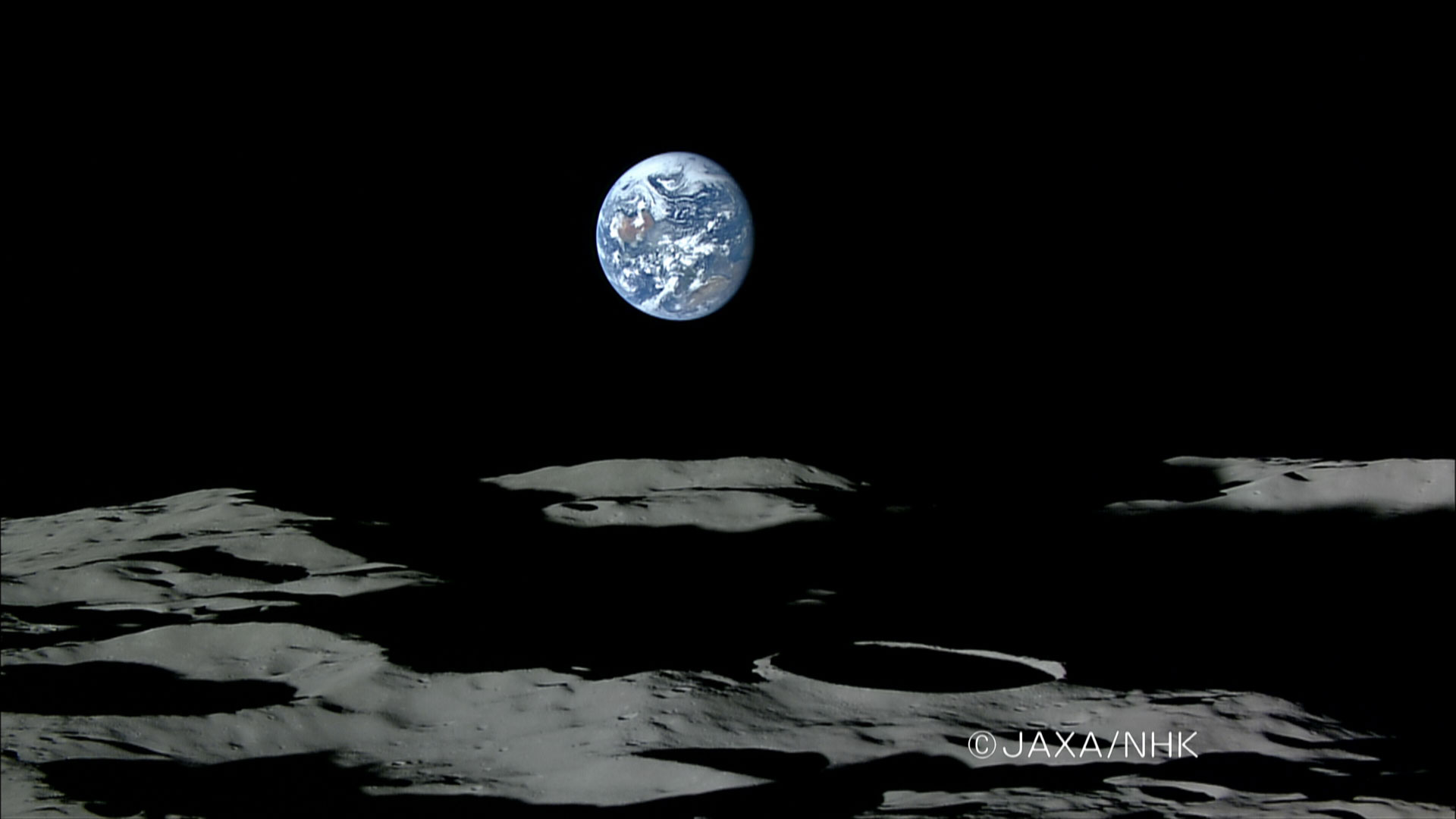
In November 2007, Japan’s Kaguya spacecraft orbited the moon with a high-def camera onboard. You can see the first HD footage of an “earthrise” and “earthset” by checking out these still images (Earthrise and Earthset). The video above gives you a good look at what an “Earthrise” looks like from outer space.
If you would like to sign up for Open Culture’s free email newsletter, please find it here. It’s a great way to see our new posts, all bundled in one email, each day.
If you would like to support the mission of Open Culture, consider making a donation to our site. It’s hard to rely 100% on ads, and your contributions will help us continue providing the best free cultural and educational materials to learners everywhere. You can contribute through PayPal, Patreon, and Venmo (@openculture). Thanks!
 Just a quick note: our collection of Free Courses from top universities was getting a bit long, pushing toward 275 courses. So we decided to make things a bit easier to navigate. You can now directly access individual sections of the collection. The sections are listed below, and you can otherwise find them in the “Free Courses” section of our site (located in the center vertical nav). All courses can be downloaded to your computer or mp3 player (yup, it’s a bonanza of free content), and while the collection includes many courses in audio, you will also find many in video too.
The world according to John Irving. Times are tougher for young writers. But the book isn’t going away. You can watch the full interview with Irving here.
The New York Times asks: Can an old brain learn, and then remember what it learns? Can it keep nimble and throw off the rust? Happily, new studies suggest that it can, and it largely comes down to nudging neurons in the right direction by challenging our ingrained perceptions, confronting new ideas, and constantly pushing to discover new things. Get more on how to keep your mind sharp here.


Open Culture scours the web for the best educational media. We find the free courses and audio books you need, the language lessons & educational videos you want, and plenty of enlightenment in between.

©2006-2026 Open Culture, LLC.
All rights reserved.