Somewhere back in the 1970s, Bob Dylan and Joan Baez teamed up again to sing Blowin’ in the Wind. Quite the duet, which we’ve added to our YouTube Favorites. As mentioned a few weeks back, Dylan recently agreed to lend this classic song to a TV commercial for an ethical banking and retail group in the UK. You can now see this rare commercialization of a Dylan song over at the Guardian. Thanks Stephen for flagging that.
I didn’t think it would be possible, but it happened. I found my two least favorite intellectuals together on the same stage, and King’s College in NYC made it all possible. So, to mark the occasion, I bring you Dinesh D’Souza, the academy’s dressed up version of Ann Coulter, debating the ever surly Christopher Hitchens. The topic is faith and atheism. The debate is heated. And as you watch, you’ll see the charming personalities come out. The video continues with Part 2, Part 3, Part 4, Part 5, Part 6, Part 7, Part 8, Part 9, and Part 10. 90 minutes in total.
Harvard historian Niall Ferguson has written extensively about the rise and fall of great empires and financial systems. Writing for Foreign Policy, Ferguson now warns that the spiraling economic crisis may soon pose serious threats to international peace and American security. As we saw during the late 1930s, economic crisis often sets the stage for full-blown political and possibly military crisis, and we’re already seeing the risk of upheaval in nine countries, including Somalia, Russia, and Mexico. Ferguson closes by saying: “Economic volatility, plus ethnic disintegration, plus an empire in decline: That combination is about the most lethal in geopolitics. We now have all three. The age of upheaval starts now.”
When we first created our Twitter feed, my hopes weren’t especially high. And while I’m still not completely sold on the personal uses of Twitter, I’m definitely liking the way that it works for a blogger. For starters, Twitter has given us insight into who actually reads Open Culture. Since we started things in October 2006, I haven’t known much about who visits the site. I’ve been flying in the dark, to be honest. But now Twitter gives us a snapshot of our regular readers. Because you can see who subscribes to your Twitter feed (something that doesn’t happen with RSS feeds), you can get a feel for readers’ geographical location, their general age range, and most importantly their professional and personal interests — all of which helps us tailor the blog’s content a bit better.
Still more perks come from our subscribers. Twitter gives you the ability to see who your “followers” also follow. And that inevitably means that your subscribers, sharing similar tastes, will turn you on to new and different sources of information/inspiration. Essentially, your subscribers help you develop intellectual affinity groups that provide good grist for the mill. In addition, our readers also do their own microblogging on Twitter, and, here again, their short, pithy 140 word “posts” have surfaced interesting content that we bring back to you … with proper attribution, of course.
Based on our brief time with Twitter, we’ve put together an initial list of culturally-redeeming Twitter feeds. Have a look, and feel free to let us know if we’re missing some good ones. Of course, this list will grow over time.
Lastly, if you’re not on Twitter, it’s time to get on and see if it works for you. Join here. And if you want to subscribe to our feed, click here and then click “Follow.”
In 1907, executives from the Gramophone Company headed to the basement of the Paris Opera and sealed up some wax recordings of famous opera singers. Now, a century later, these recordings have been opened, dusted off, and (yes) even commercialized. Later this month, EMI will release the recordings under the title, “Treasures From the Paris Opera Vaults.” If you click on this NYTimes article and scroll down a little to the Multimedia section, you can sample these century old recordings. The Times collection features outtakes from Verdi’s Aida, Otello and Rigoletto. Find them here.
Here’s a handy way to weather the recession with your intellect and pocket book intact…
In this very down economy, you can keep feeding your reading habit by book swapping. Yes, that’s right, book swapping. What goes on here is fairly straightforward. You give away books that you’ve already read. In exchange, you get books that you want to read. And the cost (aside from shipping fees) is zero. Plus you’ll save more than a few trees.
On the web, you’ll find two major online book swapping services. The first is PaperBackSwap.com. The second is BookMooch. You can learn more about each service (respectively) here and here.
John Cheever’s story “Of Love: A Testimony” hasn’t been anthologized or reprinted since it was originally published in 1943. Now, you can find it online at Fivechapters.com. Throughout the week, Fivechapters will roll out the story in nice daily installments, as is their general custom.
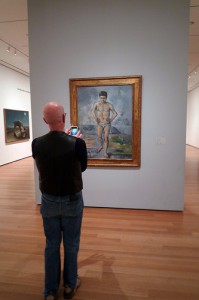
Now there’s a nice alternative to the traditional, expensive art history textbook. The folks at smARThistory have created a free multi-media web-book that offers a dynamic survey of art history. The online resource combines traditional images with audio and videos, and the beauty is that you don’t have to read this web-book in a linear fashion. Rather, you can sort through things by time period, style and artist and find the information that you want. In case you’re wondering about the credibility of this resource, it doesn’t hurt to mention that one of its founders, Beth Harris, is the Director of Digital Learning at the Museum of Modern Art in New York City, and the other, Steven Zucker, is Dean of the School of Graduate Studies at the Fashion Institute of Technology, part of the State University of New York. Have a look.
This chart comes from a new Pew Research Center study that looks at the worldwide acceptance of evolution 150 years after Darwin’s On the Origin of Species by Means of Natural Selection. At least in the United States, only a minority of the public believes in evolution, largely because evangelical protestants (a large portion of the American population) resist Darwin’s thinking far more strongly than other world populations. (The chart makes that simple fact fairly clear.) A piece newly published by the Pew Center goes on to add:
Recent public opinion polls indicate that challenges to Darwinian evolution have substantial support among the American people. According to an August 2006 survey by the Pew Research Center’s Forum on Religion & Public Life and the Pew Research Center for the People & the Press, 63 percent of Americans believe that humans and other animals have either always existed in their present form or have evolved over time under the guidance of a supreme being. Only 26 percent say that life evolved solely through processes such as natural selection. A similar Pew Research Center poll, released in August 2005, found that 64 percent of Americans support teaching creationism alongside evolution in the classroom.
Jared Diamond became a household name with his Pulitzer Prize-winning book Guns, Germs & Steel (2003). Later, the UCLA geographer climbed the charts again with Collapse: How Societies Choose to Fail or Succeed (2005). Now, based on this last book, he’s putting odds on whether the United States will survive this crisis, and he’s putting them only at 51–49. Not too great. And he goes on to say that our best chance of surviving is if America’s wealthy elite suffers far more than it already has. For more, listen here.
We're hoping to rely on loyal readers, rather than erratic ads. Please click the Donate button and support Open Culture. You can use Paypal, Venmo, Patreon, even Crypto! We thank you!
Open Culture scours the web for the best educational media. We find the free courses and audio books you need, the language lessons & educational videos you want, and plenty of enlightenment in between.
 Earlier in the month, we
  Now there’s a nice alternative to the traditional, expensive art history textbook. The folks at smARThistory have created a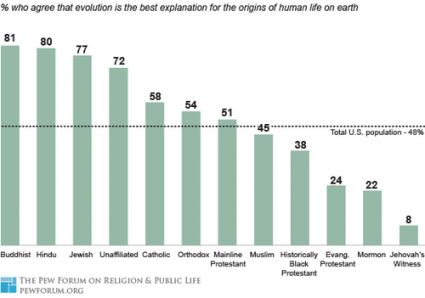
 Jared Diamond


