The celebration of Martin Luther King’s birthday was a little different this year. It had a political edge to it, and unavoidably so. Dr. King’s work made possible what we’re finally seeing today — a black candidate making a serious run at the American presidency. So it seemed entirely appropriate that Barack Obama spoke Sunday before the congregation at Ebenezer Baptist Church in Atlanta, where MLK preached long ago. In this 34-minute speech, you get a perfect reminder of King’s legacy and also a stump speech delivered in an oratorical style that King would appreciate. The video clip below has been viewed close to 450,000 times on YouTube. It’s also been added to our YouTube playlist.

A Slew of New Audiobooks (for Free)
Librivox is on a roll lately. Since December, the provider of free, public domain audiobooks has released a number of classic works on audio. Below, we’ve listed some of the highlights, which we’ve also included in our AudioBook Podcast Collection. (Here, you’ll also find free audiobooks by other providers.) For Librivox’s complete catalogue, click here.
2 B R 0 2 B, Kurt Vonnegut (MP3 File)
A Child’s History of England, Charles Dickens (Full Zip — Individual MP3s)
A Short History of the United States by Edward Channing (Full Zip — Individual MP3 Files)
Hans Brinker by Mary Mapes Dodge, (Full Zip — Individual MP3 Files)
History of the United States, Vol. IV, Charles Beard (Full Zip — Individual MP3 Files)
Meditations on First Philosophy, Rene Descartes (Full Zip - Individual MP3 Files)
The History of the Decline and Fall of the Roman Empire, Vol. II, Edward Gibbon (The Full Zip — Individual MP3s)
The Life of Charlemagne, Einhard (Full Zip — Individual Files)
The Master of the World, Jules Verne (Full Zip — Individual Files)
The Problems of Philosophy, Bertrand Russell (Full Zip — Individual MP3 Files)
The Three Musketeers, Alexandre Dumas (Full Zip — Individual MP3 Files)
The Works of Tacitus (Full Zip — Individual Files)

Comments We Love to Hear
In one of our recent pieces, we highlighted a video that featured law professor Cass Sunstein interpreting the second amendment and questioning whether it conferred the right to bear arms. In response, one of our readers offered this comment:
“Reeeeeally good talk. My friend and I sat down to watch it, and before we started, we laid out our positions, basically one on each side of the debate. Sunstein proceeds to explain how we’re both wrong. Awesome.”
I mention this simply because it’s great to see the media (videos/podcasts) featured here being used in this way. It’s great to see readers really engaging with the material and allowing it to shape their views. It’s the ultimate compliment in some ways. Thanks Ben.

Waves Freeze in Newfoundland
This counts as science, right?
Also see 18 Stunning Bridges From Around The World via Metafilter.
The Future of Ideas: Download Your Free Copy (and More)
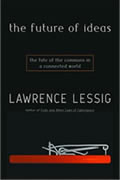 In 2001, Stanford law professor Lawrence Lessig published The Future of Ideas: The Fate of the Commons in a Connected World. Here, Lessig launched a campaign against American copyright law, arguing that it has become so restrictive that it stifles cultural innovation and social progress .… which undermines the original point of copyright law. Back in 1787, the founding fathers included the “copyright clause” in the American constitution, looking to give authors a short-term incentive to innovate and ultimately contribute to the public good. (Article I, Section 8 empowers Congress “To promote the Progress of Science and useful Arts, by securing for limited Times to Authors and Inventors the exclusive Right to their respective Writings and Discoveries.”). At the outset, copyright law protected forms of expression — and let authors profit from them — for a minimum of 14 years and a maximum of 28. Then, the material went into the public domain. But over time, the protections placed on cultural expression have been extended, and now works are protected so long as an author is alive, and then another 70 years. That’s potentially up to 140 years or more. All of this has happened because Congress has been successfully lobbied by large media corporations (e.g. Disney), wanting to monetize their media assets (think, Mickey Mouse) indefinitely.
Anyway, this is a long way of telling you that you can now download The Future of Ideas for free. Lessig persuaded Random House to release the book under a “Creative Commons” license, using the argument that free e‑books will actually stimulate sales of paper copies. (Do you really want to read 350 pages on your computer screen?)
This is not the first time that Lessig has worked with this model. One of his previous books, Free Culture: How Big Media Uses Technology and the Law to Lock Down Culture and Control Creativity, was also made freely available in digital format. (You can download a free audiobook version or buy the paper version here.)
As a final note, I should mention that Lessig will be leaving behind his focus on these copyright issues, and turning his sights to corruption in Washington. Below you can watch him outline the problem that he’s looking to tackle.

Steve Jobs’ 90 Minute Keynote Boiled Down to 60 Seconds
Want the quick overview of what Apple has in the pipeline for ’08? Here it is:
The Second Amendment: Does It Really Let You Bear Arms?
What does the Second Amendment mean? It’s something that the Supreme Court has never really said. In this hour long video, Cass Sunstein, a very well known law professor from the University of Chicago, takes a crack at interpreting this amendment and seeing whether its original meaning actually confers the right to bear arms. Originalists/conservatives probably won’t like his conclusions, and they may be inclined to dismiss this as a talk given by another liberal elitist. But they should keep in mind that Sunstein actually saw the Bush administration’s wiretapping as having a plausible legal basis, and he’s had anything but a harsh assessment of John Roberts’ track record as a judge.
This talk was recorded on October 23, 2007.
Jimi Hendrix Vintage Footage
Astoundingly good footage of Hendrix playing Voodoo Chile live. The date is 1969, in London. (Video is added to our YouTube Playlist.)
Resolving the Omnivore’s Dilemma: Pollan’s New Book
Coming off of the runaway success of Omnivore’s Dilemma, Michael Pollan has just published a logical sequel — In Defense of Food: An Eater’s Manifesto. His new book tells us what to eat, what not to eat, and how to stay healthy. Generally speaking, his advice can be boiled down to a few words: “Eat food. Not too much. Mostly plants.” But there is obviously much more to it than that. To fill in the gaps, you can buy the book or listen to two recent interviews with Pollan:
1.) The Leonard Lopate Show (January 9) : MP3 — iTunes — Feed — Web Site
2.) Science Friday (January 4): MP3 — iTunes — Feed — Web Site

Central Intelligence: From Ants to the Web
Sometimes order seemingly comes out of nowhere. It just materializes. It happens in ant colonies, in cities, on the web, in the brain. This episode of Radio Lab (MP3 — iTunes — Feed) takes a fascinating look at how groups organize and direct themselves without the help of a leader, or some kind of central command. The show includes conversations with biologist E.O. Wilson, economist James Surowiecki, and neurologists Oliver Sacks and Christof Koch. Also included in the mix is Deborah Gordon, a Stanford professor who has spent years studying ants, which are individually incompetent but do remarkably complex things as colonies. There’s more to ants than you’d first think, so we’ve also included below Deborah Gordon’s presentation at the TED Talks conference. It’s called “How Do Ants Know What to Do?” And it’s added to our YouTube Playlist.
Support Us
We're hoping to rely on loyal readers, rather than erratic ads. Please click the Donate button and support Open Culture. You can use Paypal, Venmo, Patreon, even Crypto! We thank you!

Receive our Daily Email
About Us

Open Culture scours the web for the best educational media. We find the free courses and audio books you need, the language lessons & educational videos you want, and plenty of enlightenment in between.
Advertise With Us

