| More good news for book fans: Google has launched a new collection of videos called Authors@Google. The videos feature talks by authors, writing across many genres (literary fiction to science fiction, sociology to technology, politics to business) who have made recent visits to Google campuses.You can access the talks via a new homepage, or just go immediately to the video archive itself. And there, you’ll find talks by Martin Amis (House of Meetings) and Jonathan Lethem (You Don’t Love Me Yet: A Novel), but also ones by Strobe Talbott, Bob & Lee Woodruff, Senator Hillary Clinton, and Carly Fiorina.To get a better feel for Authors@Google, we’ve included a clip below from Jonathan Lethem, who wrote Motherless Brooklyn, a favorite of mine that offers a truly unique, literary take on the traditional detective novel, and which always leaves me feeling a bit homesick for Brooklyn. For more information on Authors@Google, click here.Tell a Friend About Open Culture |
Authors@Google: Video Talks From the Epicenter of the Universe
David Halberstam’s Last Speech and Supper
 As many know by now, David Halberstam, the Pulitzer Prize-winning journalist, was killed in a car accidenton Monday just a few short miles from the Stanford campus. As the obits were all quick to point out, Halberstam made his name during an era that paralleled our own, during the Vietnam War. And he did it by reporting facts and truths about the war that inconveniently contradicted the rosy, disingenuous claims that were officially coming out of Washington. As The New York Times said about its former correspondent, “His dispatches infuriated American military commanders and policymakers in Washington, but they accurately reflected the realities on the ground.” Halberstam’s account of how America got it wrong in Vietnam were all famously recounted in 1972 bestseller The Best and the Brightest. As many know by now, David Halberstam, the Pulitzer Prize-winning journalist, was killed in a car accidenton Monday just a few short miles from the Stanford campus. As the obits were all quick to point out, Halberstam made his name during an era that paralleled our own, during the Vietnam War. And he did it by reporting facts and truths about the war that inconveniently contradicted the rosy, disingenuous claims that were officially coming out of Washington. As The New York Times said about its former correspondent, “His dispatches infuriated American military commanders and policymakers in Washington, but they accurately reflected the realities on the ground.” Halberstam’s account of how America got it wrong in Vietnam were all famously recounted in 1972 bestseller The Best and the Brightest.
Halberstam spent this past Saturday night dinning in the company of fellow journalists from UC Berkeley, just after giving a speech (mp3 — transcript) at the university (see original event page here). On Wednesday, Radio Open Source (mp3) talked with Halberstam’s supper guests — Orville Schell, dean of the Berkeley graduate program in journalism; Mark Danner of The New York Review of Books; and Sandy Tolan of NPR — and they reconstructed their dinner conversations, which touched on the Iraq war, the comparative state of journalism during Vietnam and Iraq, and Halberstam’s sense of mortality following his heart attack last year. They also recalled Halberstam’s dogged approach to journalism and how he resisted the temptation to line up behind the government position during times of war, even when faced with the threat of being called unpatriotic. Of course, if you watched Bill Moyer’s PBS expose on Wednesday, you’ll know that we’re not seeing enough of this these days. Give this segment a listen (get mp3 here), and also spend some time watching the video clip below. Here, you get Halberstam reflecting on his days as a 28-year old reporter in Vietnam and the significant pressures that the American government brought to bear against him, all of which leaves you thinking — plus ça change, plus c’est la même chose. |
Richard Dawkins on Bill O’Reilly: How It Went Down
Whenever you put atheism’s most prominent spokesperson on Fox News, you’d expect the fur to fly. But that’s not how it turned out. The fur ended up staying on the cats when Bill O’Reilly interviewed Richard Dawkins, author of the bestselling The God Delusion, this week, as you can see above.
Rare Ezra Pound Recordings Now Online
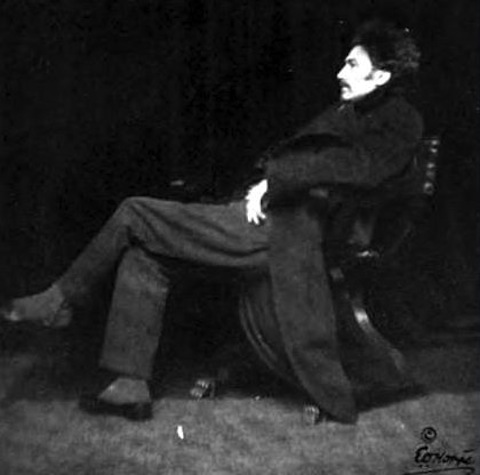
Here’s a quick fyi for poetry fans: PennSound has released on its site rare audio recordings by modernist poet, Ezra Pound (October 30, 1885 – November 1, 1972) and, along with them, a helpful essay called The Sound of Pound: A Listener’s Guide by Richard Sieburth. The audio clips largely come out of two major recording sessions, one at Harvard in 1939, the other in Washington in 1958. They also include Pound’s 1942 reading of Canto XLVI, a reading of his “Confucian Odes” in 1970, and a private recording of three Cantos. Based at the University of Pennsylvania, PennSound houses, they claim, the largest archive of digital poetry recordings, all accessible online. For more information on the Pound recordings and PennSound, click here.
If you would like to sign up for Open Culture’s free email newsletter, please find it here. It’s a great way to see our new posts, all bundled in one email, each day.
If you would like to support the mission of Open Culture, consider making a donation to our site. It’s hard to rely 100% on ads, and your contributions will help us continue providing the best free cultural and educational materials to learners everywhere. You can contribute through PayPal, Patreon, and Venmo (@openculture). Thanks!
Related Content:
1,000 Free Audio Books: Download Great Books for Free
Free Online Literature Courses
Hear Ezra Pound Read From His “Cantos,” Some of the Great Poetic Works of the 20th Century
A Better Way to Read News and Blogs
|
|
These days, if you spend enough time on the web, you’ll inevitably hear talk about RSS feeds, feed readers, and subscribing to feeds – talk that can seem fairly obscure and off-putting if you’re not already familiar with these terms. If this has been your experience, then you should really watch this short video below. This instructive, even amusing, video uses simple language and images to demonstrate how to use feeds and feed readers. In a matter of minutes, all of this will be demystified, and you’ll discover a much quicker, more efficient and powerful way to access news and blog content, including stories from Open Culture. You can subscribe to our feed here. And if you’re looking for a good feed reader, definitely give Google Reader a look. |
The Pirates of Silicon Valley Courtesy (?) of Google Video
One of the most bookmarked items this weekend on del.icio.us was a streamed version of The Pirates of Silicon Valley. It’s a well-regarded television movie, based on the book Fire in the Valley, which looks at the early days of Bill Gates and Steve Jobs, the respective founders of Microsoft and Apple Computer. The video promoted by del.icio.us is itself hosted by Google Video, a fact that has a couple of layers of irony to it.
Irony #1. Back when the film was made in 1999, Google was barely on anyone’s radar screen. Nowadays, it’s the 800 lb gorilla in the tech sector. In a few short years, it has elbowed Yahoo out of its leadership position on the web, and you can bet it will soon be eating Microsoft’s lunch. If any company is dominating Silicon Valley right now, it’s Google, although a re-invented Apple is certainly having a nice run.
Irony #2. The Pirates of Silicon Valley makes a point of underscoring how Microsoft built its business by “borrowing” from Apple. Meanwhile, Google, which now owns YouTube, has been locked in a lawsuit with Hollywood studios (most notably Viacom) for letting its video services distribute, yes, pirated content. It stands to reason that the Google-hosted version of The Pirates of Silicon Valley falls in that category, though we could be wrong. But given how long the video has been posted on Google Video (since last November) and how many times it has been viewed (352,988 at last count), you have to wonder how much the studio (Turner Home Entertainment) particularly cares. This is all entirely speculative, but perhaps their logic is simply this: The resolution of Youtubesque video is so poor that few viewers will see the movie as a real substitute for the original film, and perhaps users will be motivated to buy the film in DVD once they get a taste of the plot. (This is essentially the same logic, by the way, put forward by those who argue for releasing books in free e‑book versions and fee-based paper versions.) To get a sense of what I’m talking about, you can watch the video below, but you’ll pretty quickly see that it’s worth ponying up a little cash and watching a watchable version. (You can buy one here.)
Long-term some of this thinking may figure into any deal that Google works out with Hollywood. A deal could look like this: Hollywood agrees to upload low resolution content that Google gets to monetize. In turn, Google agrees to let users make contextual purchases of DVDs, or at least download high resolution versions of videos for a fee. And then everyone can go home happy.
Stanford Rolls Out Another Podcast Course and a New iTunes Look
|
|
Among the new releases, you’ll find the latest in a series of full-fledged courses ready to be downloaded to your iPod for free. (See the previous courses we’ve mentioned here, here and here.) This time around, you can access a short course, Virgil’s Aeneid: Anatomy of a Classic (get it on iTunes), which takes a close look at one of the central texts in the Western tradition. (You can purchase a copy of the book referenced in the course here, or download free web versions in English or Latin, though they won’t follow the correct pagination.) Presented by Susanna Braund, a Stanford classics professor, the course is divided into 5 installments, each running about two hours. For the moment, you can only download the first part. But rest assured that the remaining ones are set to be issued in the weeks to come. The course was originally presented in Stanford’s Continuing Studies program. To learn more about the course, take a look at the course description below.
Find many more University Podcasts here. See all of Open Culture’s Podcast Collections: Arts & Culture — Audio Books — Foreign Language Lessons — News & Information — Science — Technology — University (General) — University (B‑School) — Podcast Primer
|

20 Audio Lessons That Will Teach You Spanish, French, Italian and German
As we’ll mention in an upcoming piece, European languages dominate the list of most popular educational podcasts. So we thought that we’d highlight the key podcasts that will teach you the major European languages — Spanish, French, Italian and German. Meanwhile, if you want to learn English online, please see our piece below. Bonne chance.
For our complete collection, see How to Learn Languages for Free: Spanish, English, Chinese & Beyond.
French
- French for Beginners iTunes Feed Web Site
- Fun, effective lessons for beginners. Provided by the French Ecole.
- Le Journal en français facile iTunes Feed Web Site
- Nightly news from RFI presented in slowly spoken French to assist you with your comprehension.
- Learn French by Podcast iTunes Feed Web Site
- A well-reviewed series of lessons for beginners and those who want to brush up on their French.
- Learn French with Daily Podcasts iTunes Feed Web Site
- These lessons are brought to you by French teachers from Paris. They are best suited for those who already have some beginning French under their belts.
- The French Pod Class iTunes Feed Web Site
- A very popular collection that teaches students the French language and different facets of French culture.
- The Verbcast — French Verbs by Relaxation iTunes Feed Web Site
- A four-week series of lessons that will allow you to refine your knowledge of French verbs.
German
- Deutsch — warum nicht?
- Slowly Spoken News iTunes Feed
- Deutsche Welle provides a nightly news broadcast in German that’s spoken slowly so that you can work on your comprehension.
- GerGermanGrammar iTunes Feed Web Site
- German grammar lessons aimed at American students.
- Lernen Wir Deutsch iTunes Feed Web Site
- Presented in video, these “vodcasts” get high marks for being not only educational but also very entertaining.
- MyDailyPhrase.com iTunes Feed Web Site
- Learn German phrase by phrase over a course of 20 weeks. The podcasts will cover all the language you need to know to get by on a visit to a German-speaking country. This series is put together by the same people created the popular series “Coffee Break Spanish.”
Italian
- LearnItalianPod.com iTunes Feed Web Site
- A series of Italian language lessons that will get you up and running. I have personally used them and found them effective.
- Let’s Speak Italian iTunes Feed Web Site
- This collection will help you learn Italian in small, manageable 5‑minute bites.
- MyDailyPhrase.com iTunes Web Site
- Learn Italian step by step over a course of 20 weeks. The podcasts will cover all the language you need to know to get by on a visit to a Italian-speaking country. Created by the same people who put together the popular series “Coffee Break Spanish.”
- World Languages Podcasting — Italian Podcast iTunes Feed Web Site
- It’s admittedly a bit of an untraditional way to learn Italian. This podcast lets you listen to conversations about Australian culture in Italian.
Spanish
- Coffee Break Spanish iTunes Feed Web Site
- Learn Spanish in a low-key, effective way. Currently the #2 overall favorite in iTunes’ podcast collection. They must be loaded on iPods everywhere.
- Finally Learn Spanish — Beyond the Basics iTunes Feed Web Site
- If you’ve had some Spanish classes and you need experience listening to and speaking the language, then Finally Learn Spanish has a collection of podcasts for you.
- Insta Spanish Lessons iTunes Feed Web Site
- Weekly comprehension and grammar exercises for students of all levels. One of the more popular podcasts on iTunes.
- Learn Spanish Survival Guide iTunes Feed
- If you’re planning a trip to a Spanish speaking country, and if you don’t know the langugage, this will help get you up to speed.
Where the American Press Went Wrong on the Iraq War: Bill Moyers Returns to TV Next Week
|
|
Next Wednesday, at 9 pm, respected journalist Bill Moyers will return to PBS and air a 90-minute presentation called Buying the War. Along the way, he’ll look at how the mainstream American press wound up cheerleading for the Bush administration’s drive toward war in Iraq rather than doing their real job — asking tough questions and providing partisan-free reporting. Below, you can find a video excerpt from next week’s show. To briefly set the stage, Bob Simon of of 60 |
How Web 2.0 Will Transform the Humanities
 Contrary to popular belief, there are a few professors out there who actually have their own accounts on FaceBook, much to the horror of their students. Now you can hear their take on new media and the university in a biweekly podcast, Digital Campus.
The series features a panel of new media scholars at George Mason University discussing how Web 2.0 techonologies will change humanities teaching and research. Topics so far have included Wikipedia, YouTube and this week’s episode on social networking (mp3 — feed — website). As the most recent show points out, Web 2.0 is rapidly making it to the academic primetime–the University of Michigan now offers a master’s degree in social computing.
The flip side of new media technologies is how they will transform research into more traditional humanities subjects. The Digital Campus crew are all involved in the emerging field of digital humanities. On the podcast they discuss many of the challenges of transferring old media knowledge to digital archives and structuring those archives to make searching easy. In addition to airing these questions in the podcast, Digital Campus is promoting a new wiki designed for newcomers and veterans alike.
Pulitzer Prize-Winning Play Ready to Download and Sync
| When you think Broadway, you don’t necessarily think first about plays that make science its point of focus. Or at least
you didn’t before Copenhagen hit the stage in 1998 and dramatically told the story of Niels Bohr’s shadowy meeting with Werner Heisenberg back in 1941. Since then, science plays have been going strong. Just take this for example: L.A. Theatre Works recently launched its Relativity Series, a “monthly broadcast featuring plays that explore the impact of science on individuals and society.” You can download the series as a podcast (iTunes — Feed — Web Site), and it so happens that the series kicks off with a Tony and Pulitzer Prize-winning play called Proof, starring Anne Heche. Written by David Auburn in 2001, Proof is not as academic as it sounds. The New York Times called it “An exhilarating and assured new play … accessible and compelling as a detective story.” And Hollywood turned the play into a film in 2005, with Gwyneth Paltrow playing the lead. So you shouldn’t have any reservations about immersing yourself in this dramatic work. Download it, sync it, and get ready to listen to a tale of love and death, intellectual adventure and paranoia, and a sprinkling of sex, drugs and rock and roll. Tell a Friend About Open Culture
|
Support Us
We're hoping to rely on loyal readers, rather than erratic ads. Please click the Donate button and support Open Culture. You can use Paypal, Venmo, Patreon, even Crypto! We thank you!

Receive our Daily Email
About Us

Open Culture scours the web for the best educational media. We find the free courses and audio books you need, the language lessons & educational videos you want, and plenty of enlightenment in between.
Advertise With Us

