If we believe that Homo sapiens (a.k.a. people) and monkeys evolved from a common ancestor, then it makes sense to ask: Can monkeys use language like we do? Do they make mere sounds? Or do they use specific sounds to communicate a range of different intended things? Robert Seyfarth, a professor at the University of Pennsylvania, uses the case of the Vervet Monkeys to answer these questions. You can read more about his work in The New York Times.
Sir Ken Robinson: Bring on the Learning Revolution!
Some months ago, we asked you to name your favorite TED Talk. And, more than a few of you flagged Sir Ken Robinson’s presentation from 2006, Do Schools Kill Creativity? You’re in good company. The talk remains one of TED’s most popular videos of all time. Today, TED has released Robinson’s sequel (of sorts). Recorded this past February, Bring on the Learning Revolution! “makes the case for a radical shift from standardized schools to personalized learning — creating conditions where kids’ natural talents can flourish.” Give it some time. Perhaps it’s another talk for the ages.
Mark Twain Finally to Publish Autobiography
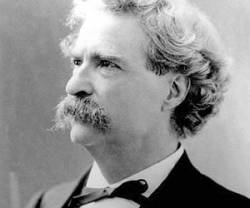 File this under “better late than never.” Mark Twain spent his last decade writing his memoirs, producing some 5,000 unedited pages. However, he stipulated that they couldn’t be published for at least a century following his death. (Apropos see this very rare footage recorded by Thomas Edison showing Twain in his last year.) Fast forward to 2010. We have now clocked 100 years. And this November, UC Berkeley will publish the first volume of Twain’s manuscript. The Independent tells you more about this literary event, and suggests why Twain wanted to keep his autobiography under wraps. Get the full article here.
via @ebertchicago
James Joyce Encoded in Venter’s Artificial Life
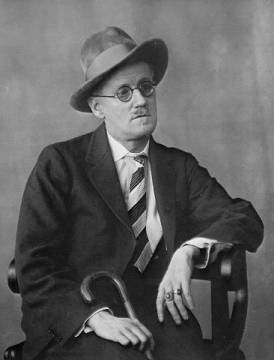 You may have heard the news last week: J. Craig Venter and a team of scientists created the first living organism – a “synthetic cell” – by way of a computer-generated genome. We’re now seeing the beginnings of artificial life. And it’s a big story, with many far-reaching implications. But where does James Joyce fit into this picture? Let me add this little factoid to the mix: According to The Christian Science Monitor, Venter’s team inserted DNA watermark codes into the genome so that they can distinguish between natural and synthetic bacteria moving forward. And when this code is translated into English, it will “spell out the names of the 46 researchers who helped with the project, quotations from James Joyce, physicist Richard Feynman and J. Robert Oppenheimer, and a URL that anyone who deciphers the code can e‑mail.” Lots of smarts packed into the tiniest of packages.
UPDATE: The quotes in watermark apparently read: “TO LIVE, TO ERR, TO FALL, TO TRIUMPH, TO RECREATE LIFE OUT OF LIFE.” — James Joyce’s A Portrait of the Artist as a Young Man; “SEE THINGS NOT AS THEY ARE, BUT AS THEY MIGHT BE.”-A quote from an Oppenheimer biography, American Prometheus; “WHAT I CANNOT BUILD, I CANNOT UNDERSTAND.” — Richard Feynman.
David Simon Takes New York Down a Peg
Speaking in New York City, David Simon, the creator of The Wire, wasn’t shy about taking the city to task. “There is no city more vain about its position in popular culture, more indifferent to other realities, more self absorbed than other cities.” “Manhattan is [now] one big pile of money,” which leaves it divorced from the real problems facing other American cities. So why are so many stories and television shows still centered in New York, and how can they tell the real tale of urban America in 2010?
This talk took place at The New School for Liberal Arts in NYC.
via The Daily Dish
Bill Gates Holds Office Hours; Talks about Giving Back
The Bill Gates college tour rolled through Stanford University in late April. And Gates brought with him a message for students: Philanthropy counts. No matter how young you are, you can start thinking about giving back.
His visit featured a large public talk where he drove home this point. (Get the full talk in video or audio here.) Then, like any good teacher, he held office hours and answered student questions posed through Facebook. Watch his responses above.
HuffPo on Literary One-Hit Wonders
HuffPo has pulled together a list of The 12 Greatest Literary One-Hit Wonders. And it’s a strange list indeed. When you think of “one-hit wonders,” you think of memorable songs recorded by very unmemorable artists – artists who got their 15 minutes of fame and then fell right off the radar. Meanwhile, the HuffPo list includes some of the most enduring names in American literature – F. Scott Fitzgerald, J.D. Salinger, and Herman Melville. They gave us their big novels – The Great Gatsby, The Catcher in the Rye, and Moby Dick – then wrote some other lasting pieces of fiction, both short and long. They hardly faded into oblivion. And, years later, we’re certainly not asking, “what ever happened to old what’s his name?”
Spring: A Short Film Based on Hemingway’s Memoir
British filmmaker Temujin Doran may be better known for his strong, highly opinionated views on democracy and politics, but his adaptation of Ernest Hemingway’s memoir, A Moveable Feast, is something else entirely.
Though still narrated in Doran’s characteristically urgent, restless tone, Spring offers a quiet tribute to Parisian urbanity and the richness of seasonality, captured with cinematic minimalism and eerily indulgent aesthetic austerity.
Maria Popova is the founder and editor in chief of Brain Pickings, a curated inventory of eclectic interestingness and indiscriminate curiosity. She writes for Wired UK, GOOD Magazine, BigThink and Huffington Post, and spends a disturbing amount of time curating interestingness on Twitter.
Support Us
We're hoping to rely on loyal readers, rather than erratic ads. Please click the Donate button and support Open Culture. You can use Paypal, Venmo, Patreon, even Crypto! We thank you!

Receive our Daily Email
About Us

Open Culture scours the web for the best educational media. We find the free courses and audio books you need, the language lessons & educational videos you want, and plenty of enlightenment in between.
Advertise With Us

