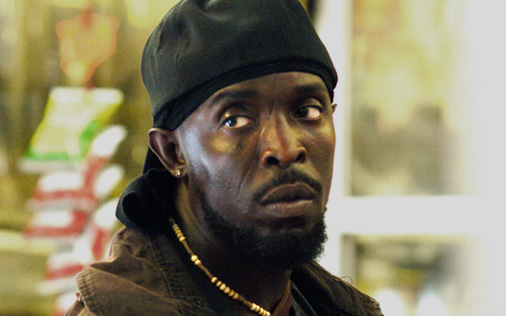
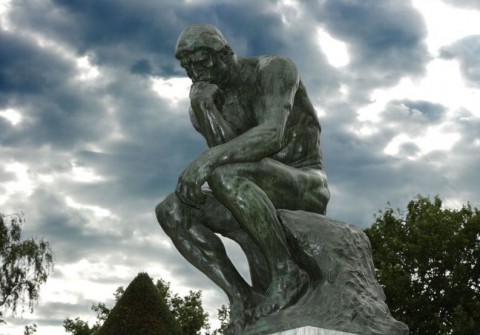
The Amsterdam Museum teamed up with the Dutch creative agency PlusOne to create a series of videos for the new Amsterdam DNA exhibition — an exhibition that offers a three-dimensional 45-minute journey through Amsterdam’s history. PlusOne created seven videos in total. The clip above comes from the second film called Revolt Against King and Church, and it obviously brings you back to Amsterdam in the 16th century. The clip below offers an aesthetic introduction to the exhibition itself. h/t The Atlantic
If you would like to support the mission of Open Culture, consider making a donation to our site. It’s hard to rely 100% on ads, and your contributions will help us continue providing the best free cultural and educational materials to learners everywhere. You can contribute through PayPal, Patreon, and Venmo (@openculture). Thanks!
Carl Sagan left a big void when he died in 1996. His eloquence, his passion for explaining science to a wider public, made him a major cultural figure in late 20th century America. Now a new voice is emerging. Neil deGrasse Tyson, like Sagan, is an astronomer and physicist with a remarkable gift for speaking about the beauty and importance of science. Like Sagan, he hosts a PBS television program (NOVA ScienceNOW) and appears frequently on talk shows. The passing of the torch will become obvious next year, when Tyson hosts the sequel to Sagan’s ground-breaking 1980 TV series, Cosmos. Tyson’s connection to Sagan actually began at a very young age. In the video clip above, Tyson tells Ted Simons of the regional PBS show Arizona Horizonthe story of a remarkable act of generosity by Sagan when Tyson was only a teenager. If it whets your appetite, be sure to watch the complete 25-minute interview below. And don’t miss our very popular related post: Neil deGrasse Tyson Lists 8 (Free) Books Every Intelligent Person Should Read.
Imagine a high school class on the Great Works of Western Civilization, circa 2400. The teacher shows the students a selection of films by Quentin Tarantino, that exalted late-20th- and early-21st-century dramatist who worked in the medium then known as film. The series culminates in Pulp Fiction, perhaps, for modern audiences, the most enduring and accessible example of the master’s art. Yet most of the kids in the room falter on the edge of comprehension, and one eventually explodes in frustration. “Why do they all dress like that?” the student demands, in whatever the English language has evolved into. “And seriously, why do they talk that way? Why do we even have to watch this, anyway?” Then the teacher, returning to his drying well of patience, his face settling into the creases worn by decades of stoically borne disappointment, explains to his despondent charge that Tarantino’s all about the language. “He used English in ways nobody had before,” he says, for nothing close to the first nor last time, “and if you put in just a little more study time, you’d understand that.”
Her Majesty’s Secret Players do seem to understand that, bring as they will a production called Pulp Shakespeare (or, A Slurry Tale) to its West Coast premiere at this summer’s Hollywood Fringe Festival. To view the clip of the show above is to feel at least two senses of odd familiarity at once: don’t I know this scene and these characters from somewhere, and don’t I know these words from somewhere? Were you to watch it without context, you’d probably guess that the dialogue sounded Shakespearean, and in the first few minutes, that guess might even take you as far as wondering which of the lesser-known plays this might be. But Pulp Shakespeare offers not Shakespeare’s words but a pastiche of Shakespeare through which to watch Pulp Fiction, effectively bringing that 25th-century classroom scenario into the present. Rendering Tarantino’s dialogue in Shakespearean dramatic poetry both familiarizes Shakespeare’s style and de-familiarizes Tarantino’s, giving strong hints to anyone looking to understand Shakespeare’s appeal in his day, how history might treat Tarantino, and how the two have more in common than we’d have assumed.
(Note to 21st-century teachers: we nonetheless do not suggest you introduce Shakespeare as “sort of the Quentin Tarantino of his day.”)
Although HBO’s critically-acclaimed series, The Wire, ended its run in 2008, the show keeps getting back into the headlines. Just last week President Obama, an acknowledged fan of The Wire, was asked during an audio interview with ESPN to name his favorite character on the show, to which he replied “It’s got to be Omar, right? I mean, that guy is unbelievable, right?” And then this other piece of audio surfaced online — Slavoj Žižek, your favorite Slovenian philosopher/cultural critic, presented a talk at The University of London (2/24/2012) called The Wire or The Clash of Civilisations in One Country. And it takes the show seriously as a work of tragic, realist art. Listen here.
Here’s an intriguing clip from early 1976: A camera rolls as a 29-year-old Steven Spielberg sits down with friends to watch the televised announcement of the Academy Award nominations for 1975. Spielberg’s film from that year, Jaws, was a monster hit–the highest-grossing movie in history up until then–so he was feeling pretty cocky. “You’re about to see a sweep of the nominations,” he says as the broadcast begins. But when the nominees for Best Director are named, his jaw drops:
Federico Fellini for Amacord
Stanley Kubrick for Barry Lyndon
Sidney Lumet for Dog Day Afternoon
Robert Altman for Nashville
Milos Forman for One Flew Over the Cuckoo’s Nest
“I got beaten out by Fellini!” Spielberg says to his friends, the character actors Joe Spinell and Frank Pesce. And he’s right. When the list for Best Picture is announced, the very same movies make it–all except for Fellini’s Amacord, which is replaced by Jaws.
Milos Forman and One Flew Over the Cuckoo’s Nest went on to win the Oscars for Best Director and Best Picture that year. Despite directing a string of beautifully crafted blockbusters–Close Encounters of the Third Kind, Raiders of the Lost Ark, E.T. the Extra-Terrestrial–Spielberg would not win an Academy Award for Best Director for another 18 years, with Schindler’s List.
The video of Spielberg’s defeat 36 years ago is fascinating to watch. “What makes it so great,” writes Erik Davis at Movies.com, “is being able to watch a rare slice of history in which a master of his craft actually fails at something. He fails at getting that directing nod, and you can tell in his face that he wanted it. He wanted it bad.” H/T Metafilter
It’s a little random. It’s very cool. It’s Jared Ficklin’s interactive art project that takes Stephen Hawking’s Cambridge Lectures and then uses an algorithm to turn the physicist’s words into stars. The video pretty much explains all that you need to know. I should only add two things. 1.) Ficklin is one of the speakers at the big TED show this week, and 2.) it looks like you can snag The Cambridge Lectures (or pretty much any book you want) as a free audio download from Audible.com if you sign up for their 14 day, no-strings-attached, free trial. Get more details on that here.
ABC’s period drama Pan Am may have come to an end two weeks ago, but if you look hard enough, you can still find a few Pan American World Airways-inspired media. Back in the sixties and seventies, at the height of the long heyday that would cement its place in the lore of Cold War American culture, the airline commissioned New Horizons, a series of ten- to fifteen-minute documentaries on their various exotic destinations. Eleven of these short subjects have surfaced on YouTube, so you, too, can feel the midcentury aspirational thrill of motoring across the rolling Irish countryside in a powder-blue Austin-Healey, handling creatures snatched fresh from the sea floor by a Fijan diver, or gazing upon Sydney’s imposing new modernist apartment complexes.
Maybe I’ve made these sound like glorified commercials pitched toward newly affluent Americans in need of a charming corner of the Earth to loaf their two weeks away. But in that era of stoically authoritative voiceovers, ethnomusicologically-spiced orchestral scores, and colors vividly saturated enough to approach fantasy, weren’t commercials sometimes glorious? And as even this small archive reveals, the New Horizons films had audiences well outside the United States, the Anglosphere, and even the West. The production company Pan Am engaged to make these, a certain Movietonews, Inc., assembled the footage and audio in such a separate way as to allow for both easy narration and easy translation into other languages.
Forty or fifty years on, this gives us the opportunity to enjoy such simultaneously cross-temporal and cross-cultural experiences as New York in Italian, Hawaii in Portuguese, America’s national parks in Japanese, and the Philippines in German. If you happen to get as excited about midcentury advertising, documentary film, language-learning, and multi-national media as I do, these New Horizons will make for rich Friday viewing indeed.
The Philosophy section of our big Free Courses collection just went through a major update, and it now lists more than 75 courses. Enough to give you a soup-to-nuts introduction to a timeless discipline. You can start with one of several introductory courses.
Philosophy for Beginners – iTunes – Web Video – Marianne Talbot, Oxford
The History of Philosophy Without Any Gaps - Multiple Formats– Peter Adamson, King’s College London
Then, once you’ve found your footing, you can head off in some amazing directions. As we mentioned many moons ago, you can access courses and lectures by modern day, rock star philosophers — Michel Foucault, Bertrand Russell, John Searle, Walter Kaufmann, Leo Strauss, Hubert Dreyfus and Michael Sandel. Then you can sit back and let them introduce you to the thinking of Aristotle, Socrates, Plato, Hobbes, Hegel, Heidegger, Kierkegaard, Kant, Nietzsche, Sartre and the rest of the gang. The courses listed here are generally available via YouTube, iTunes, or the web.
Explore our collection of 400 Free Courses to find topics in many other disciplines — History, Literature, Physics, Computer Science and beyond. As we like to say, it’s the most valuable single page on the web.
We're hoping to rely on loyal readers, rather than erratic ads. Please click the Donate button and support Open Culture. You can use Paypal, Venmo, Patreon, even Crypto! We thank you!
Open Culture scours the web for the best educational media. We find the free courses and audio books you need, the language lessons & educational videos you want, and plenty of enlightenment in between.