Marlon Brando Screen Tests for Rebel Without A Cause (1947)

Dur­ing the 1940s, Warn­er Broth­ers bought the rights to Robert Lind­ner’s book, Rebel With­out a Cause: The Hyp­no­analy­sis of a Crim­i­nal Psy­chopath, and began turn­ing it into a film. A par­tial script was writ­ten, and a 23-year old Mar­lon Bran­do was asked to do a five-minute screen test in 1947. For what­ev­er rea­son, the stu­dio aban­doned the orig­i­nal project, and even­tu­al­ly revived it eight years lat­er with a new script and a new actor — James Dean, of course. Dean’s own screen test for Rebel With­out a Cause appears here.

If you would like to sign up for Open Culture’s free email newslet­ter, please find it here. It’s a great way to see our new posts, all bun­dled in one email, each day.

If you would like to sup­port the mis­sion of Open Cul­ture, con­sid­er mak­ing a dona­tion to our site. It’s hard to rely 100% on ads, and your con­tri­bu­tions will help us con­tin­ue pro­vid­ing the best free cul­tur­al and edu­ca­tion­al mate­ri­als to learn­ers every­where. You can con­tribute through Pay­Pal, Patre­on, and Ven­mo (@openculture). Thanks!

Relat­ed Con­tent:

The God­fa­ther With­out Bran­do?: It Almost Hap­pened

The James Dean Sto­ry by Robert Alt­man (Com­plete Film)

Paul New­man and James Dean Screen­test for East of Eden

by | Permalink | Make a Comment ( 1 ) |

Watch Ray Bradbury: Story of a Writer, a 1963 Film That Captures the Creative Process of the Legendary Sci-Fi Author

Sto­ry of a Writer shows all the con­tra­dic­tions the late Ray Brad­bury embod­ied: An unstop­pably curi­ous admir­er of sci­ence and tech­nol­o­gy who some called a “mechan­i­cal moron,” a non-dri­ver in mid­cen­tu­ry Los Ange­les, an imag­in­er of the future who worked in a base­ment crowd­ed with paper files and trib­al masks. We watch the clas­sic IBM mot­to “THINK” catch the 43-year-old writer’s eye, yet we notice anoth­er sign post­ed above his type­writer: “DON’T THINK!” This half-hour tele­vi­sion doc­u­men­tary cap­tures that most instinc­tu­al of crafts­men in the ratio­nal genre of sci­ence fic­tion in all sorts of activ­i­ties ground­ed in his time, place, and pro­fes­sion: telling sto­ries and per­form­ing mag­ic for his daugh­ters, offer­ing guid­ance to younger writ­ers, “work­shop­ping” a piece with a cir­cle of asso­ciates in his liv­ing room, bicy­cling through town to get ideas, and tour­ing a fall­out shel­ter show­ground.

Pro­duced by David L. Wolper, best known for pro­grams like Roots, The Thorn Birds, and This is Elvis, Sto­ry of a Writer inter­weaves with these scenes from Brad­bury’s dai­ly life a jagged­ly cin­e­mat­ic adap­ta­tion of his short sto­ry “Dial Dou­ble Zero.” In it, a man receives a series of unwant­ed phone calls from what even­tu­al­ly starts to sound like the phone sys­tem itself, which has, for unex­plained rea­sons, spon­ta­neous­ly devel­oped intel­li­gence. In Brad­bury’s imag­i­na­tion, tech­nol­o­gy may do trou­bling things, but rarely malev­o­lent ones. “I’ve always been in favor of sci­ence that can pro­long and beau­ti­fy our lives,” he says in voiceover. The broad­cast even includes one of Brad­bury’s many plain­spo­ken but enthu­si­as­tic lec­tures about the craft of writ­ing, which has much in com­mon with his sim­i­lar­ly themed 2001 speech pre­vi­ous­ly fea­tured on Open Cul­ture. As he sums up his rec­om­men­da­tions to aspi­rants con­cerned about the qual­i­ty of their work: “It does­n’t have to be the great­est. It does have to be you.”

You can find Ray Brad­bury: Sto­ry of a Writer list­ed in our col­lec­tion, 4,000+ Free Movies Online: Great Clas­sics, Indies, Noir, West­erns, Doc­u­men­taries & More.

via The Atlantic

Relat­ed con­tent:

Ray Brad­bury: Lit­er­a­ture is the Safe­ty Valve of Civ­i­liza­tion

Ray Brad­bury Gives 12 Pieces of Writ­ing Advice to Young Authors (2001)

Ray Brad­bury Reads Mov­ing Poem on the Eve of NASA’s 1971 Mars Mis­sion

Col­in Mar­shall hosts and pro­duces Note­book on Cities and Cul­ture. Fol­low him on Twit­ter at @colinmarshall.

World Cinema: Joel and Ethan Coen’s Playful Homage to Cinema History

Cha­cun son ciné­ma (To Each His Own Cin­e­ma) is a 2007 French anthol­o­gy film that brings togeth­er short films by 36 acclaimed direc­tors. Lars von Tri­er, Jane Cam­pi­on, Gus Van Sant, and Abbas Kiarosta­mi all con­tributed to the project. Meant to com­mem­o­rate the 60th anniver­sary of the Cannes Film Fes­ti­val, the film orig­i­nal­ly aired on Canal+ in France. And, for rea­sons that remain unknown to us, that broad­cast did­n’t include the short film con­tributed by Joel and Ethan Coen, World Cin­e­ma. Nor did it appear on a lat­er DVD release. If you wait long enough, these kinds of films even­tu­al­ly sur­face on YouTube. And, as luck would have it, you can watch World Cin­e­ma above. Fans of the Coen Broth­ers will imme­di­ate­ly rec­og­nize Josh Brolin, who played a very sim­i­lar char­ac­ter in their Acad­e­my Award-win­ning film, No Coun­try for Old Men. Grant Heslov and Brooke Smith also make appear­ances. H/T Bib­liok­lept

Relat­ed Con­tent:

Tui­leries: A Short, Slight­ly Twist­ed Film by Joel and Ethan Coen

40 Great Film­mak­ers Go Old School, Shoot Short Films with 100 Year Old Cam­era

by | Permalink | Make a Comment ( 2 ) |

Simon Schama Presents Van Gogh and the Beginning of Modern Art

We like to think of Vin­cent van Gogh as the arche­typ­al tor­tured artist. While per­haps he fits the bill, there’s more to the sto­ry, and this episode of Pow­er of Art (above) takes pains to fill out the Dutch painter’s char­ac­ter. He did­n’t slice off his entire ear, we learn — just part of it. And while he did indeed enjoy his peaks of cre­ativ­i­ty between ago­niz­ing “spasms of crazi­ness,” he expe­ri­enced both as an “insa­tiable book­worm” fueled by a deep-seat­ed reli­gious dri­ve. All this infor­ma­tion comes from the mouth of his­to­ri­an Simon Schama, author of pop­u­lar books and host of tele­vi­sion pro­grams includ­ing Land­scape and Mem­o­ry, Rem­brandt’s Eyes, and this par­tic­u­lar video’s source, Pow­er of Art. The series enters the world of eight artists through eight paint­ings. Van Gogh’s 1890 Wheat­field with Crows, accord­ing to Schama, marks the start of mod­ern art.

Two per­son­al­i­ties take us through the sto­ry of paint­ing and painter: Schama and van Gogh him­self, por­trayed in dra­mat­ic scenes that come between sec­tions of Schama’s nar­ra­tion. The pro­gram does­n’t keep these two time frames strict­ly sep­a­rate: while we hear Schama describe van Gogh’s pecu­liar­ly ener­getic use of the brush, we also hear the brush itself, loud­ly and clear­ly, as we watch van Gogh wield it. (Pow­er of Art’s sound design shows an uncom­mon atten­tion to detail.) Lat­er, we see van Gogh lament the episodes of insan­i­ty that have him eat­ing dirt off the floor. Cut to Schama: “It’s worse, actu­al­ly.” A har­row­ing extend­ed shot fol­lows of the painter eat­ing his paint. Nev­er has tele­vi­sion taught art his­to­ry quite so dra­mat­i­cal­ly.

All episodes of The Pow­er of Art are avail­able on YouTube. It’s also avail­able in one tidy col­lec­tion on Ama­zon:

Relat­ed con­tent:

The Art His­to­ry Web Book

Robert Hugh­es, Famed Art Crit­ic, Demys­ti­fies Mod­ern Art: From Cézanne to Andy Warhol

Col­in Mar­shall hosts and pro­duces Note­book on Cities and Cul­ture. Fol­low him on Twit­ter at @colinmarshall.

Rare 1930s Audio: W.B. Yeats Reads Four of His Poems

The great Irish poet William But­ler Yeats was born on this day in 1865. To mark the date we bring you a series of record­ings he made for BBC radio in the final decade of his life.

“I’m going to read my poems with great empha­sis upon their rhythm,” says Yeats in the first seg­ment, record­ed in 1932, “and that may seem strange if you are not used to it. I remem­ber the great Eng­lish poet William Mor­ris com­ing in a rage out of some lec­ture hall, where some­body had recit­ed a pas­sage out of his Sig­urd the Vol­sung. ‘It gave me a dev­il of a lot of trou­ble,’ said Mor­ris, ‘to get that thing into verse!’ It gave me a dev­il of a lot of trou­ble to get into verse the poems that I am going to read, and that is why I will not read them as if they were prose.”

Yeats made ten radio broad­casts between 1931 and 1937. In the first read­ing, from 1932, Yeats begins with his famous ear­ly poem, “The Lake Isle of Inn­is­free,” which he once called “my first lyric with any­thing in its rhythm of my own music. ” He recites his verse in a somber tone that con­tem­po­rary poet Sea­mus Heaney once described as an “ele­vat­ed chant”:

The Lake Isle of Inn­is­free

I will arise and go now, and go to Inn­is­free,
And a small cab­in build there, of clay and wat­tles made:
Nine bean-rows will I have there, a hive for the hon­ey­bee,
And live alone in the bee-loud glade.

And I shall have some peace there, for peace comes drop­ping slow,
Drop­ping from the veils of the morn­ing to where the crick­et sings;
There mid­night’s all a glim­mer, and noon a pur­ple glow,
And evening full of the lin­net’s wings.

I will arise and go now, for always night and day
I hear lake water lap­ping with low sounds by the shore;
While I stand by the road­way, or on the pave­ments gray,
I hear it in the deep heart’s core.

The next poem was writ­ten in 1889, less than a year after “The Lake Isle of Inn­is­free.” “A cou­ple of miles from Inn­is­free,” says Yeats, “no, four or five miles from Inn­is­free, there’s a great rock called Dooney Rock where I had often pic­nicked when a child. And when in my 24th year I made up a poem about a mer­ry fid­dler I called him ‘The Fid­dler of Dooney’ in com­mem­o­ra­tion of that rock and all of those pic­nics.”

The Fid­dler of Dooney

When I play on my fid­dle in Dooney,
Folk dance like a wave of the sea;
My cousin is priest in Kil­var­net,
My broth­er in Moharabuiee.

I passed my broth­er and cousin:
They read in their books of prayer;
I read in my book of songs
I bought at the Sli­go fair.

When we come at the end of time,
To Peter sit­ting in state,
He will smile on the three old spir­its,
But call me first through the gate;

For the good are always the mer­ry,
Save by an evil chance,
And the mer­ry love the fid­dle,
And the mer­ry love to dance:

And when the folk there spy me,
They will all come up to me,
With ‘Here is the fid­dler of Dooney!’
And dance like a wave of the sea.

The third poem was record­ed in March of 1934. It was first pub­lished in Yeat­s’s 1899 anthol­o­gy, The Wind Among the Reeds, and tells the sto­ry of an old and weary peas­ant woman:

The Song of the Old Moth­er

I rise in the dawn, and I kneel and blow
Till the seed of the fire flick­er and glow;
And then I must scrub and bake and sweep
Till stars are begin­ning to blink and peep;
And the young lie long and dream in their bed
Of the match­ing of rib­bons for bosom and head,
And their day goes over in idle­ness,
And they sigh if the wind but lift up a tress:
While I must work because I am old,
And the seed of the fire gets fee­ble and cold.

The tape ends with a pair of record­ings from 1937: anoth­er read­ing of “The Lake Isle of Inn­is­free,” fol­lowed by two stan­zas from the 1931 poem “Coole and Bal­lylee.” (Find the com­plete six-stan­za poem here.) The poem was inspired by the grace­ful Gal­way estate of Isabel­la Augus­ta, Lady Gre­go­ry, a co-founder of the Abbey The­atre. The poem was first pub­lished as “Coole Park and Bal­lylee” in the 1932 vol­ume Words for Music Per­haps and Oth­er Poems, but was short­ened to “Coole and Bal­lylee” in the 1933 edi­tion of The Wind­ing Stair and Oth­er Poems.

Coole and Bal­lylee (two stan­zas)

Anoth­er emblem there! That stormy white
But seems a con­cen­tra­tion of the sky;
And, like the soul, it sails into the sight
And in the morn­ing’s gone, no man knows why;
And is so love­ly that it sets to right
What knowl­edge or its lack had set awry,
So arro­gant­ly pure, a child might think
It can be mur­dered with a spot of ink.

Sound of a stick upon the floor, a sound
From some­body that toils from chair to chair;
Beloved books that famous hands have bound,
Old Mar­ble heads, old pic­tures every­where;
Great rooms where trav­elled men and chil­dren found
Con­tent or joy; a last inher­i­tor
Where none has reigned that lacked a name and fame
Or out of fol­ly into fol­ly came.

The record­ings will be added to the Poet­ry sec­tion in our Free Audio Books col­lec­tion. You can also lis­ten to a ver­sion of these record­ings on Spo­ti­fy below:

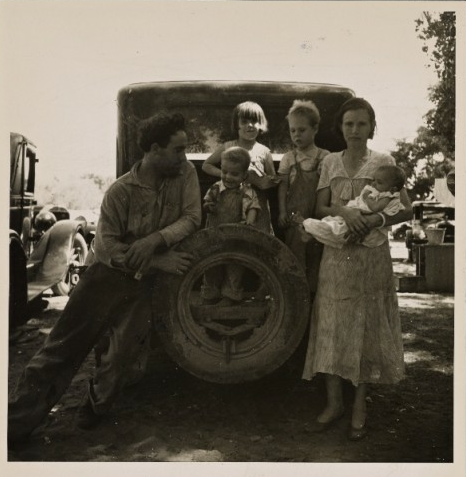
Found: Lost Great Depression Photos Capturing Hard Times on Farms, and in Town

Dur­ing the Great Depres­sion, the Farm Secu­ri­ty Admin­is­tra­tion took on the task of “intro­duc­ing Amer­i­ca to Amer­i­cans” through pho­tog­ra­phy. The FSA hired Dorothea Lange, Walk­er Evans, Gor­don Parks and oth­er artists to cap­ture images of ordi­nary Amer­i­cans, specif­i­cal­ly poor farm­ers.

Some of the images are now icon­ic, notably Lange’s image of a des­ti­tute migrant moth­er of sev­en. That image and most oth­ers are cat­a­loged in the col­lec­tions of the Library of Con­gress, but some lan­guished and were for­got­ten. Oth­ers end­ed up in gen­er­al cir­cu­la­tion, so that, in the­o­ry, any­one with a library card could check out an orig­i­nal print.

Recent­ly a pho­tog­ra­phy cura­tor with the New York Pub­lic Library tracked down the miss­ing images—some 1,000 of them—and cre­at­ed a spe­cial online archive where they can final­ly be seen.

Many depict rur­al life: A 91-year-old woman sits in front of her North Car­oli­na cab­in. A work­er takes a break from carv­ing a dirt road into the New Mex­i­co land­scape. A black man in black face pre­pares to per­form in a trav­el­ing med­i­cine show. The chil­dren of migrant fruit pick­ers in Michi­gan sit for­lorn­ly on a truck.

But not all the pho­tographs doc­u­ment the plight of rur­al Amer­i­ca. Some of the col­lec­tion’s most pow­er­ful images are of Amer­i­cans strug­gling in cities. Here two young girls play out­side in a Bal­ti­more slum. Three peo­ple sit out­doors on a Sun­day in New Orleans. And then we cap­ture a scene on the Low­er East Side of New York City.

Not sur­pris­ing­ly Dorothea Lange’s work is among the strongest in this col­lec­tion. One of the most pow­er­ful images comes sev­er­al pages into her work’s archive, so be sure to click through. The sto­ry behind “From Texas ten­ant farmer to Cal­i­for­nia fruit tramp” (the first image above) sums up the era: “1927 made $7000 in cot­ton. 1928 broke even. 1929 went in the hole. 1930 went in still deep­er. 1931 lost every­thing. 1932 hit the road.”

Kate Rix is an Oak­land-based writer. See more of her work at .

A Stringed Salute to AC/DC and Guns N’ Roses

Rus­sell Fall­stad and Adam DeGraff come from Lewis­burg, West Vir­ginia. The two fiddlers/violinists have been close friends for 20+ years. They trained togeth­er at the same music schools, steep­ing them­selves in clas­si­cal music. Then, they decid­ed to move in a new direc­tion and explore the brave new world of “vio­lin rock,” where “clas­si­cal train­ing com­bines with siz­zling ener­gy and a raw impro­vi­sa­tion­al cre­ativ­i­ty.” Above you can watch the Duel­ing Fid­dlers pre­pare for their debut con­cert, per­form­ing an AC/DC mashup of “Back in Back” and “Thun­der­struck.” Maybe one day you’ll find them on tour with 2Cellos, who per­form G ‘n R’s “Wel­come to the Jun­gle” below.

Fol­low us on Face­book, Twit­ter, Google Plus and LinkedIn and  share intel­li­gent media with your friends. Or bet­ter yet, sign up for our dai­ly email and get a dai­ly dose of Open Cul­ture in your inbox.

by | Permalink | Make a Comment ( 2 ) |

The Classic 1956 Oscar-Winning Children’s Film, The Red Balloon

The best chil­dren’s sto­ries can be a delight for adults, too. That’s cer­tain­ly the case with Albert Lam­or­is­se’s 1956 short film, The Red Bal­loon. The sto­ry is set in the run-down Ménil­montant neigh­bor­hood of Paris. A lit­tle boy, played by the direc­tor’s son Pas­cal, is walk­ing to school one morn­ing when he dis­cov­ers a red bal­loon tan­gled around a lamp post. He “res­cues” it and takes it to school with him. Along the way, the boy dis­cov­ers that the bal­loon has a mind of its own. It fol­lows him like a stray dog, and togeth­er they face the ter­rors, and tedi­um, of child­hood.

The film, shown above in its entire­ty, earned Lam­or­isse an Acad­e­my Award for Best Orig­i­nal Screen­play and a Palme d’Or for Best Short Film at the Cannes Film Fes­ti­val, along with near-uni­ver­sal praise from crit­ics. “The Red Bal­loon is a won­der­ful movie for chil­dren,” says New York Times film crit­ic A.O. Scott in the “Crit­ics’ Picks” video below. “It’s also a unique­ly insight­ful movie about child­hood.” In a 2008 essay, “The Red Bal­loon: Writ­ten on the Wind,” the chil­dren’s author Bri­an Selznick writes of his life-long appre­ci­a­tion for the film:

As a child, I longed for two spe­cif­ic things that I now real­ize Lam­or­is­se’s movie embod­ies: the pres­ence of a lov­ing friend and the knowl­edge that real mag­ic exists in the world. Child­hood, in so many ways, is about learn­ing to nav­i­gate the world around us, to make sense of what seems over­whelm­ing and gigan­tic. Hav­ing a spe­cial com­pan­ion makes that expe­ri­ence more man­age­able and less ter­ri­fy­ing. To kids, the world of grown-ups is often alien and untrans­lat­able, and so mag­ic becomes a lens through which the incom­pre­hen­si­ble uni­verse (as Ein­stein once called it) becomes com­pre­hen­si­ble.

Many Amer­i­cans remem­ber see­ing The Red Bal­loon for the first time as a 16mm film pro­ject­ed in ele­men­tary school class­rooms and cafe­te­rias. With the 2008 release of the Cri­te­ri­on Col­lec­tion DVD, many are redis­cov­er­ing the movie–and per­haps over-ana­lyz­ing it–from the per­spec­tive of adult­hood. “An adult watch­ing The Red Bal­loon will not find it dif­fi­cult to see the title char­ac­ter as a sym­bol of spir­i­tu­al­i­ty, friend­ship, love, tran­scen­dence, the tri­umph of good over evil, or any of the count­less oth­er things that a sim­ple, round red bal­loon can rep­re­sent,” writes Selznick. “But per­haps we’re bet­ter off enjoy­ing some things the way a child under­stands them: not as metaphors but as sto­ries. In the end, I think there’s some­thing nice about allow­ing the bal­loon to just be. I guess that’s what you do with good friends–you let them be them­selves.”

If you would like to sign up for Open Culture’s free email newslet­ter, please find it here. It’s a great way to see our new posts, all bun­dled in one email, each day.

If you would like to sup­port the mis­sion of Open Cul­ture, con­sid­er mak­ing a dona­tion to our site. It’s hard to rely 100% on ads, and your con­tri­bu­tions will help us con­tin­ue pro­vid­ing the best free cul­tur­al and edu­ca­tion­al mate­ri­als to learn­ers every­where. You can con­tribute through Pay­Pal, Patre­on, and Ven­mo (@openculture). Thanks!

« Go BackMore in this category... »
Quantcast