Update: Not long after we posted this, NPR took the audio offline. We told you to act quickly, but we didn’t expect that quickly! Sorry for the inconvenience.
We all need guides for the overwhelming world of the Internet. Digital curators are essential to sifting through the vast and expanding supply of online content because they find the good stuff that’s worth checking out.
When Download the Universe launched a year ago, the digital world gained a smart and discerning curator for the growing number of science ebooks. What a boon for science lovers. Science lends itself uniquely to apps and ebook publishing. And doing what digital publishing does best, a good ebook can bring content to life like no paperback or hardcover can.
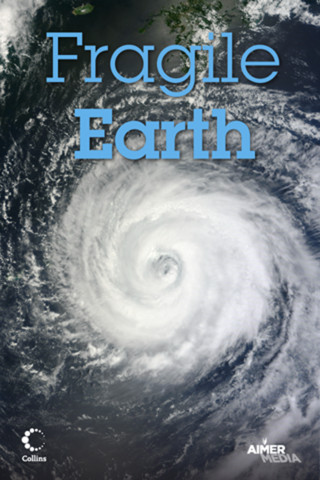
Take Harper Collins’ Fragile Earth ($2.99 on iTunes), which came out originally as a glossy coffee table book. Loaded with before and after photos of places on the planet scarred by deforestation and climate change, the book was visually stunning, if pedantic. But when released as an ebook, the whole experience unfolded like a beautiful, heartbreaking origami.
As Download the Universe’s review of the Fragile Earth ebook points out, the app version benefits from digital technology, laying before and after satellite images over one another, rather than side by side, making the experience of seeing them even more profound.
Here’s another one: Color Uncovered (free on iTunes), produced by San Francisco’s Exploratorium Museum, is a rich experience like a museum exhibit itself. Combining text with images and interactive features, the ebook explores how the eye perceives color. The reviewer, New York Times contributor Carl Zimmer, uses his review to discuss what the ebook experience shares with museum exhibits.
In the hands of Download the Universe, it appears that ebook publishing has matured into its own genre, with its own distinct advantages.
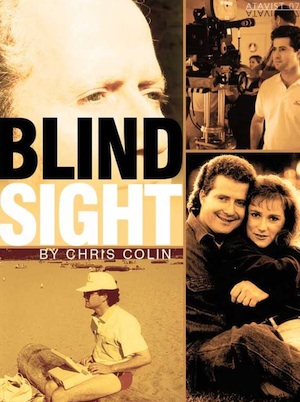
Sometimes ebook publishers don’t make good use of available features. This review of Blindsight by journalist Chris Colin notes that the book’s app version, telling the story of a television director who suffers a brain injury, should have included neurological background information in the main story, not as a separate feature.
Download the Universe only reviews ebooks in the digital universe, not spin-offs from traditional print books. They look at Kindle products, self-published pdf manuscripts and apps, and they’ve got top-notch talent reviewing this brave new world on our behalf. The editorial board includes some names you may well recognize, like Sean Carroll (Caltech physicist), Steve Silberman (Wired), Maggie Koerth-Baker (Boing Boing), Annalee Newitz (io9), and David Dobbs (NYTimes, Nat Geo, etc.).
Most theaters in America seem by now to have equipped themselves for digital projection. But just a year or two ago, distributors had to send out digital copies of their movies to some venues and celluloid prints to others. As it hasn’t proven quite the revelation its boosters had hoped, the latest wave of 3D pictures still has to deal with the fact that certain theaters accept a higher-tech version, but most need a lower-tech one. In 1929, cinema found itself in much the same technical situation, but regarding sound. Even as Alfred Hitchcock began shooting his tenth film, Blackmail, as a traditional silent, British International Pictures decided he should join the popular “talkies” just then opening in England. This required Hitchcock to deliver both a sound and a silent version of the picture — and to incorporate sound recording on the fly.
Above you see — and, more importantly, hear — a sound test Hitchcock made with Anny Ondra, Blackmail’s lead actress. For a demonstration of what at the time surely seemed like a complicated new cinematic technology, it has an amusingly risqué goofiness. Starting this 42-second conversation, a wisecracking young Hitchcock asks to hear Ondra’s voice. “But Hitch, you mustn’t do that,” she insists. “Why not?” asks the director. “Well,” replies the hesitant actress, “because I can’t speak well.” Indeed, the Czech Ondra spoke with an accent, which forced the production to “dub” her lines, live, with an English actress standing offstage. As sound swept the motion picture industry, Blackmail’s leading lady suffered the fate of many an unacceptably-voiced silent star and returned to the Continent. As for its director, well, we’d hear a bit more from him. You can watch Hitchcock’s first talkie in full below.
Colin Marshall hosts and produces Notebook on Cities and Culture and writes essays on literature, film, cities, Asia, and aesthetics. He’s at work on a book about Los Angeles, A Los Angeles Primer. Follow him on Twitter at @colinmarshall.
According to Buddhist scholar and translator Robert Thurman (father of Uma), The Tibetan Book of the Dead, or Bardo Thodol, “organizes the experiences of the between—(Tibetan, bar-do) usually referring to the state between death and rebirth.” While The Book of the Dead has, of course, a long and illustrious history in Tibetan Buddhist life, it also has its place in the history of the West, particularly among 20th century intellectuals and artists. In the 1950s, for example, there was talk among Igor Stravinsky, Martha Graham, and Aldous Huxley to turn the Bardo into a ballet with a Greek chorus. Huxley, who famously spent his final hours on an acid trip, asked that a passage from the book be read to him as he lay dying: “Hey! Noble one, you named Aldous Huxley! Now the time has come for you to seek the way….”
In another, less trippy, example of Eastern mysticism meets Western artist, the video above (continued below) features poet and troubadour Leonard Cohen narrating a two-part documentary series from 1994 that explores the ancient Tibetan teachings on death and dying. As Cohen tells it above, in Tibetan tradition, the time spent in the between supposedly lasts 49 days after a person’s death. During that time, a Buddhist yogi reads the Bardo each day, while the consciousness of the dead person, so it is believed, hovers between one life and another, and can hear the instructions read to him or her. The film gives us an intimate look at this ceremony, performed after the death of a villager—with its intricate rituals and ancient, unbound, hand-printed text of the book—and touches on the tricky political issues of Buddhist practice in largely Chinese-controlled Tibet. In this first installment above, The Tibetan Book of the Dead: A Way of Life, the Dalai Lama weighs in with his own views on life and death (at 33:22). Before his appearance, the film provides some brief context of his supposed incarnation from the 13th Dalai Lama and his rise to governance, then exile.
The second installment of the series, The Great Liberation (also above), follows an old Buddhist lama and a thirteen-year-old novice monk as they guide another deceased person with the text of the Bardo. The National Film Board of Canada, who produced the series (you can purchase the DVD on their website), did well in their choice of Cohen as narrator. Not only is his deep, soothing voice the kind of thing you might want to hear reading to you as you slipped into the between realms (or just slipped off to sleep), but his own journey has brought him to an abiding appreciation for Buddhism. Although Cohen has always identified strongly with Judaism—incorporating Jewish themes and texts into his songs and poetry—he found refuge in Zen Buddhism late in life. Two years after this film, he was ordained as a Zen Buddhist monk at age 62, at the Mount Baldy Zen Center east of Los Angeles (where Ram Dass, Oliver Stone, and Richard Gere also practiced). Cohen’s “Dharma name”? Jikan, or “Silent One.”
In late 1964, when he was at the height of his success, Peter Sellers filmed a series of vaudevillian sketches with a group of wealthy and socially elite friends. He edited the scenes together into a movie and called it I Say I Say I Say.
The ten-minute film was made during a weekend at the home of Jocelyn and Jane Stevens. Jocelyn Stevens was the publisher of Queen magazine and had recently gained notoriety by financing the controversial pirate radio ship Caroline–hence the reference to “the Duke and Duchess of Caroline.” A drawing of the pirate ship appears at the beginning of the film on top of the Duke and Duchess’s coat of arms, with its symbols for money and guns and the Latin motto “Errare Humanum Est” (“To Err is Human”).
Sellers is joined in the film by his pregnant wife Britt Ekland, the Stevenses, Princess Margaret and her husband Anthony Armstrong-Jones, 1st Earl of Snowdon. Sellers jokingly called the enterprise “Snowdodeodo Productions.” In one scene, Lord Snowdon appears as a rather effeminate gangster. But the most famous episode features Sellers as “The Great Berko,” recently returned from his “dramatic success at the Workmen’s Institute, Penge,” who presents an uncanny impersonation of Her Royal Highness, Princess Margaret. Sellers disappears behind a screen and out comes–of course–the real Princess Margaret, sister of Queen Elizabeth II.
I Say I Say I Say was locked away in the Sellers family archives until about 1995, when the BBC produced The Peter Sellers Story. The film was never intended for public exhibition. “It was totally improvised,” Lord Snowdon told The Telegraph in 2004. “Peter had a camera that he wanted to try out. It was all very haphazard. We made the whole thing in I should think two hours.”
During recent months, we’ve been busy enhancing what’s now a list of 700 Free Online Courses from top universities. Here’s the lowdown: This master list lets you download free courses from schools like Stanford, Yale, MIT, Oxford, Harvard and UC Berkeley. Generally, the courses can be accessed via YouTube, iTunes or university web sites. Right now you’ll find 85 courses in Philosophy, 60 in History, 80 in Computer Science, 35 in Physics, and that’s just beginning to scratch the surface. Most of the courses were recently produced. But, in some cases, we’ve layered in lecture series by famous intellectuals recorded years ago. You can listen to these lectures whenever you want, and pretty much wherever you want. Here are some highlights from the complete list.
The Character of Physical Law (1964) — YouTube — Richard Feynman, Cornell
The Art of Living – Web Site – Team taught, Stanford
World War and Society in the 20th Century: World War II — Multiple Formats — Charles S. Maier, Harvard
Again, the complete list of Free Online Courses is here. And, in the meantime, if you’re looking for a good list of MOOCs, we’ve got you covered there too. 80 new MOOCs, many offering certificates, will get started in the next 60 days.
Find us on Facebook, Twitter and Google Plus and we’ll make it easy to share intelligent media with your friends!
“When lightning flashes across the sky, you only get a chance to glimpse its fractal form for a split second. But when you send 15,000 volts coursing through plywood, you get a much better look at how it grows. Melanie Hoff, a student at the Pratt Institute in New York City did just that, and the result is a timelapse where you can see the patterns slowly grow out and smolder, like lightning made from molasses.”
That’s the description that introduces the 15,000 Volts video on YouTube. On her own Vimeo Channel, Hoff adds a few more details about what you’re seeing above, saying “Yes, the grain of the wood influences the pattern and the direction [it takes]. The layers of veneer and the glue that holds them together causes the growth to progress much slower than in non-plywood. This is sped up hundreds of thousands of times” in the timelapse film. The musical accompaniment is “Aire De Zamba,” by Augustin Barrios Mangore.
Mark your calendars, music lovers, March 22nd is Dynamic Range Day and March 12th is the day Dave Grohl’s new documentary Sound City Studios gets wide release. What does this mean, you ask, and how are these things related? I’m getting there, hear me out. The digital age has brought us many bountiful rewards, it’s true, but it has also brought us the so-called “Loudness Wars”—basically, for several annoyingly boring technical reasons, digital recordings can be very highly compressed so as to sound subjectively louder than anything analog recording can produce. Sounds like a real bonus, right? Louder is better? Not so, say the organizers of Dynamic Range Day. Not so, say the participants in Dave Grohl’s documentary about the legendary Sound City Studios (trailer above) and his album of recordings using Sound City’s vintage analog Neve console.
See, highly compressed digital recordings basically sound like crappy walls of distorted noise after a while, which is ugly and tiresome. Gone is the dynamic range–the nuance, or light-and-shade, as music people sometimes like to say. This phenomenon—combined with the proliferation of low-grade mp3s and the digital trickery that makes bad singers sound tolerable—is ruining recorded music, and musicians know it, which is why so many great ones were excited to work with Grohl on his film and recording project, celebrating the lost art of live, all-analog recording. Well, that’s not the only reason. Founded in Van Nuys, CA in 1969, the dive‑y Sound City Studios also happens to be where some of the most-loved rock and roll records of all time were made, including Fleetwood Mac’s Rumours, Nirvana’s Nevermind, and Neil Young’s After the Gold Rush. (Rick Rubin also recorded Metallica’s Death Magnetic there—according to the purists and fans alike, one of the worst casualties of the Loudness Wars—but that’s a story for another day).
Now, Sound City Studios is no more, but its history has been documented by Grohl in Sound City, the movie, and Grohl preserved the studio’s beautiful analog gear, now housed in his Studio 606, and recorded a suite of songs with special guests from the film like Stevie Nicks, Paul McCartney, Trent Reznor, Cheap Trick’s Rick Nielsen, Nirvana bassist Krist Novoselic, punk legends Lee Ving and Pat Smear, and Queens of the Stone Age’s Josh Homme. That record, Sound City: Real to Reel is streaming free now on NPR. Listen to its sweet analog goodness above for a limited time (through your digital machine—hey, it is what it is, right?). Then, if you’re so inclined, you can purchase the record (or individual tracks) from iTunes or Amazon. The film will be available shortly on Blu-ray and download too.
We're hoping to rely on loyal readers, rather than erratic ads. Please click the Donate button and support Open Culture. You can use Paypal, Venmo, Patreon, even Crypto! We thank you!
Open Culture scours the web for the best educational media. We find the free courses and audio books you need, the language lessons & educational videos you want, and plenty of enlightenment in between.