Great Story: How Neil Young Introduced His Classic 1972 Album Harvest to Graham Nash

neil young barn

Image by F. Antolín Hernán­dez, via Wiki­me­dia Com­mons

Gra­ham Nash, of Cros­by, Stills, Nash & Young, has a new book out, Wild Tales: A Rock & Roll Life. And that means he’s doing inter­views, many inter­views. A cou­ple of weeks ago, he spent an excel­lent hour on The Howard Stern Show (seri­ous­ly). Next, it was off to chat with the more cere­bral Ter­ry Gross on NPR’s Fresh Air.

In the midst of the inter­view (lis­ten online here), Gross asked Nash to talk about his friend­ship with Neil Young, a man Nash has called “the strangest of my friends.” Just what makes him strange? Nash explains:

The man is total­ly com­mit­ted to the muse of music. And he’ll do any­thing for good music. And some­times it’s very strange. I was at Neil’s ranch one day just south of San Fran­cis­co, and he has a beau­ti­ful lake with red-wing black­birds. And he asked me if I want­ed to hear his new album, “Har­vest.” And I said sure, let’s go into the stu­dio and lis­ten.

Oh, no. That’s not what Neil had in mind. He said get into the row­boat.

I said get into the row­boat? He said, yeah, we’re going to go out into the mid­dle of the lake. Now, I think he’s got a lit­tle cas­sette play­er with him or a lit­tle, you know, ear­ly dig­i­tal for­mat play­er. So I’m think­ing I’m going to wear head­phones and lis­ten in the rel­a­tive peace in the mid­dle of Neil’s lake.

Oh, no. He has his entire house as the left speak­er and his entire barn as the right speak­er. And I heard “Har­vest” com­ing out of these two incred­i­bly large loud speak­ers loud­er than hell. It was unbe­liev­able. Elliot Maz­er, who pro­duced Neil, pro­duced “Har­vest,” came down to the shore of the lake and he shout­ed out to Neil: How was that, Neil?

And I swear to god, Neil Young shout­ed back: More barn!

To that we say, more Neil Young! Find more Neil right below.

Neil Young Busk­ing in Glas­gow, 1976: The Sto­ry Behind the Footage

‘The Nee­dle and the Dam­age Done’: Neil Young Plays Two Songs on The John­ny Cash Show, 1971

The Time Neil Young Met Charles Man­son, Liked His Music, and Tried to Score Him a Record Deal

Neil Young on the Trav­es­ty of MP3s

by | Permalink | Make a Comment ( 22 ) |

The Very First Reviews of James Joyce’s Ulysses: “A Work of High Genius” (1922)

Review_of_Ulysses

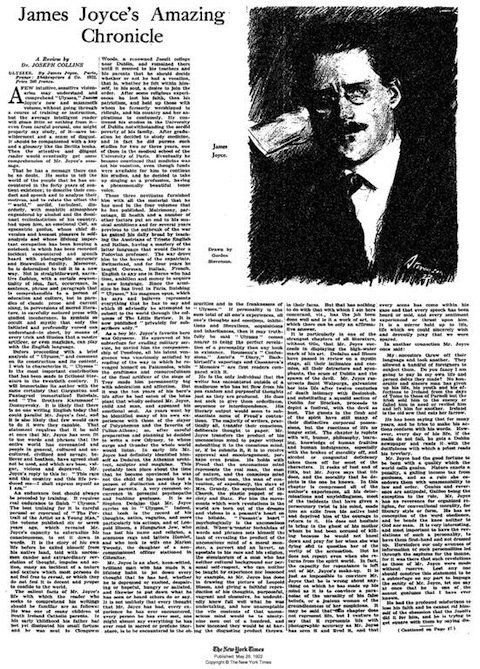
We’ve recent­ly dis­cussed the reac­tions of James Joyce’s lit­er­ary con­tem­po­raries to the 1922 pub­li­ca­tion of Ulysses. T.S. Eliot was floored, and told all of his friends, includ­ing Vir­ginia Woolf. Woolf wres­tled with the book and either found it too dull or too over­whelm­ing to fin­ish. What­ev­er the reac­tion, Joyce’s peers took notice. But what did peo­ple who weren’t soon to be the sub­ject of thou­sands of dis­ser­ta­tions think? Of the few non-mod­ernist mas­ters who read Joyce, his first pro­fes­sion­al crit­ics offer evi­dence. Take the review of Dr. Joseph Collins in The New York Times (above—see the full text here). Collins begins with a very pre­scient state­ment, one most read­ers of Joyce will like­ly agree with in some part:

Few intu­itive, sen­si­tive vision­ar­ies may under­stand and com­pre­hend “Ulysses,” James Joyce’s new and mam­moth vol­ume, with­out going through a course of train­ing or instruc­tion, but the aver­age intel­li­gent read­er will glean lit­tle or noth­ing from it- even from care­ful perusal, one might prop­er­ly say study, of it- save bewil­der­ment and a sense of dis­gust. It should be com­pan­ioned with a key and a glos­sary like the Berlitz books. Then the atten­tive and dili­gent read­er would even­tu­al­ly get some com­pre­hen­sion of Mr. Joyce’s mes­sage.

Collins then goes on to praise Joyce’s great­ness in no uncer­tain terms:

Before pro­ceed­ing with a brief analy­sis of “Ulysses,” and a com­ment on its con­struc­tion and con­tent, I wish to char­ac­ter­ize it. “Ulysses” is the most impor­tant con­tri­bu­tion that has been made to fic­tion­al lit­er­a­ture in the twen­ti­eth cen­tu­ry. It will immor­tal­ize its author with the same cer­tain­ty that Gar­gan­tua and Pan­ta­gru­el immor­tal­ized Rabelais, and “The Broth­ers Kara­ma­zof” Dos­toyevsky. It is like­ly that there is no one writ­ing Eng­lish today that could par­al­lel Joyce’s feat.

Such incred­i­bly high praise it sounds like flat­tery, espe­cial­ly since Joyce’s book had not even weath­ered a few weeks among the read­ing pub­lic. For a more sober and care­ful assess­ment, see the great lit­er­ary crit­ic Edmund Wilson’s July, 1922 review in the New Repub­lic. In Wilson’s ambiva­lent assess­ment: “The thing that makes Ulysses impos­ing is, in fact, not the theme but the scale upon which it is devel­oped. It has tak­en Mr. Joyce sev­en years to write Ulysses and he has done it in sev­en hun­dred and thir­ty pages which are prob­a­bly the most com­plete­ly “writ­ten” pages to be seen in any nov­el since Flaubert.” If this seems like faint praise, it sets up some of Wilson’s “com­plaints” to come. And yet, “for all its appalling longueurs,” he writes, “Ulysses is a work of high genius. [It] has the effect at once of mak­ing every­thing else look brassy.”

Of course there were those who hat­ed the book, like Harvard’s Irv­ing Bab­bitt, who said it could only have been writ­ten “in an advanced stage of psy­chic dis­in­te­gra­tion.” And there were the puri­tans and philistines who found the novel’s scat­o­log­i­cal  humor, frank depic­tions of sex, and near con­stant erot­ic charge a scan­dal. Yet it was the opin­ions, how­ev­er qual­i­fied, of Joyce’s peers and most of his crit­ics that moved U.S. Judge John Mon­ro Woolsey eleven years lat­er to rule that the book was not obscene and could be legal­ly sold in Amer­i­ca. Wrote Woolsey in his deci­sion, “The rep­u­ta­tion of ‘Ulysses’ in the lit­er­ary world… war­rant­ed my tak­ing such time as was nec­es­sary… In ‘Ulysses,’ in spite of its unusu­al frank­ness, I do not detect any­where the leer of the sen­su­al­ist.” Good thing Woolsey did­n’t read Joyce’s let­ters to his wife.

Relat­ed Con­tent: 

James Joyce Read From his Epic Ulysses, 1924

James Joyce, With His Eye­sight Fail­ing, Draws a Sketch of Leopold Bloom (1926)

Vir­ginia Woolf Writes About Joyce’s Ulysses, “Nev­er Did Any Book So Bore Me,” and Quits at Page 200

James Joyce’s “Dirty Let­ters” to His Wife (1909)

James Joyce’s Ulysses: Down­load the Free Audio Book

Josh Jones is a writer and musi­cian based in Durham, NC. Fol­low him at @jdmagness

Ingmar Bergman Evaluates His Fellow Filmmakers — The “Affected” Godard, “Infantile” Hitchcock & Sublime Tarkovsky

Nowa­days, most of us who still reli­gious­ly attend screen­ings of films by the most respect­ed Euro­pean direc­tors of the twen­ti­eth cen­tu­ry have cir­cled the wag­ons: even if we far pre­fer, say, Felli­ni to Truf­faut, we’ll more than like­ly still turn up for the Truf­faut, even if only out of cinephilic sol­i­dar­i­ty. But in the fifties, six­ties, and sev­en­ties — or so I’ve read, any­way — dis­cus­sions of such film­mak­ers’ rel­a­tive mer­its could turn into seri­ous intel­lec­tu­al shov­ing match­es, and even many of the lumi­nar­ies them­selves would eval­u­ate their col­leagues’ work can­did­ly. At the Ing­mar Bergman fan site Bergmanora­ma, you can read what the mak­er of The Sev­enth SealWild Straw­ber­ries, and Per­sona had to say about the mak­ers of movies like L’Avven­tu­raBreath­lessVer­ti­goThe Exter­mi­nat­ing AngelThe 400 Blows, and Stalk­er.

Regard­ing Jean Luc Godard: “I’ve nev­er been able to appre­ci­ate any of his films, nor even under­stand them… I find his films affect­ed, intel­lec­tu­al, self-obsessed and, as cin­e­ma, with­out inter­est and frankly dull… I’ve always thought that he made films for crit­ics.”

Michelan­ge­lo Anto­nioni, thought Bergman, had “nev­er prop­er­ly learnt his craft. He’s an aes­thete. If, for exam­ple, he needs a cer­tain kind of road for The Red Desert, then he gets the hous­es repaint­ed on the damned street. That is the atti­tude of an aes­thete. He took great care over a sin­gle shot, but did­n’t under­stand that a film is a rhyth­mic stream of images, a liv­ing, mov­ing process; for him, on the con­trary, it was such a shot, then anoth­er shot, then yet anoth­er. So, sure, there are some bril­liant bits in his films… [but] I can’t under­stand why Anto­nioni is held in such high esteem.”

Alfred Hitch­cock struck him as “a very good tech­ni­cian. And he has some­thing in Psy­cho, he had some moments. Psy­cho is one of his most inter­est­ing pic­tures because he had to make the pic­ture very fast, with very prim­i­tive means. He had lit­tle mon­ey, and this pic­ture tells very much about him. Not very good things. He is com­plete­ly infan­tile, and I would like to know more — no, I don’t want to know — about his behav­iour with, or, rather, against women. But this pic­ture is very inter­est­ing.”

You’ll find more quotes on F.W. Mur­nau, teller of image-based tales with “fan­tas­tic sup­ple­ness”; Mar­cel Carné and Julien Duvivi­er, “deci­sive influ­ences in my want­i­ng to become a film­mak­er”; Fed­eri­co Felli­ni, the sheer heat from whose cre­ative mind “melts him”; François Truf­faut, with his fas­ci­nat­ing “way of relat­ing with an audi­ence”; and Andrei Tarkovsky, “the great­est of them all,” at Bergmanora­ma. His com­ments on Luis Buñuel offer espe­cial­ly impor­tant advice for cre­ators in any medi­um, of any age. He quotes a crit­ic who wrote that “with Autumn Sonata Bergman does Bergman” and admits the truth in it, but he adds that, at some point, “Tarkovsky began to make Tarkovsky films and that Felli­ni began to make Felli­ni films.” Buñuel, alas, “near­ly always made Buñuel films.” The les­son: if you must do a pas­tiche, don’t do a pas­tiche of your own style — or, as I once heard the writer Geoff Dyer (him­self a great fan of mid­cen­tu­ry Euro­pean cin­e­ma) call it, “self-karaoke.”

Relat­ed Con­tent:

Stan­ley Kubrick to Ing­mar Bergman: “You Are the Great­est Film­mak­er at Work Today” (1960)

Ing­mar Bergman’s Soap Com­mer­cials Wash Away the Exis­ten­tial Despair

Dick Cavett’s Wide-Rang­ing TV Inter­view with Ing­mar Bergman and Lead Actress Bibi Ander­s­son (1971)

How Woody Allen Dis­cov­ered Ing­mar Bergman, and How You Can Too

Tarkovsky Films Now Free Online

Col­in Mar­shall hosts and pro­duces Note­book on Cities and Cul­ture and writes essays on lit­er­a­ture, film, cities, Asia, and aes­thet­ics. He’s at work on a book about Los Ange­lesA Los Ange­les Primer. Fol­low him on Twit­ter at @colinmarshall.

Henry David Thoreau’s Hand-Drawn Map of Cape Cod (1866)

HDT_Cape_Cod_large

Hen­ry David Thore­au wrote in 1866:

“Wish­ing to get a bet­ter view than I had yet had of the ocean, which, we are told, cov­ers more than two thirds of the globe, but of which a man who lives a few miles inland may nev­er see any trace…I have spent, in all, about three weeks on the Cape; walked from East­ham to Province­town twice on the Atlantic side, and once on the Bay side also…but hav­ing come so fresh to the sea, I have got but lit­tle salt­ed.”

You can click the image above to see it in a larg­er for­mat. For many oth­er maps made by Thore­au, vis­it the “Thore­au Lands and Prop­er­ty Sur­vey” col­lec­tion at the Con­cord Free Pub­lic Library. Also find works by Thore­au in our col­lec­tion of Free eBooksand Free Audio Books

via Steve Sil­ber­man

If you would like to sign up for Open Culture’s free email newslet­ter, please find it here. It’s a great way to see our new posts, all bun­dled in one email, each day.

If you would like to sup­port the mis­sion of Open Cul­ture, con­sid­er mak­ing a dona­tion to our site. It’s hard to rely 100% on ads, and your con­tri­bu­tions will help us con­tin­ue pro­vid­ing the best free cul­tur­al and edu­ca­tion­al mate­ri­als to learn­ers every­where. You can con­tribute through Pay­Pal, Patre­on, and Ven­mo (@openculture). Thanks!

Ian Rubbish (aka Fred Armisen) Interviews the Clash in Spinal Tap-Inspired Mockumentary

You’ve heard of Lon­don Call­ing by the Clash. But what about Cam­den Beck­ons, by Ian Rub­bish & the Biz­zaros?

That’s one of the weird cre­ations of come­di­an Fred Armisen, who first intro­duced his Spinal Tap-like punk char­ac­ter Ian Rub­bish ear­li­er this year on Sat­ur­day Night Live. Armisen has just released this mock doc­u­men­tary for Fun­ny or Die fea­tur­ing a tongue-in-cheek inter­view and jam ses­sion with two of the sur­viv­ing mem­bers of the Clash: gui­tarist Mick Jones and bassist Paul Simonon. The leg­endary rock­ers, who have been busy late­ly pro­mot­ing the new Clash boxed set Sound Sys­tem, go along with the joke as Armisen describes the influ­ence the Bizarros had on the Clash. “In a way,” he says, “they did a sort of past-tense copy­ing of us.”

For more on Ian Rub­bish & the Bizarros, includ­ing free down­loads, see the offi­cial Web site.

Relat­ed Con­tent:

Doc­u­men­tary Viva Joe Strum­mer: The Sto­ry of the Clash Sur­veys the Career of Rock’s Beloved Front­man

“Joe Strummer’s Lon­don Call­ing”: All Eight Episodes of Strummer’s UK Radio Show Free Online

The Clash Live in Tokyo, 1982: Watch the Com­plete Con­cert

Mick Jones Plays Three Clas­sics by The Clash at the Pub­lic Library

Patti Smith Sings “You Light Up My Life” with Composer Joe Brooks on 1979 Show Kids Are People Too

Maybe the Yo Gab­ba Gab­ba of its day, the Sun­day morn­ing kids’ show Kids are Peo­ple Too ran from 1978 to 1982, dur­ing which time it attract­ed such guests as Cheap Trick and KISS to its stu­dio. KISS was vir­tu­al­ly a car­toon already, and Cheap Trick def­i­nite­ly had its kid-friend­ly ele­ments, but one of the show’s musi­cal guests prob­a­bly did­n’t reach into a lot kids’ bed­rooms with her blas­phe­mous take on Van Morrison’s “Glo­ria,” her “Hey Joe / Piss Fac­to­ry,” or her spo­ken word open let­ter to Pat­ty Hearst. But the lengthy Q&A with Pat­ti Smith before she sings, with host Michael Young prompt­ing ques­tions from excit­ed audi­ence mem­bers, leaves me with the impres­sion that she was more pop­u­lar with Amer­i­ca’s youth than I thought.

Maybe it was her 1978 hit “Because the Night,” writ­ten by Bruce Spring­steen, that tempt­ed Kids are Peo­ple Too’s pro­duc­ers to invite Smith on the show to sing anoth­er cov­er, “You Light Up My Life,” with com­pos­er Joe Brooks. It’s a pret­ty weird moment in pop cul­ture his­to­ry, espe­cial­ly con­sid­er­ing the strange turns both musi­cians’ lives took. Smith went on to win a Nation­al Book Award and remains vital and cre­ative. Brooks went on to a very sor­did, igno­min­ious end. But here, they cross paths after Brooks won an Oscar for his song and Smith had recov­ered from a dis­as­trous fall from the stage and reboot­ed her career in a more pop direc­tion. Despite her greater mass appeal, Young still assumes that Pat­ti Smith means one thing. He even asks the kids in the stu­dio audi­ence, “didn’t you say Pat­ti Smith, punk rock, right?” The kids all yell back, “Yeah!” Hip kids or very effec­tive teleprompter? You be the judge.

*Note, an ear­li­er ver­sion of this post iden­ti­fied the host as Bob McAl­lis­ter and stat­ed that “Hearst went on to win a Nation­al Book Award.” As some read­ers have point­ed out, the host was Michael Young, and it was Smith, of course, not Pat­ty Hearst, who won the Nation­al Book Award in 2010.

Relat­ed Con­tent:

See Pat­ti Smith Give Two Dra­mat­ic Read­ings of Allen Ginsberg’s “Foot­note to Howl”

Watch Pat­ti Smith Read from Vir­ginia Woolf, and Hear the Only Sur­viv­ing Record­ing of Woolf’s Voice

Pat­ti Smith Shares William S. Bur­roughs’ Advice for Writ­ers and Artists

Josh Jones is a writer and musi­cian based in Durham, NC. Fol­low him at @jdmagness

Apocalypse Now’s “Ride of the Valkyries” Attack: The Anatomy of a Classic Scene

“I love the smell of napalm in the morn­ing.” There we have undoubt­ed­ly the most famous quote of what must count as one of Robert Duval­l’s finest per­for­mances, and sure­ly his most sur­pris­ing: that of Lieu­tenant Colonel Bill Kil­go­re in Fran­cis Ford Cop­po­la’s Apoc­a­lypse Now. As you’ll no doubt recall — and if you don’t recall it, min­i­mize your brows­er for a few hours and make your way to a screen­ing, or at least watch it online — Cap­tain Ben­jamin Willard’s Con­ra­di­an boat jour­ney into the Viet­nam War’s dark heart hits a snag fair­ly ear­ly in the pic­ture: they need to pass through a coastal area under tight Viet Cong con­trol.

valk 1

Kil­go­re, ini­tial­ly reluc­tant to call in his heli­copters to back up Willard’s dubi­ous mis­sion, changes his mind when he real­izes that Willard counts among his own small crew famed pro­fes­sion­al surfer Lance B. John­son. The Lieu­tenant Colonel, it turns out, loves to surf. He also loves to blast Richard Wag­n­er’s “Ride of the Valkyries” from heli­copter-mount­ed speak­ers. “It scares the hell out of the slopes,” he explains. “My boys love it.”

valk 5

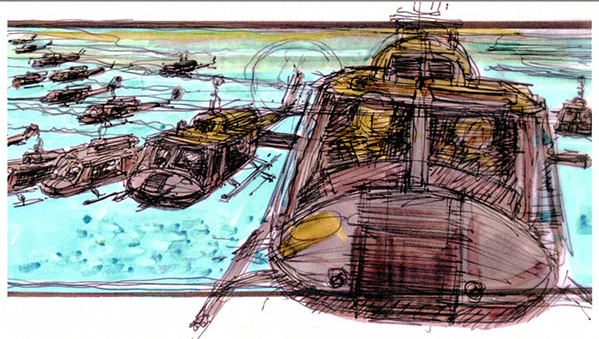
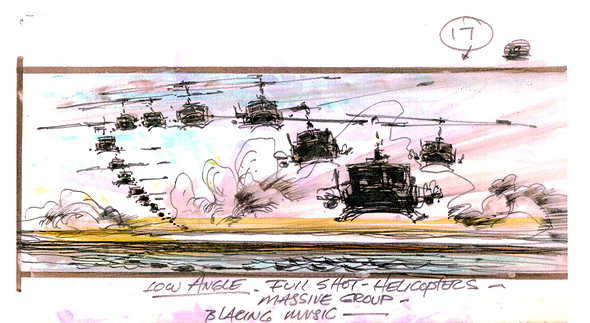
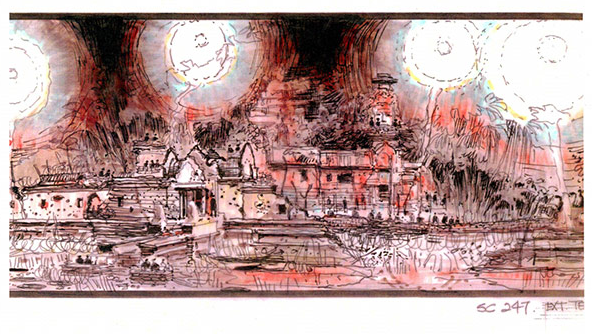
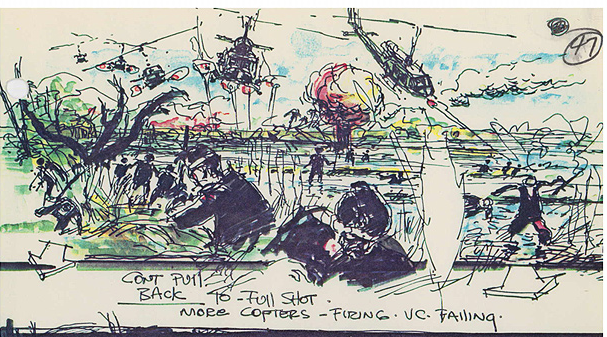
At the top, you can watch the fruits of Willard and Kil­go­re’s coop­er­a­tion, an oper­at­ic napalm airstrike that takes the entire beach: not an easy thing to accom­plish, and cer­tain­ly not an easy thing to film. As any­one acquaint­ed with the mak­ing of Apoc­a­lypse Now has heard, the pro­duc­tion tend­ed to turn as com­pli­cat­ed, con­fus­ing, and per­ilous as the Viet­nam War itself, but not nec­es­sar­i­ly for lack of plan­ning.

valk 3

At Empire, you can view the scene’s orig­i­nal sto­ry­boards and read along­side them a brief inter­view with Doug Clay­bourne, who on the film had the envi­able title of Heli­copter Wran­gler. Arriv­ing to the Philip­pines-based shoot (in “the mid­dle of nowhere”), Clay­bourne found Cop­po­la on the beach with a bull­horn, Mar­tin Sheen just replac­ing Har­vey Kei­t­el in the role of Willard, chop­pers bor­rowed from Pres­i­dent Fer­di­nand Mar­cos (who peri­od­i­cal­ly took them back to use against insur­rec­tions else­where), a com­ing typhoon, and “a lot of chaos.”

valk 4

But Cop­po­la, Clay­bourne, and the rest of the team saw it through, achiev­ing results even more strik­ing, in moments, than these sto­ry­boards sug­gest. As for the unflap­pable Kil­go­re, well, we all remem­ber him rush­ing to catch a tan­ta­liz­ing wave even before the fight­ing sub­sides. After all, to quote his sec­ond-most famous line, “Char­lie don’t surf!”

valk 6

Relat­ed Con­tent:

Aki­ra Kuro­sawa & Fran­cis Ford Cop­po­la Star in Japan­ese Whisky Com­mer­cials (1980)

Demen­tia 13: The Film That Took Fran­cis Ford Cop­po­la From Schlock­ster to Auteur

Fran­cis Ford Coppola’s Hand­writ­ten Cast­ing Notes for The God­fa­ther

Col­in Mar­shall hosts and pro­duces Note­book on Cities and Cul­ture and writes essays on lit­er­a­ture, film, cities, Asia, and aes­thet­ics. He’s at work on a book about Los Ange­lesA Los Ange­les Primer. Fol­low him on Twit­ter at @colinmarshall.

How Philip K. Dick Disdained American Anti-Intellectualism and Found His Inspiration in Flaubert, Stendhal & Balzac

Despite some of the stranger cir­cum­stances of Philip K. Dick’s life, his rep­u­ta­tion as a para­noid guru is far bet­ter deserved by oth­er sci­ence fic­tion writ­ers who lost touch with real­i­ty. Dick was a seri­ous thinker and writer before pop cul­ture made him a prophet. Jonathan Letham wrote of him, “Dick wasn’t a leg­end and he wasn’t mad. He lived among us and was a genius.” It’s a fash­ion­able opin­ion these days, but his genius went most­ly unrec­og­nized in his lifetime—at least in his home country—except among a sub­set of sci-fi read­ers. But Dick con­sid­ered him­self a lit­er­ary writer. He left the Uni­ver­si­ty of Cal­i­for­nia after less than a semes­ter, but the “con­sum­mate auto­di­dact” read wide­ly and deeply, favor­ing the giants of Euro­pean phi­los­o­phy, the­ol­o­gy, and lit­er­a­ture. For this rea­son, Dick sus­pect­ed that his tepid recep­tion in the U.S., by com­par­i­son with the warm regard of the French, showed a “flawed” anti-intel­lec­tu­al­ism in Amer­i­cans that pre­vent­ed them from appre­ci­at­ing his work. In the 1977 edit­ed inter­view above with Dick in France, you can hear him lay out his the­o­ry in detail, offer­ing insights along the way into his lit­er­ary edu­ca­tion and influ­ences.

Dick iden­ti­fies two strains of anti-intel­lec­tu­al­ism in the U.S. The first, he says, pre­vents Amer­i­can read­ers from appre­ci­at­ing “nov­els of ideas.” Sci­ence fic­tion, he says, “is essen­tial­ly the field of ideas. And the anti-intel­lec­tu­al­ism of Amer­i­cans pro­hibits their inter­est in imag­i­na­tive ideas and inter­est­ing con­cepts.”

I don’t find Dick par­tic­u­lar­ly per­sua­sive here, but I live in a time when he has been ful­ly embraced, if only in adap­ta­tion. Dick’s more spe­cif­ic take on what may be a root cause for Amer­i­cans’ lack of curios­i­ty has to do with the read­ing habits of Amer­i­cans.

There’s anoth­er facet as regards my par­tic­u­lar work say com­pared to oth­er sci­ence fic­tion writ­ers. I grew up in Berke­ley and my edu­ca­tion was not lim­it­ed at all to read­ing oth­er sci­ence fic­tion nov­els pre­ced­ing my own, such as van Vogt, or Hein­lein, or peo­ple of that kind… Pad­gett, and so on…. Brad­bury. What I read, because it’s a uni­ver­si­ty city,  was Flaubert, Stend­hal, Balzac… Proust, and the Russ­ian nov­el­ists influ­enced by the French. Tur­genev. And I even read Japan­ese nov­els, mod­ern Japan­ese nov­els, nov­el­ists who were influ­enced by the French real­is­tic writ­ers.

Dick says his “slice of life” nov­els were well received in France because he based them on 19th French real­ist nov­els. His favorite, he tells the inter­view­er, were Madame Bovary and The Red and the Black, as well as Turgenev’s Fathers and Sons — all found in our col­lec­tion of Free eBooks and Free Audio BooksPer­haps a lit­tle self-impor­tant­ly, in his par­tic­u­lar con­cep­tion of him­self as a lit­er­ary writer, Dick dis­tances him­self from oth­er Amer­i­can sci­ence fic­tion authors, whom he alleges share the Amer­i­can reader’s anti-intel­lec­tu­al propen­si­ties. “I think this applies to me more than oth­er Amer­i­can sci­ence fic­tion writ­ers,” says Dick, “In fact, I think that it’s a great flaw in Amer­i­can sci­ence fic­tion writ­ers, and their read­ers, that they are insu­lat­ed from the great lit­er­a­ture of the world.”

Relat­ed Con­tent:

Robert Crumb Illus­trates Philip K. Dick’s Infa­mous, Hal­lu­ci­na­to­ry Meet­ing with God (1974)

The Penul­ti­mate Truth About Philip K. Dick: Doc­u­men­tary Explores the Mys­te­ri­ous Uni­verse of PKD

Free Philip K. Dick: Down­load 13 Great Sci­ence Fic­tion Sto­ries

Josh Jones is a writer and musi­cian based in Durham, NC. Fol­low him at @jdmagness

« Go BackMore in this category... »
Quantcast