30 Renowned Writers Speaking About God: From Isaac Asimov to Margaret Atwood

Back in 2011,  Jonathan Parara­jas­ing­ham, a British med­ical doc­tor spe­cial­iz­ing in Neu­ro­surgery, cre­at­ed a mon­tage of 50 renowned aca­d­e­mics talk­ing about their views on the exis­tence of God. Then came Part II about a month lat­er – Anoth­er 50 Aca­d­e­mics Speak­ing About God. The videos most­ly fea­tured sci­en­tists, fig­ures like Richard Feyn­man, Steven Pinker, Oliv­er Sacks, Stephen Hawk­ing, and Richard Dawkins. Notice­ably miss­ing were the lib­er­al art­sy types. But then … hold the phones … came Parara­jas­ing­ham’s 2012 video: 30 Renowned Writ­ers Speak­ing About God. Run­ning 25 min­utes, the clip brings togeth­er com­ments by Nobel Lau­re­ates JosĂ© Sara­m­a­go and Nadine Gordimer, sci-fi leg­ends Isaac Asi­mov and Arthur C. Clarke, and impor­tant con­tem­po­rary nov­el­ists: Philip Roth, Mar­garet Atwood, Ian McE­wan, Salman Rushdie, to name a few. You can find the com­plete list of authors below the jump.

All of these authors ques­tion the exis­tence of God. Some are doubt­ful. Oth­ers round­ly reject the idea. That’s the slant of this video. To the­ists out there, let me just say this: If you find a mon­tage that fea­tures thinkers of sim­i­lar stature and cal­iber mak­ing the case for God, send it our way. We’ll hap­pi­ly give it a look. Speak­ing for myself, I don’t have much of a dog in this fight.

(more…)

by | Permalink | Make a Comment ( 39 ) |

The Challenge of Archiving Sound + Vision in the 21st Century

Where is the wis­dom we have lost in knowl­edge?

Where is the knowl­edge we have lost in infor­ma­tion?

So won­ders T.S. Eliot’s cho­rus in a pageant play he once helped write in 1934. Nev­er one to let moder­ni­ty tram­ple glee­ful­ly over tra­di­tion, Eliot asks us to consider—long before it seemed necessary—what the sea of infor­ma­tion we now swim in might be worth with­out good maps to guide us and wise nav­i­ga­tors to chart out the course. We live in a time in which every­thing can be cat­a­logued, pre­served, backed up, and made open and search­able. This is a won­der­ful thing. But Will Pren­tice, Audio Engi­neer and Con­ser­va­tion Spe­cial­ist at the British Library’s Sound and Vision Divi­sion, points out a spe­cial prob­lem with archiv­ing in the dig­i­tal age. Echo­ing Eliot, Pren­tice says in the short film above, pro­duced by British music mag­a­zine The Wire:

The 20th cen­tu­ry was about audio­vi­su­al mate­r­i­al, our mem­o­ry of the 20th cen­tu­ry is heav­i­ly audio­vi­su­al, but our sense of the 21st cen­tu­ry is going to be a dif­fer­ent kind of audio­vi­su­al… archiv­ing is not going to be so much about what we can bring in, but about what to exclude.

As much as we mod­erns hate the idea of dis­crim­i­na­tion in any form, when it comes to media, past and present, it’s often a nec­es­sary good. In thought­ful inter­views above, see Pren­tice, Pop­u­lar Music Cura­tor Andy Line­han, and Wildlife Sounds Cura­tor Cheryl Tipp dis­cuss their roles as archivists of vast troves of audio­vi­su­al infor­ma­tion in their Lon­don library.

Relat­ed Con­tent:

How Brew­ster Kahle and the Inter­net Archive Will Pre­serve the Infi­nite Infor­ma­tion on the Web

Josh Jones is a writer and musi­cian based in Durham, NC. Fol­low him at @jdmagness

The Haircut: A Student Film Starring the Great John Cassavetes (1982)

Giv­en the length of the aver­age hair­cut, it sur­pris­es me that I don’t see more short films built around them. Tamar Simon Hoffs knew the advan­tages of the hair­cut-based short film, and she put them to use in 1982, dur­ing her time in the Amer­i­can Film Institute’s Direct­ing Work­shops for Women pro­gram. The Hair­cut’s script has a busy record exec­u­tive on his way to an impor­tant lunch appoint­ment. With only fif­teen min­utes to spare, he drops into Rus­so’s bar­ber shop for a trim. Lit­tle does he expect that, with­in those fif­teen min­utes, he’ll not only get his hair cut, but enjoy a shave, a mas­sage, a glass of wine, sev­er­al musi­cal num­bers, romance real or imag­ined,  and some­thing close to a psy­cho­an­a­lyt­ic ses­sion. He goes through quite a few facets of the human expe­ri­ence right there in the chair — minus the time-con­sum­ing “hot tow­el treat­ment” — and Rus­so and his col­or­ful, effi­cient crew still get him out of the door on time. Hoffs knew the per­fect actor for the star­ring role: John Cas­savetes. What’s more, she knew him per­son­al­ly.

The con­nec­tion came through her friend Eliz­a­beth Gaz­zara, daugh­ter of a cer­tain Ben Gaz­zara, star of the The Killing of a Chi­nese Book­ie, my own favorite Cas­savetes-direct­ed film. After read­ing the script, Cas­savetes agreed to per­form, “his only stip­u­la­tion being that his co-stars must be entire­ly rehearsed and ready to go, so he could just come in and per­form as if he real­ly was the cus­tomer,” writes British Film Insti­tute DVD pro­duc­er James Black­ford. “Even in a lit­tle film such as this, Cas­savetes was still search­ing for those per­fect moments that come from the spon­tane­ity of ear­ly takes.” You’ll even laugh at a few lines, spo­ken by Cas­savetes as his char­ac­ter begins to enjoy him­self, that must sure­ly have come out of his beloved impro­vi­sa­tion­al meth­ods. And we can cred­it the film’s sur­pris­ing end to an even more per­son­al con­nec­tion of Hoffs’: to her daugh­ter Susan­na, front­woman of The Ban­gles, then known as The Bangs. You can watch The Hair­cut on the BFI’s new DVD/Blu-Ray release of The Killing of a Chi­nese Book­ie, or you can watch it above.

Relat­ed Con­tent:

Wes Anderson’s First Short Film: The Black-and-White, Jazz-Scored Bot­tle Rock­et (1992)

The Sur­re­al Short Films of Louis C.K., 1993–1999

Por­trait Wern­er Her­zog: The Director’s Auto­bi­o­graph­i­cal Short Film from 1986

Col­in Mar­shall hosts and pro­duces Note­book on Cities and Cul­ture and writes essays on lit­er­a­ture, film, cities, Asia, and aes­thet­ics. He’s at work on a book about Los Ange­lesA Los Ange­les Primer. Fol­low him on Twit­ter at @colinmarshall.

Charles Darwin’s Son Draws Cute Pictures on the Manuscript of On the Origin of Species

Most of us can iden­ti­fy Charles Dar­win as the father of mod­ern evo­lu­tion­ary biol­o­gy, but were you aware that he also fathered ten chil­dren with his cousin, Emma Wedg­wood?

As dad­dies go, Dar­win was quite evolved him­self, dis­play­ing a 21st-cen­tu­ry lev­el of devo­tion to and involve­ment with his young. He even went so far as to let one of his kids draw on the orig­i­nal man­u­script for On the Ori­gin of Species. Sav­ing paper was as good for the envi­ron­ment in the mid-1800s as it is today, but his will­ing­ness to let his pre­cious pages do dou­ble duty may explain why the sem­i­nal doc­u­ment sur­vives as mere piece­meal today.

Maybe Charles and Emma read some arti­cle that sug­gest­ed their house­hold would run more smooth­ly if it were bet­ter orga­nized, and lack­ing such mod­ern solu­tions as col­or­ful Ikea stor­age bins and scan­ners, sim­ply pitched all but the absolute best of their chil­dren’s art­work. (Or maybe their youngest was a scrunch­er, destroy­ing pages by the fist­ful.)

origindrawing2

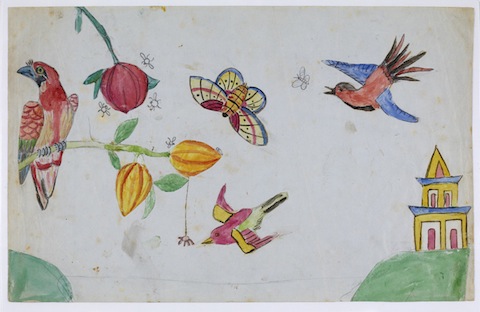
It seems a good bet young Fran­cis Dar­win’s water­col­or of birds, bugs and a but­ter­fly con­verg­ing on a trio of botan­i­cal­ly viable flow­ers (above) would’ve done his nat­u­ral­ist papa proud.

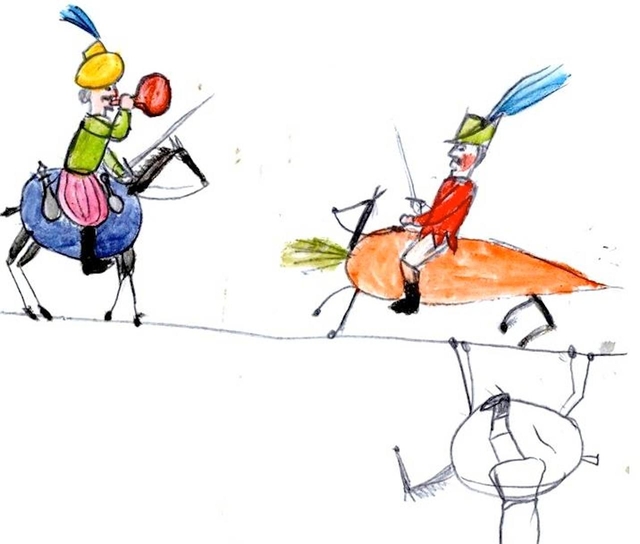
I can also state with near-sci­en­tif­ic cer­tain­ty that if the Dar­wins had had a refrig­er­a­tor, The Bat­tle of the Fruit and Veg­etable Sol­diers (top) would have been on it. Today, Fran­cis’ masterpiece—and its flipside—reside in the Cam­bridge Uni­ver­si­ty Library.

via The Tele­graph

Relat­ed Con­tent:

Watch Dar­win, a 1993 Film by Peter Green­away

Read the Orig­i­nal Let­ters Where Charles Dar­win Worked Out His The­o­ry of Evo­lu­tion

The Genius of Charles Dar­win Revealed in Three-Part Series by Richard Dawkins

Darwin’s Per­son­al Library Goes Dig­i­tal: 330 Books Online

Darwin’s Lega­cy, a Stan­ford course in our col­lec­tion of 750 Free Online Cours­es

Ayun Hal­l­i­day remem­bers her grand­moth­er was very impressed by her abil­i­ty to  draw Huck­le­ber­ry Finn with his legs crossed. Fol­low her @AyunHalliday

Be His Guest: David Sedaris at Home in Rural West Sussex, England

Note:  Watch the entire 25-minute inter­view here. There’s a brief intro­duc­tion in Dutch, after which the con­ver­sa­tion switch­es to Eng­lish.

Dutch TV jour­nal­ist Wim Brands looks a bit dour to be inhab­it­ing the role of World’s Luck­i­est Man, but that’s sure­ly how bazil­lions of David Sedaris fans will view him, wish­ing they too had been invit­ed to cozy up to their favorite author’s kitchen table. Par­tic­u­lar­ly since that table is sit­u­at­ed in the rus­tic, six­teenth-cen­tu­ry West Sus­sex house that pro­vid­ed the set­ting for “Com­pa­ny Man”, one of his more delight­ful New York­er sto­ries of late.

Sedaris has made a for­tune pass­ing him­self off as a self-involved fuss-pot, but in this episode of Boeken op Reis (Dutch for “Books on Tour”) he’s the per­fect host.

He sup­plies thought­ful respons­es to Brands’ unsmil­ing ques­tions and affa­bly points out the home­’s notable fea­tures, includ­ing off-kil­ter door­ways and a taxi­der­mied lap­dog (“We call him Casey because he’s in a case.”)

He brings a plas­tic bag on a stroll through the sur­round­ing coun­try­side in order to col­lect lit­ter  — an endear­ing rou­tine, even if it’s a scoop Brands must share with the BBC’s Clare Bald­ing.

Best of all, he oblig­es his guest with a cou­ple of live read­ings, the first from the afore­men­tioned  New York­er piece, the oth­er hav­ing to do with his youngest sis­ter’s sui­cide this sum­mer.

“I always fig­ure that what­ev­er most embar­rass­es you is some­thing that every­one can relate to,” he mus­es, effec­tive­ly sum­ming up the secret of his suc­cess. If you ever feel like Sedaris is over­do­ing the craven com­plain­er bit, this vis­it will set the record straight.

Watch the entire inter­view here. Non-Dutch speak­ers, please be advised that the seg­ment switch­es to Eng­lish once Brands sets the scene for his intend­ed audi­ence.

-Tip of the hat to Michael Ahn for the idea.

Ayun Hal­l­i­day’s teenage daugh­ter wrote David Sedaris a fan let­ter and David Sedaris sent a hand­writ­ten reply on a post­card. Classy!  Fol­low her @AyunHalliday

Relat­ed Con­tent:

David Sedaris Reads You a Sto­ry By Miran­da July

David Sedaris and Ian Fal­con­er Intro­duce “Squir­rel Seeks Chip­munk”

Thelonious Monk Plays Duke Ellington: Solo Piano, Berlin 1969

In Novem­ber of 1969 Thelo­nious Monk appeared at the Berlin­er Jaz­ztage (“Berlin Jazz Days,” now known as Jaz­zFest Berlin) and played a series of Duke Elling­ton pieces on solo piano. Monk brought his own quirky genius — his jagged-edged, per­cus­sive play­ing style and har­mon­ic dis­so­nance — to Elling­ton’s ele­gant melodies. The result was mag­ic.

In the video above, Monk plays four com­po­si­tions by Elling­ton — “Satin  Doll,” “Sophis­ti­cat­ed Lady,” “Car­a­van” and “Soli­tude” — fol­lowed by one of his own, “Cre­pus­cule With Nel­lie,” before join­ing the Joe Turn­er Trio in a per­for­mance of “Blues for Duke.” The trio includes Turn­er on Piano, Hans Ret­ten­bach­er on bass and Stu Mar­tin on drums. The per­for­mances are avail­able on the DVD Monk Plays Elling­ton: Solo Piano in Berlin ’69.

Relat­ed con­tent:

Thelo­nious Monk: Straight No Chas­er

Advice From the Mas­ter: Thelo­nious Monk Scrib­bles a List of Tips for Play­ing a Gig

Duke Elling­ton Plays for Joan Miró in the South of France, 1966: Bassist John Lamb Looks Back on the Day

Free Audio: Bryan Cranston, Breaking Bad Star, Reads First Chapter of The Things They Carried

cranston reads

If you’re going through Break­ing Bad with­draw­al, here’s a small way to fill the void. Audible.com has made avail­able a record­ing of Bryan Cranston, the actor behind Wal­ter White, read­ing the first chap­ter from The Things They Car­ried, Tim O’Brien’s famous sto­ry col­lec­tion that offers a chill­ing, boots-on-the-ground por­tray­al of sol­diers’ expe­ri­ence dur­ing the Viet­nam War. A final­ist for the 1990 Pulitzer Prize and the Nation­al Book Crit­ics Cir­cle Award, the book has sold over 2 mil­lion copies world­wide and is now a sta­ple of col­lege and high school Eng­lish class­es across Amer­i­ca. Cranston’s read­ing runs over 47 min­utes.

Cranston actu­al­ly nar­rates the entire book, and if you’re inter­est­ed in down­load­ing it, there’s a way to do it for free. Just head over to Audible.com and reg­is­ter for a 30-day free tri­al. You can down­load any audio book for free, includ­ing The Things They Car­ried. Then, when the tri­al is over, you can con­tin­ue your Audi­ble sub­scrip­tion, or can­cel it, and still keep the audio book. The choice is  yours. And, in full dis­clo­sure, let me tell you that we have a nice arrange­ment with Audi­ble. When­ev­er some­one signs up for their amaz­ing ser­vice, it helps sup­port Open Cul­ture. Get more infor­ma­tion on Audi­ble’s free tri­al here.

Also don’t miss our col­lec­tion, 1,000 Free Audio Books: Down­load Great Books for Free. It’s a price­less resource.

by | Permalink | Make a Comment ( 2 ) |

Mark Twain Plays With Electricity in Nikola Tesla’s Lab (Photo, 1894)

Mark-Twain-Nikola-Tesla-Laboratory-1894

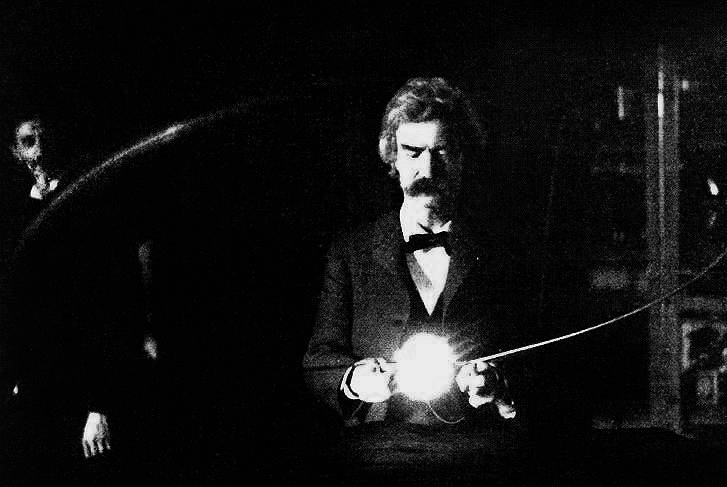
You’ll get a charge out this pic­ture tak­en long ago. It cap­tures Mark Twain, a lit­er­ary giant of the 19th cen­tu­ry, tin­ker­ing in the lab­o­ra­to­ry of the great inven­tor, Niko­la Tes­la. Accord­ing to the Uni­ver­si­ty of Vir­ginia, the pho­to was tak­en in the spring of 1894, when Cen­tu­ry Mag­a­zine pub­lished an arti­cle called “Tes­la’s Oscil­la­tor and oth­er Inven­tions.” Still avail­able online, the arti­cle begins:

[Mr. Tes­la] invites atten­tion to-day, whether for pro­found inves­ti­ga­tions into the nature of elec­tric­i­ty, or for beau­ti­ful inven­tions in which is offered a con­crete embod­i­ment of the lat­est means for attain­ing the ends most sought after in the dis­tri­b­u­tion of light, heat, and pow­er, and in the dis­tant com­mu­ni­ca­tion of intel­li­gence.  Any one desirous of under­stand­ing the trend and scope of mod­ern elec­tri­cal advance will find many clues in the work of this inven­tor.  The present arti­cle dis­clos­es a few of the more impor­tant results which he has attained, some of the meth­ods and appa­ra­tus which he employs, and one or two of the the­o­ries to which he resorts for an expla­na­tion of what is accom­plished.

Below, we’ve got more vin­tage Twain (includ­ing Twain top­less), plus some choice Tes­la picks:

Mark Twain Shirt­less in 1883 Pho­to

Mark Twain Drafts the Ulti­mate Let­ter of Com­plaint (1905)

Mark Twain Cap­tured on Film by Thomas Edi­son in 1909. It’s the Only Known Footage of the Author

Thomas Edi­son and Niko­la Tes­la Face Off in “Epic Rap Bat­tles of His­to­ry”

“Sweet Home Alaba­ma” Played on Tes­la Coils

by | Permalink | Make a Comment ( 4 ) |

« Go BackMore in this category... »
Quantcast