In Touching Video, Artist Marina Abramović & Former Lover Ulay Reunite After 22 Years Apart

In 2010, Ser­bian artist Mari­na Abramović had the hon­or of being the sub­ject of a pop­u­lar ret­ro­spec­tive at New York’s Muse­um of Mod­ern Art. Through­out the show, Abramović per­formed a gru­el­ing piece enti­tled “The Artist Is Present,” sit­ting in the museum’s atri­um and invit­ing the swelling crowds of view­ers to sit direct­ly oppo­site her, in silent dia­logue. Abramović was no stranger to chal­leng­ing per­for­mances. By the time that MoMA staged the ret­ro­spec­tive, the then 63-year-old artist had engaged in count­less tax­ing exhi­bi­tions, earn­ing her self-giv­en title, “the grand­moth­er of per­for­mance art.”

In her first per­for­mance at 27, Abramović explored the idea of rit­u­al by play­ing a knife game on cam­era, stab­bing the sur­face between her splayed fin­gers with a knife and occa­sion­al­ly hurt­ing her­self; she would then watch a video record­ing of the vio­lence, and attempt to repli­cate it. Sub­se­quent per­for­mances includ­ed her explo­rations of con­scious­ness through the inges­tion of pills for cata­to­nia and depres­sion; anoth­er com­prised a 1974 incar­na­tion of her MoMA per­for­mance, where Abramović  sat pas­sive­ly before a table lit­tered with objects for six hours, invit­ing the audi­ence to put them to use on her per­son (of this piece, Abramović says, “What I learned was that… if you leave it up to the audi­ence, they can kill you… I felt real­ly vio­lat­ed: they cut up my clothes, stuck rose thorns in my stom­ach…”)

In 1976, Abramović  met Ulay, a West Ger­man artist who would become her lover and col­lab­o­ra­tor for the next twelve years. The duo fell into an imper­son­al abyss, los­ing their self­hoods and attempt­ing to become a sin­gle enti­ty through arrest­ing per­for­mances such as Breath­ing In/Breathing Out, where they locked mouths and breathed each other’s exhaled breath, even­tu­al­ly fill­ing their lungs with car­bon monox­ide and falling uncon­scious. By 1988, their romance had run its course; in typ­i­cal­ly atyp­i­cal fash­ion, the pair decid­ed to part by walk­ing from oppos­ing ends of the Great Wall of Chi­na until they met in the mid­dle, and then said good­bye.

On the open­ing night of Abramović’s ret­ro­spec­tive in 2010, the erst­while lovers were reunit­ed. The video above shows Abramović, sit­ting and steel­ing her­self for her next silent inter­locu­tor. Ulay approach­es, and Abramović, a vet­er­an of such dif­fi­cult per­for­mances, looks up to what may have been the sin­gle most unex­pect­ed sight of the night, jolt­ing her dig­ni­fied com­po­sure. Their reunion is a deeply ten­der scene.

Relat­ed Con­tent:

John Waters: The Point of Con­tem­po­rary Art

Jack­son Pol­lock 51: Short Film Cap­tures the Painter Cre­at­ing Abstract Expres­sion­ist Art

Free: The Guggen­heim Puts 65 Mod­ern Art Books Online

Ilia Blin­d­er­man is a Mon­tre­al-based cul­ture and sci­ence writer. Fol­low him at @iliablinderman.

Slavoj Žižek on the Feel-Good Ideology of Starbucks

Back in 2010, we pre­sent­ed an ani­mat­ed video where Slavoj Ĺ˝iĹľek, our favorite Sloven­ian the­o­rist, iden­ti­fied a new trend in mod­ern cap­i­tal­ism. Nowa­days, mar­keters have found a crafty way to rework Max Weber’s Protes­tant Eth­ic. They tell us we can achieve per­son­al redemp­tion not through hard work and amass­ing sav­ings, but by con­sum­ing the right prod­ucts. When you buy eco-friend­ly prod­ucts, fair trade goods, or prod­ucts that yield some kind of char­i­ta­ble div­i­dend, you don’t have to think twice about the cost of your con­sumerism. Not when you’ve done some good and earned your­self some good cap­i­tal­ist kar­ma.

This line of think­ing returns in Ĺ˝iĹľek’s new film The Per­vert’s Guide to Ide­ol­o­gy, where, once again, he focus­es on one of the world’s most effec­tive mar­ket­ing oper­a­tions, Star­bucks. This, after hav­ing seem­ing­ly imbibed a “Ven­ti” or “Trenta” por­tion of the prod­uct.

To drill deep­er into Zizek’s thoughts on this sub­ject, see his 30-minute lec­ture “First as Tragedy, Then as Farce.” For more clips from his new film, see our recent posts:

Slavoj Žižek Exam­ines the Per­verse Ide­ol­o­gy of Beethoven’s Ode to Joy

Slavoj Žižek’s Pervert’s Guide to Ide­ol­o­gy Decodes The Dark Knight and They Live

via Bib­liok­lept

by | Permalink | Make a Comment ( 5 ) |

Sergei Eisenstein’s Seminal Battleship Potemkin Gets a Soundtrack by Pet Shop Boys

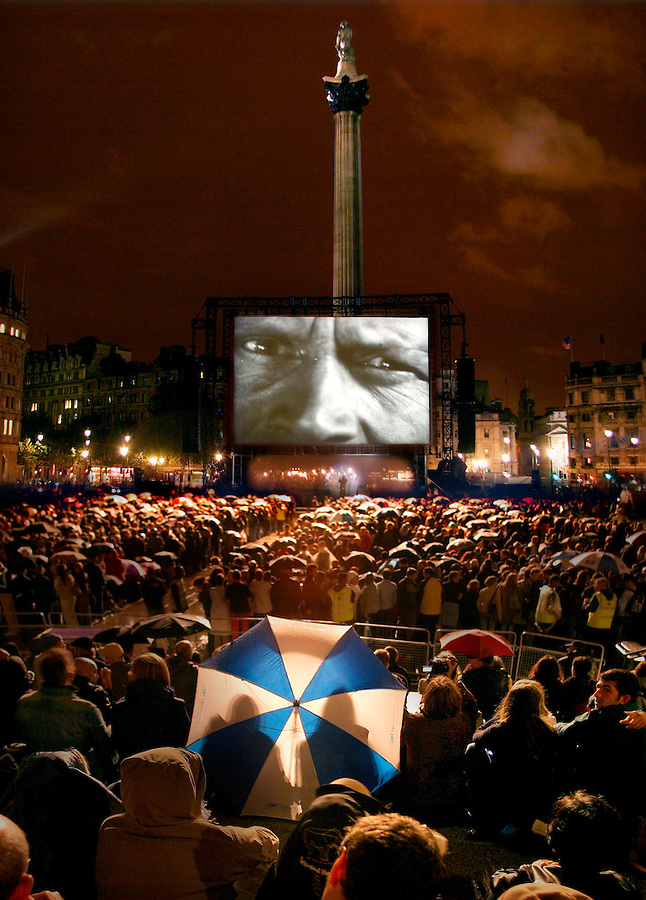
'Battleship Potemkin' Film Showing, Trafalgar Square, London.

Like many philistines, my famil­iar­i­ty with Sergei Eisen­stein’s silent mas­ter­piece, Bat­tle­ship Potemkin—hailed by Cracked mag­a­zine as the “longest 70 min­utes of com­mu­nist pro­pa­gan­da every first year film school stu­dent will ever be forced to watch” —was large­ly lim­it­ed to par­o­dies of and homages to its famous “Odessa Steps” sequence.

The orig­i­nal scene is absolute­ly hor­ri­fy­ing. There’s a rea­son this silent film nev­er gets pro­ject­ed on the back walls of piz­za par­lors for the enter­tain­ment of wait­ing cus­tomers. I can also see why it has spooked var­i­ous gov­ern­ments. The dra­mat­ic tram­pling of chil­dren and shoot­ing of young moth­ers and old ladies def­i­nite­ly could spur cit­i­zens to action. (It’s impor­tant to note here that the famous scene is not a fac­tu­al retelling. Eisen­stein, the father of mon­tage, com­bined a num­ber of inci­dents, set­ting them in such a mem­o­rable loca­tion that this mas­sacre eas­i­ly pass­es for a mat­ter of his­toric record.)

This 1920s clip fea­tures a score bor­rowed from Shostakovich. What might be the effect with a sound­track sup­plied by the elec­tron­ic duo Pet Shop Boys? (Can’t wait to find out? Click here.)

I’m not kid­ding. In 2004, Lon­don’s Insti­tute of Con­tem­po­rary Arts invit­ed band­mates Neil Ten­nant and Chris Lowe to com­pose a new score to be per­formed with Dres­d­ner Sin­foniker at a screen­ing in Trafal­gar Square. To no one’s sur­prise, they went with an elec­tro-prog sound. What would the film­mak­er, who died in 1948, have made of that?

In order to make an edu­cat­ed guess, let’s turn to crit­ic and film his­to­ri­an Roger Ebert, who attend­ed a more mod­est screen­ing in Three Oaks, Michi­gan, fea­tur­ing a live, orig­i­nal sound­track by local band Con­crete. (Who knew com­pos­ing music for this near 90-year-old film would turn out to be such a thing?) Ebert approved of Con­crete’s use of “key­boards, half-heard snatch­es of speech, cries and choral pas­sages, per­cus­sion, mar­tial airs and found sounds… played loud, by musi­cians who saw them­selves as Eisen­stein’s col­lab­o­ra­tors, not his meek accom­pa­nists.”

We may not be able to scare up fur­ther doc­u­men­ta­tion of Con­crete’s work, but you can view the film in its entire­ty with its Pet Shop Boys score. Their sound­track is also avail­able for pur­chase by those who would lis­ten to it on its own mer­its.

You can find the orig­i­nal Bat­tle­ship Potemkin here or in our col­lec­tion of 600 Free Movies Online. And if you’re inter­est­ed in anoth­er remix of a silent clas­sic, please see The Pix­ies’ Black Fran­cis Cre­ates a Sound­track for the Famous Ger­man Expres­sion­ist Film, The Golem

via Metafil­ter

Relat­ed Con­tent: 

Watch Ten of the Great­est Silent Films of All Time — All Free Online

The Pow­er of Silent Movies, with The Artist Direc­tor Michel Haz­anavi­cius

Ayun Hal­l­i­day’s most recent book is Peanut,  a graph­ic nov­el about a girl who fakes a peanut aller­gy. @AyunHalliday

« Go Back
Quantcast

