Storm: New Short Film Captures the Artistry of Winemaking

In many ways food—its pro­duc­tion, prepa­ra­tion and consumption—is the hottest art form today. Chefs are like celebri­ty auteurs, revered for their pas­sion and ded­i­ca­tion. We even watch real­i­ty tele­vi­sion shows about the dra­ma of com­mer­cial restau­rant kitchens.

The newest doc­u­men­tary by Daniel Addel­son puts anoth­er one of these artists in the spot­light. Addelson’s new film Storm fol­lows vint­ner Ernst Storm, a native of South Africa who makes wine in the San­ta Ynez Val­ley near San­ta Bar­bara, through a fall grape har­vest. The film is as earthy, bright and moody as the beau­ti­ful land where it is set. Storm tromps around his land in shorts and boots and a hat oper­at­ing fork lifts and hoist­ing pitch­forks full of grapes into huge tubs. We also see him in the lab, track­ing the chem­i­cal trans­ac­tions tak­ing place in his cur­rent batch.

The movie doesn’t shy away from the indus­tri­al side of wine­mak­ing, all the hoses and vats and stain­less steel casks.  But Storm’s voiceover reminds us that behind the heavy lift­ing is the dream of coax­ing some­thing plea­sur­able out of nature’s boun­ty.

Storm will pre­miere at the Sono­ma Film Fes­ti­val in April. Clock­ing in just over eight min­utes, Storm con­veys the hard work of mak­ing wine, the soli­tude and the fun. Most of all the film con­veys the craft’s artistry. The sen­su­al stuff—the smells and col­ors and flavors—are what dri­ve Storm’s affec­tion for process. He is dis­cern­ing and atten­tive. We see him climb­ing to the top bar­rel in a high pyra­mid, with a glass and a fan­cy turkey baster in hand. Remov­ing the big cork, Storm sucks out a bit and swish­es it around in his glass, then tast­ing it to see how things are going. Each vari­ety must be cared for, he says.

As a film­mak­er Addel­son isn’t mak­ing a com­mer­cial for Storm Wines. He’s inter­est­ed in the ingre­di­ents that make for a cre­ative person—the per­se­ver­ance, pas­sion and atten­tion to detail nec­es­sary to fol­low an idea through.

He will pick up this thread again in his next film, which looks at the ben­e­fits of teach­ing char­ac­ter to chil­dren in school.

Kate Rix writes about dig­i­tal media and edu­ca­tion. Read more of her work at .

33 Sci-Fi Stories by Philip K. Dick as Free Audio Books & Free eBooks

PKD

Image by Pete Wesch, via Wiki­me­dia Com­mons

Although he died when he was only 53 years old, Philip K. Dick (1928 – 1982) pub­lished 44 nov­els and 121 short sto­ries dur­ing his life­time and solid­i­fied his posi­tion as the most lit­er­ary of sci­ence fic­tion writ­ers. His nov­el Ubik appears on TIME magazine’s list of the 100 best Eng­lish-lan­guage nov­els, and Dick is the only sci­ence fic­tion writer to get hon­ored in the pres­ti­gious Library of Amer­i­ca series, a kind of pan­theon of Amer­i­can lit­er­a­ture.

If you’re not inti­mate­ly famil­iar with his nov­els, then you assured­ly know major films based on Dick’s work – Blade Run­nerTotal Recall, A Scan­ner Dark­ly and Minor­i­ty Report. Today, we bring you anoth­er way to get acquaint­ed with his writ­ing. We’re pre­sent­ing a selec­tion of Dick’s sto­ries avail­able for free on the web. Below we have culled togeth­er 33 short sto­ries from our two col­lec­tions, 800 Free eBooks for iPad, Kin­dle & Oth­er Devices and 1,000 Free Audio Books: Down­load Great Books for Free. The sto­ries, it appears, are all in the pub­lic domain.

NOTE:  The recent update to this page was assist­ed by this help­ful resource at SFF Audio, which has researched the pub­lic domain sta­tus of many PKD sto­ries and amassed a handy list.

eTexts (find down­load instruc­tions here)

Audio

Relat­ed Con­tent:

Free: Isaac Asimov’s Epic Foun­da­tion Tril­o­gy Dra­ma­tized in Clas­sic Audio

Neil Gaiman’s Free Short Sto­ries and New Year’s Wish­es

Ray Brad­bury Offers 12 Essen­tial Writ­ing Tips and Explains Why Lit­er­a­ture Saves Civ­i­liza­tion

by | Permalink | Make a Comment ( 10 ) |

Support The Public Domain Review

The Pub­lic Domain Review is a not-for-prof­it project ded­i­cat­ed to show­cas­ing the most inter­est­ing and unusu­al arte­facts in the his­to­ry of art, lit­er­a­ture and ideas — all of which have fall­en into the pub­lic domain and so are free for every­one to enjoy, reuse and share. Start­ed in 2011, the site has cre­at­ed a large and ever grow­ing archive of the beau­ti­ful and bizarre. High­lights from their col­lec­tions include a ghost­ly series of decayed daguer­rotypes, a dic­tio­nary of Vic­to­ri­an slang, a set of 19th cen­tu­ry French post­cards of the year 2000, and a 1930s Michi­gan farmer play­ing the tune of Yan­kee Doo­dle with “hand-farts”.

In addi­tion to show­cas­ing their picks from the world’s dig­i­tal archives, The Pub­lic Domain Review pro­vides a plat­form for lead­ing writ­ers, schol­ars and cura­tors to write about the things they love. A whole host of weird and won­der­ful top­ics are cov­ered, includ­ing an Ital­ian car­di­nal who could speak over 70 lan­guages,  Ger­ard Man­ley Hopkins’s soar­ing mete­o­rol­o­gy of vol­cano sun­sets, Thomas Browne’s list of imag­i­nary arte­facts, and, in an arti­cle from Man Book­er prize win­ner Julian Barnes, a tale of strange encoun­ters with mon­key-eat­ing poets.

It’s a great project, and it needs your sup­port to con­tin­ue. With their ini­tial fund­ing now com­ing to an end, The Pub­lic Domain Review is turn­ing to its com­mu­ni­ty of read­ers to help it con­tin­ue to tell the world about the impor­tance of the pub­lic domain. If you’d like to see the project con­tin­ue, then they need your dona­tions. If you make a dona­tion of $40 or more you’ll get a rather won­der­ful look­ing Tote Bag. Learn more about the cam­paign and donate on their sup­port page. Again, click here to give The Pub­lic Domain Review your sup­port!

by | Permalink | Make a Comment ( 1 ) |

Michael Sandel’s Famous Harvard Course on Justice Launches as a MOOC on Tuesday

Back in 2009, Har­vard polit­i­cal philoso­pher Michael Sandel made his course, Jus­tice: What’s the Right Thing to Do?, avail­able on the web for free (YouTube — iTunes — Web). Sud­den­ly life­long learn­ers around the world had access to a pop­u­lar course enjoyed by more than 14,000 Har­vard stu­dents over 30 years. Start­ing this Tues­day, Sandel plans to offer Jus­tice as a free course through edX, the provider of MOOCs (or Mas­sive Open Online Cours­es) cre­at­ed by Har­vard and MIT. And here’s one thing you can guar­an­tee: In a sin­gle offer­ing, Sandel will bring his course to more stu­dents world­wide than he did through his decades teach­ing at Har­vard. You can enroll and reserve your free seat here. Stu­dents who receive a pass­ing grade in the course can earn a cer­tifi­cate of mas­tery, which will bear the name Har­vardX.

Jus­tice has been added to our every grow­ing list of MOOCs from Great Uni­ver­si­ties.

Relat­ed Con­tent:

Wal­ter Lewin, the Orig­i­nal Star of Open Edu­ca­tion, Returns with a Brand New Physics MOOC

Get Ready for MIT’s “Intro­duc­tion to Biol­o­gy: The Secret of Life” on edX

Har­vard and MIT Cre­ate EDX to Offer Free Online Cours­es World­wide

Learn to Code with Harvard’s Intro to Com­put­er Sci­ence Course And Oth­er Free Tech Class­es

by | Permalink | Make a Comment ( 3 ) |

Can’t Get That Song Out of My Head: An Animation of a Psychological Phenomenon We All Know

You know what it feels like when, no mat­ter how hard you try to shake it, you can’t get that song out of your head. Psy­chol­o­gists have a tech­ni­cal name for this phe­nom­e­non. They call it an “ear­worm,” refer­ring to those songs that “arrive with­out per­mis­sion and refuse to leave when we tell them to.” In the video above, the Dan­ish design agency Ben­ny Box has cre­at­ed a short ani­mat­ed film — called Jazz that nobody asked for — that serves as an “ode to all those unwant­ed songs out there, that have nowhere to go.” The music taunt­ing the main char­ac­ter is “Quak­er City Jazz” (1937) by Jan Savitt and His Top Hat­ters Orches­tra. If you’ve had your own ear­worm — your own mad­den­ing sound­track for this film — let us know in the com­ments sec­tion below.

Relat­ed Con­tent:

Clas­sic Jazz Album Cov­ers Ani­mat­ed, or the Re-Birth of Cool

Ker­mit the Frog Learns to Love Jazz Through “Visu­al Think­ing” (1959)

Jazz Toons: Allen Mezquida’s Jour­ney from Bebop to Smigly

by | Permalink | Make a Comment ( 12 ) |

The Physics Professor, the Glamour Model, and a Whole Suitcase Full of Trouble

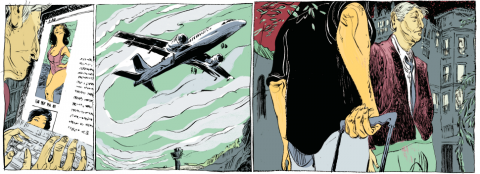
framptondrawingFrom the annals of Why Smart Peo­ple Do Dumb Things: The New York Times has a long piece on Paul Framp­ton, a the­o­ret­i­cal physi­cist at the Uni­ver­si­ty of North Car­oli­na-Chapel Hill, who meets a Czech mod­el online, then, rather gullibly, trav­els to South Amer­i­ca to get to know her in per­son. Instead of find­ing love in La Paz, Framp­ton winds up in a dilap­i­dat­ed Buenos Aires prison. It’s a bizarre tale, a sto­ry of hubris, naivete, lust, and decep­tion all rolled into one. Grab a cof­fee, set aside some time, and have a read.

Find us on Face­bookTwit­ter and Google Plus and we’ll deliv­er our posts right to your vir­tu­al doorstep. Or sign up for our Dai­ly Email!

by | Permalink | Make a Comment ( 1 ) |

Charlie Parker Plays with Dizzy Gillespie in the Only Footage Capturing the “Bird” in True Live Performance

Here’s a his­toric TV broad­cast of the found­ing fathers of bebop, Char­lie Park­er and Dizzy Gille­spie, play­ing togeth­er in 1952. It’s one of only two known sound films of Park­er playing–and the only one of him play­ing live, rather than synch­ing to a pre­re­cord­ed track.

The per­for­mance is from a Feb­ru­ary 24, 1952 broad­cast on the pio­neer­ing DuMont Tele­vi­sion Net­work. The full seg­ment begins with a brief cer­e­mo­ny in which Park­er and Gille­spie receive awards from Down Beat mag­a­zine, but the clip above cuts straight to the music: a per­for­mance of the bebop stan­dard “Hot House,” com­posed by Tad Dameron around the har­mon­ic struc­ture of Cole Porter’s “What Is This Thing Called Love?.”

The quin­tet includes Park­er on alto sax­o­phone, Gille­spie on trum­pet, Sandy Block on bass, Char­lie Smith on drums and Dick Hyman on piano.

It was Hyman, who had played with Park­er and had his own night­ly show on the DuMont net­work, who helped orga­nize the appear­ance. In a 2010 inter­view with Jazz­Wax, Hyman talked about what it was like play­ing on the show with Park­er and Gille­spie. “It was togeth­er,” he said. “Those guys played with such a good time and feel. It’s a ter­rif­ic per­for­mance con­sid­er­ing it was a pop show with just two cam­eras.”

If you would like to sup­port the mis­sion of Open Cul­ture, con­sid­er mak­ing a dona­tion to our site. It’s hard to rely 100% on ads, and your con­tri­bu­tions will help us con­tin­ue pro­vid­ing the best free cul­tur­al and edu­ca­tion­al mate­ri­als to learn­ers every­where. You can con­tribute through Pay­Pal, Patre­on, and Ven­mo (@openculture). Thanks!

Relat­ed Con­tent:

Jean-Paul Sartre on How Amer­i­can Jazz Lets You Expe­ri­ence Exis­ten­tial­ist Free­dom & Tran­scen­dence

The Nazis’ 10 Con­trol-Freak Rules for Jazz Per­form­ers: A Strange List from World War II

Mis­ter Rogers Turns Kids On to Jazz with Help of a Young Wyn­ton Marsalis and Oth­er Jazz Leg­ends (1986)

Jazz ‘Hot’: The Rare 1938 Short Film With Jazz Leg­end Djan­go Rein­hardt

Watch The Band Play “The Weight,” “Up On Cripple Creek” and More in Rare 1970 Concert Footage

In the late-six­ties/ear­ly sev­en­ties, a new genre—pioneered by CSNY, Gram Par­sons, Dylan, the Grate­ful Dead, and a host of others—brought down-home coun­try sounds to main­stream rock audi­ences. So-called “Coun­try Rock,” how­ev­er, most­ly emanat­ed from a Los Ange­les scene that grew far­ther from both coun­try and rock and strayed into easy lis­ten­ing ter­ri­to­ry (or “Yacht-rock”; think late-peri­od Eagles), or jam-band land. But one band nev­er dis­solved into soft rock or aging psy­che­delia: The Band. The four hard-work­ing Cana­di­ans and a man from Arkansas named Lev­on Helm took their coun­try sound more from Helm’s home­town of Turkey Scratch than Lau­rel Canyon. The Band ignored almost every trend in con­tem­po­rary pop music and focused on tight­ly craft­ed, loose­ly-played songs that hewed close to the roots music that seem­ing­ly ran through their veins.

In 1970, when they played the con­cert record­ed above, the five unas­sum­ing mus­ta­chioed men also graced a Time mag­a­zine cov­er under the ban­ner “The New Sound of Coun­try Rock.” With songs like “Up on Crip­ple Creek” and “The Weight,” The Band earned the dis­tinc­tion. Their jour­ney brought them from back­ing band for rock­a­bil­ly singer Ron­nie Hawkins, then Bob Dylan, then final­ly emerg­ing on their own with their non­de­script name in 1968. The name says a lot about The Band’s ethos—there didn’t seem to be an ounce of van­i­ty in what they did, with each mem­ber con­tribut­ing to song­writ­ing and vocal duties. It might be said that the “coun­try” in their sound was pow­ered by drum­mer, man­dolin-play­er, and some­time lead singer Helm (they once briefly broke off from Hawkins and toured and record­ed as Lev­on and the Hawks), but The Band, and Lev­on, were also a top-notch blue-eyed soul singers, as you can hear clear­ly in their mid-six­ties out­put.

In the footage above, from a show at Pittsburgh’s Syr­ia Mosque, watch Helm, Rick Danko, Rob­bie Robert­son, Garth Hud­son, and Richard Manuel work their saloon-room country/soul mag­ic and smooth vocal har­monies on four songs: “Time to Kill,” “The Weight,” “This Wheel’s on Fire,” and “Up on Crip­ple Creek.” And don’t let the term “coun­try rock” put you off. You don’t have to like coun­try music to love what these guys do so well.

Relat­ed Con­tent:

Mar­tin Scors­ese Cap­tures Lev­on Helm and The Band Per­form­ing “The Weight” in The Last Waltz

The 1969 Bob Dylan-John­ny Cash Ses­sions: Twelve Rare Record­ings

Bob Dylan and The Grate­ful Dead Rehearse Togeth­er in Sum­mer 1987. Lis­ten to 74 Tracks

Josh Jones is a writer, edi­tor, and musi­cian based in Wash­ing­ton, DC. Fol­low him @jdmagness

« Go BackMore in this category... »
Quantcast