Muddy Waters, Howlin’ Wolf, Sister Rosetta Tharpe & Other American Blues Legends Perform in the UK (1963–66)


What is Amer­i­can music? Like most things it depends on who you ask. Who­ev­er it is, you’re bound at least to hear jazz… or coun­try, blues, and rock ‘n’ roll. You might even get those last three all at once. There was a brief time in the six­ties when we did, with the resur­gence of the coun­try blues, or folk blues, as it was called for the Amer­i­can Folk-Blues fes­ti­val, a long-run­ning Euro­pean tour of the Delta’s most revered names: Son­ny Boy Williamson, Mud­dy Waters, Lon­nie John­son, Big Joe Williams, Light­nin’ Hop­kins, Sug­ar Pie DeSan­to, Howl­in’ Wolf, Big Joe Turn­er, and Sis­ter Roset­ta Tharpe. And that’s only to name a very few. Just to get your feet wet, see all those names above per­form, in order. The footage was filmed for broad­cast on British TV between 1963 and 1966. Son­ny Boy Williams opens, strid­ing onstage in a dap­per suit, umbrel­la, bowler hat, and leather case. He takes his time arriv­ing, and in the pause between his announce­ment of “Keep It to Your­self” and the first note, he has com­plete­ly mes­mer­ized the audi­ence. Next Mud­dy Waters, with his easy charis­ma (at 5:10), deliv­ers “Got My Mojo Work­ing” like a rock ‘n’ roll hyp­no­tist, and leaves the crowd dazed.

The mojo works. Whether tra­di­tion­al acoustic or elec­tri­fied hybrid blues, you will get chills at least once dur­ing each song. That is, if you like Amer­i­can music. The British kids in the audi­ence sure did. At the tour’s first British stop, Man­ches­ter in 1962, Mick Jag­ger, Kei­th Richards, Bri­an Jones, and Jim­my Page were in the crowd. It’s said that in Lon­don, Erics Bur­don and Clap­ton watched the show. But while those young dudes invad­ed the States, the Folk Blues Tour kept rolling through Ger­many, France, the UK and points East, every year until 1972, then again from 1980 to 1985. A stag­ger­ing num­ber of those per­for­mances were record­ed and released on LP and CD. Scroll through this discog­ra­phy to get a sense of the embar­rass­ing wealth of blues the entire col­lec­tion rep­re­sents. As a bonus for col­lec­tors, the albums boast some of the coolest cov­ers to ever grace a live com­pi­la­tion. If these albums sound any­thing like the film com­pi­la­tion above, then they’ve cap­tured these musi­cians at their best—if also at times their least edgy and most com­posed. But it’s no won­der. For a great many of the blues artists rep­re­sent­ed, All­mu­sic crit­ic Bruce Elder notes, “these were the largest audi­ences they’d ever played to, and the first (and often only) decent mon­ey they ever made.”

Relat­ed Con­tent:

Crumb’s Heroes of Blues, Jazz & Coun­try Fea­tures 114 Illus­tra­tions of the Artist’s Favorite Musi­cians

Zep­pelin Took My Blues Away: An Illus­trat­ed His­to­ry of Zeppelin’s “Copy­right Indis­cre­tions”

Djan­go Rein­hardt Demon­strates His Gui­tar Genius in Rare Footage From the 1930s, 40s & 50s

Josh Jones is a writer and musi­cian based in Durham, NC. Fol­low him at @jdmagness.

Open Culture Picks Our 10 Avant-Garde Favorites on Ubuweb: Joyce, Borges, Sontag, Wittgenstein & More

samuelbeckett-ubuweb

If you know about Open Cul­ture, sure­ly you know about Ubuweb. If you don’t, its slo­gan says almost every­thing you need to know about it: “All Avant-Garde. All the Time.” This vast online repos­i­to­ry of cut­ting-edge cul­tur­al arti­facts from a vari­ety of eras also adheres stead­fast­ly to the prin­ci­ple of keep­ing all of its mate­r­i­al free: free in the sense of charg­ing you noth­ing to read, hear or view it, and free in the sense that you can do what­ev­er you want with it. Need­less to say, the site, found­ed by poet Ken­neth Gold­smith in 1996, has made many fans, and Ubuweb itself has tapped quite a few of the high­er-pro­file ones to curate top ten lists. Assem­bled by peo­ple like New York­er music crit­ic Alex Ross, nov­el­ists Hari Kun­zru and Rick Moodyalter­na-pop star Nick “Momus” Cur­rie, these help the poten­tial­ly (and under­stand­ably) bewil­dered find their way through the trove of Ubuwe­b’s media, which is uni­ver­sal­ly influ­en­tial and van­ish­ing­ly obscure, vis­cer­al­ly trans­gres­sive and ver­tig­i­nous­ly intel­lec­tu­al, eter­nal­ly excit­ing and delib­er­ate­ly bor­ing.

This month, Ubuweb called upon our fear­less edi­tor here at Open Cul­ture for a top ten list. Most of the picks have been pre­vi­ous­ly fea­tured on OC. The list runs as fol­lows:

1. Finnegans Wake (1939), Read by Patrick Healy
Open Cul­ture: Hear All of Finnegans Wake Read Aloud: A 35 Hour Read­ing

“The sheer plea­sure one can derive — con­ven­tion­al expec­ta­tions duly set aside — from the almost tac­tile qual­i­ty of Joyce’s prose, its earthy, ancient, elven sounds, seems more to the point of appre­ci­at­ing this odd, frus­trat­ing work. Per­haps, like any well-writ­ten poem, one sim­ply needs to hear it read aloud. Joyce him­self said so, and so you can.”

2. The Craft of Verse: Jorge Luis Borges’ Nor­ton Lec­tures, 1967–68
Open Cul­ture: Jorge Luis Borges’ 1967–8 Nor­ton Lec­tures On Poet­ry (And Every­thing Else Lit­er­ary)

“Near­ing both 70 years of age and total blind­ness, Borges nonethe­less gives a vir­tu­osi­cal­ly wide-rang­ing series of talks, freely reach­ing across forms, coun­tries, eras, and lan­guages with­out the aid of notes. Enti­tled ‘This Craft of Verse,’ these lec­tures osten­si­bly deal with poet­ry. Alas, like many lit­er­ary geeks, I know too lit­tle of poet­ry, but if Borges can’t moti­vate you to learn more, who can?”

3. Three Rare Films by Susan Son­tag
Open Cul­ture: The Film­mak­ing of Susan Son­tag & Her 50 Favorite Films (1977)

“Son­tag, they say, ‘sought to lib­er­ate art from inter­pre­ta­tion (which is a bit iron­ic, of course, for some­one who was essen­tial­ly an exalt­ed crit­ic). When it came to her own film, she made some­thing that intend­ed to delib­er­ate­ly con­found the notion that there was any sort of under­ly­ing mean­ing beyond exact­ly what the audi­ence was see­ing on the screen direct­ly in front of them.’ ”

4.  M.A. Num­mi­nen Sings Wittgen­stein (1983 / 1989)
Open Cul­ture: Lud­wig Wittgenstein’s Trac­ta­tus Gets Adapt­ed Into an Avant-Garde Com­ic Opera

“Giv­en the Trac­ta­tus’s fire­bomb­ing of an entire area of human endeav­or, it’s no sur­prise it hasn’t fared well in many tra­di­tion­al depart­ments, but that hasn’t stopped Wittgenstein’s work from find­ing pur­chase else­where, influ­enc­ing mod­ern artists like Jasper Johns, the Coen Broth­ers, and, not least sure­ly, Finnish avant garde com­pos­er and musi­cian M.A. Num­mi­nen. This odd char­ac­ter, who caused a stir in the 60s by set­ting sex guides to music, took it upon him­self to do the same for many of the Trac­ta­tus’s propo­si­tions, and the results are, well…. Lis­ten for your­self.”

5. Aldous Huxley’s Vision­ary Expe­ri­ence
Open Cul­ture: Aldous Hux­ley, Psy­che­delics Enthu­si­ast, Lec­tures About “the Vision­ary Expe­ri­ence” at MIT (1962)

“Hux­ley had already gained world­wide fame for his views on bet­ter liv­ing, which was some­times achieved, he believed, through psy­che­del­ic drugs. This might have already sound­ed like old hat in, say, the San Fran­cis­co of the late 1960s, let alone the 70s and onward, but in these record­ings Hux­ley says his piece in — I still can’t quite believe it — the MIT of the ear­ly 1960s. But diag­nosed a cou­ple years before with the can­cer that would claim his life the next, he had noth­ing to lose by spread­ing the word of his sub­stance-induced dis­cov­er­ies.”

6. Jacques Derrida’s Inter­view with Ornette Cole­man [PDF]
Open Cul­ture: Philoso­pher Jacques Der­ri­da Inter­views Jazz Leg­end Ornette Cole­man: Talk Impro­vi­sa­tion, Lan­guage & Racism (1997)

“Trans­lat­ing Coleman’s tech­nique into ‘a domain that I know bet­ter, that of writ­ten lan­guage,’ Der­ri­da ven­tures to com­pare impro­vi­sa­tion to read­ing, since it ‘doesn’t exclude the pre-writ­ten frame­work that makes it pos­si­ble.’ For him, the exis­tence of a framework—a writ­ten composition—even if only loose­ly ref­er­enced in a jazz per­for­mance, ‘com­pro­mis­es or com­pli­cates the con­cept of impro­vi­sa­tion.’ ”

7. Joey Ramone Sings a Piece by John Cage Adapt­ed from James Joyce’s Finnegans Wake: “The Won­der­ful Wid­ow of Eigh­teen Springs,”
Open Cul­ture: Hear Joey Ramone Sing a Piece by John Cage Adapt­ed from James Joyce’s Finnegans Wake

“Ramone’s inter­pre­ta­tion of the piece is enthralling sim­ply as a piece of record­ed music.  But it’s also a fas­ci­nat­ing piece of cul­tur­al his­to­ry, rep­re­sent­ing a con­flu­ence of the fore­most fig­ures in ear­ly twen­ti­eth cen­tu­ry mod­ernist lit­er­a­ture, mid-cen­tu­ry avant-garde music, and late cen­tu­ry punk rock.”

8. The Avant-Garde Project
Open Cul­ture: The Avant-Garde Project: An Archive of Music by 200 Cut­ting-Edge Com­posers, Includ­ing Stravin­sky, Schoen­berg, Cage & More

“Every sphere of record­ed music has its crate-dig­gers, those hap­py to flip through hun­dreds — nay, hun­dreds of thou­sands — of obscure, for­got­ten vinyl albums in search of their subgenre’s even obscur­er, more for­got­ten gems. This holds espe­cial­ly true, if not in num­ber than in avid­i­ty, for enthu­si­asts of the 20th-cen­tu­ry clas­si­cal-exper­i­men­tal-elec­troa­coustic tra­di­tion that The Avant-Garde Project takes as its preser­va­tion man­date.”

9. Alice Tok­las Reads Her Hashish Fudge Recipe
Open Cul­ture: Alice B. Tok­las Reads Her Famous Recipe for Hashish Fudge (1963)

“In this 1963 record­ing from Paci­fi­ca Radio, Tok­las reads her noto­ri­ous recipe. The snack ‘might pro­vide an enter­tain­ing refresh­ment for a Ladies’ Bridge Club or a chap­ter meet­ing of the DAR,’ Tok­las notes in her reedy, dig­ni­fied voice.”

10. Jean Bau­drillard Sings!
Open Cul­ture: Jean Bau­drillard Reads His Poet­ry, Backed By All-Star Arts Band (1996)

“Known to hip aca­d­e­m­ic types and avant-garde-ists, Bau­drillard’s maybe the kind of thinker who gets name-dropped more than read (and he’s no easy read). But in the audio clip above, he reads to us, from his poet­ry no less, while backed by the swirling abstract sounds of The Chance Band. It’s an odd, one-time, assem­blage of artists and thinkers Ubuweb describes as ‘unbe­liev­able but true!’ ”

If you’ve already seen every­thing on it, con­grat­u­la­tions: you can con­sid­er your­self a true, shall we say, OC OG.

Relat­ed Con­tent:

Avant-Garde Media: The UbuWeb Col­lec­tion

Exten­sive Archive of Avant-Garde & Mod­ernist Mag­a­zines (1890–1939) Now Avail­able Online

Take a Vir­tu­al Tour of the 1913 Exhi­bi­tion That Intro­duced Avant-Garde Art to Amer­i­ca

Col­in Mar­shall hosts and pro­duces Note­book on Cities and Cul­ture and writes essays on cities, lan­guage, Asia, and men’s style. He’s at work on a book about Los Ange­les, A Los Ange­les Primer. Fol­low him on Twit­ter at @colinmarshall or on Face­book.

A Free Cartoon Biography of Ayn Rand: Her Life & Thought

rand cartoon bio

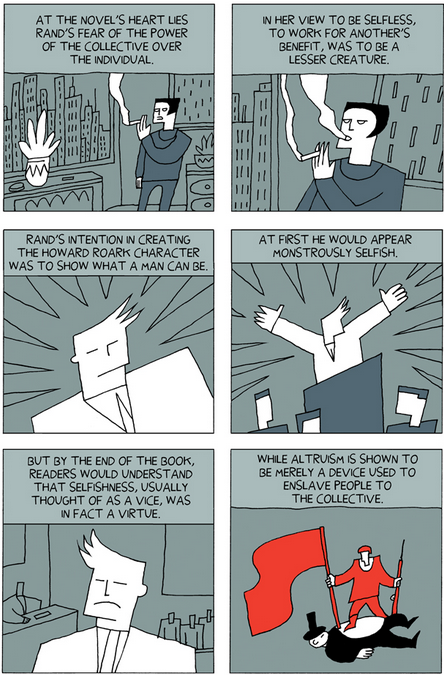
Ayn Rand is one of the most divi­sive fig­ures in 20th Cen­tu­ry Amer­i­can thought. In some cir­cles, par­tic­u­lar­ly on Wall Street and in Wash­ing­ton DC think tanks, she’s seen as a patron saint of lais­sez faire cap­i­tal­ism. She preached the virtues of indi­vid­u­al­ism and decried gov­ern­ment hand­outs and tax­es before it was cool, after all. In oth­er cir­cles, her best­selling books are thought to be lit­tle more than jus­ti­fi­ca­tions of socio­path­ic behav­ior couched in stilt­ed, preachy prose. Whit­tak­er Cham­bers famous­ly dis­missed her final book, Atlas Shrugged, in a review for William F. Buck­ley’s Nation­al Review: “Out of a life­time of read­ing, I can recall no oth­er book in which a tone of over­rid­ing arro­gance was so implaca­bly sus­tained. Its shrill­ness is with­out reprieve. Its dog­ma­tism is with­out appeal.”

Yet Rand’s thought found a great deal of appeal among Amer­i­can con­ser­v­a­tives. Alan Greenspan, the for­mer head of the Fed­er­al Reserve, was a mem­ber of Rand’s inner cir­cle. For­mer vice pres­i­den­tial can­di­date Paul Ryan and like­ly pres­i­den­tial con­tender Rand Paul are both not­ed fol­low­ers. Whether you agree with her or not, Rand is some­one you need to under­stand if you want to get a sense of what’s going on with Amer­i­can pol­i­tics. So for those of you who might blanche at the thought of wad­ing through one of her phone­book-sized tomes, check out Dar­ryl Cunningham’s car­toon biog­ra­phy of Rand.

Cun­ning­ham traces her life — her family’s loss of wealth and prop­er­ty at the hands of the Bol­she­viks dur­ing the Russ­ian Rev­o­lu­tion, her immi­gra­tion to Amer­i­ca at age 21, and her even­tu­al rise in fame and for­tune. Ele­gant­ly and con­cise­ly, Cun­ning­ham not only lays out Rand’s phi­los­o­phy but also paints a com­plex por­trait of a deeply con­tra­dic­to­ry per­son. All with the help of car­toons.

Rand preached the virtue of indi­vid­u­al­i­ty but she ruth­less­ly excom­mu­ni­cat­ed any­one in her cult-like inner cir­cle who devi­at­ed from her ide­ol­o­gy. She praised rea­son over emo­tion but her spec­tac­u­lar­ly com­pli­cat­ed per­son­al life was rid­dled with pet­ty jeal­ousies and long sim­mer­ing feuds. She abhorred gov­ern­ment aid for the poor but she lived on Social Secu­ri­ty at the end of her life. And per­haps strangest of all, con­sid­er­ing the cur­rent Amer­i­can polit­i­cal cli­mate, Rand vocal­ly sup­port­ed both athe­ism and abor­tion rights, but she has been utter­ly embraced by the Amer­i­can right.

You can see a page of Cunningham’s work above, or you can read his entire work, 66 pages of com­ic good­ness, at ACT-I-VATE.

via io9

Relat­ed Con­tent:

The His­to­ry of Eco­nom­ics & Eco­nom­ic The­o­ry Explained with Comics, Start­ing with Adam Smith

William F. Buck­ley Flogged Him­self to Get Through Atlas Shrugged

Ayn Rand Talks Athe­ism with Phil Don­ahue

Great Shake­speare Plays Retold with Stick Fig­ures in Three Sim­ple Draw­ings

Free Online Phi­los­o­phy Cours­es

Jonathan Crow is a Los Ange­les-based writer and film­mak­er whose work has appeared in Yahoo!, The Hol­ly­wood Reporter, and oth­er pub­li­ca­tions. You can fol­low him at @jonccrow. And check out his blog Veep­to­pus, fea­tur­ing one new draw­ing of a vice pres­i­dent with an octo­pus on his head dai­ly.  The Veep­to­pus store is here.

1000 Digits of Pi, Recited by Jane Barbe, Famous Voice of Telephone Company Recordings

If you came of age dur­ing the 1960s and 1970s, you knew the voice of Jane Barbe, aka “The Tele­phone Lady.” Her voice appeared on tele­phone com­pa­ny record­ings and voice­mail sys­tems across the US. Just lis­ten to this clip, and you will imme­di­ate­ly know who I’m talk­ing about.

Any­way, Ms. Barbe appar­ent­ly had more in her reper­toire than “If you’d like to make a call, please hang up.” A lot more.

Above, we have her recit­ing the first 1,000 dig­its of Pi. The back­sto­ry remains unknown to us. We did some research and came up bone dry. If you know some­thing about the cir­cum­stances behind the record­ing, please let us know in the com­ments sec­tion below. To read along with a tran­script of the record­ing, just click here.

If you would like to sign up for Open Culture’s free email newslet­ter, please find it here. It’s a great way to see our new posts, all bun­dled in one email, each day.

If you would like to sup­port the mis­sion of Open Cul­ture, con­sid­er mak­ing a dona­tion to our site. It’s hard to rely 100% on ads, and your con­tri­bu­tions will help us con­tin­ue pro­vid­ing the best free cul­tur­al and edu­ca­tion­al mate­ri­als to learn­ers every­where. You can con­tribute through Pay­Pal, Patre­on, and Ven­mo (@openculture). Thanks!

via Laugh­ing Squid

Relat­ed Con­tent:

Hunter S. Thomp­son Calls Tech Sup­port, Unleash­es a Tirade Full of Fear and Loathing (NSFW)

Saul Bass Gives Ma Bell a Com­plete Makeover, 1969

The World’s First Mobile Phone Shown on 1922 Vin­tage Film

How Pi Was Near­ly Changed to 3.2 … and Copy­right­ed!

by | Permalink | Make a Comment ( 3 ) |

Peter Thiel’s Stanford Course on Startups: Read the Lecture Notes Free Online

peter thiel

Peter Thiel has many claims to fame in Sil­i­con Val­ley. He co-found­ed Pay­Pal in 1998, before sell­ing it to eBay for $1.5 bil­lion in 2002. He lat­er launched var­i­ous hedge funds, and made ear­ly invest­ments in Face­book. He’s an unabashed lib­er­tar­i­an, a pro­po­nent of Seast­eading and Sin­gu­lar­i­ty, a crit­ic of the Amer­i­can uni­ver­si­ty sys­tem, and the cre­ator of the annu­al Thiel Fel­low­ship, which pays promis­ing col­lege-age stu­dents to “stop out” of school for two years and launch busi­ness ven­tures instead.

Final­ly, Thiel is also now the best­selling author of Zero to One: Notes on Star­tups, or How to Build the FuturePub­lished in mid-Sep­tem­ber, the book received a pret­ty rave review in The Atlantic, where Derek John­son calls it “a lucid trea­tise on cap­i­tal­ism and entre­pre­neur­ship” and per­haps “the best busi­ness book I’ve read.”

The book itself is actu­al­ly a dis­til­la­tion of thoughts Thiel pre­sent­ed in a course he taught at Stan­ford in 2012. And it just so hap­pens that the notes from that course — CS138 Star­tups — are freely avail­able online. They come cour­tesy of Blake Mas­ters, a stu­dent in Thiel’s class, who lat­er helped the entre­pre­neur write Zero to One.

Below, you can find the lec­ture notes for 19 class­es, which, when orig­i­nal­ly pub­lished on Mas­ters’ site, became pret­ty pop­u­lar in the tech com­mu­ni­ty.  Links to these lec­tures will be per­ma­nent­ly housed in our col­lec­tions of Free Online Busi­ness Cours­es and Free Online Com­put­er Sci­ence Cours­es. Oth­er Stan­ford cours­es on entre­pre­neur­ship can be found here: Start Your Start­up with Free Stan­ford Cours­es and Lec­tures.

Lec­tures Notes: CS138 Star­tups

Class 1: The Chal­lenge of the Future

Class 2: Par­ty Like it’s 1999?

Class 3: Val­ue Sys­tems

Class 4: The Last Mover Advan­tage

Class 5: The Mechan­ics of Mafia

Class 6: Thiel’s Law

Class 7: Fol­low The Mon­ey

Class 8: The Pitch

Class 9: If You Build It, Will They Come?

Class 10: After Web 2.0

Class 11: Secrets

Class 12: War and Peace

Class 13: You Are Not A Lot­tery Tick­et

Class 14: See­ing Green

Class 15: Back to the Future

Class 16: Decod­ing Our­selves

Class 17: Deep Thought

Class 18: Founder as Vic­tim, Founder as God

Class 19: Stag­na­tion or Sin­gu­lar­i­ty?

For a huge col­lec­tion of free cours­es, please see our large and ever-expand­ing col­lec­tion: 1,700 Free Online Cours­es from Top Uni­ver­si­ties.

by | Permalink | Make a Comment ( 1 ) |

Django Reinhardt Demonstrates His Guitar Genius in Rare Footage From the 1930s, 40s & 50s

In one of my favorite Woody Allen films, Sweet and Low­down, Sean Penn plays Emmett Ray, a fic­tion­al jazz gui­tarist who embod­ies the tit­u­lar qual­i­ties in equal­ly great mea­sure. “Already con­sid­ered peer­less among Amer­i­can jazz gui­tarists,” Ray admits of only one rival—Parisian gyp­sy gui­tarist Djan­go Rein­hardt, whom Emmett wor­ships, obvi­ous­ly pat­terns him­self after, and can’t stand to see in per­son with­out faint­ing dead away. Where Ray is a tremen­dous­ly con­vinc­ing cre­ation of Allen and Penn, Rein­hardt was very much a real musi­cian, and was indeed the reign­ing king of jazz gui­tar from the 1930s to the 50s. Reinhardt’s incred­i­ble skill is all the more impres­sive con­sid­er­ing he only had use of three fin­gers on his left hand due to injuries sus­tained in a car­a­van fire in 1928.

Rein­hardt and jazz vio­lin­ist Stéphane Grap­pel­li found­ed the Quin­tette du Hot Club de France in 1934, and in the for­ties, Rein­hardt began com­pos­ing, and toured Eng­land, Switzer­land, and the U.S. as a soloist with Duke Ellington’s band. He record­ed his final album, Djan­gol­o­gy in 1949, retired in 51, and died in 53, already a leg­end, “one of the few Euro­pean musi­cians to exert a seri­ous influ­ence on the Amer­i­can art form of jazz,” writes an NPR “Week­end Edi­tion” pro­file. Django’s play­ing, “at times joy­ous, fierce and lyri­cal,” draws heav­i­ly on his Roma roots while mas­ter­ing the vocab­u­lary of swing—a lan­guage, it seems, still new to many audi­ences in 1938, when the film at the top of the post, Jazz “Hot,” was made.

In a pre­vi­ous post, Mike Springer points out the “didac­tic tone” of the first cou­ple min­utes of the doc­u­men­tary, cre­at­ed by Reinhardt’s man­ag­er Lew Grade in order to famil­iar­ize the British pub­lic with jazz in advance of the quintet’s first UK tour. The film “real­ly comes alive when Djan­go arrives on the screen,” play­ing an arrange­ment of the pop­u­lar French song “J’attendrai.” Pri­or to the UK tour, the Quin­tet du Hot Club trav­eled to the Nether­lands and played The Hague. See them in the Dutch film clip above, begin­ning at 0:34. Grap­pel­li solos while Djan­go holds down the rhythm.

By 1944, Rein­hardt was well known to jazz lovers and musi­cians alike, appear­ing at the upscale Paris cabaret Bal Tabarin in the footage above at 2:54, fol­low­ing a clip of Mar­lene Diet­rich look­ing on from the audi­ence.

In 1952, the year before his death, Rein­hardt was famous enough to be cast along­side Louis Arm­strong and Sid­ney Bechet in the French-Ital­ian film La Route de Bon­heur (titled Salu­ti e baci in Italy). In this clip, Rein­hardt enter­tains a packed train car. The song dubbed over the footage is Nuits de St. Ger­main des Pres.

See much more film and pho­tog­ra­phy of Djan­go Rein­hardt and his famous quin­tet in this bio­graph­i­cal doc­u­men­tary, The Genius of Djan­go Rein­hardt. Described as an unsta­ble and child­like man capa­ble of the most unusu­al whims, the por­trait of Rein­hardt, prac­ti­cal­ly the inven­tor of jazz gui­tar, traces his life from birth in a Roma encamp­ment in Bel­gium to his final years in semi-retire­ment. And for even more Djan­go, don’t miss this French doc­u­men­tary film, Trois doigts de genie.

Relat­ed Con­tent:

Jazz ‘Hot’: The Rare 1938 Short Film With Jazz Leg­end Djan­go Rein­hardt

Djan­go Rein­hardt and the Inspir­ing Sto­ry Behind His Gui­tar Tech­nique

Josh Jones is a writer and musi­cian based in Durham, NC. Fol­low him at @jdmagness.

Swedish Scientists Sneak Bob Dylan Lyrics Into Their Academic Publications For Last 17 Years

Sci­en­tists who study and write about intesti­nal gases—just like the rest of us, I guess—find it hard to resist the occa­sion­al fart joke. And when they’re John Jund­berg and Eddie Weitzberg, two pro­fes­sors at the Karolin­s­ka Insti­tute in Stock­holm, they can’t resist couch­ing their occa­sion­al fart joke in a Bob Dylan lyric, part of a now sev­en­teen-year tra­di­tion among five Swedish sci­en­tists who’ve been slip­ping Dylan lyrics into their pub­li­ca­tions, wager­ing on who can fit the most in before retire­ment.

It all began with Jund­berg and Weitzberg’s “Nitric oxide and inflam­ma­tion: the answer is blow­ing in the wind,” pub­lished in the jour­nal Nature Med­i­cine in 1997. (See Dylan play the paper’s inspi­ra­tion above in 1963.) Next came arti­cles like “Blood on the tracks: a sim­ple twist of fate” by Kon­stan­ti­nos Meletis and Jonas Frisen and “Tan­gled up in blue: Mol­e­c­u­lar car­di­ol­o­gy in the post­mol­e­c­u­lar era” by Ken­neth Chien.

The five aren’t the only sci­en­tists who try to spice up dry research pub­li­ca­tions with word­play. “If you read oth­er sci­en­tif­ic arti­cles,” ways Weitzberg, “you’ll find peo­ple try­ing to be clever in dif­fer­ent ways.” But they don’t do so at the expense of the sci­ence, or their careers: “We’re not talk­ing about sci­en­tif­ic papers—we could have got in trou­ble for that-but rather arti­cles we have writ­ten about research by oth­ers, book intro­duc­tions, edi­to­ri­als and things like that.”

The writer with the most Dylan ref­er­ences gets lunch in a restau­rant in Sol­na, a town north of Stock­holm. But thanks to inter­est from out­lets like the Wash­ing­ton Post, he may also get a few extra min­utes of fame. Weitzberg’s response? “I would much rather become famous for my sci­en­tif­ic work than for my Bob Dylan quotes, but yes, I am enjoy­ing this!”

via The Local

Relat­ed Con­tent:

Phys­i­cal Attrac­tion: Mar­riage Pro­pos­al Comes in the Form of a Physics Paper

Fake Bob Dylan Sings Real Dr. Seuss

Stu­dent Rick­rolls Teacher By Sneak­ing Rick Ast­ley Lyrics into Quan­tum Physics Paper

Josh Jones is a writer and musi­cian based in Durham, NC. Fol­low him at @jdmagness.

A Secret Bookstore in a New York City Apartment: The Last of a Dying Breed

Even in our era of dig­i­tal media — and even as a cre­ator of dig­i­tal media myself — I can’t help but eval­u­ate each new city I vis­it, or the state of each old city I vis­it, in part by the qual­i­ty and quan­ti­ty of its book­stores. Toron­to, where I’ve spent the past week or so, does sur­pris­ing­ly well on this count, though I hear from long­time locals that recent cir­cum­stances have forced a few beloved spots to shut down, relo­cate or down­size. A sim­i­lar fate may loom over New York City’s Brazen­head Books, the by-appoint­ment-only under­ground Upper East Side book­store we fea­tured back in 2011. New York still does pret­ty well in terms of book­stores, of course, but here we have a rare spec­i­men in any city: a book­store run almost in secret, a place where, accord­ing to Fodor’s, you’ll find three rooms of an apart­ment “crammed floor to ceil­ing with books, both new and used, includ­ing some rare titles,” where, “on Sat­ur­day nights, the city’s intel­lec­tu­als can be found sip­ping whiskey and dis­cussing clas­sic and con­tem­po­rary lit­er­a­ture.”

If that sounds like an evening to you, you might want to pay a vis­it soon­er than lat­er. Accord­ing to the web­site DNAIn­fo, Brazen­head­’s own­er, Michael Sei­den­berg, wrote on his Face­book page this sum­mer,  “Brazen­head Books turns its last page on Octo­ber 31st.” “Lost our lease…lots of things must go.” If you can’t make it to New York before then, at least have a look at the video tour of Brazen­head at the top of the post.

As the book­selling indus­try has shift­ed over the past few decades, those omnipresent, large, order­ly, util­i­tar­i­an chain spaces meant for cus­tomers in search of a spe­cif­ic title — remem­ber those? — have giv­en way to small­er, more idio­syn­crat­ic book­stores, each of which pro­vides a dif­fer­ent set of tex­tu­al and social expe­ri­ences. Far at the lat­ter end of the spec­trum, we have Brazen­head, a one-man cen­ter of lit­er­ary cul­ture that you’ve got to know about just to enter. Hope­ful­ly it will sur­vive, in some form, beyond Octo­ber. But no mat­ter what, the short video just above reminds us that what holds true about your favorite book­store — whichev­er book­store you call your favorite — holds espe­cial­ly for this one: you won’t find anoth­er place like it.

Relat­ed Con­tent:

Remem­ber­ing George Whit­man, Own­er of Famed Book­store, Shake­speare & Com­pa­ny

World’s Most Inter­est­ing Book­stores

Col­in Mar­shall hosts and pro­duces Note­book on Cities and Cul­ture and writes essays on cities, lan­guage, Asia, and men’s style. He’s at work on a book about Los Ange­les, A Los Ange­les Primer. Fol­low him on Twit­ter at @colinmarshall or on Face­book.

« Go BackMore in this category... »
Quantcast