The CIA’s Style Manual & Writer’s Guide: 185 Pages of Tips for Writing Like a Spook

cia style guide

Along with top­pling demo­c­ra­t­i­cal­ly elect­ed gov­ern­ments, fun­nel­ing mon­ey ille­gal­ly to dubi­ous polit­i­cal groups and pro­duc­ing porno­graph­ic movies about heads of state, the Cen­tral Intel­li­gence Agency has also been fiendish­ly good at manip­u­lat­ing lan­guage. After all, this is the orga­ni­za­tion that made “water­board­ing” seem much more accept­able, at least to the Wash­ing­ton elite, by rebrand­ing it as “enhanced inter­ro­ga­tion tech­niques.” Anoth­er CIA turn of phrase, “extra­or­di­nary ren­di­tion,” sounds so much bet­ter to the ear than “ille­gal kid­nap­ping and tor­ture.”

Not too long ago, the CIA’s style guide, called the Style Man­u­al and Writ­ers Guide for Intel­li­gence Pub­li­ca­tions, was post­ed online. “Good intel­li­gence depends in large mea­sure on clear, con­cise writ­ing,” writes Fran Moore, Direc­tor of Intel­li­gence in the fore­word. And con­sid­er­ing the agency’s deft­ness with the writ­ten word, it shouldn’t come as a sur­prise that it’s remark­ably good. Some high­lights:

  • The guide likes the Oxford or ser­i­al com­ma. “Most author­i­ties on Eng­lish usage rec­om­mend [the ser­i­al com­ma], and it is the rule for CIA pub­li­ca­tions.”
  • It favors using adjec­tives and adverbs spar­ing­ly. “Let nouns and verbs show their pow­er.”
  • In all cas­es, it favors Amer­i­can over British spellings, even prop­er names. Thus, “Labor Par­ty” not “Labour Par­ty.” And for that mat­ter, the guide isn’t ter­ri­bly keen on using phras­es like “apro­pos” and “faux pas.” “For­eign expres­sions should be avoid­ed because they sound hack­neyed.”
  • It wise­ly dis­cour­ages writ­ers, or any­one real­ly, from ever using the word “enthused.”
  • And they cau­tion against using excla­ma­tion points. “Because intel­li­gence reports are expect­ed to be dis­pas­sion­ate, this punc­tu­a­tion mark should rarely, if ever, be used.”

And then there are some rules that will remind you this guide is the prod­uct of a par­tic­u­lar­ly shad­owy arm of the U.S. Gov­ern­ment.

  • The guide makes a point of defin­ing “dis­in­for­ma­tion” as opposed to “mis­in­for­ma­tion.” “Dis­in­for­ma­tion refers to the delib­er­ate plant­i­ng of false reports. Mis­in­for­ma­tion equates in mean­ing but does not car­ry the same devi­ous con­no­ta­tion.” Now you know.
  • Unde­clared wars, like Viet­nam, should be spelled with an uncap­i­tal­ized “w.” Same goes for the “Kore­an war” and the “Falk­lands war.” It goes on to argue that the writer should “avoid ‘Yom Kip­pur war’ which is slangy.” Pre­sum­ably, the CIA prefers the term “The 1973 Arab-Israeli war.”
  • The con­fus­ing split between Chi­na and Tai­wan – each refus­es to rec­og­nize the oth­er — is rep­re­sent­ed con­fus­ing­ly here too. “For what was once called Nation­al­ist Chi­na or the Repub­lic of Chi­na, use only Tai­wan, both as noun and as adjec­tive. … Avoid Tai­wanese as an adjec­tive refer­ring to the island’s admin­is­tra­tion or its offi­cials (and do not use the term Tai­wanese gov­ern­ment.)”

It’s unclear whether or not the guide is being used for the CIA’s queasi­ly flip, pro­found­ly unfun­ny Twit­ter account.

If you’re look­ing for a more con­ven­tion­al style guide, remem­ber that Strunk & White’s Ele­ments of Style is also online.

Relat­ed Con­tent:

How to Spot a Com­mu­nist Using Lit­er­ary Crit­i­cism: A 1955 Man­u­al from the U.S. Mil­i­tary

How the CIA Secret­ly Fund­ed Abstract Expres­sion­ism Dur­ing the Cold War

Don­ald Duck’s Bad Nazi Dream and Four Oth­er Dis­ney Pro­pa­gan­da Car­toons from World War II

Jonathan Crow is a Los Ange­les-based writer and film­mak­er whose work has appeared in Yahoo!, The Hol­ly­wood Reporter, and oth­er pub­li­ca­tions. You can fol­low him at @jonccrow.

Terry Gilliam Reveals the Secrets of Monty Python Animations: A 1974 How-To Guide

Before he direct­ed such mind-bend­ing mas­ter­pieces as Time Ban­dits, Brazil and Fear and Loathing in Las Vegas, before he became short-hand for a film­mak­er cursed with cos­mi­cal­ly bad luck, before he became the sole Amer­i­can mem­ber of sem­i­nal British com­e­dy group Mon­ty Python, Ter­ry Gilliam made a name for him­self cre­at­ing odd ani­mat­ed bits for the UK series Do Not Adjust Your Set. Gilliam pre­ferred cut-out ani­ma­tion, which involved push­ing bits of paper in front of a cam­era instead of pho­tograph­ing pre-drawn cels. The process allows for more spon­tane­ity than tra­di­tion­al ani­ma­tion along with being com­par­a­tive­ly cheap­er and eas­i­er to do.

Gilliam also pre­ferred to use old pho­tographs and illus­tra­tions to cre­ate sketch­es that were sur­re­al and hilar­i­ous. Think Max Ernst meets Mad Mag­a­zine. For Mon­ty Python’s Fly­ing Cir­cus, he cre­at­ed some of the most mem­o­rable moments of a show chock full of mem­o­rable moments: A pram that devours old ladies, a mas­sive cat that men­aces Lon­don, and a mus­tached police offi­cer who pulls open his shirt to reveal the chest of a shape­ly woman. He also cre­at­ed the show’s most icon­ic image, that giant foot dur­ing the title sequence.

On Bob God­frey’s series Do It Your­self Film Ani­ma­tion Show, Gilliam delved into the nuts and bolts of his tech­nique. You can watch it above. Along the way, he sums up his thoughts on the medi­um:

The whole point of ani­ma­tion to me is to tell a sto­ry, make a joke, express an idea. The tech­nique itself doesn’t real­ly mat­ter. What­ev­er works is the thing to use. That’s why I use cut-out. It’s the eas­i­est form of ani­ma­tion I know.

He also notes that the key to cut-out ani­ma­tion is to know its lim­i­ta­tions. Grace­ful, ele­gant move­ment à la Walt Dis­ney is damned near impos­si­ble. Swift, sud­den move­ments, on the oth­er hand, are much sim­pler. That’s why there are far more behead­ings in his seg­ments than ball­room danc­ing. Watch the whole clip. If you are a hard­core Python enthu­si­ast, as I am, it is plea­sure to watch him work. Below find one of his first ani­mat­ed movies, Sto­ry­time, which includes, among oth­er things, the tale of Don the Cock­roach. Also don’t miss, this video fea­tur­ing All of Ter­ry Gilliam’s Mon­ty Python Ani­ma­tions in a Row.

Relat­ed Con­tent: 

The Best Ani­mat­ed Films of All Time, Accord­ing to Ter­ry Gilliam

Ter­ry Gilliam: The Dif­fer­ence Between Kubrick (Great Film­mak­er) and Spiel­berg (Less So)

The Mir­a­cle of Flight, the Clas­sic Ear­ly Ani­ma­tion by Ter­ry Gilliam

Jonathan Crow is a Los Ange­les-based writer and film­mak­er whose work has appeared in Yahoo!, The Hol­ly­wood Reporter, and oth­er pub­li­ca­tions. You can fol­low him at @jonccrow.

A Threat to Internet Freedom: Filmmaker Brian Knappenberger Explains Why Net Neutrality Matters

A cou­ple weeks back, we men­tioned that Bri­an Knap­pen­berg­er had released his new doc­u­men­tary about Aaron Swartz, The Internet’s Own Boy, under a Cre­ative Com­mons license, mak­ing it free to watch online. He now returns with a short op-doc for The New York Times. It’s called A Threat to Inter­net Free­dom, and it explains why pre­serv­ing Net neu­tral­i­ty remains “crit­i­cal­ly impor­tant for the future of Inter­net free­dom and access.” It you’re get­ting up to speed on the whole net neu­tral­i­ty ques­tion, you’ll per­haps want to pair this video with Michael Good­win’s new illus­trat­ed primer, Vi Hart’s doo­dle-filled intro­duc­tion or John Oliv­er’s comedic but not less sub­stan­tive take on the mat­ter.

via Boing­Bo­ing


Percussionist Marlon Brando Patented His Invention for Tuning Conga Drums

Maybe you knew about Mar­cel Ducham­p’s pas­sion for chess. But did you know about Mar­lon Bran­do’s pas­sion for con­ga drums? Long­time fans may have first picked up on it in 1955, when the actor gave a microwave-link tele­vi­sion tour of his Hol­ly­wood Hills home to Edward R. Mur­row on Per­son to Per­son. Halfway through the seg­ment (above), Bran­do gets into his his­to­ry with the instru­ment, and even offers to “run down­stairs and give you a lick or two” — and the always high­ly-pre­pared pro­gram had cam­eras in the con­ga room ready to cap­ture this “impromp­tu” per­for­mance. While the inter­ests actors keep on the side may tend to wane, Bran­do’s seems to have waxed, and lat­er in life he even, writes Movieline’s Jen Yam­a­to, “enlist­ed the help of Latin jazz per­cus­sion­ist Pon­cho Sanchez while devel­op­ing a new tun­ing sys­tem for con­ga drums.” We can behold the extent and seri­ous­ness of Bran­do’s pur­suit of con­ga per­fec­tion with a look at one of those patents, filed in 2002, for an auto­mat­ic “drum­head ten­sion­ing device and method.

BrandoCongaDesign

As The Atlantic’s Rebec­ca Green­field explains in a post on “Patents of the Rich and Famous,” “tight­en­ing a drum takes a lot of effort. Once the drum head los­es its ten­sion, there are typ­i­cal­ly six sep­a­rate rods that need tight­en­ing. Far too many rods for Mar­lon. Bran­do explains that oth­ers have tried to devel­op mech­a­nisms that would improve the drum tight­en­ing expe­ri­ence but none of them pro­vid­ed a sim­ple or afford­able solu­tion.” Hence his motor­ized “sim­ple and inex­pen­sive drum tun­ing device that is also accu­rate and reli­able and not sub­ject to inad­ver­tent adjust­ments.” And if you have no need for an auto­mat­ic con­ga drum tuner, per­haps we can inter­est you in anoth­er of Bran­do’s achieve­ments? “He had these shoes that you can wear in the pool, that would increase fric­tion as you walk on the bot­tom of the pool to give you a bet­ter work­out,” says patent attor­ney Kevin Costan­za in an NPR sto­ry on Bran­do’s inven­tions. Or maybe you’d pre­fer to sim­ply watch The God­fa­ther again.

Relat­ed Con­tent:

Mar­lon Bran­do Screen Tests for Rebel With­out A Cause (1947)

The God­fa­ther With­out Bran­do?: It Almost Hap­pened

Col­in Mar­shall hosts and pro­duces Note­book on Cities and Cul­ture and writes essays on cities, lan­guage, Asia, and men’s style. He’s at work on a book about Los Ange­les, A Los Ange­les Primer. Fol­low him on Twit­ter at @colinmarshall or on Face­book.

Flannery O’Connor’s Satirical Cartoons: 1942–1945

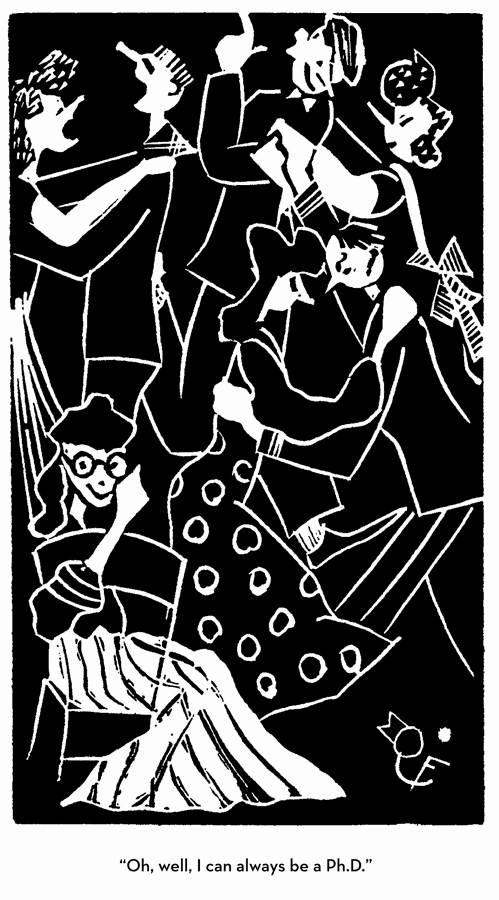
Sci-fi author B.C. Kowal­s­ki recent­ly post­ed a short essay on why the advice to write every day is, for lack of a suit­able euphemism, “bull­shit.” Not that there’s any­thing wrong with it, Kowal­s­ki main­tains. Only that it’s not the only way. It’s said Thack­er­ay wrote every morn­ing at dawn. Jack Ker­ouac wrote (and drank) in binges. Every writer finds some method in-between. The point is to “do what works for you” and to “exper­i­ment.” Kowal­s­ki might have added a third term: diver­si­fy. It’s worked for so many famous writ­ers after all. James Joyce had his music, Sylvia Plath her art, Hem­ing­way his machis­mo. Faulkn­er drew car­toons, as did his fel­low South­ern writer Flan­nery O’Connor, his equal, I’d say, in the art of the Amer­i­can grotesque. Through both writ­ers ran a deep vein of pes­simistic humor, oblique, but detectable, even in scenes of high­est pathos.


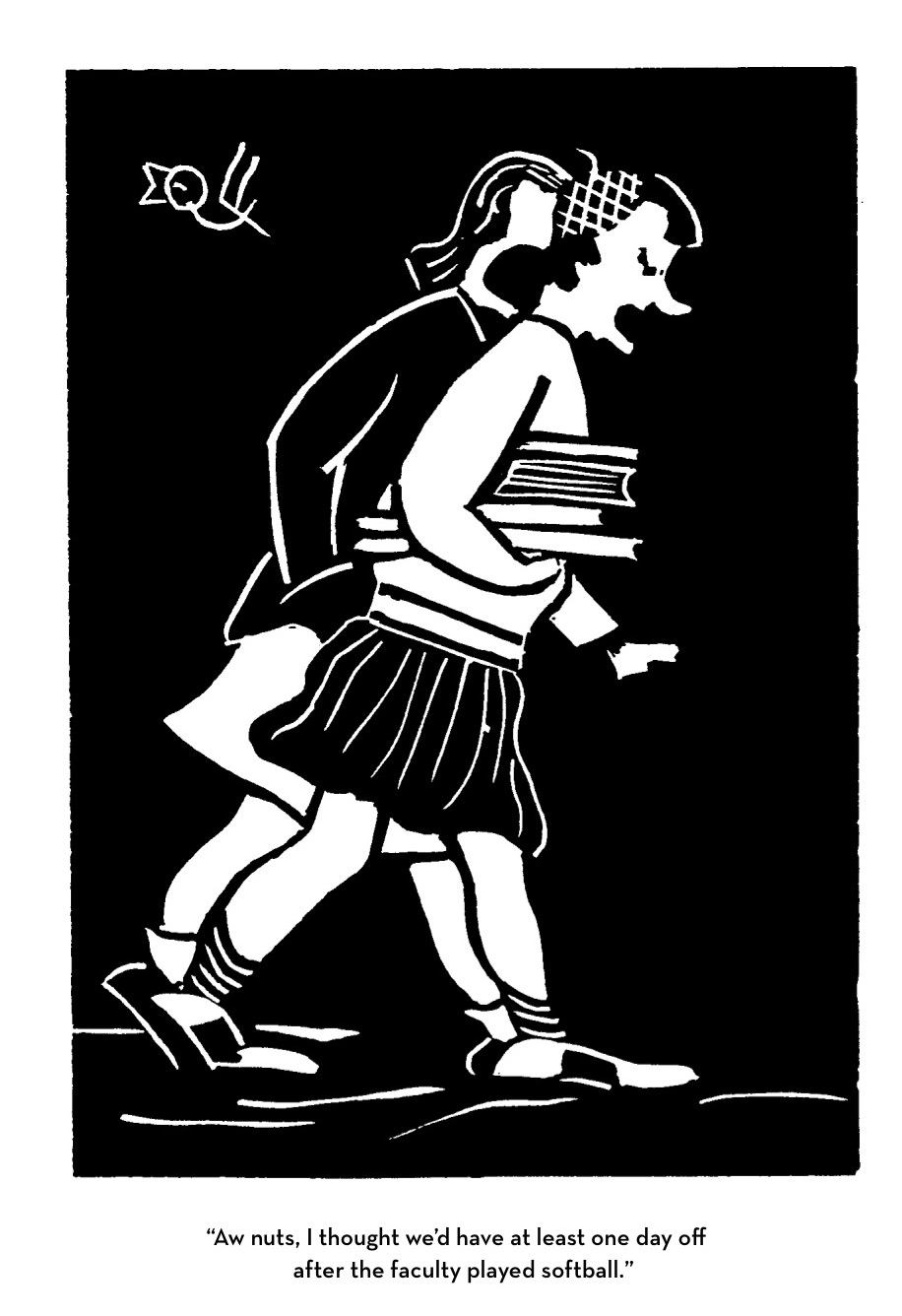
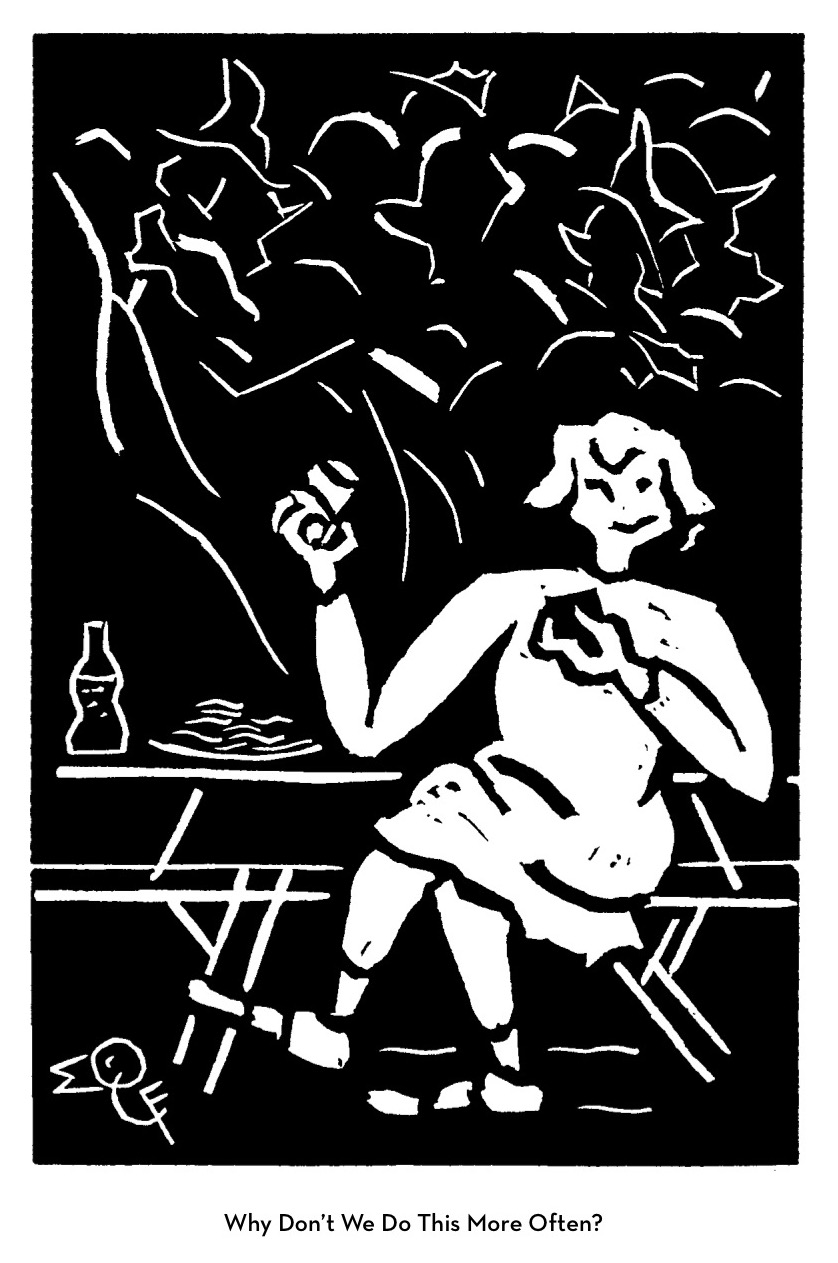
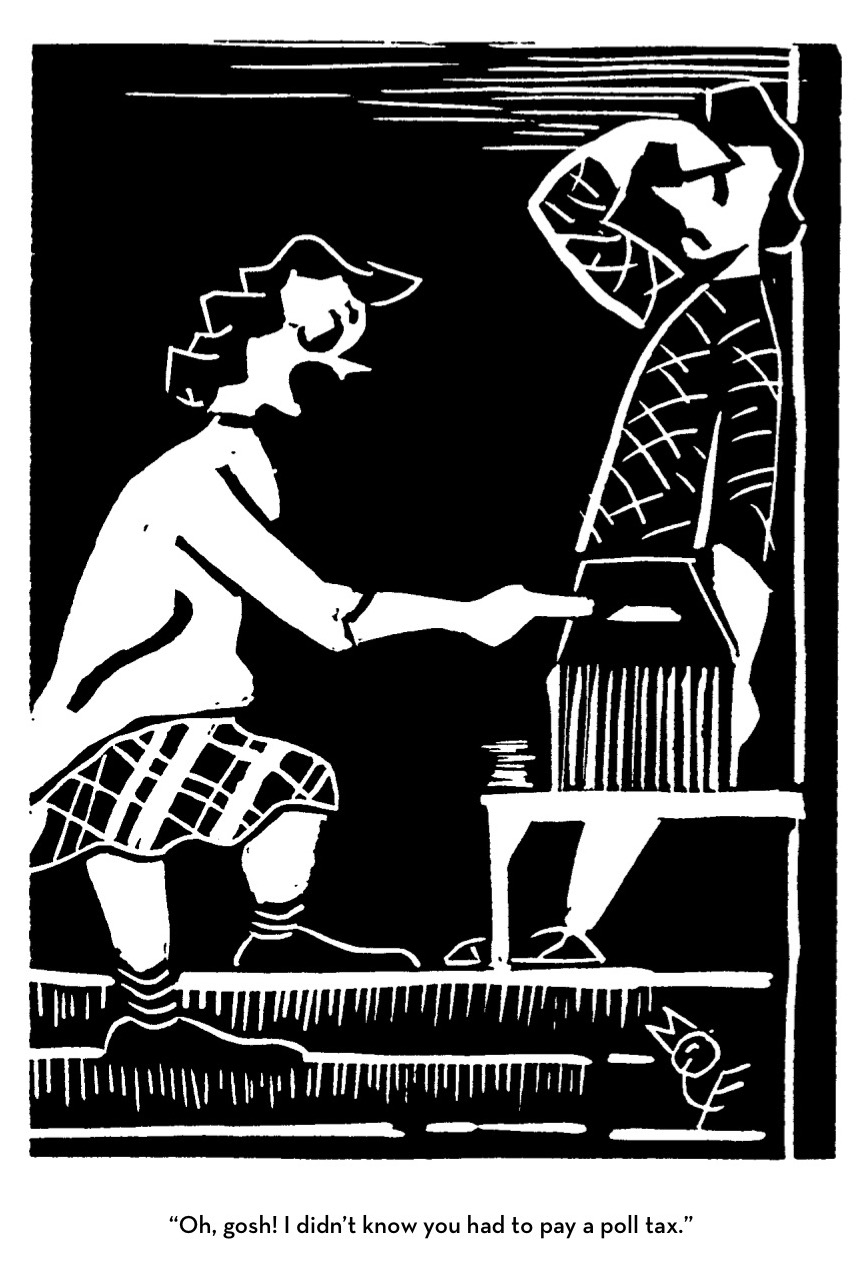
O’Connor’s visu­al work, writes Kel­ly Ger­ald in The Paris Review, was a “way of see­ing she described as part of the ‘habit of art’”—a way to train her fic­tion writer’s eye. Her car­toons hew close­ly to her autho­r­i­al voice: a lone sar­don­ic observ­er, supreme­ly con­fi­dent in her assess­ments of human weak­ness. Per­haps a bet­ter com­par­i­son than Faulkn­er is with British poet and doo­dler Ste­vie Smith, whose bleak vision and razor-sharp wit sim­i­lar­ly cut through moun­tains of… shall we say, bull­shit. In both pen & ink and linoleum cuts, O’Connor set dead­pan one-lin­ers against images of pre­ten­sion, con­for­mi­ty, and the banal­i­ty of col­lege life. In the car­toon at the top, she seems to mock the pur­suit of cre­den­tials as a refuge for the social­ly dis­af­fect­ed. Above, a cam­paign­er for a low-lev­el office deploys bom­bas­tic pseu­do-Lenin­ist rhetoric, and in the car­toon below, a cranky char­ac­ter escapes a horde of iden­ti­cal WAVES.

O’Connor was an intense­ly visu­al writer with, Ger­ald writes, a “nat­ur­al pro­cliv­i­ty for cap­tur­ing the humor­ous char­ac­ter of real peo­ple and con­crete sit­u­a­tions,” ful­ly cred­i­ble even at their most extreme (as in the increas­ing­ly hor­rif­ic self-lac­er­a­tions of Wise Blood’s Hazel Motes). She began draw­ing at five and pro­duced small books and sketch­es as a child, even­tu­al­ly pub­lish­ing car­toons in almost every issue of her high-school and college’s news­pa­pers and year­books. Her alma mater Geor­gia Col­lege, then known as Geor­gia State Col­lege for Women, has pub­lished a book fea­tur­ing her car­toons from her under­grad­u­ate years, 1942–45.

More recent­ly, Ger­ald edit­ed a col­lec­tion called Flan­nery O’Connor: The Car­toons for Fan­ta­graph­ics. In his intro­duc­tion, artist Bar­ry Moser describes in detail the tech­nique of her linoleum cuts, call­ing them “coarse in tech­ni­cal terms.” And yet, “her rudi­men­ta­ry han­dling of the medi­um notwith­stand­ing, O’Connor’s prints offer glimpses into the work of the writer she would become” with their “lit­tle O’Connor petards aimed at the walls of pre­ten­tious­ness, aca­d­e­mics, stu­dent pol­i­tics, and stu­dent com­mit­tees.” Had O’Connor con­tin­ued mak­ing car­toons into her pub­lish­ing years, she might have, like B.C. Kowal­s­ki, aimed one of those petards at those who dis­pense dog­mat­ic, cook­ie-cut­ter writ­ing advice as well.

via Geor­gia Col­lege/The Paris Review

Relat­ed Con­tent:

The Art of William Faulkn­er: Draw­ings from 1916–1925

The Art of Sylvia Plath: Revis­it Her Sketch­es, Self-Por­traits, Draw­ings & Illus­trat­ed Let­ters

The Art of Franz Kaf­ka: Draw­ings from 1907–1917

Rare 1959 Audio: Flan­nery O’Connor Reads ‘A Good Man is Hard to Find’

Flan­nery O’Connor: Friends Don’t Let Friends Read Ayn Rand (1960)

Josh Jones is a writer and musi­cian based in Durham, NC. Fol­low him at @jdmagness

Game of Thrones: A Great Behind-the-Scenes Look at The Show’s Visual Effects

Maybe you’re a diehard Game of Thrones fan. Maybe you’re not. Either way, you’ll mar­vel at this behind-the-scenes video. The short clip was put togeth­er by Mack­e­vi­sion, one of the VFX (visu­al effects) stu­dios that worked on Sea­son 4 of the HBO series. As one com­menter on Metafil­ter not­ed, “The obvi­ous stuff, such as cas­tles in the back­ground, is expect­ed. As is adding in extra troops. But adding the fog, bits of vines and chang­ing the col­or of the grass are the lit­tle touch­es that enliv­en a scene. Love they’re mak­ing moun­tains just pop in the back­ground to illus­trate the VFX work.” Anoth­er com­menter not­ed, “It feels like a mod­ern-day Python ani­ma­tion.” All I can say is that we’ll have more on that lat­er today.

Relat­ed Con­tent:

Ani­mat­ed Video Explores the Invent­ed Lan­guages of Lord of the Rings, Game of Thrones & Star Trek

15-Year-Old George R.R. Mar­tin Writes a Fan Let­ter to Stan Lee & Jack Kir­by (1963)

Revealed: The Visu­al Effects Behind The Great Gats­by

A Pre-Pantone Guide to Colors: Dutch Book From 1692 Documents Every Color Under the Sun

In 1963, the Pan­tone cor­po­ra­tion began pub­lish­ing a bi-year­ly col­or guide, which divides and cat­e­go­rizes every col­or under the sun. The aston­ish­ing­ly ubiq­ui­tous guide is an essen­tial tool for design­ers of every stripe, from a fash­ion guru fig­ur­ing out what col­or to high­light in her fall line to the guy in charge of cre­at­ing a col­or palette for the inte­ri­or of a new Boe­ing-787.

Twice a year, Pan­tone, along with a shad­owy cabal of col­orists from around the world, meet in a Euro­pean city and, with the secre­cy of the Vat­i­can choos­ing a new pope, they select the col­or of the sea­son.

They are the rea­son why you paint­ed your kitchen Wasabi Green a cou­ple years ago and why, whether you want to or not, you’ll be wear­ing Radi­ant Orchid next year. Slate did a great write up about the whole con­fus­ing process a while back.

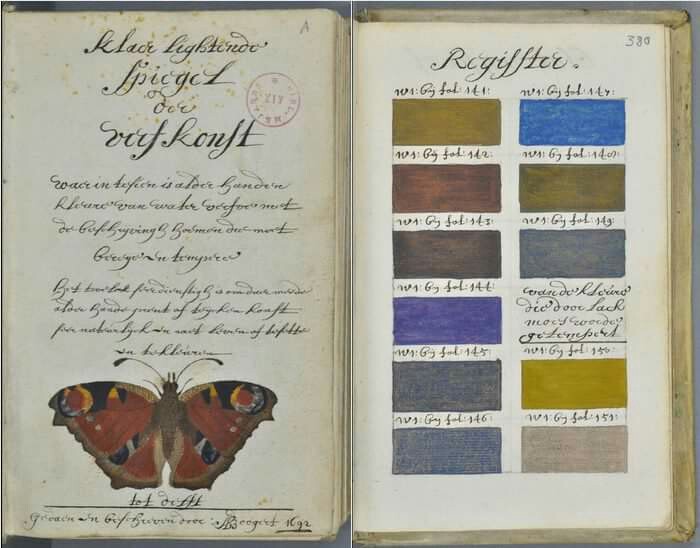
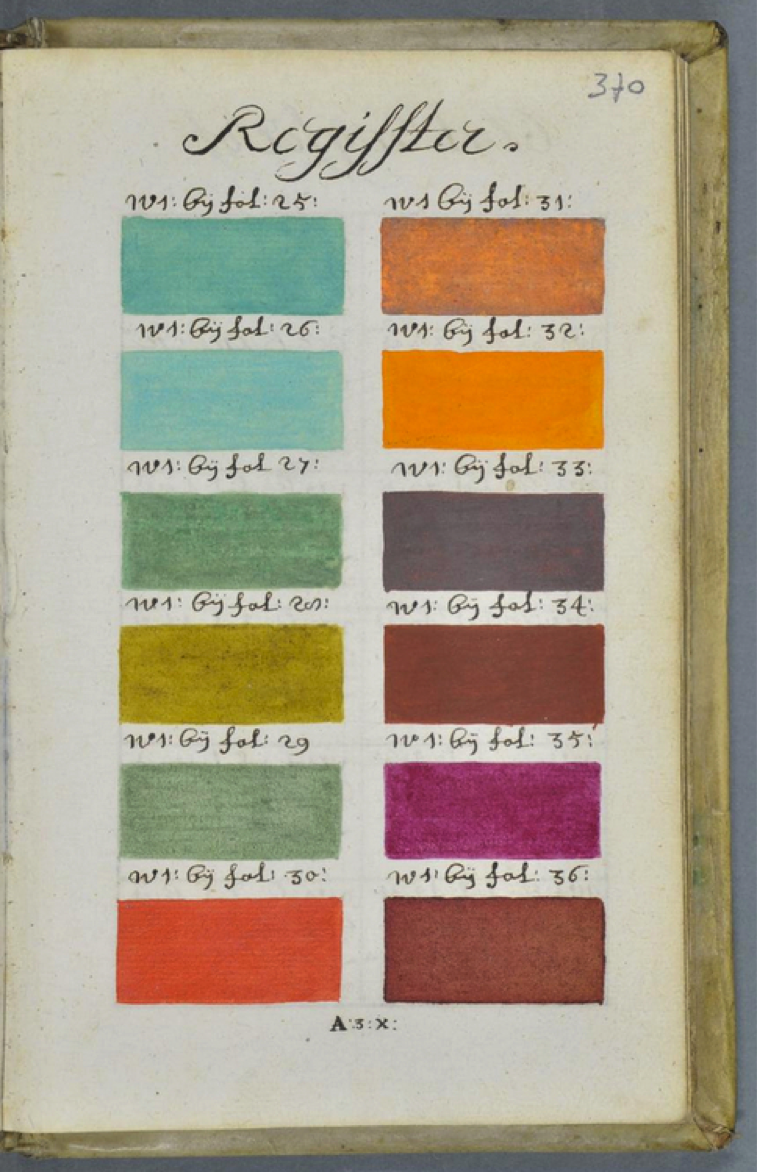
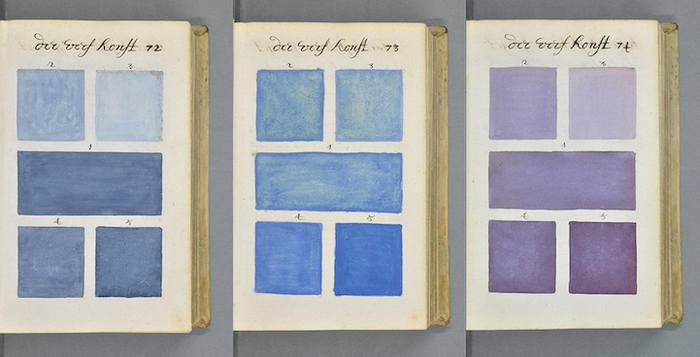
Over 250 years before the Col­or-Indus­tri­al Com­plex reared its head, a mys­te­ri­ous Dutch artist also detailed every col­or in the spec­trum, only he did it all by hand. Known by the snick­er-induc­ing name of A. Boogert, the author set out to demon­strate how to mix water­col­or paint and how to manip­u­late the paint’s val­ue by adding water. Yet he approached his task with a stag­ger­ing lev­el of detail and depth; the result­ing book — Traité des couleurs ser­vant à la pein­ture à l’eau — is over 700 pages. It’s about as thor­ough a col­or guide as one could imag­ine in a world with­out col­or print­ers.

The book was large­ly for­got­ten, gath­er­ing dust at the Bib­lio­thèque Méjanes in Aix-en-Provence, France until Dutch art his­to­ri­an Erik Kwakkel, who trans­lat­ed the intro­duc­tion, post­ed selec­tions from the book on his blog. Herr Boogert appar­ent­ly intend­ed the book to be edu­ca­tion­al for aspir­ing artists. Unfor­tu­nate­ly, only a few artists at the time ever got a chance to see the one-of-a-kind book.

You can see scans of the book above. And if you want to more, click here to see them in high res­o­lu­tion.

For more intrigu­ing man­u­scripts, be sure to fol­low Erik Kwakkel’s Tum­blr here.

pre pantone

via This is Colos­sal

Relat­ed Con­tent:

Goethe’s The­o­ry of Col­ors: The 1810 Trea­tise That Inspired Kandin­sky & Ear­ly Abstract Paint­ing

Wass­i­ly Kandin­sky Caught in the Act of Cre­ation, 1926

When Respect­ed Authors, from Goethe to Hen­ry Miller, Try Their Hand at Paint­ing

Jonathan Crow is a Los Ange­les-based writer and film­mak­er whose work has appeared in Yahoo!, The Hol­ly­wood Reporter, and oth­er pub­li­ca­tions. You can fol­low him at @jonccrow.

130 Free Microsoft eBooks & Guides

msft

Quick fyi: Eric Lig­man, a Microsoft Sales Excel­lence Man­ag­er, has gath­ered togeth­er a big list of free Microsoft ebooks and resource guides that will help you nav­i­gate through var­i­ous Microsoft issues. Some of the texts are geared toward con­sumers; oth­ers toward IT pro­fes­sion­als work­ing with Microsoft prod­ucts. A few handy titles include:

Most titles are made avail­able as in epub, pdf, and mobi for­mats.

via Metafil­ter

Relat­ed Con­tent:

Free Online Com­put­er Sci­ence Cours­es

Free Text­books: Com­put­er Sci­ence

800 Free eBooks for iPad, Kin­dle & Oth­er Devices
« Go BackMore in this category... »
Quantcast