Watch Oscar-Winning Films Free Online

free oscar films

To warm you up for tonight’s Oscars, we “pinned” our col­lec­tion of 34 Free Oscar Win­ning Films to the top of our home­page ear­li­er today. If you did­n’t get a chance to peruse the list, you can always find it here: 34 Free Oscar Win­ning Films Avail­able on the Web. Or vis­it our meta col­lec­tion of 635 Free Movies Online: Great Clas­sics, Indies, Noir, West­erns, etc.

Relat­ed Con­tent:

David Niv­en Presents an Oscar and Gets Inter­rupt­ed by a Streak­er (1974)

Hat­tie McDaniel, Star of Gone with the Wind, Gives a Mov­ing Acad­e­my Award Accep­tance Speech (1940)

Spiel­berg Reacts to the 1975 Oscar Nom­i­na­tions: ‘Com­mer­cial Back­lash!’

33 Free Oscar Win­ning Films Avail­able on the Web

80 Years of Acad­e­my Award Win­ning Films in Posters

by | Permalink | Make a Comment ( 2 ) |

David Niven Presents an Oscar and Gets Interrupted by a Streaker (1974)

While Acad­e­my Awards will no doubt have its share of dra­ma and sur­pris­es tonight, there will like­ly be few inci­dents of pub­lic nudi­ty. That wasn’t always the case with the Oscars.

Back in 1974, co-host David Niv­en was about to intro­duce Eliz­a­beth Tay­lor when a long-haired, mus­tached nude man sprint­ed out on stage and flashed a peace sign (among oth­er things) before a shocked audi­ence. He jogged from one side of the stage to the oth­er before slip­ping off into the wings, as Hen­ry Manci­ni cued his orches­tra to start play­ing music.

After he regained his com­po­sure, Niv­en quipped, “Well, ladies and gen­tle­men, that was almost bound to hap­pen… But isn’t it fas­ci­nat­ing to think that prob­a­bly the only laugh that man will ever get in his life is by strip­ping off and show­ing his short­com­ings?”

Right from the begin­ning, how­ev­er, some won­dered if the inci­dent wasn’t in fact planned by pro­duc­ers hop­ing to give the audi­ence a jolt. Instead of arrest­ing the streak­er (and cart­ing him direct­ly to a Super Max prison, as would hap­pen today), he was giv­en a press con­fer­ence.

At the press con­fer­ence, he said that his name was Robert Opel and false­ly described him­self as an “adver­tis­ing exec­u­tive” dur­ing the press con­fer­ence. When asked why he did the deed, Opel respond­ed, “You know, peo­ple should­n’t be ashamed of being nude in pub­lic. Besides — it is a hell of a way to launch a career.”

The inci­dent did turn Opel briefly into a celebri­ty. He appeared (clothed) on the Mike Dou­glas Show and he was even hired to repeat the stunt at a par­ty for Rudolph Nureyev and Mar­vin Ham­lisch.

Though he was des­tined to go down in his­to­ry as the naked Oscar guy, he was also an avant-garde artist and a leader in the nascent gay rights move­ment. After his brush with fame, Opel moved to the Bay Area where he found­ed Fey-Wey Stu­dios, which was one of the first art gal­leries to show­case artists like Robert Map­plethor­pe and Tom of Fin­land. He also staged an Ani­ta Bryant look-alike con­test at the height of the for­mer beau­ty queen’s anti-gay pub­lic cam­paign. He was mur­dered in his gallery in 1979 dur­ing a bun­gled rob­bery.

Bay Area artist and pho­tog­ra­ph­er BIRON, who was friends with Opel dur­ing his San Fran­cis­co days, remem­bered him fond­ly. “Uncom­pro­mis­ing and unapolo­getic, he blurred the lines between art and life as he trav­eled beyond the con­fines of accept­ed behav­ior. Har­vey Milk and then Robert Opel both killed with­in a few months.”

Relat­ed Con­tent:

Spiel­berg Reacts to the 1975 Oscar Nom­i­na­tions: ‘Com­mer­cial Back­lash!’

33 Free Oscar Win­ning Films Avail­able on the Web

80 Years of Acad­e­my Award Win­ning Films in Posters

Jonathan Crow is a Los Ange­les-based writer and film­mak­er whose work has appeared in Yahoo!, The Hol­ly­wood Reporter, and oth­er pub­li­ca­tions. You can fol­low him at @jonccrow.


Billy Corgan Performs an 8+ Hour Ambient Interpretation of Herman Hesse’s Siddhartha

Bil­ly Cor­gan, the front­man of The Smash­ing Pump­kins, made this announce­ment on his Face­book page last week:

On 2/28 I’ll be doing a show at Madame ZuZu’s Tea­house [in Chica­go]; start time noon, and due to nature of per­for­mance it’ll last 8–9 hours… As with all our events there is no charge. Per­for­mance will be cen­tered around an ambient/musical inter­pre­ta­tion of Her­mann Hes­se’s Sid­dhartha; built by mod­u­lar syn­the­sis, on the fly. Read­ings of the text to go hand in hand with what­ev­er is cre­at­ed; + the first @Hexistential poster, and event t‑shirts too. Hope to see you there.

One fan quick­ly respond­ed: “Film this, please. This sounds like a tru­ly spe­cial event, one that I’d be hum­bled to take in, even if a record­ing is the only way to do so.” Luck­i­ly, his wish was grant­ed.

Above and below, you can watch Cor­gan’s long ambi­ent inter­pre­ta­tion. And, in our Free eBooks and Free Audio Books col­lec­tions, you can find a copy of Her­man Hes­se’s exis­ten­tial nov­el from 1922. As you watch the video, you’ll encounter what SPIN describes as “a read­ing of the book itself, com­bined with mod­u­lar synth blips, bloops, and tex­tures.” Set­tle in and enjoy.

by | Permalink | Make a Comment ( 3 ) |

R.E.M Plays “Radio Free Europe” on Their National Television Debut on The David Letterman Show (1983)

It’s hard for me to believe that we now live in a post‑R.E.M. world. Also a post-Son­ic Youth world, post-Pix­ies world (as far as I’m con­cerned), etc. The bands of my errant youth are no more; some­times it feels like all I can do is toss out the occa­sion­al, half-heart­ed “get off my lawn” or mum­ble bemus­ed­ly, “what’s a Lorde?” when con­tem­plat­ing the cur­rent state of music.

Yet all is not lost for “aging hipsters”—in the par­lance of the blog Rock Turtle­neck!. Though our pop cul­ture may seem to slip into an irrel­e­vant ice age, we can at least warm our­selves at the flick­er­ing screen, where Youtube caches troves of footage of our bygone heroes—like the video above of R.E.M. play­ing “Radio Free Europe” for their first appear­ance on TV in 1983.

Now, this was before the time of my fan­dom, which dates from the lat­er 80s. Still, it’s always a joy to see one of my all time favorites roar­ing in their lion­heart­ed youth.

The band appeared on Let­ter­man, pro­mot­ing their debut, Mur­mur. The venue is no sur­prise, giv­en Dave’s con­sis­tent cham­pi­oning of instant-clas­sic Amer­i­can artists. But after this appear­ance, they would not return to his show for anoth­er 12 years, this time to play “Crush With Eye­lin­er” in the midst of their 1995 Mon­ster tour (above). I loved R.E.M. no less then, but they were pros by that time, not the scrap­py, jan­g­ly South­ern alt-rock­ers bold­ly chal­leng­ing the ortho­doxy of bloat­ed sta­di­um rock.

I think Rock Turtle­neck! does not over­state its case in claim­ing that the band’s nation­al tele­vi­sion debut “was the col­lege rock equiv­a­lent of The Bea­t­les play­ing the Ed Sul­li­van Show in 1964.” Well, maybe just a lit­tle, but it’s still a piv­otal moment in the his­to­ry of alt-rock. Mur­mur appears as num­ber 1 on this list of the “best albums of 1983”—calculated from “over­all rank­ings in over 13,000 great­est album charts”—followed by oth­er new wave and alter­na­tive clas­sics like the Vio­lent Femmes’s epony­mous debut, The Police’s Syn­chronic­i­ty, U2’s War, Tom Wait’s Sword­fishtrom­bones, and New Order’s Pow­er, Cor­rup­tion and Lies. Sim­pler times, sim­pler times….

If you would like to sign up for Open Culture’s free email newslet­ter, please find it here. It’s a great way to see our new posts, all bun­dled in one email, each day.

If you would like to sup­port the mis­sion of Open Cul­ture, con­sid­er mak­ing a dona­tion to our site. It’s hard to rely 100% on ads, and your con­tri­bu­tions will help us con­tin­ue pro­vid­ing the best free cul­tur­al and edu­ca­tion­al mate­ri­als to learn­ers every­where. You can con­tribute through Pay­Pal, Patre­on, and Ven­mo (@openculture). Thanks!

Relat­ed Con­tent:

Two Very Ear­ly Con­cert Films of R.E.M., Live in ‘81 and ‘82

R.E.M.’s Final Encore (and an Ear­ly Con­cert from Ger­many)

R.E.M.’s “Los­ing My Reli­gion” Reworked from Minor to Major Scale

Josh Jones is a writer and musi­cian based in Durham, NC. Fol­low him at @jdmagness

Opening Sentences From Great Novels, Diagrammed: Lolita, 1984 & More

Lolitadiagrammed

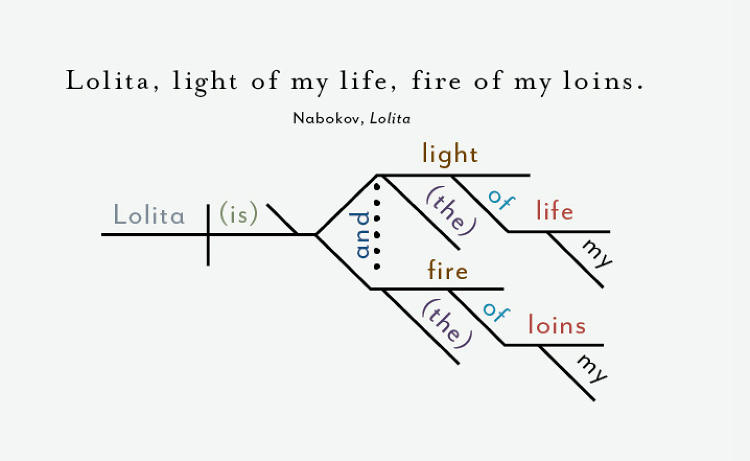
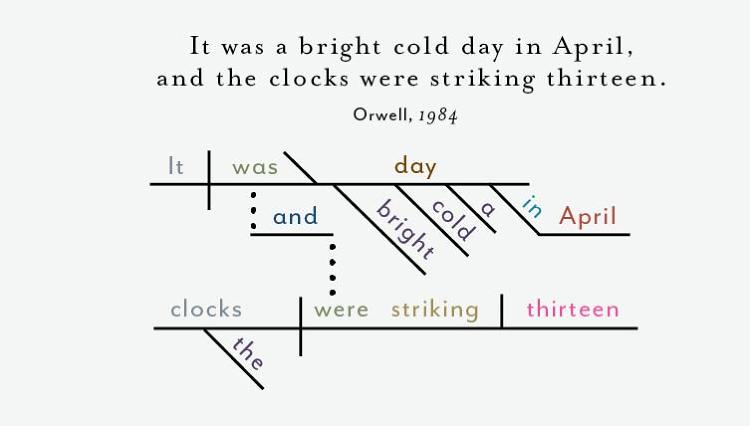
I admit it: I still don’t under­stand sen­tence dia­gram­ming. Though as a mid­dle school­er I duti­ful­ly, if grudg­ing­ly, sub­mit­ted to that clas­sic Eng­lish class­room exer­cise, the prac­tice did­n’t stick, nor did what­ev­er habit of com­po­si­tion it meant to con­vey. Some of my teach­ers tried to make sen­tence dia­gram­ming inter­est­ing, but they could only do so much. They could only do so much, that is, with­out Pop Chart Lab’s “A Dia­gram­mat­i­cal Dis­ser­ta­tion on Open­ing Lines of Notable Nov­els,” a poster that “dia­grams 25 famous open­ing lines from revered works of fic­tion accord­ing to the dic­tates of the clas­sic Reed-Kel­logg sys­tem,” with each and every graph­ic “pars­ing clas­si­cal prose by parts of speech and offer­ing a par­ti­tioned, col­or-cod­ed pic­to-gram­mat­i­cal rep­re­sen­ta­tion of some of the most famous first words in lit­er­ary his­to­ry.”

Orwelldiagrammed

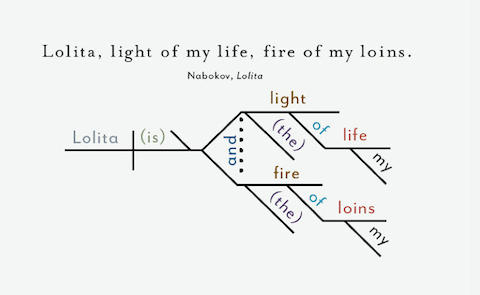
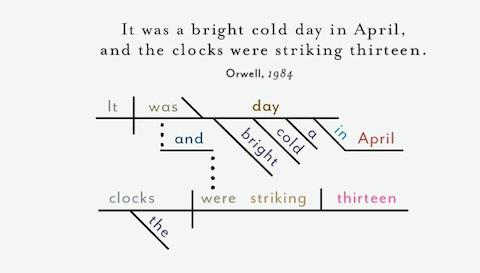
At the top of the post, we have the poster’s dia­gram of Hum­bert Hum­bert’s famous first words, by way of Vladimir Nabokov, in Loli­ta: “Loli­ta, light of my life, fire of my loins.” That immor­tal sen­tence may always have struck you as incom­plete — does­n’t it need a verb? — but hey, it dia­grams, at least with the addi­tion of the implic­it (is) and a cou­ple implic­it (the)s. Fol­low the branch­es and you find the words’ con­cealed com­plex­i­ty visu­al­ly revealed. Just above, you’ll see dia­grammed a more tra­di­tion­al open­ing sen­tence from George Orwell, a much more plain­spo­ken writer. “It was a bright cold day in April,” goes the first line of 1984, “and the clocks were strik­ing thir­teen” — a more lin­guis­ti­cal­ly involved descrip­tion, as you can see, than it may at first seem. Fif­teen years after the specter of Reed-Kel­logg dark­ened my desk — in which time I’ve made writ­ing my career — I still can’t claim the abil­i­ty to pro­duce prop­er­ly dia­grammed sen­tences for myself. But I like to think that I can appre­ci­ate them, espe­cial­ly when they show me the work­ings of a suf­fi­cient­ly great sen­tence.

See more famous open­ing sen­tences from Pop Chart Lab’s poster (and pur­chase your own copy) here.

Relat­ed Con­tent:

George Orwell’s 1984: Free eBook, Audio Book & Study Resources

The His­to­ry of the Eng­lish Lan­guage in Ten Ani­mat­ed Min­utes

Learn Lan­guages for Free: Span­ish, Eng­lish, Chi­nese & 37 Oth­er Lan­guages

David Fos­ter Wal­lace Breaks Down Five Com­mon Word Usage Mis­takes in Eng­lish

Nabokov Reads Loli­ta, Names the Great Books of the 20th Cen­tu­ry

Col­in Mar­shall hosts and pro­duces Note­book on Cities and Cul­ture and writes essays on cities, aes­thet­ics, Asia, and men’s style. He’s at work on a book about Los Ange­les, A Los Ange­les Primer. Fol­low him on Twit­ter at @colinmarshall or on Face­book.

« Go Back
Quantcast