Helen Keller Had Impeccable Handwriting: See a Collection of Her Childhood Letters

keller-handwriting

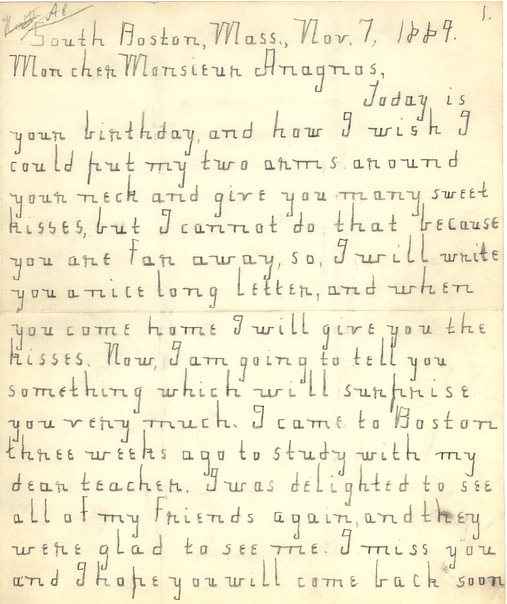
Image by Flickr, cour­tesy of Perkins School for the Blind

The inspi­ra­tional blind and deaf activist and edu­ca­tor Helen Keller learned to speak aloud, but, to her great regret, nev­er clear­ly.

Her care­ful pen­man­ship, above, is anoth­er mat­ter. Her impec­ca­bly ren­dered upright hand puts that of a great many sight­ed peo­ple—not all of them physi­cians—to shame.

Keller learned to write—and read—with the help of embossed books as a stu­dent at Perkins School for the Blind. The Unit­ed States didn’t adopt Stan­dard Braille as its offi­cial sys­tem for blind read­ers and writ­ers until 1918, when Keller was in her late 30’s. Pri­or to that blind read­ers and writ­ers were sub­ject­ed to a num­ber of com­pet­ing sys­tems, a sit­u­a­tion she decried as “absurd.”

Some of these sys­tems had their basis in the Roman alpha­bet, includ­ing Boston Line Type, the brain­child of Perkins’ Found­ing Direc­tor, Samuel Gri­d­ley Howe, an oppo­nent of Braille. Stu­dents may have pre­ferred dot-based sys­tems for tak­ing notes and writ­ing let­ters, but Boston Line Type remained Perkins’ approved print­ing sys­tem until 1908.

There’s more than an echo of Boston Line Type in Keller’s blocky char­ac­ters, as well as her spac­ing. Devi­at­ing from pen­man­ship forms learned at school is a lux­u­ry exclu­sive to the sight­ed. Until for­ma­tion became instinc­tu­al, Keller relied on a grooved board to help her size her char­ac­ters cor­rect­ly, an exhaust­ing process. Small won­der that she end­ed many of her ear­ly let­ters with “I am too tired to write more.”

Perkins has pub­lished a Flickr album of let­ters Keller wrote between the ages of 8 and 11 to then-direc­tor Michael Anag­nos, includ­ing 3 pages in French. Leaf­ing through them, I mar­veled less at her abil­i­ty and deter­mi­na­tion than my (sight­ed) 16-year-old son’s lack of inter­est in devel­op­ing a respectable-look­ing hand.

Keller’s hand­writ­ing is so above reproach that it quick­ly fades to the back­ground, upstaged by her charm­ing man­ners and girl­ish pre­oc­cu­pa­tions. A sam­ple:

If you go to Rou­ma­nia, please ask the good queen Eliz­a­beth about her lit­tle invalid broth­er and tell her that I am very sor­ry that her dar­ling lit­tle girl died. I should like to send a kiss to Vit­to­rio, the lit­tle prince of Naples, but teacher says she is afraid you will not remem­ber so many mes­sages.

Browse Perkins’ col­lec­tion of Keller’s hand­writ­ten let­ters to Michael Anag­nos here.

Relat­ed Con­tent:

Helen Keller Speaks About Her Great­est Regret — Nev­er Mas­ter­ing Speech

Mark Twain & Helen Keller’s Spe­cial Friend­ship: He Treat­ed Me Not as a Freak, But as a Per­son Deal­ing with Great Dif­fi­cul­ties

“A Glo­ri­ous Hour”: Helen Keller Describes The Ecsta­sy of Feel­ing Beethoven’s Ninth Played on the Radio (1924)

Ayun Hal­l­i­day is an author, illus­tra­tor, the­ater mak­er and wine­mak­er who played Annie Sul­li­van in her high school’s pro­duc­tion of The Mir­a­cle Work­er. Fol­low her @AyunHalliday.

H.G. Wells Pans Fritz Lang’s Metropolis in a 1927 Movie Review: It’s “the Silliest Film”

metropolis-wells

When we watch Fritz Lang’s Metrop­o­lis now, we see an aes­thet­i­cal­ly dar­ing land­mark work of sci­ence-fic­tion cin­e­ma. When H.G. Wells watched Metrop­o­lis back in 1927, the year of its release, he saw some­thing very dif­fer­ent indeed. “I have recent­ly seen the sil­li­est film,” wrote the author of The War of the Worlds and The Time Machine as an open­er for his New York Times review. “I do not believe it would be pos­si­ble to make one sil­li­er.”

Despite its giant bud­get, Metrop­o­lis gives “in one eddy­ing con­cen­tra­tion almost every pos­si­ble fool­ish­ness, clichĂ©, plat­i­tude, and mud­dle­ment about mechan­i­cal progress and progress in gen­er­al, served up with a sauce of sen­ti­men­tal­i­ty that is all its own.” His­to­ry remem­bers Lang and Wells both as vision­ar­ies who looked, often with lit­tle opti­mism, to the future, but clear­ly they had a dif­fer­ence of opin­ion as to how that future would actu­al­ly play out.

The sci­en­tif­i­cal­ly-mind­ed Wells took the impres­sion­is­tic Metrop­o­lis lit­er­al­ly, tak­ing issue with — among oth­er things — how its air­planes “show no advance on con­tem­po­rary types”; its â€śmotor cars are 1926 mod­els or ear­li­er”; its vision of a ver­ti­cal­ly strat­i­fied city look, “to put it mild­ly, high­ly improb­a­ble”; the appar­ent con­di­tion that the city’s â€śmachines are engaged quite furi­ous­ly in the mass pro­duc­tion of noth­ing that is ever used”; and the sen­ti­men­tal­i­ty of its mak­ers, “who are all on the side of soul and love and such like.”

Metrop­o­lis opened to mixed reviews at first (some of which you can read here), but no con­tem­po­rary crit­ic could match Wells for sheer dis­dain. â€śNev­er for a moment does one believe any of this fool­ish sto­ry; nev­er for a moment is there any­thing amus­ing or con­vinc­ing in its drea­ry series of strained events,” he wrote, steer­ing his point-by-point take­down to its con­clu­sion. “It is immense­ly and strange­ly dull. It is not even to be laughed at.”

Strong stuff, but the high­est form of film crit­i­cism, as the French New Wave would lat­er artic­u­late, is film­mak­ing. And so, in 1936, came Things to Come, anoth­er cin­e­mat­ic spec­ta­cle of the future, this one built to the osten­si­bly more plau­si­ble spec­i­fi­ca­tions Wells laid out as its screen­writer — that film itself just one more pre­de­ces­sor to the unend­ing series of dystopias, utopias, and every kind of future in-between to appear on the screen over the next eight decades.

Relat­ed Con­tent:

Read the Orig­i­nal 32-Page Pro­gram for Fritz Lang’s Metrop­o­lis (1927)

Fritz Lang Invents the Video Phone in Metrop­o­lis (1927)

Things to Come, the 1936 Sci-Fi Film Writ­ten by H.G. Wells, Accu­rate­ly Pre­dicts the World’s Very Dark Future

Based in Seoul, Col­in Mar­shall writes and broad­casts on cities and cul­ture. He’s at work on a book about Los Ange­les, A Los Ange­les Primer, the video series The City in Cin­e­ma, the crowd­fund­ed jour­nal­ism project Where Is the City of the Future?, and the Los Ange­les Review of Books’ Korea Blog. Fol­low him on Twit­ter at @colinmarshall or on Face­book.

« Go Back
Quantcast