The more things change, the more they stay the same. That adage often holds true, but not in this historical case. While your average American teenager devotes more than 7 hours a day to imbibing media — to watching TV, playing video games, hanging out on Facebook — the average 17-year-old Roman kid (circa 73 AD) had some more serious business to deal with. Like mastering reading and writing in two languages, fighting in imperial wars, taking care of (obscenely young) spouses and various other items. All of this gets conveyed to us by Ray Laurence, a classics professor from the University of Kent. The video itself comes from the TED-Ed series that otherwise features a clip about the historic walls of Constantinople, built during the Byzantine period.
If you would like to sign up for Open Culture’s free email newsletter, please find it here. It’s a great way to see our new posts, all bundled in one email, each day.
If you would like to support the mission of Open Culture, consider making a donation to our site. It’s hard to rely 100% on ads, and your contributions will help us continue providing the best free cultural and educational materials to learners everywhere. You can contribute through PayPal, Patreon, and Venmo (@openculture). Thanks!
Over the years, we’ve let you hear Sylvia Plath reading many of her poems, all written before she took her life at the age of 30. What you likely haven’t heard — until today — is Three Women, one of Plath’s lesser-known pieces of writing. “Originally written as a radio verse drama for three voices,” notes The Guardian, the play “was broadcast in 1962 on the BBC Third Programme and later included in Winter Trees, a poetry collection first published in 1971.” “With its themes of pregnancy, birth, miscarriage and adoption, it perfectly encapsulates the experience of becoming — or not becoming — a mother, including all the ecstasy and terror of childbirth.” Below you can hear a recording with actress Judith Binder as the wife, Ann Bernstein as the secretary, and Rachelle Towers as the girl. The program is made available on Archive.org by Pacifica Radio Archives. Find more Sylvia Plath audio in our collection, 1,000 Free Audio Books: Download Great Books for Free.
If you would like to sign up for Open Culture’s free email newsletter, please find it here. It’s a great way to see our new posts, all bundled in one email, each day.
If you would like to support the mission of Open Culture, consider making a donation to our site. It’s hard to rely 100% on ads, and your contributions will help us continue providing the best free cultural and educational materials to learners everywhere. You can contribute through PayPal, Patreon, and Venmo (@openculture). Thanks!
The skilled chef has always held a place of honor amongst gourmands and the fine dining elite. But it took television to bring us the celebrity chef: Julia Childs and Jacques Pepin; Dom DeLuise and Paul Prudhomme. Those were the good old days, before reality TV turned cooking into a competitive sport. Still, we’ve got many quality cooks on the tube, entertaining and hugely informative: Alton Brown, Anthony Bourdain, Gordon Ramsay, Jamie Oliver…. Many of us who take cooking seriously have at one time or another apprenticed under one of these food gurus.
My personal favorite? Well, I’m a fan of haute cuisine as fashioned by Salvador Dalí. Sure, the surrealist painter and all-around weirdo has been dead since 1989, and never had anything approaching a cooking show in his lifetime (though he did make a few TV ads and an appearance on What’s My Line?). Nor is Dalí known for his cooking. As you might guess, there’s good reason for that.
Dishes like “Veal Cutlets Stuffed with Snails,” “Thousand Year Old Eggs,” and “Toffee with Pine Cones” were never going to catch on widely. But when it comes to food as art—as an especially strange and imaginative form of art—it’s hard to beat Dalí’s rare, legendary 1973 cookbook Les Diners de Gala, just reissued by Taschen.
The book, writes This is Colossal, represented “a dream fulfilled” for Dalí, “who claimed at the age of 6 that he wanted to be a chef.” As is sometimes the case when a life’s goal goes unmet—it is perhaps for the best that the Spanish painter never seriously attempted to interest the general public in his sometimes inedible concoctions. He did, however, entertain his coterie of admirers, friends, and celebrity acquaintances with “opulent dinner parties thrown with his wife Gala.” As the cookbook suggests, these events “were almost more theatrical than gustatory.” In addition to the bizarre dishes he and Gala prepared, the guests “were required to wear completely outlandish costumes and an accompaniment of wild animals often roamed free around the table”…..
If only Dalí had lived into the age of the Kardashians. Likely he would have leapt at the chance to turn these art parties into great TV. Or maybe not. In any case, we can now reconstruct them ourselves with what design site It’s Nice Thatcalls “a delicious combination of elaborately detailed oil paintings and kitsch 1970s food photography.” Along the way, Dalí drops aphorisms like “the jaw is our best tool to grasp philosophical knowledge” (recalling Nietzsche’s preoccupation with digestion). And despite the absurdity of many of these dishes—and paintings like that above which make the turducken look like casual fare—many of the actual recipes, This is Colossal notes, “originated in some of the top restaurants in Paris at the time including Lasserre, La Tour d’Argent, Maxim’s, and Le Train Bleu.”
However, even as far back as 1973, home cooks had begun to fret about the healthiness of their food. Dalí gives such people fair warning; Les Diners de Gala, he writes, “is uniquely devoted to the pleasures of Taste. Don’t look for dietetic formulas here.”
We intend to ignore those charts and tables in which chemistry takes the place of gastronomy. If you are a disciple of one of those calorie-counters who turn the joys of eating into a form of punishment, close this book at once; it is too lively, too aggressive, and far too impertinent for you.
As if you thought Dalí would bow to something as quotidian as nutrition. See many more surreally sensual food illustrations and quotes from the book at Brain Pickings, where you’ll also find the full, extravagant recipe for “Conger of the Rising Sun.” You can order Les Diners de Gala online.
If you would like to sign up for Open Culture’s free email newsletter, please find it here. It’s a great way to see our new posts, all bundled in one email, each day.
If you would like to support the mission of Open Culture, consider making a donation to our site. It’s hard to rely 100% on ads, and your contributions will help us continue providing the best free cultural and educational materials to learners everywhere. You can contribute through PayPal, Patreon, and Venmo (@openculture). Thanks!
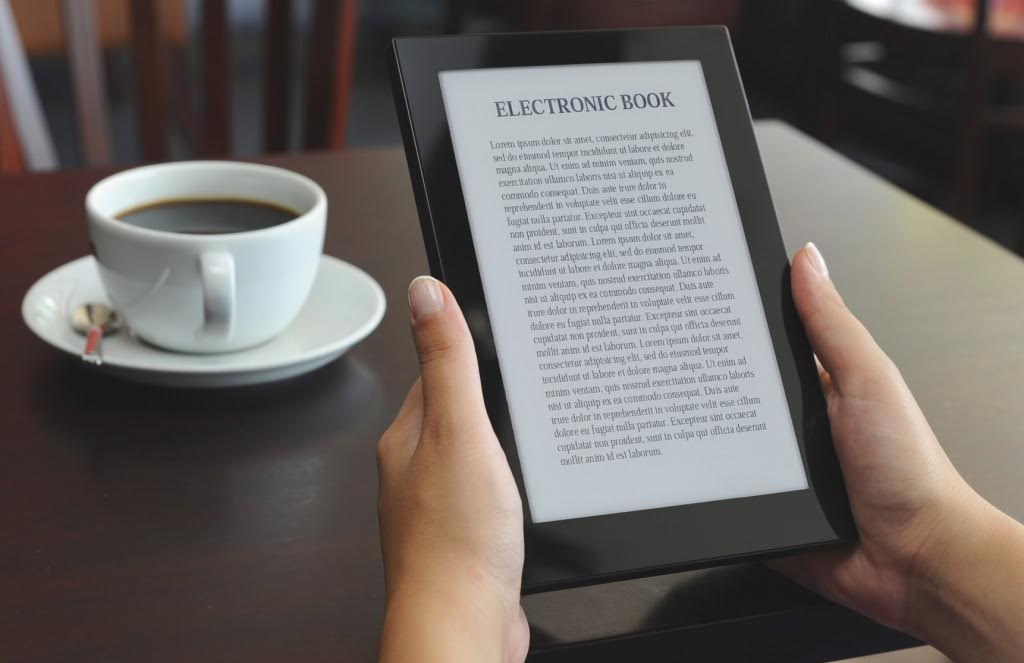
Maybe you’re an eBooks holdout, a late adopter, a disdainer of the book as a branded “device”? I get it. Is there anything more ridiculous than putting down a book because its batteries have run out? No amount of crowing about the supremacy of tech will make me love the smell and feel of paper less…
And yet…
Within the charming heft of printed books reside their limitation. Traveling students, researchers, or avid readers must lug several pounds of bound paper along with them on long journeys, or to work sessions at the local coffee shop. An eReader or smartphone can hold an entire library—which one can expand ad infinitum, it seems, on the fly.
This feature—along with the ease of copying quotes and passages and sending them across platforms—eventually sold me on the eBook as a robust supplement to print. And if it sounds like I’m making a sales pitch, I am: for hundreds of free books, available to read on the device of your choosing. Entry-level Kindle, budget smartphone, or latest, fanciest iPad—most all will accommodate the range of formats available in our collection of 800 Free eBooks.
Can you freely download the latest New York Times bestsellers? Not here, and I’d hope—for the sake of those hard-working writers—that you’d pay to read new releases. Can you carry along with you on your next business trip or vacation the works of Aristotle and Freud, several novels by Jane Austen and Joseph Conrad, the masterworks of Hegel, Hume, and Kant, the complete Shakespeare, and Proust’s multi-volume À la recherche du temps perdu? Quite easily. Here’s a small sample of what’s on our list:
See the full list of 800 offerings here. They may lack the sensory pleasure of print, but the ability to carry an entire library of classic literature in your pocket has its advantages, to say the least. And if your travels include long drives, you’ll also want to check out our master list of Free Audio Books.
You don’t just listen to “Bohemian Rhapsody”; you experience it. Anyone who’s ever heard Queen’s signature progressive rock epic knows it, and anyone who’s ever performed all six minutes of it at a karaoke bar understands it more deeply still. The song, which rumor holds to have cost more to record than any single to date, made use of the latest studio techniques; now, technology barely imaginable when the song hit the charts in 1975 has given us a whole new way to experience “Bohemian Rhapsody”: in virtual reality, through either the Google Cardboard app or as a 360° video.
A collaboration between Queen, Google Play, and VR developer Enosis, The Bohemian Rhapsody Experience offers a three-dimensional audiovisual journey featuring “interactive elements and spatial sound, allowing you to step inside the music.” The Creators Project’s Kara Weisenstein describes it as “peering into Freddie Mercury’s brain. The musician was famously coy about the song’s meaning, and while it doesn’t give anything away, this experience renders Mercury’s imagination in resplendent purples and blues. The ballad is a playful wonderland of bicycling skeletons and animated globes. During the opera, the scene is a spooky cave. The rock section is a neon trip through space, and the coda is a drippy, intergalactic aurora.”
“ ‘Bohemian Rhapsody’ is unusual, isn’t it?” asks Queen’s lead guitarist and self-described VR proponent Brian May in the video on the making of The Bohemian Rhapsody Experience above. “Even 40 years later, or whatever it is, [the 1975 song] still sounds innovative.” And it began inspiring innovation right after its recording, when it led to the six-minute film that, years before MTV, practically invented the form of the music video. Does this new project herald an era when every single must, by necessity, come accompanied by a full-fledged VR journey? For the moment, that question remains among the unanswered, right alongside the one Queen has been asking for over four decades now: “Is this the real life? Is this just fantasy?”
45 years ago, four eminences took the stage at the University of Toronto: Irish actor Jack MacGowran, best known for his interpretations of Samuel Beckett; English poet and dramatist W.H. Auden; American architect and theorist of humanity’s way of life Buckminster Fuller; and Canadian literary scholar turned media technology oracle Marshall McLuhan. Now only did all four men come from different countries, they came from very different points on the intellectual and cultural map. The CBC recorded them for broadcast on its long-running series Ideas, prefacing it with an announcement that “the ostensible subject of their discussion is theatre and the visual arts.”
Key word: ostensible. “That topic is soon forgotten as two modes of perception clash,” says the announcer, “that of Professor McLuhan, who is one of the most famous interpreters of contemporary 20th-century cultural trends, and that of W.H. Auden, who cheerfully admits to being ‘a 19th-century man’ and sees no reason to change.” And so, though Fuller and MacGowan do occasionally provide their perspective, the panel turns into a rollicking debate between McLuhan and Auden, more or less from the point where the former — making one of his characteristically compelling proclamations — declares that modern media brings us to a world in which “there is no audience. There are only actors.” But the latter objects: “I profoundly disapprove of audience participation.”
By the early 1970s, television had long since found its way into homes all across America, Canada, and Britain, but the thinkers of the time had only just begun to grapple with its consequences. “We’ve just seen Apollo 14, which has some visual effects going with it. It’s a new type of theater, obviously,” says McLuhan, drawing one of many audience laughs. On the subject of television’s conflation of fact and fiction, Auden doesn’t mince words: “I think TV is a very, very wicked medium. That’s all I can say.” McLuhan emphasizes that, as a professional observer of these phenomena, “I have steadfastly reserved moral judgment on all media matters.” Auden: “I don’t.”
Yet the author of The Age of Anxiety and the author of The Gutenberg Galaxy turn out to have more in common than their conflict might suggest. Both in their 60s by the time of this discussion (“Thank God I can remember the world before World War I,” says the poet) and both 1930s converts to Catholicism, they also both harbored deep suspicions of technologies like television. Auden, who insists he would never dream of owing a TV set himself, seems to look down on it as merely lowbrow, but McLuhan has darker suspicions: “You are missing the name of the game, sir. You are actually imagining that those little images you see on TV are TV. They are not. What is TV is that fire stream pouring out of that tube into your gut.”
Even while predicting still-unheard-of advances in televisual technology (at one point attempting to engage MacGowran on “the immediate prospect of four- and five-dimensional TV”), McLuhan also foresees it as the potential spark for such cataclysms as a global race war, going so far as to suggest that “if you want to save a fantastic bloodbath on this planet, which will be very traumatic, very cathartic, and very tragic — in the Greek sense — we turn off TV totally. For good.” Auden, of course, actually approves of that particular idea of McLuhan’s, though he evinces little optimism about its feasibility. “Why won’t it happen?” asks McLuhan. “Because people like the damn things,” he replies.
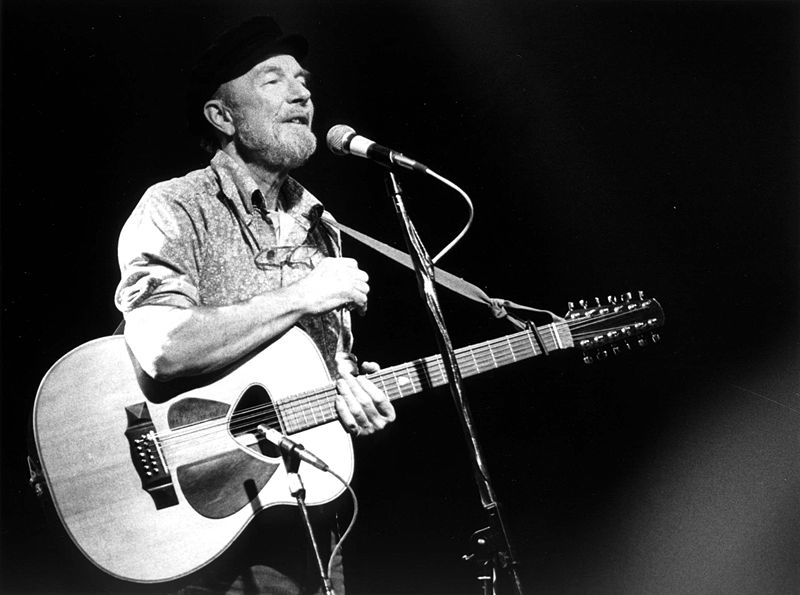
Along with earnest political populism and a renewed interest in regional cultures, the folk revival of the fifties and sixties brought with it a liberating sense of possibility, as young writers, singers, and artists discovered that, truly, anyone can play guitar. Or rather, anyone can pick up most any stringed instrument and, with a few fundamentals, enjoy the experience of writing and playing music in a way that seemed unavailable or forbidding before people like Pete Seeger and Bob Dylan appeared on the scene.
Both popularizers of Woody Guthrie’s Depression-era ballads and of obscure blues and folk artists, Dylan and Seeger took very different approaches to their art. The former cultivated a mystique that seems impossible to penetrate, and that has made him seem—as Todd Haynes’ masterful film I’m Not There dramatizes—like a series of different people. But Seeger has always been Seeger, from his gentle, aw-shucks demeanor and warm accessibility to his staunchly progressive messages that speak to children and regular folks as well as to those with more sophisticated tastes and talents.
So it seems only natural that Seeger released an album of guitar instruction, The Folksinger’s Guitar Guide, addressed to both beginners and more advanced players. “I guess any musical instrument can be as hard to play as you want to make it,” Seeger begins, in one of his characteristically fluid transitions from song to speech: “If you wanted to be a person like Andres Segovia or Merle Travis, why it would take a lifetime of training. But for most of us, playing a guitar can be about as simple as walking.” After that reassuring comparison, he does remind us, however, that “it took us all a couple years to learn how to walk.”
Seeger begins with first steps—tuning the instrument—and patiently leads his listeners through some basic chord shapes, strumming techniques, and then more advanced picking methods, alternate tunings, and styles like Flamenco, “Rhumba Rhythm,” and “Mexican Blues.” You can listen to the album track-by-track on Spotify, further up. (You can also find it kicking around on YouTube.) Like the great educator he was, Seeger also includes some helpful visual aids in the album’s liner notes (see them here), including drawings of chord fingerings, musical notation, and guitar tablature for those who don’t read music. In addition to his readable instructions, he also includes the lyrics to all of the folk songs referenced throughout.
“Practice each small section over and over,” he writes in his introduction, “until it comes easy. Actually, if you enjoy playing the guitar, you shouldn’t think of it as practicing, in the formal sense. Rather simply play for your own enjoyment and that of your friends.” He also recommends that his listeners “beg, borrow, or steal” the records he references in the booklet, for “they will be of help to you in giving you an idea of the scope and possibilities of the instrument.” I can’t think of a music teacher more inviting than Seeger, nor a method more relaxed.
A second volume featuring Jerry Silverman appeared soon after, and upped the ante a good bit. “Musical standards are on the rise,” Silverman says in his introduction, “the virtuoso folk guitarist is on the scene.” He promises to help the “strumming population… keep pace with the upward spiral.” You can be the judge of how successful he is in that effort. Unfortunately, we don’t have Silverman’s supplementary materials available, but you can listen to the complete Folksinger’s Guitar Guide: Volume 2 above.
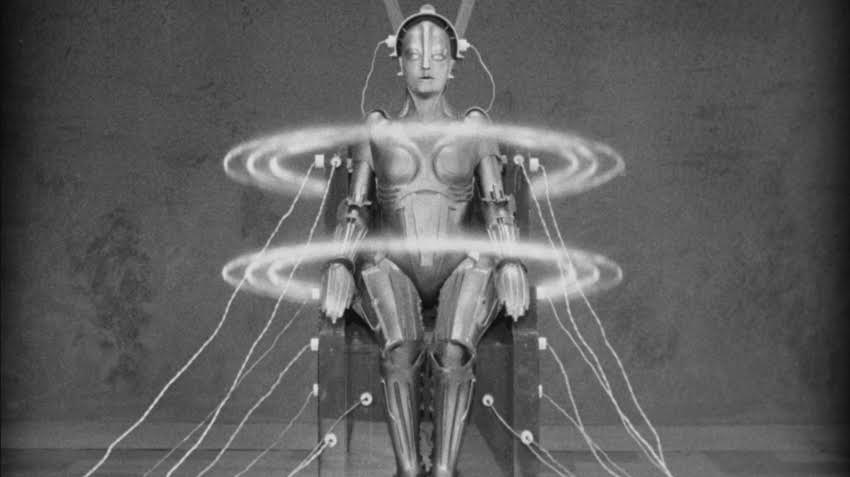
The Russian Revolution not only radically reshaped social and political institutions in the soon-to-be Soviet Union, but it also radicalized the arts. “The Romanovs, who ruled Russia for 300 years,” comments Glenn Altschuler at The Boston Globe, used “culture as an instrument of political control.” As the Bolsheviks swept away lumbering czarist elitism, they brought with them an avant-gardism that also sought to be populist and proletarian—spearheaded by such experimental artists as filmmaker Dziga Vertov, poet, futurist actor, and artist Vladimir Mayakovsky, and “suprematist” painter Kazimir Malevich. While many of these artists were denounced as bourgeois obscurantists when the dogmas of socialist realism became their own instruments of political control, for several years, the nascent Communist state produced some of the most forward-thinking art, music, dance, and film the world had yet seen.
That includes some of the first fully synthetic music ever made, created by innovative methods that predated synthesizers by several decades. We’ve likely all heard of the Theremin, for example, invented in 1919 by Soviet engineer Leon Theremin. By the 1930s, other inventive technologists and composers had begun to experiment with oscilloscopes and magnetic tape, cutting or drawing waveforms by hand to create synthetic sounds.
One avant-garde Soviet composer, Arseny Avraamov became inspired by the advent of sound recording technology in film. The process of optical sound uses an audio track recorded on a separate negative that runs parallel with the film (see it explained above). After the development of this technology, writes Paul Gallagher at Dangerous Minds, Bauhaus artist László Moholy-Nagy suggested that “a whole new world of abstract sound could be created from experimentation with the optical film sound track.”
Taking up the challenge after the first Russian sound film—1929’s The Five Year Plan—Avraamov “produced (possibly) the first short film with a hand-drawn synthetic soundtrack.” One very short example of his technique, at the top of the post, may not sound like much to us, but it preserves a fascinating technique and a look at what might have been had this technique, and others like it, borne more fruit. Monoskop describes Avraamov as “a composer, music theorist, performance instigator, expert in Caucusian folk music, [and] outspoken critic of the classical twelve-tone system.” He was also the commissar of a ministry set up to encourage “the development of a distinctly proletarian art and literature.” It’s not entirely clear how what he called “ornamental sound” techniques fit that purpose. But along with innovators like Evgeny Sholpo and Nikolai Voinov—whose fascinating experiments you can hear above and below—Avraamov showed that technologies generally used to deliver entertainment and propaganda to passive mass audiences could be manipulated by hand to create something entirely unique.
The experiments of these sound pioneers perhaps held little appeal for the average Russian, but they were enthusiastically written up in a 1936 issue of American magazine Modern Mechanix. “Voinov and Avraamov,” notes Gallagher, “briefly formed a research institute in Moscow, where they hoped to create synthetic voices and understand the musical language of geometric shapes. It didn’t last and, alas, closed within a year.”
We're hoping to rely on loyal readers, rather than erratic ads. Please click the Donate button and support Open Culture. You can use Paypal, Venmo, Patreon, even Crypto! We thank you!
Open Culture scours the web for the best educational media. We find the free courses and audio books you need, the language lessons & educational videos you want, and plenty of enlightenment in between.