Benedict Cumberbatch Reads Albert Camus’ Touching Thank You Letter to His Elementary School Teacher

It’s nev­er too late to thank the teacher who changed your life.

Oprah Win­frey fell to pieces when she was reunit­ed on air with Mrs. Dun­can, her fourth grade teacher, her “first lib­er­a­tor” and “val­ida­tor.”

Patrick Stew­art used his knight­hood cer­e­mo­ny as an occa­sion to thank Cecil Dor­mand, the Eng­lish teacher who told him that Shakespeare’s works were not dra­mat­ic poems, but plays to be per­formed on one’s feet.

And Bill Gates had kind words for Blanche Caffiere, the for­mer librar­i­an at View Ridge Ele­men­tary in Seat­tle, who des­tig­ma­tized his role as a “messy, nerdy boy who was read­ing lots of books.”

One of the most heart­felt stu­dent-to-teacher trib­utes is that of Nobel Prize-win­ning author and philoso­pher Albert Camus to Louis Ger­main, a father sub­sti­tute whose class­room was a wel­come reprieve from the extreme pover­ty Camus expe­ri­enced at home. Ger­main per­suad­ed Camus’ wid­owed moth­er to allow Camus to com­pete for the schol­ar­ship that enabled him to attend high school.

As read aloud by actor Bene­dict Cum­ber­batch, above, at Let­ters Live, a “cel­e­bra­tion of the endur­ing pow­er of lit­er­ary cor­re­spon­dence,” Camus’ 1957 mes­sage to Ger­main is an exer­cise in humil­i­ty and sim­ply stat­ed grat­i­tude:

Dear Mon­sieur Ger­main,

I let the com­mo­tion around me these days sub­side a bit before speak­ing to you from the bot­tom of my heart. I have just been giv­en far too great an hon­our, one I nei­ther sought nor solicit­ed.

But when I heard the news, my first thought, after my moth­er, was of you. With­out you, with­out the affec­tion­ate hand you extend­ed to the small poor child that I was, with­out your teach­ing and exam­ple, none of all this would have hap­pened.

I don’t make too much of this sort of hon­our. But at least it gives me the oppor­tu­ni­ty to tell you what you have been and still are for me, and to assure you that your efforts, your work, and the gen­er­ous heart you put into it still live in one of your lit­tle school­boys who, despite the years, has nev­er stopped being your grate­ful pupil. I embrace you with all my heart.

Albert Camus

The let­ter was grate­ful­ly received by his for­mer teacher, who wrote back a year and a half lat­er to say in part:

If it were pos­si­ble, I would squeeze the great boy whom you have become, and who will always remain for me “my lit­tle Camus.”

He com­pli­ment­ed his lit­tle Camus on not let­ting fame go to his head, and urged him to con­tin­ue mak­ing his fam­i­ly pri­or­i­ty. He shared some fond mem­o­ries of Camus as a gen­tle, opti­mistic, intel­lec­tu­al­ly curi­ous lit­tle fel­low, and praised his moth­er for doing her best in dif­fi­cult cir­cum­stances.

Read­ers, please use the com­ments sec­tion to share with us the teach­ers deserv­ing of your thanks.

You can find this let­ter, and many more, in the great Let­ters of Note book.

Relat­ed Con­tent:

Albert Camus: The Mad­ness of Sin­cer­i­ty — 1997 Doc­u­men­tary Revis­its the Philosopher’s Life & Work

Albert Camus, Edi­tor of the French Resis­tance News­pa­per Com­bat, Writes Mov­ing­ly About Life, Pol­i­tics & War (1944–47)

Hear Albert Camus Deliv­er His Nobel Prize Accep­tance Speech (1957)

Ayun Hal­l­i­day is an author, illus­tra­tor, the­ater mak­er and Chief Pri­ma­tol­o­gist of the East Vil­lage Inky zine.  Her play Zam­boni Godot is open­ing in New York City in March 2017. Fol­low her @AyunHalliday.

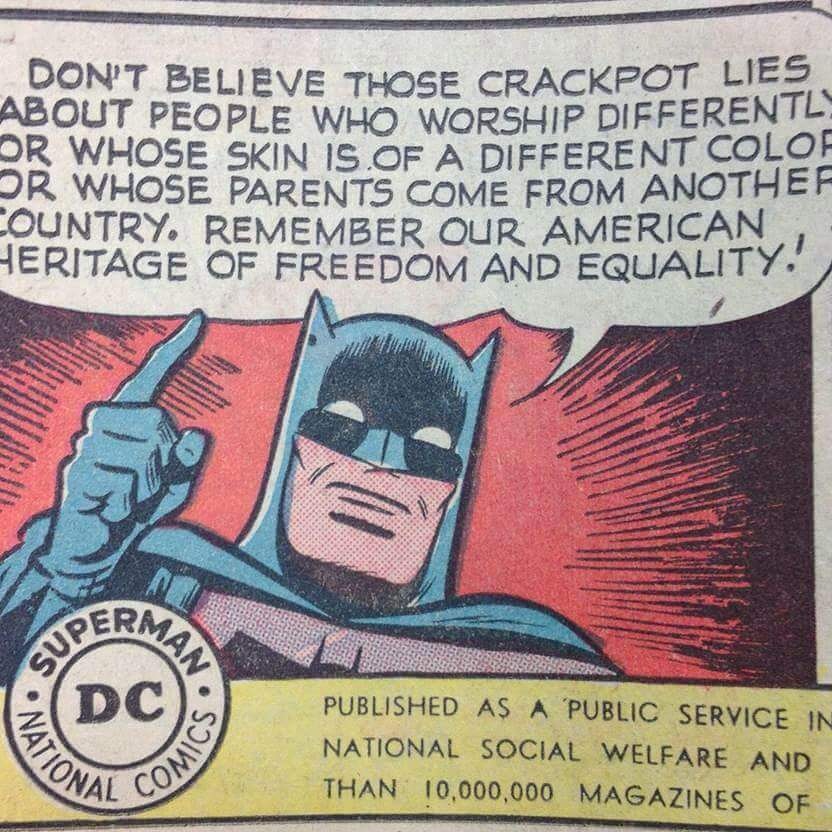
1950s Batman Cartoon Tells Kids: “Don’t Believe Those Crackpot Lies About People Who Worship Differently”

“Don’t believe those crack­pot lies about peo­ple who wor­ship dif­fer­ent­ly, or whose skin is of a dif­fer­ent col­or, or whose par­ents come from anoth­er coun­try. Remem­ber our Amer­i­can her­itage of free­dom and equal­i­ty!”

Blow the dust off the vin­tage 1950s Pub­lic Ser­vice Announce­ment (PSA) from Bat­man.

Back dur­ing the Eisen­how­er era, refugees from World War II did­n’t exact­ly get a warm recep­tion in the Unit­ed States. And so the forces of good, DC Comics, cre­at­ed some PSAs designed to encour­age kids to treat new cit­i­zens with kind­ness and under­stand­ing. You can see one frame from a larg­er car­toon above. The mak­ers of Super­man car­toon also cre­at­ed their own tol­er­ance poster. Check it out here. And hope­ful­ly you’ll help spread the same mes­sage today.

via Boing Boing

Relat­ed Con­tent

1950 Super­man Poster Urged Kids to Defend All Amer­i­cans, Regard­less of Their Race, Reli­gion or Nation­al Ori­gin

Bat­man Stars in an Unusu­al Car­toon Adap­ta­tion of Dostoyevsky’s Crime and Pun­ish­ment

The Evo­lu­tion of Bat­man in Cin­e­ma: From 1939 to Present

by | Permalink | Make a Comment ( 4 ) |

Kraftwerk Plays a Live 40-Minute Version of their Signature Song “Autobahn:” A Soundtrack for a Long Road Trip (1974)

“The joys of motor­ing are more or less fic­tion­al,” wrote Zel­da Fitzger­ald to Lud­low Fowler, a friend of her hus­band F. Scott, in 1920. But what an inspir­ing breadth of fic­tion they’ve inspired on the page and screen, most­ly set along the seem­ing­ly end­less road-miles of Amer­i­ca. But look over to Ger­many, a land of dri­vers renowned for their love of and respect for the auto­mo­bile, and you find a whole oth­er sort of, as it were, dri­ving-dri­ven cre­ativ­i­ty. Most famous­ly, 34 years after Fitzger­ald wrote to Fowler, a young Düs­sel­dorf band by the name of Kraftwerk looked to the joys of motor­ing and laid down their sig­na­ture song: “Auto­bahn.”

Tak­ing up 22 full min­utes of the epony­mous 1974 album (though less than three and a half as a sin­gle), “Auto­bahn,” which rock crit­ic Robert Christ­gau described as ema­nat­ing from “a machine deter­mined to rule all music with a steel hand and some mylar,” uses the kind of elec­tron­ic com­po­si­tion tech­niques Kraftwerk would go on to pop­u­lar­ize to evoke the feel­ing of move­ment on the tit­u­lar Ger­man high­way sys­tem.

“We used to dri­ve a lot,” per­cus­sion­ist Wolf­gang Flür once recalled. “We used to lis­ten to the sound of dri­ving, the wind, pass­ing cars and lor­ries, the rain, every moment the sounds around you are chang­ing, and the idea was to rebuild those sounds on the synth.”

But as vet­er­an road-trip­pers know, you aren’t real­ly dri­ving unless the dri­ving hyp­no­tizes you: not only should you spend pro­longed stretch­es of time on the road, you should ide­al­ly do it to a rhyth­mi­cal­ly and tem­po­ral­ly suit­able son­ic back­drop. And so we offer you this live 40-minute ver­sion of “Auto­bahn” which, in the words of Elec­tron­ic Beats, “demon­strates what a musi­cal force the group was back in the day,” tak­en from “a show in the Ger­man city of Lev­erkusen that fus­es the group’s lat­ter-era tech­no-futur­ism with its ear­li­er free-jazz psy­che­del­ic freak­i­ness.” To keep the road-robot mood rolling, why not fire up the ani­mat­ed “Auto­bahn” music video from 1979 we fea­tured last year? But please, don’t watch while you dri­ve — espe­cial­ly if there’s no speed lim­it.

via Elec­tron­ic Beats

Relat­ed Con­tent:

The Psy­che­del­ic Ani­mat­ed Video for Kraftwerk’s “Auto­bahn” from 1979

Kraftwerk’s “The Robots” Per­formed by Ger­man First Graders in Adorable Card­board Robot Out­fits

Kraftwerk’s First Con­cert: The Begin­ning of the End­less­ly Influ­en­tial Band (1970)

Based in Seoul, Col­in Mar­shall writes and broad­casts on cities and cul­ture. He’s at work on a book about Los Ange­les, A Los Ange­les Primer, the video series The City in Cin­e­ma, the crowd­fund­ed jour­nal­ism project Where Is the City of the Future?, and the Los Ange­les Review of Books’ Korea Blog. Fol­low him on Twit­ter at @colinmarshall or on Face­book.

How Animated Cartoons Are Made: A Vintage Primer Filmed Way Back in 1919

Many tech­niques shown in Bray Stu­dios’ 1919 short How Ani­mat­ed Car­toons are Made, above, were ren­dered obso­lete by dig­i­tal advance­ments, but its 21-year-old star, ani­ma­tor Wal­lace Carl­son, seems as if he would fit right in at Cal Arts or Pratt, Class of 2017.

Like many of today’s work­ing ani­ma­tors, the indus­try pio­neer got start­ed ear­ly, get­ting atten­tion (and a dis­tri­b­u­tion deal!) for work made as a young teen.

His com­ic sen­si­bil­i­ties also sug­gest that young Carl­son would’ve found a place among the 21st-century’s ani­ma­tion greats (and soon-to-be-greats).

It doesn’t hurt that he’s cute, in an indie Williams­burg Dandy sort of way.

The vin­tage feel of his lit­tle instruc­tion­al film is pret­ty hip these days. It could be the work of a very par­tic­u­lar kind of mil­len­ni­al, famil­iar to fans of Girls, Search Par­ty, or oth­er shows whose char­ac­ters spend a lot of time in cafes, mak­ing art that will find its great­est audi­ence on the inter­net.

You know, down­load some silent clips from the Prelinger Archives, browse the Free Music Archive for a suit­ably jan­g­ly old time tune, and put it all togeth­er in iMovie, mess­ing around with title fonts until you achieve the desired effect. That’s what Carl­son might have been doing, had he been born a hun­dred years lat­er.

Some of his (silent) obser­va­tions about his craft still ring true.

Unless you’re work­ing on your own thing, it’s a good idea to get the boss’ bless­ing on your script before embark­ing on the painstak­ing ani­ma­tion process.

And char­ac­ter eye­brow move­ments remain an excel­lent sto­ry­telling device.

Ani­ma­tors whose tal­ents are more visu­al than ver­bal could take a les­son from Carlson’s kicky peri­od dia­logue—“Gee I just bust­ed a win­dow! Hope I don’t get pinched.”—though I’d advise against turn­ing a character’s dis­abil­i­ty into a punch­line.

While today’s young ani­ma­tors have lit­tle to no expe­ri­ence with film pro­cess­ing, Carlson’s exhaus­tion after pump­ing out draw­ing after draw­ing may strike a chord. The dev­il is still in the details for any­one seek­ing to pro­duce work of a high­er qual­i­ty than that which can be achieved with pur­chase of an app.

It’s also pret­ty cool to see Carl­son pre­fig­ur­ing white board ani­ma­tion 56 years before the inven­tion of dry erase mark­ers, as he demon­strates how to set a scene using his Lit­tle Ras­cals-esque char­ac­ters Mamie and Dreamy Dud.

Relat­ed Con­tent:

Ger­tie the Dinosaur: The Moth­er of all Car­toon Char­ac­ters (1914)

Ear­ly Japan­ese Ani­ma­tions: The Ori­gins of Ani­me (1917–1931)

Win­sor McCay Ani­mates the Sink­ing of the Lusi­ta­nia in a Beau­ti­ful Pro­pa­gan­da Film (1918)

Ayun Hal­l­i­day is an author, illus­tra­tor, the­ater mak­er and Chief Pri­ma­tol­o­gist of the East Vil­lage Inky zine.  She used one of the allud­ed-to archives to cre­ate the trail­er for her play, Zam­boni Godot, open­ing in New York City next month. Fol­low her @AyunHalliday.

Stream Marc Maron’s Excellent, Long Interview with The Band’s Robbie Robertson

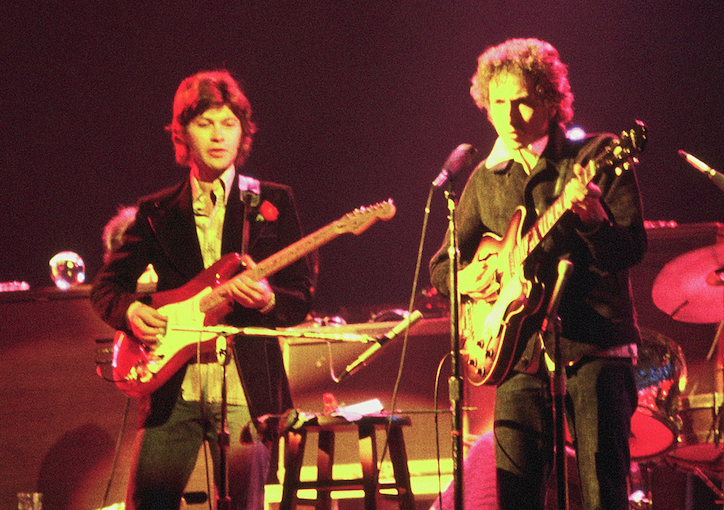
Image of Robert­son (left) and Bob Dylan (right) by Jim Sum­maria, via Wiki­me­dia Com­mons

A quick heads up: Marc Maron released this week a long, prob­ing and quite excel­lent inter­view with The Band’s Rob­bie Robert­son. The con­ver­sa­tion gives you:

the full low­down on the his­to­ry of The Band, from its ori­gins as a back­ing group to its final bow with The Last Waltz. Rob­bie talks about being with Bob Dylan when he went elec­tric and deal­ing with the blow­back of that, and he explains how he came to have such a great work­ing rela­tion­ship with Mar­tin Scors­ese on many of the direc­tor’s films.

You can stream the inter­view below. It’s worth lis­ten­ing to Maron’s impas­sioned mono­logue. But if you want to skip straight to the inter­view itself, then jump to the 15 minute mark.

Robert­son recent­ly pub­lished a new mem­oir called Tes­ti­mo­ny, and I should point out that you can down­load it as a free audio­book if you take part in Audible.com’s 30 day free tri­al pro­gram. Get details on Audi­ble’s free tri­al here.

If you would like to sign up for Open Culture’s free email newslet­ter, please find it here. It’s a great way to see our new posts, all bun­dled in one email, each day.

If you would like to sup­port the mis­sion of Open Cul­ture, con­sid­er mak­ing a dona­tion to our site. It’s hard to rely 100% on ads, and your con­tri­bu­tions will help us con­tin­ue pro­vid­ing the best free cul­tur­al and edu­ca­tion­al mate­ri­als to learn­ers every­where. You can con­tribute through Pay­Pal, Patre­on, and Ven­mo (@openculture). Thanks!

Relat­ed Con­tent:

Watch The Band Play “The Weight,” “Up On Crip­ple Creek” and More in Rare 1970 Con­cert Footage

Mar­tin Scors­ese Cap­tures Lev­on Helm and The Band Per­form­ing “The Weight” in The Last Waltz

Jeff Bridges Nar­rates a Brief His­to­ry of Bob Dylan’s Base­ment Tapes

Hear an Hour of the Jazzy Background Music from the Original 1967 Spider-Man Cartoon

Ray Ellis had a six-decade career as a pro­duc­er, arranger, and jazz com­pos­er. And while he’s best known for arrang­ing music for Bil­lie Hol­i­day’s Lady in Satin (1958), he also enjoyed a long career orches­trat­ing music for tele­vi­sion. Work­ing under a pseu­do­nym “Yvette Blais” (his wife’s name), Ellis com­posed back­ground music for the car­toon stu­dio Fil­ma­tion between 1968 and 1982. And, dur­ing the late 60s, he notably cre­at­ed the back­ground and inci­den­tal music for the orig­i­nal Spi­der-Man car­toons.

Above, hear Ray Ellis’ Spi­der-Man sound­track. The show’s talk­ing parts and sound effects have been removed as much as pos­si­ble, then “pieced back togeth­er into com­plete form,” by a YouTu­ber who uses the moniker “11db11.” All of the music from Sea­son 1 is includ­ed, plus many record­ings from Sea­sons 2 and 3. It’s worth not­ing that the 52 episodes from the orig­i­nal 1967 Spi­der-Man TV series have been com­plete­ly restored. You can pur­chase them on DVD online.

If you would like to sign up for Open Culture’s free email newslet­ter, please find it here. It’s a great way to see our new posts, all bun­dled in one email, each day.

If you would like to sup­port the mis­sion of Open Cul­ture, con­sid­er mak­ing a dona­tion to our site. It’s hard to rely 100% on ads, and your con­tri­bu­tions will help us con­tin­ue pro­vid­ing the best free cul­tur­al and edu­ca­tion­al mate­ri­als to learn­ers every­where. You can con­tribute through Pay­Pal, Patre­on, and Ven­mo (@openculture). Thanks!

via Retroist

Relat­ed Con­tent:

The Math­e­mat­ics of Spi­der­man and the Physics of Super­heroes

Down­load Over 22,000 Gold­en & Sil­ver Age Com­ic Books from the Com­ic Book Plus Archive

Crime Jazz: How Miles Davis, Count Basie & Duke Elling­ton Cre­at­ed Sound­tracks for Noir Films & TV

Watch Miles Davis Impro­vise Music for Ele­va­tor to the Gal­lows, Louis Malle’s New Wave Thriller (1958)

by | Permalink | Make a Comment ( 4 ) |

20,000 Letters, Manuscripts & Artifacts From Sigmund Freud Get Digitized and Made Available Online

In his intro­duc­tion to the 2010 essay col­lec­tion Freud and Fun­da­men­tal­ism, Stathis Gour­gouris defines fun­da­men­tal­ism as “thought that dis­avows mul­ti­plic­i­ties of mean­ing, abhors alle­gor­i­cal ele­ments, and strives toward an exclu­sion­ary ortho­doxy.” While there may be both reli­gious and sec­u­lar ver­sions of such ide­olo­gies world­wide, we can trace the word itself to an Evan­gel­i­cal move­ment in the U.S., and to a set of beliefs that endures today among around a third of all Amer­i­cans and has “ani­mat­ed America’s cul­ture wars for over eighty years,” writes David Adams. The fun­da­men­tal­ist move­ment first took shape in 1920, just as Sig­mund Freud wrote and pub­lished his Beyond the Plea­sure Prin­ci­ple.

It was in that book that Freud intro­duced the con­cept of the “death dri­ve.” Adams argues that “the ‘fun­da­men­tal­ist’ and the ‘death dri­ve,’ are twins: they came into being simul­ta­ne­ous­ly,” and “their simul­tane­ity is not mere­ly an acci­dent. Both of these con­cepts are respond­ing to the pro­found cul­tur­al and psy­cho­log­i­cal cri­sis result­ing from the First World War.” Every calami­ty since World War I has seemed to rean­i­mate that ear­ly 20th cen­tu­ry strug­gle between modernism—with its plu­ral­ist val­ues and empha­sis on cre­ativ­i­ty and experiment—and fun­da­men­tal­ism, with its com­pul­sion for rigid hier­ar­chy and destruc­tion. And we might see, as Adams does, such cul­tur­al con­flicts as anal­o­gous to those Freud wrote of between Eros—the plea­sure principle—and the dri­ve toward death.

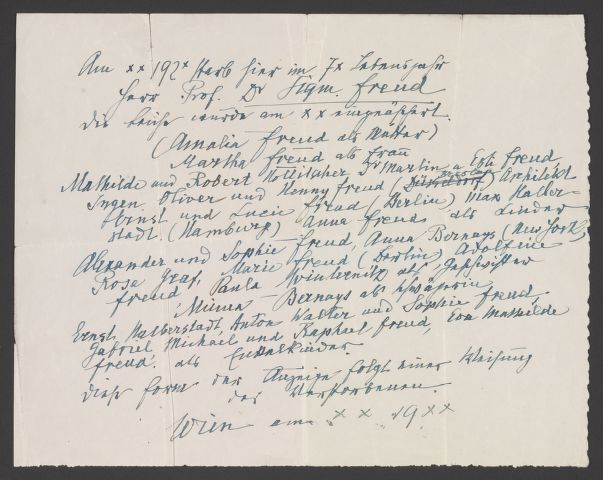
The Great War turned Freud’s thoughts in this direc­tion, as did the racism and anti-Semi­tism tak­ing hold in both Europe and the U.S. His the­o­ry of an instinc­tu­al dri­ve toward the destruc­tion of self and oth­ers seemed to antic­i­pate the hor­ror of the World War yet to come. Freud inte­grat­ed the con­cept into his social the­o­ry ten years lat­er in Civ­i­liza­tion and its Dis­con­tentsin which he wrote that “the incli­na­tion to aggres­sion” was “the great­est imped­i­ment to civ­i­liza­tion.” While med­i­tat­ing on the death instinct as a psy­cho­an­a­lyt­ic and social con­cept, Freud also pon­dered his own mor­tal­i­ty. Just above, you can see the draft of a death notice that he wrote for him­self dur­ing the 1920s. This comes to us from the Library of Congress’s new col­lec­tion of Sig­mund Freud papers, which con­tains arti­facts and man­u­scripts dat­ing from the 6th cen­tu­ry B.C.E. (a Greek stat­ue) to cor­re­spon­dence dis­cov­ered in the late 90s.

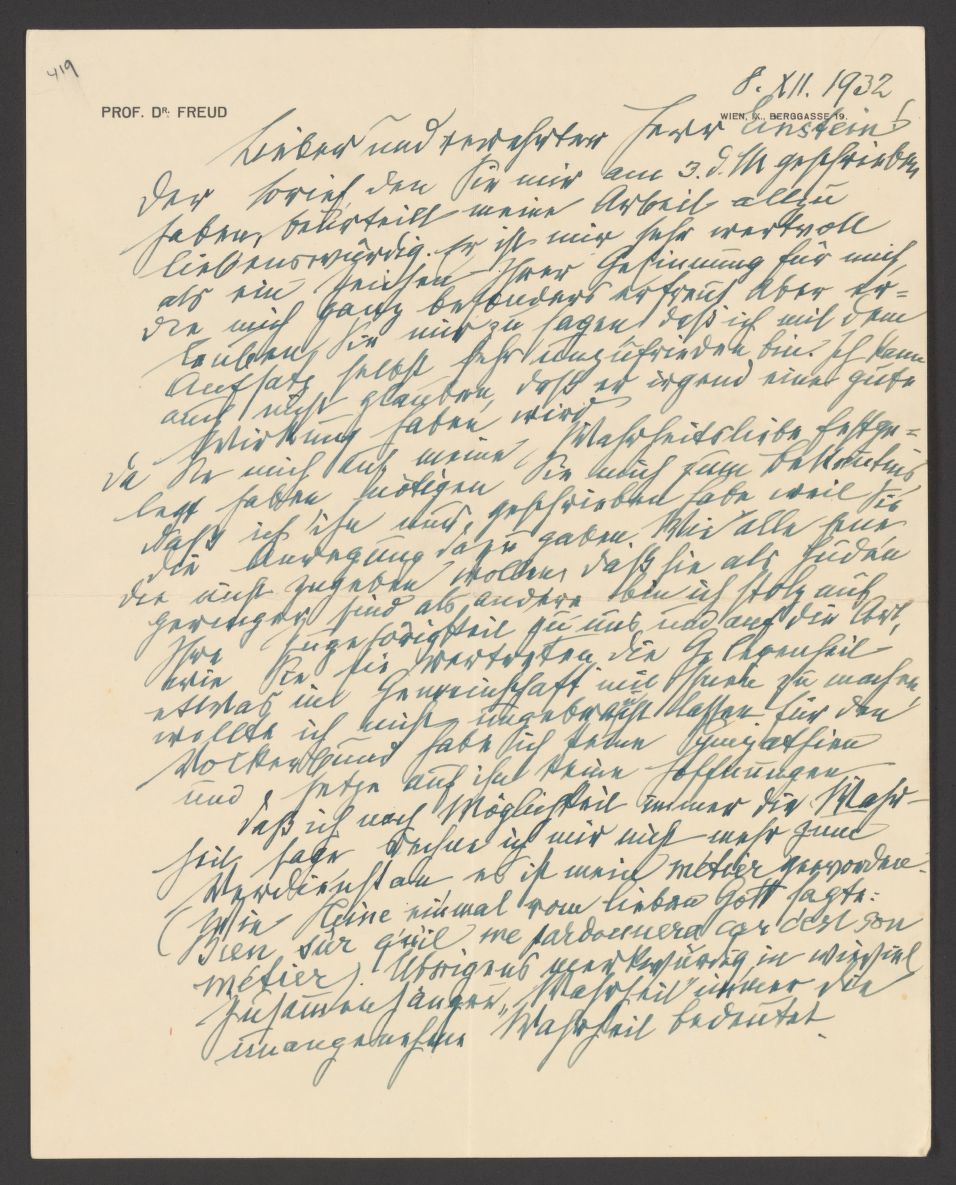
The “bulk of the mate­r­i­al,” writes the LoC, dates “from 1891 to 1939,” and the “dig­i­tized col­lec­tion doc­u­ments Freud’s found­ing of psy­cho­analy­sis, the mat­u­ra­tion of psy­cho­an­a­lyt­ic the­o­ry, the refine­ment of its clin­i­cal tech­nique, and the pro­lif­er­a­tion of its adher­ents and crit­ics.” Much of this archive may be of inter­est only to the spe­cial­ist schol­ar of Freud’s life and work, with “legal doc­u­ments, estate records… school records” of the Freud chil­dren, and oth­er mun­dane bureau­crat­ic paper­work. But there are also let­ters rep­re­sent­ing “near­ly six hun­dred cor­re­spon­dents,” such as Freud’s one­time pro­tégé Carl Jung and Albert Ein­stein, with whom Freud cor­re­spond­ed in 1932 on the sub­ject of “Why war?” (See Freud’s let­ter to Ein­stein above.)

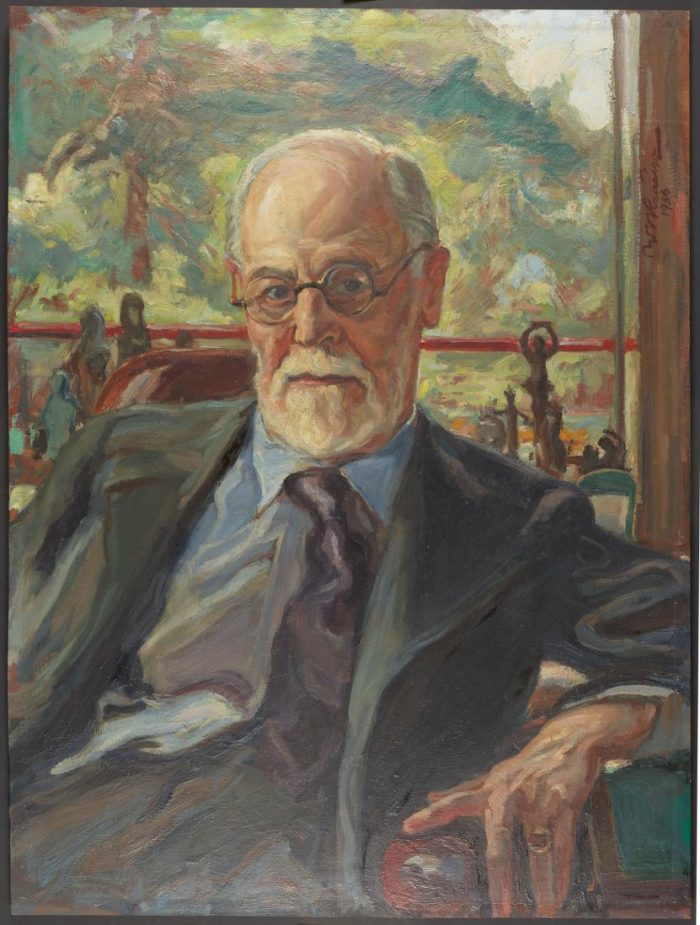
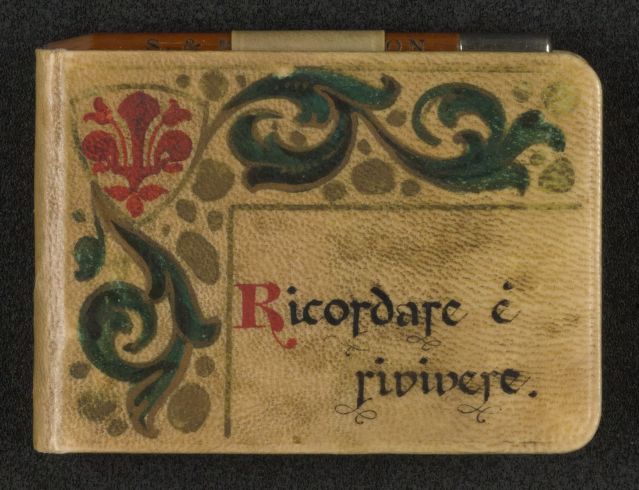
The doc­u­ments are near­ly all in Ger­man and the hand­writ­ten let­ters, notes, and drafts will be dif­fi­cult to read even for speak­ers of the lan­guage. Yet, there are also arti­facts like the 1936 por­trait of Freud at the top, by Vic­tor Krausz, the pock­et note­book Freud car­ried between 1907 and 1908, just above, and—below—a pic­ture of a pock­et watch giv­en to Freud by physi­cian Max Schur, whose fam­i­ly left Aus­tria with Freud’s in 1938. You can browse the online col­lec­tion of over 20,000 items by date, name, loca­tion, and oth­er indices, and all images are down­load­able in high res­o­lu­tion scans. 

Relat­ed Con­tent:

Sig­mund Freud Speaks: The Only Known Record­ing of His Voice, 1938

The Famous Let­ter Where Freud Breaks His Rela­tion­ship with Jung (1913)

Albert Einstein​ & Sig­mund Freud​ Exchange Let­ters and Debate How to Make the World Free from War (1932)

Josh Jones is a writer and musi­cian based in Durham, NC. Fol­low him at @jdmagness

The Filmmaking of Martin Scorsese Demystified in 6 Video Essays

Some film­mak­ers of the 1970s “New Hol­ly­wood” era have passed away, retired, or fad­ed into rel­a­tive obscu­ri­ty, but each movie Mar­tin Scors­ese makes still meets with great inter­est from crit­ics and movie­go­ers alike. His lat­est pic­ture Silence, despite its out­ward­ly dry sub­ject mat­ter of 17th-cen­tu­ry Jesuit priests in Japan, has remained a sub­ject of con­ver­sa­tion and indeed debate since its release at the end of last year. Coin­ci­den­tal­ly, its title evokes one of the sig­na­ture tech­niques that have kept his work engag­ing over the decades, no mat­ter its sto­ry, set­ting, or theme: his uncon­ven­tion­al and pow­er­ful use of moments with­out sound or music, explored in the Every Frame a Paint­ing video essay “The Art of Silence” above.

One espe­cial­ly effec­tive exam­ple of Scors­ese’s silence comes from Good­fel­las, quite pos­si­bly the most acclaimed of his gang­ster movies — and indeed, one of the most acclaimed works in his robust fil­mog­ra­phy.

The “film break­down” from Film-Drunk Love above gets into what, exact­ly, has already solid­i­fied this quar­ter-cen­tu­ry-old film into a clas­sic, high­light­ing its use of freeze-frames to empha­size par­tic­u­lar­ly sig­nif­i­cant moments in the life of its young mob­ster pro­tag­o­nist as well as the impor­tance of that pro­tag­o­nist’s wife and oth­er female char­ac­ters in moti­vat­ing or observ­ing the events of this high­ly male-ori­ent­ed sto­ry, one that fits well among those of Scors­ese’s favorite sub­jects, a list that includes the police, box­ers, invest­ment bankers, Jesus Christ, and the Rolling Stones.

Scors­ese’s movies may depict a man’s world, but as James Brown once sang, it would­n’t be noth­ing with­out a woman — and this film­mak­er cer­tain­ly knows it. The Press Play video essay above exam­ines the indis­pens­able pres­ence of women in his work, who offer feroc­i­ty, temp­ta­tion, manip­u­la­tion, judg­ment, and moti­va­tion, and often a com­bi­na­tion of all of the above and more, but nev­er friend­ship. “Men can’t be friends with women, Howard,” says Cate Blanchet­t’s Katharine Hep­burn to Leonar­do DiCapri­o’s trou­bled mogul in The Avi­a­tor. “They must pos­sess them or leave them be. It’s a prim­i­tive urge from cave­man days. It’s all in Dar­win: hunt the flesh, kill the flesh, eat the flesh. That’s the male sex all over.”

But Scors­ese works in cin­e­ma, after all, and none of these ele­ments would have a frac­tion of their impact if not deliv­ered with the keen visu­al sense on dis­play since his ele­men­tary-school days. We’ve pre­vi­ous­ly fea­tured the video essays of Anto­nios Papan­to­niou, which pro­vide tech­ni­cal shot-by-shot break­downs of how mas­ter film­mak­ers assem­ble their most mem­o­rable sequences. Scors­ese’s fil­mog­ra­phy can some­times seem made up of noth­ing oth­er than mem­o­rable sequences, but Papan­to­niou picks one from Cape Fear where Scors­ese’s wide-angle lens­es, “con­stant motion,” “ultra quick shots,” and “unset­tling angles and zooms,” the essay argues, put the view­er in the pro­tag­o­nist’s place “and project to us his pri­vate hor­ror.”

Cape Fear came, of course, as a remake—starring Robert de Niro and Nick Nolte—of the epony­mous 1962 psy­cho­log­i­cal thriller with Robert Mitchum and Gre­go­ry Peck. Scors­ese, per­haps Amer­i­ca’s first open­ly cinephilic big-name direc­tor, has made no secret of his knowl­edge of and enthu­si­asm for this his­to­ry of his cho­sen medi­um. In the Good­fel­las break­down, for exam­ple, he describes that pic­ture as an homage to the decades of gang­ster movies that pre­ced­ed it. “Equipped with ency­clo­pe­dic knowl­edge of the medi­um, he draws from its past to inform his work,” argues Steven Bene­dict in his video essay “The Jour­neys of Mar­tin Scors­ese,” a look at how that mas­tery of what has come before allows his own films to not just “explore the human expe­ri­ence” but to “expand cinema’s abil­i­ty to express that expe­ri­ence.”

In 2015 we fea­tured Scors­ese’s list of 85 films every aspir­ing film­mak­er needs to see (this in addi­tion to his 39 essen­tial for­eign films for the young film­mak­er), all of which he men­tioned dur­ing a four-hour inter­view grant­ed to Fast Com­pa­ny. The Fla­vor­wire video essay above illus­trates Scors­ese’s words with clips from the movies he rec­om­mends, mak­ing a crash-course “Mar­tin Scors­ese film school” that encom­pass­es every­thing from Jen­nifer Jones shoot­ing Gre­go­ry Peck in The Duel in the Sun to the “self-con­scious­ness” of Cit­i­zen Kane’s style to the tes­ta­ment to “the pow­er of movies to effect change in the world, to inter­act with life and for­ti­fy the soul” that is neo­re­al­ism. From which cin­e­mat­ic tra­di­tion — or set of tra­di­tions — will Scors­ese draw, and in the process expand and trans­form, next? No doubt this tire­less auteur is just as excit­ed to reveal it as we are to find out.

Relat­ed Con­tent:

Mar­tin Scors­ese Reveals His 12 Favorite Movies (and Writes a New Essay on Film Preser­va­tion)

Mar­tin Scorsese’s Very First Films: Three Imag­i­na­tive Short Works

Revis­it Mar­tin Scorsese’s Hand-Drawn Sto­ry­boards for Taxi Dri­ver

11-Year-Old Mar­tin Scors­ese Draws Sto­ry­boards for His Imag­ined Roman Epic Film, The Eter­nal City

Mar­tin Scors­ese Cre­ates a List of 39 Essen­tial For­eign Films for a Young Film­mak­er

Mar­tin Scors­ese Makes a List of 85 Films Every Aspir­ing Film­mak­er Needs to See

Based in Seoul, Col­in Mar­shall writes and broad­casts on cities and cul­ture. He’s at work on a book about Los Ange­les, A Los Ange­les Primer, the video series The City in Cin­e­ma, the crowd­fund­ed jour­nal­ism project Where Is the City of the Future?, and the Los Ange­les Review of Books’ Korea Blog. Fol­low him on Twit­ter at @colinmarshall or on Face­book.

« Go BackMore in this category... »
Quantcast