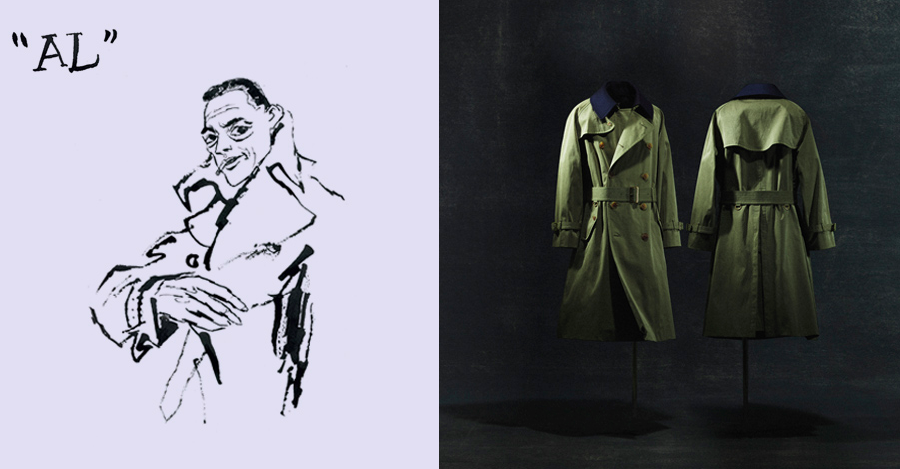
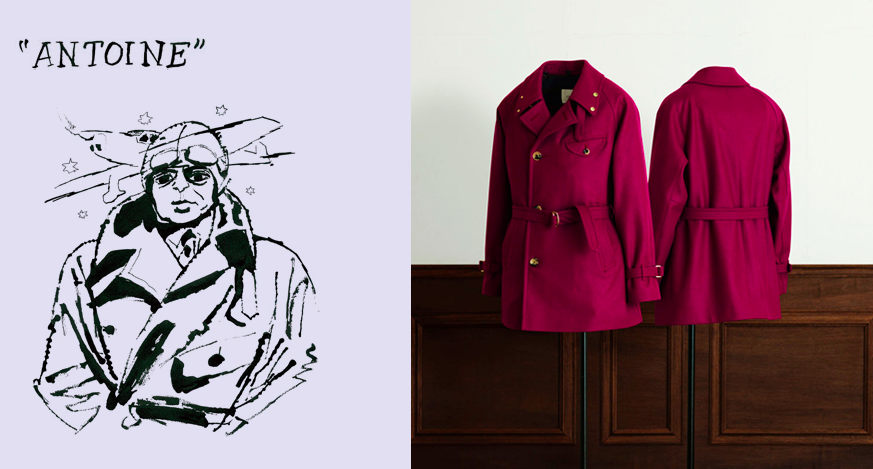
If you follow men’s style in the 21st century, you know that the same names tend to come up as references again and again, from actors like Cary Grant and Steve McQueen to businessmen like Gianni Agnelli and royalty like Prince Charles. But what if we looked to other, less conventional realms of culture for inspiration on what to wear and, more importantly, how to wear it? Over the past few years, Japanese label Cohérence has done just that, designing coats modeled after those worn by the likes of Albert Camus, Jean-Paul Sartre, Marcel Duchamp, and Le Corbusier — and improving upon them with new materials and details.
“I love Dada and Surrealism, jazz music, writers connected to the Lost Generation, and New Wave cinema. Along with the art and culture, there were also the clothes – the heavier fabrics and fuller silhouettes,” says Cohérence designer Kentaro Nakagomi as quoted by men’s style blogger Derek Guy of Die, Workwear! “They were classic, but also modern at the same time.”
If it strikes you as odd that a Japanese operation would dedicate itself to the styles of particular cultural moments in the West, know that modern Japan has quite a history of not just replicating them but reinventing them, told most recently by W. David Marx in his book Ametora: How Japan Saved American Style. Americans, thus far, haven’t constituted a major presence in Cohérence’s collections, though the jazz saxophonist, clarinetist, and composer Sidney Bechet did inspire a Balmacaan.
Though Frenchmen (also including The Little Prince author Antoine de Saint-Exupéry and writer-artist-filmmaker Jean Cocteau) dominate the label’s list of inspirations, it has also made several coats in honor of Léonard Tsuguharu Foujita, the Japanese painter and printmaker who in the early 20th century brought the artistic techniques of his ancestral homeland to his adopted homeland of France. In a way, Foujita stands as a symbol of the whole project, premised as it is on the union of classicism and modernity as well as exchange between Japan and Europe. And were he around today, Foujita, like Cohérence, would surely also have made good use of Instagram.
Based in Seoul, Colin Marshall writes and broadcasts on cities and culture. His projects include the book The Stateless City: a Walk through 21st-Century Los Angeles and the video series The City in Cinema. Follow him on Twitter at @colinmarshall or on Facebook.
An Indian guru travels to the West with teachings of enlightenment, world peace, and liberation from the soul-killing materialist grind. He attracts thousands of followers, some of them wealthy celebrities, and founds a commercial empire with his teachings. No, this isn’t the story of Bhagwan Shree Rajneesh, the head of the religious movement in Wild Wild Country. There was no miraculous city in the Oregon wilds or fleet of Learjets and Rolls Royces. No stockpile of automatic weapons, planned assassinations, or mass poisonings. Decades before those strange events, another teacher, Maharishi Mahesh Yogi inspired mass devotion among students around the world with the peaceful practice of Transcendental Meditation.
Rolling Stone’s Claire Hoffman—who grew up in a TM community—writes of the movement with ambivalence. For most of his disciples, he was a “Wizard of Oz-type character,” she says, distant and mysterious. But much of what we popularly know about TM comes from its most famous adherents, including Jerry Seinfeld, Katy Perry, David Lynch, the Beach Boys, and, of course, The Beatles, who famously traveled to India in 1968, meditated with Mia Farrow, Donovan, and Mike Love, and wrote some of their wildest, most inventive music after a creative slump following the huge success of Sgt. Pepper’s.
“They stayed in Rishikesh,” writes Maria Popova at Brain Pickings, “a small village in the foothills of the Himalayas, considered the capital of yoga. Immersed in this peaceful community and nurtured by an intensive daily meditation practice, the Fab Four underwent a creative growth spurt—the weeks at Rishikesh were among their most fertile songwriting and composing periods, producing many of the songs on The White Album and Abbey Road.” Unlike most of the Maharishi’s followers, The Beatles got a personal audience. The Indian spiritual teacher “helped them through the shock” of their manager Brian Epstein’s death, and helped them tap into cosmic consciousness without LSD.
They left on a sour note—there were allegations of impropriety, and Lennon, being Lennon, got a bit nasty, originally writing The White Album’s “Sexy Sadie” with the lyrics “Maharishi—what have you done? You made a fool of everyone.” But before their falling out with TM’s founder, before even the trip to India, all four Beatles became devoted meditators, sitting for two twenty-minute sessions a day and finding genuine peace and happiness—or “energy,” as Lennon and Harrison describe it in a 1967 interview with David Frost. The next year, happily practicing, and feverishly writing, in India, Lennon received letters from fans, and responded with enthusiasm.
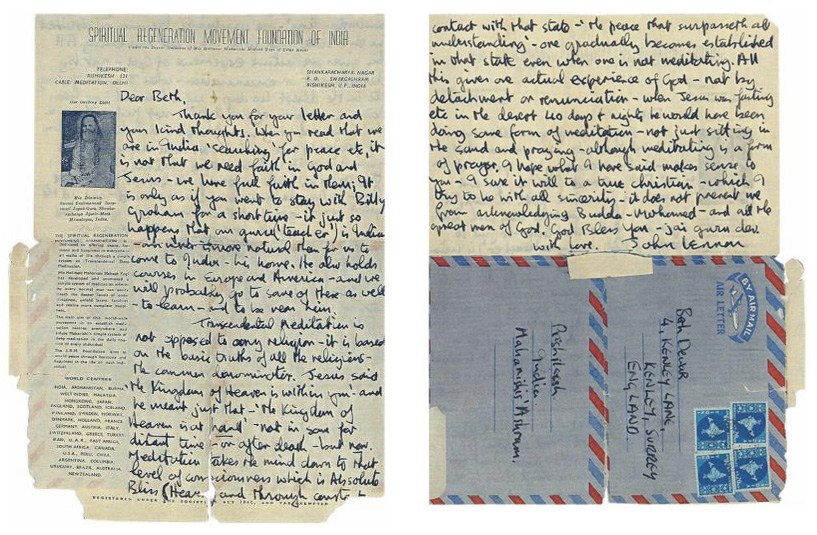
In answer to a letter from a fan named Beth, evidently a devout Christian and apparently threatened by TM and concerned for the bands’ immortal souls, Lennon wrote the following (see his handwritten reply at the top):
Dear Beth:
Thank you for your letter and your kind thoughts. When you read that we are in India searching for peace, etc, it is not that we need faith in God or Jesus — we have full faith in them; it is only as if you went to stay with Billy Graham for a short time — it just so happens that our guru (teacher) is Indian — and what is more natural for us to come to India — his home. He also holds courses in Europe and America — and we will probably go to some of these as well — to learn — and to be near him.
Transcendental meditation is not opposed to any religion — it is based on the basic truths of all religions — the common denominator. Jesus said: “The Kingdom of Heaven is within you” — and he meant just that — “The Kingdom of Heaven is at hand” — not in some far distant time — or after death — but now.
Meditation takes the mind down to that level of consciousness which is Absolute Bliss (Heaven) and through constant contact with that state — “the peace that surpasses all understanding” — one gradually becomes established in that state even when one is not meditating. All this gives one actual experience of God — not by detachment or renunciation — when Jesus was fasting etc in the desert 40 days & nights he would have been doing some form of meditation — not just sitting in the sand and praying — although me it will be a true Christian — which I try to be with all sincerity — it does not prevent me from acknowledging Buddha — Mohammed — and all the great men of God. God bless you — jai guru dev.
With love,
John Lennon
This hardly sounds like the man who imagined no religion. A fan in India wrote Lennon less to inquire and more to acquire, namely money for a trip around the world so that he could “discover the ‘huge treasure’ necessary for achieving inner peace.” Lennon responded with a brief rebuke of the man’s material aspirations, then recommended TM, “through which all things are possible.” (He signs both letters with “jai guru dev,” or “I give thanks to the Guru Dev,” the Maharishi’s teacher. The phrase also appears as the refrain in his “Across the Universe.”)
The letters come from an excellent collection of his correspondence, The John Lennon Letters, which includes other missives extolling the virtues of transcendental meditation. We might take his word for it based on the strength of the creative work he produced during the period. We could also take the word of David Lynch, who describes meditation as the way he catches the creative “big fish.” Or we could go out and find our own methods for expanding our minds and tapping into creative potential.
Delia Derbyshire, composer of the Dr. Who theme song and musical pioneer, has not quite become a household name, but readers of this site surely know who she is, as well should every student of avant garde, electronic, and experimental pop music. Along with other often unsung female electronic composers of the 60s and beyond—like fellow BBC Radiophonic Workshop doyenne, Daphne Oram—Derbyshire brought the early electronic techniques of musique concrete and tape manipulation to a wider audience, who mostly had no idea where the sounds they heard came from.
As part of the unit responsible for creating the sounds of British television, Derbyshire’s unusual instincts took her to places no composer had ever ventured before. In her sound work for a documentary called The World About Us, on the Tuareg people of the Sahara, she “used her voice for the sound of the [camels’] hooves,” writes her onetime colleague Brian Hodgson at The Guardian, “cut up into an obbligato rhythm. And she added a thin, high electronic sound using virtually all the filters and oscillators in the workshop.” As Derbyshire recalls it:
My most beautiful sound at the time was a tatty BBC lampshade. It was the wrong colour, but it had a beautiful ringing sound to it. I hit the lampshade, recorded that, faded it up into the ringing part without the percussive start. I… reconstructed the sound of the workshop’s famous 12 oscillators to give it a whooshing sound. So the camels rode off into the sunset with my voice in their hooves and a green lampshade on their backs.
What the color of the lampshade had to do with the sound, only Derbyshire could know for sure. But it clearly had a psychological impact on the way she heard it. “I suppose in a way,” she said, “I was experimenting in psycho-acoustics.”
This was an immersive experience for her, and for everyone who heard the results, no matter whether they could identify what it was they were hearing. Derbyshire’s sound design revolutionized the industry, but we cannot overlook her extracurricular work—experimental sound collages and musical pieces made with several close collaborators, including Hodgson, which sound remarkably ahead of their time.
In 1964, Derbyshire collaborated with poet and dramatist Barry Bermange on The Dreams, a work that showed her, Hodgson writes, “at her elegant best.” The two put together a collage, with people describing their dreams in snippets of cut-up monologues, backed by a pulsing, throbbing, buzzing, humming ominous score. (Listen to “Running” further up.) In 1966, she worked with David Bowie’s favorite performer Anthony Newley on “Moogles Bloogles,” above, which Ubuweb calls “an unreleased perv-pop classic in the 1966 novelty vein.” She was not privy to what the song would become. “I’d written this beautiful innocent tune,” she said, “all sensitive love and innocence, and he made it into a dirty old raincoat song. But he was really chuffed!”
In the late sixties, Derbyshire joined Hodgson and bass player David Vorhaus to form White Noise, an experimental electronic pop project whose “Love Without Sound” you can hear at the top of the post (behind scenes from Jean Cocteau’s Orphée.) In 1972, Derbyshire teamed with Hodgson and Don Harper, all “moonlighting from day jobs” at the BBC, for an album called Electrosonic, a “haunting batch of spare electronic tracks.” Just above, hear “Liquid Energy (Bubbling Rhythm)” from that collection.
These tracks represent just a fraction of the Derbyshire music available at Ubuweb’s Delia Derbyshire library, including a compilation of Radiophonic Workshop soundtrack pieces like “Environmental Studies,” above, from 1969, as well as an audio documentary on her work made in 2010. Soon after her early 70s musical experiments, Derbyshire retired from music to work as a radio operator and in an art gallery and bookshop, disgusted with the state of contemporary sound. But in her last few years, she had the pleasure of watching a new generation discover her work. As Hodgson writes in his touching eulogy, “the technology she had left behind was finally catching up to her vision.”
There may be no sweeter sound to the ears of Open Culture writers than the words “public domain”—you might even go so far as to call it our “cellar door.” The phrase may not be as musical, but the fact that many of the world’s cultural treasures cannot be copyrighted in perpetuity means that we can continue to do what we love: curating the best of those treasures for readers as they appear online. Public domain means companies can sell those works without incurring any costs, but it also means that anyone can give them away for free. “Anyone can re-publish” public domain works, notes Lifehacker, “or chop them up and use them in other projects.” And thereby emerges the remixing and repurposing of old artifacts into new ones, which will themselves enter the public domain of future generations.
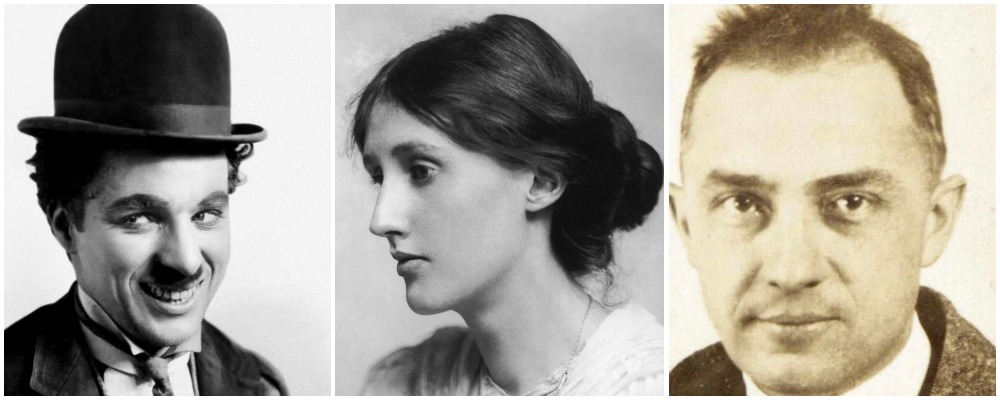
Some of those future works of art may even become the next Great American Novel, if such a thing still exists as anything more than a hackneyed cliché. Of course, no one seriously goes around saying they’re writing the “Great American Novel,” unless they’re Philip Roth in the 70s or William Carlos Williams (top right) in the 20s, who both somehow pulled off using the phrase as a title (though Roth’s book doesn’t quite live up to it.) Where Roth casually used the concept in a light novel about baseball, Williams’ The Great American Novel approached it with deep concern for the survival of the form itself. His modernist text “engages the techniques of what we would now call metafiction,” writes literary scholar April Boone, “to parody worn out formulas and content and, ironically, to create a new type of novel that anticipates postmodern fiction.”
We will all, as of January 1, 2019, have free, unfettered access to Williams’ metafictional shake-up of the formulaic status quo, when “hundreds of thousands of… books, musical scores, and films first published in the United States during 1923” enter the public domain, as Glenn Fleishman writes at The Atlantic. Because of the complicated history of U.S. copyright law—especially the 1998 “Sonny Bono Act” that successfully extended a copyright law from 50 to 70 years (for the sake, it’s said, of Mickey Mouse)—it has been twenty years since such a massive trove of material has become available all at once. But now, and “for several decades from 2019 onward,” Fleishman points out, “each New Year’s Day will unleash a full year’s worth of works published 95 years earlier.”
In other words, it’ll be Christmas all over again in January every year, and while you can browse the publication dates of your favorite works yourself to see what’s coming available in coming years, you’ll find at The Atlantic a short list of literary works included in next-year’s mass-release, including books by Aldous Huxley, Winston Churchill, Carl Sandburg, Edith Wharton, and P.G. Wodehouse. Lifehacker has several more extensive lists, which we excerpt below:
Cecil B. DeMille’s (first, less famous, silent version of) The Ten Commandments
Harold Lloyd’s Safety Last!, including that scene where he dangles off a clock tower, and his Why Worry?
A long line-up of feature-length silent films, including Buster Keaton’s Our Hospitalityand Charlie Chaplin’s The Pilgrim
Short films by Chaplin, Keaton, Laurel and Hardy, and Our Gang (later Little Rascals)
Cartoons including Felix the Cat(the character first appeared in a 1919 cartoon)
Marlene Dietrich’s film debut, a bit part in the German silent comedy The Little Napoleon; also the debuts of Douglas Fairbanks Jr. and Fay Wray
Whose Body?, the first Lord Peter Wimsey novel by Dorothy L. Sayers
Two of Agatha Christie’s Hercule Poirot novels, The Murder of Roger Ackroyd and The Murder on the Links
The Prisoner, volume 5 of Marcel Proust’s In Search of Lost Time (note that English translations have their own copyrights)
The Complete Works of Anthony Trollope
George Bernard Shaw’s play Saint Joan
Short stories by Christie, Virginia Woolf, H.P. Lovecraft, Katherine Mansfield, and Ernest Hemingway
Poetry by Edna St. Vincent Millay, E.E. Cummings, William Carlos Williams, Rainer Maria Rilke, Wallace Stevens, Robert Frost, Sukumar Ray, and Pablo Neruda
Works by Jane Austen, D.H. Lawrence, Edith Wharton, Jorge Luis Borges, Mikhail Bulgakov, Jean Cocteau, Italo Svevo, Aldous Huxley, Winston Churchill, G.K. Chesterton, Maria Montessori, Lu Xun, Joseph Conrad, Zane Grey, H.G. Wells, and Edgar Rice Burroughs
Marcel Duchamp’s The Bride Stripped Bare By Her Bachelors, Even (The Large Glass)
Yokoyama Taikan’s Metempsychosis
Work by M. C. Escher, Pablo Picasso, Wassily Kandinsky, Max Ernst, and Man Ray
Again, these are only partial lists of highlights, and such highlights…. Speaking for myself, I cannot wait for free access to the very best (and even worst, and weirdest, and who-knows-what-else) of 1923. And of 1924 in 2020, and 1925 and 2021, and so on and so on….
Just what, exactly, is Roxy Music? Those encountering the band for the first time when their self-titled debut came out in 1972 had questions. Were these 50s R&B throwbacks? Ziggy Stardust/Slade/T‑Rex like glam rockers? Experimental art-rock-retro-futurists dressed like a Stax funk band on acid? Yes, yes, yes, and then some. The album, “at once postmodern, strange, sensual and thrilling,” writes Chicago Tribune’s Greg Kot, “mapped out a new frontier, even as bands like the Rolling Stones and Led Zeppelin dominated the rock landscape.”
In the very same year that Bowie’s Ziggy landed to re-make rock in its image, Brian Ferry and his virtuoso band—including standouts Phil Manzanera on guitar and Brian Eno on synths, tape effects, and various “treatments”—prefigured a somehow even sexier, weirder, funkier, more disturbing future for pop, charting the territory for bands like Duran Duran, the Cars, Eurythmics, Pulp, and too many more to name. Roxy Music was so effortlessly original that once Bowie exhausted his space alien phase, he turned to Ferry and Eno for inspiration.
Like Bowie, Roxy Music favored saxophones, courtesy of Andy Mackay, who also played… the oboe? Manzanera’s psychedelic flights were reminiscent of The Doors’ Robby Krieger, with a Latin American flavor from his early days playing revolutionary Cuban folk songs. Paul Thompson’s rhythmic pounding and smooth, country-ish grooves improbably married Moe Tucker and Kenny Buttrey.
Graham Simpson played the bass with “an exuberant rush,” writes Kot. “They were specialists in their field,” remarks Ferry,” who himself drew from the rockers every British child of the 50s loved, but was also obsessed with Charlie Parker, Lester Young, Billie Holliday, Kurt Weill, the Beats, T.S. Eliot, Fred Astaire, and Cole Porter.
And Eno? “With his deep interest in experimental music,” says Ferry, Eno turned raunchy retro-fusion rock ‘n’ roll into soundtracks for spaceships, his synth lines swooping wildly and burbling ominously behind Ferry’s quavering melisma. “Those textures,” the singer recalled recently, “the synth sounds were washes, colours, textures, mood enhancers, and so on.” Arriving fully-formed in 1972, they “sounded as if they had just beamed down from outer space and brought along the music of the spheres,” Dangerous Minds’ Paul Gallagher writes. “Roxy Music was the sound of the future—but we just didn’t realize it then. Roxy was so overwhelmingly new. No one knew what to think.”
“Try to imagine,” writes Gallagher, “how insane this TV footage looked” at the time. Imagine tuning in to Top of the Pops and catching them playing their debut single “Virginia Plain” (top), a song “named after a packet of cigarettes.” (Read about how they recorded those motorcycle sounds.) Imagine seeing Mackay dressed like a Flash Gordon villain, playing oboe over Eno’s sci-fi synth washes in the intro to “Ladytron” on the Old Grey Whistle Test, or seeing the band confidently stomp through “Re-make/Re-model,” “Ladytron,” and “Grey Lagoons,” on the BBC’s Full House, further up.
In that later 1972 live televised performance, Roxy Music was already delivering the sound of its future with “Grey Lagoons” from the following year’s brilliant For Your Pleasure, the final album to feature Eno, who would go on to even stranger things in his solo work. Now imagine you happened to tune in to The Old Grey Whistle Test in ’73 just in time to catch that album’s “In Every Dream Home a Heartache,” a warbly, sinister, Ballardian love song written for a blow-up doll.
Among the many acclaimed animated films of Studio Ghibli — and indeed among recent Japanese animated films in general — those directed by the outspoken, oft-retiring-and-returning Hayao Miyazaki tend to get the most attention. But even casual viewers overlook the work of the late Isao Takahata (1935–2018), the older animator formerly of Toei with whom Miyazaki founded the studio in 1985, at their peril. Though he most often played the role of producer at Ghibli, he also directed several of its films, first and most memorably 1988’s Grave of the Fireflies, the story of an orphaned brother and sister’s struggle for survival at the very end of the Second World War.
“Grave of the Fireflies is an emotional experience so powerful that it forces a rethinking of animation,” wrote Roger Ebert in 2000, adding the picture to his “Great Movies” canon. “When anime fans say how good the film is, nobody takes them seriously. [ … ] Yes, it’s a cartoon, and the kids have eyes like saucers, but it belongs on any list of the greatest war films ever made.”
No Western critic would frame it quite the same way now, with the implicit disclaimer about the nature of Japanese animation, thanks in no small part to what animators like Takahata have done to show the entire world the true potential of their medium since.
The quarter-century after Grave of the Fireflies saw Takahata direct four more features, Only Yesterday, Pom Poko, My Neighbors the Yamadas, and his visually unconventional, long-in-the-making final work The Tale of Princess Kaguya. You can get a sense of Takahata’s distinctive sensibilities and sensitivities as an animation director in the Royal Ocean Film Society video essay “Isao Takahata: The Other Master” at the top of the post. It gets into the questions of why Takahata chose to tell essentially realistic, drawn-from-life stories in a form most know for its way with the fantastical, and how the visual exaggerations in his films somehow imbue them with a more solid feel of reality.
Just above, “Isao Takahata Doesn’t Get Enough Respect (A Retrospective),” by Youtuber Stevem, goes in other directions, exploring the director’s technique as well as his career, life, and personality, drawing not just from his work with Ghibli but the considerable amount he did before the studio’s foundation as well. Still, Grave of the Fireflies may well remain most filmgoers’ gateway into his filmography for the foreseeable future, not least because of its still-refreshing “anti-Hollywood” qualities. “Hollywood will have you believe that heroes are needed when times are tough,” says writer on Japanese culture Roland Kelts in a recent BBC piece on the movie. “Isao Takahata shows us the humble opposite, that when times are tough what you need most is humility, patience and self-restraint. That’s how one survives.”
Based in Seoul, Colin Marshall writes and broadcasts on cities and culture. His projects include the book The Stateless City: a Walk through 21st-Century Los Angeles and the video series The City in Cinema. Follow him on Twitter at @colinmarshall or on Facebook.
Yesterday, Kendrick Lamar won the Pulitzer Prize in Music for his 2017 album, DAMN, a “virtuosic song collection,” writes the Pulitzer board, “unified by its vernacular authenticity and rhythmic dynamism that offers affecting vignettes capturing the complexity of modern African-American life.” This is the first time (since its inception in 1943) that the prize has gone, notes NPR, “to an artist outside of the classical or jazz community.” Other recipients have included Aaron Copland, Wynton Marsalis, and Ornette Coleman. You can stream DAMN, which comes with a Parental Advisory warning, on Spotify or right below.
If you would like to sign up for Open Culture’s free email newsletter, please find it here. It’s a great way to see our new posts, all bundled in one email, each day.
If you would like to support the mission of Open Culture, consider making a donation to our site. It’s hard to rely 100% on ads, and your contributions will help us continue providing the best free cultural and educational materials to learners everywhere. You can contribute through PayPal, Patreon, and Venmo (@openculture). Thanks!
Faced with the question, “who are the most important philosophers of the 20th century?,” I might find myself compelled to ask in turn, “in respect to what?” Ethics? Political philosophy? Philosophy of language, mind, science, religion, race, gender, sexuality? Phenomenology, Feminism, Critical theory? The domains of philosophy have so multiplied (and some might say siloed), that a number of prominent authors, including eminent philosophy professor Robert Solomon, have written vehement critiques against its entrenchment in academia, with all of the attendant pressures and rewards. Should every philosopher of the past have had to run the gauntlet of doctoral study, teaching, tenure, academic politics and continuous publication, we might never have heard from some of history’s most luminous and original thinkers.
Solomon maintains that “nothing has been more harmful to philosophy than its ‘professionalization,’ which on the one hand has increased the abilities and techniques of its practitioners immensely, but on the other has rendered it an increasingly impersonal and technical discipline, cut off from and forbidding to everyone else.” He championed “the passionate life” (say, of Nietzsche or Camus), over “the dispassionate life of pure reason…. Let me be outrageous and insist that philosophy matters. It is not a self-contained system of problems and puzzles, a self-generating profession of conjectures and refutations.” I am sympathetic to his arguments even as I might object to his wholesale rejection of all academic thought as “sophisticated irrelevancy.” (Solomon himself enjoyed a long career at UCLA and the University of Texas, Austin.)
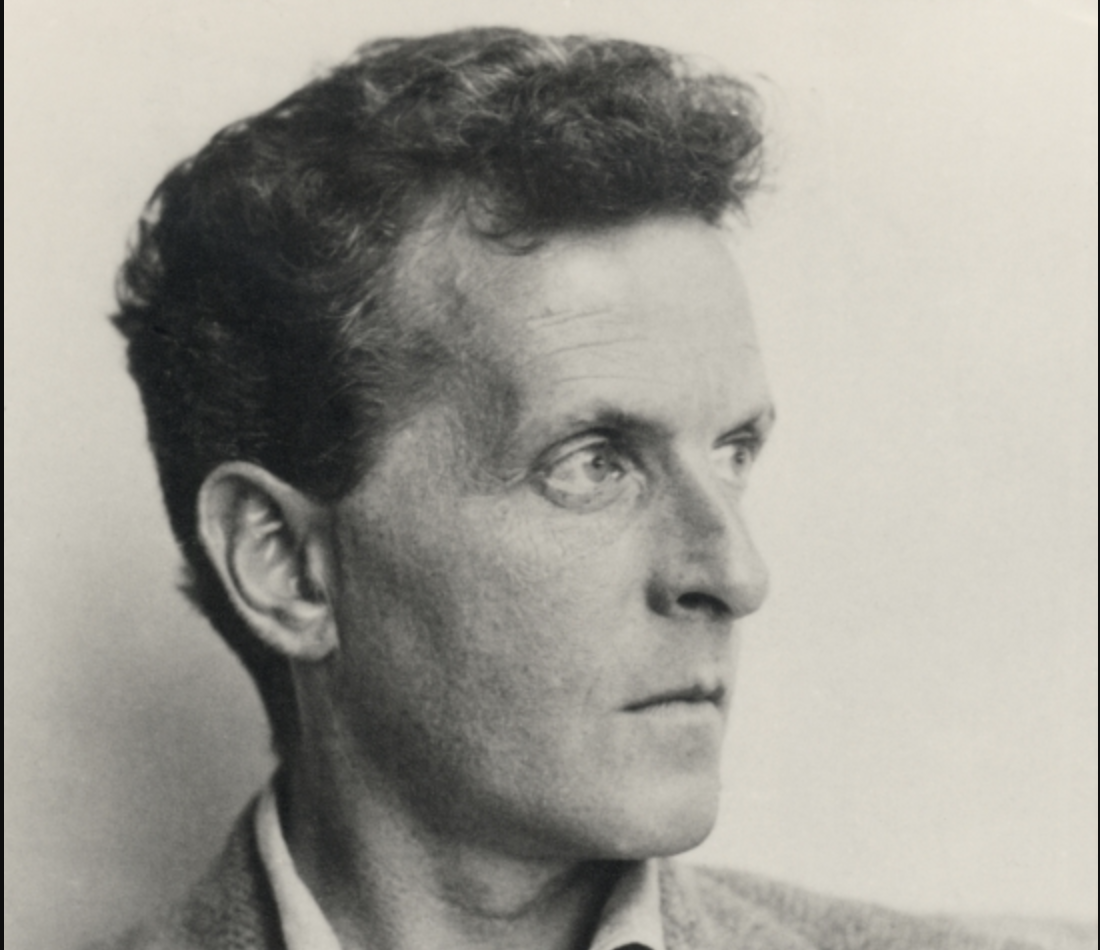
But if forced to choose the most important philosophers of the late 20th century, I might gravitate toward some of the most passionate thinkers, both inside and outside academia, who grappled with problems of everyday personal, social, and political life and did not shy away from involving themselves in the struggles of ordinary people. This need not entail a lack of rigor. One of the most passionate of 20th century thinkers, Ludwig Wittgenstein, who worked well outside the university system, also happens to be one of the most difficult and seemingly abstruse. Nonetheless, his thought has radical implications for ordinary life and practice. Perhaps non-specialists will tend, in general, to accept arguments for philosophy’s everyday relevance, accessibility, and “passion.” But what say the specialists?
One philosophy professor, Chen Bo of Peking University, conducted a survey along with Susan Haack of the University of Miami, at the behest of a Chinese publisher seeking important philosophical works for translation. As Leiter Reports reader Tracy Ho notes, the two professors emailed sixteen philosophers in the U.S., England, Australia, Germany, Finland, and Brazil, asking specifically for “ten of the most important and influential philosophical books after 1950.” “They received recommendations,” writes Ho, “from twelve philosophers, including: Susan Haack, Donald M. Borchert (Ohio U.), Donald Davidson, Jurgen Habermas, Ruth Barcan Marcus, Thomas Nagel, John Searle, Peter F. Strawson, Hilary Putnam, and G.H. von Wright.” (Ho was unable to identify two other names, typed in Chinese.)
The results, ranked in order of votes, are as follows:
As an addendum, Ho adds that “most of the works on the list are analytic philosophy,” therefore Prof. Chen asked Habermas to recommend some additional European thinkers, and received the following: “Axel Honneth, Kampf um Anerkennung (1992), Rainer Forst, Kontexte der Cerechtigkeit (1994) and Herbert Schnadelbach, Kommentor zu Hegels Rechtephilosophie (2001).”
The list is also overwhelmingly male and pretty exclusively white, pointing to another problem with institutionalization that Solomon does not acknowledge: it not only excludes non-specialists but can also exclude those who don’t belong to the dominant group (and so, perhaps, excludes the everyday concerns of most of the world’s population). But there you have it, a list of the most important, post-1950 works in philosophy according to some of the most eminent living philosophers. What titles, readers, might get your vote, or what might you add to such a list, whether you are a specialist or an ordinary, “passionate” lover of philosophical thought?
We're hoping to rely on loyal readers, rather than erratic ads. Please click the Donate button and support Open Culture. You can use Paypal, Venmo, Patreon, even Crypto! We thank you!
Open Culture scours the web for the best educational media. We find the free courses and audio books you need, the language lessons & educational videos you want, and plenty of enlightenment in between.