Drone Footage of San Francisco Set to the Music of Bladerunner 2049

When real life and dystopi­an cin­e­ma become one and the same. You can com­pare side-by-side images of Bladerun­ner 2049 con­cept art and the San Fran­cis­co sky­line here.

If you would like to sign up for Open Culture’s free email newslet­ter, please find it here. It’s a great way to see our new posts, all bun­dled in one email, each day.

If you would like to sup­port the mis­sion of Open Cul­ture, con­sid­er mak­ing a dona­tion to our site. It’s hard to rely 100% on ads, and your con­tri­bu­tions will help us con­tin­ue pro­vid­ing the best free cul­tur­al and edu­ca­tion­al mate­ri­als to learn­ers every­where. You can con­tribute through Pay­Pal, Patre­on, and Ven­mo (@openculture). Thanks!

Relat­ed Con­tent:

42 Hours of Ambi­ent Sounds from Blade Run­ner, Alien, Star Trek and Doc­tor Who Will Help You Relax & Sleep

Three Blade Run­ner Pre­quels: Watch Them Online

The Blade Run­ner Pro­mo­tion­al Film

How Rid­ley Scott’s Blade Run­ner Illu­mi­nates the Cen­tral Prob­lem of Moder­ni­ty

by | Permalink | Make a Comment ( 1 ) |

Watch the First Trailer for Dune, Denis Villeneuve’s Adaptation of Frank Herbert’s Classic Sci-Fi Novel

It takes a fear­less film­mak­er indeed to adapt Dune. Atop its rich lin­guis­tic, polit­i­cal, philo­soph­i­cal, reli­gious, and eco­log­i­cal foun­da­tions, Frank Her­bert’s saga-launch­ing 1965 nov­el also hap­pens to have a plot “con­vo­lut­ed to the point of pain.” So writes David Fos­ter Wal­lace in his essay on David Lynch, who direct­ed the first cin­e­mat­ic ver­sion of Dune in 1984. That the result is remem­bered as a “huge, pre­ten­tious, inco­her­ent flop” (with an accom­pa­ny­ing glos­sary hand­out) owes to a vari­ety of fac­tors, not least stu­dio med­dling and the unsur­pris­ing incom­pat­i­bil­i­ty of the man who made Eraser­head with large-scale Hol­ly­wood sci-fi. The ques­tion lin­gered: could Dune be suc­cess­ful­ly adapt­ed at all?

Well before Lynch took his crack, El Topo and The Holy Moun­tain direc­tor Ale­jan­dro Jodor­owsky put togeth­er his own Dune adap­ta­tion. If all had gone well it would have come out as a ten-hour film fea­tur­ing the art of H.R. Giger and Moe­bius as well as the per­for­mances of Orson Welles, Glo­ria Swan­son, David Car­ra­dine, Alain Delon, Mick Jag­ger, and Sal­vador Dalí.

But all did not go well, and cin­e­ma was deprived of what would have been a sin­gu­lar spec­ta­cle no mat­ter how it turned out. At least one ele­ment of Jodor­owsky’s Dune has sur­vived, how­ev­er, in the lat­est attempt to bring Her­bert’s com­plex best­seller to the screen: the music of Pink Floyd, heard in the just-released trail­er for Denis Vil­leneu­ve’s Dune, star­ring Tim­o­th­ée Chalemet as the young hero Paul Atrei­des (as well as Oscar Isaac, Josh Brolin, and a host of oth­er cur­rent­ly big names), sched­uled for release in Decem­ber.

If a cred­i­ble Dune movie is pos­si­ble, Vil­leneuve is the man to direct it. His pre­vi­ous two pic­tures, Blade Run­ner 2049 and the alien-vis­i­ta­tion dra­ma Arrival, demon­strate not just his capa­bil­i­ties with sci­ence fic­tion but his sense of the sub­lime. Begin­ning with its set­ting, the desert-waste­land plan­et of Arrakis, Dune demands to be envi­sioned with the kind of beau­ty that inspires some­thing close to dread and fear. (The first direc­tor asked to adapt Dune was David Lean, per­haps due to his track record with majes­tic views of sand.) Vil­leneuve has also made the wise choice of refus­ing to com­press the entire book into a sin­gle fea­ture, pre­sent­ing this as the first of a two-part adap­ta­tion. And as a life­long Dune fan, he under­stands the atti­tude nec­es­sary to approach­ing this chal­lenge: “Fear is the mind-killer,” as Paul famous­ly puts it — so famous­ly that the trail­er could­n’t pos­si­bly exclude Cha­la­met’s deliv­ery of the line.

Relat­ed Con­tent:

Why You Should Read Dune: An Ani­mat­ed Intro­duc­tion to Frank Herbert’s Eco­log­i­cal, Psy­cho­log­i­cal Sci-Fi Epic

The 14-Hour Epic Film, Dune, That Ale­jan­dro Jodor­owsky, Pink Floyd, Sal­vador Dalí, Moe­bius, Orson Welles & Mick Jag­ger Nev­er Made

Moe­bius’ Sto­ry­boards & Con­cept Art for Jodorowsky’s Dune

Based in Seoul, Col­in Mar­shall writes and broad­casts on cities, lan­guage, and cul­ture. His projects include the book The State­less City: a Walk through 21st-Cen­tu­ry Los Ange­les and the video series The City in Cin­e­ma. Fol­low him on Twit­ter at @colinmarshall, on Face­book, or on Insta­gram.

Watch Dan Aykroyd & Bill Murray Goof Off in a Newly Unearthed Ghostbusters Promotional Film (1984)

If you weren’t in the indie cin­e­ma exhi­bi­tion indus­try in the 1980s, you prob­a­bly haven’t heard of Show­est. But this was *the* con­ven­tion back then, a chance to trav­el to Las Vegas, shmooze with film dis­trib­u­tors and Hol­ly­wood stu­dios, smoke cig­ars, drink sin­gle malt Scotch, run up your company’s tab and have a dim mem­o­ry in the morn­ing of vis­it­ing a strip club. You know: Busi­ness, Amer­i­can Style!

And so what we have here is a pro­mo­tion­al film for an up-and-com­ing 1984 movie called Ghost­busters. Not the trail­er, you see, that’s for the gen­er­al pub­lic. Instead, this is two of the film’s lead actors, Dan Aykroyd and Bill Mur­ray, direct­ly address­ing atten­dees, implor­ing them to check out what could be the sci-fi com­e­dy of the sum­mer. “It’s gonna make E.T. look like Raiders of the Lost Ark,” Mur­ray quips.

There’s a few things appar­ent from this pro­mo film: Ack­royd and Mur­ray are com­plete­ly wing­ing it, and this prob­a­bly took as long to shoot as it takes time to watch. Also, per­haps: they’ve been “cel­e­brat­ing” if you know what I mean. Maybe. Alleged­ly. Either way, you can tell these guys are goof­ing about and mak­ing each oth­er laugh. And it also ends with a Ghost­busters theme that isn’t the Ray Park­er, Jr. clas­sic. It’s…well, it’s this, if you need to hear the whole thing.

And final­ly: there’s a few jokes that, if not total­ly “rapey” per se, do assume a woman-as-sex­u­al-favor vibe. To that I would posit: Ack­royd and Mur­ray knew their audi­ence (unfor­tu­nate­ly). (It was the Rea­gan era, and don’t for­get, the main vil­lain of Ghost­busters is the Envi­ron­men­tal Pro­tec­tion Agency!)

But let’s not end on a down note. Instead, let’s just quick­ly add that as of this writ­ing, the *oth­er* Ghost­busters star, Rick Mora­nis, has just appeared after years in seclu­sion to appear with Ryan Reynolds in a cell­phone com­mer­cial. Yes, it’s also advance pro­mo for a Hon­ey I Shrunk the Kids reboot, but I’ll take what we can get these days.

P.S. If you’re won­der­ing what hap­pened to Show­est, the con­ven­tion arm of the Nation­al Asso­ci­a­tion of The­ater Own­ers (NATO, for short, go fig­ure), you can read all about it here.

Relat­ed Con­tent:

The Zen of Bill Mur­ray: I Want to Be “Real­ly Here, Real­ly in It, Real­ly Alive in the Moment”

Bill Mur­ray Explains How He Was Saved by John Prine

John Belushi and Dan Aykroyd Get Bri­an Wil­son Out of Bed and Force Him to Go Surf­ing, 1976

Ted Mills is a free­lance writer on the arts who cur­rent­ly hosts the Notes from the Shed pod­cast and is the pro­duc­er of KCR­W’s Curi­ous Coast. You can also fol­low him on Twit­ter at @tedmills, and/or watch his films here.

Discover the Longest Song in the World: A 639-Year Performance of the John Cage Composition Called “Organ/ASLSP (As Slow As Possible)”

In 2016, Lau­rie Ander­son recre­at­ed the expe­ri­ence of Lou Reed’s Met­al Machine Music in Saint Mark’s chapel in Brighton. The five-day-long per­for­mance piece involved “some eight unmanned gui­tars lean­ing on a sim­i­lar num­ber of vin­tage amps,” Mark Sheerin writes, all of them cranked up, feed­ing back, and echo­ing around the Angli­can church’s vault­ed ceil­ing. It was a fit­ting trib­ute to Reed, a sus­tained, dis­so­nant drone that also invokes “the mys­ter­ies of faith and the incar­na­tion of rebel angels.”

If five days seems like a long time to hold a sin­gle note, how­ev­er, con­sid­er the per­for­mance of John Cage’s com­po­si­tion “ORGAN/ASLSP” or “A Slow as Pos­si­ble” that began in the St. Bur­char­di church, in the Ger­man town of Hal­ber­stadt, on Sep­tem­ber 5th, 2001, what would have been Cage’s 89th birth­day. The artists stag­ing this piece intend it to last for 639 years. If the organ doesn’t fall apart and if a new gen­er­a­tion of cura­tors con­tin­ues to take the place of the old, it will play until the year 2640.

Those are some big Ifs, but as long as it lasts, the piece should draw crowds every few years when a chord changes, as just hap­pened recent­ly, despite the pan­dem­ic, after the organ had played the same chord for almost 7 years. The change occurred on Sep­tem­ber 5th, 2020, Cage’s birth­day, 19 years after the per­for­mance began. Lest we think its length insane­ly per­verse, we should bear in mind that Cage him­self nev­er spec­i­fied a tem­po for “As Slow as Pos­si­ble.” The score itself only “con­sists of eight pages of music, to be played,” writes Kyle Mac­don­ald at Clas­sic FM, “well, very, very slow­ly.”

Typ­i­cal­ly, organ­ists and pianists have inter­pret­ed this direc­tion with­in the space of an hour. Some have stretched sin­gle per­for­mances “up to, and beyond, 12 hours.” Obvi­ous­ly, no sin­gle per­son, or even team of peo­ple, could sus­tain play­ing the piece for 233,235 days. Nor, how­ev­er, has the extreme slow­ness of the John Cage Organ Project ver­sion been made pos­si­ble by dig­i­tal means. Instead, a group of artists built a spe­cial pipe organ for the task. Each time a chord changes, new pipes are added man­u­al­ly. On Sat­ur­day, a masked crowd gath­ered “to see the G sharp and E notes metic­u­lous­ly installed.”

The organ is auto­mat­ed, by mechan­i­cal means. No one needs to sit and hold keys for sev­er­al years. But can the long-term coor­di­na­tion need­ed to main­tain this solemn­ly quixot­ic instal­la­tion extend over six hun­dred years for a grand finale in 2640 (IF the organ, the church, and the plan­et, sur­vive)? The ques­tion seems almost irrel­e­vant since no one liv­ing can answer it with any degree of cer­tain­ty. It depends on whether future gen­er­a­tions see the St. Buruchar­di “As Slow as Pos­si­ble” as a phe­nom­e­non that should con­tin­ue to exist. But why, we might ask, should it?

Maybe one way of think­ing of the John Cage Organ Project is through the lens of the Long Now Project’s 10,000 Year Clock, a device being con­struct­ed (“no com­ple­tion date sched­uled”) to rad­i­cal­ly change humans’ rela­tion­ship to time, to push us to think beyond—hundreds and thou­sands of years beyond—our mea­ger life­times. Cage, I think, would appre­ci­ate the effort to turn his eight page com­po­si­tion into a musi­cal man­i­fes­ta­tion of the future’s longue durée.

Relat­ed Con­tent:

An Impres­sive Audio Archive of John Cage Lec­tures & Inter­views: Hear Record­ings from 1963–1991

Nota­tions: John Cage Pub­lish­es a Book of Graph­ic Musi­cal Scores, Fea­tur­ing Visu­al­iza­tions of Works by Leonard Bern­stein, Igor Stravin­sky, The Bea­t­les & More (1969)

John Cage’s Silent, Avant-Garde Piece 4’33” Gets Cov­ered by a Death Met­al Band

Josh Jones is a writer and musi­cian based in Durham, NC. Fol­low him at @jdmagness

In 1183, a Chinese Poet Describes Being Domesticated by His Own Cats

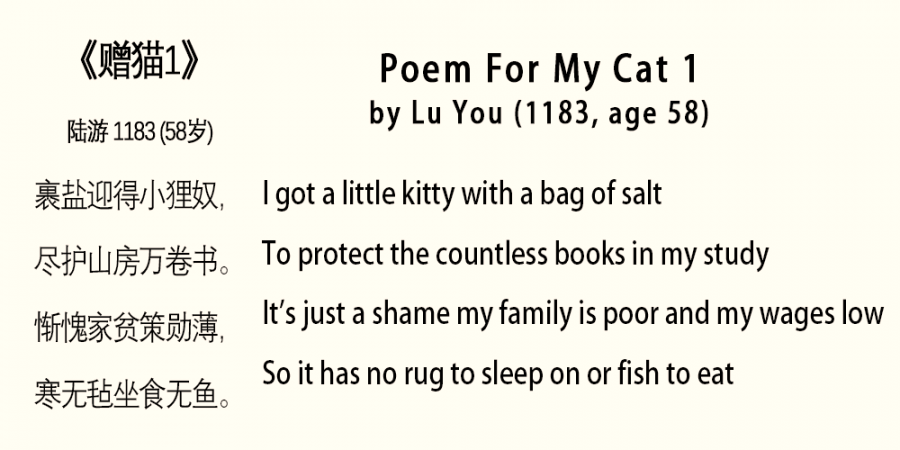
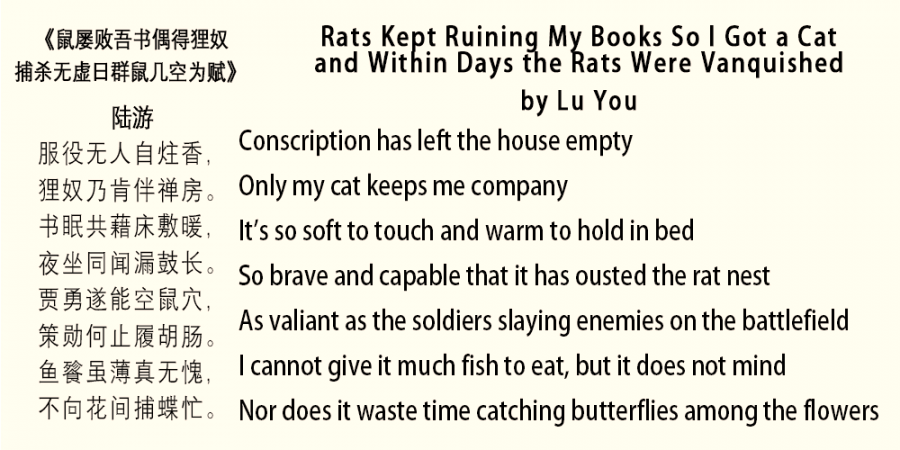
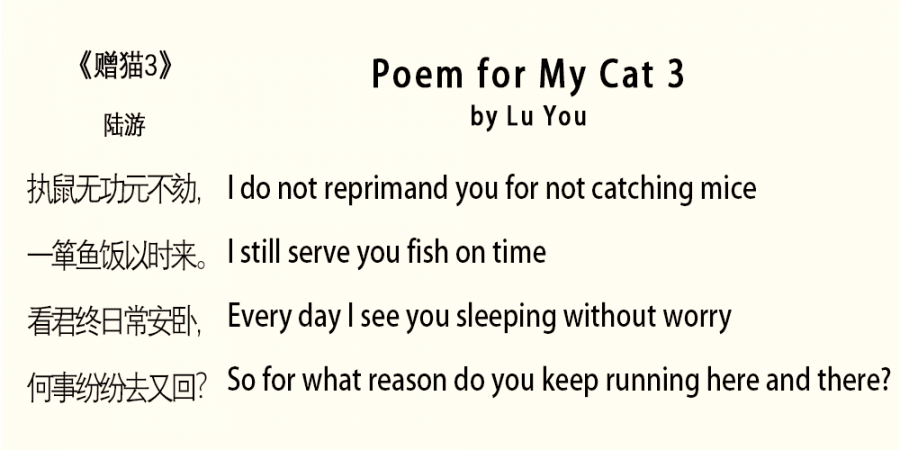
Here in Korea, where I live, cat own­ers aren’t called cat own­ers: they’re called goyan­gi jib­sa, lit­er­al­ly “cat but­lers.” Clear­ly the idea that felines have flipped the domes­tic-ani­mal script, not serv­ing humans but being served by humans, tran­scends cul­tures. It also goes far back in his­to­ry: wit­ness the 12th-cen­tu­ry vers­es recent­ly tweet­ed out in trans­la­tion by writer Xiran Jay Zhao, in which “Song dynasty poet Lu You” — one of the most pro­lif­ic lit­er­ary artists of his time and place — “poem-live­blogged his descent from cat own­er to cat slave.”

The sto­ry begins in 1138, writes Zhao, when “Down On His Luck schol­ar-offi­cial Lu You gets a cat because rats keep munch­ing on his books.” The eight poems in this series begin with praise for the ani­mal — “It’s so soft to touch and warm to hold in bed / So brave and capa­ble that it has oust­ed the rat nest” — and goes on to describe the cats he sub­se­quent­ly acquires, who self­less­ly van­quish the house­hold rats while indulging in noth­ing more than the occa­sion­al cat­nip binge.

Or at least they do at first. “Night after night you used to mas­sacre rats / Guard­ing the grain store so fero­cious­ly,” Lu asks one in “Poem for Pink-Nose.” “So why do you now act as if you live with­in palace walls / Eat­ing fish every day and sleep­ing in my bed?”

As time goes on, Lu finds him­self “serv­ing fish on time” to his cats only to find them “sleep­ing with­out wor­ry.” As the rats ram­page, he poet­i­cal­ly moans, “my books are get­ting ruined and the birds wake me before dawn.” Has it all been noth­ing more than “a ruse to get food from me?”

Yet it seems that Lu has no regrets about cat own­er­ship, if own­er­ship be the word. “Wind sweeps the world and rain dark­ens the vil­lage / Rum­bles roll off the moun­tains like ocean waves churn­ing,” he writes in 1192’s “A Rain­storm on the Fourth Day of the Eleventh Month.” Yet “the fur­nace is sooth­ing and the rug is warm / Me and my cat are not leav­ing the house.” This is relat­able con­tent for the cat but­lers of Korea (a cul­ture thor­ough­ly influ­enced by Chi­na in Lu’s day), or indeed any­where else in the world. The patri­ot­ic poet would sure­ly be pleased by the mod­ern-day ascent of Chi­na — and per­haps just as much by the high and ever-ris­ing sta­tus of the domes­tic cat.

via Xiran

Relat­ed Con­tent:

An Ani­mat­ed His­to­ry of Cats: How Over 10,000 Years the Cat Went from Wild Preda­tor to Sofa Side­kick

Two Cats Keep Try­ing to Get Into a Japan­ese Art Muse­um … and Keep Get­ting Turned Away: Meet the Thwart­ed Felines, Ken-chan and Go-chan

Medieval Cats Behav­ing Bad­ly: Kit­ties That Left Paw Prints … and Peed … on 15th Cen­tu­ry Man­u­scripts

T.S. Eliot Reads Old Possum’s Book of Prac­ti­cal Cats & Oth­er Clas­sic Poems (75 Min­utes, 1955)

What Ancient Chi­nese Phi­los­o­phy Can Teach Us About Liv­ing the Good Life Today: Lessons from Harvard’s Pop­u­lar Pro­fes­sor, Michael Puett

Free Chi­nese Lessons

Based in Seoul, Col­in Mar­shall writes and broad­casts on cities, lan­guage, and cul­ture. His projects include the book The State­less City: a Walk through 21st-Cen­tu­ry Los Ange­les and the video series The City in Cin­e­ma. Fol­low him on Twit­ter at @colinmarshall, on Face­book, or on Insta­gram.

Scorsese’s Taxi Driver Reimagined as the 1970s Sitcom, Taxi

And next up, to keep the nos­tal­gia going, watch Samuel Beck­ett star in the open­ing cred­its of an imag­i­nary 70s cop show. Enjoy.…

If you would like to sign up for Open Culture’s free email newslet­ter, please find it here. It’s a great way to see our new posts, all bun­dled in one email, each day.

If you would like to sup­port the mis­sion of Open Cul­ture, con­sid­er mak­ing a dona­tion to our site. It’s hard to rely 100% on ads, and your con­tri­bu­tions will help us con­tin­ue pro­vid­ing the best free cul­tur­al and edu­ca­tion­al mate­ri­als to learn­ers every­where. You can con­tribute through Pay­Pal, Patre­on, and Ven­mo (@openculture). Thanks!

via Laugh­ing Squid

Relat­ed Con­tent:  

What Makes Taxi Dri­ver So Pow­er­ful? An In-Depth Study of Mar­tin Scorsese’s Exis­ten­tial Film on the Human Con­di­tion

Mar­tin Scors­ese Makes a List of 85 Films Every Aspir­ing Film­mak­er Needs to See

Watch Mar­tin Scorsese’s Brand New Short Film, Made Entire­ly in His Office Under Quar­an­tine

How Mar­tin Scors­ese Directs a Movie: The Tech­niques Behind Taxi Dri­ver, Rag­ing Bull, and More

David Lynch’s Popular Surrealism Considered on Pretty Much Pop: A Culture Podcast #59

Pret­ty Much Pop hosts Mark Lin­sen­may­er, Eri­ca Spyres, and Bri­an Hirt–along with guest Mike Wilson–discuss the direc­tor’s films from Eraser­head to Inland Empire plus Twin Peaks and his recent short films. We get into the appeal and the styl­is­tic and sto­ry­telling hall­marks of his main­stays–Blue Vel­vet, Wild at Heart, Lost High­way, and Mul­hol­land Dri­ve–and also con­sid­er out­liers like Dune, The Ele­phant Man, and The Straight Sto­ry.

What’s with the campy act­ing and the weird atti­tudes toward women? Why make us stare at some­thing mov­ing very slow­ly for a long time? Are these films appeal­ing to young peo­ple inter­est­ed in some­thing dif­fer­ent but not on the whole actu­al­ly enjoy­able? Is there actu­al­ly a “solu­tion” to make sense of the sense­less, or are these wacky plots sup­posed to remain unas­sim­i­l­able and so not dis­mis­si­ble?

Some arti­cles we drew on includ­ed:

Also, read Roger Ebert’s reviews of Dune and Blue Vel­vet, and his sub­se­quent thoughts on the lat­ter. What did crit­ics say about “What Did Jack Do?” Watch “Twin Peaks Actu­al­ly Explained.”  Check out his short films if you can sit through them.

Learn more at prettymuchpop.com. If you’re not sub­scribed to the pod­cast, then you missed last week’s aftertalk high­lights episode. This episode includes bonus dis­cus­sion that you can only hear by sup­port­ing the pod­cast at patreon.com/prettymuchpop. This pod­cast is part of the Par­tial­ly Exam­ined Life pod­cast net­work.

Pret­ty Much Pop: A Cul­ture Pod­cast is the first pod­cast curat­ed by Open Cul­ture. Browse all Pret­ty Much Pop posts

The Fall of Civilizations Podcast Engagingly Explores the Collapse of Civilizations & Empires Throughout History

Now the coun­try does not even boast a tree.

—Robert Brown­ing, “Love Among the Ruins

Every empire seems to think (as much as empires seem to think) that it will be the one to out­last them all. And all of them have end­ed up more or less the same way in the end. This isn’t just a gloomy fact of human his­to­ry, it’s a fact of entropy, mor­tal­i­ty, and the lin­ear expe­ri­ence of time. If impe­r­i­al rulers forget—begin to think them­selves immortal—there have always been poets to remind them, though maybe not so direct­ly. Epic poet­ry often legit­imizes the found­ing of empires. Anoth­er form, the poet­ry of ruin, inter­prets their inevitable demise.

All the Roman­tics were doing it, and so too was an unknown 8th cen­tu­ry British poet who encoun­tered Roman ruins dur­ing the so-called “Dark Ages.” The poem they left behind “gives us a glimpse of a world of mys­tery,” says Paul Coop­er above in episode one of his Fall of Civ­i­liza­tions pod­cast, which begins with Roman Britain and con­tin­ues, in each sub­se­quent (but not chrono­log­i­cal) episode, to explore the col­lapse of empires around the world through lit­er­a­ture and cul­ture. “Every ruin,” says Coop­er in an inter­view with the North Star Pod­cast, “is a place where a phys­i­cal object was torn apart, and that hap­pened because of some his­tor­i­cal force.”

We are enthralled with ruins, though this can seem like the prod­uct of a dis­tinct­ly mod­ern sensibility—that of the poets who inhab­it­ed what nov­el­ist Rose Macaulay called in her 1953 study Plea­sure of Ruins “a ruined and ruinous world.”

But as our Old Eng­lish poet above demon­strates, the fas­ci­na­tion pre­dates Shake­speare and Mar­lowe. Coop­er would know. He has ded­i­cat­ed his life to study­ing and writ­ing about ruins, earn­ing a PhD in their cul­tur­al and lit­er­ary sig­nif­i­cance. Along the way, he has writ­ten for The New York Times, The Atlantic, Nation­al Geo­graph­ic, Dis­cov­er Mag­a­zine, and the BBC.

Coop­er also began pub­lish­ing one of the most intrigu­ing Twit­ter feeds in 2017, detail­ing in “sev­er­al nest­ed threads” var­i­ous “ruin-relat­ed thoughts and feel­ings,” as Shru­ti Ravin­dran writes at Tim­ber Media. His tweets became so pop­u­lar that he turned them into a pod­cast, and it is not your stan­dard infor­mal­ly chat­ty pod­cast fare. Fall of Civ­i­liza­tions engages deeply with its sub­jects on their own terms, and avoids the sen­sa­tion­al­ist clich­es of so much pop­u­lar his­to­ry. Coop­er “knew, for cer­tain, what he want­ed to avoid,” when he began: the “focus on grue­some tor­ture tech­niques, exe­cu­tions, and the sex­ca­pades of nobles.”

“His­to­ry writ­ers often don’t trust their audi­ence will be inter­est­ed in the past if they don’t Hol­ly­wood­ize it,” says Coop­er. Instead, in the lat­est episode on the Byzan­tine Empire he recruits the choir from the Greek Ortho­dox Cathe­dral in Lon­don, “and a num­ber of musi­cians play­ing tra­di­tion­al Byzan­tine instru­ments such as the Byzan­tine lyra, the Qanun and the Greek San­tur,” he explains. In his episode on the Han dynasty, Coop­er looks back through “ancient Chi­nese poet­ry, songs and folk music” to the empire’s rise, “its remark­able tech­no­log­i­cal advances, and its first, ten­ta­tive attempts to make con­tact with the empires of the west.”

This is a rich jour­ney through ancient his­to­ry, guid­ed by a mas­ter sto­ry­teller ded­i­cat­ed to tak­ing ruins seri­ous­ly. (Coop­er has pub­lished a nov­el about ruins, Riv­er of Ink, “inspired by time spent in UNESCO sites in Sri Lan­ka,” Ravin­dran reports.) There is “love among the ruins,” wrote Robert Brown­ing, and there is poet­ry and music and sto­ry and song—all of it brought to bear in Fall of Civ­i­liza­tions to “make sense about what must have hap­pened,” says Coop­er. Find more episodes, on fall­en civ­i­liza­tions all around the world, on YouTube or head to Fall of Civ­i­liza­tions to sub­scribe through the pod­cast ser­vice of your choice.

Relat­ed Con­tent:

The His­to­ry of Lit­er­a­ture Pod­cast Takes You on a Lit­er­ary Jour­ney: From Ancient Epics to Con­tem­po­rary Clas­sics

Watch Ancient Ruins Get Restored to their Glo­ri­ous Orig­i­nal State with Ani­mat­ed GIFs: The Tem­ple of Jupiter, Lux­or Tem­ple & More

The His­to­ry of Lit­er­a­ture Pod­cast Takes You on a Lit­er­ary Jour­ney: From Ancient Epics to Con­tem­po­rary Clas­sics

Josh Jones is a writer and musi­cian based in Durham, NC. Fol­low him at @jdmagness

« Go BackMore in this category... »
Quantcast