Monty Python’s Michael Palin Is Also an Art Critic: Watch Him Explore His Favorite Paintings by Andrew Wyeth & Other Artists

Many a par­ent who caught their kid watch­ing Mon­ty Python’s Fly­ing Cir­cus in the 1970s felt, as one 70s Amer­i­can dad pro­claimed, that “it was the sin­gu­lar­ly dumb­est thing ever broad­cast on the tube.” Fans of the show know oth­er­wise. The Pythons cre­at­ed some of sharpest satire of con­ser­v­a­tive author­i­ty fig­ures and mid­dle-class mores. But they did it in the broad­ly sil­li­est of ways. The troupe, who met at Oxford and Cam­bridge, where they’d been study­ing for pro­fes­sion­al careers, decid­ed they pre­ferred to fol­low in the foot­steps of their heroes on The Goon Show. What must their par­ents have thought?

But the Pythons made good. They grew up to be avun­cu­lar author­i­ties them­selves, of the kind they might have skew­ered in their younger days. After sev­er­al decades of mak­ing high­ly regard­ed trav­el doc­u­men­taries, Michael Palin became pres­i­dent of the Roy­al Geo­graph­i­cal Soci­ety, an office one can imag­ine him occu­py­ing in the short-pants uni­form of a Bruce. Instead, pho­tographed in aca­d­e­m­ic casu­al hold­ing a globe, he was dubbed by The Inde­pen­dent as “a man with the world in his hands.”

Unlike fel­low accom­plished Python John Cleese, who can nev­er resist get­ting in a joke, Palin has most­ly played the straight man in his TV pre­sen­ter career. He brings to this role an earnest­ness that endeared view­ers for decades. It’s a qual­i­ty that shines through in his doc­u­men­taries on art for BBC Scot­land, in which he explores the worlds of his favorite painters with­out a hint of the pre­ten­tious­ness we would find in a Python car­i­ca­ture. Just above, Palin trav­els to Maine to learn about the life of Andrew Wyeth and the set­ting of his most famous work, Christina’s World.

Palin’s pas­sion for art and for trav­el are of a piece—driven not by ideas about what art or trav­el should be, but rather by what they were like for him. Palin brings this per­son­al approach to the con­ver­sa­tion above with Car­o­line Camp­bell, Head of Cura­to­r­i­al at the British Nation­al Gallery. Here, he dis­cuss­es “ten paint­ings which I can­not avoid when I’m going in the gallery. They always catch my eye, and each one means some­thing to me.” Artists includ­ed in his “rather eso­teric” col­lec­tion include the late-Medieval/ear­ly-Renais­sance pio­neer Duc­cio, Hans Hol­bein the Younger, William Hog­a­rth, and Joseph Mal­lord William Turn­er.

While these may be famil­iar names to any art lover, the works Palin choos­es from each artist may not be. His thought­ful, per­cep­tive respons­es to these works are not those of the pro­fes­sion­al crit­ic or of the pro­fes­sion­al come­di­an. They are the respons­es of a fre­quent trav­el­er who notices some­thing new on every trip.

Relat­ed Con­tent:

Mon­ty Python Pays Trib­ute to Ter­ry Jones: Watch Their Mon­tage of Jones’ Beloved Char­ac­ters in Action

John Cleese Revis­its His 20 Years as an Ivy League Pro­fes­sor in His New Book, Pro­fes­sor at Large: The Cor­nell Years

New Ani­mat­ed Film Tells the Life Sto­ry of Mon­ty Python’s Gra­ham Chap­man

Josh Jones is a writer and musi­cian based in Durham, NC. Fol­low him at @jdmagness

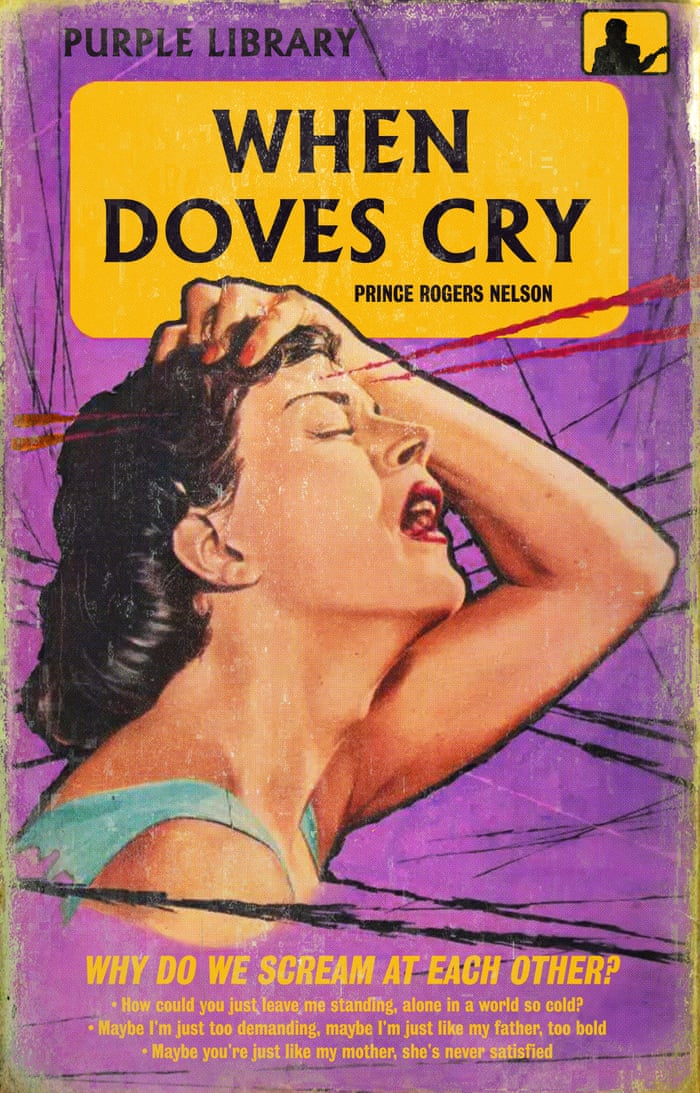
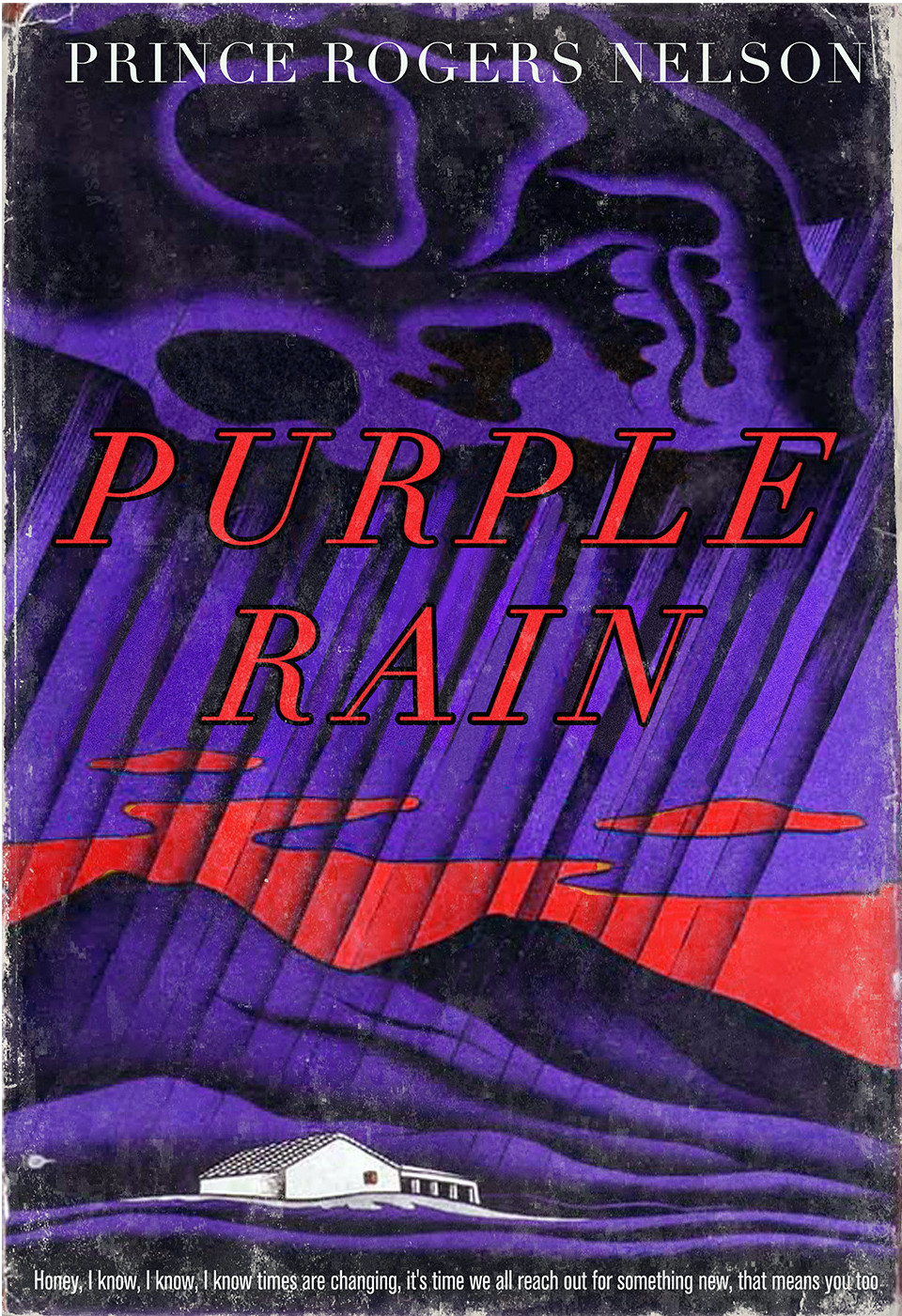
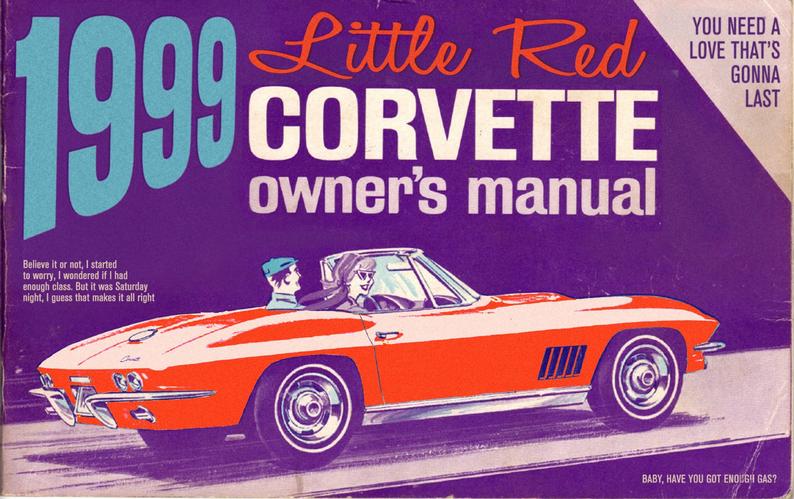
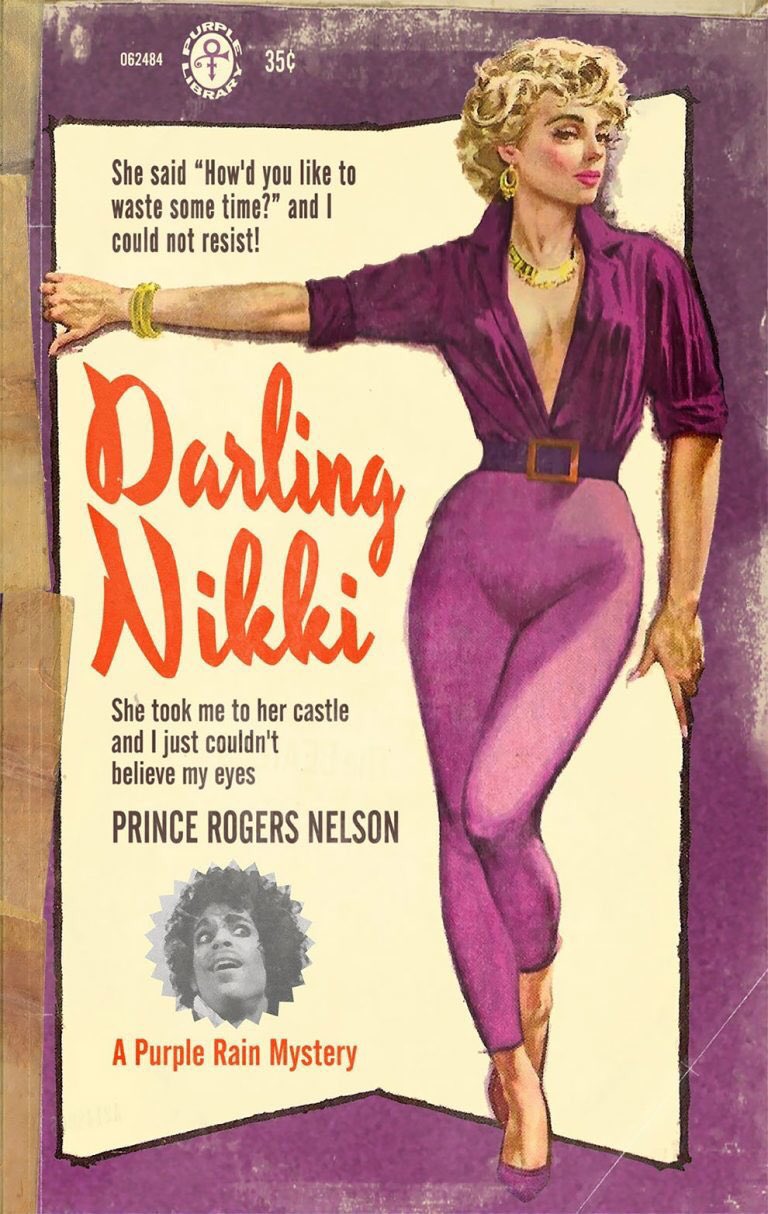
Four Classic Prince Songs Re-Imagined as Pulp Fiction Covers: When Doves Cry, Little Red Corvette & More

There’s a book-lined Knowl­edge Room in the late Prince Rogers Nel­son’s Pais­ley Park, but the Prince-inspired faux-books that artist Todd Alcott imag­ines are prob­a­bly bet­ter suit­ed to the estate’s pur­ple-lit Relax­ation Room.

The Knowl­edge Room was con­ceived of as a library where the world’s most famous con­vert to Jehovah’s Wit­ness­es could delve into reli­gious lit­er­a­ture, reflect on the mean­ing of life, and study the Bible deep into the night.

Alcott’s cov­ers harken to an ear­li­er stage in Prince’s evolution—one the star even­tu­al­ly disavowed—as well as sev­er­al bygone eras of book design.

Lyri­cal­ly, there’s no mis­tak­ing what Prince’s noto­ri­ous 1984 “Dar­ling Nik­ki” is about. There’s a direct line between it and the cre­ation of parental advi­so­ry stick­ers for musi­cal releas­es con­tain­ing what is polite­ly referred to as “mature con­tent.”

Alcott’s 1950s pulp nov­el treat­ment, above, is sim­i­lar­ly graph­ic. Those skintight pur­ple curves are a promise that even pur­pler prose lays with­in, or would, were there any text couched behind that steamy cov­er.

When Doves Cry” makes for a pret­ty pur­ple cov­er, too. In this case, the inspi­ra­tion is a 1950s self-help book, enriched with some Freudi­an taglines from Prince’s own pen. (“Maybe you’re just like my moth­er, she’s nev­er sat­is­fied.”)

Alcott remem­bers Prince being “an incred­i­bly lib­er­at­ing fig­ure” when he burst onto the scene:

There was his flam­boy­ant, out­ra­geous sex­u­al­i­ty, but also his musi­cal omniv­o­rous­ness; he played funk, rock, pop, jazz, every­thing. Pur­ple Rain was the Sergeant Pepper’s of its day, a wall-to-wall bril­liant album that every­one could rec­og­nize as a remark­able achieve­ment. I remem­ber when I first saw Pur­ple Rain, at the very begin­ning of the movie, before the movie has even begun, the Warn­er Bros logo came up and you heard the sound of an expec­tant crowd, and an announc­er says “Ladies and Gen­tle­men, The Rev­o­lu­tion,” and the first shot is of Prince, back­lit, sil­hou­et­ted in pur­ple against a dense mist, and he says “Dear­ly beloved, we have gath­ered here today to get through this thing called life.” And I was instant­ly, incon­tro­vert­ibly, a fan for life. The con­fi­dence of that open­ing, the sheer audac­i­ty of it, adopt­ing the tone of a priest at a wed­ding, in his Hen­drix out­fit and hair­do, the sheer gutsi­ness of that state­ment, alone, just blew me away. And then he pro­ceed­ed to play “Let’s Go Crazy” which com­plete­ly lived up to that open­ing. After that he could have run Buick ads for the rest of the movie and I’d still be a fan.

Decades lat­er, I was sit­ting in a Sub­way restau­rant at the end of a very, very long, tir­ing day, and was feel­ing com­plete­ly exhaust­ed and mis­er­able, and out of nowhere, “When Doves Cry” came on the sound sys­tem. And I was remind­ed that the song, which was a huge hit in 1984, the song of the year, had no bass line. The arrange­ment of it made no sense. It was a song put togeth­er by force of will, with its met­al gui­tar and its synth strings and its elec­tron­ic drums. And in that moment, at the end of a long, tir­ing day, I was remind­ed that mir­a­cles are pos­si­ble.

Alcott’s mirac­u­lous graph­ic trans­for­ma­tions are round­ed out with a com­par­a­tive­ly under­stat­ed 1930s mur­der mys­tery, Pur­ple Rain and an inge­nious Lit­tle Red Corvette owner’s man­u­al dat­ing to the mid-60s. Prints of Todd Alcott’s Prince-inspired paper­back cov­ers are avail­able in his Etsy shop.

Relat­ed Con­tent: 

Prince (RIP) Per­forms Ear­ly Hits in a 1982 Con­cert: “Con­tro­ver­sy,” “I Wan­na Be Your Lover” & More

Clas­sic Songs Re-Imag­ined as Vin­tage Book Cov­ers Dur­ing Our Trou­bled Times: “Under Pres­sure,” “It’s the End of the World as We Know It,” “Shel­ter from the Storm” & More

Clas­sic Radio­head Songs Re-Imag­ined as a Sci-Fi Book, Pulp Fic­tion Mag­a­zine & Oth­er Nos­tal­gic Arti­facts

Ayun Hal­l­i­day is an author, illus­tra­tor, the­ater mak­er and Chief Pri­ma­tol­o­gist of the East Vil­lage Inky zine. Fol­low her @AyunHalliday.

Behold the First Underwater Portrait in the History of Photography (Circa 1899)

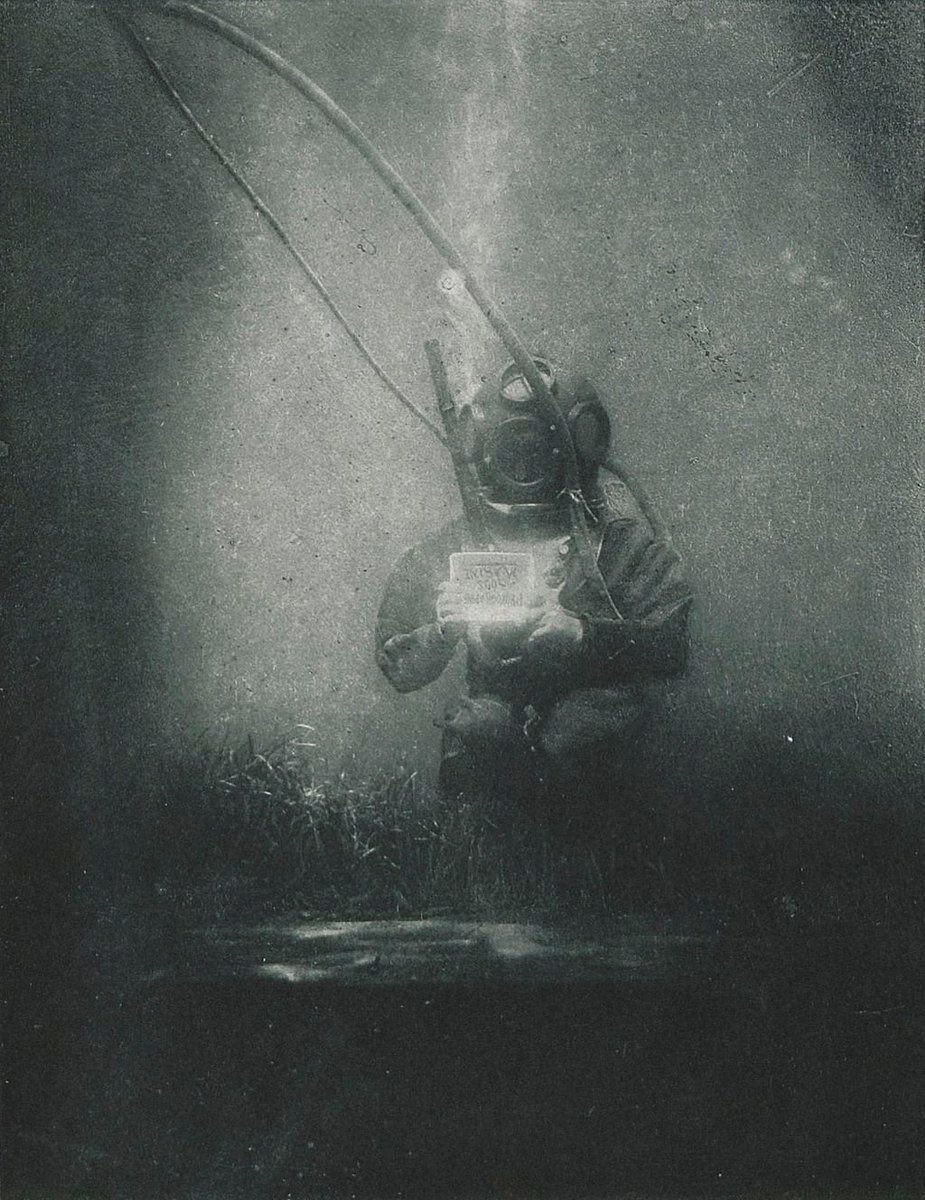
The image above may at first look like a plate from a Jules Verne nov­el, or per­haps a still from one of Georges Méliès’ more fan­tas­ti­cal mov­ing pic­tures. It does indeed come from fin de siè­cle France, a time and place in which Verne, Méliès, and many oth­er imag­i­na­tive cre­ators lived and worked, but it is in fact a gen­uine under­wa­ter pho­to­graph — or rather, a gen­uine under­wa­ter por­trait, and the first exam­ple of such a thing in pho­to­graph­ic his­to­ry. Tak­en in the 1890s (most like­ly 1899) by biol­o­gist and pho­tog­ra­phy pio­neer Louis Boutan, it depicts Boutan’s Roman­ian col­league Emil Racov­itza hold­ing up a sign that reads “Pho­togra­phie Sous Marine,” or “Under­wa­ter Pho­tog­ra­phy.”

Such an out­landish con­cept could hard­ly have crossed many minds back then, and few­er still would have dreamt up prac­ti­cal ways to real­ize it. To start with the most basic of chal­lenges, there is, as David Byrne sung, water at the bot­tom of the ocean — but not a whole lot of light, espe­cial­ly com­pared to the bur­den­some require­ments of late 19th-cen­tu­ry cam­eras. This neces­si­tat­ed the devel­op­ment of what Petapix­el’s Lau­rence Bar­tone calls a “crazy under­wa­ter flash pho­tog­ra­phy rig,” one pow­er­ful enough that it “could eas­i­ly dou­ble as a bomb. The cre­ation involved an alco­hol lamp on an oxy­gen-filled bar­rel. A rub­ber bulb would then blow a puff of mag­ne­sium pow­der over the flame, cre­at­ing a flash.”

Pho­tog­ra­phy enthu­si­asts will under­stand the mag­ni­tude of Boutan’s achieve­ment (made with the help of his broth­er Auguste and a lab­o­ra­to­ry tech­ni­cian named Joseph David). Some have gone so far as to recre­ate it, an effort you can see in the Barcelona Under­wa­ter Fes­ti­val video just above. Not only are there fish and oth­er sea crea­tures swim­ming every­where, a fea­ture of the envi­ron­ment not vis­i­ble in Boutan’s orig­i­nal shot, but the re-enac­tors face the pres­sure of curi­ous passers­by, young and old, who walk through a near­by trans­par­ent under­wa­ter tun­nel, not a con­sid­er­a­tion for Boutan and his col­lab­o­ra­tors. That ground­break­ing suc­cess in under­wa­ter por­trai­ture came 54 years after a Philadel­phia chemist named Robert Cor­nelius first turned his cam­era on him­self. Has pho­to­graph­ic his­to­ry record­ed how long it took human­i­ty after Boutan’s famous pic­ture to snap the first under­wa­ter self­ie?

via Diane Doniol-Val­croze on Twit­ter

Relat­ed Con­tent:

Under­wa­ter Vol­canic Erup­tion Wit­nessed for the First Time

Reef View: Google Gives Us Stun­ning Under­wa­ter Shots of Great Coral Reefs

Sunken Films: Watch a Cin­e­mat­ic Med­i­ta­tion on Films Found on the Ocean’s Floor

See the First “Self­ie” In His­to­ry Tak­en by Robert Cor­nelius, a Philadel­phia Chemist, in 1839

The His­to­ry of Pho­tog­ra­phy in Five Ani­mat­ed Min­utes: From Cam­era Obscu­ra to Cam­era Phone

Based in Seoul, Col­in Mar­shall writes and broad­casts on cities, lan­guage, and cul­ture. His projects include the book The State­less City: a Walk through 21st-Cen­tu­ry Los Ange­les and the video series The City in Cin­e­ma. Fol­low him on Twit­ter at @colinmarshall, on Face­book, or on Insta­gram.

19th-Century Japanese Woodblocks Illustrate the Lives of Western Inventors, Artists, and Scholars (1873)

For more than 200 years between the mid-17th and mid-19th cen­tu­ry, Japan closed itself to the out­side world. But when it final­ly opened again, it could­n’t get enough of the out­side world. The Amer­i­can Navy com­modore Matthew Per­ry arrived with his for­mi­da­ble “Black Ships” in 1853, demand­ing that Japan engage in trade. Five years lat­er came the Mei­ji Restora­tion, which con­sol­i­dat­ed Japan’s polit­i­cal sys­tem under impe­r­i­al rule and encour­aged both indus­tri­al­iza­tion and West­ern­iza­tion. Or rather, it encour­aged the impor­ta­tion of West­ern tech­nol­o­gy and ideas for use in Japan­ese ways, a com­bi­na­tion known as wakon-yōsai, mean­ing “Japan­ese spir­it and West­ern tech­niques.”

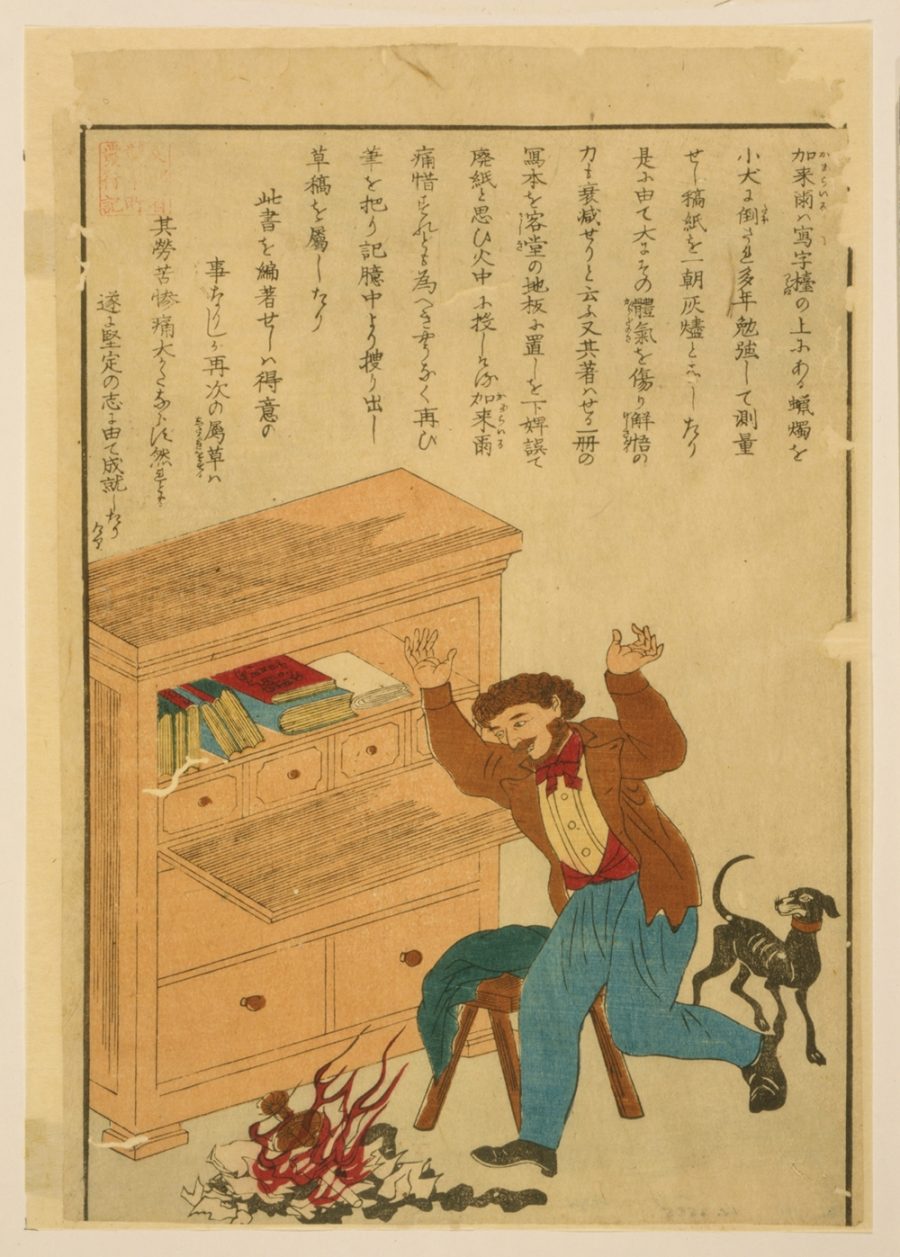
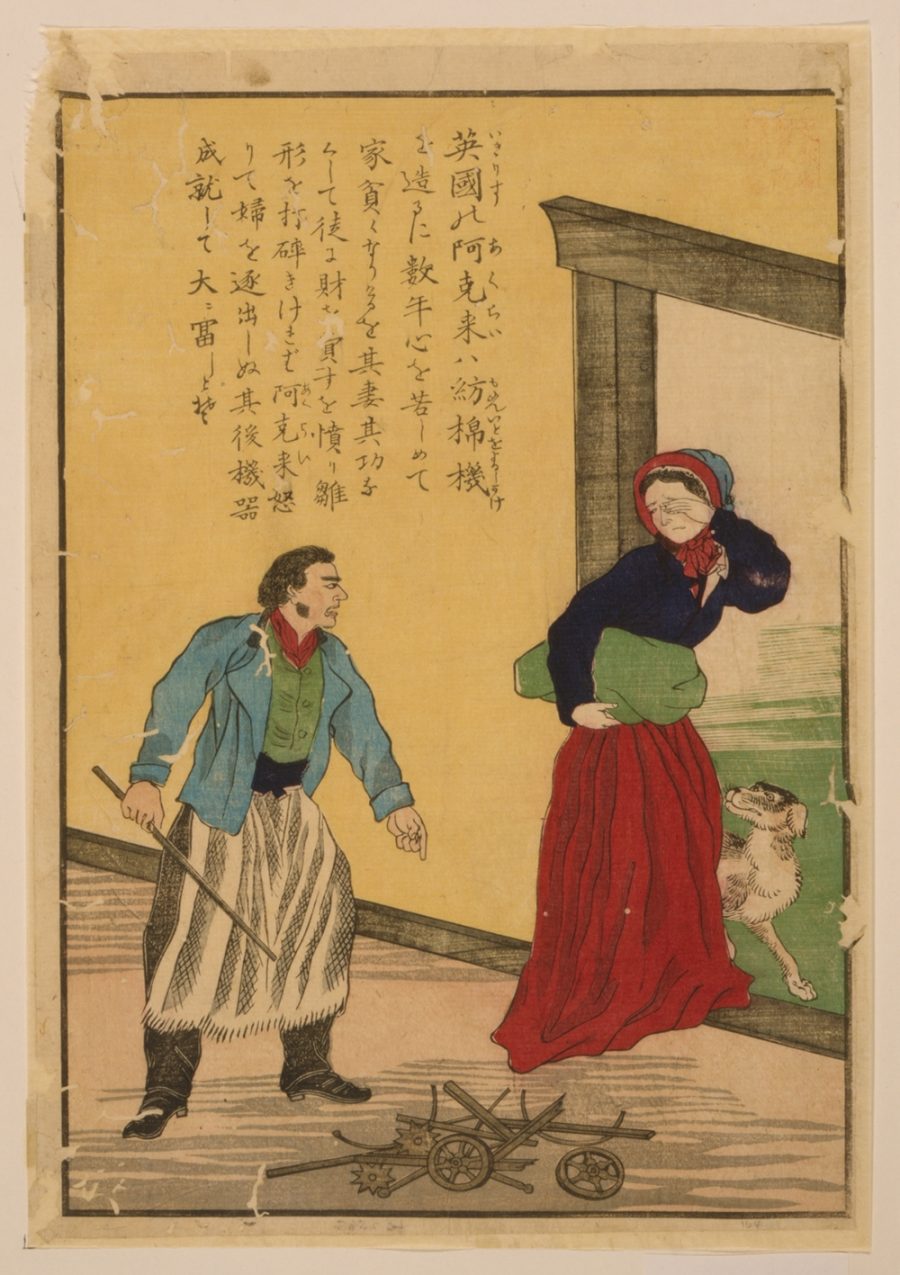
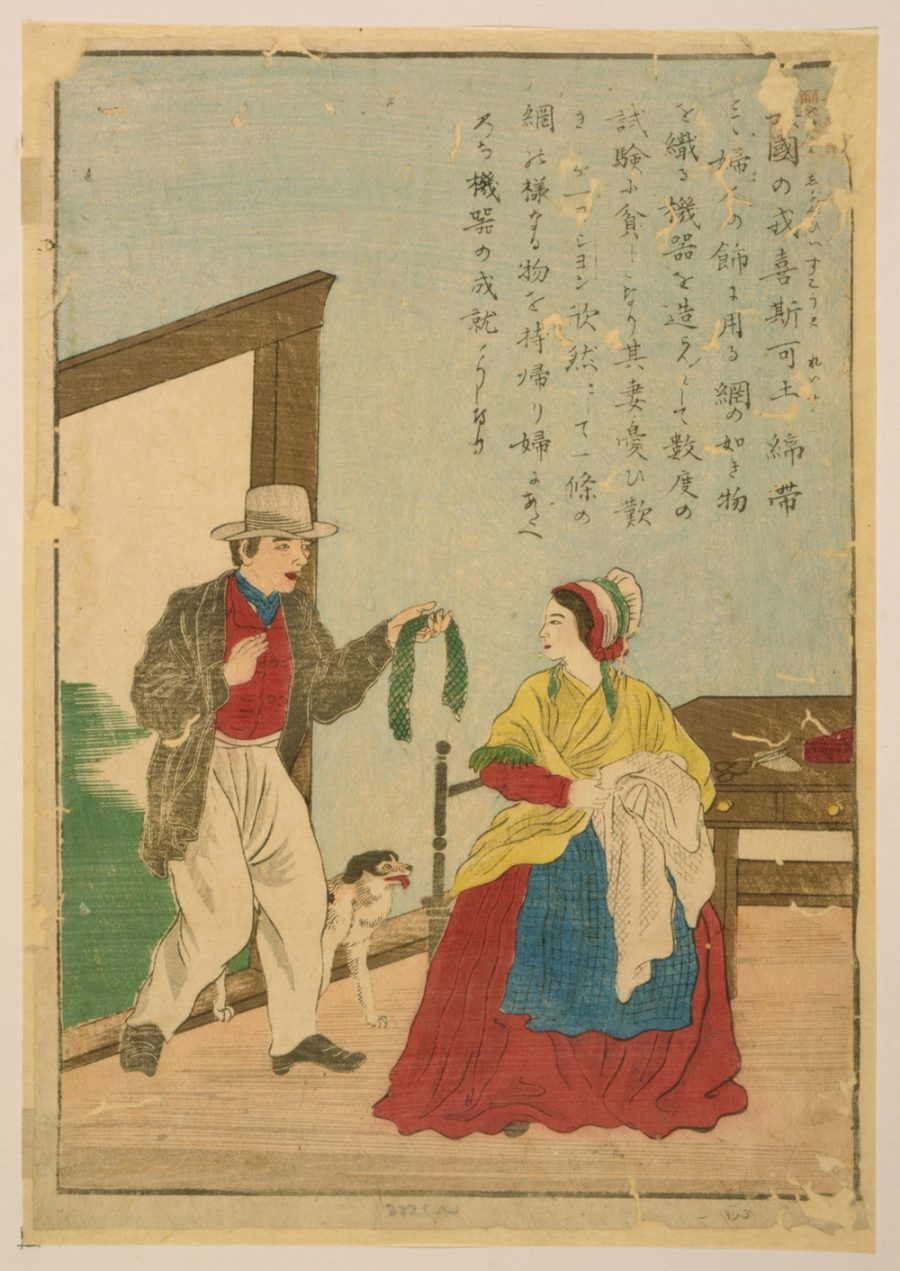
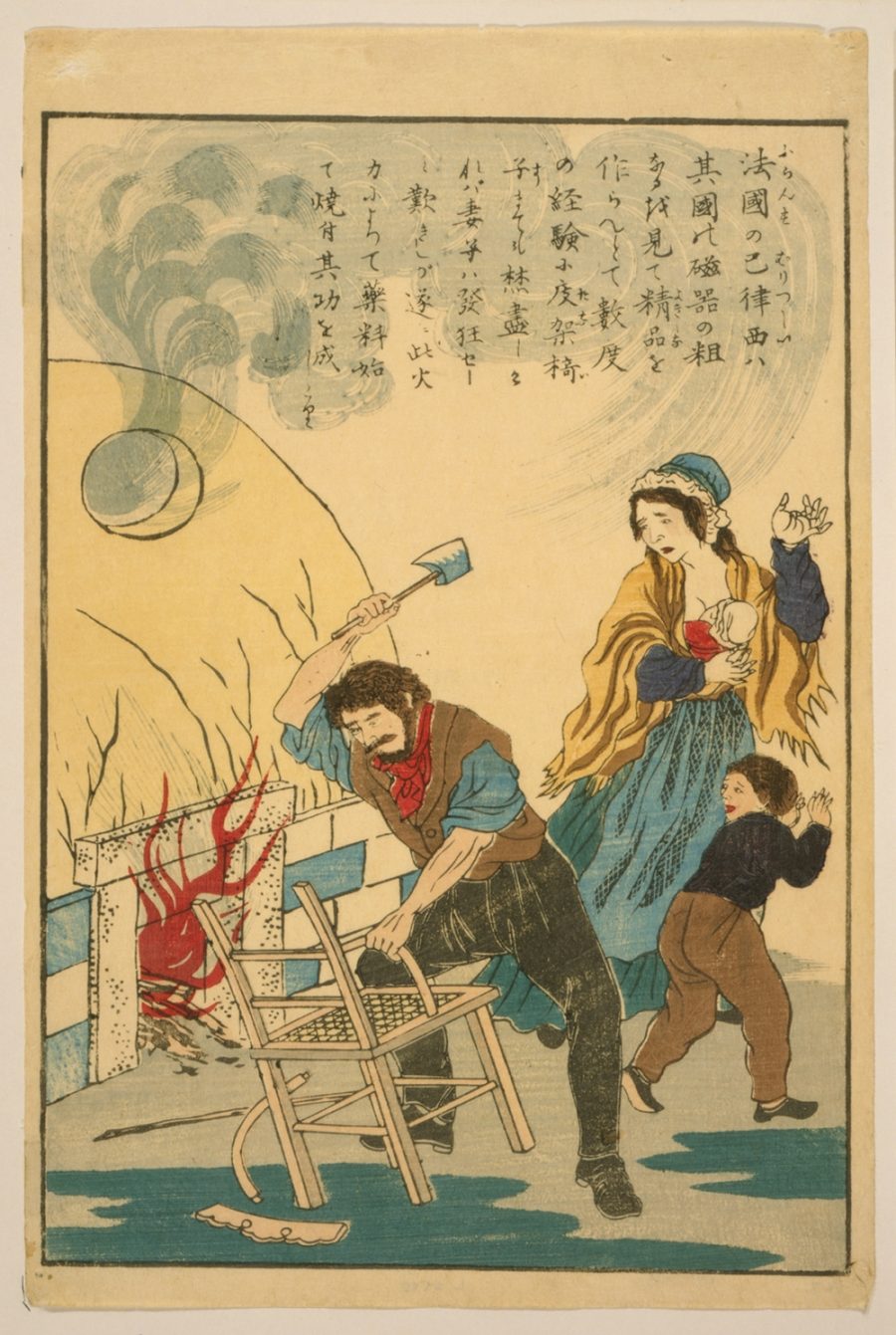
It is in the mind­set of wakon-yōsai, says the Pub­lic Domain Review, that we should view these Japan­ese wood­block prints of West­ern inven­tors, schol­ars, and artists. Most like­ly dat­ing from 1873 — a heady time for the mix­ture of Japan­ese spir­it and West­ern tech­niques — they depict these fig­ures fac­ing a vari­ety of chal­lenges, some more plau­si­ble than oth­ers.

“The great nat­u­ral­ist John James Audubon bat­tles with a mis­chie­vous rat who has eat­en his work; the dog of his­to­ri­an and poet Thomas Car­lyle has upset a lamp burn­ing his papers; the wife of Richard Ark­wright, inven­tor of the spin­ning-frame, smash­es his cre­ation; the devel­op­er of the Watt steam engine James Watt suf­fers the wrath of his impa­tient Aunt; pot­tery impre­sario Bernard Palis­sy has to burn his fam­i­ly’s fur­ni­ture to keep his kil­n’s fire going.”

Com­mis­sioned by the Japan­ese Depart­ment of Edu­ca­tion, these school­book illus­tra­tions may bring to mind the 1861 Japan­ese his­to­ry of Amer­i­ca pre­vi­ous­ly fea­tured on Open Cul­ture, with its tiger-punch­ing George Wash­ing­ton and ser­pent-slay­ing John Adams. But the text that accom­pa­nies these might­i­ly strug­gling West­ern lumi­nar­ies, trans­la­tions of which you can find along with the images at the Pub­lic Domain Review, “paints a slight­ly more pos­i­tive pic­ture, reveal­ing the moral, some­thing akin to ‘If at first you don’t suc­ceed then try again,’ or ‘Per­se­ver­ance pros­pers.’ ” In Japan’s case, per­se­ver­ance would indeed make it one of the most pros­per­ous nations in the world — if only after its defeat in World War II, by some of the very nations whose his­tor­i­cal fig­ures it had lion­ized less than a cen­tu­ry before. Find more images at the Pub­lic Domain Review and the Library of Con­gress.

Relat­ed Con­tent:

What Hap­pens When a Japan­ese Wood­block Artist Depicts Life in Lon­don in 1866, Despite Nev­er Hav­ing Set Foot There

A Japan­ese Illus­trat­ed His­to­ry of Amer­i­ca (1861): Fea­tures George Wash­ing­ton Punch­ing Tigers, John Adams Slay­ing Snakes & Oth­er Fan­tas­tic Scenes

19th Cen­tu­ry Japan­ese Wood­block Prints Cre­ative­ly Illus­trate the Inner Work­ings of the Human Body

Down­load Hun­dreds of 19th-Cen­tu­ry Japan­ese Wood­block Prints by Mas­ters of the Tra­di­tion

Enter a Dig­i­tal Archive of 213,000+ Beau­ti­ful Japan­ese Wood­block Prints

The 10 Com­mand­ments of Chindōgu, the Japan­ese Art of Cre­at­ing Unusu­al­ly Use­less Inven­tions

Based in Seoul, Col­in Mar­shall writes and broad­casts on cities, lan­guage, and cul­ture. His projects include the book The State­less City: a Walk through 21st-Cen­tu­ry Los Ange­les and the video series The City in Cin­e­ma. Fol­low him on Twit­ter at @colinmarshall, on Face­book, or on Insta­gram.

Leonardo da Vinci’s Elegant Studies of the Human Heart Were 500 Years Ahead of Their Time

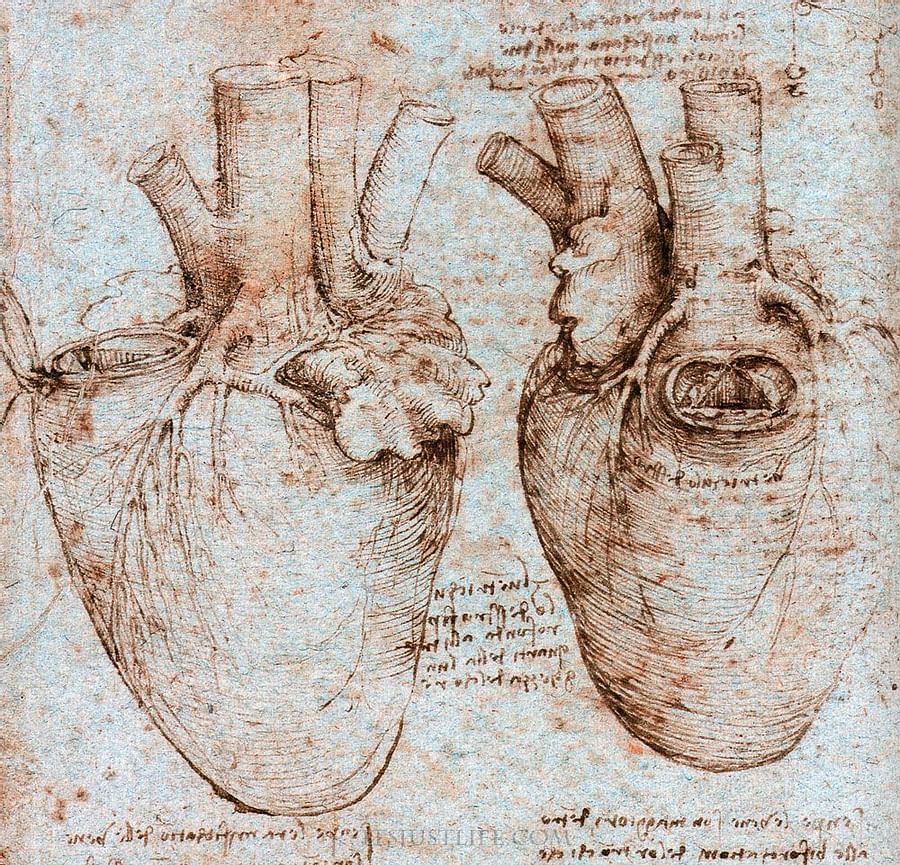
Leonar­do da Vin­ci didn’t real­ly have hob­bies; he had pas­sion­ate, unpaid obses­sions that filled whole note­books with puz­zles sci­en­tists are still try­ing to solve. Many of the prob­lems to which he applied him­self were those none of his con­tem­po­raries under­stood, because he was the only per­son to have noticed them at all. The ama­teur anatomist was the first, for exam­ple, “to sketch tra­bec­u­lae,” notes Medievalists.net, “and their snowflake-like frac­tal pat­terns in the 16th cen­tu­ry.”

These geo­met­ric pat­terns of mus­cle fibers on the inner sur­face of the heart have remained a mys­tery for over 500 years since Leonardo’s anatom­i­cal inves­ti­ga­tions, car­ried out first on pig and oxen hearts, then lat­er, in hasty dis­sec­tions in the win­ter cold, on human spec­i­mens. He spec­u­lat­ed they might have warmed the blood, but sci­en­tists have recent­ly found they enhance blood flow “just like the dim­ples on a golf ball reduce air resis­tance.”

Leonar­do may have been wide of the mark in his tra­bec­u­lae the­o­ry, not hav­ing access to genet­ic test­ing, AI, or MRI. But he was the first to describe coro­nary artery dis­ease, which would become one of the lead­ing caus­es of death 500 years lat­er. Many of his med­ical con­clu­sions have turned out to be start­ing­ly cor­rect, in fact. He detailed and ele­gant­ly sketched the heart’s anato­my from 1507 until his death in 1519, work­ing out the flow of the blood through the body.

As the Medlife Cri­sis video above explains, Leonardo’s stud­ies on the heart ele­gant­ly brought togeth­er his inter­ests in art, anato­my, and engi­neer­ing. Because of this mul­ti-dimen­sion­al approach, he was able to explain a fact about the heart’s oper­a­tion that even many car­di­ol­o­gists today get wrong, the move­ment of the aor­tic valve. In order to visu­al­ize the “flow dynam­ics” of the heart’s machin­ery, with­out imag­ing machin­ery of his own, he built a glass mod­el, and drew sev­er­al sketch­es of what he saw. “Incred­i­bly, it took 450 years to prove him right.”

The mind of this extra­or­di­nary fig­ure con­tin­ues to divulge its secrets, and schol­ars and doc­tors across mul­ti­ple fields con­tin­ue to engage with his work, in the pages, for exam­ple, of the Nether­lands Heart Jour­nal. His stud­ies on the heart par­tic­u­lar­ly show how his aston­ish­ing breadth of knowl­edge and skill para­dox­i­cal­ly made him such a focused, deter­mined, and cre­ative thinker.

via Medievalists.net

Relat­ed Con­tent:

A Com­plete Dig­i­ti­za­tion of Leonar­do Da Vinci’s Codex Atlanti­cus, the Largest Exist­ing Col­lec­tion of His Draw­ings & Writ­ings

Leonar­do da Vinci’s Ear­li­est Note­books Now Dig­i­tized and Made Free Online: Explore His Inge­nious Draw­ings, Dia­grams, Mir­ror Writ­ing & More

Leonar­do da Vinci’s Inven­tions Come to Life as Muse­um-Qual­i­ty, Work­able Mod­els: A Swing Bridge, Scythed Char­i­ot, Per­pet­u­al Motion Machine & More

Josh Jones is a writer and musi­cian based in Durham, NC. Fol­low him at @jdmagness

Sounds of the Forest: A Free Audio Archive Gathers the Sounds of Forests from All Over the World

Some of my fond­est mem­o­ries are of hik­ing the Olympic Nation­al For­est in Wash­ing­ton State and the forests of the Shenan­doah Val­ley in Vir­ginia, seek­ing the kind of silence one can only find in busy ecosys­tems full of birds, insects, wood­land crea­tures, rustling leaves, etc. This expe­ri­ence can be trans­for­ma­tive, a full immer­sion in what acoustic ecol­o­gist Gor­don Hemp­ton calls a “nat­ur­al acoustic sys­tem,” the end­less inter­play of calls and respons­es that evolved to har­mo­nize over mil­len­nia.

Trag­i­cal­ly, human noise pol­lu­tion encroach­es on the acoustic space of such refuges, and cli­mate change may irrev­o­ca­bly alter their nature. But they will be pre­served, in dig­i­tal record­ings at least, thanks in part to the efforts of a project called Sounds of the For­est, which has been doc­u­ment­ing the preg­nant silences of forests around the world and has so far col­lect­ed audio files from six con­ti­nents, with west­ern Europe most heav­i­ly rep­re­sent­ed.

The Sounds of the For­est library, acces­si­ble via its inter­ac­tive map or Sound­cloud page, “will form an open source library,” the project announces, “to be used by any­one to lis­ten to and cre­ate from.”

Nature lovers can con­tribute their own record­ings, help­ing to fill in the many remain­ing areas on the map with­out rep­re­sen­ta­tion. “Vis­it a wood­land,” the project rec­om­mends, “recharge under the canopy and record your sounds of the for­est.” The site gives spe­cif­ic instruc­tions for how to upload audio file sub­mis­sions.

Sounds of the For­est came out of the annu­al Tim­ber Fes­ti­val, an inter­na­tion­al gath­er­ing in the UK’s Nation­al For­est, which is the “bold­est envi­ron­men­tal­ly-led regen­er­a­tion project: the cre­ation of England’s first new for­est in a thou­sand years… an imag­i­na­tive and ambi­tious state­ment of sus­tain­able devel­op­ment.” When the pan­dem­ic scut­tled plans for an in-per­son 2020 Tim­ber Fes­ti­val, orga­niz­ers con­ceived of the sound files as a way to bring the world togeth­er in a vir­tu­al for­est gath­er­ing. They are also for­ag­ing mate­r­i­al for next year’s fest, in which “select­ed artists will be respond­ing to the sounds that are gath­ered, cre­at­ing music, audio, art­work or some­thing else incred­i­ble.”

If you can’t make it to Tim­ber Fes­ti­val 2021 next sum­mer, or to your for­est refuge of choice this autumn, you can still immerse your­self in the restora­tive sounds of forests world­wide. Open the sound map, click on a file, close your eyes, and imag­ine your­self in Nel­son Lakes Nation­al Park in New Zealand, Yasuni Nation­al Park at night in Ecuador, or Chernyaevsky For­est in Rus­sia. Expe­ri­enc­ing the busy silences of nature brings us back to ourselves—or to the ancient parts of our­selves that once also har­mo­nized with the nat­ur­al world.


via Kot­tke

Relat­ed Con­tent:

How to Find Silence in a Noisy World

The British Library’s “Sounds” Archive Presents 80,000 Free Audio Record­ings: World & Clas­si­cal Music, Inter­views, Nature Sounds & More

Free: Down­load the Sub­lime Sights & Sounds of Yel­low­stone Nation­al Park

10 Hours of Ambi­ent Arc­tic Sounds Will Help You Relax, Med­i­tate, Study & Sleep

Josh Jones is a writer and musi­cian based in Durham, NC. Fol­low him at @jdmagness

Watch Lime Kiln Club Field Day, One of the Earliest Surviving Feature Films with an All Black Cast (1913)

For some of us (no names) the world of Tik­Tok is baf­fling and bizarre. Why does Gen Z flock to it? Who knows, but they do, in droves. Any­one can be a “cre­ator” on what Jason Parham at Wired calls “the most excit­ing cul­tur­al prod­uct of this time.” It also hap­pens to be a place where “dig­i­tal black­face” has evolved—an online cul­tur­al phe­nom­e­non in which Black users of a plat­form get dis­pro­por­tion­ate­ly cen­sored while oth­ers who adopt the trap­pings of Black Amer­i­can cul­ture, often in exag­ger­at­ed, stereo­typ­i­cal ways, rack up fol­low­ers and views.

21st cen­tu­ry forms of black­face per­sist for all sorts of rea­sons. The intent may not be con­scious­ly to demean, but the effects are usu­al­ly oth­er­wise, espe­cial­ly giv­en the long his­to­ry of black­face as a way of mock­ing Black Amer­i­cans, while forc­ing Black actors to them­selves per­form in black­face to gain an audi­ence and get work. Min­strel­sy per­formed by white stage actors, come­di­ans, musi­cians, etc. set a trag­i­cal­ly low bar for Black actors.

A once-promi­nent exam­ple comes from the career of per­former Bert Williams. “Large­ly for­got­ten today,” Clau­dia Roth Pier­pont writes at The New York­er, Williams was “the first African-Amer­i­can star: the most famous ‘col­ored man’ in Amer­i­ca dur­ing the ear­ly years of the twen­ti­eth cen­tu­ry.” He per­formed at Buck­ing­ham Palace, was the only Black mem­ber of Ziegfeld Fol­lies (and a head­lin­er) and played “along­side Fan­ny Brice and Eddie Cantor—for near­ly a decade.”

He did all of it in black­face, decades after the orig­i­nal Jim Crow char­ac­ter appeared in 1830. Born in 1874 in the Bahamas, says Caribbean nov­el­ist Caryl Phillips, Williams “was an out­sider in all sorts of ways… He didn’t see him­self to be ful­ly a part of African Amer­i­can tra­di­tions, so in a sense he didn’t quite under­stand the full impli­ca­tions of the black­face per­for­mance. He saw it as part of his cos­tume.” That may not nec­es­sar­i­ly be so. In his stage act, Williams and his part­ner resist­ed the prac­tice for as long as they could, until they real­ized that they would be sub­ject to con­stant vio­lence from white audi­ences with­out it.

Black­face affec­ta­tions helped Williams cross over into a film career. He “pro­duced, wrote, direct­ed and starred in two short films for Bio­graph,” the San Fran­cis­co Silent Film Fes­ti­val notes, “A Nat­ur­al Born Gam­bler (1916) and Fish (1916). Pro­duced by a black man for white audi­ences, they were ground­break­ing, how­ev­er, these films fea­tured char­ac­ters and sto­ry­lines that still sat­is­fied dom­i­nant racist stereo­types of black men.”

In con­trast, a third film, pro­duced three years ear­li­er, titled Lime Kiln Club Field Day, “one of a hand­ful of sur­viv­ing silent films with an all-black cast,” told a very dif­fer­ent kind of sto­ry. Williams appeared in black­face, but the oth­er actors did not. “The film … fea­tures one of the first exam­ples of on-screen inti­ma­cy between a black man and a black woman—a kiss—along with scenes of mid­dle class leisure; sto­ry ele­ments that chal­lenged the most­ly neg­a­tive, some­times evil, depic­tions of blacks in the major­i­ty of white-pro­duced films, which reached a dis­tress­ing nadir in D.W. Griffith’s The Birth of a Nation, released two years lat­er.”

Lime Kiln Club Field Day was nev­er com­plet­ed. Its many unedit­ed reels of film were only recent­ly redis­cov­ered, a cen­tu­ry lat­er, in the archives at New York’s Muse­um of Mod­ern Art. See the film above, restored by cura­tor Ron Magliozzi and preser­va­tion offi­cer Peter Williamson, who con­duct­ed research “over near­ly a decade,” the MoMA writes, to deci­pher the plot of the film and recov­er its pro­duc­tion his­to­ry, even going so far as to employ a lip read­er and explore Stat­en Island and New Jer­sey in search of loca­tions.”

Film his­to­ri­ans do not know why the project was aban­doned. They do know that Williams suf­fered sig­nif­i­cant­ly for the racist car­i­ca­tures he felt forced to per­form. Read more about his extra­or­di­nary career at The New York­er and learn more about the Lime Kiln Club Field Day restora­tion project at the San Fran­cis­co Silent Film Fes­ti­val site.

Relat­ed Con­tent:

Watch Free Films by African Amer­i­can Film­mak­ers in the Cri­te­ri­on Col­lec­tion … and the New Civ­il Rights Film, Just Mer­cy

Watch the Pio­neer­ing Films of Oscar Micheaux, America’s First Great African-Amer­i­can Film­mak­er

Watch the First-Ever Kiss on Film Between Two Black Actors, Just Hon­ored by the Library of Con­gress (1898)

Josh Jones is a writer and musi­cian based in Durham, NC. Fol­low him at @jdmagness

Central Park Bird Watcher Christian Cooper Writes DC Comics Graphic Novel: It’s Now Free Online

Write what you know.

It’s oft-cit­ed advice for writ­ers both begin­ning and estab­lished.

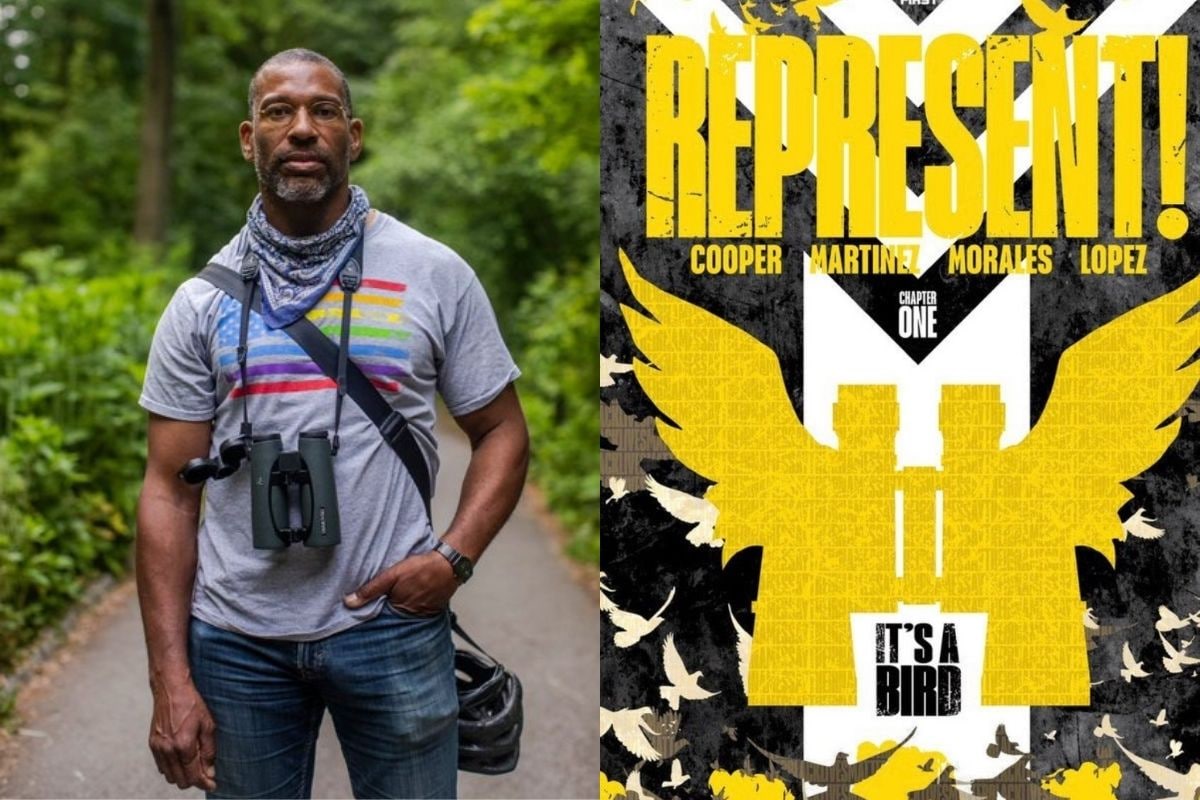
Thus, Jules, the teenage boy at the cen­ter of Chris­t­ian Cooper’s It’s a Bird, the first entry in DC Comics’ dig­i­tal-first anthol­o­gy series Rep­re­sent!, is a bird­watch­er, like the author.

And the binoc­u­lars that were a 50th birth­day gift from Cooper’s father, a Kore­an War vet and Civ­il Rights activist, serve as mod­els for the ones Jules is none too thrilled to receive, despite his grandpa’s belief that they pos­sess spe­cial pow­ers.

Coop­er, who was was Mar­vel’s first open­ly gay writer and edi­tor, intro­duc­ing a num­ber of queer char­ac­ters before devot­ing him­self to sci­ence writ­ing, also draws on recent per­son­al his­to­ry that is more fraught.

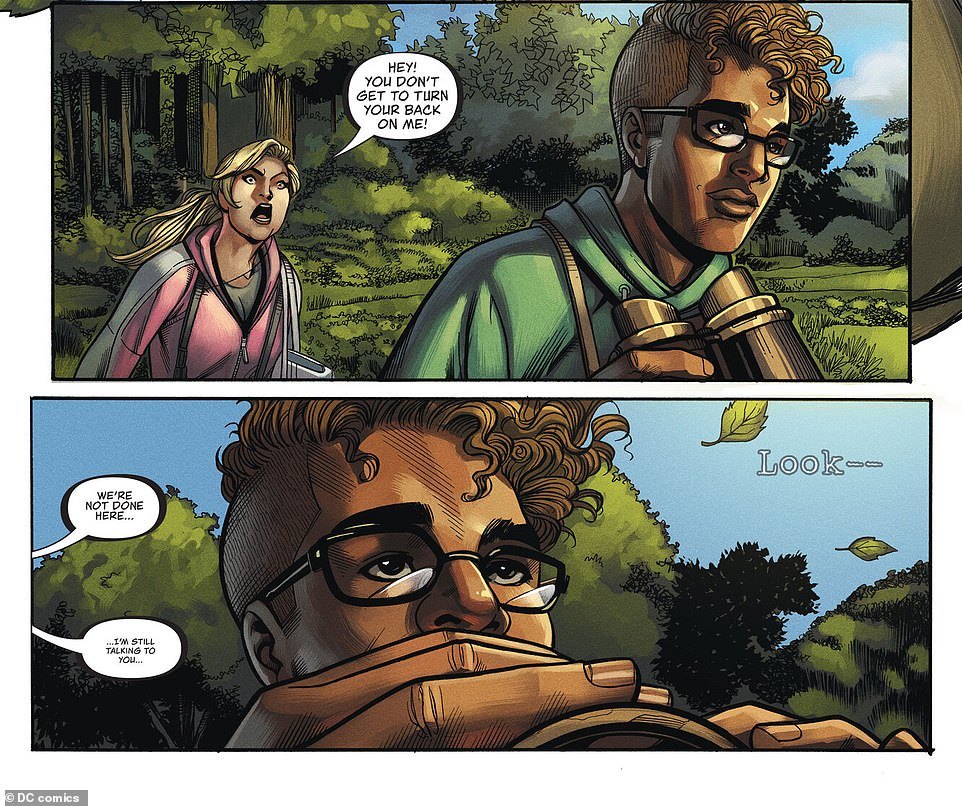
Although the loca­tion has shift­ed from New York City’s Cen­tral Park to a sub­ur­ban green space bor­dered with large, well-kept homes, includ­ing Jules’, the young man’s encounter with an indig­nant white woman and her off-leash dog should ring any num­ber of bells.

In late May, Coop­er became the sub­ject of nation­al news, when he con­front­ed Amy Coop­er (no rela­tion) over her vio­la­tion of park rules, tired of the hav­oc uncon­trolled dogs wreak on birds who call the park home. Ms. Coop­er esca­lat­ed things quick­ly by call­ing 911, claim­ing she was being threat­ened by an African-Amer­i­can man. Coop­er record­ed the inci­dent as a mat­ter of pro­to­col, and his sis­ter shared the video on social media lat­er that day.

The same day that George Floyd was killed by police in Min­neapo­lis, Min­neso­ta.

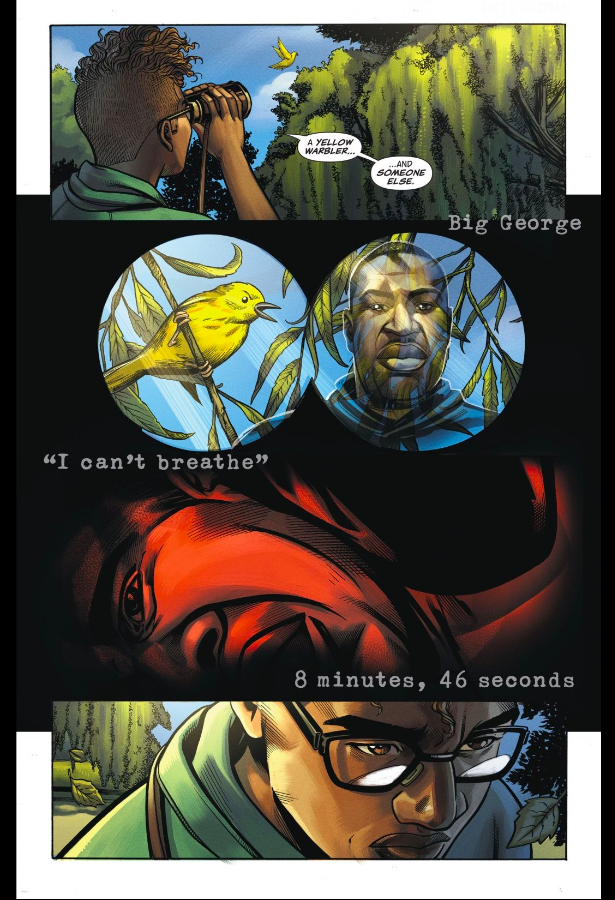
What Jules sees through the lens­es of his grand­fa­ther’s binoc­u­lars con­tains an ele­ment of fan­ta­sy, but is also deeply root­ed in reality—the faces of Ami­dou Dial­lo, Bre­on­na Tay­lor, Floyd, and oth­er Black peo­ple who have died as a result of exces­sive, unwar­rant­ed police force.

When DC first approached him about tap­ping his expe­ri­ence for his first com­ic in over two decades, Coop­er was reluc­tant:

I thought, “I don’t know, DC Comics? Super­heroes? Not sure how that’s going to work.” We kicked around a cou­ple of ideas. They said they had got­ten the title, I’m not sure exact­ly from who, but some­body pret­ty high up in the DC food chain: “It’s a Bird.” It took me half a beat. “Oh…I get what you did there.” Once I had the title, the sto­ry wrote itself.

It’s a Bird artist Aletha E. Mar­tinez, a pio­neer whose 20-year career has includ­ed ink­ing such super­hero heavy hit­ters as the Black Pan­ther, Iron Man, Bat­girl, and X‑Men, also pulled from per­son­al expe­ri­ence when ren­der­ing Jules’ expres­sion after the binoc­u­lars reveal the cir­cum­stances of George Floyd’s death:

I saw that look on my son’s face three years ago after we left North Car­oli­na, and we were com­ing home to New York. We were stopped going into the air­port. We trav­el so often—cons, in and out of the coun­try. These two secu­ri­ty guards start­ed to harass us. They want­ed to take my purse. “Where are you from?” You hear my voice, there’s no accent in my voice. It end­ed up with them say­ing, “You should trav­el with your pass­port.” This is after back­ing us up in the cor­ner, and why? I’m an Amer­i­can cit­i­zen born on this soil, so is my son. I don’t need a pass­port to trav­el with­in my coun­try. This is our day and age.

I watched my son’s face change, and he nev­er quite walked up again look­ing hap­py going to the air­port. Now he has on armor. That face you see? That’s my kid.

It’s a Bird can be read for free on par­tic­i­pat­ing dig­i­tal plat­forms (see links below), and Coop­er is hope­ful that it will inspire young peo­ple to find out more about some of the real life char­ac­ters Jules spies through his binoc­u­lars. To that end, an appen­dix touch­es on some bio­graph­i­cal details:

We not only give the bare bones details of how they died, but also a lit­tle bit about them, because they were peo­ple. They weren’t just want hap­pened to them. I hope young peo­ple (are) inspired to keep the focus where it needs to be, which is on those we have lost and how we keep from los­ing more. There are peo­ple who are invest­ed in dis­tract­ing us right now, and there are peo­ple who want to dis­tract us from their fail­ures on so many oth­er things. That’s not what this moment is about. This moment is about the ones we’ve lost, and how we’re going to keep from los­ing any more. And if you’re not talk­ing about that, I don’t want to hear it.

Read Rep­re­sent!: It’s a Bird for free on readdc.comComixol­o­gyAma­zon Kin­dle, Apple Books, and oth­er par­tic­i­pat­ing dig­i­tal plat­forms.

Read an inter­view with Coop­er and Mar­tinez, from which the quotes in this post are drawn, on DC’s blog.

Relat­ed Con­tent:

A New Dig­i­tal Archive Pre­serves Black Lives Mat­ter & COVID-19 Street Art

Read Mar­tin Luther King and The Mont­gomery Sto­ry: The Influ­en­tial 1957 Civ­il Rights Com­ic Book

Bat­man Stars in an Unusu­al Car­toon Adap­ta­tion of Dostoyevsky’s Crime and Pun­ish­ment

Ayun Hal­l­i­day is an author, illus­tra­tor, the­ater mak­er and Chief Pri­ma­tol­o­gist of the East Vil­lage Inky zine. Fol­low her @AyunHalliday.

« Go BackMore in this category... »
Quantcast