What Does the United States’ Coronavirus Response Look Like Abroad?: Watch the Rest of the World Stare Aghast at Our Handling of COVID-19

“Even in third world coun­tries, like Sene­gal, it isn’t like this…”

Relat­ed Con­tent:

Carl Sagan Pre­dicts the Decline of Amer­i­ca: Unable to Know “What’s True,” We Will Slide, “With­out Notic­ing, Back into Super­sti­tion & Dark­ness” (1995)

The Splen­did Book Design of the 1946 Edi­tion of Gibbon’s Decline and Fall of the Roman Empire 

Orson Welles Nar­rates an Ani­mat­ed Para­ble About How Xeno­pho­bia & Greed Will Put Amer­i­ca Into Decline (1971)

by | Permalink | Make a Comment ( 1 ) |

The Map of Quantum Physics: A Colorful Animation Explains the Often Misunderstood Branch of Science

In our time, few branch­es of sci­ence have tak­en as much pub­lic abuse as quan­tum physics, the study of how things behave at the atom­ic scale. It’s not so much that peo­ple dis­like the sub­ject as they see fit to draft it in sup­port of any giv­en notion: quan­tum physics, one hears, proves that we have free will, or that Bud­dhist wis­dom is true, or that there is an after­life, or that noth­ing real­ly exists. Those claims may or may not be true, but they do not help us at all to under­stand what quan­tum physics actu­al­ly is. For that we’ll want to turn to Dominic Wal­li­man, a Youtu­ber whose chan­nel Domain of Sci­ence fea­tures clear visu­al expla­na­tions of sci­en­tif­ic fields includ­ing physics, chem­istry, math­e­mat­ics, as well as the whole domain of sci­ence itself — and who also, as luck would have it, is a quan­tum physics PhD.

With his knowl­edge of the field, and his mod­esty as far as what can be defin­i­tive­ly said about it, Wall­man has designed a map of quan­tum physics, avail­able for pur­chase at his web site. In the video above he takes us on a guid­ed tour through the realms into which he has divid­ed up and arranged his sub­ject, begin­ning with the “pre-quan­tum mys­ter­ies,” inquiries into which led to its foun­da­tion.

From there he con­tin­ues on to the foun­da­tions of quan­tum physics, a ter­ri­to­ry that includes such poten­tial­ly famil­iar land­marks as par­ti­cle-wave dual­i­ty, Heisen­berg’s uncer­tain­ty prin­ci­ple, and the Schrödinger equa­tion — though not yet his cat, anoth­er favorite quan­tum-physics ref­er­ence among those who don’t know much about quan­tum physics.

Alas, as c explains in the sub­se­quent “quan­tum phe­nom­e­na” sec­tion, Schrödinger’s cat is “not very help­ful, because it was orig­i­nal­ly designed to show how absurd quan­tum mechan­ics seems, as cats can’t be alive and dead at the same time.” But then, this is a field that pro­ceeds from absur­di­ty, or at least from the fact that its obser­va­tions at first made no sense by the tra­di­tion­al laws of physics. There fol­low for­ays into quan­tum tech­nol­o­gy (lasers, solar pan­els, MRI machines), quan­tum infor­ma­tion (com­put­ing, cryp­tog­ra­phy, the prospect tele­por­ta­tion), and a vari­ety of sub­fields includ­ing con­densed mat­ter physics, quan­tum biol­o­gy, and quan­tum chem­istry. Though detailed enough to require more than one view­ing, Wal­li­man’s map also makes clear how much of quan­tum physics remains unex­plored — and most encour­ag­ing­ly of all, leaves off its sup­posed philo­soph­i­cal, or exis­ten­tial impli­ca­tions. You can watch Wal­li­man’s oth­er intro­duc­tion to Quan­tum Physics below.

Relat­ed Con­tent:

Quan­tum Physics Made Rel­a­tive­ly Sim­ple: A Mini Course from Nobel Prize-Win­ning Physi­cist Hans Bethe

Ani­mat­ed Intro­duc­tions to Quan­tum Mechan­ics: From Schrödinger’s Cat to Heisenberg’s Uncer­tain­ty Prin­ci­ple

The Map of Physics: Ani­ma­tion Shows How All the Dif­fer­ent Fields in Physics Fit Togeth­er

The Map of Chem­istry: New Ani­ma­tion Sum­ma­rizes the Entire Field of Chem­istry in 12 Min­utes

The Map of Math­e­mat­ics: Ani­ma­tion Shows How All the Dif­fer­ent Fields in Math Fit Togeth­er

Info­graph­ics Show How the Dif­fer­ent Fields of Biol­o­gy, Chem­istry, Math­e­mat­ics, Physics & Com­put­er Sci­ence Fit Togeth­er

Free Online Physics Cours­es

Based in Seoul, Col­in Mar­shall writes and broad­casts on cities, lan­guage, and cul­ture. His projects include the book The State­less City: a Walk through 21st-Cen­tu­ry Los Ange­les and the video series The City in Cin­e­ma. Fol­low him on Twit­ter at @colinmarshall, on Face­book, or on Insta­gram.

Revisit Scenes of Daily Life in Amsterdam in 1922, with Historic Footage Enhanced by Artificial Intelligence

Welkom in Ams­ter­dam… 1922.

Neur­al net­work artist Denis Shiryaev describes him­self as “an artis­tic machine-learn­ing per­son with a soul.”

For the last six months, he’s been apply­ing him­self to re-ren­der­ing doc­u­men­tary footage of city life—Belle Epoque ParisTokyo at the start of the the Taishō era, and New York City in 1911—the year of the Tri­an­gle Shirt­waist Fire.

It’s pos­si­ble you’ve seen the footage before, but nev­er so alive in feel. Shiryaev’s ren­der­ings trick mod­ern eyes with arti­fi­cial intel­li­gence, boost­ing the orig­i­nal frames-per-sec­ond rate and res­o­lu­tion, sta­bi­liz­ing and adding color—not nec­es­sar­i­ly his­tor­i­cal­ly accu­rate.

The herky-jerky bustling qual­i­ty of the black-and-white orig­i­nals is trans­formed into some­thing fuller and more flu­id, mak­ing the human sub­jects seem… well, more human.

This Trip Through the Streets of Ams­ter­dam is tru­ly a blast from the past… the antithe­sis of the social dis­tanc­ing we must cur­rent­ly prac­tice.

Mer­ry cit­i­zens jos­tle shoul­der to shoul­der, unmasked, snack­ing, danc­ing, arms slung around each oth­er… unabashed­ly curi­ous about the hand-cranked cam­era turned on them as they go about their busi­ness.

A group of women vis­it­ing out­side a shop laugh and scatter—clearly they weren’t expect­ing to be filmed in their aprons.

Young boys look­ing to steal the show push their way to the front, cut­ting capers and throw­ing mock punch­es.

Sor­ry, lads, the award for Most Mem­o­rable Per­for­mance by a Juve­nile goes to the small fel­low at the 4:10 mark. He’s not ham­ming it up at all, mere­ly tak­ing a quick puff of his cig­a­rette while run­ning along­side a crowd of men on bikes, deter­mined to keep pace with the cam­era per­son.

Numer­ous YouTube view­ers have observed with some won­der that all the peo­ple who appear, with the dis­tant excep­tion of a baby or two at the end, would be in the grave by now.

They do seem so alive.

Mod­ern eyes should also take note of the absences: no cars, no plas­tic, no cell phones…

And, of course, every­one is white. The Nether­lands’ pop­u­la­tion would not diver­si­fy racial­ly for anoth­er cou­ple of decades, begin­ning with immi­grants from Indone­sia after WWII and Suri­nam in the 50s.

With regard to that, please be fore­warned that not all of the YouTube com­ments have to do with cheeky lit­tle boys and babies who would be push­ing 100…

The footage is tak­en from the archival col­lec­tion of the EYE film­mu­se­um in Ams­ter­dam, with ambi­ent sound by Guy Jones.

See more of Denis Shiryaev’s  upscaled vin­tage footage in the links below.

Relat­ed Con­tent:

Watch Vin­tage Footage of Tokyo, Cir­ca 1910, Get Brought to Life with Arti­fi­cial Intel­li­gence

Watch Scenes from Belle Époque Paris Vivid­ly Restored with Arti­fi­cial Intel­li­gence (Cir­ca 1890)

A Trip Through New York City in 1911: Vin­tage Video of NYC Gets Col­orized & Revived with Arti­fi­cial Intel­li­gence

Icon­ic Film from 1896 Restored with Arti­fi­cial Intel­li­gence: Watch an AI-Upscaled Ver­sion of the Lumière Broth­ers’ The Arrival of a Train at La Cio­tat Sta­tion

Ayun Hal­l­i­day is an author, illus­tra­tor, the­ater mak­er and Chief Pri­ma­tol­o­gist of the East Vil­lage Inky zine. Fol­low her @AyunHalliday.

Zamrock: An Introduction to Zambia’s 1970s Rich & Psychedelic Rock Scene

The sto­ry of pop­u­lar music in the late 20th cen­tu­ry is nev­er com­plete with­out an account of the explo­sive psy­che­del­ic rock, funk, Afrobeat, and oth­er hybrid styles that pro­lif­er­at­ed on the African con­ti­nent and across Latin Amer­i­can and the Caribbean in the 1960s and 70s. It’s only late­ly, how­ev­er, that large audi­ences are dis­cov­er­ing how much pio­neer­ing music came out of Kenya, Ghana, Nige­ria, and oth­er post­colo­nial coun­tries, thanks to UK labels like Strut and Sound­way (named by The Guardian as “one of the 10 British Labels defin­ing the sound of 2014” and named “Label of the Year” in 2017).

Germany’s Ana­logue Africa, a label that reis­sues clas­sic albums from the era, puts it this way: “the future of music hap­pened decades ago.” Only most West­ern audi­ences weren’t pay­ing attention—with notable excep­tions, of course: super­star drum­mer Gin­ger Bak­er appren­ticed him­self to Fela Kuti and became an evan­ge­list for African drum­ming; Bri­an Eno and Talk­ing Heads’ David Byrne (who also intro­duced thou­sands to “world music”) import­ed the sound of African rock to New Wave in the 80s, as did post-punk bands like Orange Juice and oth­ers in Britain, where music from Africa gen­er­al­ly had a big­ger impact.

But the fusion of African polyrhythms with rock instru­ments and song struc­tures had been done, and done incred­i­bly well, already by dozens of bands, includ­ing sev­er­al in the East African coun­try of Zam­bia, which had been British-con­trolled North­ern Rhode­sia until its inde­pen­dence in 1964. In the decade after, bands formed around the coun­try to cre­ate a unique form of music known as “Zam­rock,” as it came to be called, “forged by a par­tic­u­lar set of nation­al cir­cum­stances,” writes Calum Mac­Naughton at Music in Africa.

Zam­rock bands were influ­enced by the funk and soul of James Brown and the heavy rock of Hen­drix, Deep Pur­ple, Led Zep­pelin, The Who, and Cream—the same music every­one else was lis­ten­ing to. As Rik­ki Ili­lon­ga from the band Musi-O-Tun­ya says in the Vinyl Me, Please mini-doc­u­men­tary above, says, “the hip­pie time, the flow­ers, love and every­thing, Wood­stock. We were a part of that cul­ture too. If the record was in the Top 10 in the UK, it was in the Top 10 here.” But Zam­bia had its own con­cerns, and its own pow­er­ful musi­cal tra­di­tions.

“As much as we want­ed to play rock from the West­ern world, we are Africans,” says Jagari Chan­da, vocal­ist for a band called WITCH (“we intend to cause hav­oc”), “so the oth­er part is from Africa—Zambia. So it’s Zam­bian type of rock—Zamrock.” The term was coined by Zam­bian DJ Man­asseh Phiri. The music itself “was the sound­track of Ken­neth Kaunda’s social­ist ide­ol­o­gy of Zam­bian Human­ism,” Mac­Naughton notes. “In fact, Zam­rock owed much of its exis­tence to the nation’s first pres­i­dent and found­ing father. A gui­tar-pick­er who took great plea­sure in song” and who pro­mot­ed local music “via a quo­ta sys­tem” imposed on the new­ly-formed Zam­bia Broad­cast­ing Ser­vice (ZBS).

Vinyl Me, Please has col­lab­o­rat­ed with Mac­Naughton and oth­ers from Now-Again Records to release 8 Zam­rock albums, “7 of which have nev­er been reis­sued in their orig­i­nal form.” The video above, “The Sto­ry of Zam­rock,” reflects their decade-long jour­ney to redis­cov­er the 70s scene and its pio­neers. In the video at the top from Band­splain­ing, you can learn more about Zam­rock, which has been gain­ing promi­nence in album reis­sues for the last sev­er­al years, and which “deserves to be a part of the musi­cal his­to­ry of Africa in a much big­ger way than it has been up to now,” Hen­ning Goran­son Sand­berg writes at The Guardian. See all of the music fea­tured in the video at the top in the track­list below.

0:00 WITCH — “Liv­ing In The Past”

0:40 Kei­th Mlevhu — “Love and Free­dom”

1:05 Paul Ngozi — “Bamayo”

3:11 WITCH — “Intro­duc­tion”

4:19 Musi-O-Tun­ya — “Mpon­do­lo”

4:32 Musi-O-Tun­ya — “Dark Sun­rise”

5:28 Rik­ki Ili­lon­ga — “Shee­been Queen”

5:37 WITCH — “Lazy Bones”

6:00 Paul Ngozi — “Ana­soni”

6:16 The Peace — “Black Pow­er”

6:46 Kei­th Mlevhu — “Ubun­tung­wa”

7:06 Amanaz — “Kha­la my Friend”

7:24 WITCH — “Liv­ing In The Past”

8:19 The Black­foot — “When I Need­ed You”

8:39 Salty Dog — “See The Storm”

9:30 Salty Dog — “Fast”

10:42 Rik­ki Ili­lon­ga & Der­ick Mbao — “Madzi A Moyo”

10:54 Paul Ngozi — “Nshaup­wa Bwino”

11:43 Amanaz — “Sun­day Morn­ing”

12:38 The Black­foot — “Lon­ley High­way”

Relat­ed Con­tent:

David Byrne Cre­ates a Playlist of Cre­ative Music From Africa & the Caribbean—or What One Name­less Pres­i­dent Has Called “Shit­hole Coun­tries”

An Intro­duc­tion to the Life & Music of Fela Kuti: Rad­i­cal Niger­ian Band­leader, Polit­i­cal Hero, and Cre­ator of Afrobeat

Stream 8,000 Vin­tage Afropop Record­ings Dig­i­tized & Made Avail­able by The British Library

Josh Jones is a writer and musi­cian based in Durham, NC. Fol­low him at @jdmagness

Take an 360° Interactive Tour Inside the Great Pyramid of Giza

You can’t take it with you if you’ve got noth­ing to take with you.

Once upon a time, the now-emp­ty Great Pyra­mid of Giza was sump­tu­ous­ly appoint­ed inside and out, to ensure that Pharaoh Khu­fu, or Cheops as he was known to the Ancient Greeks, would be well received in the after­life.

Bling was a seri­ous thing.

Thou­sand of years fur­ther on, cin­e­mat­ic por­tray­als have us con­vinced that tomb raiders were greedy 19th- and 20th-cen­tu­ry cura­tors, eager­ly fill­ing their vit­rines with stolen arti­facts.

There’s some truth to that, but mod­ern Egyp­tol­o­gists are fair­ly con­vinced that Khufu’s pyra­mid was loot­ed short­ly after his reign, by oppor­tunists look­ing to grab some good­ies for their jour­ney to the after­life.

At any rate, it’s been picked clean.

Per­haps one day, we 21st-cen­tu­ry cit­i­zens can opt in to a pyra­mid expe­ri­ence akin to Rome Reborn, a dig­i­tal crutch for our fee­ble imag­i­na­tion to help us past the emp­ty sar­coph­a­gus and bare walls that have defined the world’s old­est tourist attraction’s inte­ri­ors for … well, not quite ever, but cer­tain­ly for FlaubertMark Twain, and 12th-cen­tu­ry schol­ar Abd al-Latif.

Fast for­ward­ing to 2017, the BBC’s Rajan Datar host­ed “Secrets of the Great Pyra­mid,” a pod­cast episode fea­tur­ing Egyp­tol­o­gist Sal­i­ma Ikram, space archae­ol­o­gist Dr Sarah Par­cak, and archae­ol­o­gist, Dr Joyce Tyldes­ley.

The experts were keen to clear up a major mis­con­cep­tion that the 4600-year-old pyra­mid was built by aliens or enslaved labor­ers, rather than a per­ma­nent staff of archi­tects and engi­neers, aid­ed by Egypt­ian civil­ians eager to barter their labor for meat, fish, beer, and tax abate­ment.

Datar’s ques­tion about a scan­ning project that would bring fur­ther insight into the Pyra­mid of Giza­’s con­struc­tion and lay­out was met with excite­ment.

This attrac­tion, old as it is, has plen­ty of new secrets to be dis­cov­ered.

We’re hap­py to share with you, read­ers, that 3 years after that episode was taped, the future is here.

The scan­ning is com­plete.

Wit­ness the BBC’s 360° tour inside the Great Pyra­mid of Giza.

Use your mouse to crane your neck, if you like.

As of this writ­ing, you could tour the pyra­mid in per­son, should you wish—the usu­al touris­tic hoards are def­i­nite­ly dialed down.

But, giv­en the con­ta­gion, per­haps bet­ter to tour the King’s Cham­ber, the Queen’s Cham­ber, and the Grand Gallery vir­tu­al­ly, above.

(An inter­est­ing tid­bit: the pyra­mid was more dis­tant to the ancient Romans than the Colos­se­um is to us.)

Lis­ten to the BBC’s “Secrets of the Great Pyra­mid” episode here.

Tour the Great Pyra­mid of Giza here.

Relat­ed Con­tent:

What the Great Pyra­mid of Giza Would’ve Looked Like When First Built: It Was Gleam­ing, Reflec­tive White

How the Egypt­ian Pyra­mids Were Built: A New The­o­ry in 3D Ani­ma­tion

The Met Dig­i­tal­ly Restores the Col­ors of an Ancient Egypt­ian Tem­ple, Using Pro­jec­tion Map­ping Tech­nol­o­gy

Ayun Hal­l­i­day is an author, illus­tra­tor, the­ater mak­er and Chief Pri­ma­tol­o­gist of the East Vil­lage Inky zine.  Fol­low her @AyunHalliday.

Watch Metropolis’ Cinematically Innovative Dance Scene, Restored as Fritz Lang Intended It to Be Seen (1927)

When it came out in 1927, Fritz Lang’s Metrop­o­lis showed audi­ences the kind of whol­ly invent­ed real­i­ty, hith­er­to beyond imag­i­na­tion, that could be real­ized in motion pic­tures. Its vision of a soci­ety bisect­ed into colos­sal sky­scrap­ers and under­ground war­rens, an indus­tri­al Art Deco dystopia, con­tin­ues to influ­ence film­mak­ers today. This despite — or per­haps because of — the sim­ple sto­ry it tells, in which Fred­er, the scion of the city of Metrop­o­lis, rebels against his father after fol­low­ing Maria, a good-heart­ed maid­en from the under­class, into the infer­nal low­er depths.

In the role of Maria was a then-unknown 18-year-old actress named Brigitte Helm. “For all the steam and spe­cial effects,” writes Robert McG. Thomas Jr. in Helm’s New York Times obit­u­ary, “for many who have seen the movie in its var­i­ous incar­na­tions, includ­ing a tint­ed ver­sion and one accom­pa­nied by music, the most com­pelling lin­ger­ing image is nei­ther the tow­ers above nor the hell­ish fac­to­ries below. It is the star­tling trans­for­ma­tion of Ms. Helm from an ide­al­is­tic young woman into a bare­ly clad crea­ture per­form­ing a las­civ­i­ous dance in a broth­el.”

Halfway through the film, Maria gets kid­napped by the vil­lain­ous inven­tor Rot­wang and cloned as a robot. It is this robot, not the real Maria, who takes the stage in the scene in ques­tion, prac­ti­cal­ly nude by the stan­dards of silent-era cin­e­ma. Lang used the sequence to push not just the bounds of pro­pri­ety, but the aes­thet­ic capa­bil­i­ties of his art form: view­ers would nev­er have seen any­thing like the frame-fill­ing field of eye­balls into which the slaver­ing crowd of tuxe­doed men dis­solve. Here we have a medi­um demon­strat­ing deci­sive­ly and pow­er­ful­ly what sets it apart from all oth­ers, in just one of the scenes restored only recent­ly to its orig­i­nal form.

When Thomas allud­ed to the many extant cuts of Metrop­o­lis in his 1996 obit­u­ary for Helm, the now-defin­i­tive ver­sion of the pic­ture that made her a star still lay in the future. 2010’s The Com­plete Metrop­o­lis includes mate­r­i­al redis­cov­ered just two years before, on a 16-mil­lime­ter reduc­tion neg­a­tive stored at Buenos Aires’ Museo del Cine and long for­got­ten there­after. Now, just as Lang intend­ed us to, we can behold his cin­e­mat­ic vision of rulers employ­ing the high­est tech­nol­o­gy to keep even the elite mes­mer­ized by tit­il­lat­ing spec­ta­cles — a fan­tas­ti­cal sce­nario that has noth­ing at all to do, of course, with the future as it actu­al­ly turned out.

Relat­ed Con­tent:

Metrop­o­lis: Watch a Restored Ver­sion of Fritz Lang’s Mas­ter­piece (1927)

Read the Orig­i­nal 32-Page Pro­gram for Fritz Lang’s Metrop­o­lis (1927)

Fritz Lang Invents the Video Phone in Metrop­o­lis (1927)

H.G. Wells Pans Fritz Lang’s Metrop­o­lis in a 1927 Movie Review: It’s “the Sil­li­est Film”

10 Great Ger­man Expres­sion­ist Films: From Nos­fer­atu to The Cab­i­net of Dr. Cali­gari

Watch After the Ball, the 1897 “Adult” Film by Pio­neer­ing Direc­tor Georges Méliès (Almost NSFW)

Based in Seoul, Col­in Mar­shall writes and broad­casts on cities, lan­guage, and cul­ture. His projects include the book The State­less City: a Walk through 21st-Cen­tu­ry Los Ange­les and the video series The City in Cin­e­ma. Fol­low him on Twit­ter at @colinmarshall, on Face­book, or on Insta­gram.

The Story Behind the Iconic Black Power Salute Photo at the 1968 Olympics in Mexico City

You may know his name, and you def­i­nite­ly know the icon­ic pho­to of him stand­ing next to Tom­mie Smith and Peter Nor­man on the medals podi­um at the 1968 Olympics in Mex­i­co City, his black-gloved fist raised next to Smith’s in defi­ance of racial injus­tice. But you may know lit­tle more about John Car­los. Many of us learned about him the same way stu­dents at a South­ern Cal­i­for­nia high school, where he worked as a coun­selor after retir­ing from run­ning, did: “Man, we see this pic­ture in the his­to­ry book and they don’t have any sto­ry about it,” he remem­bers some kids telling him. “It’s just a two-lin­er with the people’s names.”

The Vox Dark­room video above packs more than a cap­tion ver­sion of his his­to­ry in just under 10 min­utes. The silent protest, we learn, fol­lowed a threat­ened boy­cott from the ath­letes ear­li­er in the year, sup­port­ed by Mar­tin Luther King, Jr., who appears in a clip. Instead, they went on to win medal after medal. We also learn much more about how all three run­ners on the podi­um, includ­ing Sil­ver-win­ning Aussie Peter Nor­man, par­tic­i­pat­ed by wear­ing but­tons sup­port­ing the Olympic Project for Human Rights. Found­ed by for­mer ath­lete and activist Har­ry Edwards, the orga­ni­za­tion aimed to strate­gi­cal­ly dis­rupt U.S. Olympic suc­cess by “opt­ing out of the games,” refus­ing to give Black ath­letes’ labor to sports that refused to com­bat racism.

Twen­ty years before these actions, Black ath­letes became potent sym­bols of the boot­strap­ping Amer­i­can suc­cess sto­ry for the media, long before the end of legal seg­re­ga­tion. As his­to­ry pro­fes­sor Dex­ter Black­man says in the video, the mes­sage became, “if Jack­ie Robin­son can make it, then why can’t oth­er Blacks make it?” This “myth of racial progress” could not sur­vive the 1960s. By the time of Smith and Car­los’ arrival in Mex­i­co City in Octo­ber of 1968, Mar­tin Luther King had been assas­si­nat­ed. Cities around the coun­try were erupt­ing as frus­tra­tion over failed Civ­il Rights efforts boiled over. Nei­ther Car­los nor Smith wear shoes in their podi­um pho­to, in protest of the pover­ty that per­sist­ed in Black com­mu­ni­ties.

The three paid a price for their state­ment. The protest was called “a delib­er­ate and vio­lent breach of the fun­da­men­tal prin­ci­ples of the Olympic spir­it” by the IOC pres­i­dent, who had not object­ed to Nazi salutes when he had been an Olympic offi­cial in 1936. Nor­man, who seems com­plete­ly obliv­i­ous at first glance in the pho­to­graph, “returned home to Aus­tralia a pari­ah,” CNN writes, “suf­fer­ing unof­fi­cial sanc­tion and ridicule as the Black Pow­er salute’s for­got­ten man. He nev­er ran in the Olympics again.” Smith fared bet­ter, though he was sus­pend­ed with Car­los from the Olympic team. He left run­ning, played NFL foot­ball, won sev­er­al awards and com­men­da­tions, and became a track coach and soci­ol­o­gy pro­fes­sor at Ober­lin.

In an essay at Vox, Car­los describes how “the mood in the sta­di­um went straight to ven­om” after the two raised their fists. “The first 10 years after those Olympics were hell for me. A lot of peo­ple walked away from me…. they were afraid. What they saw hap­pen­ing to me, they didn’t want it to hap­pen to them and theirs.” His kids, he said “were tor­ment­ed,” his mar­riage “crum­bled.” Still, he would do it again. Car­los embod­ies the same uncom­pro­mis­ing atti­tude, one that refus­es to silent­ly accept racism, even while stand­ing (or kneel­ing) in silence. “If you’re famous and you’re black,” he writes, “you have to be an activist. That’s what I’ve tried to do my whole life.”

Relat­ed Con­tent:

Muham­mad Ali Gives a Dra­mat­ic Read­ing of His Poem on the Atti­ca Prison Upris­ing

Great Cul­tur­al Icons Talk Civ­il Rights: James Bald­win, Mar­lon Bran­do, Har­ry Bela­fonte & Sid­ney Poiti­er (1963)

How Jazz Helped Fuel the 1960s Civ­il Rights Move­ment

Josh Jones is a writer and musi­cian based in Durham, NC. Fol­low him at @jdmagness

Historic Mexican Recipes Are Now Available as Free Digital Cookbooks: Get Started With Dessert

There are too many com­pet­ing sto­ries to tell about the pan­dem­ic for any one to take the spot­light for long, which makes com­ing to terms with the moment espe­cial­ly chal­leng­ing. Every­thing seems in upheaval—especially in parts of the world where ram­pant cor­rup­tion, inep­ti­tude, and author­i­tar­i­an abuse have wors­ened and pro­longed an already bad sit­u­a­tion. But if there’s a lens that might be wide enough to take it all in, I’d wager it’s the sto­ry of food, from man­u­fac­ture, to sup­ply chains, to the table.

The abil­i­ty to dine out serves as a barom­e­ter of social health. Restau­rants are essen­tial to nor­mal­cy and neigh­bor­hood coher­ence, as well as hubs of local com­merce. They now strug­gle to adapt or close their doors. Food ser­vice staff rep­re­sent some of the most pre­car­i­ous of work­ers. Mean­while, every­one has to eat. “Some of the world’s best restau­rants have gone from fine din­ing to curb­side pick­ups,” writes Rico Tor­res, Chef and Co-own­er of Mixtli. “At home, a renewed sense of self-reliance has led to a resur­gence of the home cook.”

Some, ama­teurs and pro­fes­sion­als both, have returned their skills to the com­mu­ni­ty, cook­ing for pro­tes­tors on the streets, for exam­ple. Oth­ers have turned a new­found pas­sion for cook­ing on their fam­i­lies. What­ev­er the case, they are all doing impor­tant work, not only by feed­ing hun­gry bel­lies but by engag­ing with and trans­form­ing culi­nary tra­di­tions. Despite its essen­tial ephemer­al­i­ty, food pre­serves mem­o­ry, through the most mem­o­ry-inten­sive of our sens­es, and through recipes passed down for gen­er­a­tions.

Recipe col­lec­tions are also sites of cul­tur­al exchange and con­flict. Such has been the case in the long strug­gle to define the essence of authen­tic Mex­i­can food. You can learn more about that argu­ment in our pre­vi­ous post on a col­lec­tion of tra­di­tion­al (and some not-so-tra­di­tion­al) Mex­i­can cook­books which are being dig­i­tized and put online by researchers at the Uni­ver­si­ty of Texas San Anto­nio (UTSA). Their col­lec­tion of over 2,000 titles dates from 1789 to the present and rep­re­sents a vast repos­i­to­ry of knowl­edge for schol­ars of Mex­i­can cui­sine.

But let’s be hon­est, what most of us want, and need, is a good meal. It just so hap­pens, as chefs now serv­ing curb­side will tell you, that the best cook­ing (and bak­ing) learns from the cook­ing of the past. In obser­vance of the times we live in, the UTSA Libraries Spe­cial Col­lec­tions has curat­ed many of the his­toric Mex­i­can recipes in their col­lec­tion as what they call “a series of mini-cook­books” titled “Rec­etas: Cocin­dan­do en los Tiem­pos del Coro­n­avirus.”

Because many in our com­mu­ni­ties have found them­selves in the kitchen dur­ing the COVID-19 pan­dem­ic dur­ing stay-at-home orders, we hope to share the col­lec­tion and make it even more acces­si­ble to those look­ing to explore Mex­i­can cui­sine.

These recipes, now being made avail­able as e‑cookbooks, have been tran­scribed and trans­lat­ed from hand­writ­ten man­u­scripts by archivists who are pas­sion­ate about this food. Per­haps in hon­or of Lau­ra Esquivel’s Like Water for Choco­late—whose nov­el “paints a nar­ra­tive of fam­i­ly and tra­di­tion using Mexico’s deep con­nec­tion to cuisine”—the col­lec­tion has “saved the best for first” and begun with the dessert cook­book. They’ll con­tin­ue the reverse order with Vol­ume 2, main cours­es, and Vol­ume 3, appe­tiz­ers & drinks.

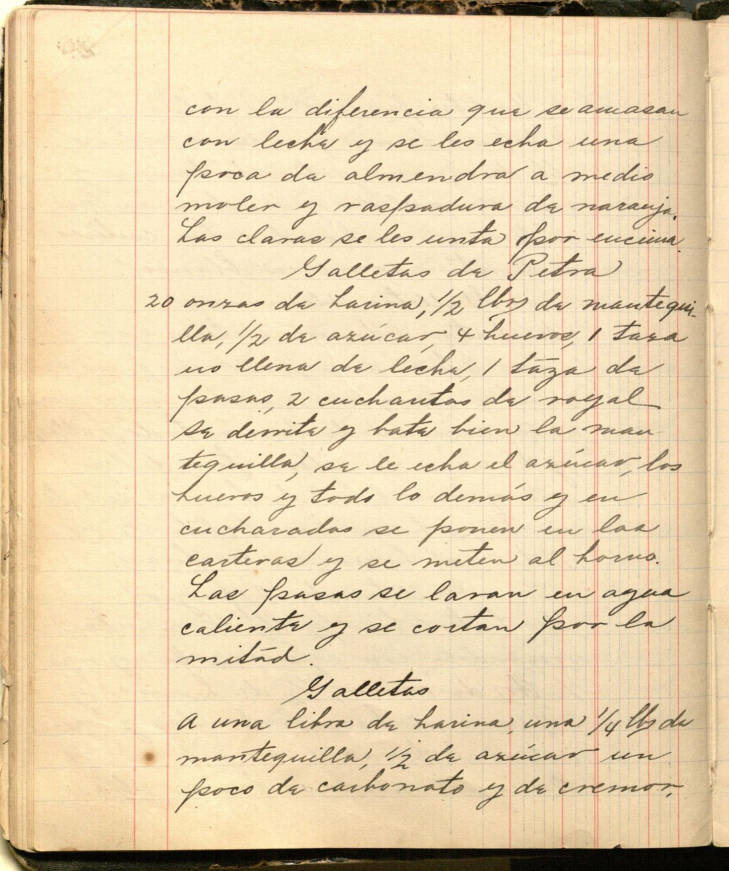
Endorsed by Chef Tor­res, the first mini-cook­book mod­ern­izes and trans­lates the orig­i­nal Span­ish into Eng­lish, and is avail­able in pdf or epub. It does not mod­ern­ize more tra­di­tion­al ways of cook­ing. As the Pref­ace points out, “many of the man­u­script cook­books of the ear­ly 19th cen­tu­ry assume read­ers to be expe­ri­enced cooks.” (It was not an occu­pa­tion under­tak­en light­ly.) As such, the recipes are “often light on details” like ingre­di­ent lists and step-by-step instruc­tions. As Atlas Obscu­ra notes, the recipe above for “ ‘Petra’s cook­ies’ calls for “‘one cup not quite full of milk.’ ”

“We encour­age you to view these instruc­tions as oppor­tu­ni­ties to acquire an intu­itive feel for your food,” the archive writes. It’s good to learn new habits. What­ev­er else it is now—community ser­vice, chore, an exer­cise in self-reliance, self-improve­ment, or stress relief—cooking is also cre­at­ing new ways of remem­ber­ing and con­nect­ing across new dis­tances of time and space, work­ing with the raw mate­ri­als we have at hand. Down­load the first Vol­ume of the UTSA cook­book series, Postres: Guardan­do Lo Mejor Para el Prin­ci­pio, here and look for more “Cook­ing in the Time of Coro­n­avirus” recipes com­ing soon.

via Atlas Obscu­ra

Relat­ed Con­tent:

An Archive of Hand­writ­ten Tra­di­tion­al Mex­i­can Cook­books Is Now Online

An Archive of 3,000 Vin­tage Cook­books Lets You Trav­el Back Through Culi­nary Time

82 Vin­tage Cook­books, Free to Down­load, Offer a Fas­ci­nat­ing Illus­trat­ed Look at Culi­nary and Cul­tur­al His­to­ry

Josh Jones is a writer and musi­cian based in Durham, NC. Fol­low him at @jdmagness

« Go BackMore in this category... »
Quantcast