Electronic Music Pioneer Wendy Carlos Demonstrates the Moog Synthesizer on the BBC (1970)


We can break pop­u­lar music into two peri­ods: before the Moog and after the Moog. Upon its debut in 1964, that syn­the­siz­er made a big splash in the small but long-estab­lished elec­tron­ic-music world by, among oth­er inno­v­a­tive qual­i­ties, being small­er than an entire room. Over the next few years, inven­tor Bob Moog (whose pre­vi­ous line was in theremins) refined his epony­mous brain­child to the point that it became acces­si­ble to com­posers not already on the cut­ting edge of music tech­nol­o­gy. But for Wendy Car­los, the cut­ting edge of music tech­nol­o­gy was where she’d spent most of her life; hence her abil­i­ty to cre­ate the first best­selling all-Moog album, 1968’s Switched-On Bach.

By the begin­ning of the 1970s, great pub­lic curios­i­ty had built up about these new music-mak­ing machines, thanks to Car­los’ work as well as that of com­posers like the BBC Radio­phon­ic Work­shop’s Daphne Oram. It was the BBC that pro­duced the clip above, in which Car­los explains the fun­da­men­tals of not just the Moog but sound syn­the­sis itself.

She even plays a bit of the sec­ond move­ment of Bach’s Bran­den­burg Con­cer­to #4, Car­los’ ren­di­tion of which on Switch-On Bach’s fol­low-up The Well-Tem­pered Syn­the­siz­er moved no less an author­i­ty than Glenn Gould to call it “the finest per­for­mance of any of the Bran­den­burgs — live, canned, or intu­it­ed — I’ve ever heard.”

In this footage, more than half a cen­tu­ry old as it is, only an evi­dent skill at oper­at­ing the Moog and under­stand­ing of the prin­ci­ples of syn­the­siz­ers sug­gest Car­los’ iden­ti­ty. At that time in her career she was still known as Wal­ter Car­los, and she has since spo­ken of hav­ing main­tained that image by apply­ing a pair of fake side­burns for pub­lic appear­ances. (She would return to the BBC to do anoth­er Moog demon­stra­tion as Wendy nine­teen years lat­er.) Today one dares say those mut­ton chops look a bit obvi­ous, but it isn’t as a mas­ter of dis­guise that Car­los has gone down in his­to­ry. Rather, her work has showed the way for gen­er­a­tions of musi­cians, well out­side of cam­pus lab­o­ra­to­ries, to make use of elec­tron­i­cal­ly gen­er­at­ed sounds in a man­ner that res­onates, as it were, with the wider lis­ten­ing pub­lic.

Relat­ed Con­tent:

Watch Com­pos­er Wendy Car­los Demo an Orig­i­nal Moog Syn­the­siz­er (1989)

Hear Glenn Gould Sing the Praise of the Moog Syn­the­siz­er and Wendy Car­los’ Switched-On Bach, “the Record of the Decade” (1968)

The Scores That Elec­tron­ic Music Pio­neer Wendy Car­los Com­posed for Stan­ley Kubrick’s A Clock­work Orange and The Shin­ing

Bob Moog Demon­strates His Rev­o­lu­tion­ary Moog Mod­el D Syn­the­siz­er

How the Moog Syn­the­siz­er Changed the Sound of Music

Based in Seoul, Col­in Mar­shall writes and broad­casts on cities, lan­guage, and cul­ture. His projects include the Sub­stack newslet­ter Books on Cities, the book The State­less City: a Walk through 21st-Cen­tu­ry Los Ange­les and the video series The City in Cin­e­ma. Fol­low him on Twit­ter at @colinmarshall or on Face­book.

Watch “Colette,” the Oscar-Winning Short Documentary (2021)

Thanks to The Guardian, you can now watch online “Colette,” the film that recent­ly won the Acad­e­my Award in the cat­e­go­ry of best doc­u­men­tary short. The British news­pa­per sets the stage as fol­lows:

90-year-old Colette Marin-Cather­ine con­fronts her past by vis­it­ing the Ger­man con­cen­tra­tion camp Mit­tel­bau-Dora where her broth­er was killed. As a young girl, she fought Hitler’s Nazis as a mem­ber of the French Resis­tance. For 74 years, she has refused to step foot in Ger­many, but that changes when a young his­to­ry stu­dent named Lucie enters her life. Pre­pared to re-open old wounds and revis­it the ter­rors of that time, Marin-Cather­ine offers impor­tant lessons for us all.

In a sep­a­rate inter­view, film­mak­ers Antho­ny Giacchi­no and Alice Doyard “explain how they found out about the sto­ry of Colette and why they decid­ed to make a doc­u­men­tary about her.”

“Colette” will be added to our list of online doc­u­men­taries, a sub­set of our col­lec­tion, 4,000+ Free Movies Online: Great Clas­sics, Indies, Noir, West­erns, Doc­u­men­taries & More.

If you would like to sign up for Open Culture’s free email newslet­ter, please find it here. It’s a great way to see our new posts, all bun­dled in one email, each day.

If you would like to sup­port the mis­sion of Open Cul­ture, con­sid­er mak­ing a dona­tion to our site. It’s hard to rely 100% on ads, and your con­tri­bu­tions will help us con­tin­ue pro­vid­ing the best free cul­tur­al and edu­ca­tion­al mate­ri­als to learn­ers every­where. You can con­tribute through Pay­Pal, Patre­on, and Ven­mo (@openculture). Thanks!

Relat­ed Con­tent:

Watch Online Eric Hob­s­bawm: The Con­so­la­tions of His­to­ry, a Doc­u­men­tary Explor­ing the Life & Work of the Influ­en­tial His­to­ri­an

Glass: The Oscar-Win­ning “Per­fect Short Doc­u­men­tary” on Dutch Glass­mak­ing (1958)

Why Man Cre­ates: Saul Bass’ Oscar-Win­ning Ani­mat­ed Look at Cre­ativ­i­ty (1968)

Oscar-Win­ning Ani­mat­ed Short, The Dot and the Line, Cel­e­brates Geom­e­try and Hard Work (1965)

Watch the Funky, Oscar-Win­ning Ani­mat­ed Film Fea­tur­ing the Music of Herb Alpert & the Tijua­na Brass (1966)

by | Permalink | Make a Comment ( 1 ) |

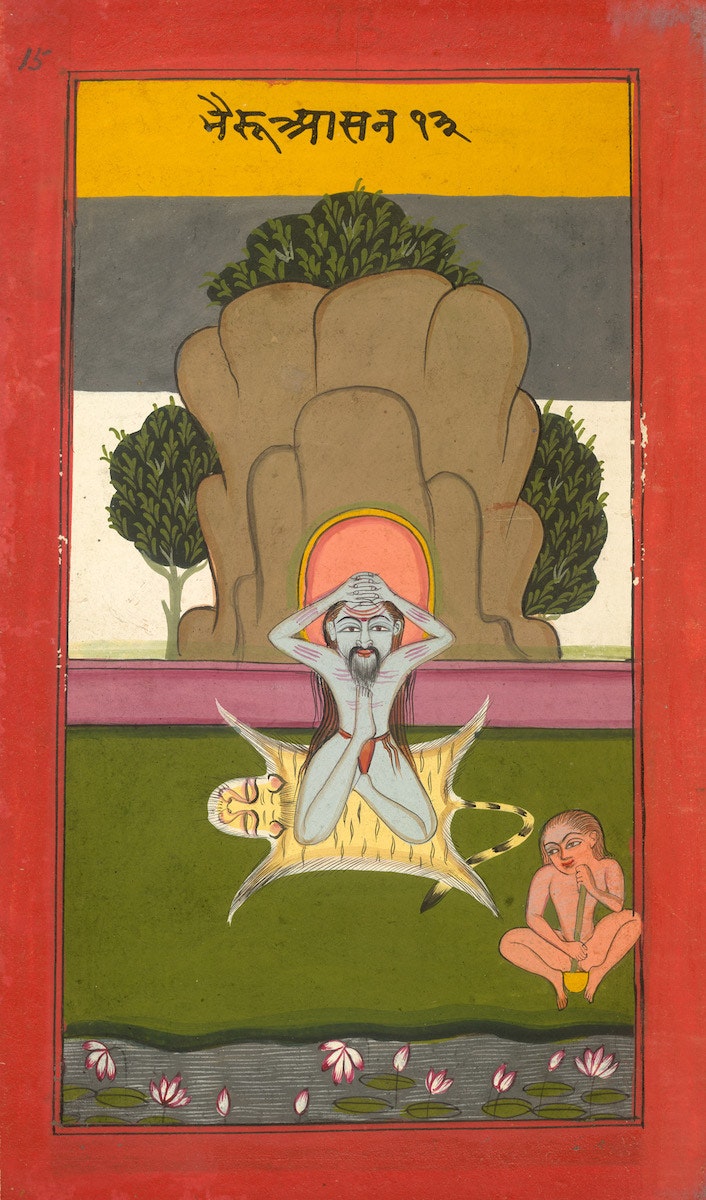
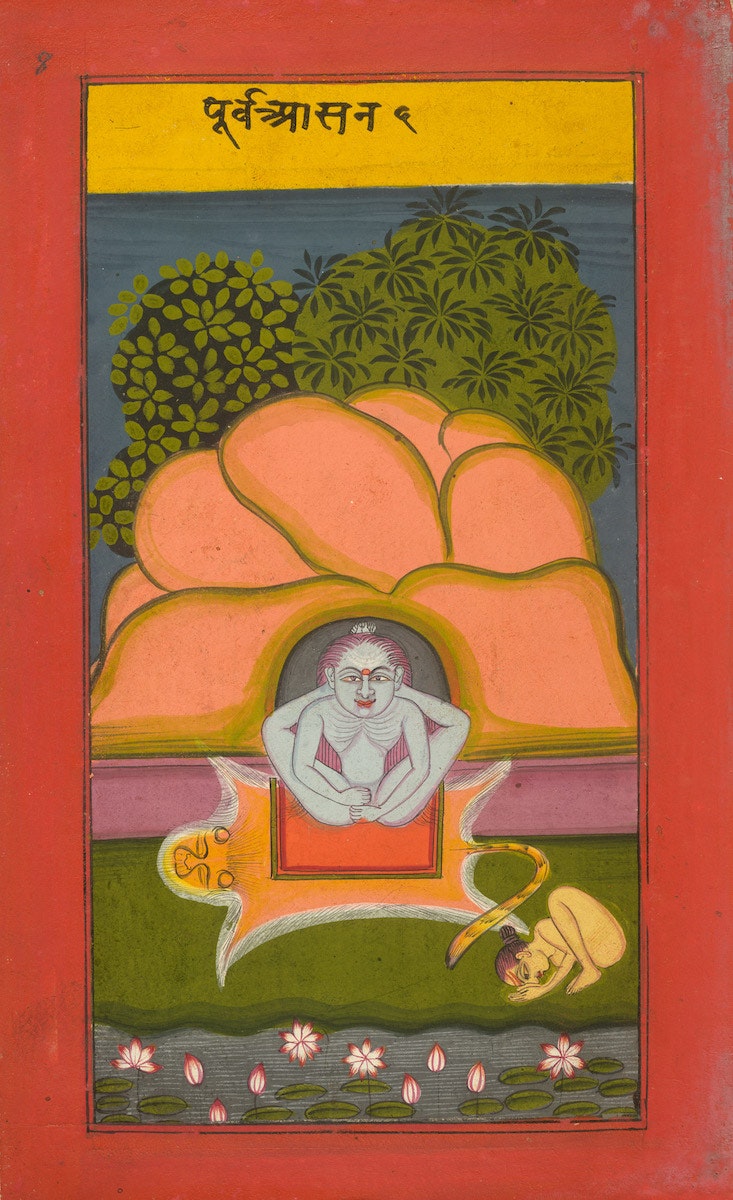
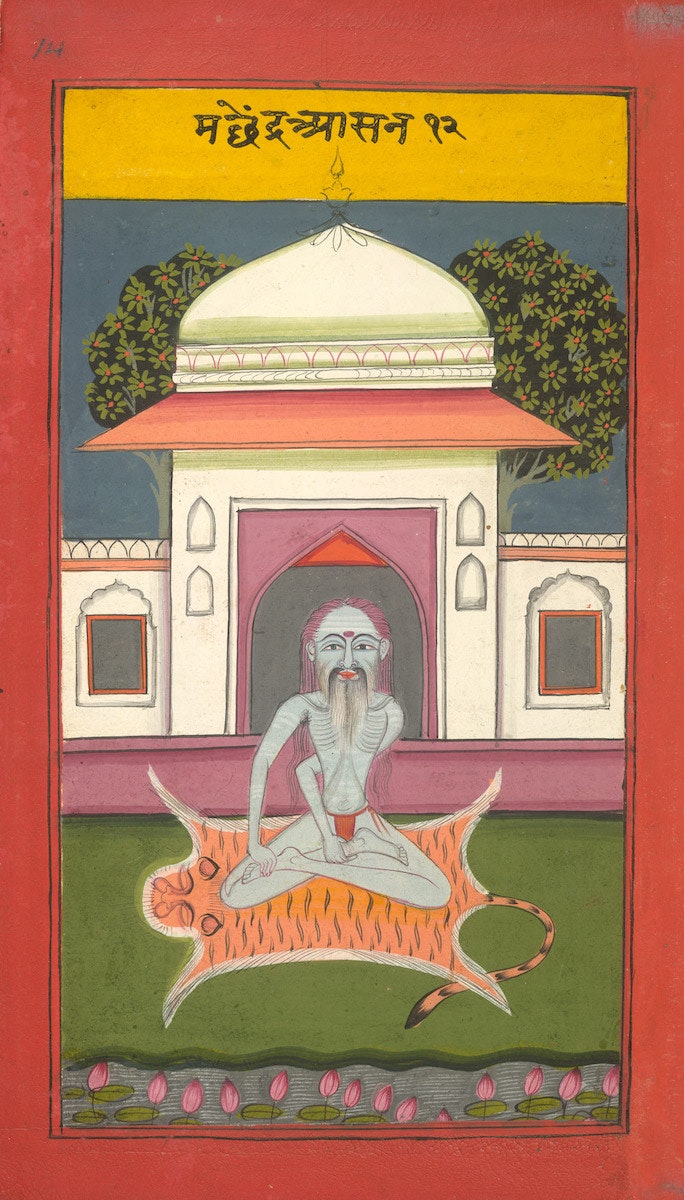
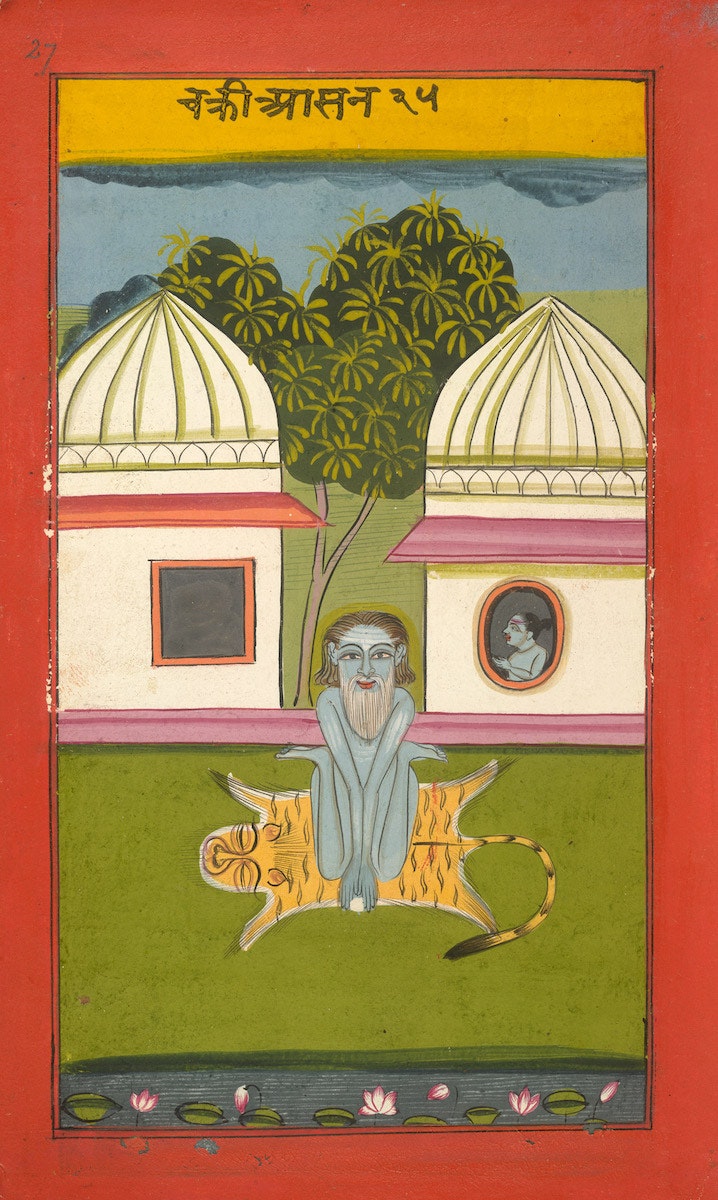
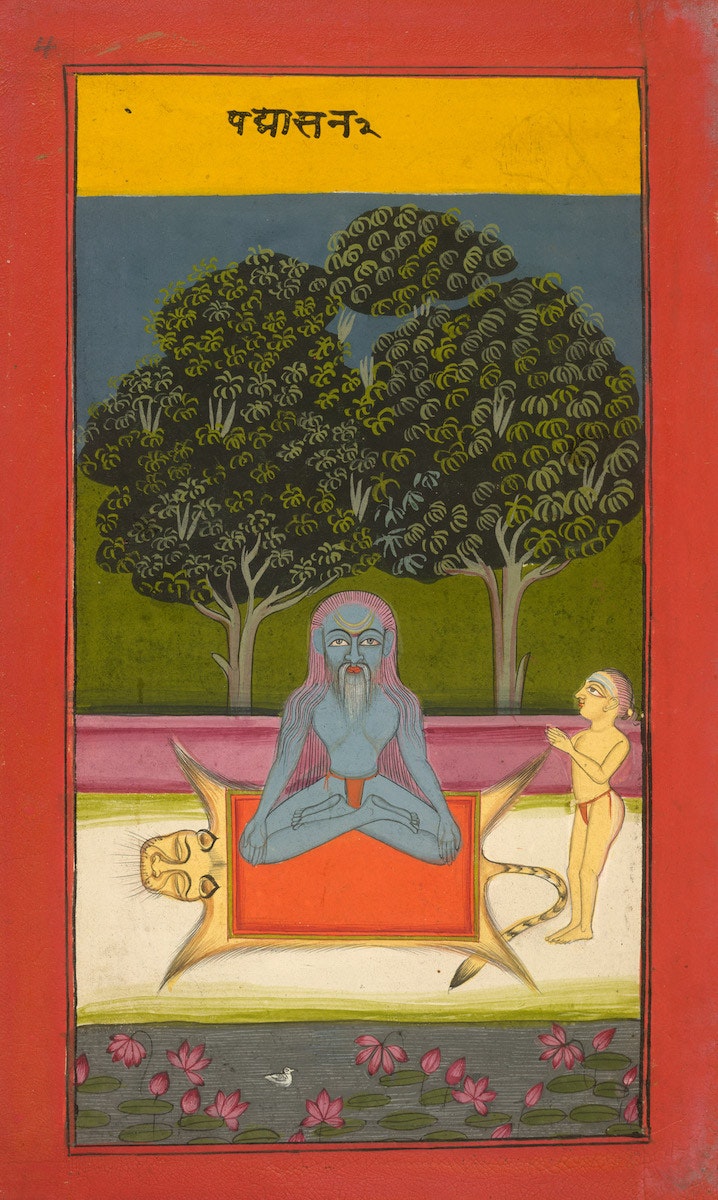
Beautiful 19th-Century Indian Drawings Show Hatha Yoga Poses Before They Reached the West

Yoga as an ath­let­ic series of pos­tures for phys­i­cal health came into being only about 100 years ago, part of a wave of gym­nas­tics and cal­is­then­ics that spread around the West­ern world in the 1920s and made its way to India, com­bin­ing with clas­si­cal Indi­an spir­i­tu­al­i­ty and asanas, a word which trans­lates to “seat.”  Yoga, of course, had exist­ed as a clas­si­cal spir­i­tu­al dis­ci­pline in India for thou­sands of years. (The word is first found in the Rig Veda), but it had lit­tle to do with fit­ness, as yoga schol­ar Mark Sin­gle­ton found when he delved into the roots of yoga as we know it.

Asana prac­tice was often mar­gin­al, even scorned by some 19th cen­tu­ry Indi­an teach­ers of high caste as the domain of “fakirs” and men­di­cant beg­gars. “The first wave of ‘export yogis,’” writes Sin­gle­ton, “head­ed by Swa­mi Vivekanan­da, large­ly ignored asana and tend­ed to focus instead on pranaya­ma [breath prac­tice], med­i­ta­tion, and pos­i­tive think­ing…. Vivekanan­da pub­licly reject­ed hatha yoga in gen­er­al and asana in par­tic­u­lar.”

In the 20th cen­tu­ry, yoga became asso­ci­at­ed with Indi­an nation­al­ism and anti-colo­nial resis­tance, and import­ed West­ern pos­es were com­bined with asanas for a pro­gram of intense phys­i­cal train­ing.

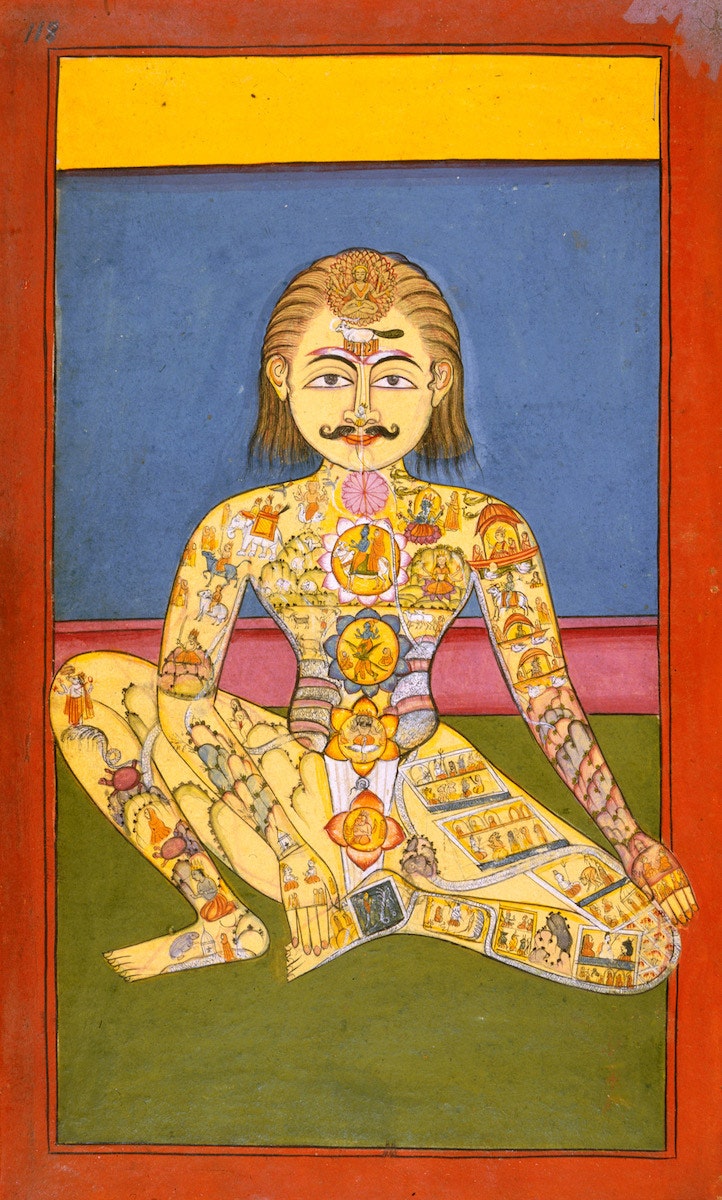
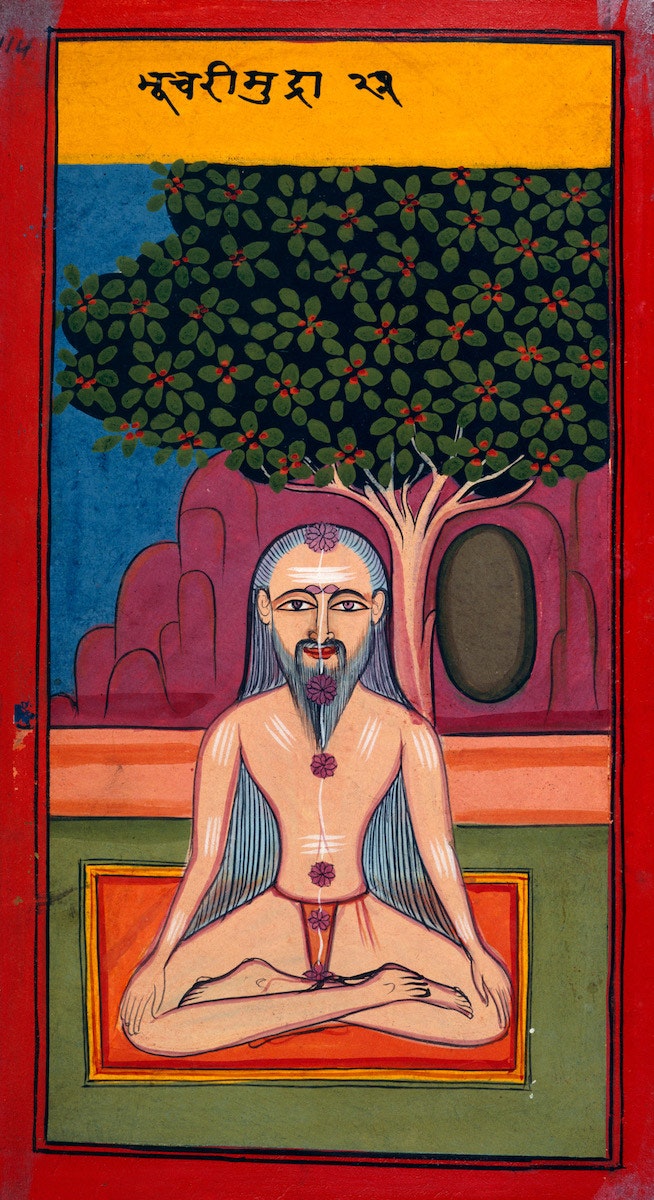
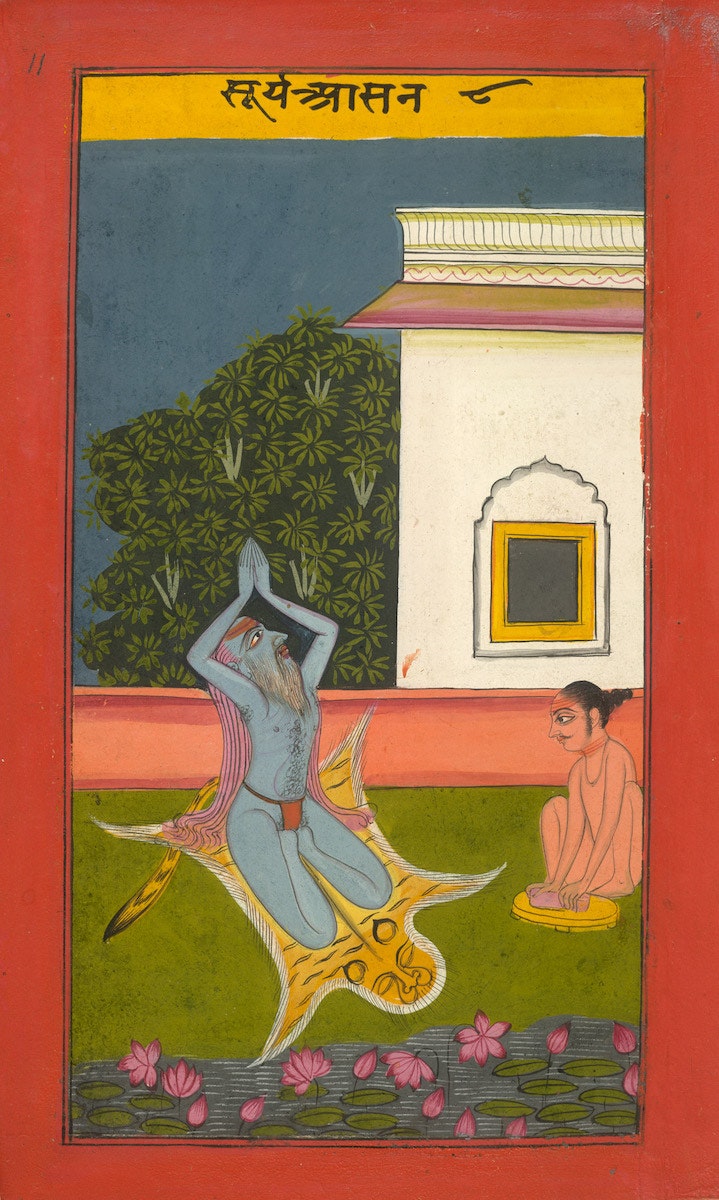
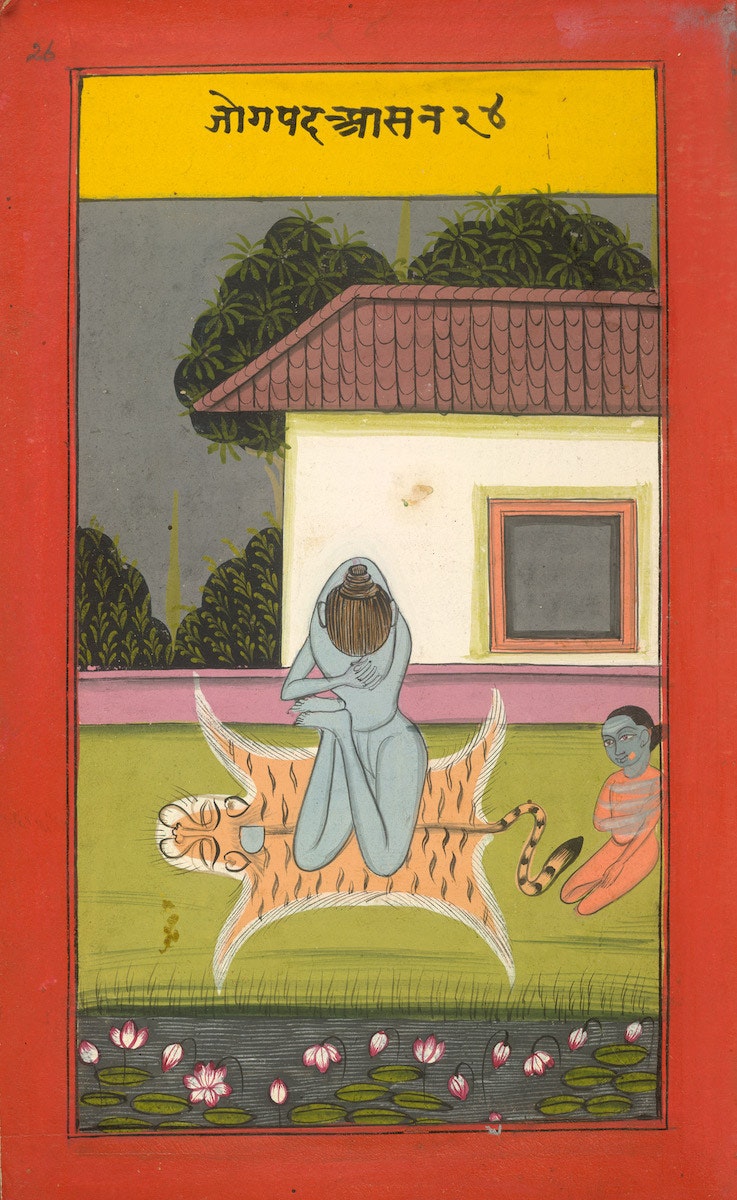
West­ern­ized yoga has obscured oth­er tra­di­tions around the world that devel­oped over hun­dreds or thou­sands of years. For his book with James Mallinson, Roots of Yoga, Sin­gle­ton con­sult­ed “yog­ic texts from Tibetan, Ara­bic, Per­sian, Ben­gali, Tamil, Pali, Kash­miri, Old Marathi, Avad­hi, Braj Bhasha, and Eng­lish,” notes the Pub­lic Domain Review, who bring our atten­tion to this ear­ly 19th-cen­tu­ry series of images from a text called the Joga Pradīpikā, made before clas­si­cal yoga became known in the west by adven­tur­ous thinkers like Hen­ry David Thore­au.

A few mil­len­nia before it was the prove­nance of lycra-clad teach­ers in bou­tique stu­dios, asana prac­tice com­bined rig­or­ous, often quite painful-look­ing, med­i­ta­tive pos­tures with mudras (“seals”), hand ges­tures whose ori­gins “remain obscure,” though yoga his­to­ri­an Georg Feuer­stein argues “they are undoubt­ed­ly the prod­ucts of inten­sive med­i­ta­tion prac­tice dur­ing [which] the body spon­ta­neous­ly assumes cer­tain sta­t­ic as well as dynam­ic pos­es.” The col­lec­tion of draw­ings in the 118-page book depicts 84 asanas and 24 mudras, “with explana­to­ry notes in Bra­ja-Bhasha verse,” notes the British Library, and one image (top) relat­ed to Kun­dali­ni yoga.

What­ev­er the var­i­ous prac­tices of yog­ic schools in both the East­ern and West­ern world, “the meth­ods and lifestyles devel­oped by the Indi­an philo­soph­i­cal and spir­i­tu­al genius­es over a peri­od of at least five mil­len­nia all have one and the same pur­pose,” writes Feuer­stein in his sem­i­nal study, The Yoga Tra­di­tion: “to help us break through the habit pat­terns of our ordi­nary con­scious­ness and to real­ize our iden­ti­ty (or at least union) with the peren­ni­al Real­i­ty. Indi­a’s great tra­di­tions of psy­chos­pir­i­tu­al growth under­stand them­selves as paths of lib­er­a­tion. Their goal is to lib­er­ate us from our con­ven­tion­al con­di­tion­ing and hence also free us from suf­fer­ing.”

Under a broad umbrel­la, yoga has flour­ished as an incred­i­ble wealth of tra­di­tions, philoso­phies, reli­gious prac­tices, and schol­ar­ship whose strands weave loose­ly togeth­er in what most of us know as yoga in a syn­the­sis of East and West. Learn more at the Pub­lic Domain Review, and have a look at their new book of his­toric images, Affini­ties, here, a curat­ed jour­ney through visu­al cul­ture.

via Pub­lic Domain Review

Relat­ed Con­tent: 

How to Get Start­ed with Yoga: Free Yoga Lessons on YouTube

How Yoga Changes the Brain and May Guard Against Alzheimer’s and Demen­tia

Son­ny Rollins Describes How 50 Years of Prac­tic­ing Yoga Made Him a Bet­ter Musi­cian

Quantcast