Devo’s Mark Mothersbaugh & Other Arists Tell Their Musical Stories in the Animated Video Series, “California Inspires Me”

I’ve lived all of my life in var­i­ous cities on the East Coast, north and south. Var­i­ous cul­tur­al and geo­graph­ic fea­tures of the mid-Atlantic have shaped me in ways I’m prob­a­bly only par­tial­ly aware of. But this past sum­mer I spent more time on the West Coast—L.A. to be precise—than I ever have before, and I found it com­plete­ly refresh­ing. Of course, mass com­merce being what it is, no mat­ter where you go in the U.S., you run smack into a Tar­get, usu­al­ly flanked by strips of oth­er tedious­ly famil­iar chains. But instead of the tow­er­ing pines of my cur­rent locale, I gazed up at lan­guid palm fronds, and instead of the typ­i­cal East Coast swel­ter, I rel­ished the arid heat and the faint ocean tang in the air. A change in cli­mate changes one’s per­cep­tions of the world, and that’s not even to men­tion my—admittedly superficial—tourist’s appre­ci­a­tion of myr­i­ad archi­tec­tur­al, culi­nary, and oth­er SoCal eccen­tric­i­ties.

On return­ing and set­tling back into the grind, I still felt the pull west­ward, toward L.A.’s weird­ness. This is unsurprising—it’s a city, and a state, that have always sym­bol­ized escapism, as well as dis­ap­point­ment, whether that of the Joads, Nor­ma Desmond, or count­less real anony­mous hope­fuls. The sto­ry of mov­ing west in pur­suit of some Amer­i­can Dream is as old as Lewis and Clark and as new as Devo, one of whose found­ing mem­bers, native Cal­i­forn­ian Mark Moth­ers­baugh, nar­rates above his jour­ney to Hol­ly­wood with his band­mates after col­lege at Kent State (at the top of the post). He begins with some for­ma­tive child­hood experiences—getting his first pair of glass­es in 2nd grade (Moth­ers­baugh is legal­ly blind), see­ing the Bea­t­les on Ed Sul­li­van. He then tells, in brief, the sto­ry of Devo vs. the record com­pa­ny, or how a quirky art-rock band co-opt­ed Madi­son Avenue strate­gies to “tell the good news of de-evo­lu­tion,” only to them­selves become a com­mod­i­ty after scor­ing a hit with “Whip It.”

The video is part of a series called “Cal­i­for­nia Inspires Me,” a col­lab­o­ra­tion between Google Play and Cal­i­for­nia Sun­day mag­a­zine. Beneath Mothersbaugh’s ani­mat­ed sto­ry, see one from film­mak­er and artist Mike Mills, who talks about skate­board­ing and punk rock in his L.A. youth. In the video above, singer/songwriter Thao Nguyen shares her “real­ly deep appre­ci­a­tion for the his­to­ry of San Fran­cis­co in music.” And below, Jack Black relates his expe­ri­ences grow­ing up in the “deep, deep South” of South­ern Cal­i­for­nia, specif­i­cal­ly Her­mosa Beach, with its surf cul­ture, and “free-wheel­ing hip­pie love.” If there’s one thing that ties all four videos together—besides the music by Shan­non Ferguson—it’s the mel­low per­son­al­i­ties of the four Cal­i­forn­ian artists. Watch­ing the series from my cur­rent­ly blus­tery win­ter cli­mate gave me the East Coast jit­ters, fir­ing up that urge again to hit the dusty trail and revis­it, or maybe relo­cate to the Sun­shine State.

Relat­ed Con­tent:

Watch Huell Howser’s Decades of Tele­vi­sion Trav­els Online. It’s Cal­i­for­nia Gold!

The Mas­ter­mind of Devo, Mark Moth­ers­baugh, Shows Off His Syn­the­siz­er Col­lec­tion

Josh Jones is a writer and musi­cian based in Durham, NC. Fol­low him at @jdmagness

Richard Dawkins’ Famous “What If You’re Wrong” Speech Animated in the Style of South Park

In 2006, Oxford biol­o­gist and new athe­ist Richard Dawkins made an appear­ance at the evan­gel­i­cal Lib­er­ty Uni­ver­si­ty and field­ed ques­tions from the audi­ence. One stu­dent, Amber Moore, asked Dawkins why he was more inclined to believe in extrater­res­tri­als with advanced intel­li­gence than God? When Dawkins gave his answer, explain­ing that he could only believe in bio­log­i­cal beings, Amber asked the fol­low up ques­tion, “What if you’re wrong?” Dawkins’ response went viral on Youtube, tal­ly­ing almost 4 mil­lions views. So did the South Park-style ani­ma­tion that appeared sev­er­al years lat­er. The ani­ma­tion (above) came not from the cre­ators of South Park, Trey Park­er and Matt Stone, but rather from some YouTu­ber called Tube­LooB.

Park­er and Stone did sep­a­rate­ly lam­poon Dawkins, how­ev­er, in a 2006 episode of the show. Dawkins did­n’t like it very much. If you watch this raunchy, very Not-Safe-for-Work clip, you’ll see why.

It’s also worth recall­ing that Park­er and Stone took a respect­ful whack at ani­mat­ing the philo­soph­i­cal teach­ings of Alan Watts. We always enjoy giv­ing it a watch.

Relat­ed Con­tent:

The Wis­dom of Alan Watts in Four Thought-Pro­vok­ing Ani­ma­tions

Grow­ing Up in the Uni­verse: Richard Dawkins Presents Cap­ti­vat­ing Sci­ence Lec­tures for Kids (1991)

Richard Dawkins’ Doc­u­men­tary The God Delu­sion Tack­les Faith & Reli­gious Vio­lence (2006)

Richard Dawkins Explains Why There Was Nev­er a First Human Being

Free Online Biol­o­gy Cours­es

by | Permalink | Make a Comment ( 2 ) |

Has Technology Changed Us?: BBC Animations Answer the Question with the Help of Marshall McLuhan

In Jan­u­ary, we fea­tured series of short ani­ma­tions from BBC Radio 4 address­ing the ques­tion “How Did Every­thing Begin?” In Feb­ru­ary, we fea­tured its fol­low-up on an equal­ly eter­nal ques­tion, “What Makes Us Human?” Both came script­ed by Phi­los­o­phy Bites co-cre­ator Nigel War­bur­ton and nar­rat­ed by X‑Files co-star Gillian Ander­son (in full British mode). Now that March has come, so has the next install­ment of these brief, crisp, curios­i­ty-fueled pro­duc­tions: “Has Tech­nol­o­gy Changed Us?”

In a word: yes. But then, every­thing we do has always changed us, thanks to the prop­er­ty of the brain we now call “plas­tic­i­ty.” This we learn from the video, “Rewiring the Brain” (right below), which, bal­anc­ing its heart­en­ing neu­ro­sci­en­tif­ic evi­dence with the prover­bial old dog’s abil­i­ty to learn new tricks, also tells of the â€śatten­tion dis­or­ders, screen addic­tions, and poor social skills” that may have already begun plagu­ing the younger gen­er­a­tion.

Mar­shall McLuhan, of course, could have fore­seen all this. Hence his appear­ance in â€śThe Medi­um is the Mes­sage” (top), a title tak­en from the Uni­ver­si­ty of Toron­to Eng­lish pro­fes­sor turned com­mu­ni­ca­tion-the­o­ry guru’s famous dic­tum.

The video actu­al­ly spells out McLuhan’s own expla­na­tion of that much-quot­ed line: “What has been com­mu­ni­cat­ed has been less impor­tant than the par­tic­u­lar medi­um through which peo­ple com­mu­ni­cate.” Whether you buy that notion or not, the whole range of procla­ma­tions McLuhan had on the sub­ject will cer­tain­ly get you think­ing â€” in his own words, “You don’t like these ideas? I got oth­ers.”

The oth­er two videos in this series, despite their short length, get into oth­er intrigu­ing relat­ed con­cepts: “The Fourth Rev­o­lu­tion” that comes as a result of life in a “mass age of infor­ma­tion and data,” and the work­ings of “The Antikythera Mech­a­nism,” the first com­put­er ever built. Our per­son­al tech­nol­o­gy has cer­tain­ly come a long way, but we should­n’t fall into com­pla­cen­cy about it, lest, as Ander­son says in this series, it all wrecks our atten­tion spans and “edu­ca­tion will all have to be deliv­ered in two-minute ani­ma­tions.”

Relat­ed Con­tent:

How Did Every­thing Begin?: Ani­ma­tions on the Ori­gins of the Uni­verse Nar­rat­ed by X‑Files Star Gillian Ander­son

What Makes Us Human?: Chom­sky, Locke & Marx Intro­duced by New Ani­mat­ed Videos from the BBC

McLuhan Said “The Medi­um Is The Mes­sage”; Two Pieces Of Media Decode the Famous Phrase

Mar­shall McLuhan: The World is a Glob­al Vil­lage

A His­to­ry of Ideas: Ani­mat­ed Videos Explain The­o­ries of Simone de Beau­voir, Edmund Burke & Oth­er Philoso­phers

Free Online Phi­los­o­phy Cours­es (130 in Total)

Col­in Mar­shall hosts and pro­duces Note­book on Cities and Cul­ture as well as the video series The City in Cin­e­ma and writes essays on cities, lan­guage, Asia, and men’s style. He’s at work on a book about Los Ange­les, A Los Ange­les Primer. Fol­low him on Twit­ter at @colinmarshall or on Face­book.

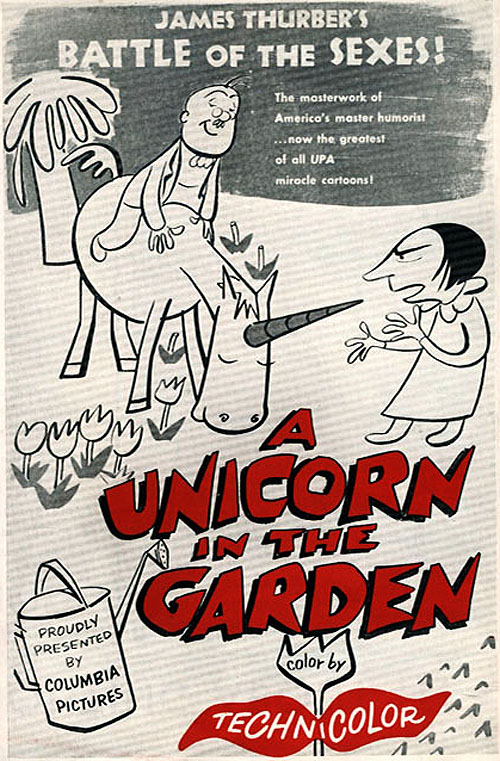
Watch a 1953 Animation of James Thurber’s “Unicorn in the Garden,” Voted One of the Best Animations Ever

Humorist James Thurber nev­er tired of sub­ject­ing puny male mil­que­toasts to pow­er­ful female bul­lies.

In his view, mem­bers of the fair­er sex were nev­er femme fatales or fussy matrons, but rather bat­tle-lov­ing war­riors in sim­ple Wilma Flint­stone-esque frocks. They are immune to the tra­di­tion­al­ly fem­i­nine con­cerns of the period—hair, chil­dren, the liv­ing room drapes… they get their plea­sure dom­i­nat­ing Wal­ter Mit­ty and his ilk.

(Was he ter­ri­fied of Woman? Resent­ful of her? The sto­ry he stuck to was that he’d con­ceived of his com­ic por­tray­al for the sole pur­pose of “egging her on.”)

There is one mem­o­rable instance where the lit­tle guy was allowed to come out on top. “The Uni­corn in the Gar­den” is a sto­ry first pub­lished in The New York­er on Octo­ber 31, 1939. No spoil­ers, but there’s a close resem­blance to Har­vey, Mary Chase’s much-pro­duced play about a mild-man­nered gent whose devo­tion to a 6’ tall invis­i­ble rab­bit dri­ves his dom­i­neer­ing sis­ter around the bend.

The 1953 car­toon adap­ta­tion above brought Thurber’s draw­ings to life, whilst pre­serv­ing the dia­logue of the orig­i­nal in its entire­ty. The orig­i­nal sto­ry was pub­lished with only a sin­gle illus­tra­tion, but direc­tor William T. Hurtz’s had hun­dreds of New York­er car­toons to draw upon. Leg­end has it that Hurtz pur­pose­ful­ly assigned some of Unit­ed Pro­duc­tions of America’s least gift­ed ani­ma­tors to the project, hop­ing to dupli­cate Thurber’s ”nice, lumpy look.” The plan was for “The Uni­corn in the Gar­den” to be part of a full-length Thurber fea­ture, but alas, the stu­dio pulled the plug on Men, Women and Dogs before it could be com­plet­ed. Moral: Don’t count your boo­bies until they are hatched.

“A Uni­corn in the Gar­den” was lat­er vot­ed #48 of the 50 Great­est Car­toons of all time by mem­bers of the ani­ma­tion field. You can find more lit­er­ary ani­ma­tions in our col­lec­tion, 4,000+ Free Movies Online: Great Clas­sics, Indies, Noir, West­erns, Doc­u­men­taries & More.

Unicorn-Garden

Relat­ed Con­tent:

Eudo­ra Wel­ty Writes a Quirky Let­ter Apply­ing for a Job at The New York­er (1933)

20 Ani­ma­tions of Clas­sic Lit­er­ary Works: From Pla­to and Dos­to­evsky, to Kaf­ka, Hem­ing­way & Brad­bury

New York­er Car­toon Edi­tor Bob Mankoff Reveals the Secret of a Suc­cess­ful New York­er Car­toon

Ayun Hal­l­i­day is an author, illus­tra­tor, and Chief Pri­ma­tol­o­gist of the East Vil­lage Inky zine. Fol­low her @AyunHalliday


What Makes Us Human?: Chomsky, Locke & Marx Introduced by New Animated Videos from the BBC

When Pla­to defined humans as two-legged ani­mals with­out feath­ers, I sus­pect he was only half seri­ous. Or if he was as humor­less as some sup­pose, his antag­o­nist Dio­genes the Cyn­ic cer­tain­ly picked up on the joke, point­ing out that the descrip­tion sounds pret­ty much like a plucked chick­en. The ancient back and forth illus­trates a ques­tion that has occu­pied philoso­phers for many thou­sands of years: what sep­a­rates humans from ani­mals? Is it a soul? Ratio­nal­i­ty? Tool-mak­ing? Most accounts, espe­cial­ly most mod­ern accounts, set­tle on one cru­cial difference—language. Although ani­mals can com­mu­ni­cate with each oth­er per­fect­ly well, they do so with­out this amaz­ing­ly sophis­ti­cat­ed fac­ul­ty we so often take for grant­ed.

In the ani­mat­ed video at the top, part of the BBC and Open University’s A His­to­ry of Ideas series, Gillian Ander­son, in her British rather than Amer­i­can accent, explains the well-known the­o­ry of lan­guage acqui­si­tion pro­posed by lin­guist Noam Chom­sky in the 60s. Chom­sky argued for what is known as a “uni­ver­sal gram­mar,” a kind of tem­plate in the struc­ture of the brain that allows every per­son of nor­mal abil­i­ty to learn their native lan­guage with rel­a­tive ease as a child. Chom­sky referred to these struc­tures as a “lan­guage acqui­si­tion device” that orga­nizes gram­mar and syn­tax inde­pen­dent­ly of expe­ri­ence or out­side stim­uli, of which we have pre­cious lit­tle in our for­ma­tive years. Doubt­less Chomsky’s the­o­ry would have per­suad­ed Pla­to, though prob­a­bly not the British empiri­cists of the 17th cen­tu­ry, who argued that the human mind has no innate ideas—that all of our abil­i­ties are learned.

Such was the argu­ment, much sim­pli­fied, of John Locke, physi­cian, philoso­pher, and polit­i­cal the­o­rist. In his far-rang­ing philo­soph­i­cal text An Essay Con­cern­ing Human Under­stand­ing and the more focused and digestible Some Thoughts Con­cern­ing Edu­ca­tion, Locke dis­cussed in depth his the­o­ries of human cog­ni­tion and iden­ti­ty, propos­ing not only that the mind could be writ­ten upon like a tab­u­la rasa—or “blank slate”—but that the key to human iden­ti­ty, that which makes us the same per­son from moment to moment, is mem­o­ry. We are—and are respon­si­ble for, Locke argued—what we remem­ber. Con­verse­ly, we are not respon­si­ble for what we don’t remem­ber. Locke’s the­o­ry presents us with some very thorny eth­i­cal prob­lems, which the video above most­ly avoids, but like Chomsky’s inter­ven­tion into debates about human vs. ani­mal intel­li­gence, Locke’s dis­cus­sion of the nature of human “per­son­hood” remains a time­ly con­cern, and an end­less­ly con­tentious one.

Oth­er videos in the series take on equal­ly con­tentious, and equal­ly time­ly, issues. Above, Ander­son briefly explains Karl Marx’s the­o­ry of the alien­ation of labor under an exploita­tive cap­i­tal­ist sys­tem, and below, she dis­cuss­es the role of cul­ture as a unique­ly human trait that ani­mals do not pos­sess. Each video address­es, in some small part, the ques­tion “What Makes Me Human?” and the series as a whole fol­lows quick­ly on the heels of A His­to­ry of Ideas’ pre­vi­ous set of Ander­son-nar­rat­ed ani­ma­tions on the ori­gins of the uni­verse: “How Did Every­thing Begin?”

Once again draw­ing on the skilled work of ani­ma­tor Andrew Park and scripts by inde­pen­dent philoso­pher Nigel War­bur­ton, this lat­est series of videos offers a num­ber of fas­ci­nat­ing appe­tiz­ers in the ways phi­los­o­phy, sci­ence, and reli­gion have approached life’s biggest ques­tions. Like any starter course, how­ev­er, these are but a taste of the com­plex­i­ty and rich­ness on offer in West­ern philo­soph­i­cal his­to­ry. To become a true intel­lec­tu­al gour­mand, browse our menu of free phi­los­o­phy cours­es and dig in to the work of thinkers like Chom­sky, Locke, Marx, and so many more.

Relat­ed Con­tent:

How Did Every­thing Begin?: Ani­ma­tions on the Ori­gins of the Uni­verse Nar­rat­ed by X‑Files Star Gillian Ander­son

A His­to­ry of Ideas: Ani­mat­ed Videos Explain The­o­ries of Simone de Beau­voir, Edmund Burke & Oth­er Philoso­phers

Down­load 130 Free Phi­los­o­phy Cours­es: Tools for Think­ing About Life, Death & Every­thing Between

Josh Jones is a writer and musi­cian based in Durham, NC. Fol­low him at @jdmagness

An Animated Lou Reed Explains The Velvet Underground’s Artistic Goals, and Why The Beatles Were “Garbage”

Blank on Blank returns this week with anoth­er one of their groovy ani­ma­tions. This time, we find Lou Reed recall­ing the goals and ambi­tions of his avant-garde rock band, The Vel­vet Under­ground. We want­ed, he says, “to ele­vate the rock n’ roll song, to take it where it had­n’t been tak­en before.” And, in his hum­ble opin­ion, they did just that, far exceed­ing the musi­cal out­put of con­tem­po­rary bands like The Doors and The Bea­t­les, which he respec­tive­ly calls “stu­pid” and “garbage.” If you lis­ten to the com­plete inter­view record­ed in 1987 (web — iTunes), you’ll hear Lou diss a lot of bands. But which one did he give props to? U2. Go fig­ure.

If you would like to sup­port the mis­sion of Open Cul­ture, con­sid­er mak­ing a dona­tion to our site. It’s hard to rely 100% on ads, and your con­tri­bu­tions will help us con­tin­ue pro­vid­ing the best free cul­tur­al and edu­ca­tion­al mate­ri­als to learn­ers every­where. You can con­tribute through Pay­Pal, Patre­on, and Ven­mo (@openculture). Thanks!

Relat­ed Con­tent:

Lou Reed Reads Del­more Schwartz’s Famous Sto­ry “In Dreams Begin Respon­si­bil­i­ties”

Teenage Lou Reed Sings Doo-Wop Music (1958–1962)

Watch Red Shirley, Lou Reed’s Short Doc­u­men­tary on His Fas­ci­nat­ing 100-Year-Old Cousin (2010)

Confusion Through Sand: A Short, Hand-Drawn Animation on the Terror & Confusion of War

Back in Octo­ber 2012, Ornana Films raised $30,000 through a Kick­starter cam­paign to pro­duce Con­fu­sion Through Sand, an ani­ma­tion that “explores the spec­trum of haze expe­ri­enced by today’s sol­diers in the desert.” It’s an inter­pre­ta­tion, Ornana tells us, “of what hap­pens when top train­ing encoun­ters cir­cum­stances beyond the realm of human con­trol, in both inte­ri­or and exte­ri­or con­flicts.” The action takes place “on the ground, under the hel­met of a 19 year-old infantry­man.” Once com­plet­ed, the film pre­miered at the 2013 SXSW film fes­ti­val and took home the Jury Award. Now, a year lat­er, it’s free online. And even bet­ter, it comes accom­pa­nied by a behind-the-scenes film that takes you inside the film­mak­ers’ artis­tic process, show­ing how they hand-ani­mat­ed the film with mark­ers on recy­cled paper. Enjoy both.

If you would like to sup­port the mis­sion of Open Cul­ture, con­sid­er mak­ing a dona­tion to our site. It’s hard to rely 100% on ads, and your con­tri­bu­tions will help us con­tin­ue pro­vid­ing the best free cul­tur­al and edu­ca­tion­al mate­ri­als to learn­ers every­where. You can con­tribute through Pay­Pal, Patre­on, and Ven­mo (@openculture). Thanks!

365: One Animated Film, Shot One Second a Day, Over One Year

Back in Sep­tem­ber, we high­light­ed an ani­ma­tion that humor­ous­ly imag­ined David Bowie and Bri­an Eno’s col­lab­o­ra­tion on the song, “Warsza­wa,” which even­tu­al­ly appeared on the album, Low. The car­toon was cre­at­ed by The Broth­ers McLeod, and they’re now back with an ani­ma­tion called “365 — One Year, One Film, One Sec­ond a Day.” The title pret­ty much says it all. But if you want more back­ground infor­ma­tion, here’s how Vimeo frames the clip: “Greg [McLeod] ani­mat­ed one sec­ond of ani­ma­tion every day for the 365 days of the year 2013. There was no sto­ry­line, script or sto­ry­board. The ideas come from things read, seen or expe­ri­enced on the day, with a lit­tle artis­tic license for good mea­sure.” The result you can watch above. Also find dai­ly stills from the project on Face­book.

Fol­low us on Face­book, Twit­ter and Google Plus and share intel­li­gent media with your friends. Or bet­ter yet, sign up for our dai­ly email and get a dai­ly dose of Open Cul­ture in your inbox.

by | Permalink | Make a Comment ( 2 ) |

« Go BackMore in this category... »
Quantcast