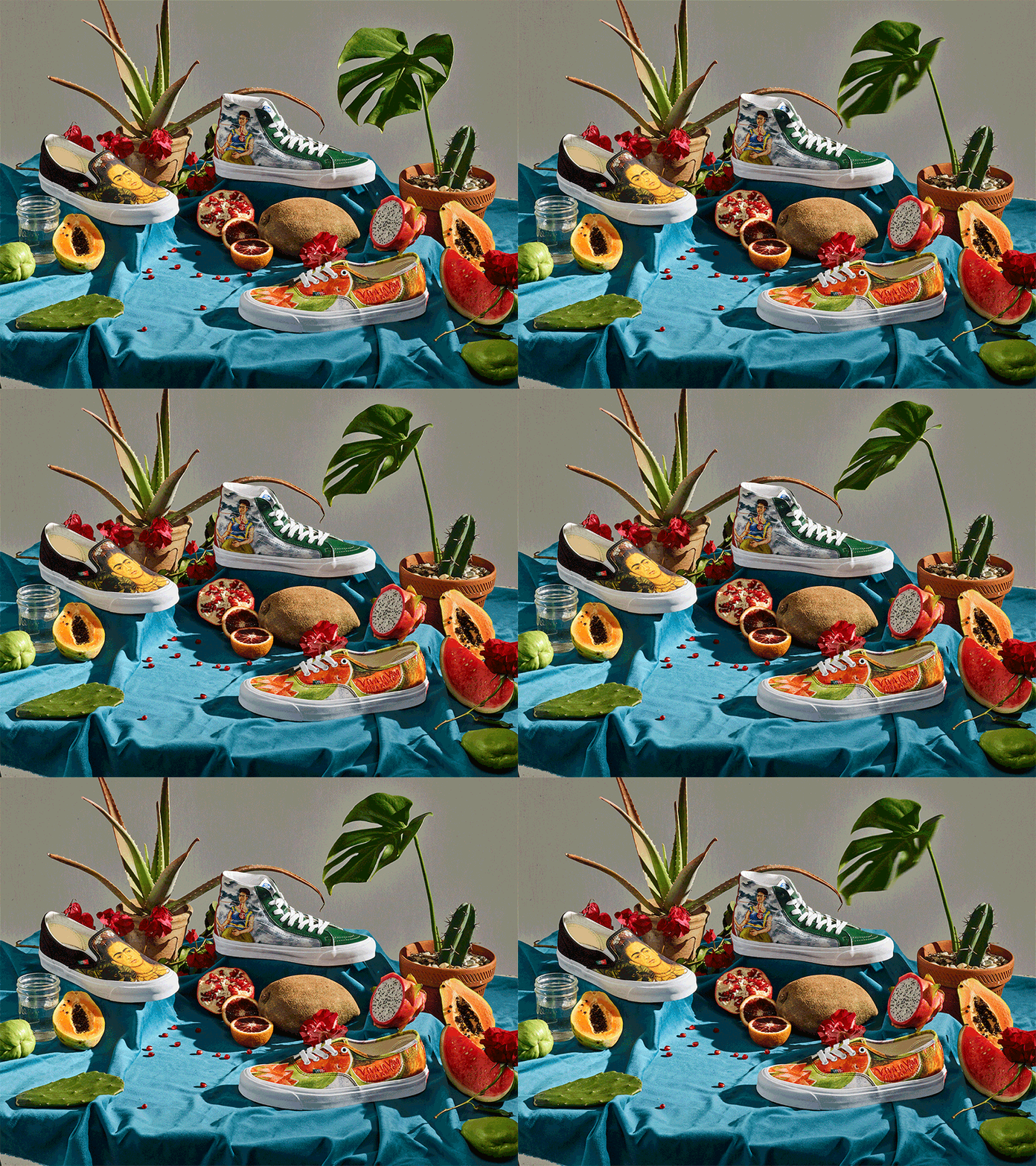
3 Iconic Paintings by Frida Kahlo Get Reborn as Vans Skate Shoes

Atten­tion Fri­da Kahlo tchotchke hounds.

You can scratch that itch, even if your sum­mer itin­er­ary doesn’t include Mex­i­co City (or Nashville, Ten­nessee, where the Frist Muse­um is host­ing Fri­da Kahlo, Diego Rivera, and Mex­i­can Mod­ernism from the Jacques and Natasha Gel­man Col­lec­tion through Sep­tem­ber 2).

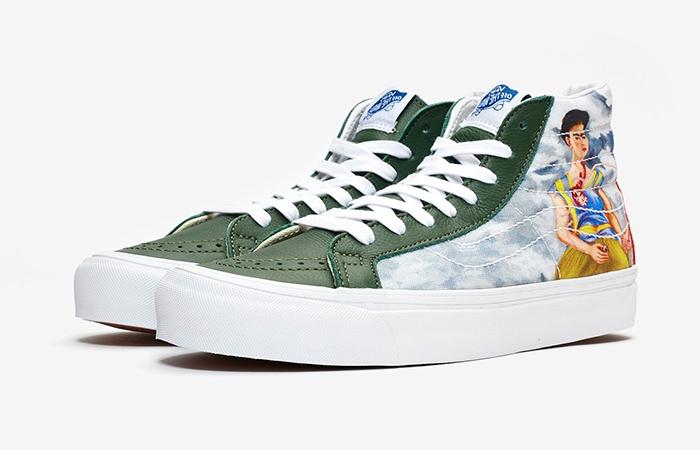
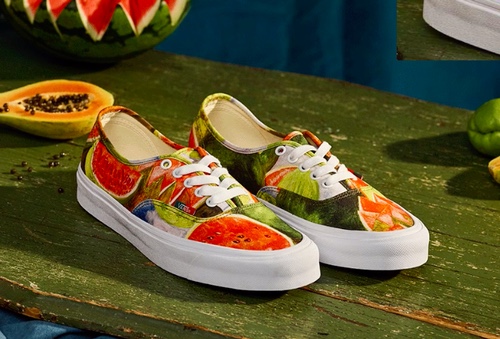
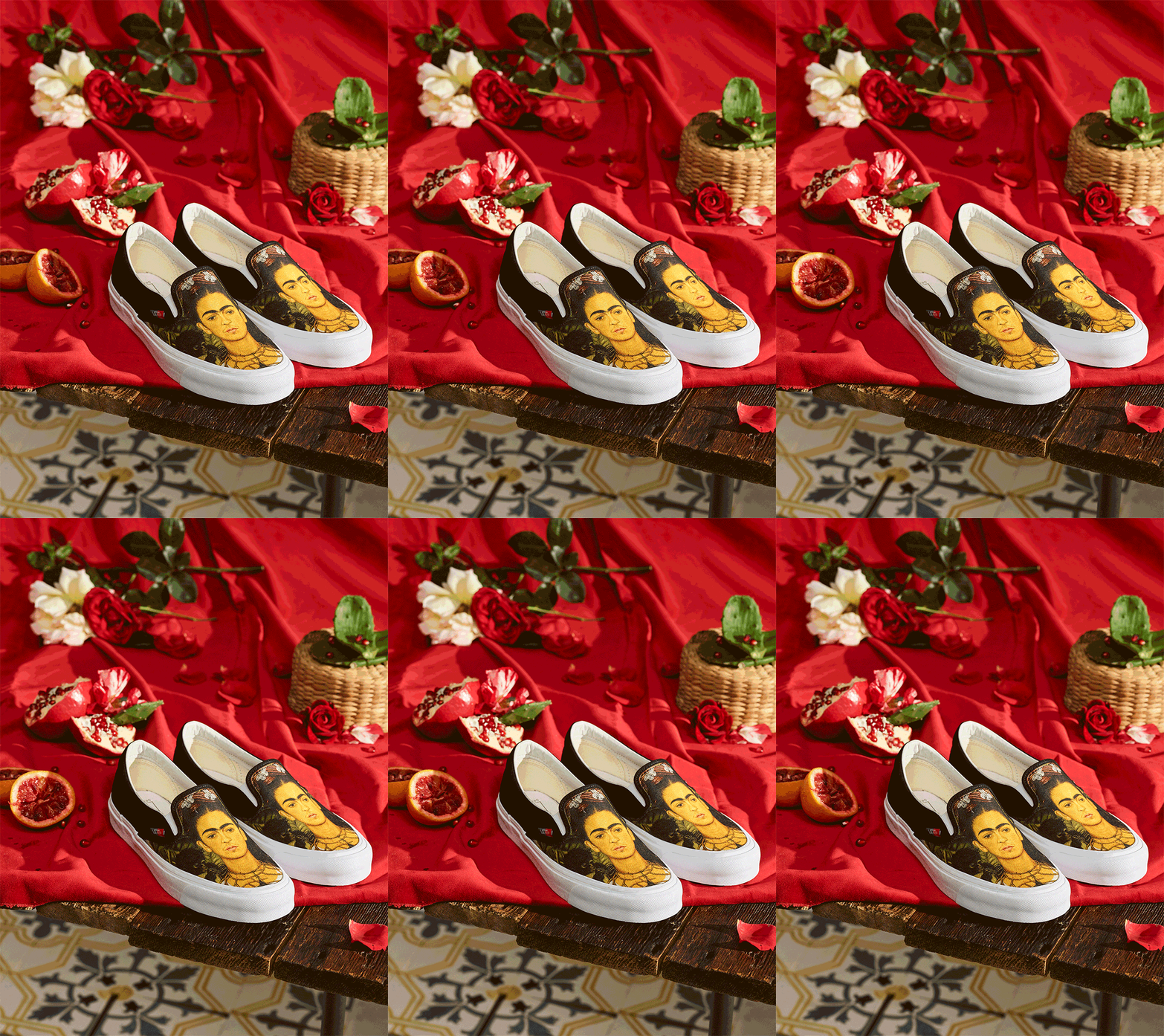
Tak­ing its cue from Doc Marten’s Muse­um Col­lec­tion, Vans is releas­ing three shoes inspired by some of the painter’s most icon­ic works, 1939’s The Two Fridas, 1940’s Self-Por­trait with Thorn Neck­lace and Hum­ming­bird, and—for those who pre­fer a more sub­tly Fri­da-inspired shoe, 1954’s refresh­ing­ly fruity Viva la Vida.

Vans’ lim­it­ed edi­tion Fri­da Kahlo col­lec­tion hits the shelves June 29. Expect it to be snapped up quick­ly by the Waf­fle­heads, Vans’ ded­i­cat­ed group of col­lec­tors and cus­tomiz­ers, so don’t delay.

If this line doesn’t tick­le your fan­cy, there is of course an abun­dance of Fri­da Kahlo trib­ute footwear on Etsy, every­thing from huaraches and Con­verse All-Stars to socks and baby booties.

via Juxtapoz/MyMod­ern­Met

Relat­ed Con­tent:

A Brief Ani­mat­ed Intro­duc­tion to the Life and Work of Fri­da Kahlo

Dis­cov­er Fri­da Kahlo’s Wild­ly-Illus­trat­ed Diary: It Chron­i­cled the Last 10 Years of Her Life, and Then Got Locked Away for Decades

Vis­it the Largest Col­lec­tion of Fri­da Kahlo’s Work Ever Assem­bled: 800 Arti­facts from 33 Muse­ums, All Free Online

Ayun Hal­l­i­day is an author, illus­tra­tor, the­ater mak­er and Chief Pri­ma­tol­o­gist of the East Vil­lage Inky zine.  Fol­low her @AyunHalliday.

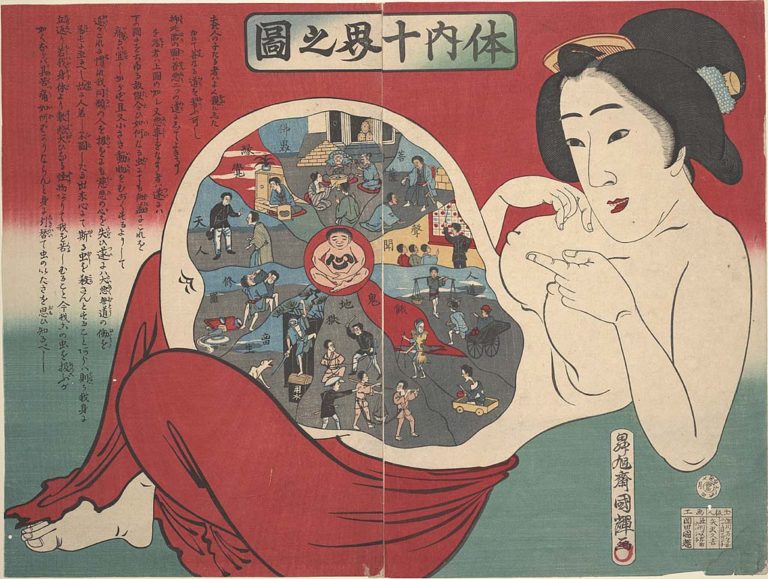
19th Century Japanese Woodblock Prints Creatively Illustrate the Inner Workings of the Human Body

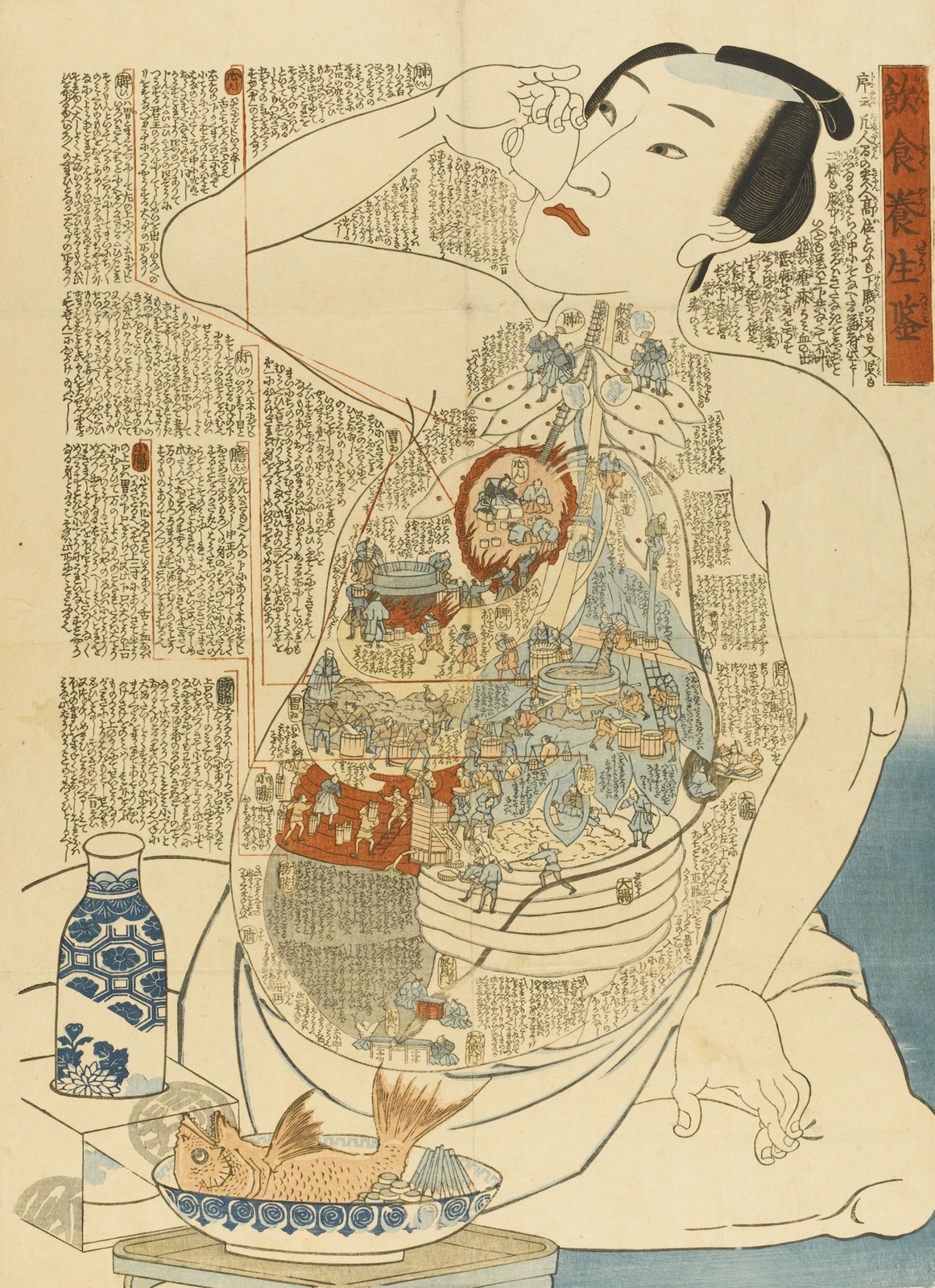
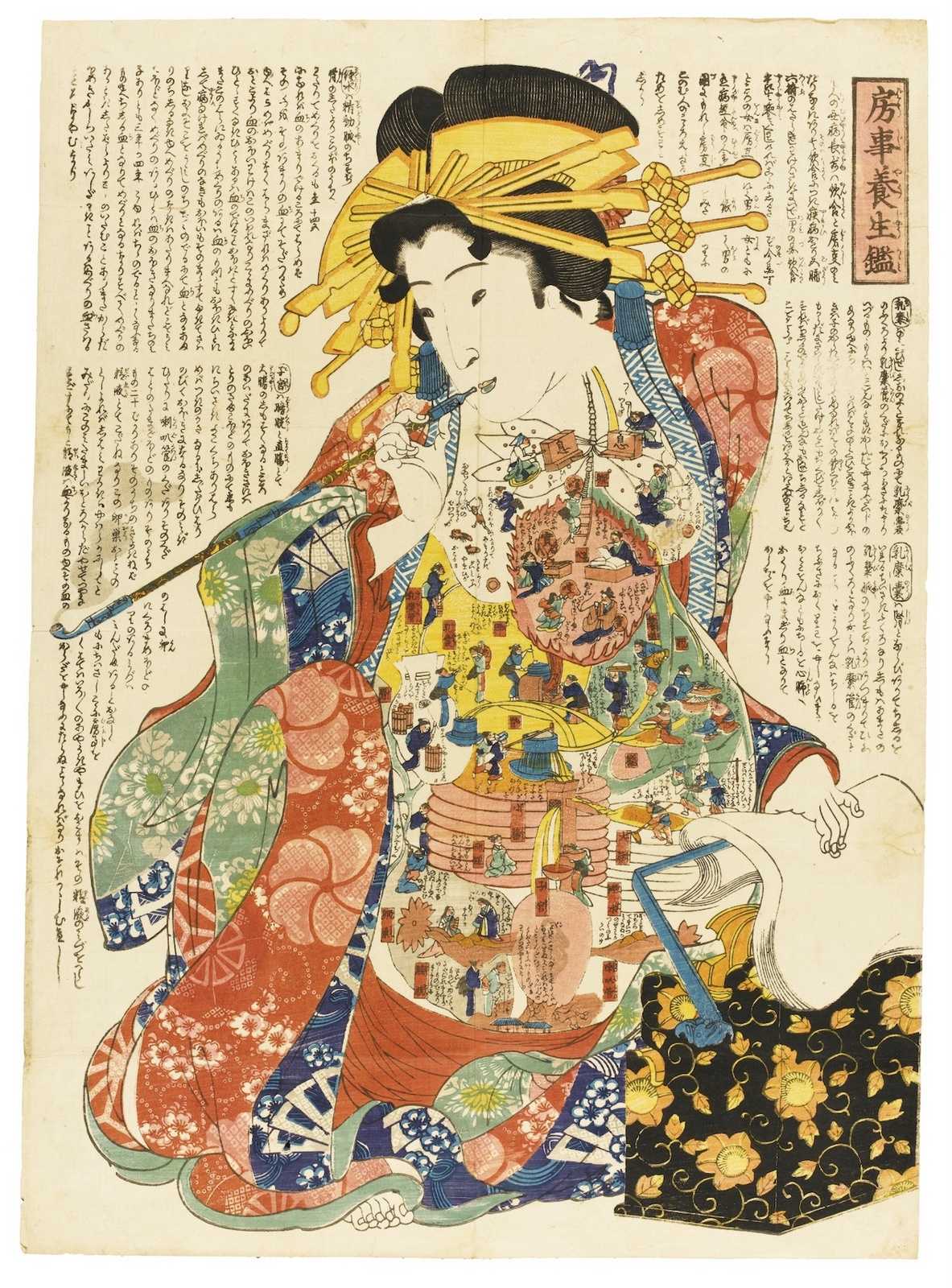
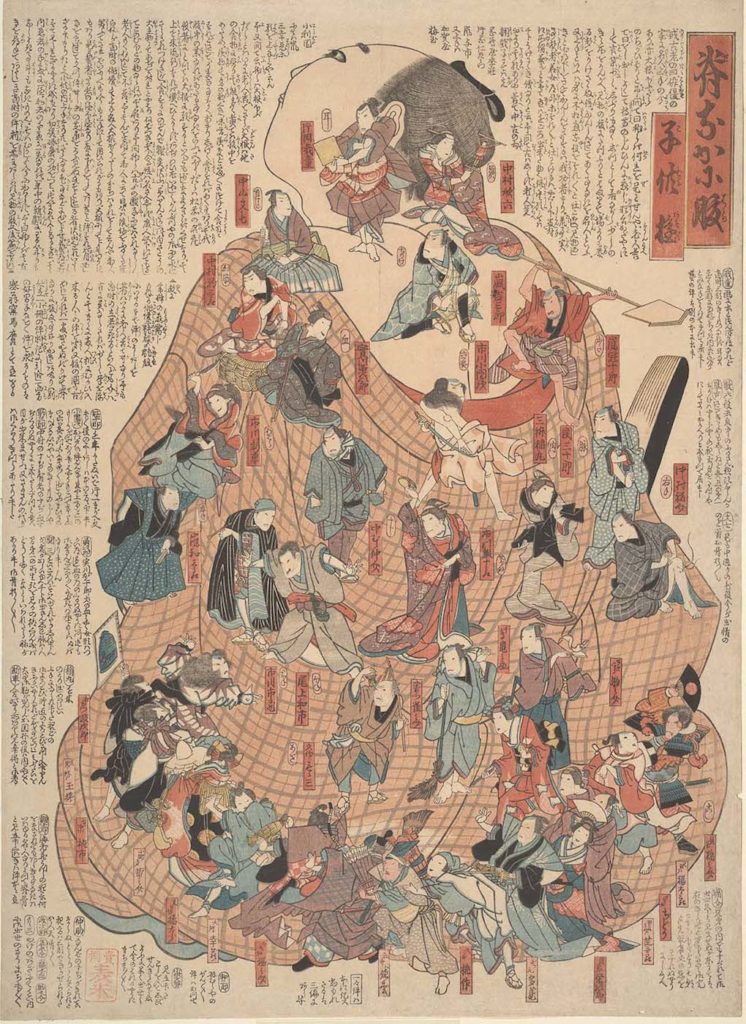
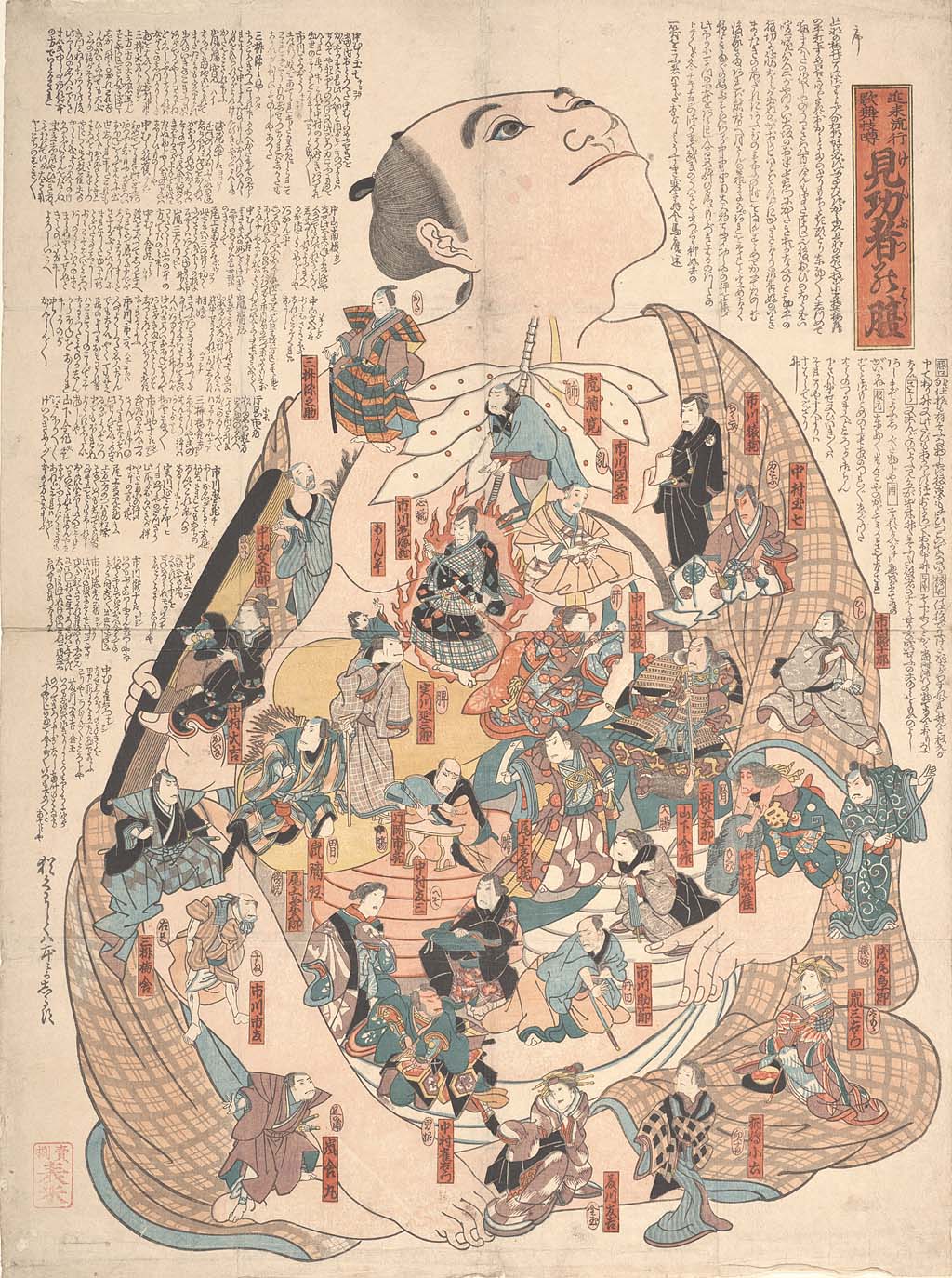
Folks with a pass­ing knowl­edge of ukiyo‑e, the Japan­ese wood­block print art form pop­u­lar in the 17th through 19th cen­turies, will be famil­iar with its land­scapes, as well as its por­traits of cour­te­sans and kabu­ki actors. But often these prints were edu­ca­tion­al, demon­strat­ed by these very odd anatom­i­cal prints that pro­mote good health as it relates to our inter­nal work­ings.

Long before ani­mat­ed mon­sters warned us about our mucus-filled chests, Japan­ese artists like Uta­gawa Kunisa­da (1786–1865) filled the guts of these men and women with lit­tle work­ers, mak­ing sure the human body worked like a func­tion­ing vil­lage or town.

In the first print, Inshoku Yojo Kaga­mi (“Mir­ror of the Phys­i­ol­o­gy of Drink­ing and Eat­ing”), a man dines on fish and drinks sake. Inside, lit­tle men scur­ry about a pool wrapped in intestines, stoke a fire under the heart, all the while a schol­ar keeps ref­er­ence mate­ri­als near­by. Down below lone­ly fig­ures guard the “urine gate” and the “feces gate,” sure­ly one of the worst jobs in all the body econ­o­my.

One of Kunisada’s stu­dents cre­at­ed a print for the women, focus­ing on the repro­duc­tive organs, called Boji Yojo Kaga­mi (“Rules of Sex­u­al Life”). Keen eyed view­ers will note that the minia­ture work­ers here are all women, so at least there’s some equal­i­ty at play.

The two prints were meant as instruc­tion­al, point­ing out best health prac­tices, and warn­ing against overindul­gence and excess.

Oth­er prints are just as inven­tive: a back and abdomen cov­ered in chil­dren play­ing famil­iar games; anoth­er fea­tur­ing pop­u­lar kabu­ki actors stand­ing in for var­i­ous organs. (Now, that is just cry­ing out for a mod­ern remake). The last print shows a preg­nant woman whose bel­ly con­tains Tainai jukkai no zu (Ten realms with­in the body), a Bud­dhist idea that you can read more about here. As for their func­tion inside the womb, that is for oth­ers of a high­er con­scious­ness to dis­cern.

via Spoon & Tam­a­go

Relat­ed Con­tent:

Map­ping Emo­tions in the Body: A Finnish Neu­ro­science Study Reveals Where We Feel Emo­tions in Our Bod­ies

A Sub­way Map of Human Anato­my: All the Sys­tems of Our Body Visu­al­ized in the Style of the Lon­don Under­ground

“Man as Indus­tri­al Palace,” the 1926 Lith­o­graph Depict­ing the Human Body as a Mod­ern Fac­to­ry, Comes to Life in a New Ani­ma­tion

Ted Mills is a free­lance writer on the arts who cur­rent­ly hosts the artist inter­view-based FunkZone Pod­cast and is the pro­duc­er of KCR­W’s Curi­ous Coast. You can also fol­low him on Twit­ter at @tedmills, read his oth­er arts writ­ing at tedmills.com and/or watch his films here.

How to Rescue a Wet, Damaged Book: A Handy Visual Primer

How to save those wet, dam­aged books? The ques­tion has to be asked. Above, you can watch a visu­al primer from the Syra­cuse Uni­ver­si­ty Libraries–peo­ple who know some­thing about tak­ing care of books. It con­tains a series of tips–some intu­itive, some less so–that will give you a clear action plan the next time water and paper meet.

If you would like to sign up for Open Culture’s free email newslet­ter, please find it here. It’s a great way to see our new posts, all bun­dled in one email, each day.

If you would like to sup­port the mis­sion of Open Cul­ture, con­sid­er mak­ing a dona­tion to our site. It’s hard to rely 100% on ads, and your con­tri­bu­tions will help us con­tin­ue pro­vid­ing the best free cul­tur­al and edu­ca­tion­al mate­ri­als to learn­ers every­where. You can con­tribute through Pay­Pal, Patre­on, and Ven­mo (@openculture). Thanks!

Relat­ed Con­tent:

The Art of Mak­ing Old-Fash­ioned, Hand-Print­ed Books

How to Clean Your Vinyl Records with Wood Glue

How to Open a Wine Bot­tle with Your Shoe

by | Permalink | Make a Comment ( 4 ) |

In 1886, the US Government Commissioned 7,500 Watercolor Paintings of Every Known Fruit in the World: Download Them in High Resolution

T.S. Eliot asks in the open­ing stan­zas of his Cho­rus­es from the Rock, “where is the knowl­edge we have lost in infor­ma­tion?” The pas­sage has been called a point­ed ques­tion for our time, in which we seem to have lost the abil­i­ty to learn, to make mean­ing­ful con­nec­tions and con­tex­tu­al­ize events. They fly by us at super­hu­man speeds; cred­i­ble sources are buried between spu­ri­ous links. Truth and false­hood blur beyond dis­tinc­tion.

But there is anoth­er fea­ture of the 21st cen­tu­ry too-often unre­marked upon, one only made pos­si­ble by the rapid spread of infor­ma­tion tech­nol­o­gy. Vast dig­i­tal archives of pri­ma­ry sources open up to ordi­nary users, archives once only avail­able to his­to­ri­ans, promis­ing the pos­si­bil­i­ty, at least, of a far more egal­i­tar­i­an spread of both infor­ma­tion and knowl­edge.

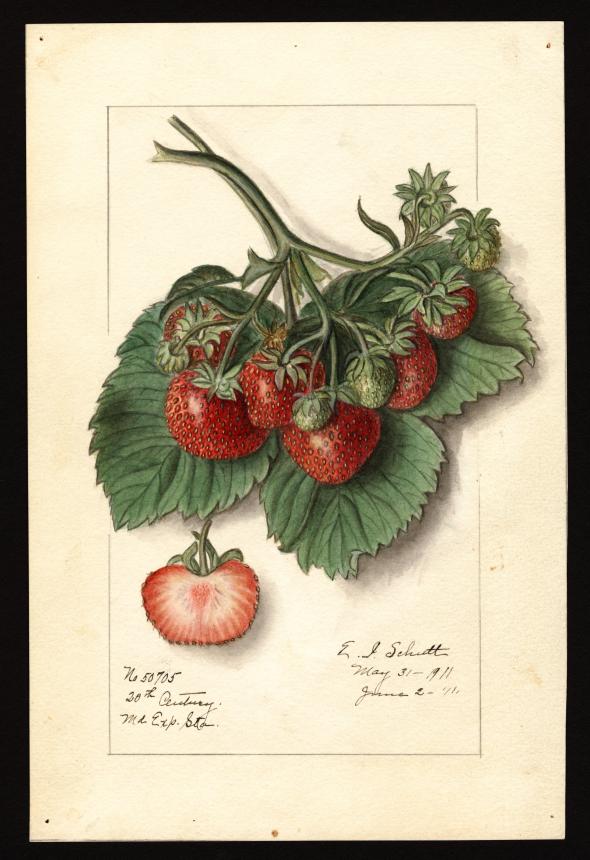
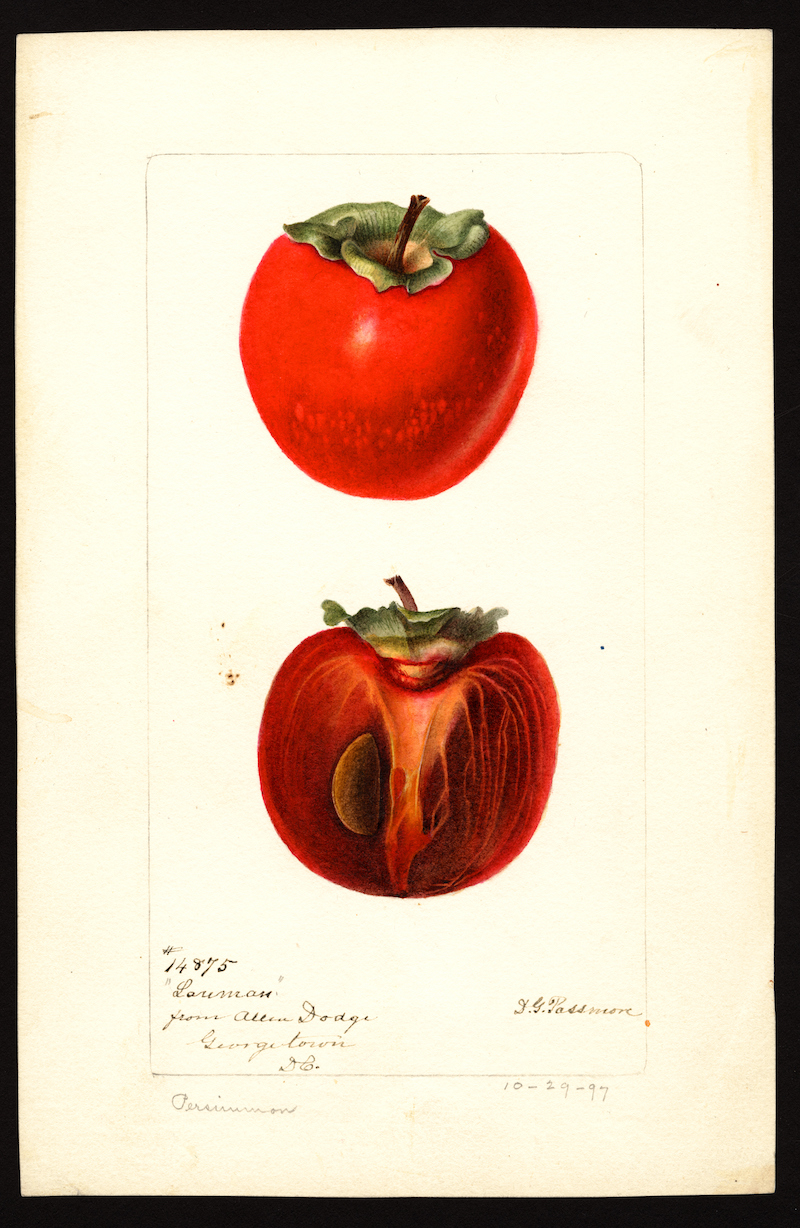
Those archives include the USDA Pomo­log­i­cal Water­col­or Col­lec­tion, “over 7,500 paint­ings, draw­ings, and wax mod­els com­mis­sioned by the USDA between 1886 and 1942,” notes Chloe Ole­witz at Morsel. The word “pomol­o­gy,” “the sci­ence and prac­tice of grow­ing fruit,” first appeared in 1818, and the degree to which peo­ple depend­ed on fruit trees and fruit stores made it a dis­tinc­tive­ly pop­u­lar sci­ence, as was so much agri­cul­ture at the time.

But pomol­o­gy was grow­ing from a domes­tic sci­ence into an indus­tri­al one, adopt­ed by “farm­ers across the Unit­ed States,” writes Ole­witz, who “worked with the USDA to set up orchards to serve emerg­ing mar­kets” as “the country’s most pro­lif­ic fruit-pro­duc­ing regions began to take shape.” Cen­tral to the gov­ern­ment agency’s grow­ing pomo­log­i­cal agen­da was the record­ing of all the var­i­ous types of fruit being cul­ti­vat­ed, hybridized, inspect­ed, and sold from both inside the U.S. and all over the world.

Pri­or to and even long after pho­tog­ra­phy could do the job, that meant employ­ing the tal­ents of around 65 Amer­i­can artists to “doc­u­ment the thou­sands and thou­sands of vari­eties of heir­loom and exper­i­men­tal fruit cul­ti­vars sprout­ing up nation­wide.” The USDA made the full col­lec­tion pub­lic after Elec­tron­ic Fron­tier Foun­da­tion activist Park­er Hig­gins sub­mit­ted a Free­dom of Infor­ma­tion Act request in 2015.

Hig­gins saw the project as an exam­ple of “the way free speech issues inter­sect with ques­tions of copy­right and pub­lic domain,” as he put it. His­tor­i­cal gov­ern­ment-issued fruit water­col­ors might not seem like the obvi­ous place to start, but they’re as good a place as any. He stum­bled on the col­lec­tion while either ran­dom­ly col­lect­ing infor­ma­tion or acquir­ing knowl­edge, depend­ing on how you look at it, “chal­leng­ing him­self to dis­cov­er one new cool pub­lic domain thing every day for a month.”

It turned out that access to the USDA images was lim­it­ed, “with high res­o­lu­tion ver­sions hid­den behind a large­ly untouched pay­wall.” After invest­ing $300,000, they had made $600 in fees in five years, a los­ing propo­si­tion that would bet­ter serve the pub­lic, the schol­ar­ly com­mu­ni­ty, and those work­ing in-between if it became freely avail­able.

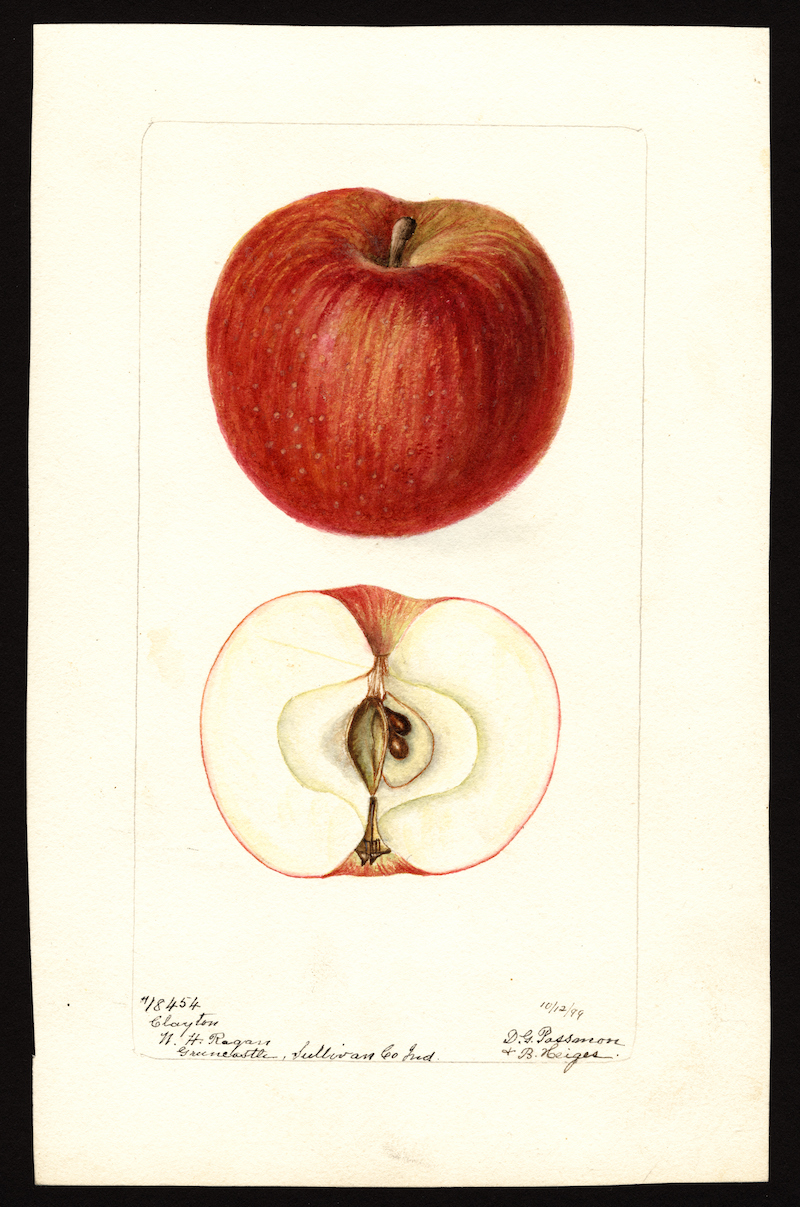
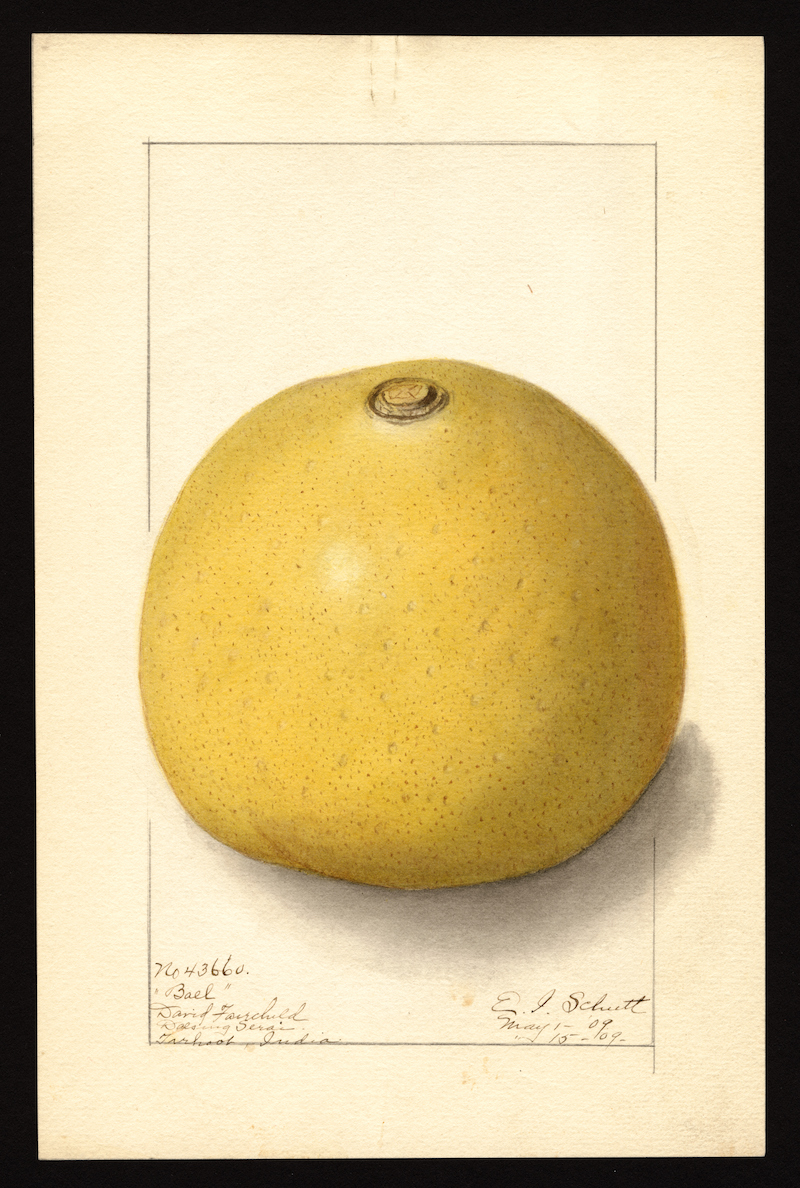
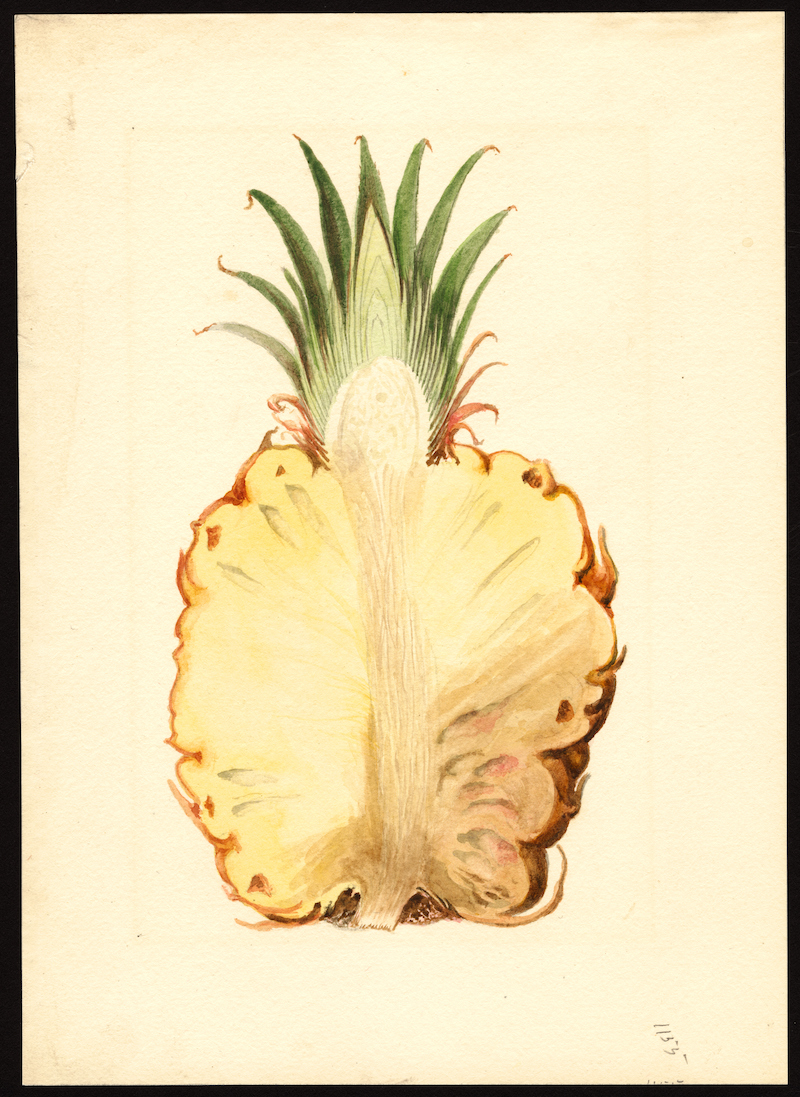
You can explore the entire­ty of this tan­ta­liz­ing col­lec­tion of fruit water­col­ors, rang­ing in qual­i­ty from the work­man­like to the near sub­lime, and from unsung artists like James Mar­i­on Shull, who sketched the Cuban pineap­ple above, Ellen Isham Schutt, who brings us the Aegle marme­los, com­mon­ly called “bael” in India, fur­ther up, and Deb­o­rah Griscom Pass­more, whose 1899 Malus domes­ti­cus, at the top, describes a U.S. pomo­log­i­cal arche­type.

It’s easy to see how Hig­gins could become engrossed in this col­lec­tion. Its util­i­tar­i­an pur­pose belies its sim­ple beau­ty, and with 3,800 images of apples alone, one could get lost tak­ing in the visu­al nuances—according to some very pro­lif­ic nat­u­ral­ist artists—of just one fruit alone. Hig­gins, of course, cre­at­ed a Twit­ter bot to send out ran­dom images from the archive, an inter­est­ing dis­trac­tion and also, for peo­ple inclined to seek it out, a lure to the full USDA Pomo­log­i­cal Water­col­or Col­lec­tion.

At what point does an explo­ration of these images tip from infor­ma­tion into knowl­edge? It’s hard to say, but it’s unlike­ly we would pur­sue either one if that pur­suit didn’t also include its share of plea­sure. Enter the USDA’s Pomo­log­i­cal Water­col­or Col­lec­tion here to new and down­load over 7,500 high-res­o­lu­tion dig­i­tal images like those above.

via Morsel.

Relat­ed Con­tent:

New Archive Dig­i­tizes 80,000 His­toric Water­col­or Paint­ings, the Medi­um Through Which We Doc­u­ment­ed the World Before Pho­tog­ra­phy

Two Mil­lion Won­drous Nature Illus­tra­tions Put Online by The Bio­di­ver­si­ty Her­itage Library

Ernst Haeckel’s Sub­lime Draw­ings of Flo­ra and Fau­na: The Beau­ti­ful Sci­en­tif­ic Draw­ings That Influ­enced Europe’s Art Nou­veau Move­ment (1889)

Josh Jones is a writer and musi­cian based in Durham, NC. Fol­low him at @jdmagness

Cartoonist Lynda Barry Teaches You How to Draw

Friend, are you par­a­lyzed by your iron­clad con­vic­tion that you can’t draw?

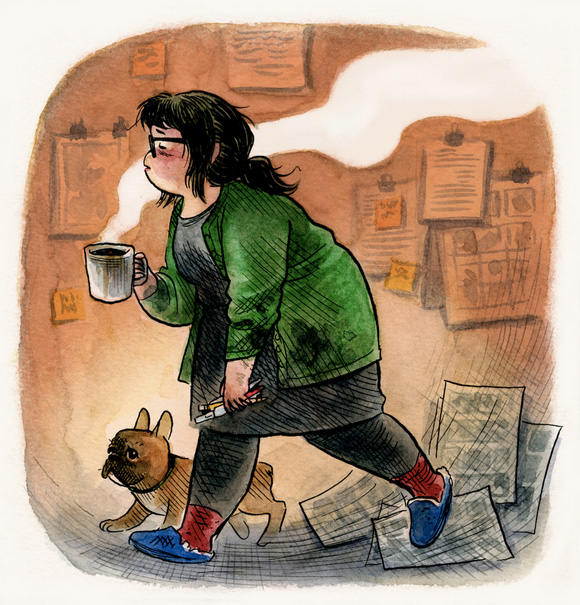
Pro­fes­sor Chew­bac­ca aka Pro­fes­sor Old Skull aka car­toon­ist Lyn­da Bar­ry has had quite enough of that non­sense!

So stop dis­sem­bling, grab a pen and a hand-sized piece of paper, and fol­low her instruc­tions to Anne Strain­champs, host of NPR’s To The Best Of Our Knowl­edge, below.

It’s bet­ter to throw your­self into it with­out know­ing pre­cise­ly what the ten minute exer­cise holds (oth­er than draw­ing, of course).

We know, we know, you can’t, except that you can. Like Strain­champs, you’re prob­a­bly just rusty.

Don’t judge your­self too harsh­ly if things look “ter­ri­ble.”

In Barry’s view, that’s rel­a­tive, par­tic­u­lar­ly if you were draw­ing with your eyes closed.

A neu­rol­o­gy nerd, Bar­ry cites Gir­i­ja Kaimal, Kendra Ray, and Juan Muniz’ study Reduc­tion of Cor­ti­sol Lev­els and Par­tic­i­pants’ Respons­es Fol­low­ing Art Mak­ing. It’s the action, not the sub­jec­tive artis­tic mer­it of what winds up on the page that counts in this regard.

For more of Barry’s exer­cis­es and delight­ful­ly droll pres­ence, check out this playlist on Dr. Michael Green’s Graph­ic Med­i­cine Chan­nel.

Relat­ed Con­tent:

Lyn­da Bar­ry on How the Smart­phone Is Endan­ger­ing Three Ingre­di­ents of Cre­ativ­i­ty: Lone­li­ness, Uncer­tain­ty & Bore­dom

Fol­low Car­toon­ist Lyn­da Barry’s 2017 “Mak­ing Comics” Class Online, Pre­sent­ed at UW-Wis­con­sin

Lyn­da Barry’s Illus­trat­ed Syl­labus & Home­work Assign­ments from Her New UW-Madi­son Course, “Mak­ing Comics”

Join Car­toon­ist Lyn­da Bar­ry for a Uni­ver­si­ty-Lev­el Course on Doo­dling and Neu­ro­science

Ayun Hal­l­i­day is an author, illus­tra­tor, the­ater mak­er and Chief Pri­ma­tol­o­gist of the East Vil­lage Inky zine… Fol­low her @AyunHalliday.

Women Who Draw: Explore an Open Directory That Showcases the Work of 5,000+ Female Illustrators

The seem­ing­ly nev­er-end­ing era of female artists labor­ing in the shad­ows cast by their male col­leagues is com­ing to a close.

Dit­to the tyran­ny of the male gaze.

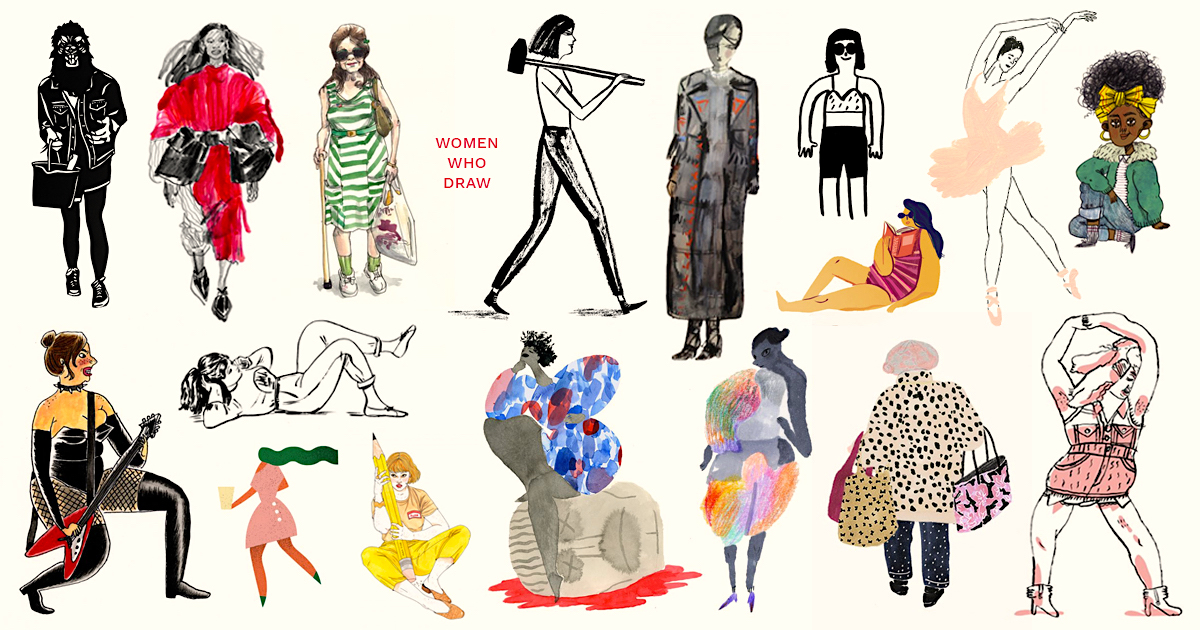
Women Who Draw, a data­base of over 5,000 pro­fes­sion­al artists, offers a thrilling­ly diverse panoply of female imagery, all cre­at­ed, as the site’s name sug­gests, by artists who iden­ti­fy as women.

Launched by illus­tra­tors Julia Roth­man and Wendy Mac­Naughton in response to a dis­may­ing lack of gen­der par­i­ty among cov­er artists of a promi­nent magazine—in 2015, men were respon­si­ble for 92%—the site aims to chan­nel work to female artists by boost­ing vis­i­bil­i­ty.

To that end, each illus­tra­tor toss­ing her hat in the ring is required to upload an illus­tra­tion of a woman, ide­al­ly a full body view, on a white back­ground.

The result is an aston­ish­ing range of styles, from an inter­na­tion­al cast of cre­ators.

Not sur­pris­ing­ly, the major­i­ty of con­trib­u­tors are based on the East Coast of the Unit­ed States, but giv­en the site’s mis­sion to pro­mote female illus­tra­tors of col­or, as well as LBTQ+ and oth­er less vis­i­ble groups, expect to see grow­ing num­bers from Africa, the Caribbean, the Mid­dle East, and Cen­tral and South Amer­i­ca.

In addi­tion to indi­cat­ing their loca­tion, artists can check­list their reli­gion, ori­en­ta­tion, and ethnicity/race. (Those who would check“white” or “straight” should be pre­pared to accept that those cat­e­gories are tabled as “WWD encour­ages peo­ple to seek out under­rep­re­sent­ed groups of women.”)

Bean count­ing aside, the per­son­al­i­ties of indi­vid­ual con­trib­u­tors shine through.

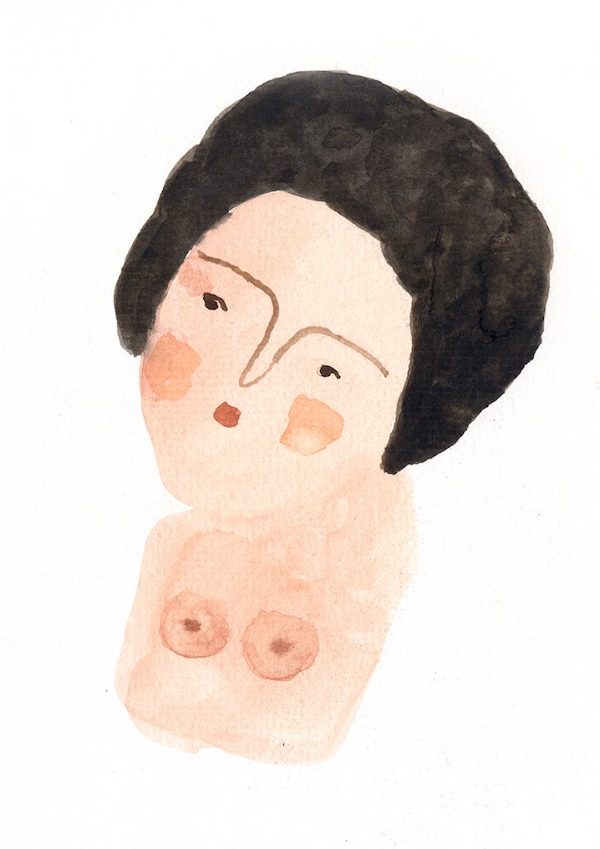
Some, like Paris-based Amer­i­can Lau­ra Park, choose explic­it self-por­trai­ture.

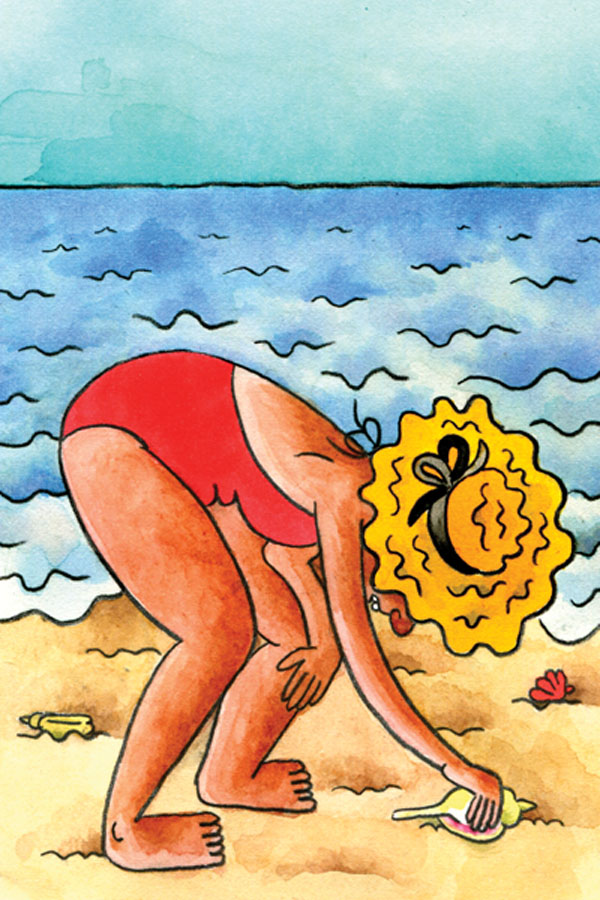
Vanes­sa Davis gives the lie to biki­ni sea­son

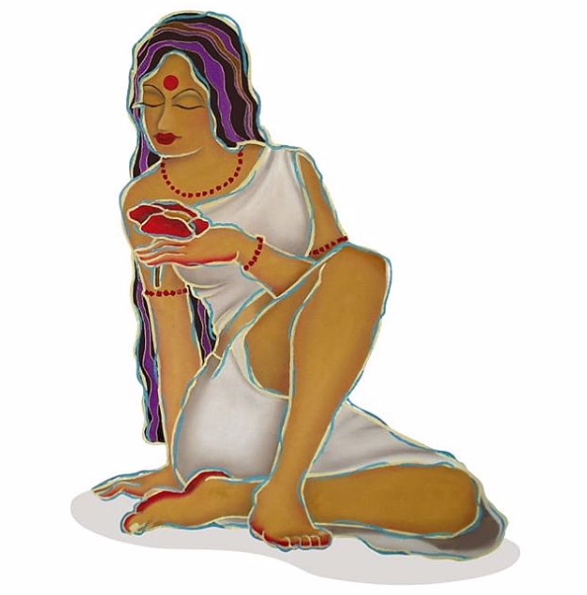
SouthAsian illus­tra­tor Baani makes an impres­sion, doc­u­ment­ing women of her com­mu­ni­ty even as she rein­ter­prets tropes of West­ern art.

Pé-de-Ovo Stu­dio cor­ners the mar­ket on plushies.

Women Who Draw’s lat­est crowd-sourced project is con­cerned with per­son­al sto­ries of immi­gra­tion.

Final words of encour­age­ment from Lind­sey Andrews, Assis­tant Art Direc­tor for the Pen­guin Young Read­ers Design Group:

Just keep putting your work out there in any form you can think of. Update your var­i­ous social plat­forms reg­u­lar­ly. Mail post­cards of your work. Send emails. Net­work when you can. But, main­ly, do what you love. Even if you have a port­fo­lio full of com­mis­sioned pieces, I still like to see what you cre­ate when you get to cre­ate what­ev­er you want. Also, let me know your process!

Sub­mit your work here.

Relat­ed Con­tent:

A Space of Their Own, a New Online Data­base, Will Fea­ture Works by 600+ Over­looked Female Artists from the 15th-19th Cen­turies

A New Archive Tran­scribes and Puts Online the Diaries & Note­books of Women Artists, Art His­to­ri­ans, Crit­ics and Deal­ers

The Dai­ly Rit­u­als of 143 Famous Female Cre­ators: Octavia But­ler, Edith Whar­ton, Coco Chanel & More

Ven­er­a­ble Female Artists, Musi­cians & Authors Give Advice to the Young: Pat­ti Smith, Lau­rie Ander­son & More

Ayun Hal­l­i­day is an author, illus­tra­tor, the­ater mak­er and Chief Pri­ma­tol­o­gist of the East Vil­lage Inkyzine.  Join her in NYC tonight, Mon­day, June 17 for anoth­er month­ly install­ment of her book-based vari­ety show, Necro­mancers of the Pub­lic Domain. Fol­low her @AyunHalliday.

Hear What’s Likely the Only Known Recording of Frida Kahlo’s Voice (1954)

Per­haps no artist in mod­ern his­to­ry, save Andy Warhol, has been so well doc­u­ment­ed, and self-doc­u­ment­ed, as Fri­da Kahlo, or has used doc­u­men­tary meth­ods, sur­re­al­ist and oth­er­wise, to so unflinch­ing­ly con­front ideas about dis­abil­i­ty, gen­der, sex­u­al­i­ty, nation­al iden­ti­ty, and rela­tion­ships. These qual­i­ties make her the per­fect celebri­ty artist for our times, but unlike the aver­age 21st cen­tu­ry star mak­ing art out of self-pre­sen­ta­tion, Kahlo’s voice has nev­er been heard, though she lived in a time almost as sat­u­rat­ed with mass media—of the radio, TV, and film variety—as our own.

That is, per­haps, until now, with the unearthing of what the Nation­al Sound Library of Mex­i­co believes to be a record­ing of her voice, “tak­en from a pilot episode of 1955 radio show El Bachiller [“The Bach­e­lor”],” writes Steph Har­mon at The Guardian. The show “aired after her death in 1954,” like­ly the fol­low­ing year. Though the pro­gram does not intro­duce her by name, the pre­sen­ter does refer to her as recent­ly deceased, and she does read an essay about her hus­band Diego Rivera, which hap­pens to be writ­ten by Fri­da Kahlo. The case seems fair­ly con­clu­sive.

Pre­vi­ous­ly the lit­tle evi­dence of what she sound­ed like came from writ­ten descrip­tions, such as French pho­tog­ra­ph­er Gisèle Freund’s char­ac­ter­i­za­tion of her voice as “melo­di­ous and warm.” Hear for your­self what is very like­ly the record­ed voice of Fri­da Kahlo in the audio above. In her typ­i­cal­ly florid yet unspar­ing style she paints a ver­bal por­trait of Rivera full of unflat­ter­ing phys­i­cal detail and lay­ers of emo­tion and admi­ra­tion. In one Eng­lish trans­la­tion, she calls him “a huge, immense child, with a friend­ly face and a sad gaze.

River­a’s “high, dark, extreme­ly intel­li­gent and big eyes rarely hold still. They almost pop out of their sock­ets because of their swollen and pro­tu­ber­ant eyelids—like a toad’s.” His huge eyes seem “built espe­cial­ly for a painter of spaces and crowds.” The Mex­i­can mural­ist, she says is like “an inscrutable mon­ster.” These are the words of a writer, we must remem­ber, who was pas­sion­ate­ly in love with her sub­ject, but who did not pre­tend to ignore his phys­i­cal odd­i­ties. As she had prac­ticed lov­ing her­self, she loved and admired Rivera because of his unique appear­ance, not in spite of it.

Researchers are mak­ing con­tin­u­ing efforts to ver­i­fy that the voice on the recod­ing is Kahlo and search­ing through about 1,300 oth­er episodes of the show, record­ed for Tele­visa Radio, to find out if there are any more record­ings of her. Giv­en Frida’s flam­boy­ant per­sona and minor art star­dom in her life­time, it’s hard to imag­ine we won’t hear more of her, if this is in fact her, as oth­er archives reveal their secrets.

Relat­ed Con­tent:

Fri­da Kahlo’s Pas­sion­ate Love Let­ters to Diego Rivera

Dis­cov­er Fri­da Kahlo’s Wild­ly-Illus­trat­ed Diary: It Chron­i­cled the Last 10 Years of Her Life, and Then Got Locked Away for Decades

A Brief Ani­mat­ed Intro­duc­tion to the Life and Work of Fri­da Kahlo

Josh Jones is a writer and musi­cian based in Durham, NC. Fol­low him at @jdmagness

The Brilliant Colors of the Great Barrier Revealed in a Historic Illustrated Book from 1893

Paul Simon’s famous lyric about every­thing look­ing worse in black and white
is hard­ly a uni­ver­sal truth, but when it comes to William Sav­ille-Kent’s ground­break­ing 1893 book The Great Bar­ri­er Reef of Aus­tralia: its prod­ucts and poten­tial­i­tiesthe asser­tion may have some mer­it.

Sav­ille-Kent, a nat­u­ral­ist whose work in var­i­ous British aquar­i­ums even­tu­al­ly led to a gig rebuild­ing deplet­ed Tas­man­ian oys­ter beds, fell hard for the col­or­ful fish, bêche-de-mer, corals, sponges, tur­tles, and oth­er marine species he encoun­tered in Aus­tralia.

He pho­tographed the Great Bar­ri­er Reef while serv­ing in Queens­land as Com­mis­sion­er of Fish­eries. 48 of his images were pub­lished in the afore­men­tioned book, offer­ing read­ers an unprece­dent­ed arm­chair tour of a coral reef, albeit in black and white.


While Sav­ille-Kent def­i­nite­ly achieved his goal of fur­ther­ing the public’s aware­ness of the reef, he also upstaged him­self by includ­ing 16 col­or lith­o­graphs inspired by his orig­i­nal water­col­ors.

These plates, by Lon­don-based lith­o­g­ra­phers Rid­dle and Couchman—whose work usu­al­ly ran toward por­traits of well-born gen­tle­men—exude a live­ly Seuss­ian appeal.

Saville-Kent’s care­ful­ly cap­tured fish, echin­o­derms, and anemones lit­er­al­ly pale in com­par­i­son to the bright spec­i­mens the lith­o­g­ra­phers, who pre­sum­ably lacked his first­hand expe­ri­ence of the forms they were depict­ing, brought to such vibrant life in the back of the book.

These days, alas, the Great Bar­ri­er Reef resem­bles Sav­ille-Ken­t’s pho­tos more close­ly than those gor­geous lith­o­graphs, the vic­tim of back-to-back bleach­ing events brought on by pol­lu­tion-relat­ed cli­mate change.

Sav­ille-Kent is buried at All Saints Churchin Mil­ford-on-Sea, Hamp­shire, Eng­land. His grave is dec­o­rat­ed with coral.

Browse a dig­i­tal copy of The Great Bar­ri­er Reef of Aus­tralia: its prod­ucts and poten­tial­i­ties here.

via The Pub­lic Domain Review

Relat­ed Con­tent:

Ernst Haeckel’s Sub­lime Draw­ings of Flo­ra and Fau­na: The Beau­ti­ful Sci­en­tif­ic Draw­ings That Influ­enced Europe’s Art Nou­veau Move­ment (1889)

Two Mil­lion Won­drous Nature Illus­tra­tions Put Online by The Bio­di­ver­si­ty Her­itage Library

New Archive Dig­i­tizes 80,000 His­toric Water­col­or Paint­ings, the Medi­um Through Which We Doc­u­ment­ed the World Before Pho­tog­ra­phy

Ayun Hal­l­i­day is an author, illus­tra­tor, the­ater mak­er and Chief Pri­ma­tol­o­gist of the East Vil­lage Inkyzine.  Join her in NYC on Mon­day, June 17 for anoth­er month­ly install­ment of her pub­lic domain-based vari­ety show, Necro­mancers of the Pub­lic Domain. Fol­low her @AyunHalliday.

« Go BackMore in this category... »
Quantcast