Little known fact. My first adventure in publishing began as a 16 year old, when I teamed up with my best friend, another ardent fan of The Who, and together we published a fanzine dedicated to the British rock band. We called it Tales from The Who, a name taken from a bootleg concert album recorded in our native Philadelphia during the ’70s. To get the zine going, we borrowed an electric typewriter, cut out pictures, collaged it all together, made copies on a photocopy machine, then started marketing the publication in Rolling Stone magazine. When actual subscriptions rolled into our P.O. Box, we couldn’t believe it.
In the great green room / There was a telephone / And a dead Keith Moon.
And Towshend jumping over the moon.
And there were four little gents pissing on cement.
And two broken sticks and a pile of sick.
Find the rest here, and, don’t be the “cool” parent who actually reads this to your kids. It is, after all, “the most inappropriate bedtime story ever,” according to The New Yorker.
We have been in Beverly Hills shopping most of the late morning and early afternoon. My mother and my two sisters and me. My mother has spent most of this time probably at Neiman-Marcus, and my sisters have gone to Jerry Magnin and have used our father’s charge account to buy him and me something and then to MGA and Camp Beverly Hills and Privilege to buy themselves something. I sit at the bar at La Scala Boutique for most of this time, bored out of my mind, smoking, drinking red wine. Finally, my mother drives up in her Mercedes and parks her car in front of La Scala and waits for me.
In the last months of his life, a physically weakened Christopher Hitchens traveled to the Texas Freethought Convention to accept the Richard Dawkins Award. While there, an eight-year-old girl, Mason Crumpacker of Dallas, asked Hitchens what books she should consider reading. Intrigued, Hitchens spent 15 minutes chatting with the youngster and sketching out a reading list. And, according to the Houston Chronicle, it looks something like this:
Robert Graves’ The Greek Myths (even though it turns out the girl was already a big fan of I, Claudius).
If you would like to support the mission of Open Culture, consider making a donation to our site. It’s hard to rely 100% on ads, and your contributions will help us continue providing the best free cultural and educational materials to learners everywhere. You can contribute through PayPal, Patreon, and Venmo (@openculture). Thanks!
In the preface of The Swerve: How the World Became Modern, Stephen Greenblatt recalls the day he encountered a translation of Lucretius’ 2000 year old poem, On the Nature of Things. He was a grad student back at Yale, living on modest means, when he ambled into a bookstore and found a copy marked down to ten cents. He picked it up, not having much to lose and not knowing what he’d find. Soon enough he was reading one of the most scandalous and groundbreaking texts from antiquity, a book that eventually traveled a long and winding road and changed our entire modern world. That story Greenblatt tells in The Swerve.
The ten cents Greenblatt spent in the 1960s may be roughly equivalent to the deal you can get today. Right now, The Swerve, the winner of the 2012 Pulitzer Prize for general nonfiction, can be downloaded as an audio book for $5.95 via iTunes. Yes, we know, $5.95 is not free, and iTunes is not open, but it’s certainly a deal worth mentioning nonetheless.
But if you’re really hankering for something free, then don’t miss our meta lists of Free Audio Books and Free eBooks, which include a copy of Lucretius’ famous work. Or definitely check out Audible.com’s Free Trial offer, which lets you download pretty much any audio book you want (classic or modern) for free. Get details here.
“I suppose you’re wondering why I’ve called you all here,” says Ray Bradbury above, in a lengthy interview with the The Big Read project sponsored by the National Endowment for the Arts. Breaking the ice with this stock phrase, Bradbury–author of Fahrenheit 451, The Illustrated Man, The Martian Chronicles, and several dozen more fantasy and sci-fi novels and short story collections (and some truly chilling horror)–begins to talk about… Love. Specifically a love of books. “Love,” he says, “is at the center of your life. The things that you do should be things that you love, and the things that you love, should be things that you do.” That’s what books teach us, he says, and it becomes his mantra.
Bradbury, who passed away in June, was certainly an early inspiration for me, and several million other bookish kids whose warmest memories involve discovering some strange, life-altering book on the shelf of a library. As he recounts his childhood experiences with books, he’s such an enthusiastic booster for public libraries that you may find yourself writing a check to your local branch in the first ten minutes of his talk. And it’s easy to see why his most famous novel sprang from what must have been a very pressing fear of the loss of books. Bradbury was largely self-taught. Unable to afford college, he pursued his fierce ambition to become a writer immediately out of high school and published his first short story, “Hollerbochen’s Dilemma,” at the age of nineteen. As he says above, he became a writer because, “I discovered that I was alive.” But I’m not doing it justice. You have to watch him tell it to really feel the thrill of this epiphany.
The Big Read’s mission is to create a “Nation of Readers,” and to do so, it posts free audio guides for classics such as Bradbury’s Fahrenheit 451, Hemingway’s A Farewell to Arms, and Fitzgerald’s The Great Gatsby. They also feature video interviews with other authors, like Amy Tan, Ernest J. Gaines, and Tobias Wolff. Each of the interviews is fantastic, and the readers’ guides are superb as well. Bradbury’s, for example, narrated by poet and author Dana Gioia, also features sci-fi giants Orson Scott Card and Ursula K. Le Guin, as well as several other writers who were inspired by his work.
Josh Jones is a doctoral candidate in English at Fordham University and a co-founder and former managing editor of Guernica / A Magazine of Arts and Politics.
If you’re anything like me, you yearn to become a good writer, a better writer, an inspiring writer, even, by learning from the writers you admire. But you neither have the time nor the money for an MFA program or expensive retreats and workshops with famous names. So you read W.H. Auden’s essays and Paris Review interviews with your favorite authors (or at least PR’s Twitter feed); you obsessively trawl the archives of The New York Times’ “Writers on Writing” series, and you relish every Youtube clip, no matter how lo-fi or truncated, of your literary heroes, speaking from beyond the grave, or from behind a podium at the 92nd Street Y.
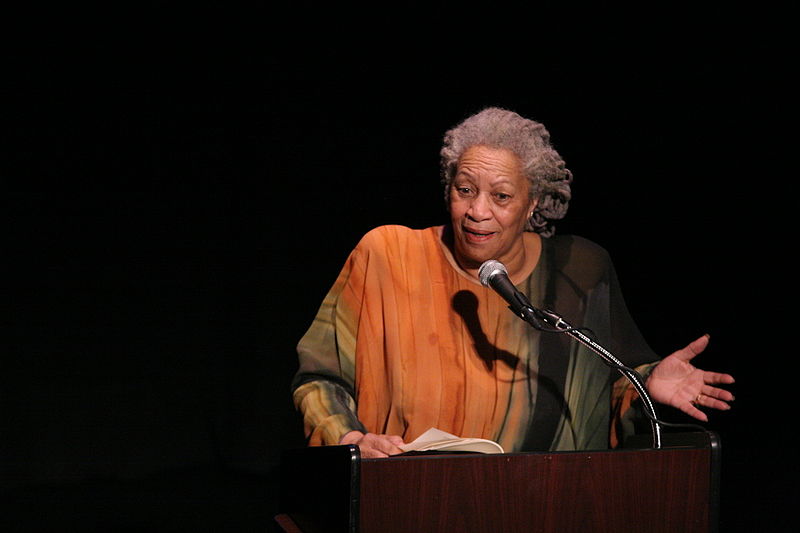
Well, friend, you are in luck (okay, I’m still talking about me here, but maybe about you, too). The Washington, DC-based non-profit Academy of Achievement—whose mission is to “bring students face-to-face” with leaders in the arts, business, politics, science, and sports—has archived a series of talks from an incredibly diverse pool of poets and writers. They call this collection “Creative Writing: A Master Class,” and you can subscribe to it right now on iTunes and begin downloading free video and audio podcasts from Nora Ephron, John Updike, Toni Morrison, Carlos Fuentes, Norman Mailer, Wallace Stegner, and, well, you know how the list goes.
The Academy of Achievement’s website also features lengthy profiles–with text and downloadable audio and video–of several of the same writers from their “Master Class” series. For example, an interview with former U.S. poet-laureate Rita Dove is illuminating, both for writers and for teachers of writing. Dove talks about the aversion that many people have for poetry as a kind of fear inculcated by clumsy teachers. She explains:
At some point in their life, they’ve been given a poem to interpret and told, “That was the wrong answer.” You know. I think we’ve all gone through that. I went through that. And it’s unfortunate that sometimes in schools — this need to have things quantified and graded — we end up doing this kind of multiple choice approach to something that should be as ambiguous and ever-changing as life itself. So I try to ask them, “Have you ever heard a good joke?” If you’ve ever heard someone tell a joke just right, with the right pacing, then you’re already on the way to the poetry. Because it’s really about using words in very precise ways and also using gesture as it goes through language, not the gesture of your hands, but how language creates a mood. And you know, who can resist a good joke? When they get that far, then they can realize that poetry can also be fun.
Dove’s thoughts on her own life, her work, and the craft of poetry and teaching are well worth reading/watching in full. Another particularly notable interview from the Academy is with another former laureate, poet W.S. Merwin.
Merwin, a two-time Pulitzer Prize winner, discusses poetry as originating with language, and its loss as tantamount to extinction:
When we talk about the extinction of species, I think the endangered species of the arts and of language and all these things are related. I don’t think there is any doubt about that. I think poetry goes back to the invention of language itself. I think one of the big differences between poetry and prose is that prose is about something, it’s got a subject… poetry is about what can’t be said. Why do people turn to poetry when all of a sudden the Twin Towers get hit, or when their marriage breaks up, or when the person they love most in the world drops dead in the same room? Because they can’t say it. They can’t say it at all, and they want something that addresses what can’t be said.
If you’re anything like me, you find these two perspectives on poetry—as akin to jokes, as saying the unsayable—fascinating. These kinds of observations (not mechanical how-to’s, but original thoughts on the process and practice of writing itself) are the reason I pore over interviews and seminars with writers I admire. I found more than enough in this archive to keep me satisfied for months.
We’ve added “Creative Writing: A Master Class” to our ever-growing collection of Free Online Courses.
Image via Angela Radulescu
Josh Jones is a doctoral candidate in English at Fordham University and a co-founder and former managing editor of Guernica / A Magazine of Arts and Politics.
By now, you know that David Rakoff, a prizewinning humorist championed by David Sedaris, died Thursday night after two public battles with cancer. Rakoff cultivated a following among listeners of This American Life, the beloved radio show hosted by Ira Glass. In May, he made one of his last appearances on the show when TAL presented “The Invisible Made Visible,” a live stage performance beamed to movie theaters nationwide. Here, Rakoff reads the story, “Stiff as a Board, Light as a Feather,” about “the invisible processes that can happen inside our bodies…and the visible effects they eventually have.” You won’t want to his miss his poignant last dance. It’s yet another reminder of why he’ll be sorely missed. We’d also recommend spending time with his appearances on NPR’s Fresh Air.
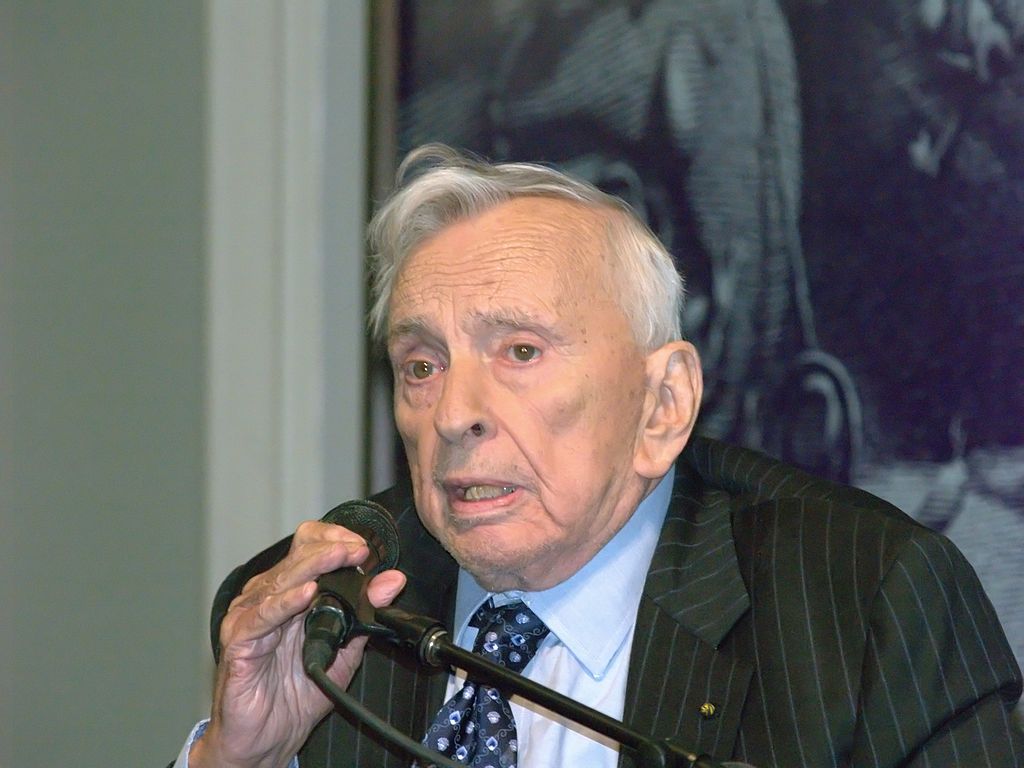
Next to “celebrated” (or “celebrity”) the description I’ve most seen applied to the late Gore Vidal is “acerbic,” or some such synonym—“scathing,” “disdainful”… I’m sure he would relish the compliment. One of the most fitting adjectives, perhaps, is “Wilde-like” (as in Oscar Wilde), deployed by Hilton Als in the New Yorker. The adjective fits especially well considering one of Vidal’s most-tweeted quotes from his treasury of Wilde-like aphorisms: “Write something, even if it’s just a suicide note.” It’s clever and morbid and naughty and devil-may-care, and almost entirely fatuous. Unlike several writers recently featured here—Margaret Atwood, Ray Bradbury, Henry Miller, George Orwell, et al.—who helpfully compiled numbered lists of writing advice, Vidal’s pronouncements on his craft were rather unsystematic. But, like many of those named above, what Vidal did leave in the form of advice was sometimes facetious, and sometimes profound. Despite his evident contempt for neat little lists, one writer in the UK has helpfully compiled one anyway. The “suicide note” quote above is number 4:
Each writer is born with a repertory company in his head.
Write what you know will always be excellent advice for those who ought not to write at all. Write what you think, what you imagine, what you suspect!
I sometimes think it is because they are so bad at expressing themselves verbally that writers take to pen and paper in the first place.
Write something, even if it’s just a suicide note.
How marvelous books are, crossing worlds and centuries, defeating ignorance and, finally, cruel time itself.
Southerners make good novelists: they have so many stories because they have so much family.
You can’t really succeed with a novel anyway; they’re too big. It’s like city planning. You can’t plan a perfect city because there’s too much going on that you can’t take into account. You can, however, write a perfect sentence now and then. I have.
Today’s public figures can no longer write their own speeches or books, and there is some evidence that they can’t read them either.
I suspect that one of the reasons we create fiction is to make sex exciting.
Writer’s Digest gives us ten additional quotes of Gore Vidal on writing (unnumbered this time):
“You can improve your talent, but your talent is a given, a mysterious constant. You must make it the best of its kind.”
“I’ve always said, ‘I have nothing to say, only to add.’ And it’s with each addition that the writing gets done. The first draft of anything is really just a track.”
“The reason my early books are so bad is because I never had the time or the money to afford constant revisions.”
“That famous writer’s block is a myth as far as I’m concerned. I think bad writers must have a great difficulty writing. They don’t want to do it. They have become writers out of reasons of ambition. It must be a great strain to them to make marks on a page when they really have nothing much to say, and don’t enjoy doing it. I’m not so sure what I have to say but I certainly enjoy making sentences.”
“Constant work, constant writing and constant revision. The real writer learns nothing from life. He is more like an oyster or a sponge. What he takes in he takes in normally the way any person takes in experience. But it is what is done with it in his mind, if he is a real writer, that makes his art.”
“I’ll tell you exactly what I would do if I were 20 and wanted to be a good writer. I would study maintenance, preferably plumbing. … So that I could command my own hours and make a good living on my own time.”
“If a writer has any sense of what journalism is all about he does not get into the minds of the characters he is writing about. That is something, shall we say, Capote-esque—who thought he had discovered a new art form but, as I pointed out, all he had discovered was lying.”
“A book exists on many different levels. Half the work of a book is done by the reader—the more he can bring to it the better the book will be for him, the better it will be in its own terms.”
[When asked which genre he enjoys the most, and which genre comes easiest:]
“Are you happier eating a potato than a bowl of rice? I don’t know. It’s all the same. … Writing is writing. Writing is order in sentences and order in sentences is always the same in that it is always different, which is why it is so interesting to do it. I never get bored with writing sentences, and you never master it and it is always a surprise—you never know what’s going to come next.”
[When asked how he would like to be remembered:]
“I suppose as the person who wrote the best sentences in his time.”
A series of snippets of Gore Vidal’s wit from Esquire provides the biting (for its non-sequitur jab at rival Norman Mailer): “For a writer, memory is everything. But then you have to test it; how good is it, really? Whether it’s wrong or not, I’m beyond caring. It is what it is. As Norman Mailer would say, “It’s existential.” He went to his grave without knowing what that word meant.”
Vidal returns to the theme of memory in a 1974 interview with The Paris Review, in which he admits to placing the ultimate faith in his memory: “I am not a camera… I don’t consciously watch anything and I don’t take notes, though I briefly kept a diary. What I remember I remember—by no means the same thing as remembering what you would like to.”
While Vidal is memorialized this week as a celebrity and Wilde-like provocateur, it’s also worth noting that he had quite a lot to say about the work of writing itself, some of it witty but useless, some of it well worth remembering.
We're hoping to rely on loyal readers, rather than erratic ads. Please click the Donate button and support Open Culture. You can use Paypal, Venmo, Patreon, even Crypto! We thank you!
Open Culture scours the web for the best educational media. We find the free courses and audio books you need, the language lessons & educational videos you want, and plenty of enlightenment in between.
 Little known fact. My first adventure in publishing began as a 16 year old, when I teamed up with my best friend, another ardent fan of The Who, and together we published a fanzine dedicated to the British rock band. We called it Tales from The Who, a name taken from a bootleg concert album recorded in our native Philadelphia during the ’70s. To get the zine going, we borrowed an electric typewriter, cut out pictures, collaged it all together, made copies on a photocopy machine, then started marketing the publication in Rolling Stone magazine. When actual subscriptions rolled into our P.O. Box, we couldn’t believe it.