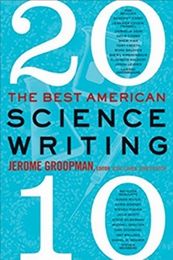
 Jerome Groopman, the New Yorker staff writer and Harvard med school prof, has edited The Best American Science Writing 2010 - a new collection that brings together “the most crucial, thought-provoking, and engaging science writing” during the past 12 months. The 368 page book runs $10.19 online. But before you run out and buy it, let me say this: you can read many of the collected essays online for free. The Truth About Grit by Jonah Lehrer; My Genome, My Self by Steven Pinker; Are We Still Evolving? by Kathleen McAuliffe – they’re among 16 essays available online, and they’re all included in a handy list pulled together by Metafilter. Meanwhile, if you want to read these essays later on (when you have some time to delve into longer articles) give Instapaper a try. As I’ve mentioned before, it’s a great way to read texts in a clean format on the iPad, iPhone, and Kindle.
The Best American Science Writing 2010: Free Essays
Vintage Literary T‑Shirts
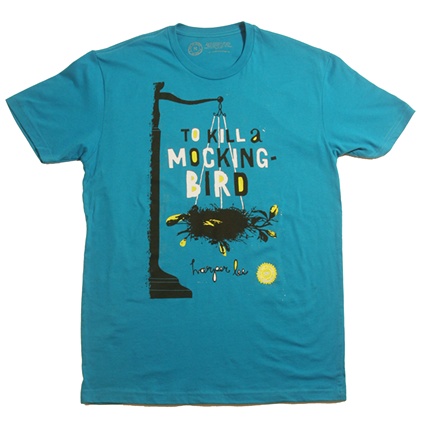
Out of Print Clothing “celebrates the world’s great stories through fashion,” working with artists to design t‑shirts that feature iconic book covers. The catalog lets you choose from Orwell’s Animal Farm, Salinger’s Catcher in the Rye, William S. Burroughs’ Naked Lunch, Bulgakov’s Russian classic Master and Margarita or 29 other vintage shirts, each of which costs a fairly reasonable $28. See the full list of shirts here.
via @AndrewHazlett
Follow Open Culture on Facebook and Twitter!!
Mark Twain #1 on Amazon
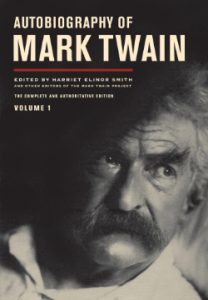 The Autobiography of Mark Twain (Vol. 1) hit the stands just yesterday, and already it stands atop the Amazon bestseller list, leapfrogging past Stieg Larsson, Bill Bryson, Jon Stewart, and even the latest, supposedly greatest American novelist, Jonathan Franzen. Although he died a century again, Twain has still got it.
The 766 page autobiography published by UC Press runs $18.99 in hardcover on Amazon, and the Kindle version a far cooler $9.99. You can read excerpts in PDF format here and here. Meanwhile you can also find free versions of Twain’s classics – Adventures of Huckleberry Finn and Tom Sawyer – in our collections of Free Audio Books and Free eBooks.
Related Content:
Mark Twain Captured on Film by Thomas Edison (1909)
The Best American Essays 2010: The Free Route
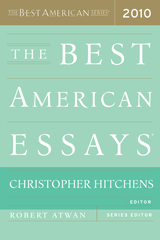 The Best American Essays, 2010, edited by Christopher Hitchens, has now hit the stands. The 300-page collection runs $10.47 online. However, know this: You can read most of the essays online for free. These essays were originally published on websites of major American journals & magazines, and there they still remain. Some notable mentions include The Murder of Leo Tolstoy: A Forensic Investigation by Elif Batuman, How Einstein Divided America’s Jews by Walter Isaacson, On John Updike by Ian McEwan, My Genome, My Self by Steven Pinker, and Guy Walks into a Bar by David Sedaris. Metafilter has pulled together a full list of available texts. Kudos to them. And if you want to read these essays later on (when you actually have some time) give Instapaper a try. It’s a wonderful way to read texts in a clean format on the iPad, iPhone, and Kindle. The trusty web browser is always an option too.
The Ware Tetralogy: Free SciFi Download
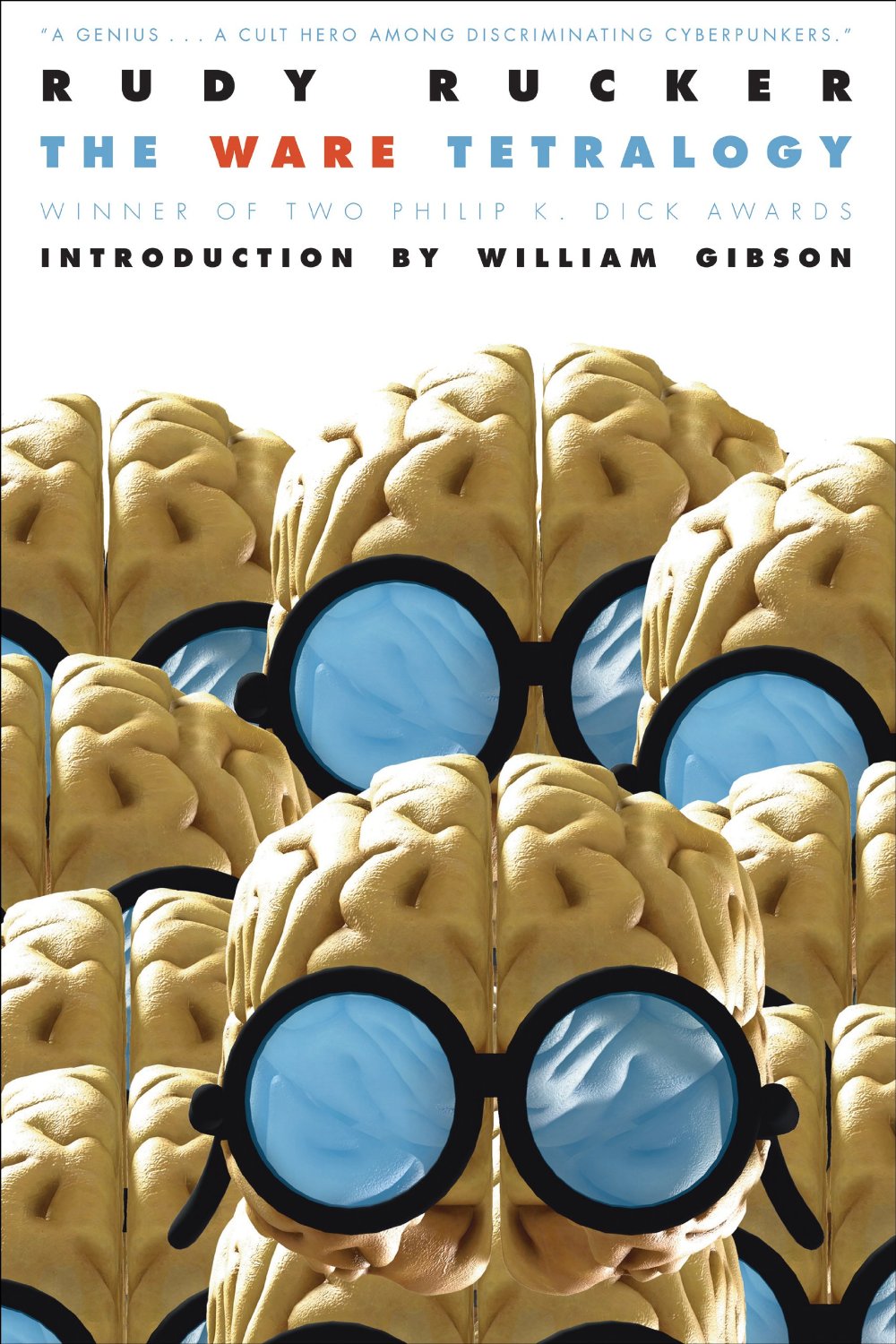
Between 1982 and 2000, Rudy Rucker wrote a series of four sci-fi novels that formed The Ware Tetralogy. The first two books in the series – Software and Wetware – won the Philip K. Dick Award for best novel. Later Freeware and Realware followed. This summer, Prime Books republished the tetralogy in one big volume, complete with an introduction by William Gibson that calls Rucker “a natural-born American street surrealist” or, more simply, one sui generis dude. And now the even better part: Rucker (who happens to be the great-great-great-grandson of Hegel) has released The Ware Tetralogy under a Creative Commons license, and you can download the full text for free in PDF and RTF formats. In total, the collection runs 800+ pages. For more information on the book and the free download, visit here. And don’t forget to donate to the Creative Commons Legion of Superheroes fundraising campaign.
A big thanks to Rosario for the heads up here.
David Sedaris Reads From New book, Squirrel Seeks Chipmunk

Squirrel Seeks Chipmunk: A Modest Bestiary, the new book by David Sedaris has hit the stands last week. And now thanks to The Guardian we get Sedaris himself reading a story/chapter from the collection, “The Mouse and the Snake.” It runs nearly 10 minutes. Start playing below…
Jeff Bezos: What Life Story Will You Write?
A quick bit of inspiration from the man who has changed the way we buy books, and now the way we’re reading them – Jeff Bezos (CEO, Amazon). Speaking at Princeton’s graduation last May, Bezos discussed the life choices that we all face: Will you follow dogma? Or be original? Will you play it safe? Or take good risks? Will you be a cynic? Or a builder? Will you be clever at the expense of others? Or will you be kind?
In short, your life story comes down to your choices. What story will you write? And how will it read when you’re 80?
Related Content:
Steve Jobs Talks Life at Stanford Graduation
74 Free Banned Books (for Banned Books Week)
 To commemorate Banned Books Week, the always great Internet Archive has opened up access to 74 banned books. The collection features some serious pieces of literature (James Joyce’s Ulysses, F. Scott Fitzgerald’s Tender is the Night, Huxley’s Brave New World, etc.); some traditional children’s classics (Winnie the Pooh); and some sinister books of unquestionable historical importance (Mein Kampf). These books can be downloaded in multiple digital formats, including sometimes ePub and Kindle formats. This gives you the ability to read the the works on the Kindle, iPad, Nook and other mainstream ebook readers. (See note below.) But the old fashioned computer will also do the job.
Censorship remains a serious problem in the US and beyond. The American Library Association recorded 460 attempts in 2009 to restrict books in US schools and libraries. But they estimate that this represents only 20–25% of actual attempts to censor. All of this censorship is neatly (and rather specifically) tracked on Google Maps.
NOTE: Please see our previous post describing how to add files to the Kindle. Meanwhile this page describes how to transfer ePub files to the iPad.
Support Us
We're hoping to rely on loyal readers, rather than erratic ads. Please click the Donate button and support Open Culture. You can use Paypal, Venmo, Patreon, even Crypto! We thank you!

About Us

Open Culture scours the web for the best educational media. We find the free courses and audio books you need, the language lessons & educational videos you want, and plenty of enlightenment in between.
Advertise With Us

